Inspection Results
28 Jul 2026
Hive #9 · 20 frame sides captured
88
Colony Strength
Strong
Monitor honey stores closely and consider supplemental feeding to prevent starvation, especially during periods of low nectar flow. Continue regular inspections to track colony progress and queen activity.
Queen Status
Queen not spotted, but likely present and laying due to extensive brood activity.
Brood Pattern
Good and consistent brood pattern across 7 frames, with healthy average coverage of 42%.
Honey Stores
Low honey stores, averaging 8% across frames.
Varroa Risk
Unknown - no specific varroa data collected during this inspection.
AI Observations
The colony exhibits strong activity with 8690 bees counted and a healthy, consistent brood pattern across 7 frames, indicating a productive queen. Despite a full inspection of all 10 frames, honey stores are notably low. The overall health and strength of the colony appear robust.
Frame Analysis — 10 frames
Frame 1
Side A
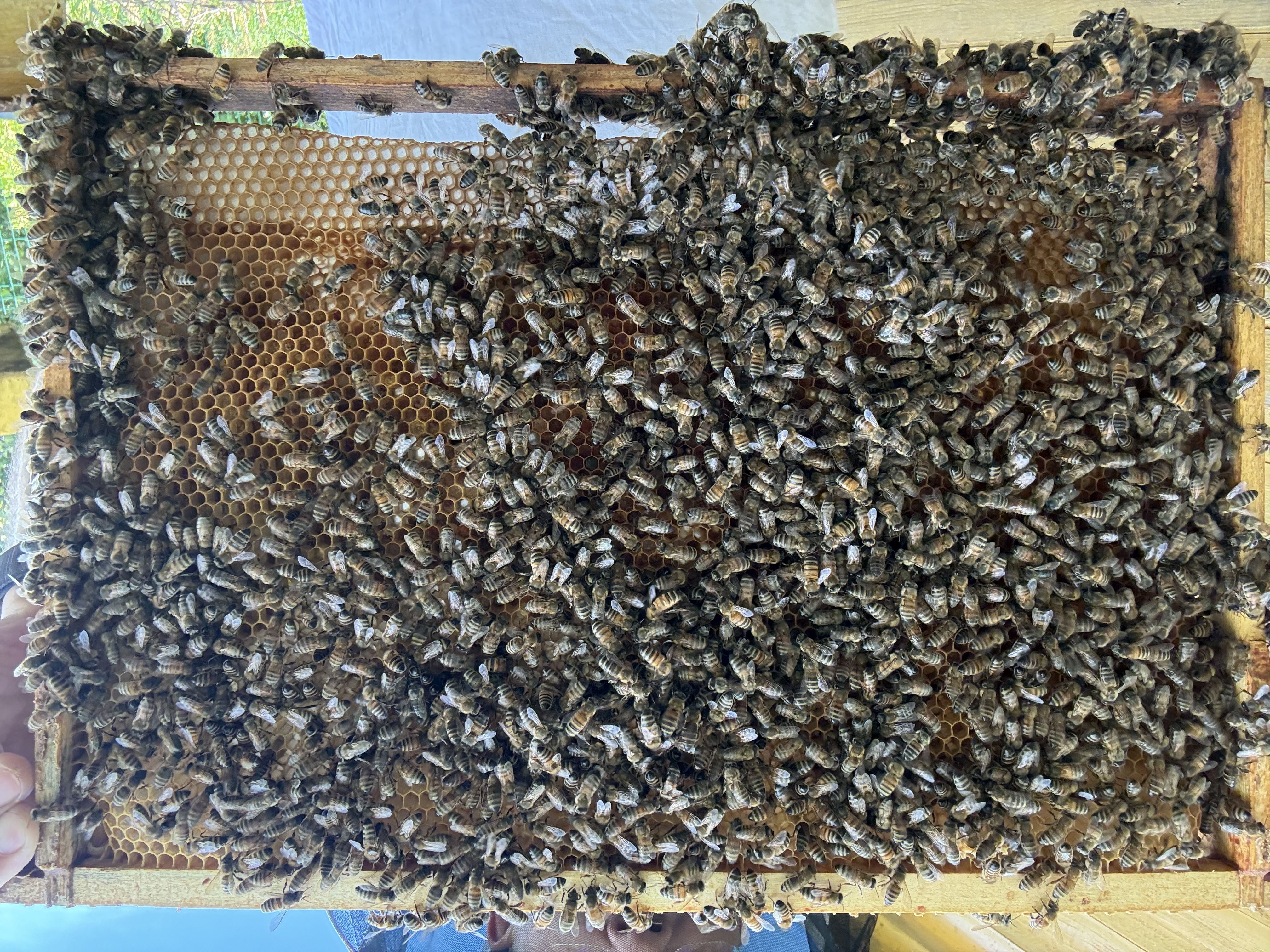
Side B
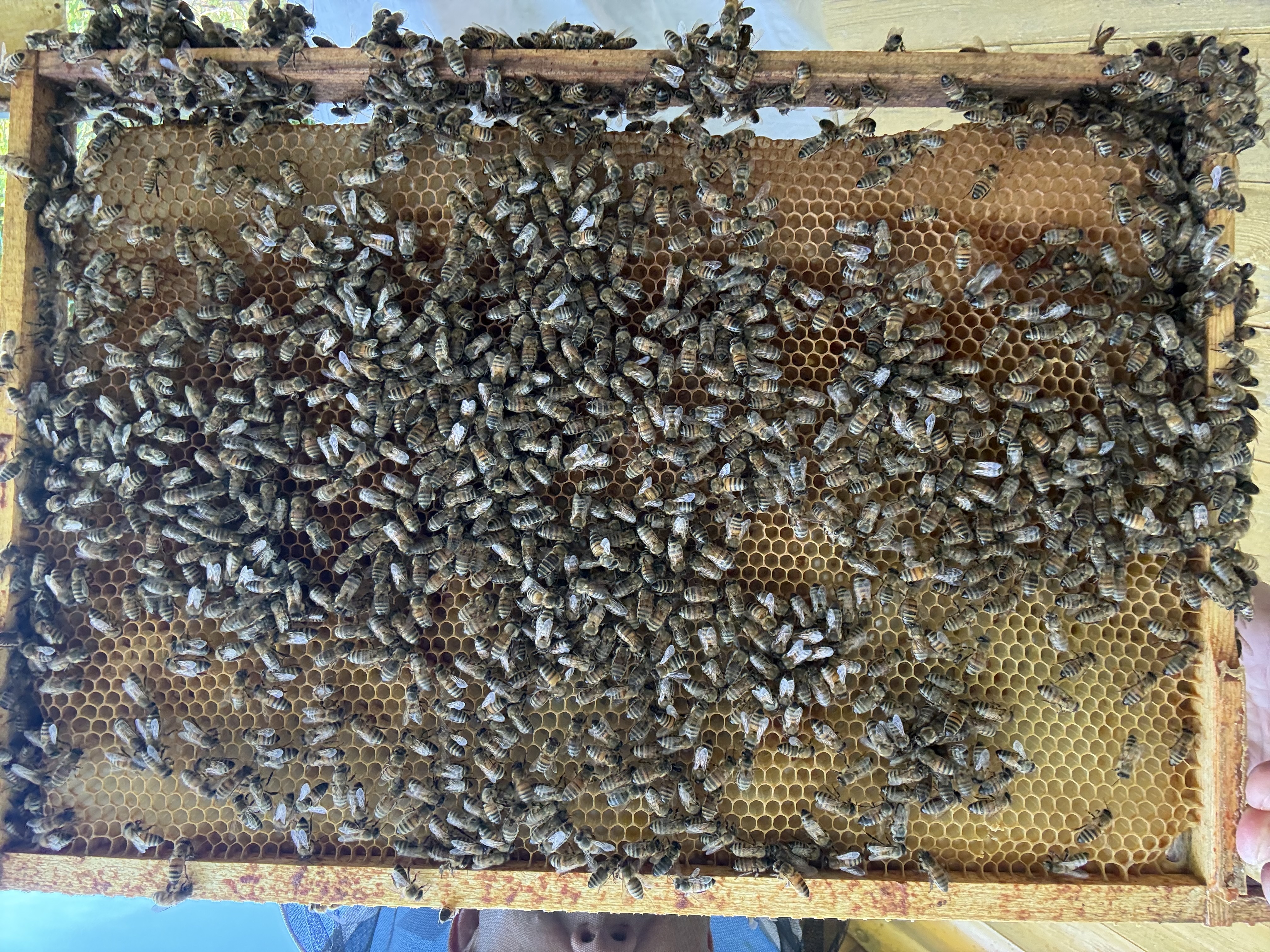
Side A
This side of the frame is heavily populated with bees, with visible areas of capped brood and pollen, and some empty cells.
Side B
The reverse side of the frame also shows a dense population of bees, with a central brood area surrounded by some honey and pollen.
Both sides of this frame show a robust bee population actively working on central brood areas, indicative of a healthy and productive colony. The presence of some honey and pollen suggests good resource management by the bees.
Frame 2
Side A
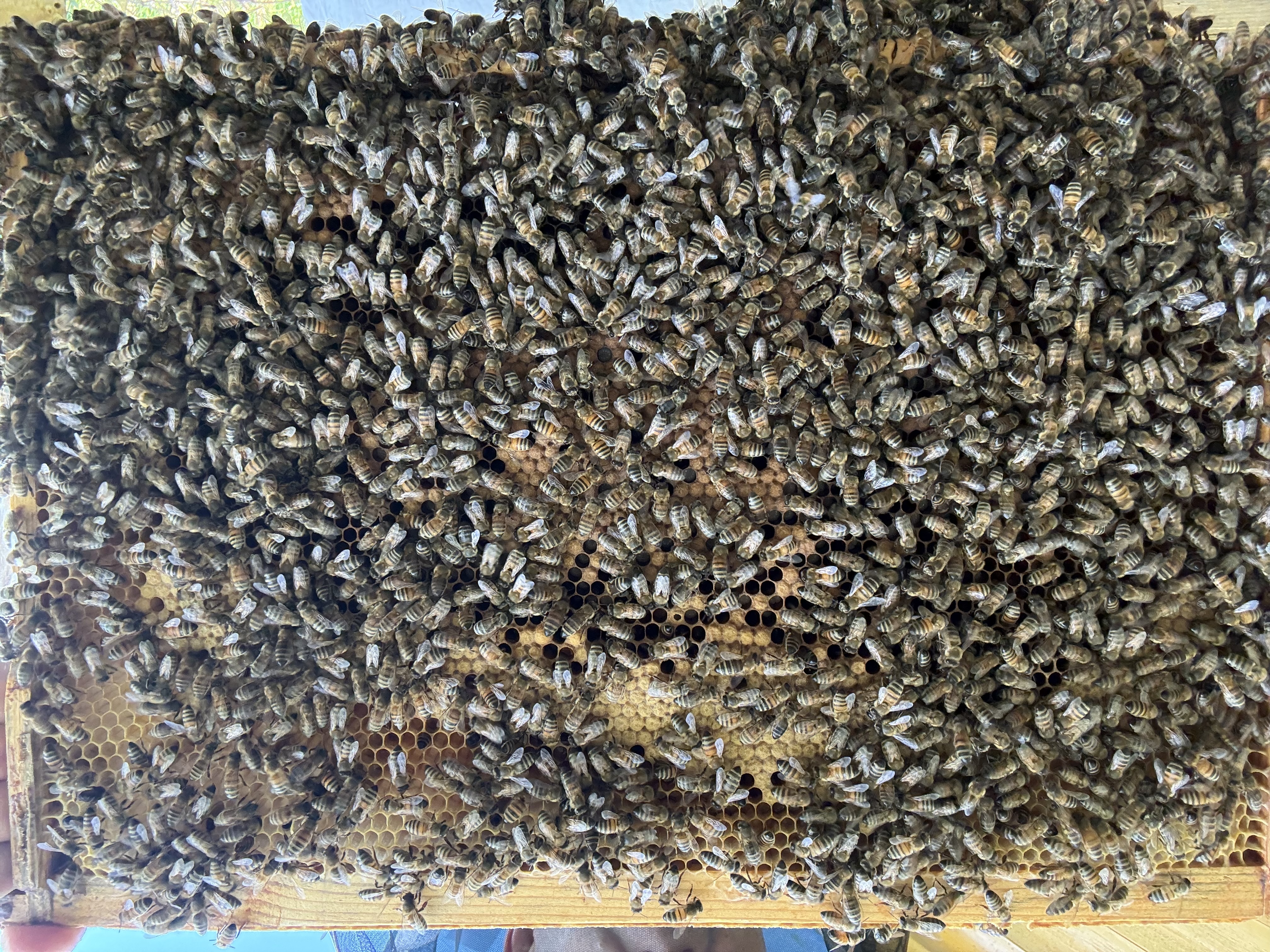
Side B
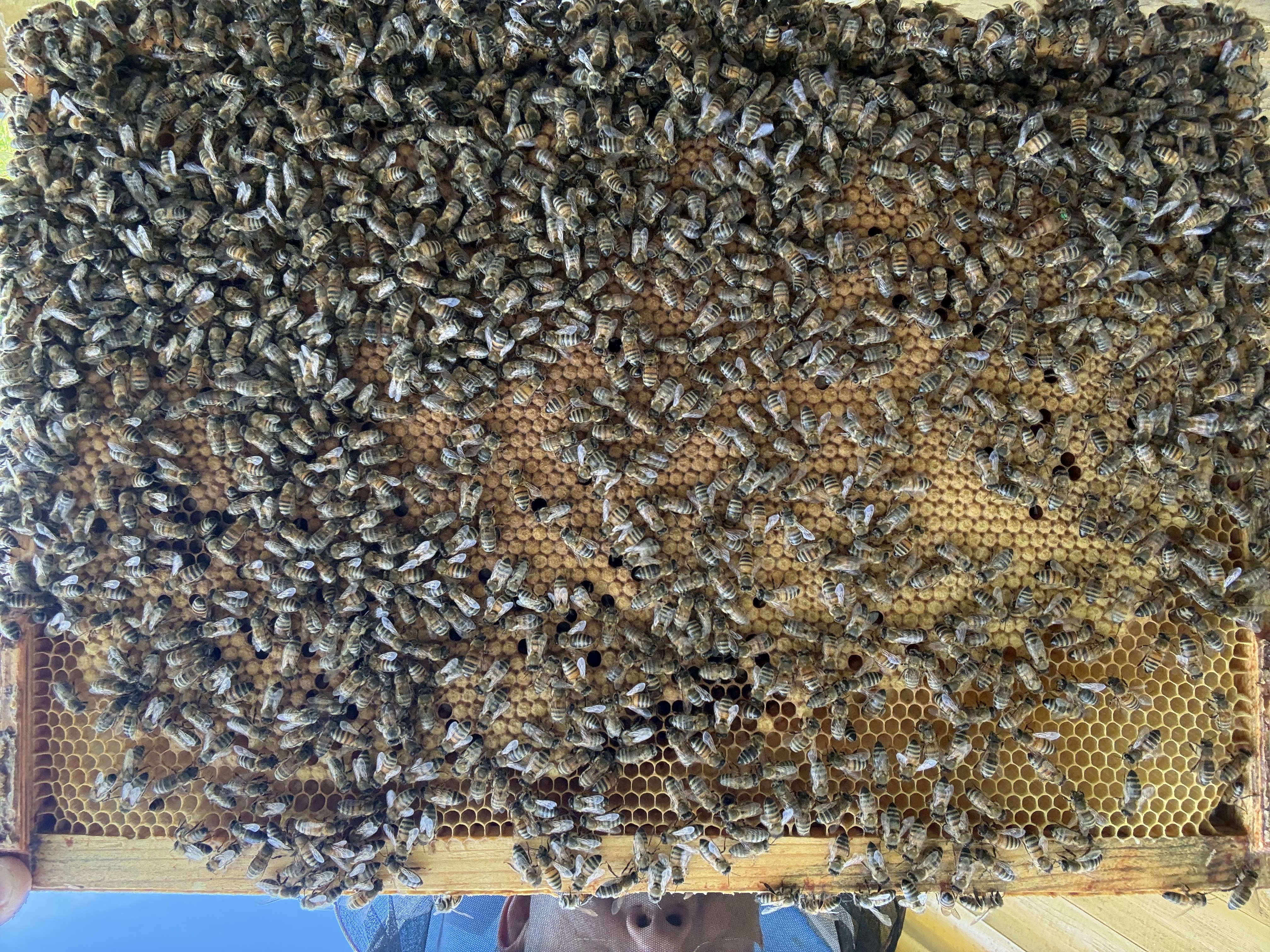
Side A
This side is densely covered with bees, revealing a significant central patch of capped brood, indicating active rearing.
Side B
The opposite side of the frame is also teeming with bees, primarily focused on a large expanse of capped brood with some signs of emerging bees and pollen storage.
This frame exhibits strong brood activity on both sides, with a large central area of capped brood suggesting a prolific queen and a growing colony. The frame is heavily populated with worker bees tending to the developing brood.
Frame 3
Side A
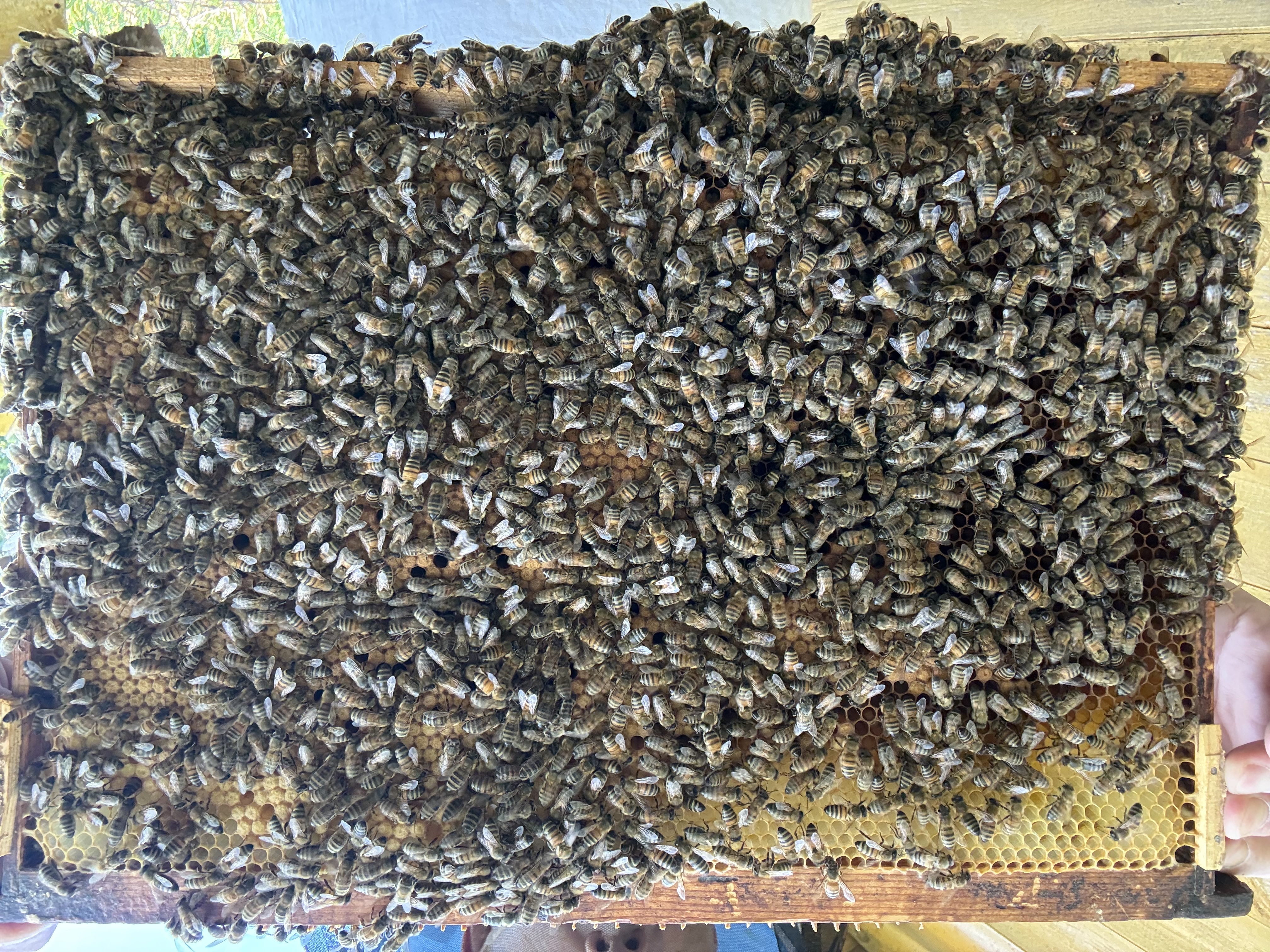
Side B
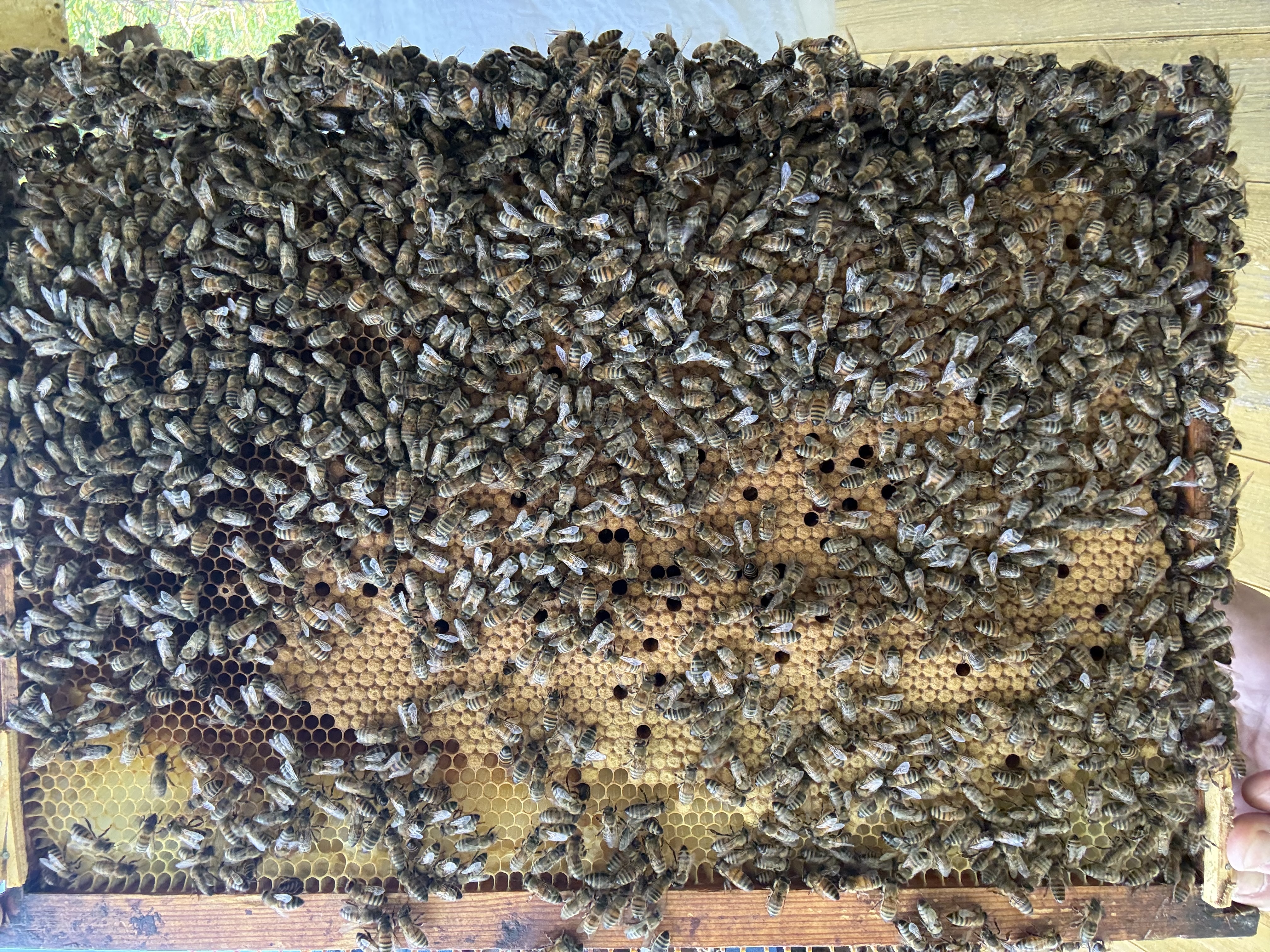
Side A
A large population of bees covers this side of the frame, with a dominant central area of healthy capped brood.
Side B
This side features a robust bee presence over a concentrated area of capped and uncapped brood, suggesting ongoing strong reproduction.
Both sides of this frame are heavily covered with bees, indicating a robust and active colony. The presence of a large, healthy brood pattern, mostly capped, signifies a productive queen and successful rearing.
Frame 4
Side A
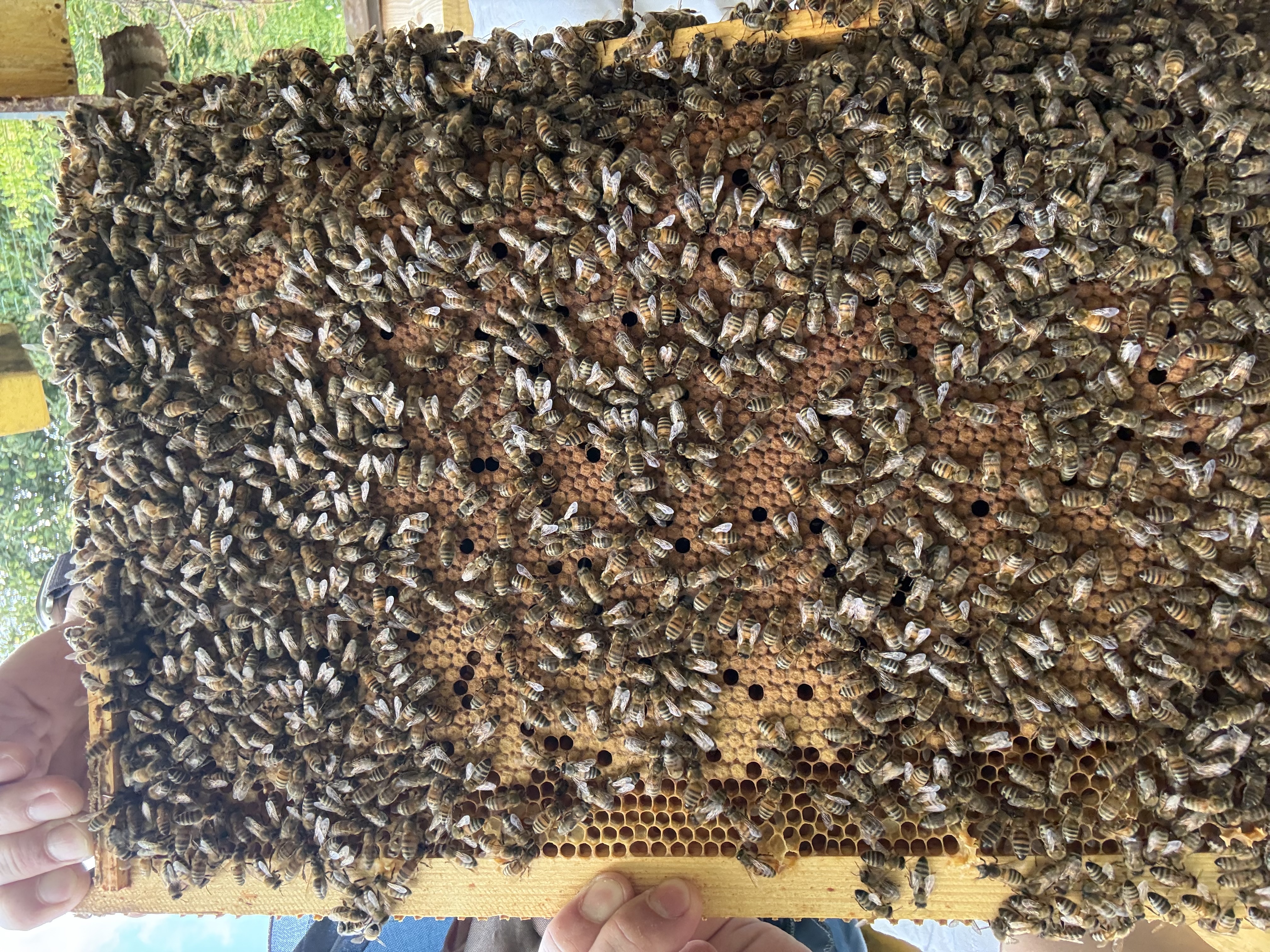
Side B
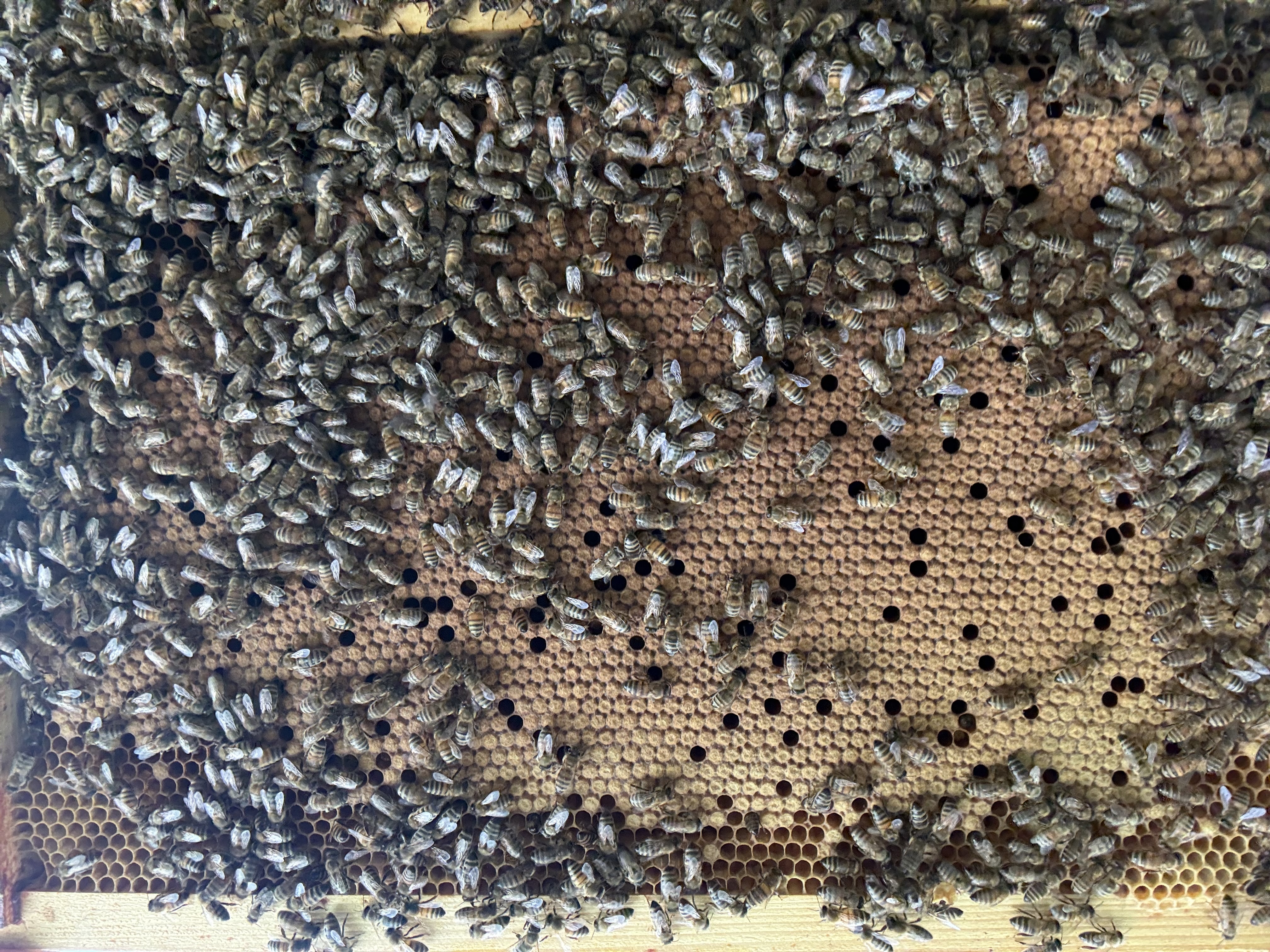
Side A
This side is densely packed with bees, displaying a significant and consistent pattern of capped brood.
Side B
The opposite side of the frame continues to show a high bee density with a central area dominated by capped brood and some signs of emergence.
This frame shows consistent, strong brood production on both sides, with a large proportion of cells containing capped brood. The active bee coverage on both surfaces highlights the colony's vitality and ongoing expansion.
Frame 5
Side A
Side B
Side A
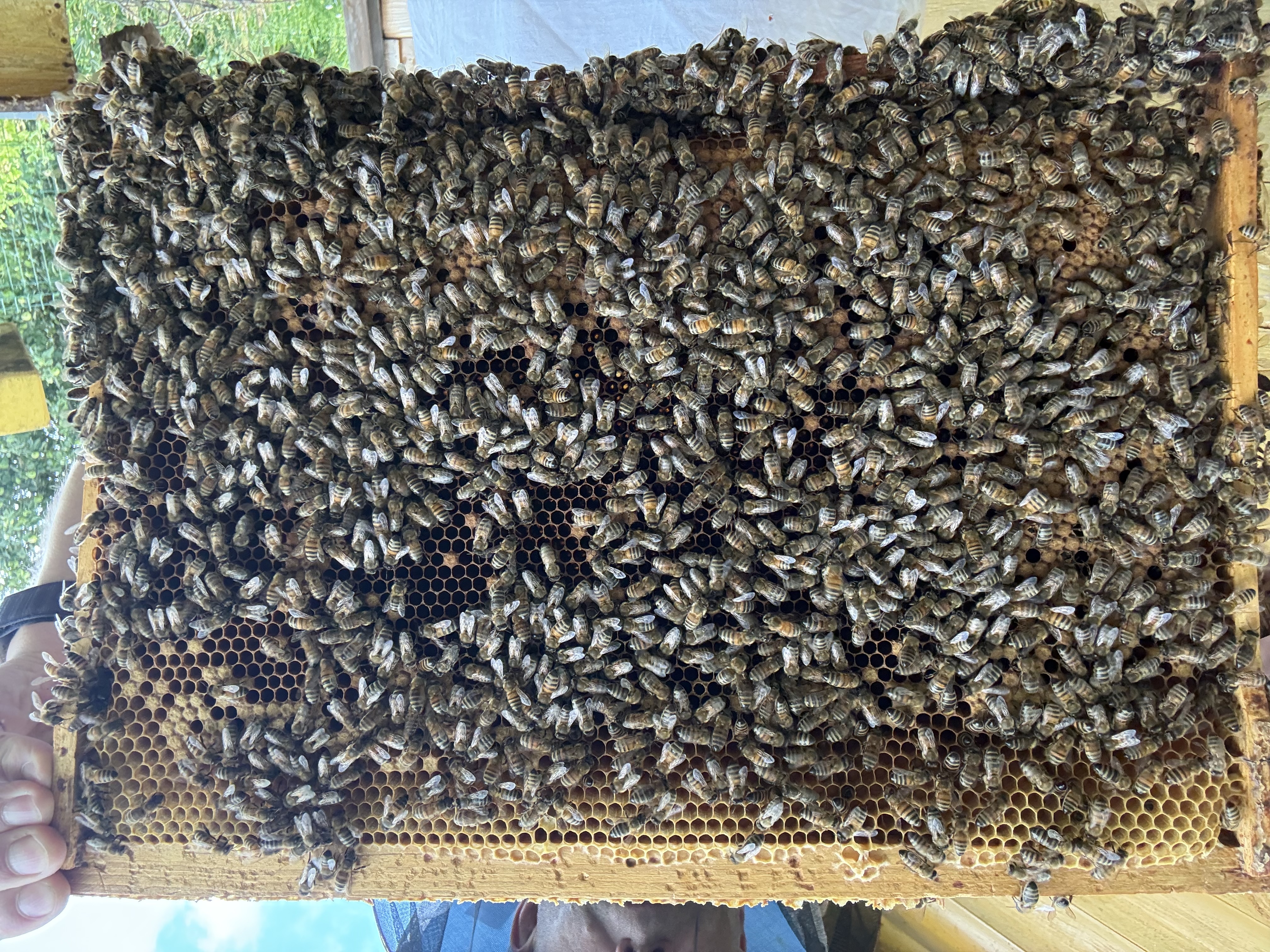
A large number of bees are visible on this frame side, actively working on a central brood pattern with some capped honey in the upper right corner.
Side B
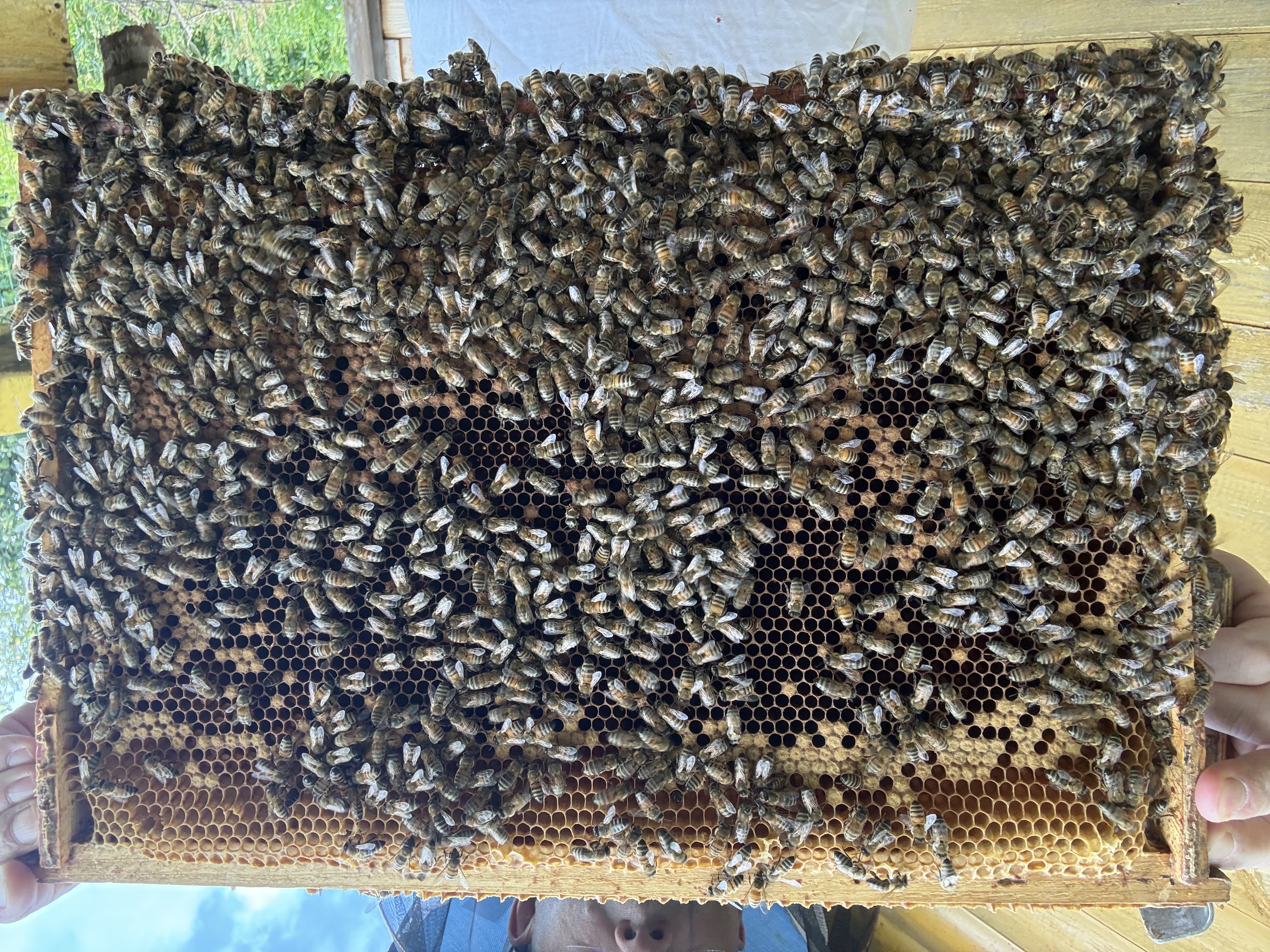
The reverse side also exhibits a dense bee population over a central brood area, complemented by patches of capped honey.
Both sides of this frame indicate a healthy colony with significant brood development in the central regions. The presence of capped honey on the upper and side areas suggests successful foraging and storage efforts.
Frame 6
Side A
Side B
Side A
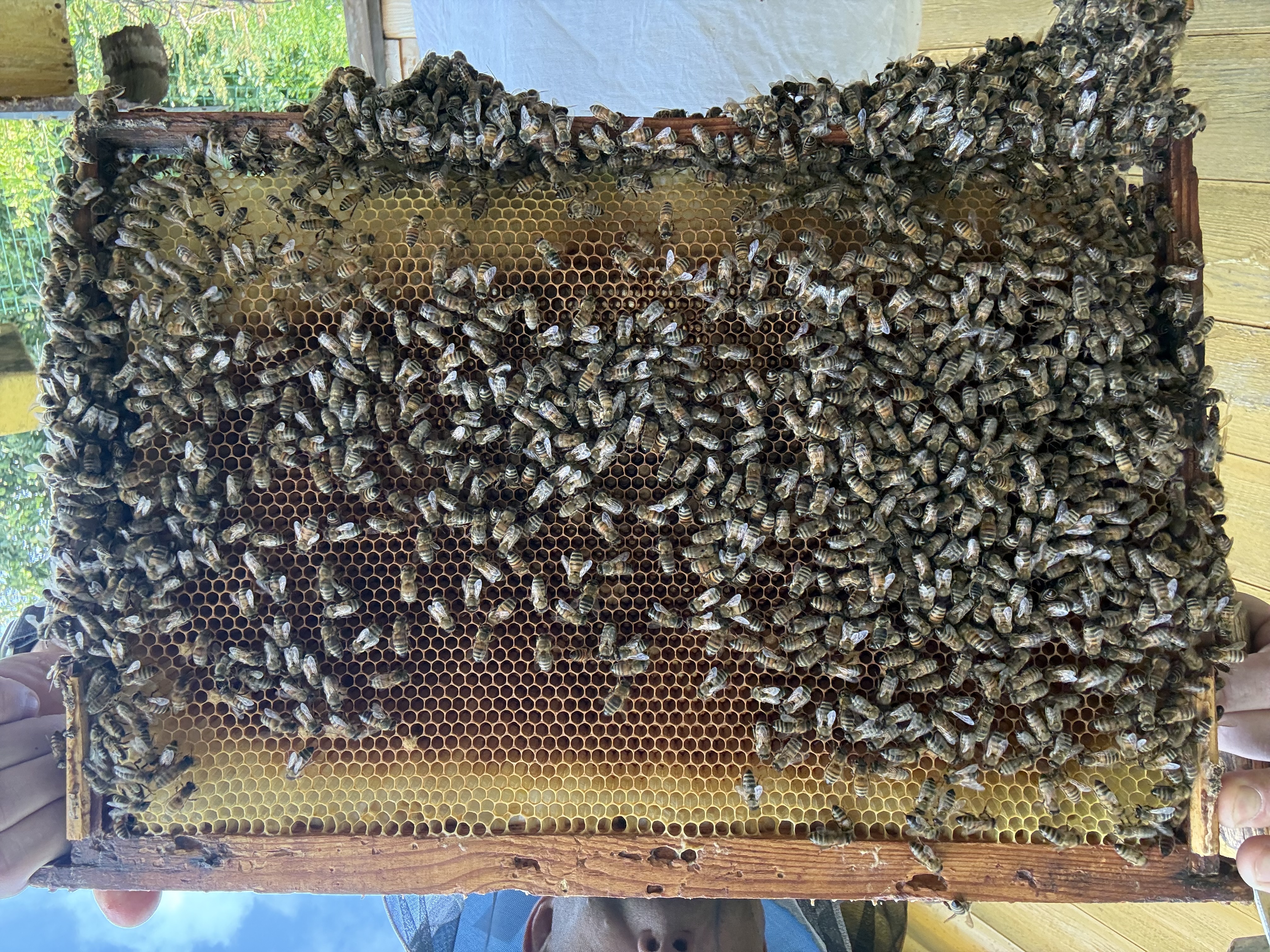
This side of the frame is bustling with bees, focusing on a central brood area, with some stored honey visible towards the top.
Side B
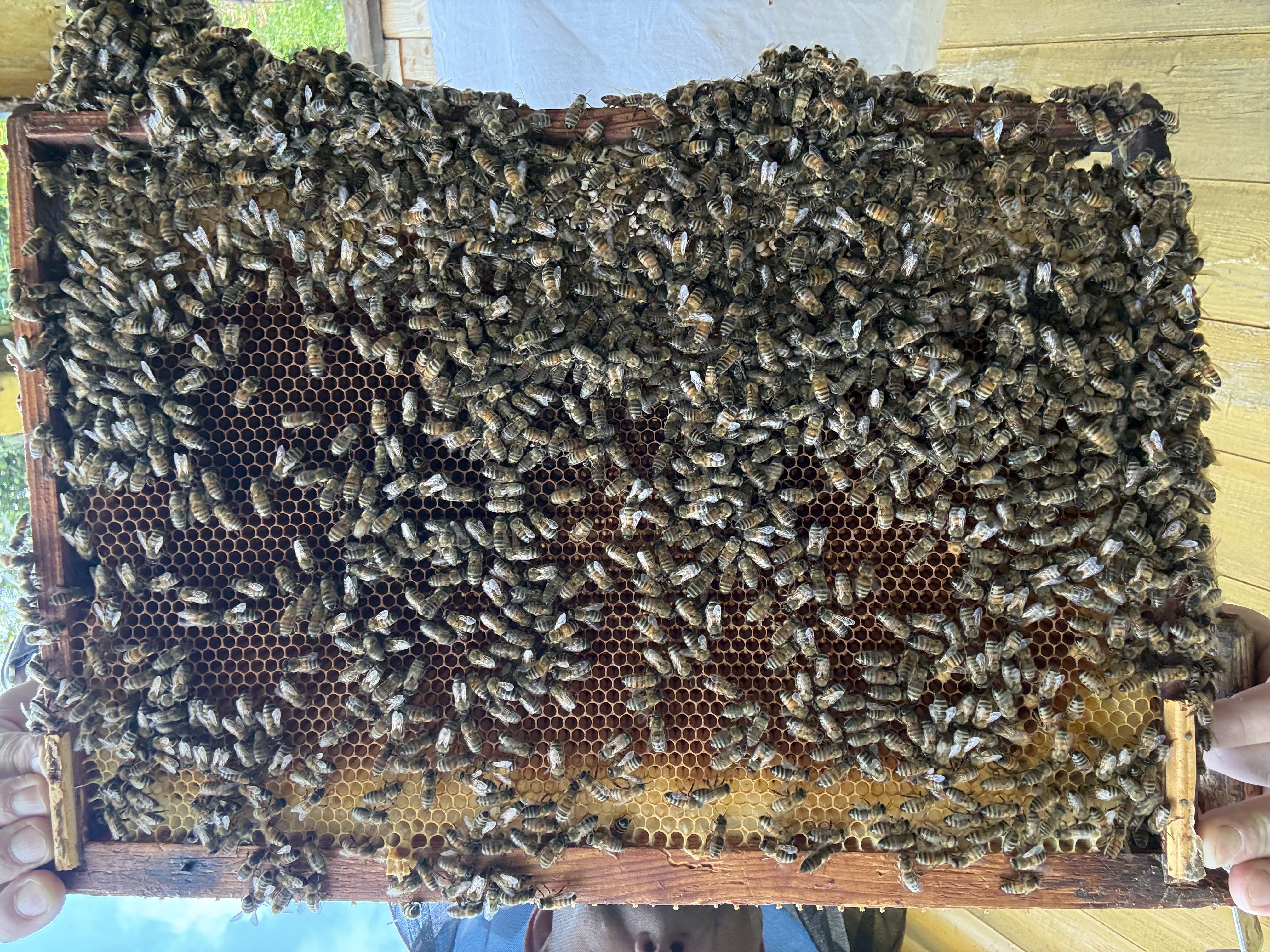
The opposite side of the frame also shows a high density of bees attending to a central brood pattern, surrounded by patches of honey and empty cells.
This frame displays active brood rearing in its central parts, heavily covered by bees on both sides. The presence of both brood and honey indicates a balanced frame supporting both reproduction and resource storage.
Frame 7
Side A
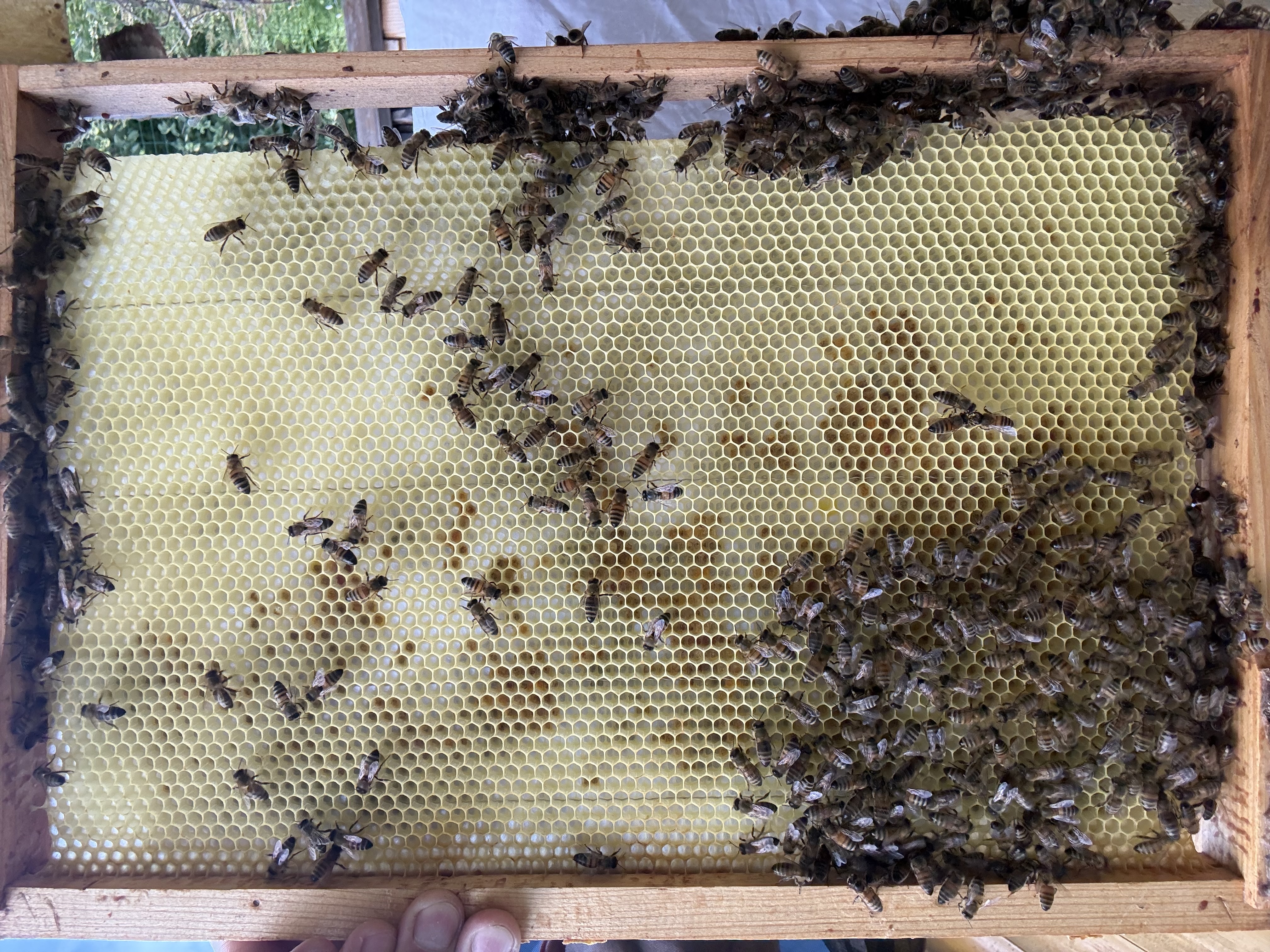
Side B
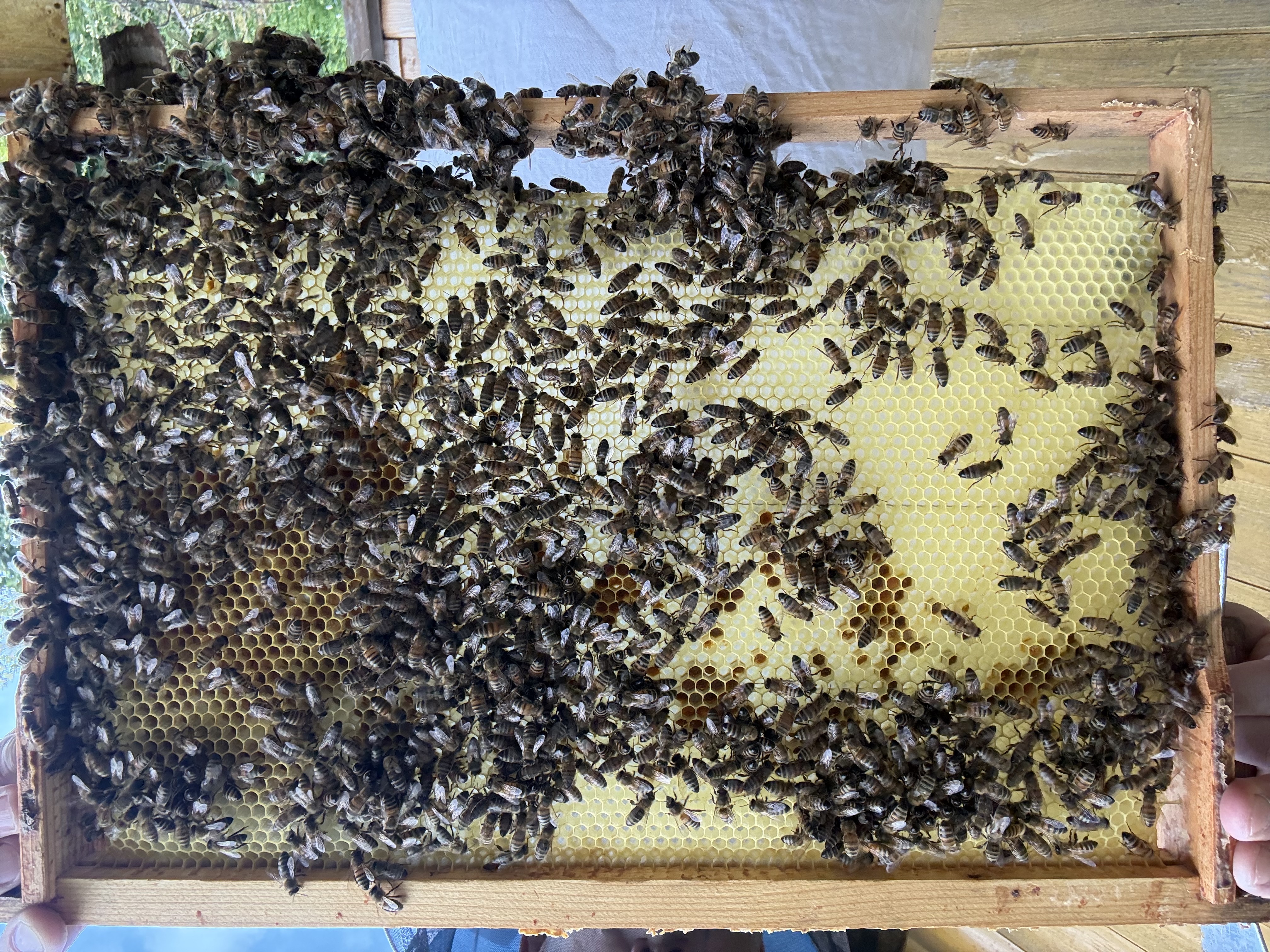
Side A
This frame side shows newly drawn comb with a sparser bee population and very limited brood or stored resources.
Side B
The reverse side of the frame largely consists of new comb, with a low number of bees present and minimal signs of activity in terms of brood or honey.
This frame appears to be a newly introduced or drawn out comb, showing sparse bee activity on both sides. There is minimal to no brood or honey stores, indicating it's likely a fresh foundation for future expansion.
Frame 8
Side A
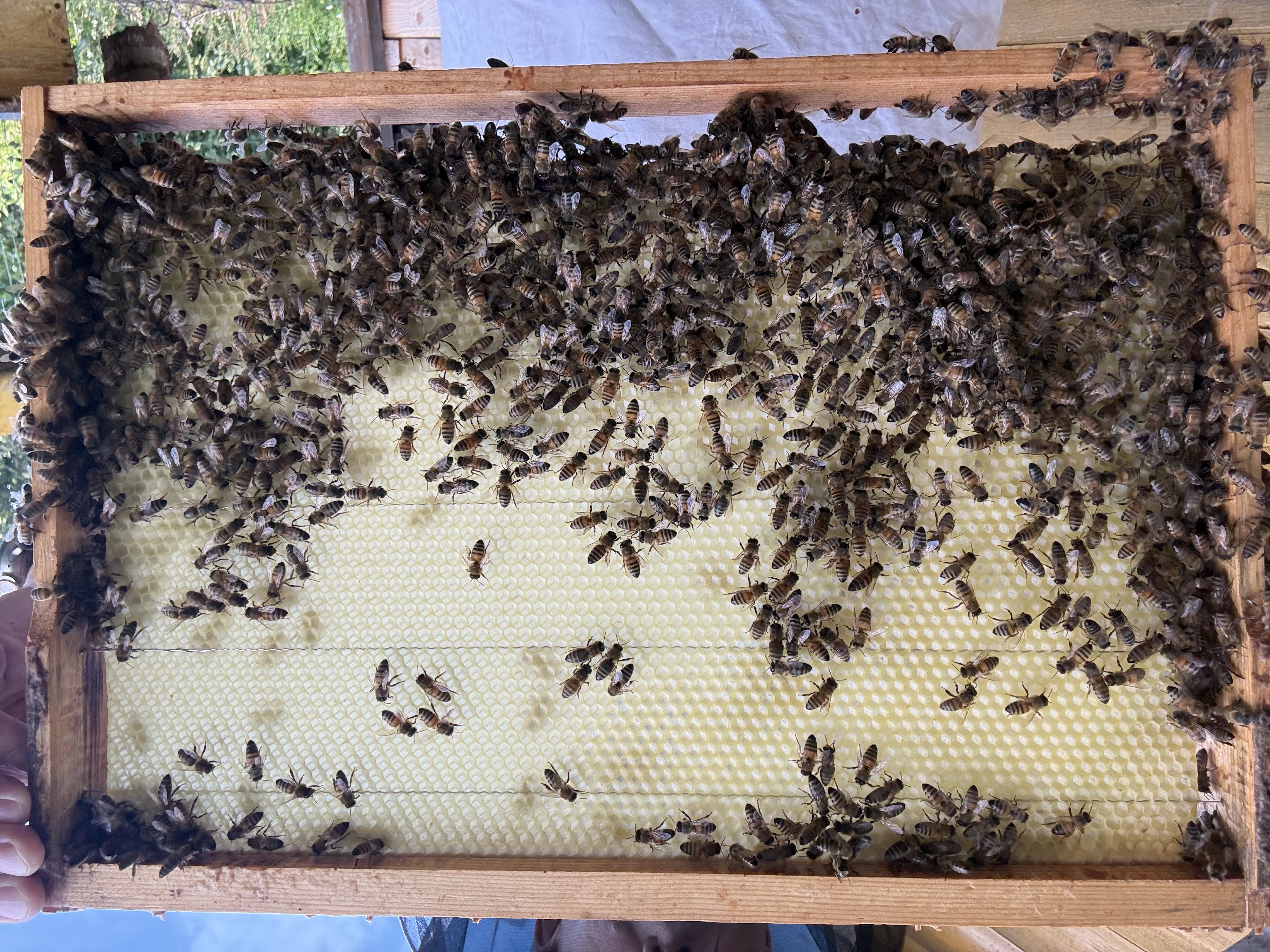
Side B
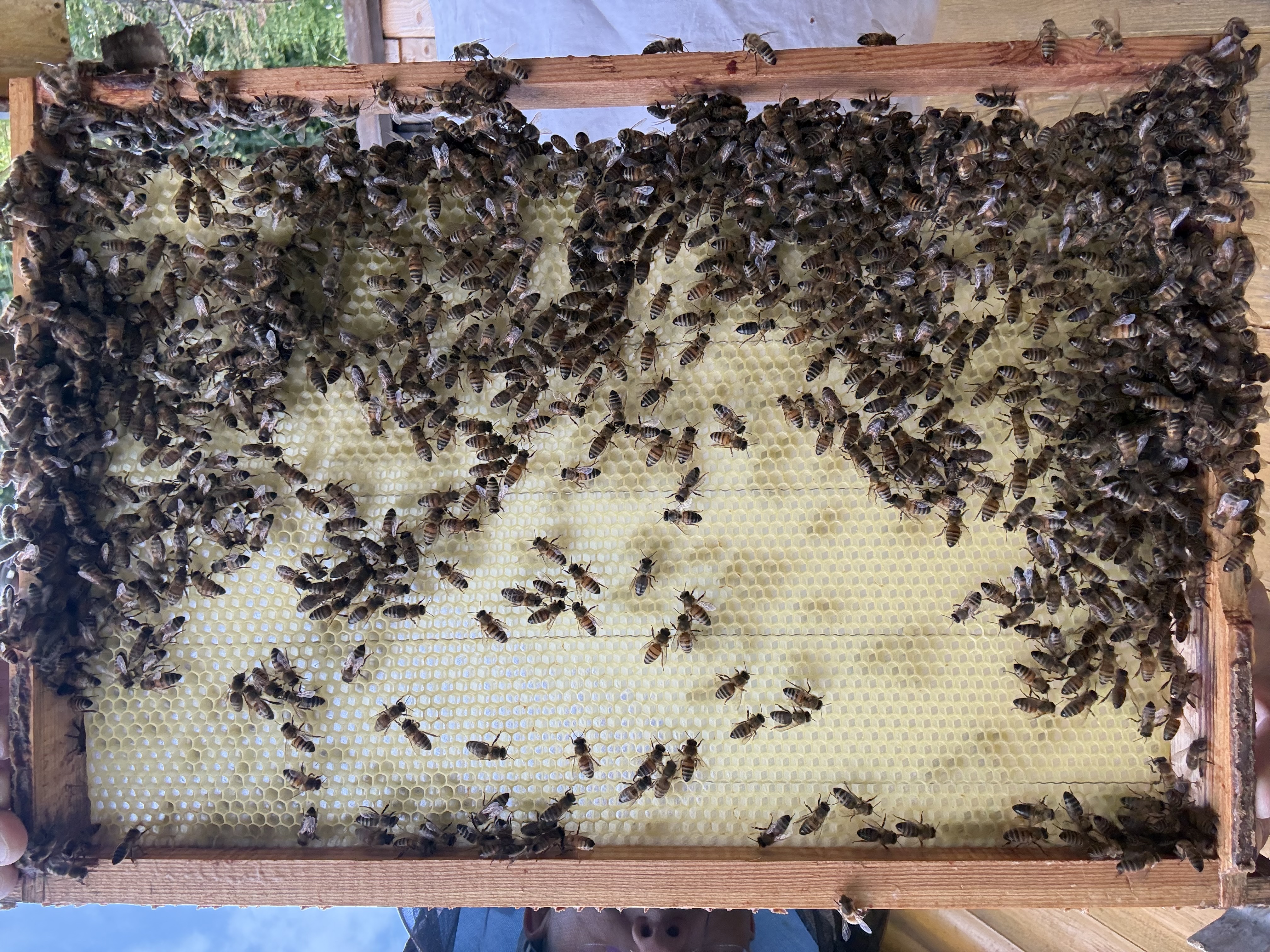
Side A
This side of the frame shows a moderate number of bees on drawn comb, with visible pollen and some empty cells but no clear brood.
Side B
The final side of the frame has a moderate bee count on drawn comb, featuring areas of pollen and empty cells, with no distinct brood pattern.
This frame is populated with a moderate number of bees on drawn comb, with a focus on pollen storage rather than brood rearing on both sides. It appears to be a resource frame, possibly for pollen and nectar storage, rather than an active brood frame.
Frame 9
Side A
Side B
Side A
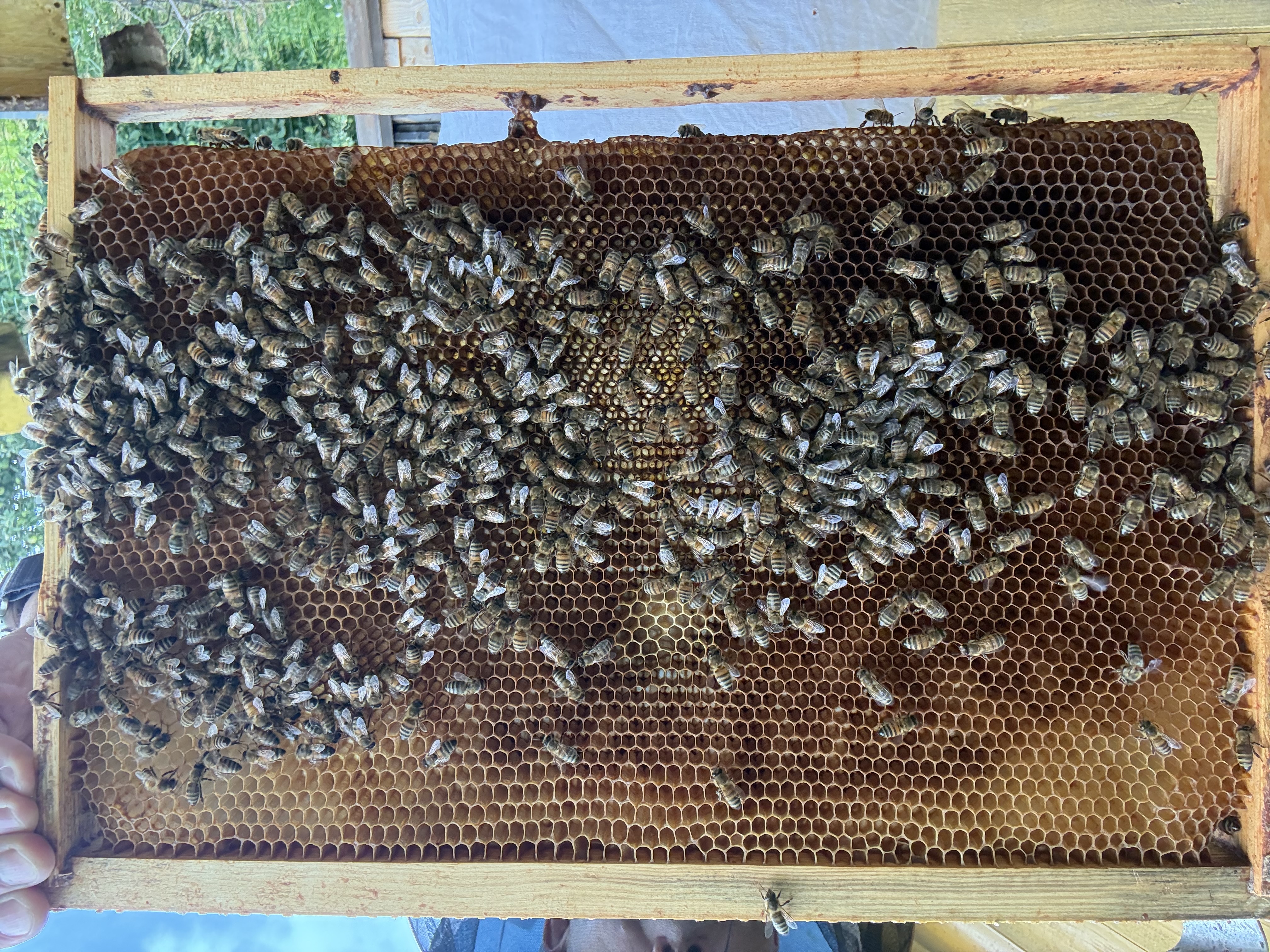
This side of the frame exhibits a dense cluster of bees, actively tending to a substantial area of brood in the center.
Side B
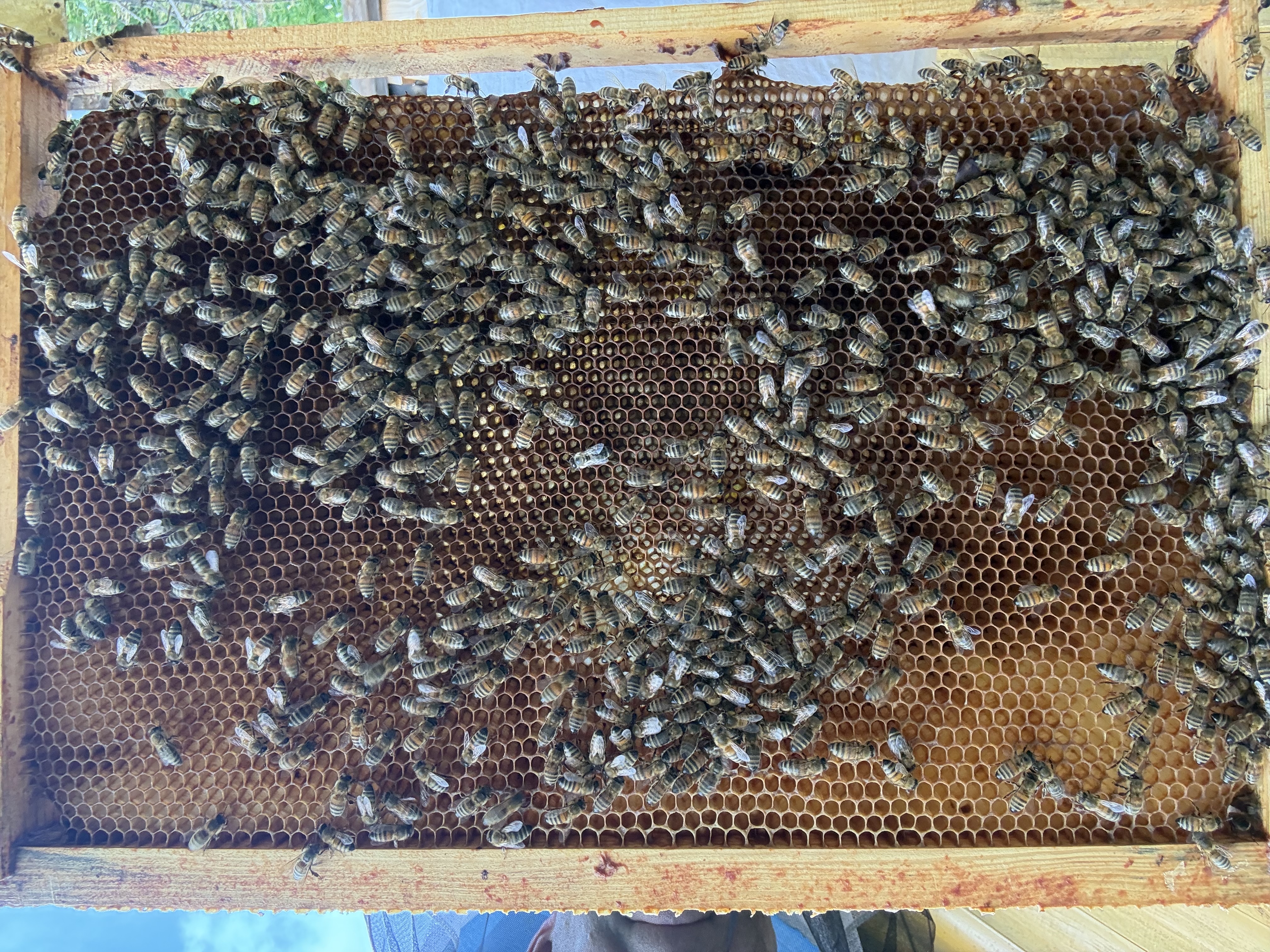
The second side of the first frame also shows a healthy bee population surrounding a central brood patch, indicating consistent activity.
Both sides of this frame display a robust bee population focused on a central area of brood. This indicates a well-established and active brood nest within the colony.
Frame 10
Side A
Side B
Side A
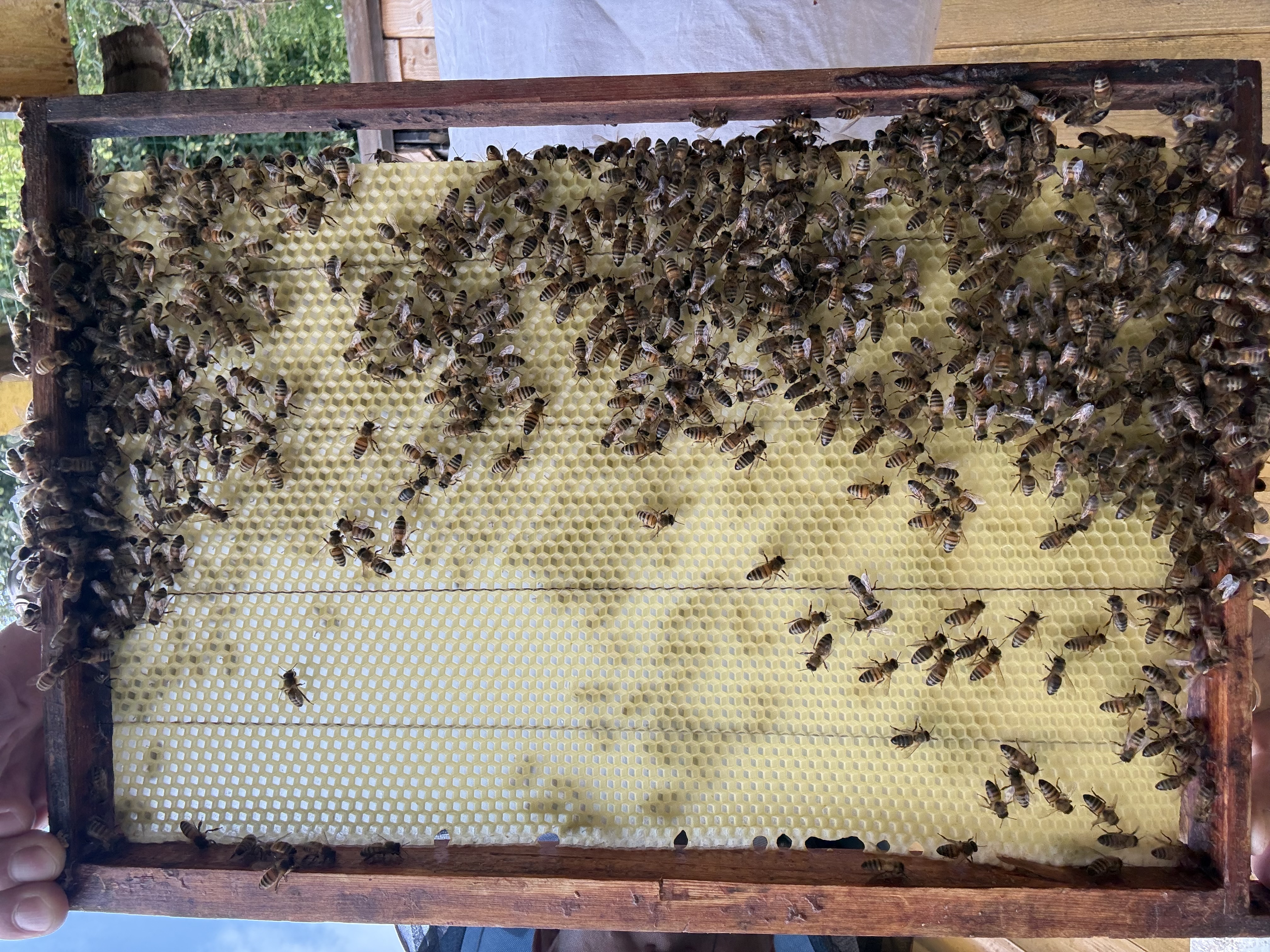
A good number of bees are present on this side, actively drawing out new comb on the foundation, with some cells possibly containing very young brood or stored resources.
Side B
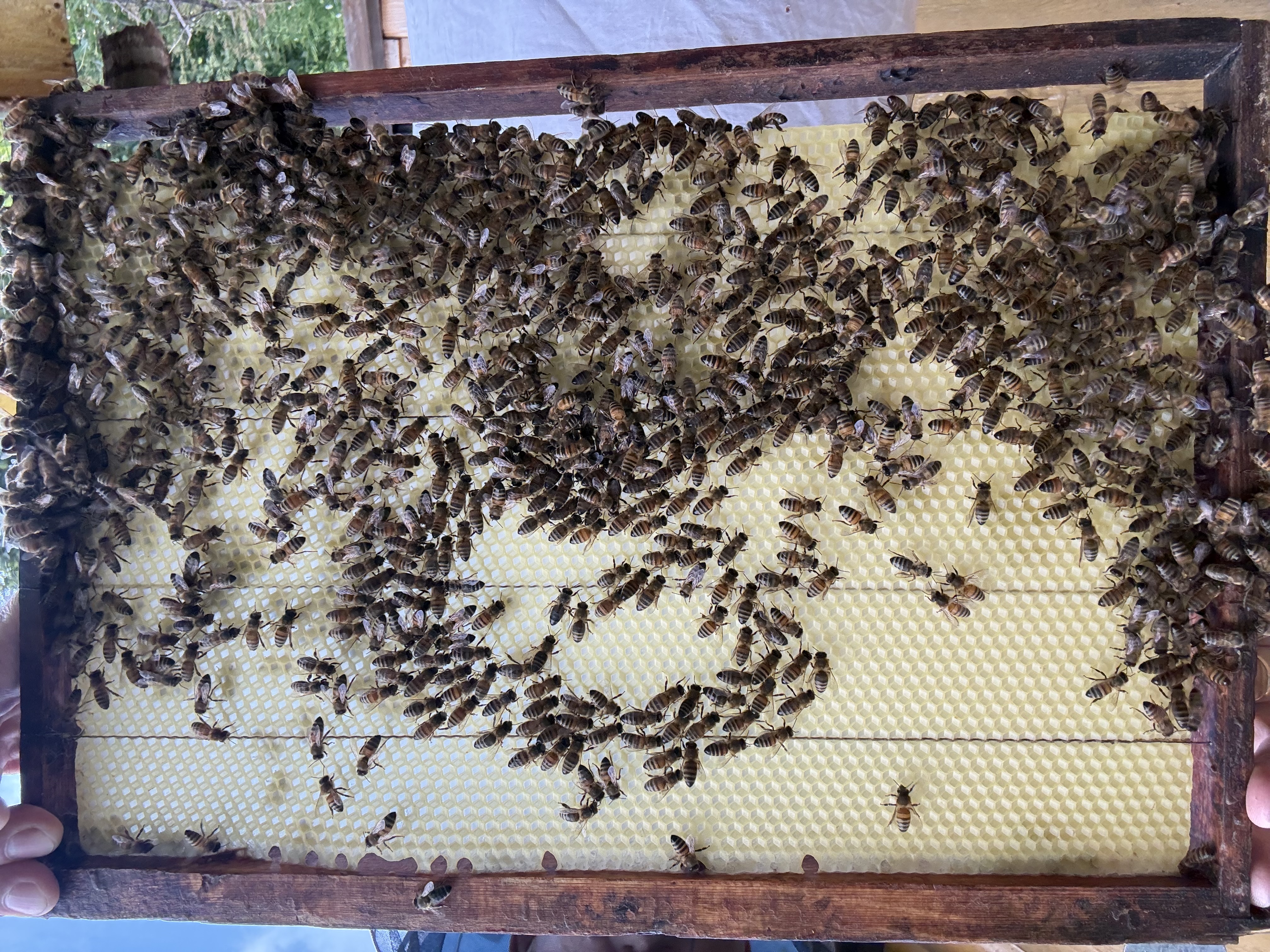
This side of the second frame shows bees continuing to build comb on the foundation, with scattered bees and minimal visible capped brood or honey.
This frame primarily features bees actively drawing out new comb on both sides, suggesting an expansion phase of the hive. While bees are working diligently, there are no extensive areas of mature brood, indicating it may be a newer comb dedicated to growth.