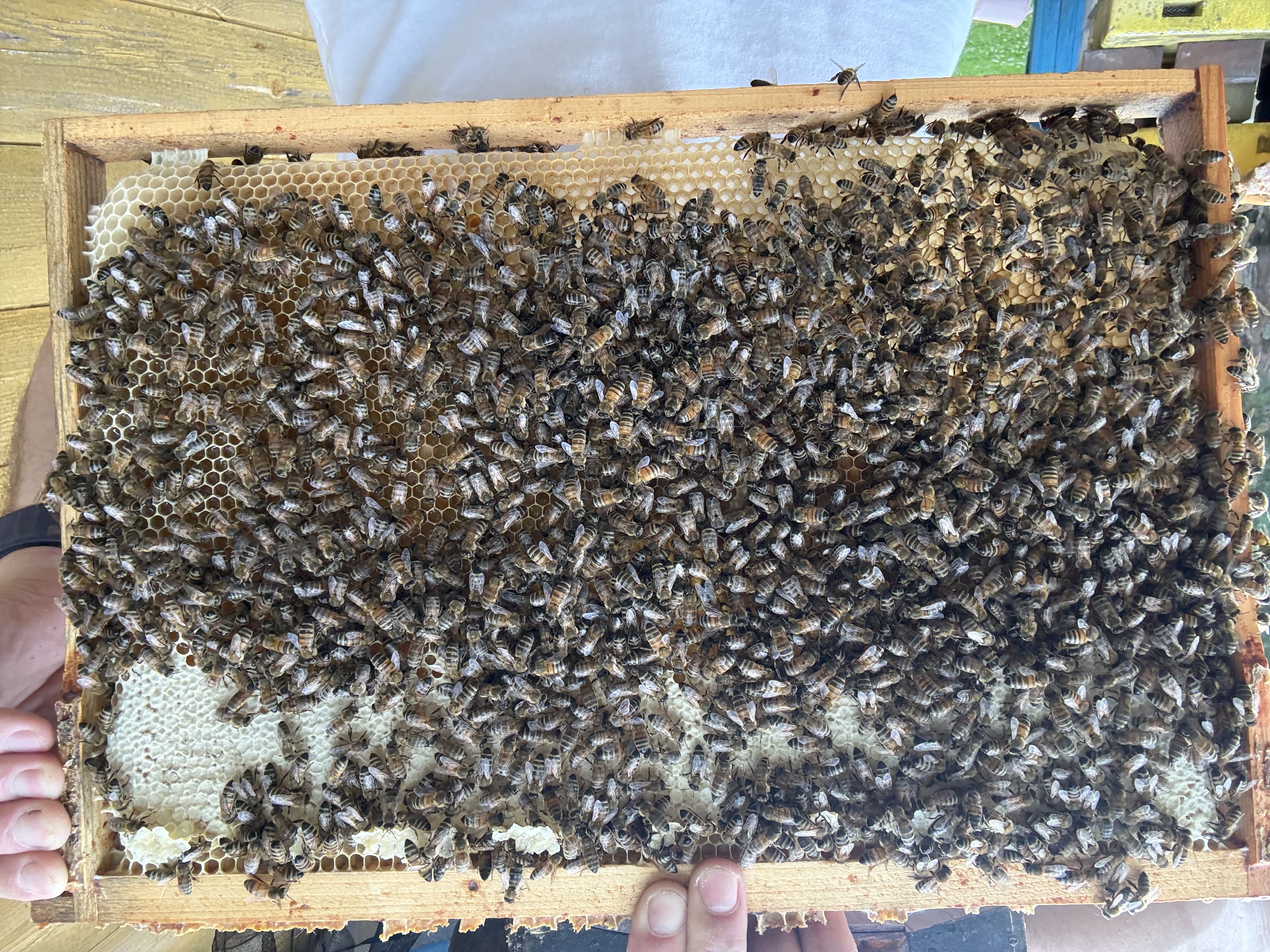
Inspection Results
4 Jul 2026
Hive #0 · 20 frame sides captured
88
Colony Strength
Strong
Immediate supplemental feeding is strongly recommended to address the critically low honey stores. Continue monitoring for visual confirmation of the queen and plan for a Varroa mite test in the near future.
Queen Status
Queen not seen, but her presence is strongly indicated by extensive brood (7 frames).
Brood Pattern
Strong and extensive, with an average of 46% coverage across brood frames.
Honey Stores
Critically low, averaging only 5%.
Varroa Risk
Not assessed, recommend monitoring.
AI Observations
This is a strong colony with a large bee population (6320 bees) and a robust, extensive brood pattern, indicating a healthy and active queen, though she was not directly observed. A significant concern is the critically low level of honey stores, which could pose a risk to the colony's survival.
Frame Analysis — 10 frames
Frame 1
Side A
Side B
Side A
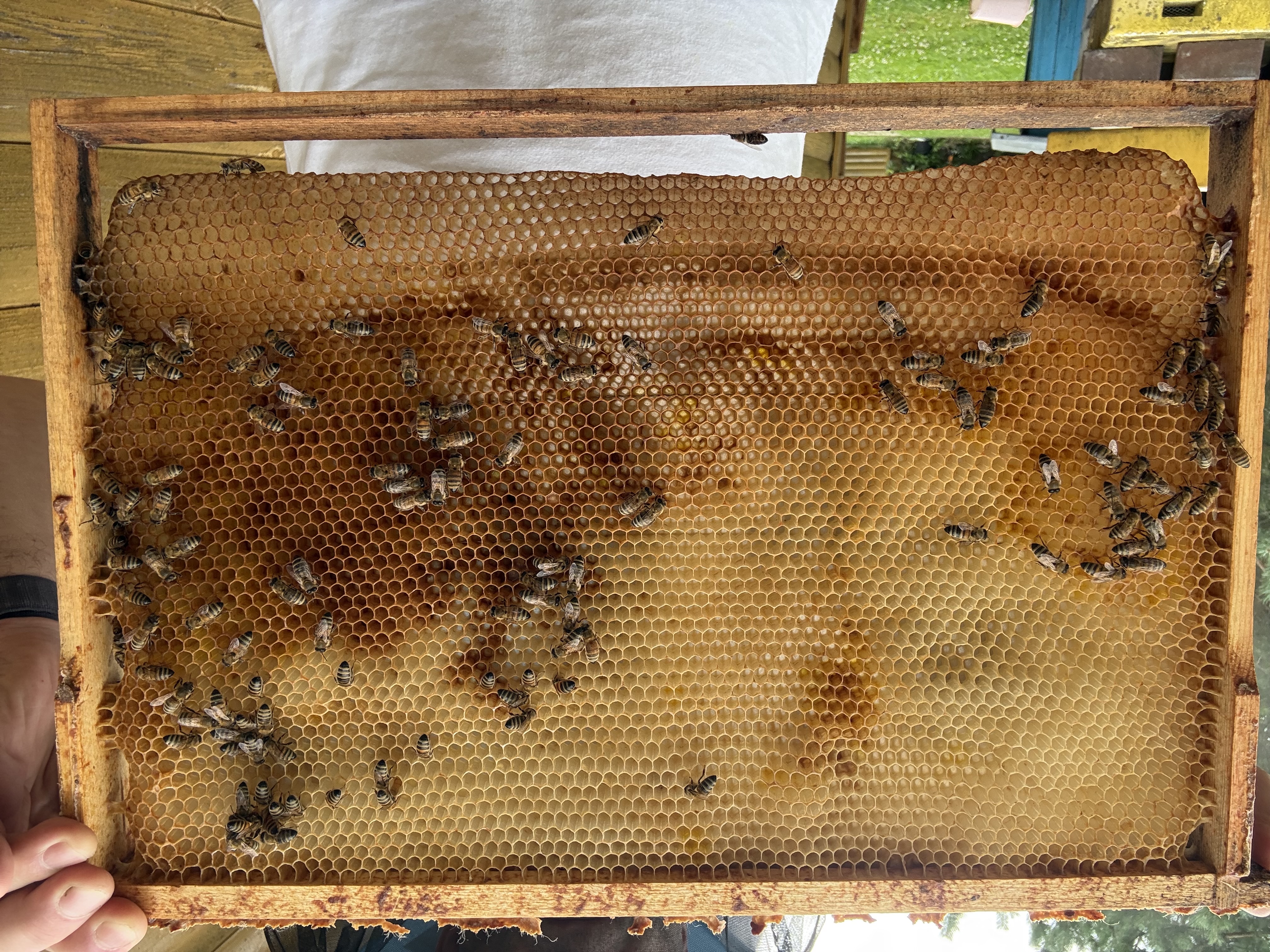
This side of the frame shows a moderate number of bees on a comb with some uncapped brood and honey, mostly in the upper section.
Side B
This side has a denser bee population covering a significant area of brood, with a smaller amount of honey present.
This frame shows active comb building and brood rearing, with more bees and concentrated brood on side B. Both sides indicate a healthy colony utilizing the frame for both storage and reproduction.
Frame 2
Side A
Side B
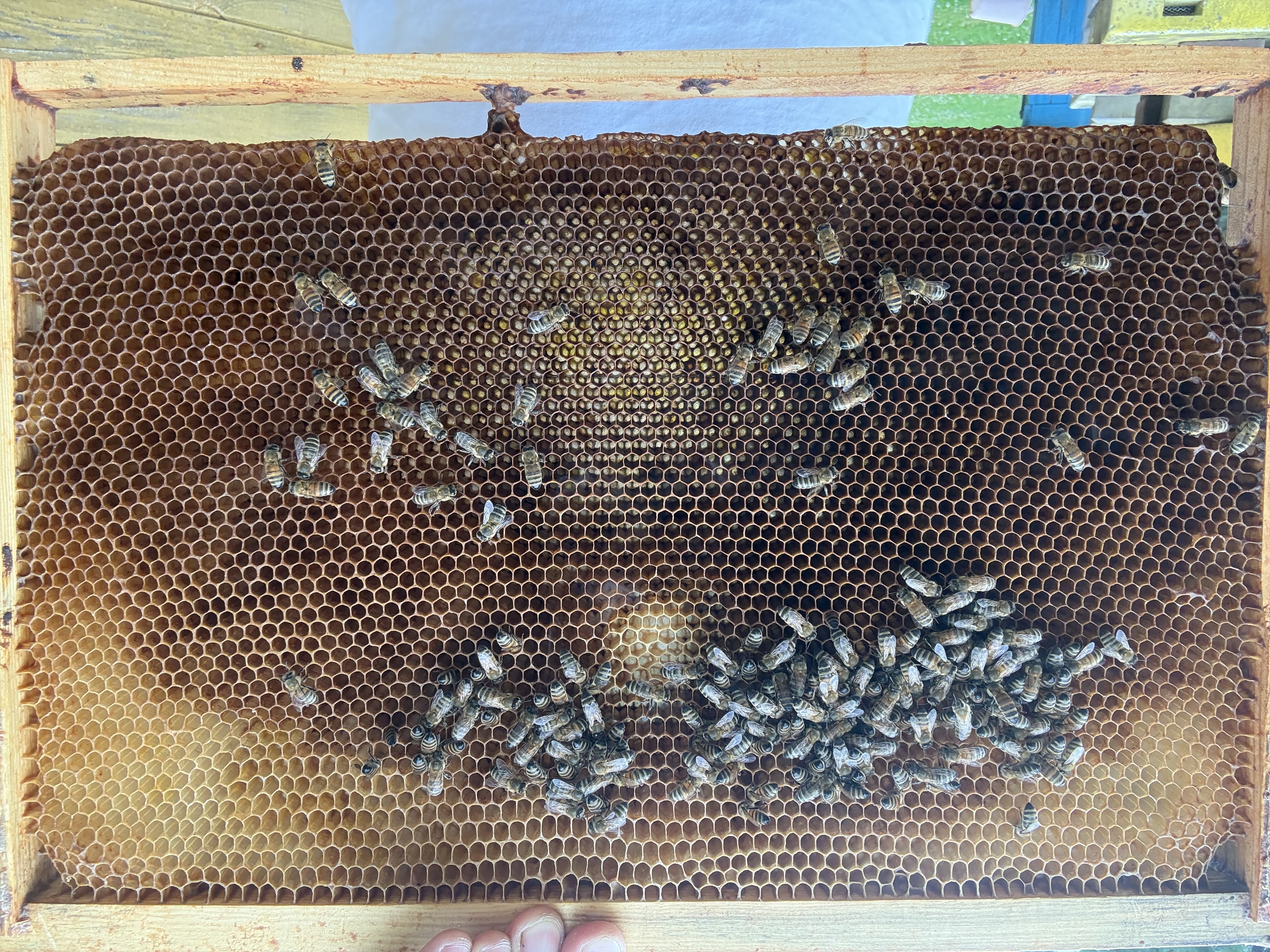
Side A
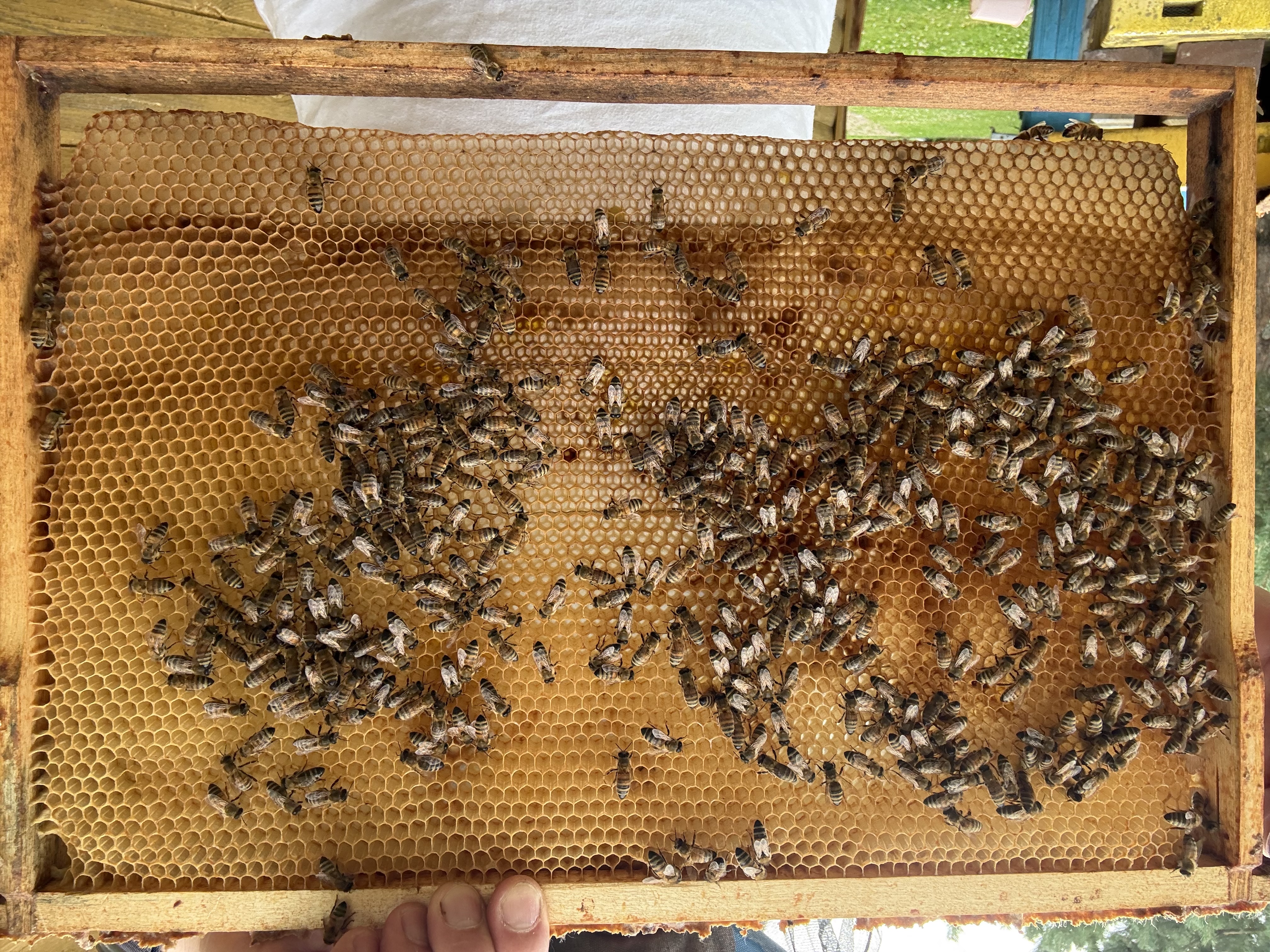
A substantial cluster of bees covers a central area of mostly capped brood, with very little visible honey.
Side B
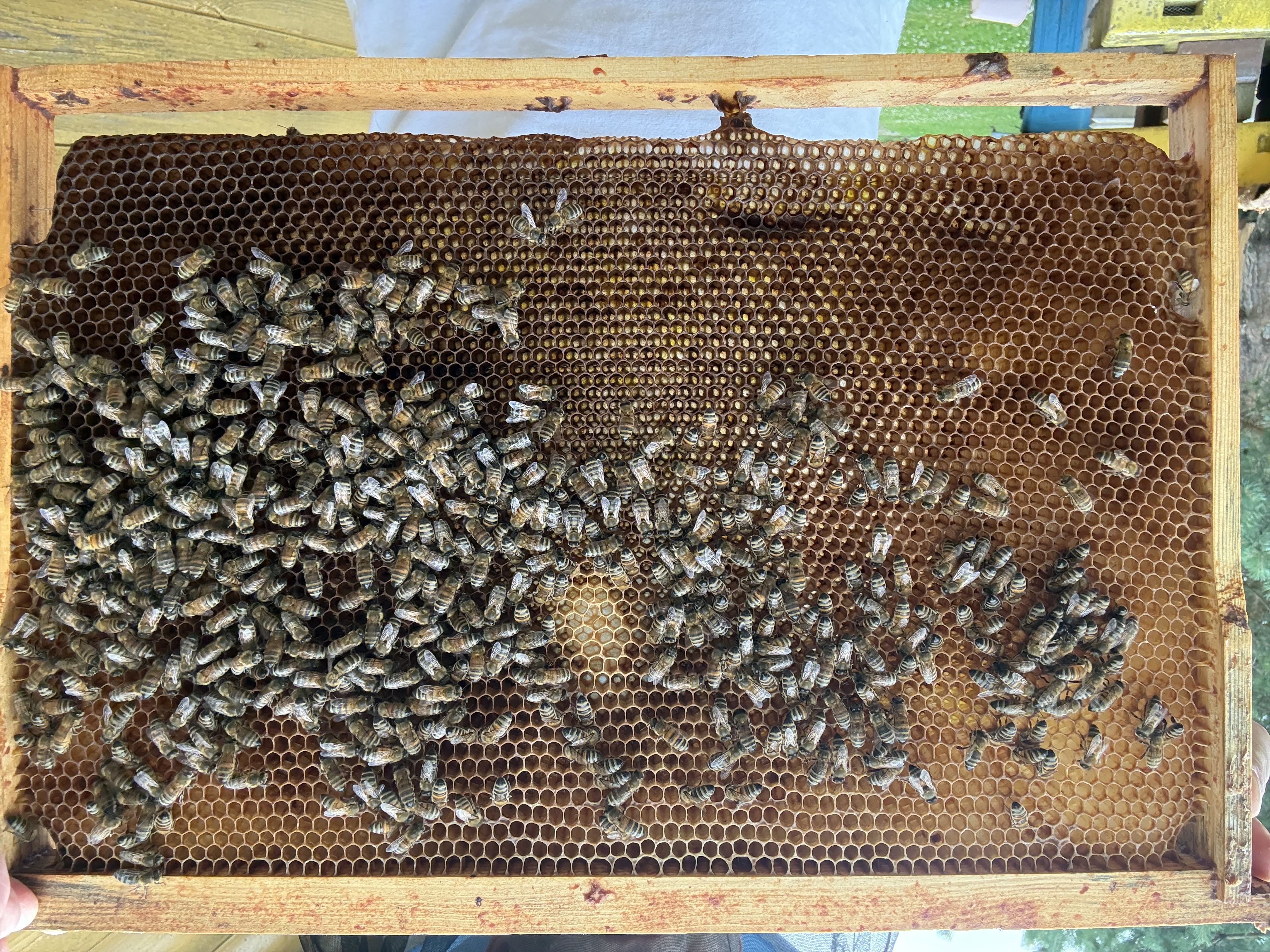
This side shows fewer bees with scattered patches of brood and honey, indicating a less active or partially filled section of the comb.
Side A of this frame is heavily populated with bees and features a robust patch of capped brood, suggesting strong reproductive activity. Side B has fewer bees and more scattered brood and honey, indicating less density or a different function within the hive.
Frame 3
Side A
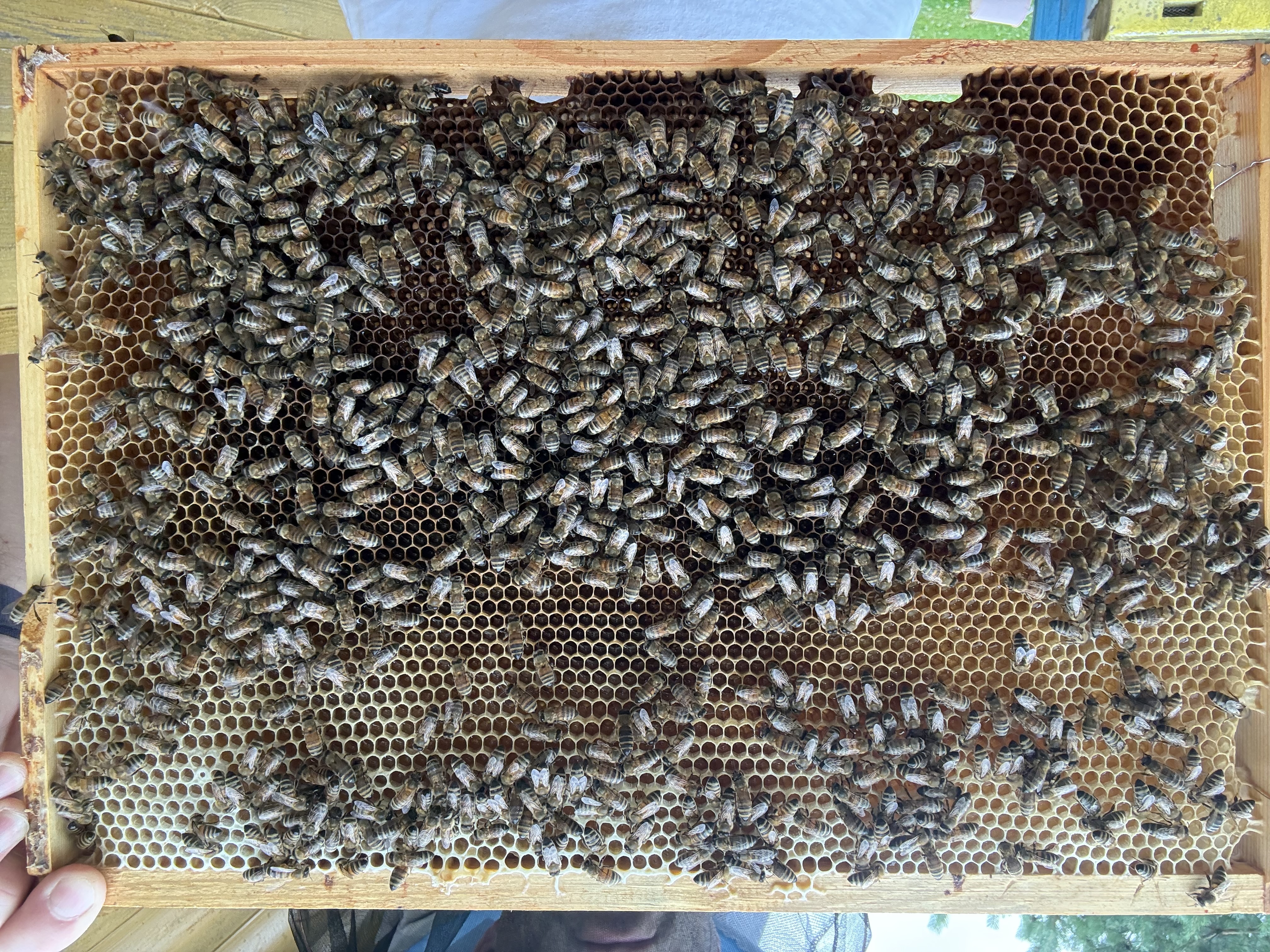
Side B
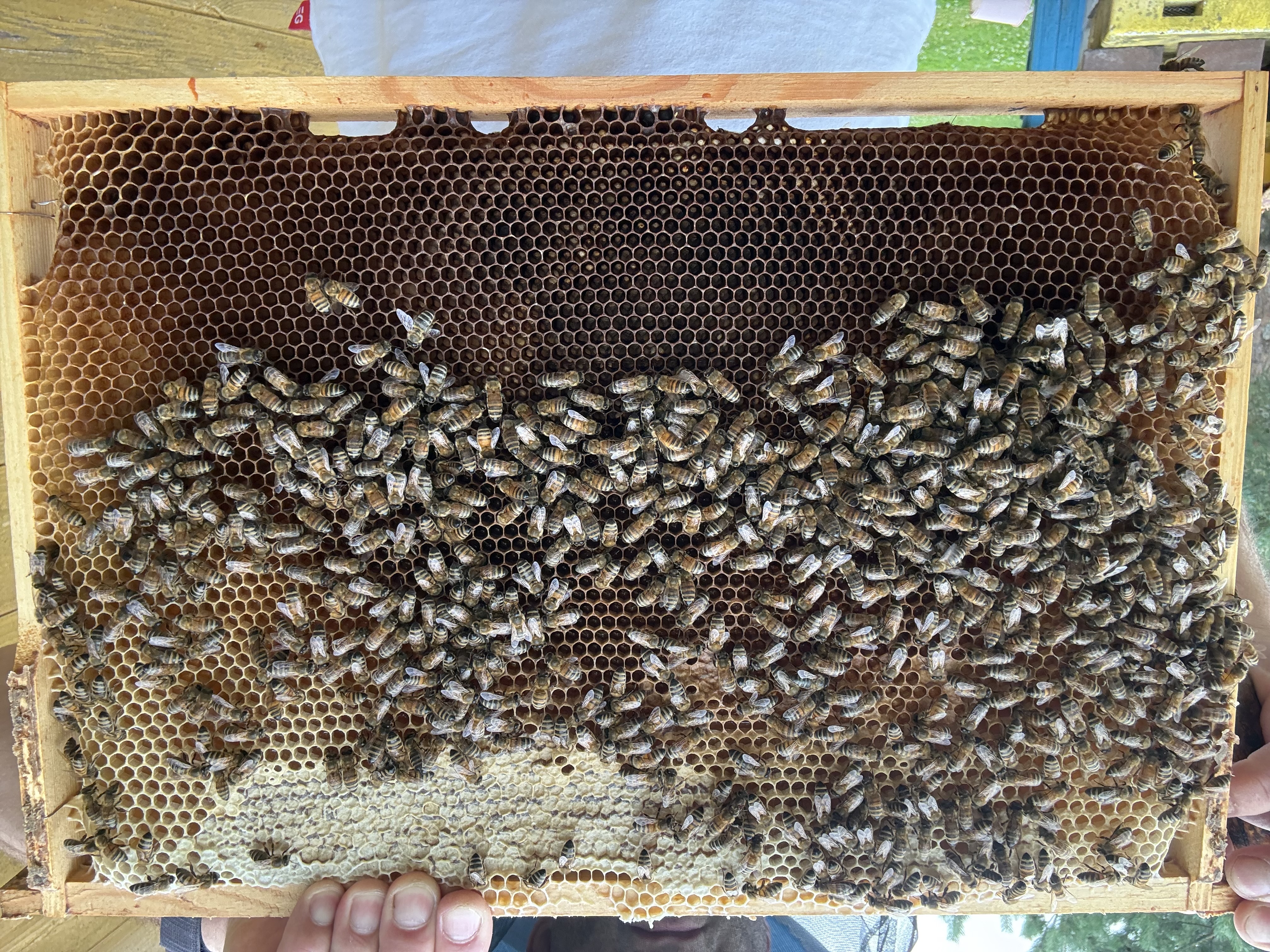
Side A
A large cluster of bees covers a significant portion of the frame, primarily focused on a central area of brood.
Side B
This side is densely populated with bees, displaying a large central brood pattern and a band of capped honey along the top.
Both sides of this frame exhibit substantial bee activity centered around large areas of brood. Side B additionally shows a notable presence of capped honey along the top, suggesting this frame serves both for brood rearing and honey storage.
Frame 4
Side A
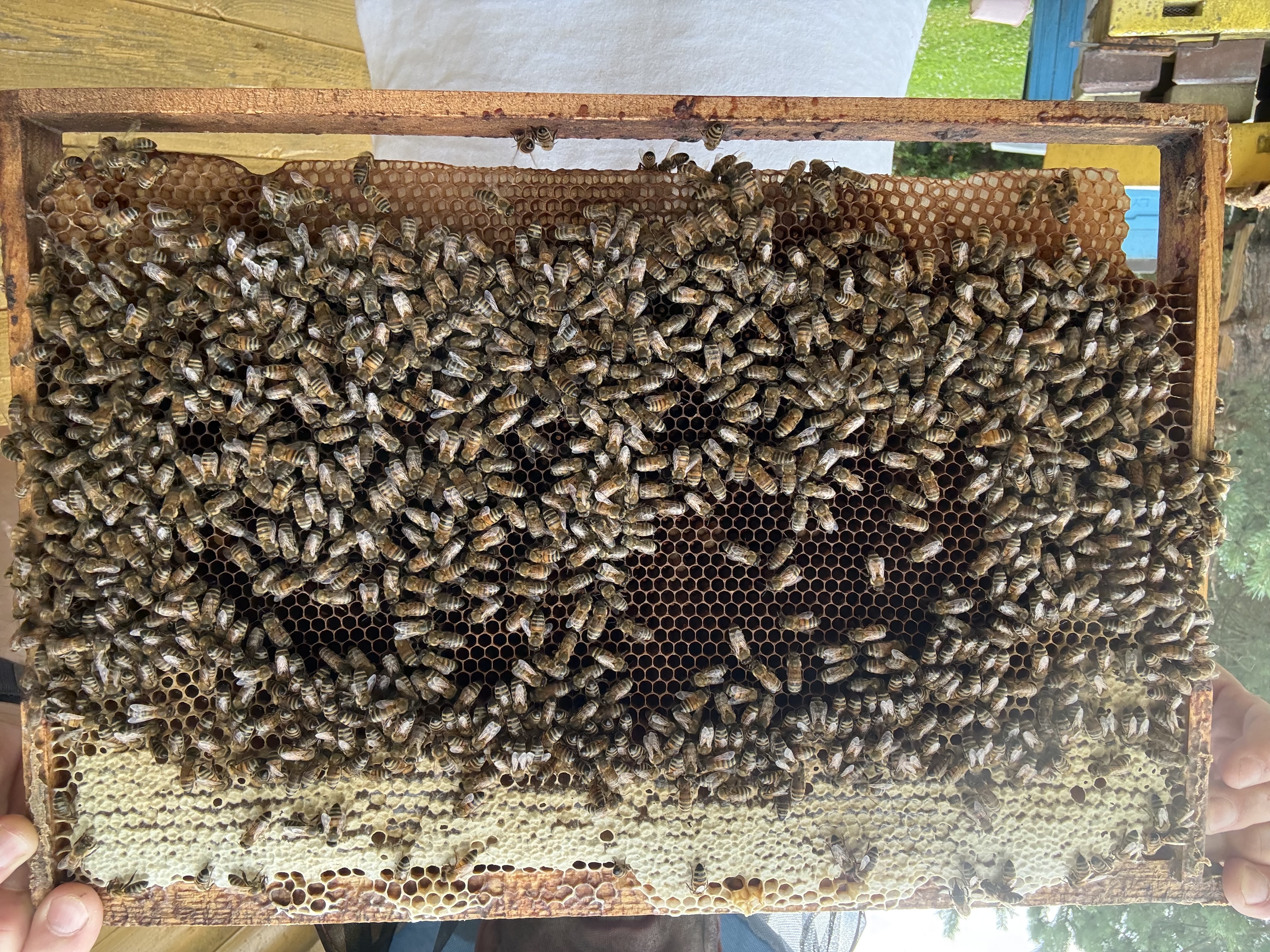
Side B
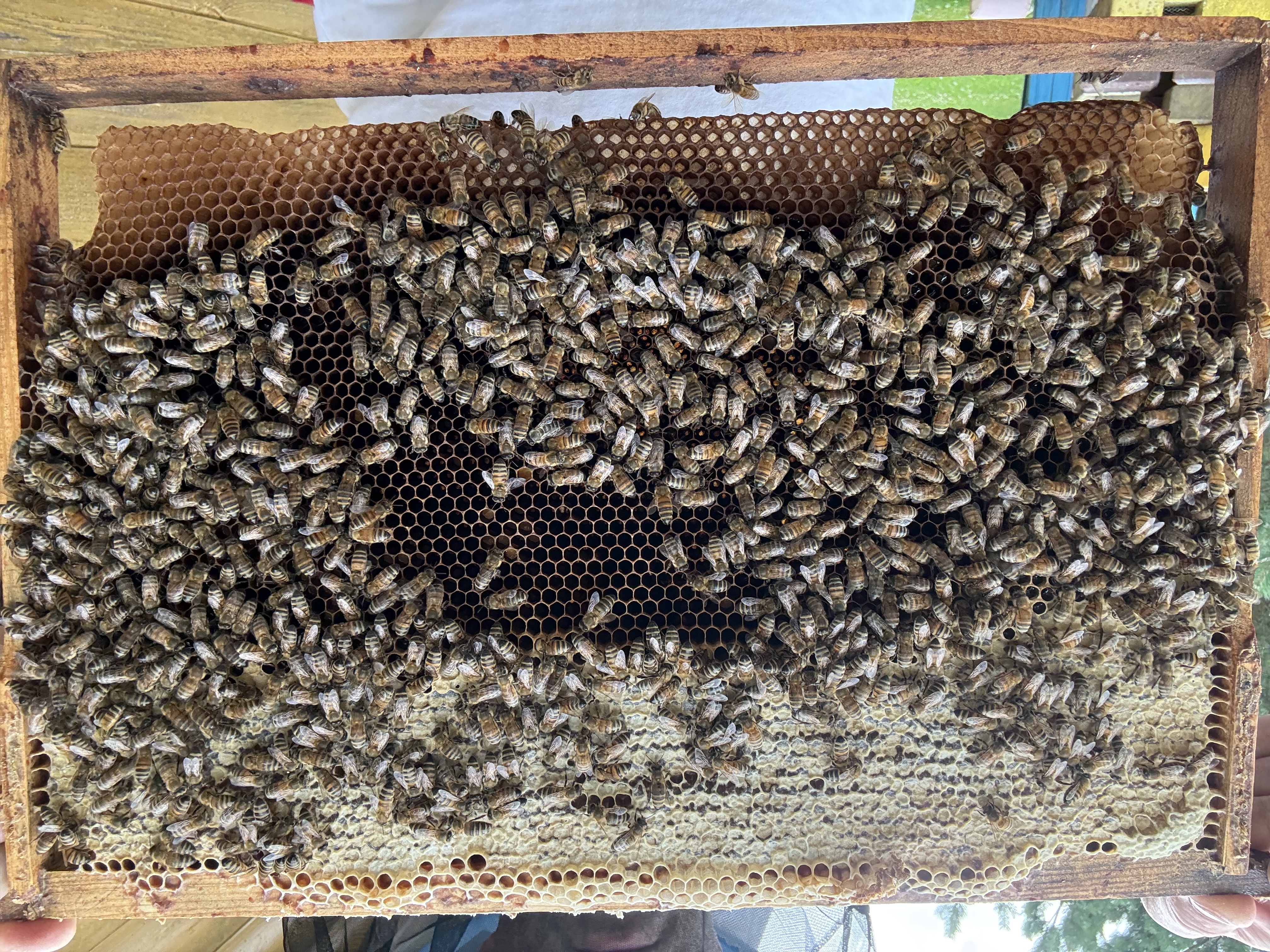
Side A
A dense concentration of bees occupies most of the frame, covering an extensive patch of capped brood with minimal visible honey.
Side B
Similarly, this side shows a high density of bees actively attending to a vast area of capped brood and a small amount of capped honey.
This frame is consistently and heavily covered with bees on both sides, indicating a strong presence of the colony. Both sides prominently feature extensive areas of capped brood, suggesting it is a primary brood frame.
Frame 5
Side A
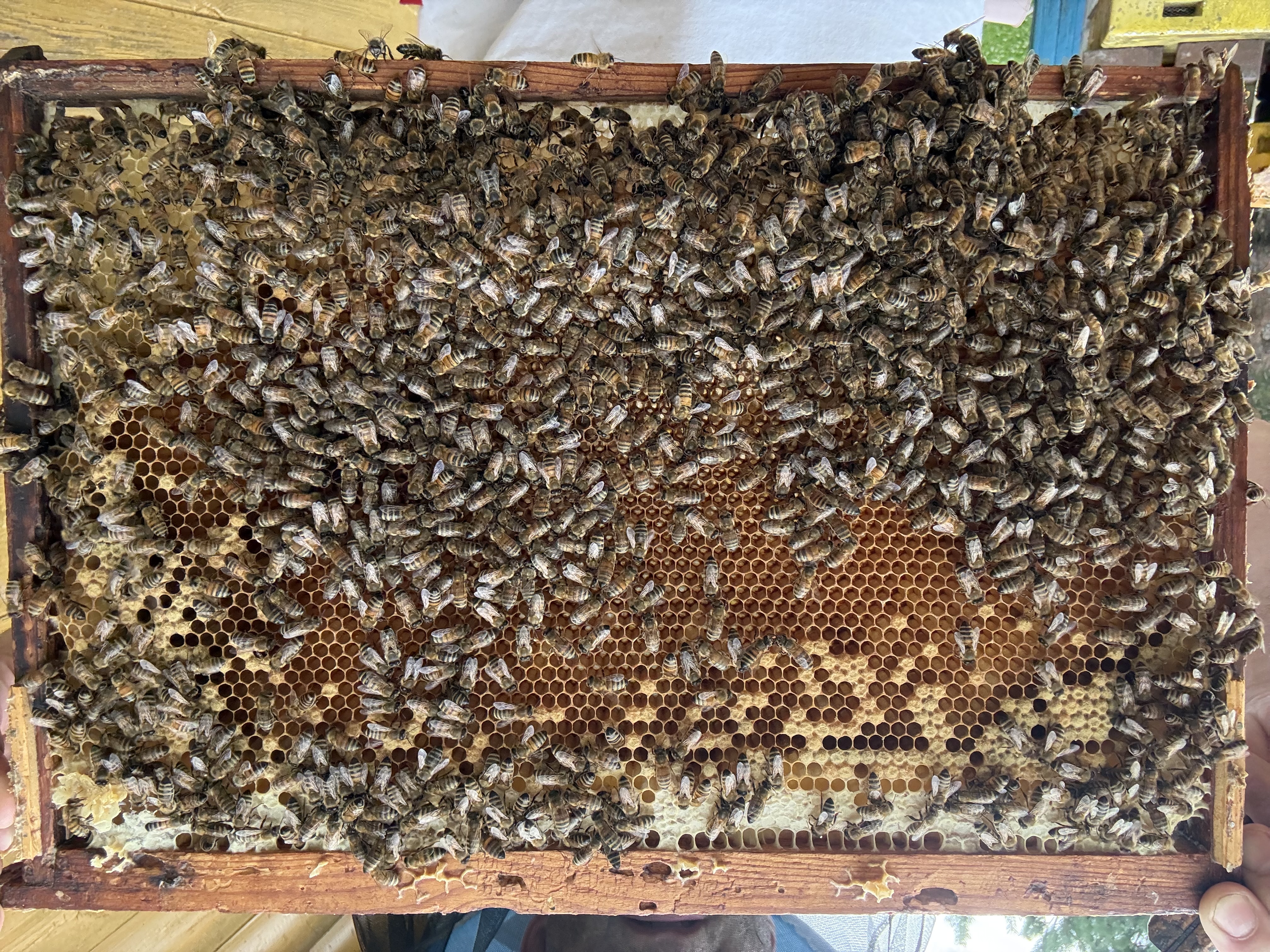
Side B
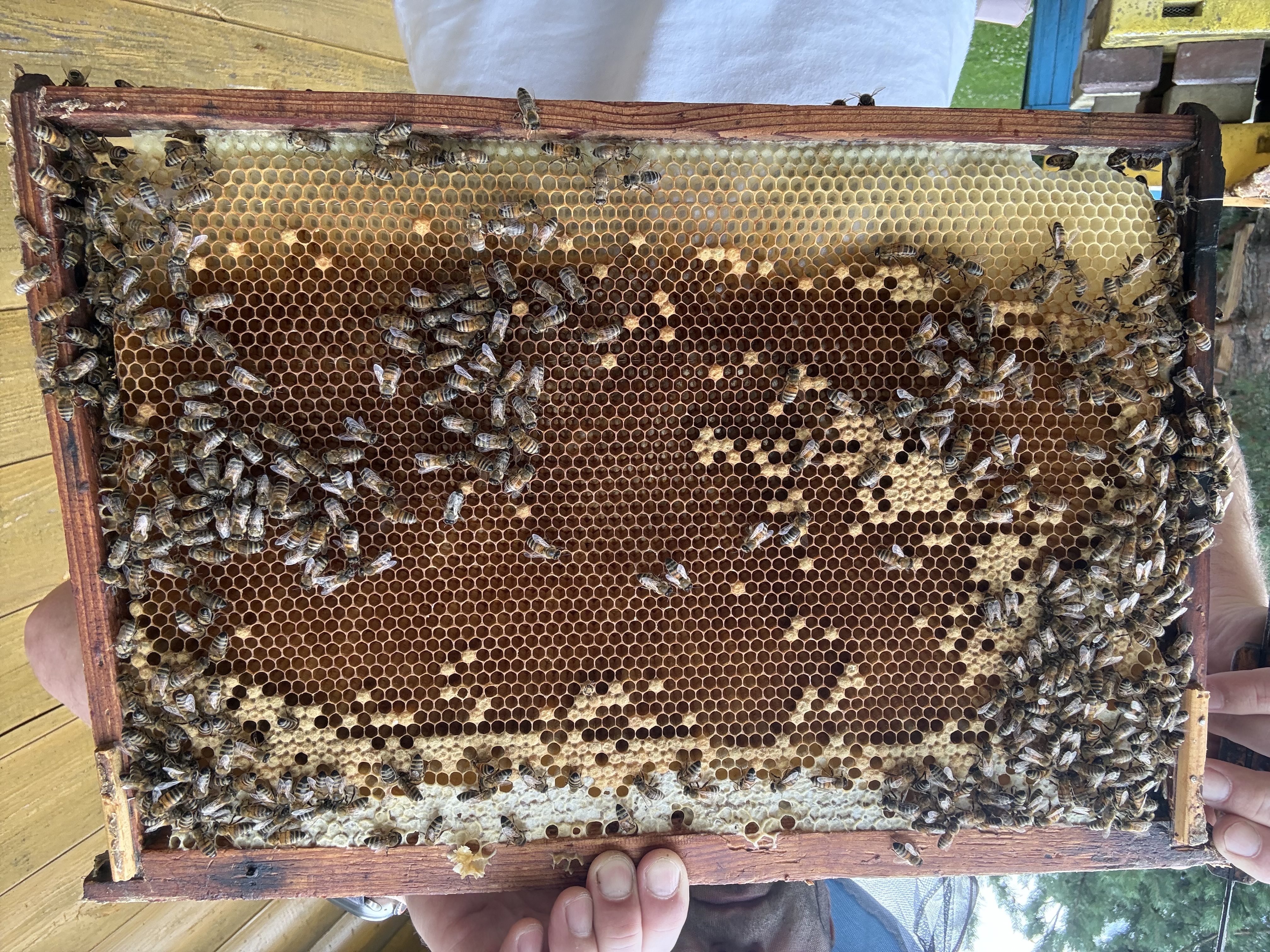
Side A
A large number of bees are clustered on this side, with a central region of mixed capped and uncapped brood and some capped honey.
Side B
Fewer bees are present on this side compared to its counterpart, revealing a more spread-out pattern of brood with minimal honey.
Side A of this frame is well-populated with bees and a significant amount of brood, showcasing active colony expansion. Side B has fewer bees and a more dispersed brood pattern, indicating varied activity across the frame.
Frame 6
Side A
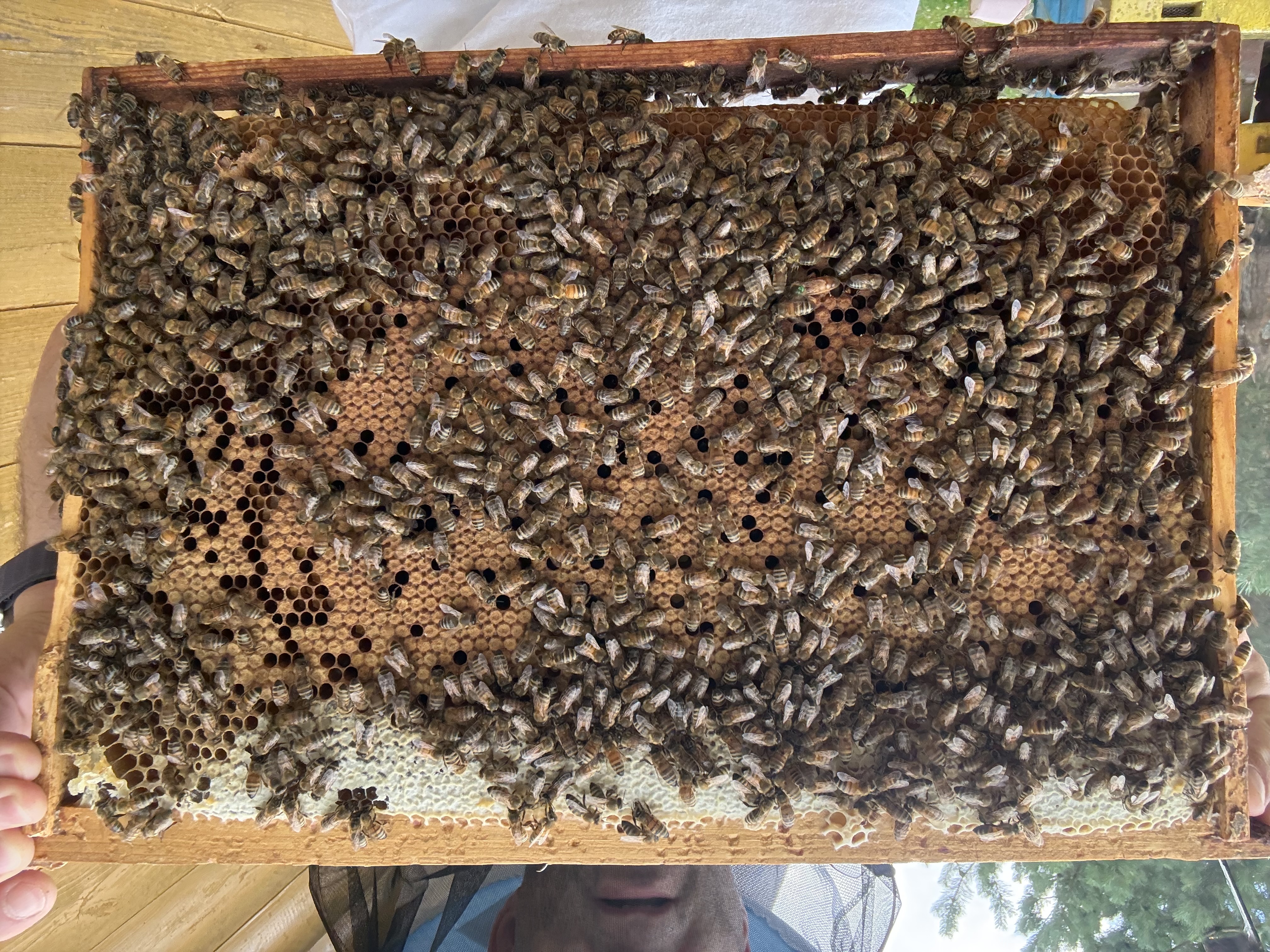
Side B
Side A
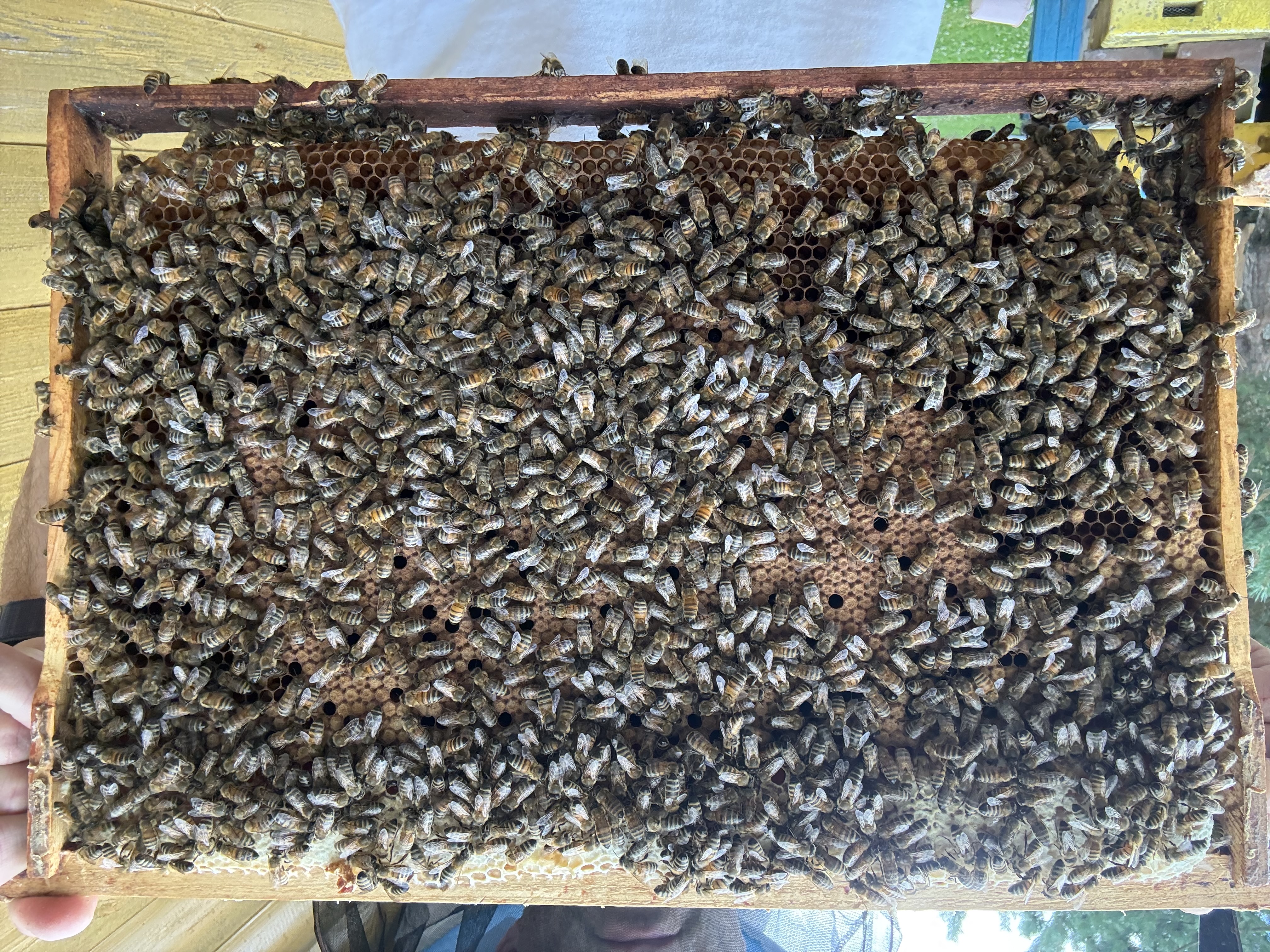
This side is teeming with bees covering a large area primarily composed of capped brood, topped by a small band of honey.
Side B
An even greater number of bees are visible here, attending to an expansive and dense area of capped brood with a narrow strip of capped honey above.
Both sides of this frame are heavily covered with bees, demonstrating a robust and active part of the hive. The primary feature on both sides is an extensive area of capped brood, confirming its crucial role in the colony's reproduction.
Frame 7
Side A
Side B
Side A
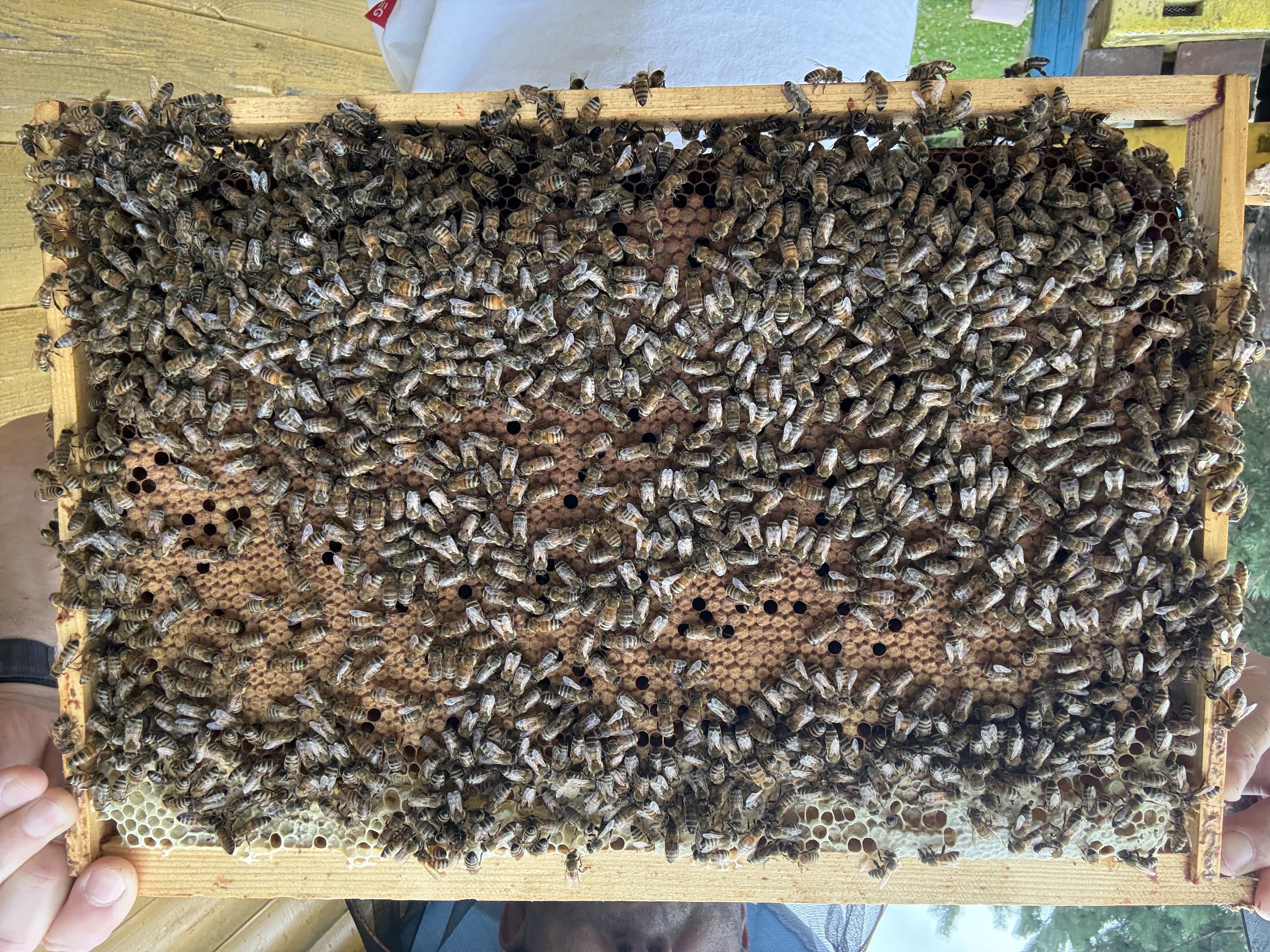
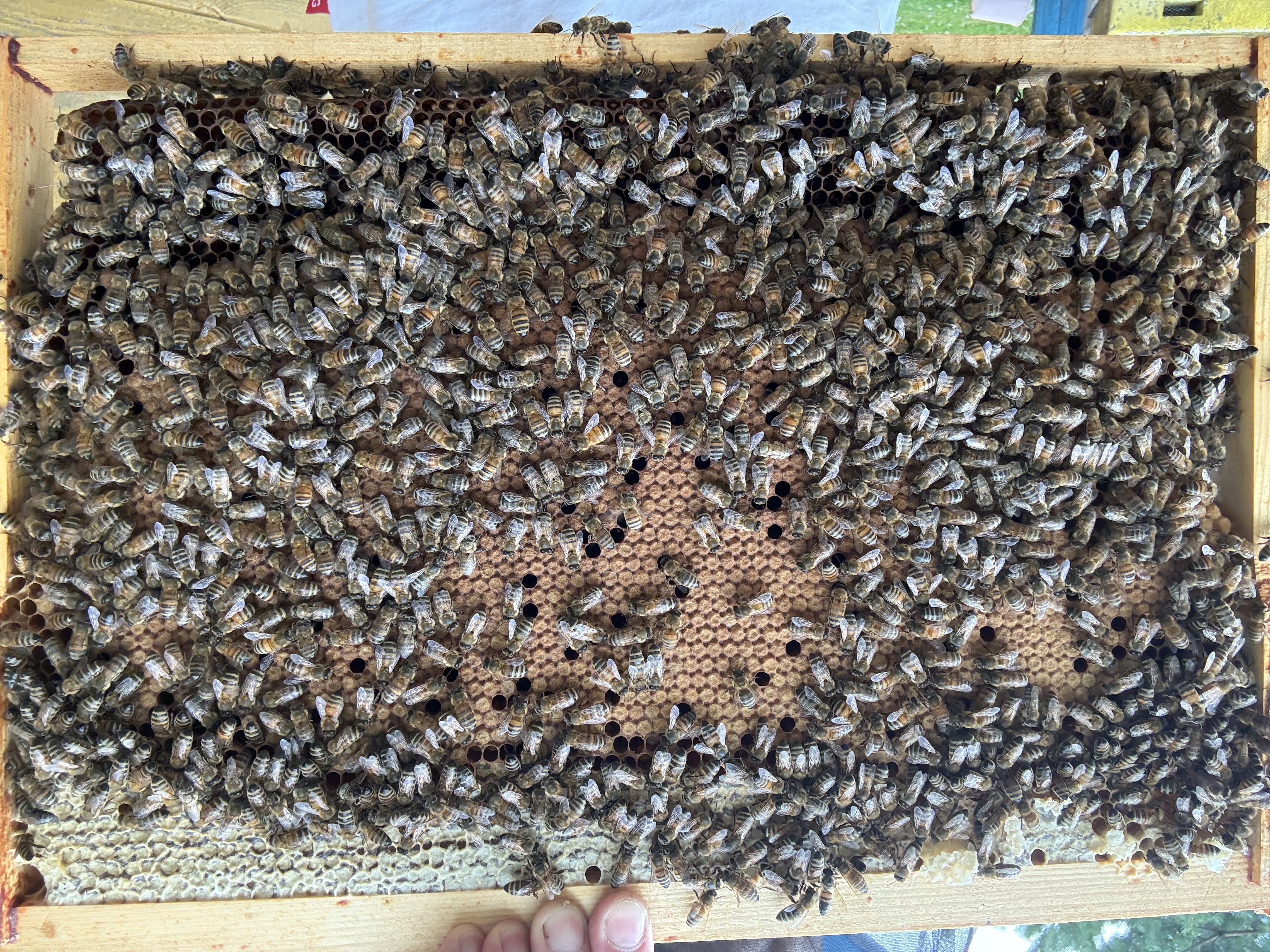
A very dense cluster of bees covers nearly the entire frame, revealing an expansive patch of capped brood and small sections of capped honey.
Side B
This side is equally packed with bees, displaying a massive central area of capped brood and minimal capped honey.
This frame is exceptionally populous with bees on both sides, indicating a thriving and strong colony. Both sides are largely filled with extensive patches of capped brood, signifying its primary function as a brood nursery.
Frame 8
Side A
Side B
Side A
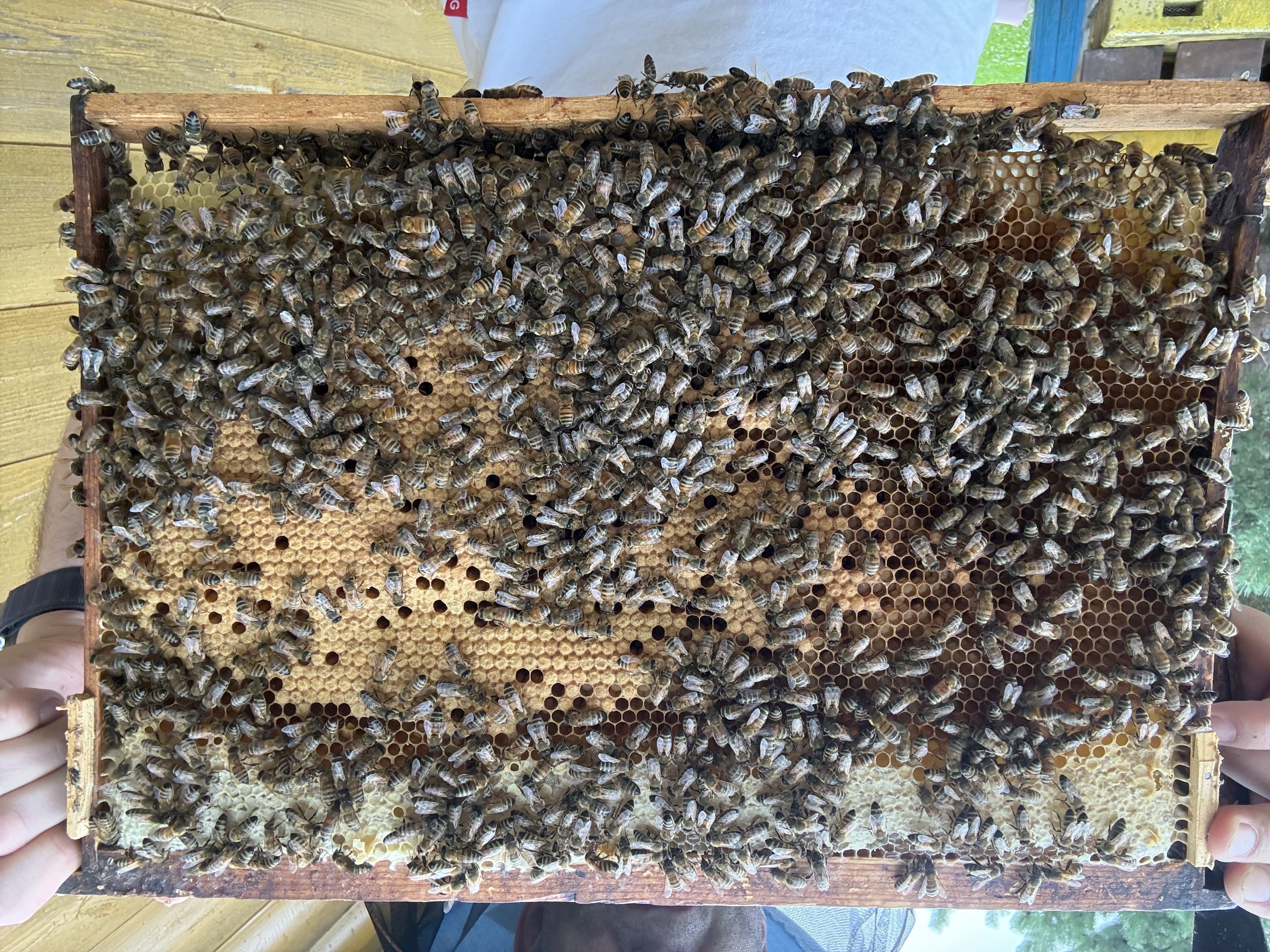
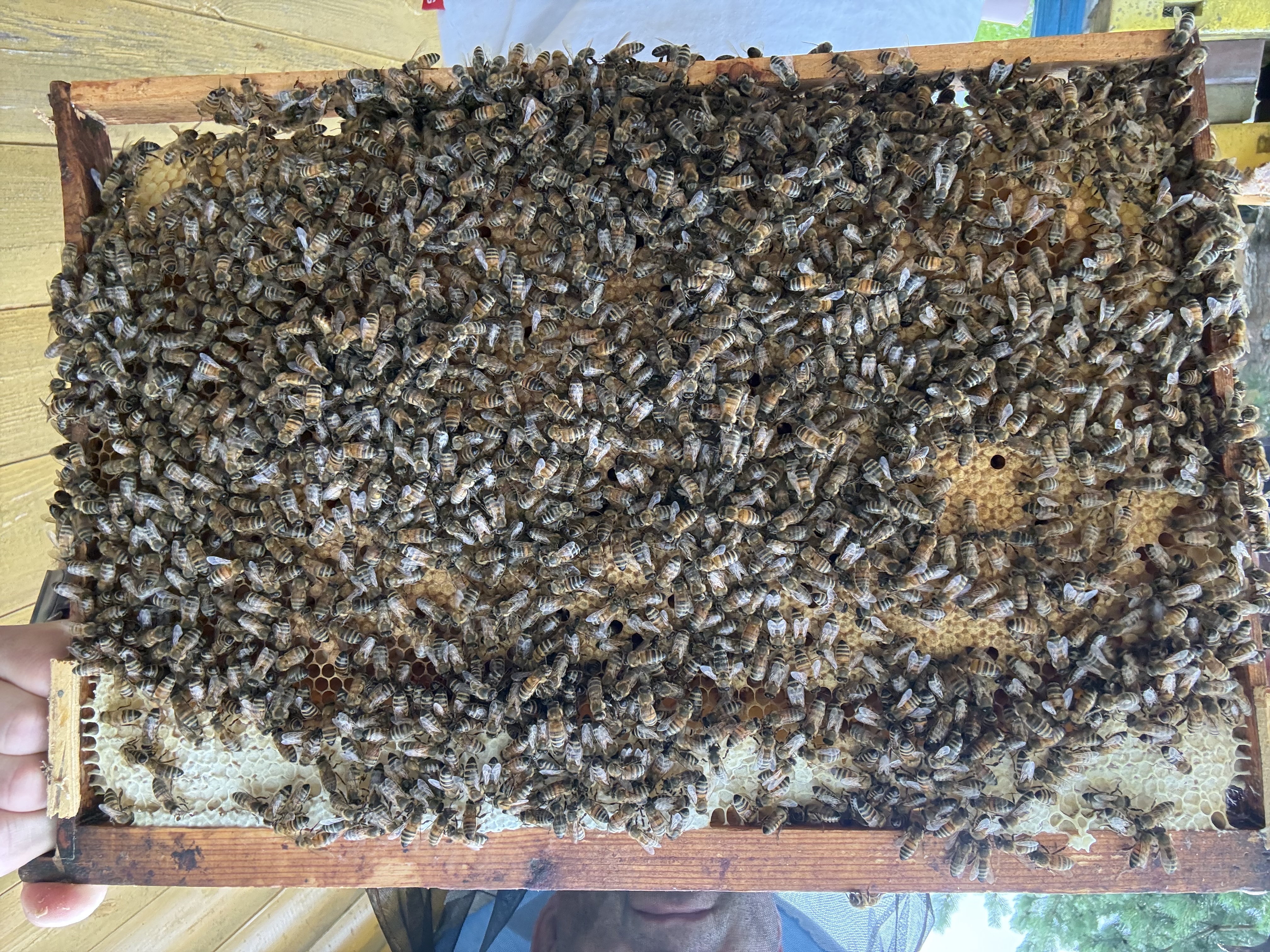
A high density of bees covers most of the frame, showcasing a significant area of capped and uncapped brood along with some capped honey.
Side B
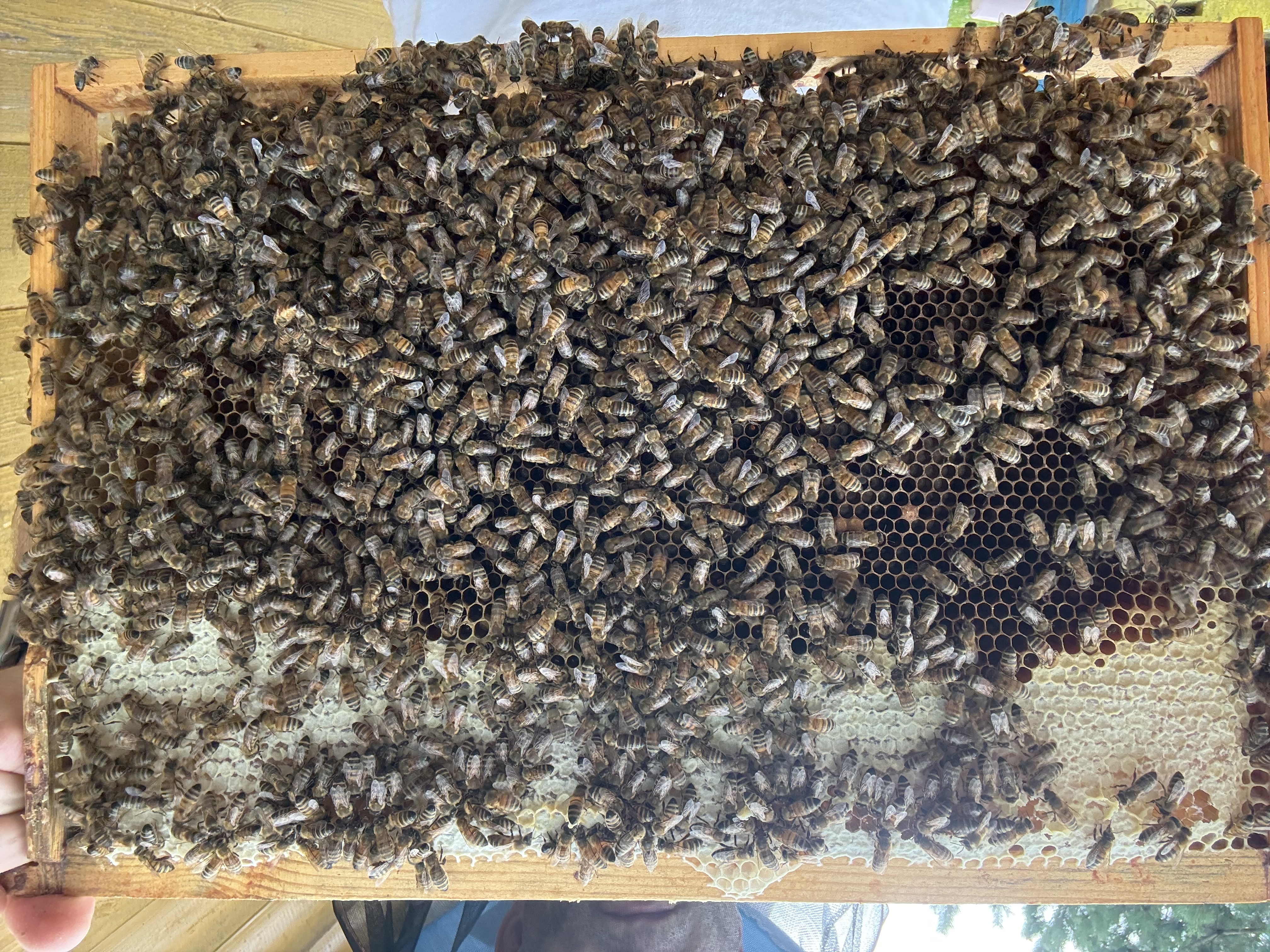
Even more bees are clustered on this side, dominating the frame and revealing a very extensive area of brood with a thin band of honey.
Both sides of this frame are completely covered by a very high number of bees, indicating a strong and healthy colony. The extensive brood coverage on both sides, primarily capped brood, confirms this frame is a vital part of the hive's reproductive cycle.
Frame 9
Side A
Side B
Frame 10
Side A
Side B