Inspection Results
4 Jul 2026
Hive #7 · 18 frame sides captured
72
Colony Strength
Strong
It is recommended to complete the inspection of the remaining frame to thoroughly assess hive conditions and attempt to locate the queen. Consider a varroa mite check and monitor honey stores closely.
Queen Status
Laying, not observed
Brood Pattern
Solid
Honey Stores
Adequate, but not abundant
Varroa Risk
Undetermined; recommend testing
AI Observations
The inspection covered 90% of the hive (9 of 10 frames), revealing a strong colony with an estimated 1133 bees. A solid brood pattern was observed across 5 of the 9 inspected frames with 29% average coverage, indicating a productive queen, though she was not directly sighted. Honey stores are currently adequate at 14%.
Frame Analysis — 9 frames
Frame 1
Side A
Side B
Side A
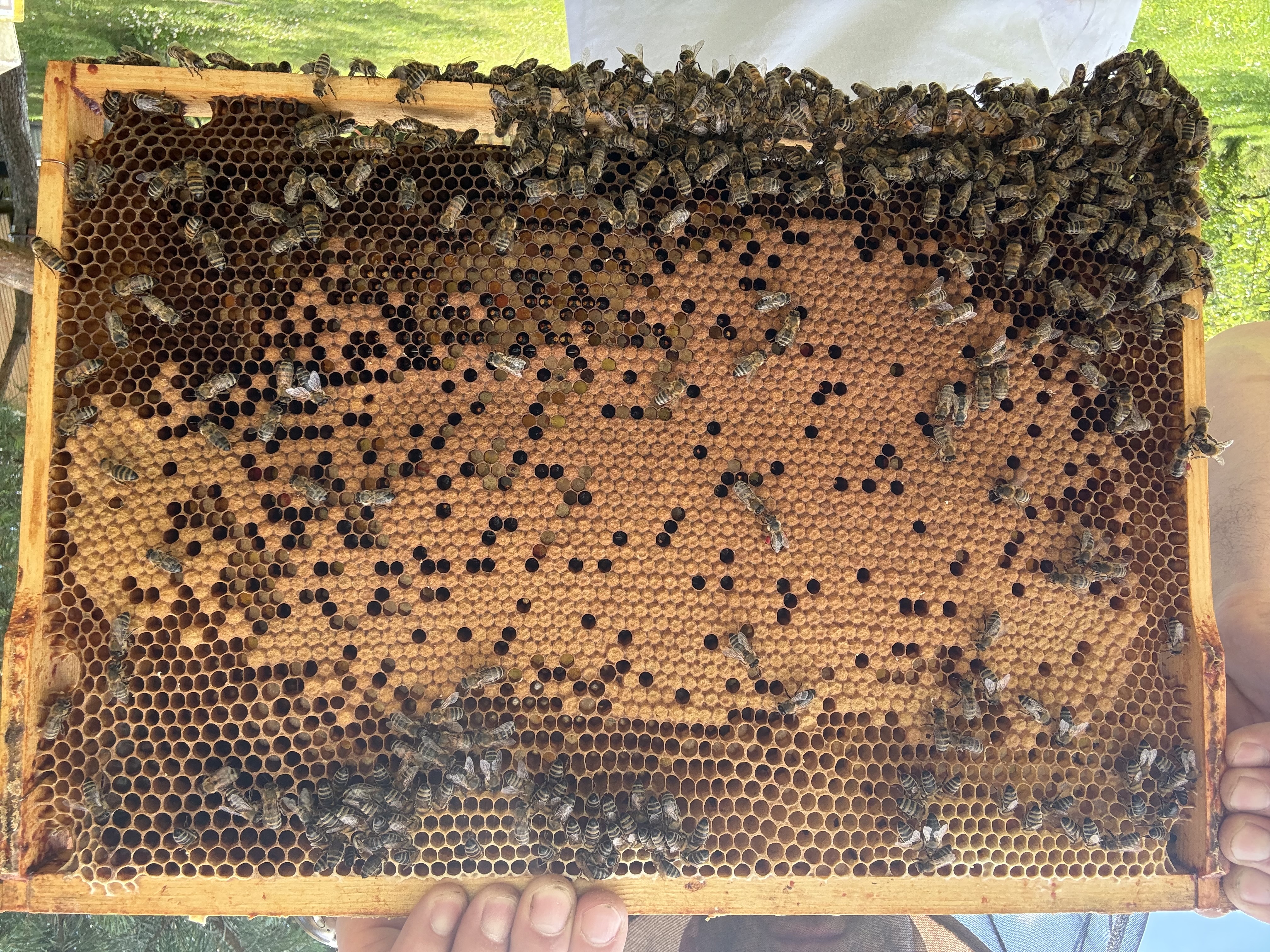
This side of the frame shows a significant area of capped brood surrounded by bees and some honey at the top.
Side B
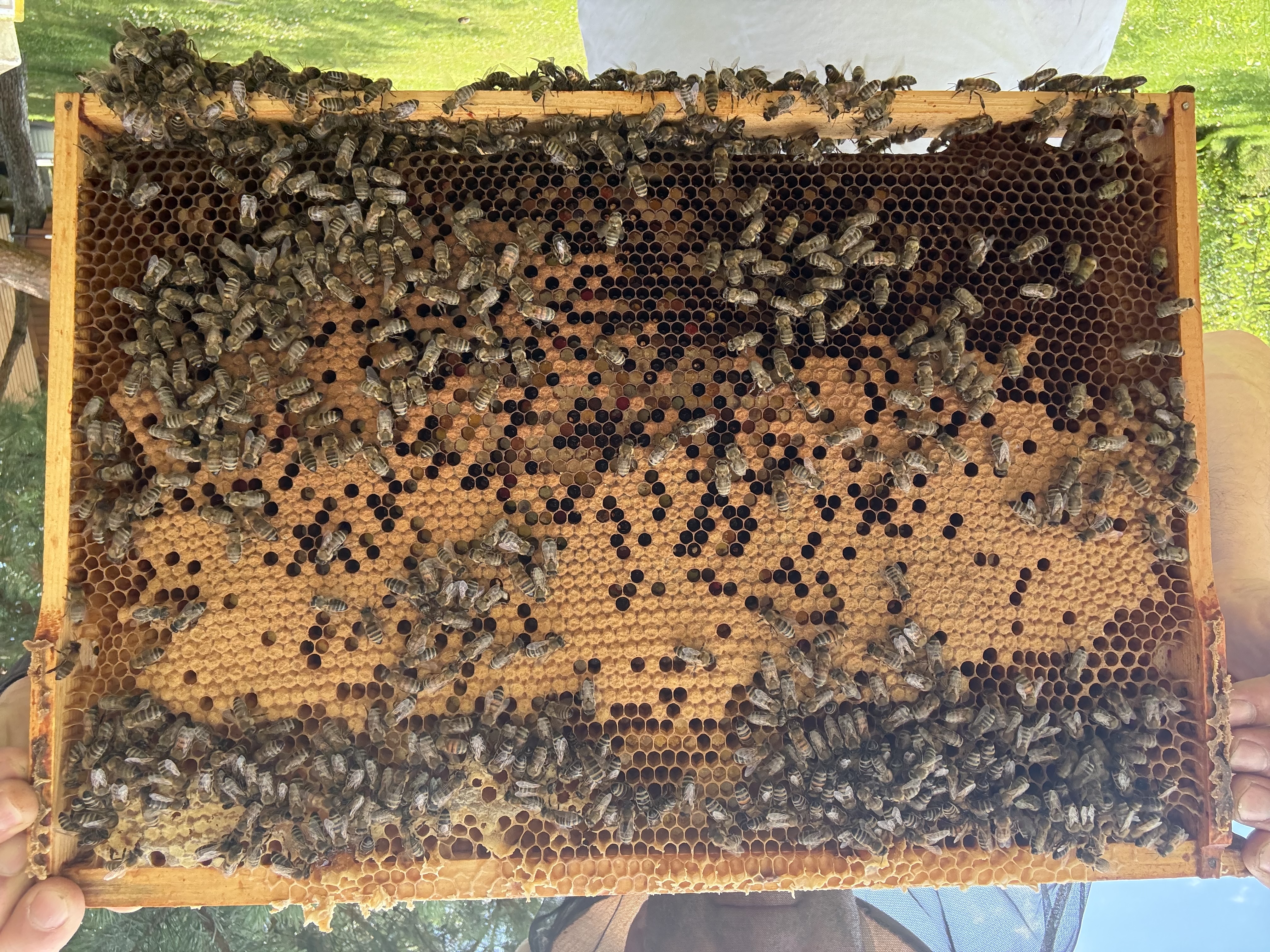
This side displays a large, healthy patch of capped brood with numerous bees and some scattered pollen or nectar cells.
This frame is a strong brood frame, featuring extensive capped brood on both sides, indicating a healthy and active queen. It also contains some stored honey and pollen to support the growing colony.
Frame 2
Side A
Side B
Side A
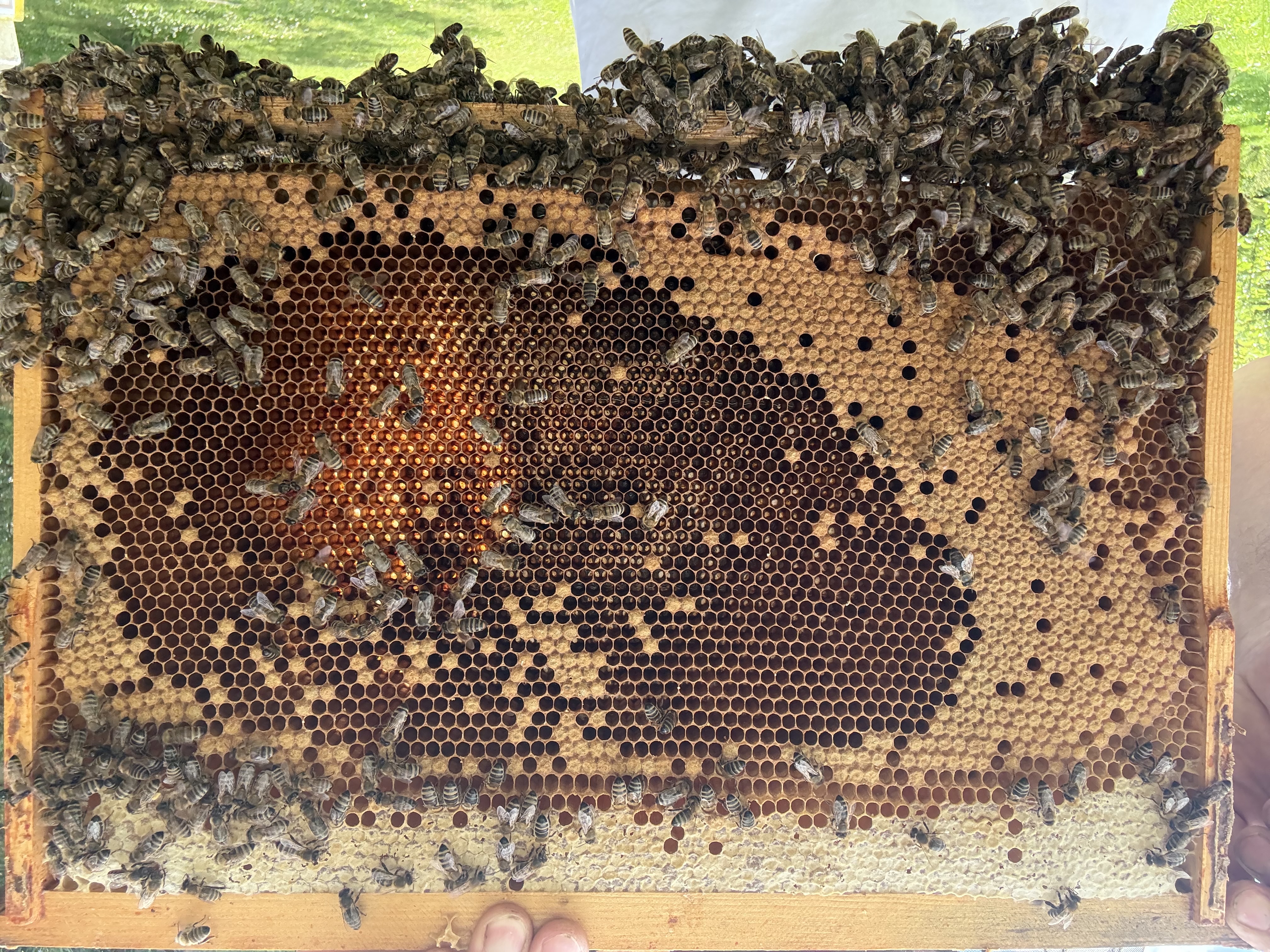
This side presents a central area of developing brood interspersed with darker cells, suggesting pollen stores and some nectar.
Side B
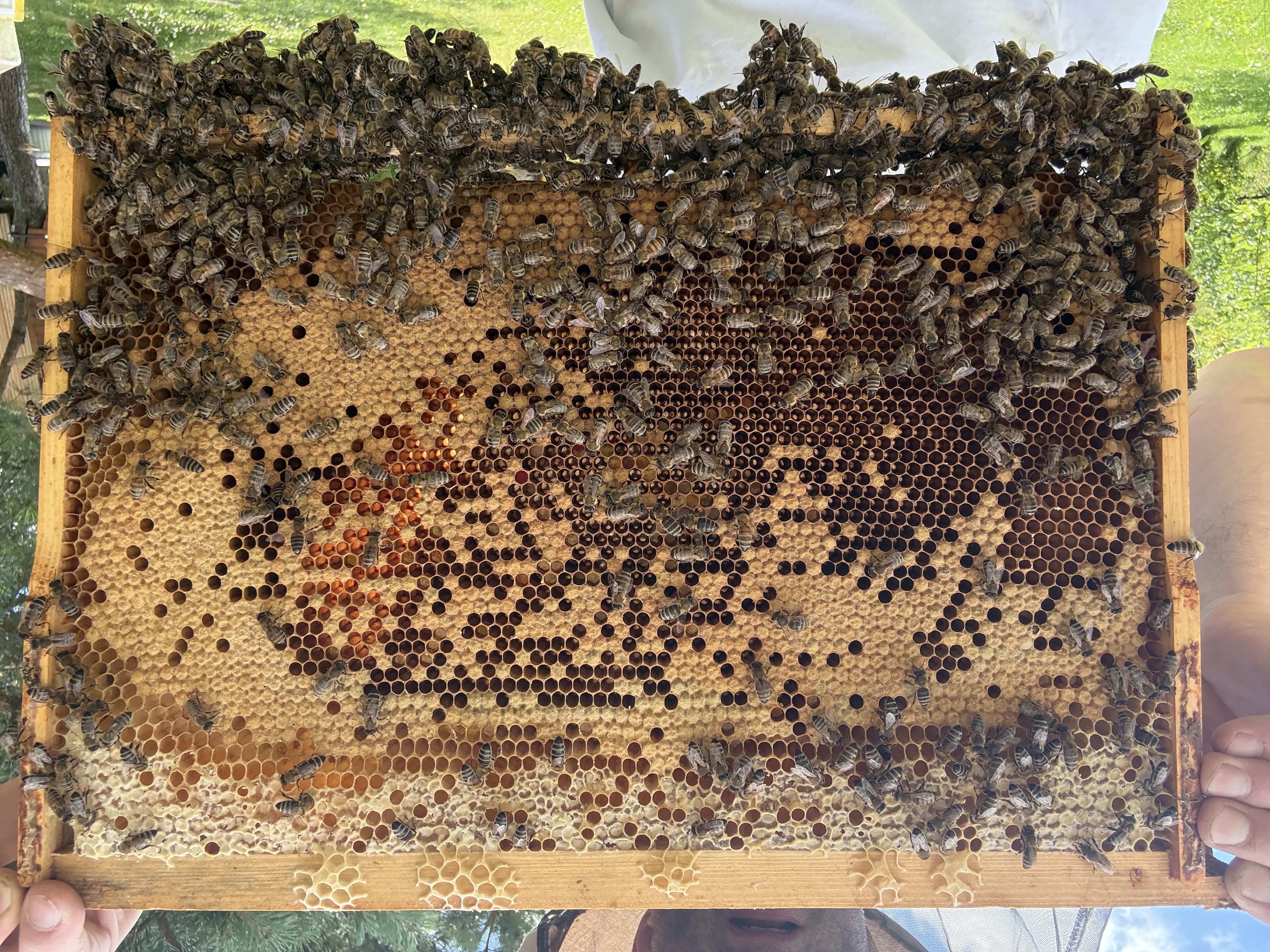
This side shows a patch of capped brood with noticeable empty cells and some darker, possibly pollen-filled, areas around the periphery.
This frame has moderate brood coverage, with both capped brood and some empty cells, and also appears to be used for pollen storage. The brood pattern is slightly less uniform on one side, but overall supports colony growth.
Frame 3
Side A
Side B
Side A
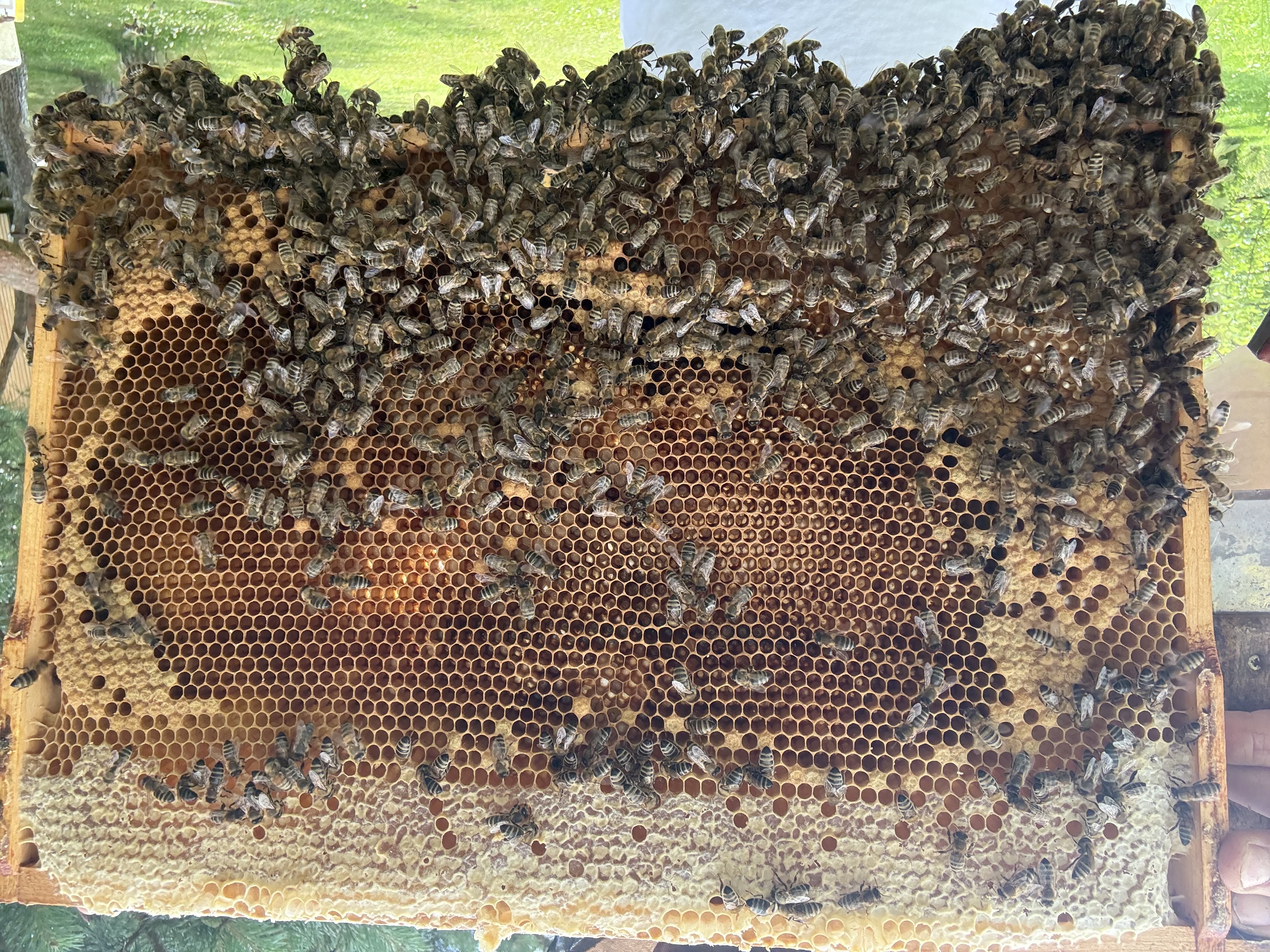
This frame side exhibits a strong pattern of capped brood in the center, flanked by a band of capped honey at the top.
Side B
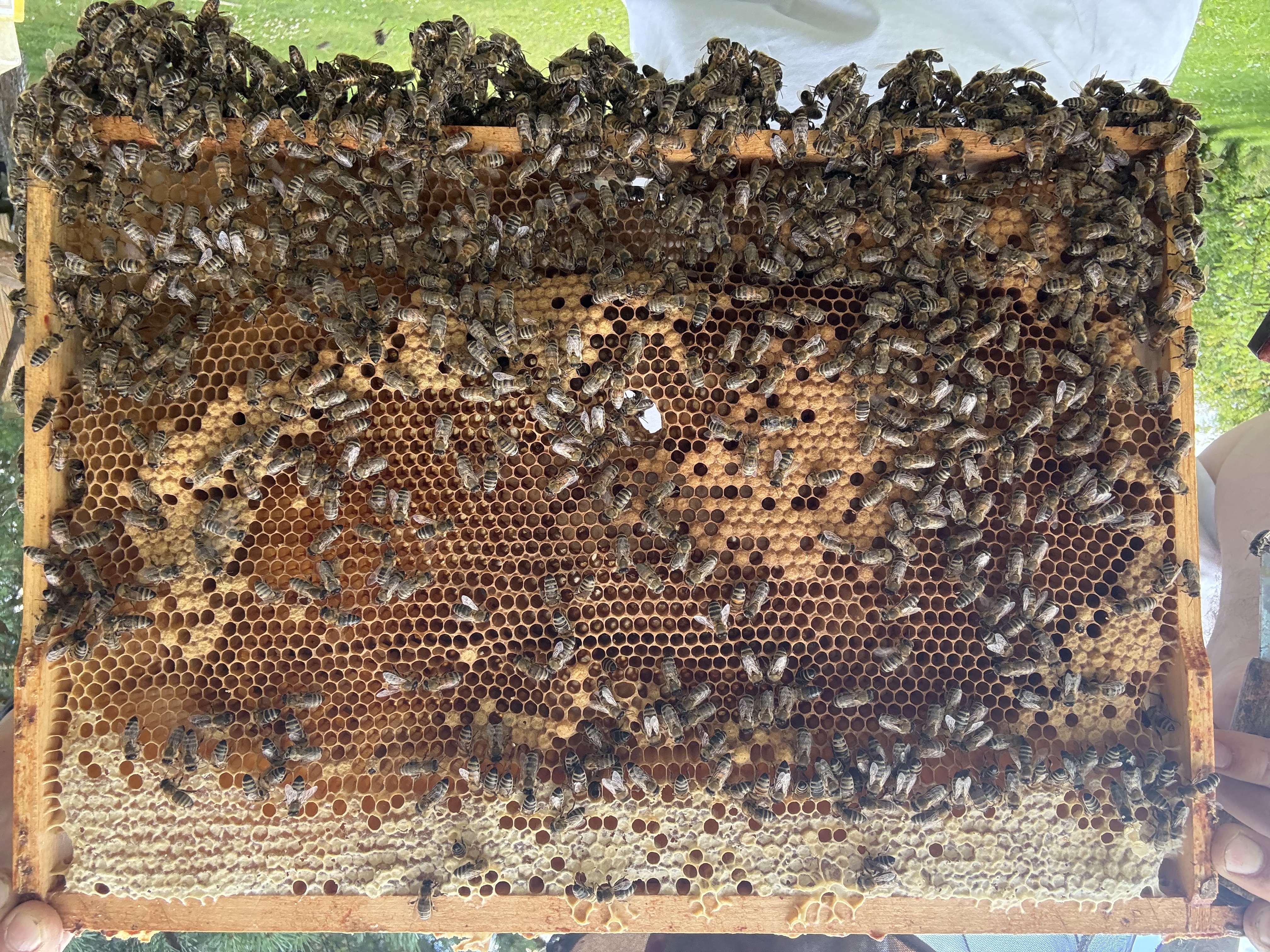
This side reveals a substantial area of capped brood along with a significant section of capped honey across the top of the frame.
This frame is a healthy brood and food frame, with solid patches of capped brood on both sides and notable stores of capped honey. It indicates a productive queen and good resource management by the colony.
Frame 4
Side A
Side B
Side A
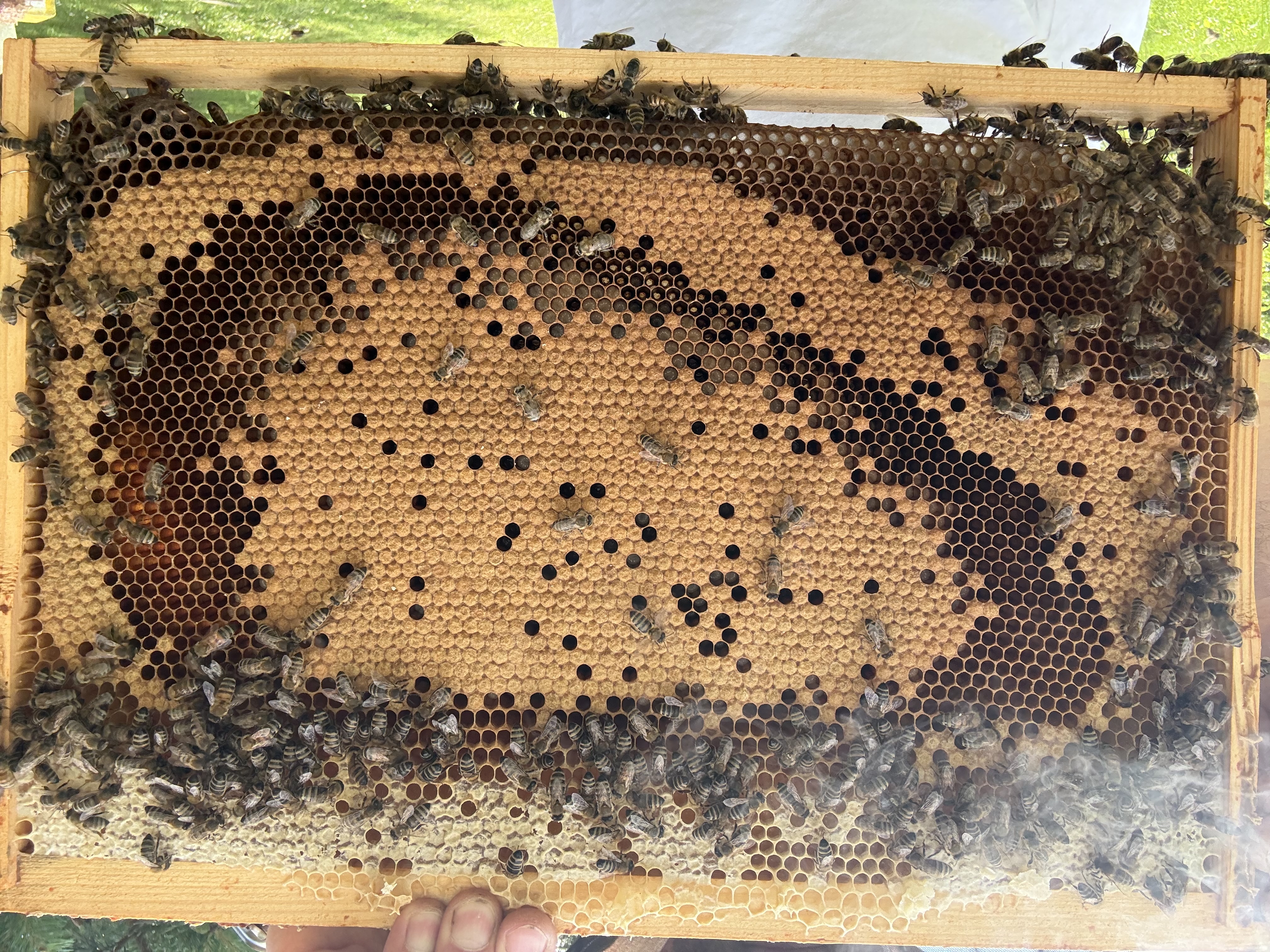
This side features a scattered pattern of capped brood and many empty cells, with minimal apparent stores.
Side B
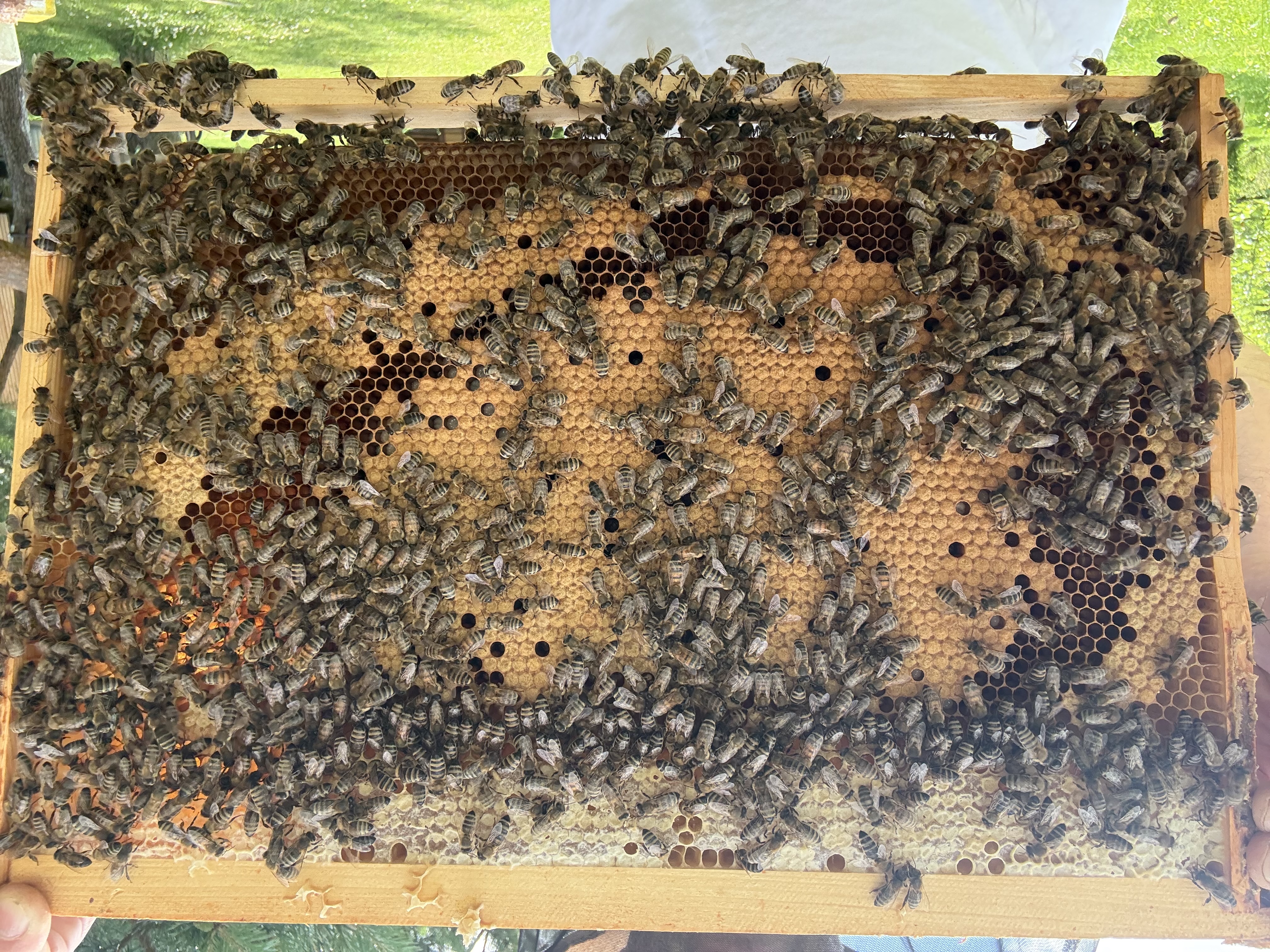
This side shows a more consolidated area of capped brood in the center, surrounded by a moderate number of bees and some honey.
This frame has uneven brood development, with one side showing a more consolidated brood pattern than the other. It contains some honey stores and suggests the queen is actively laying, though perhaps not as uniformly across both sides.
Frame 5
Side A
Side B
Side A
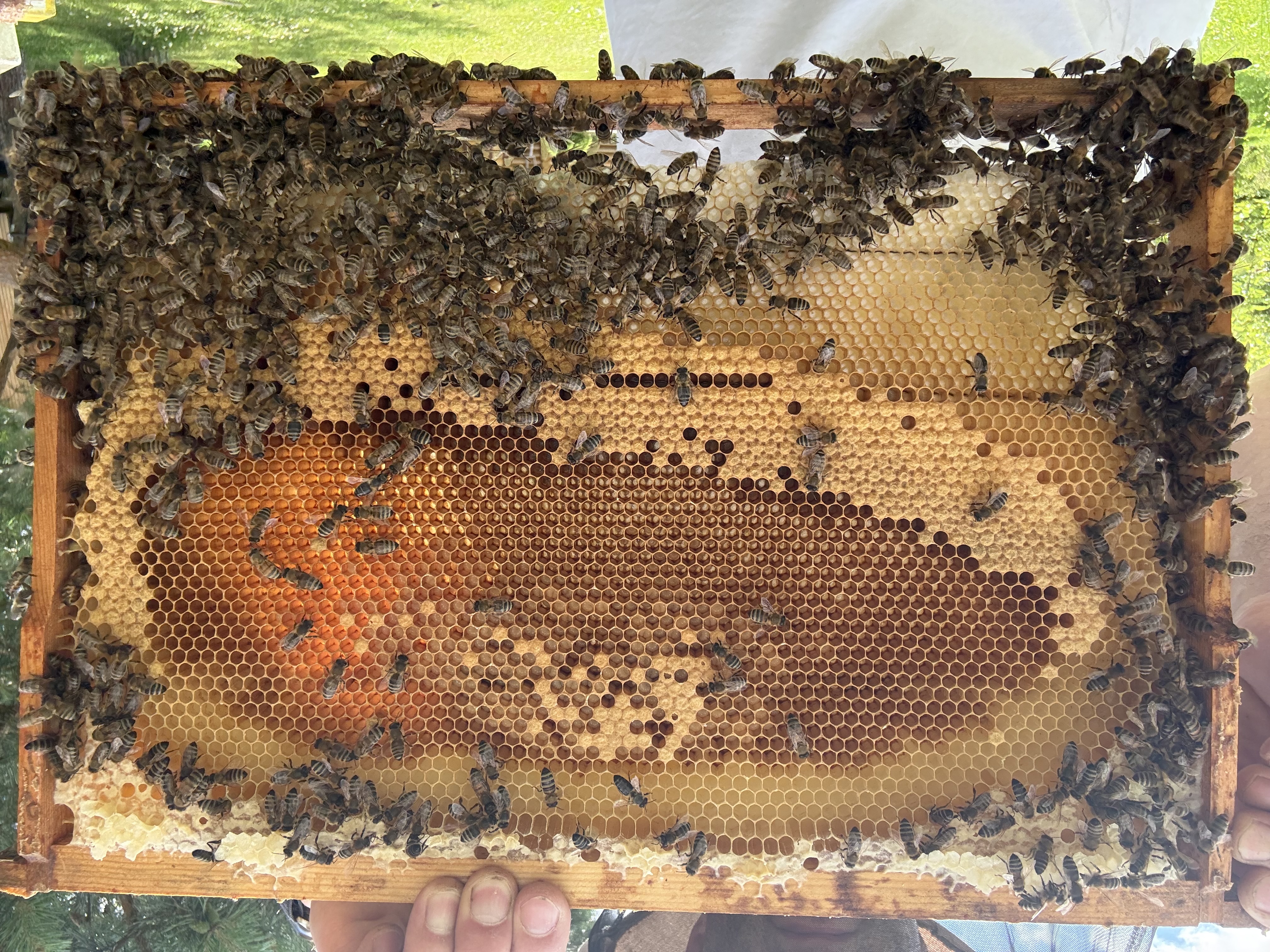
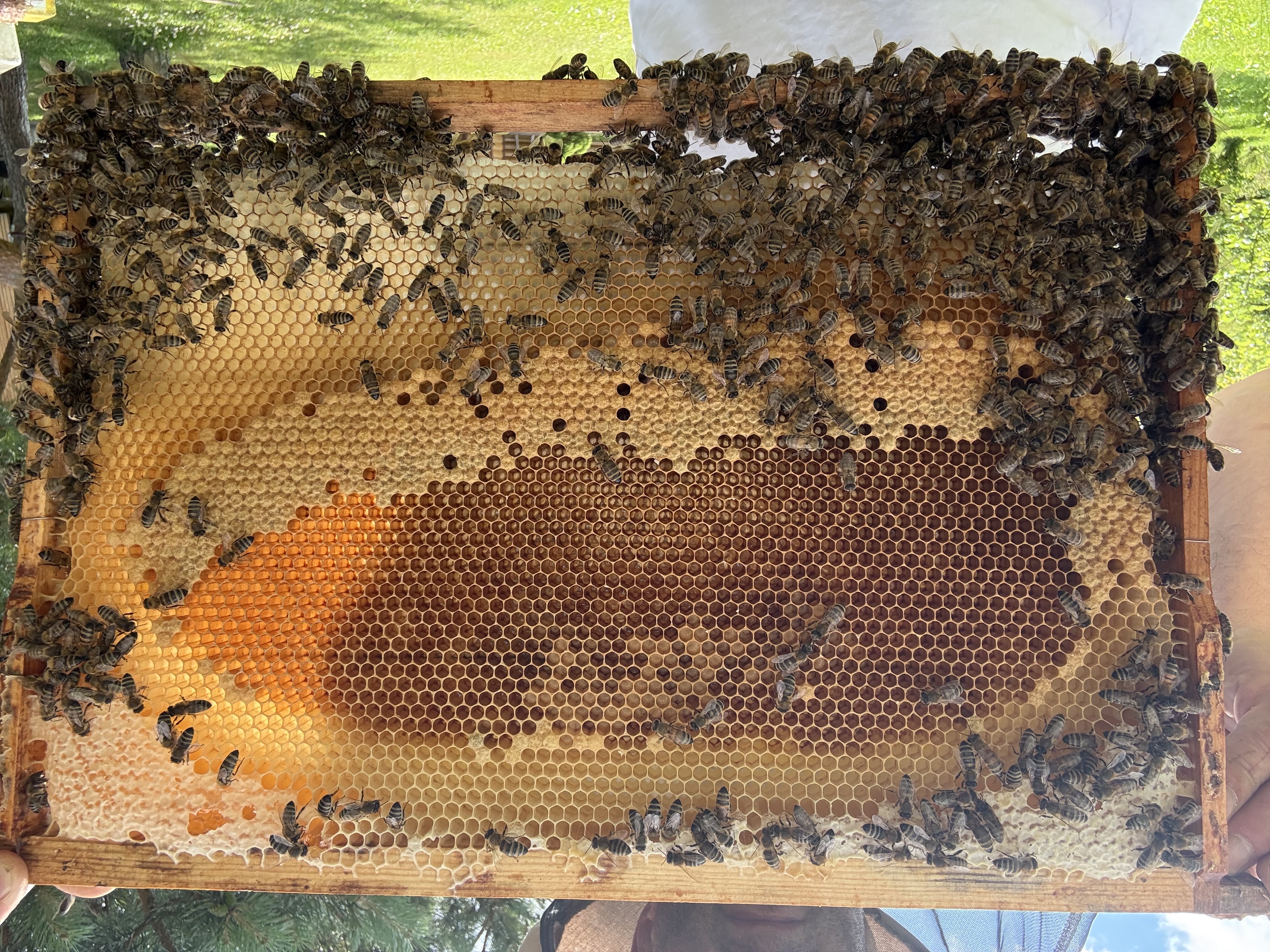
This side displays a central brood area, some empty cells, and a band of honey or nectar at the top.
Side B
This side shows a very strong and extensive pattern of capped brood, indicating robust queen activity, alongside significant honey stores.
This frame demonstrates a healthy brood pattern, with a particularly strong and extensive area of capped brood on one side. It also contains notable honey stores, supporting the colony's nutritional needs and growth.
Frame 6
Side A
Side B
Side A
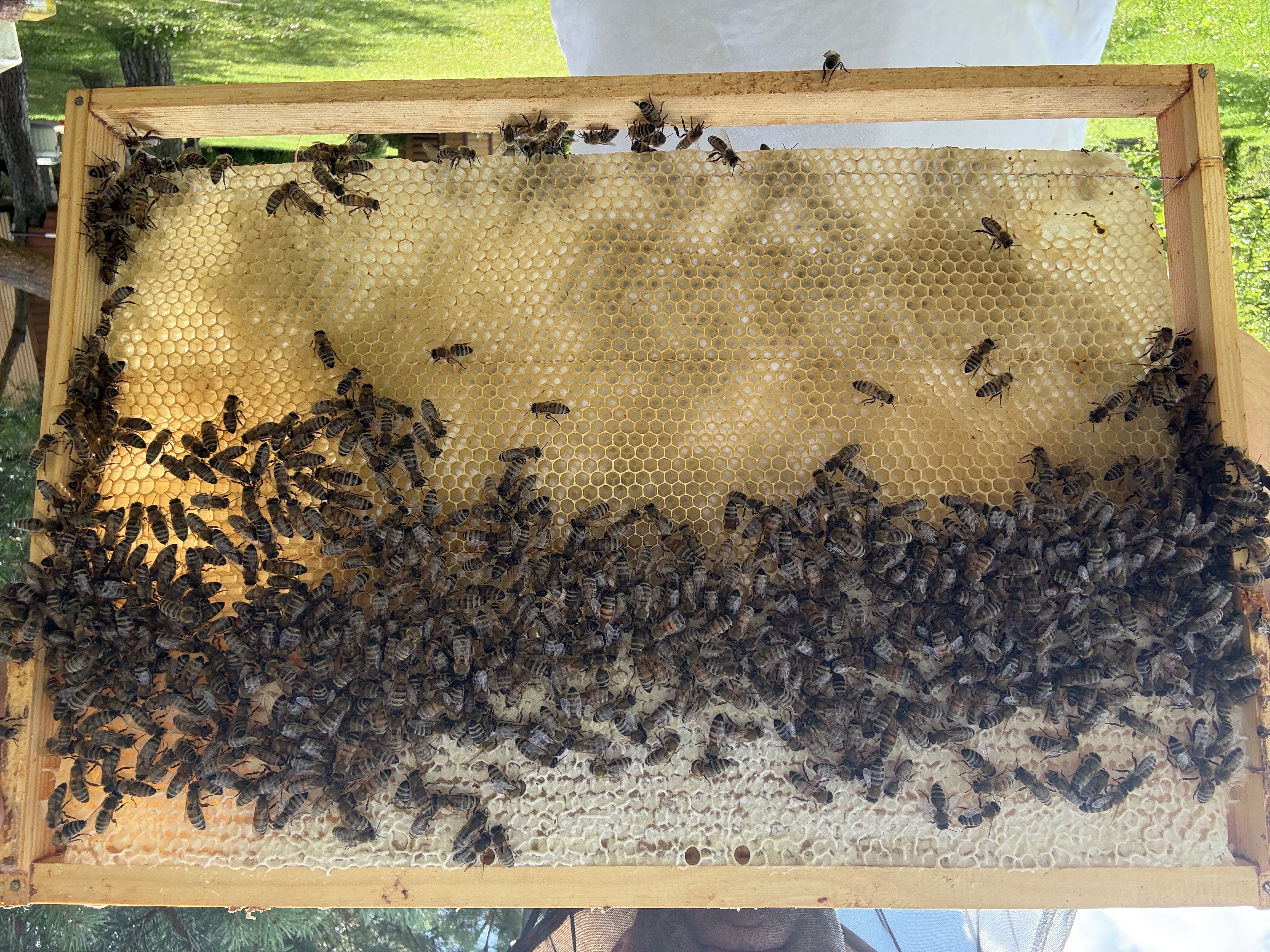
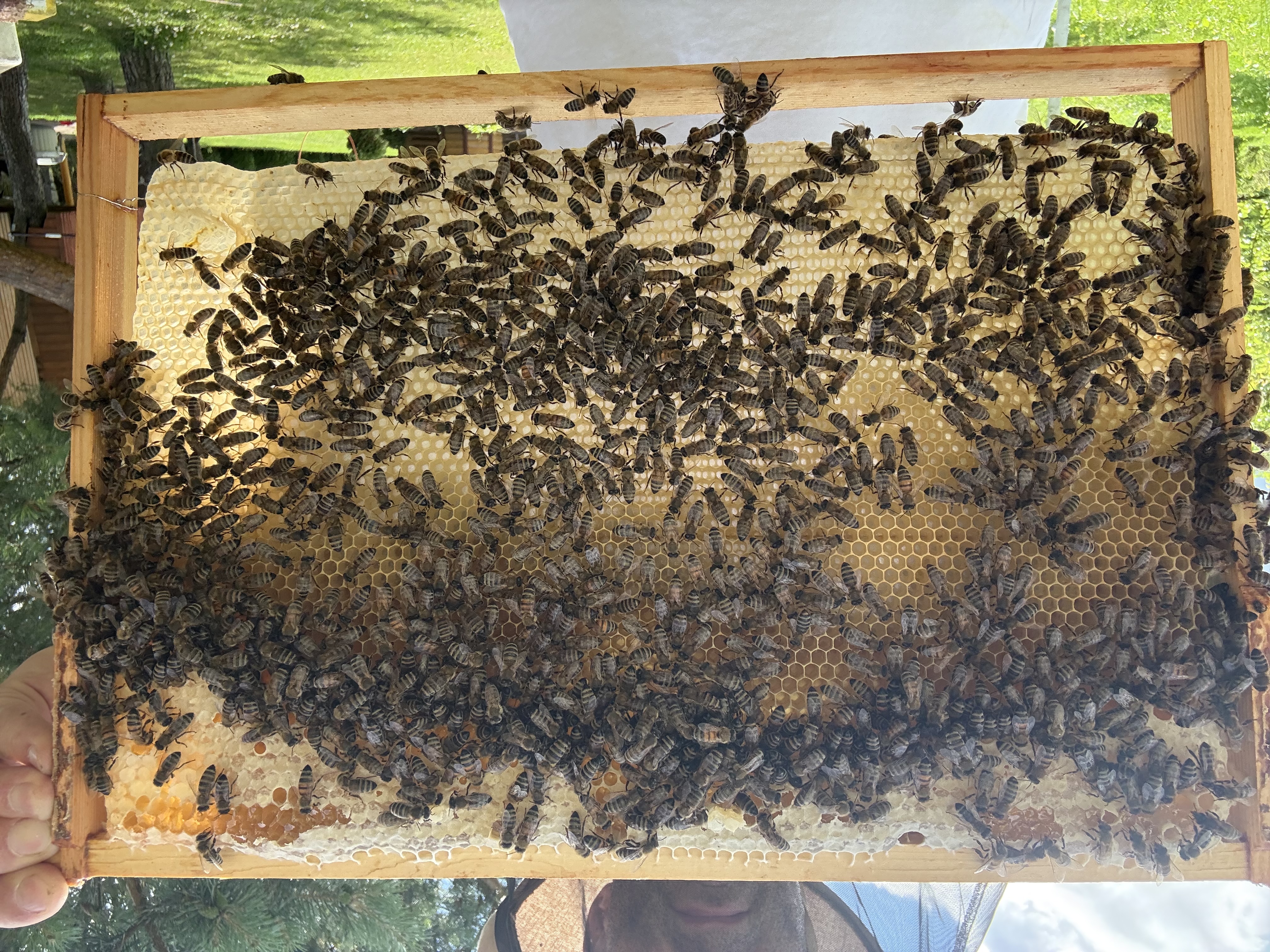
This side of the frame consists mostly of newly drawn, empty comb with very few bees and minimal brood or stores.
Side B
This side is predominantly clean, newly drawn comb with a moderate number of bees and very little visible brood or honey.
This frame is primarily new or empty comb, indicating the bees are drawing it out or preparing it for future use, with very minimal brood or honey present on either side. It suggests the colony is expanding its comb resources.
Frame 7
Side A
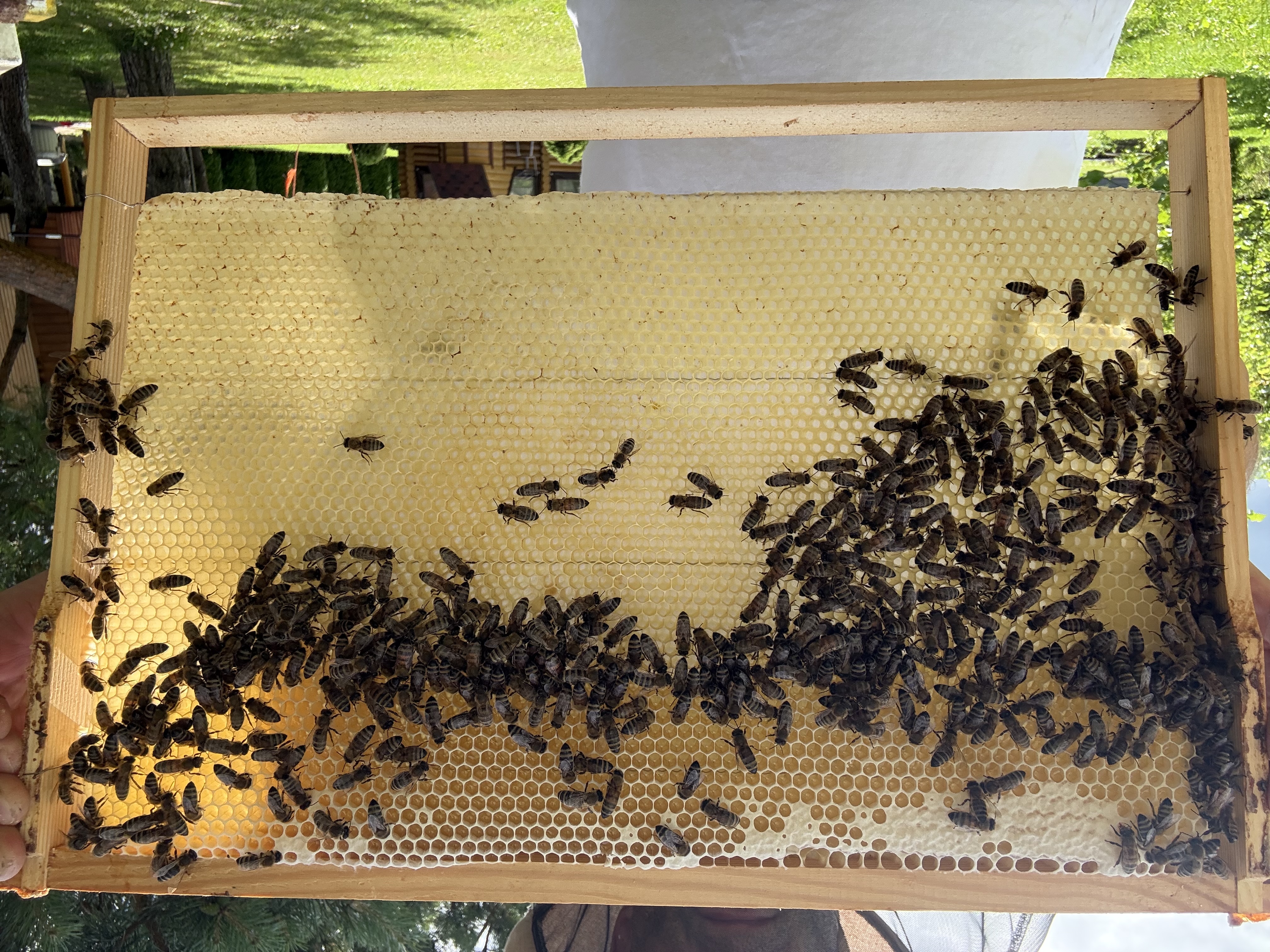
Side B
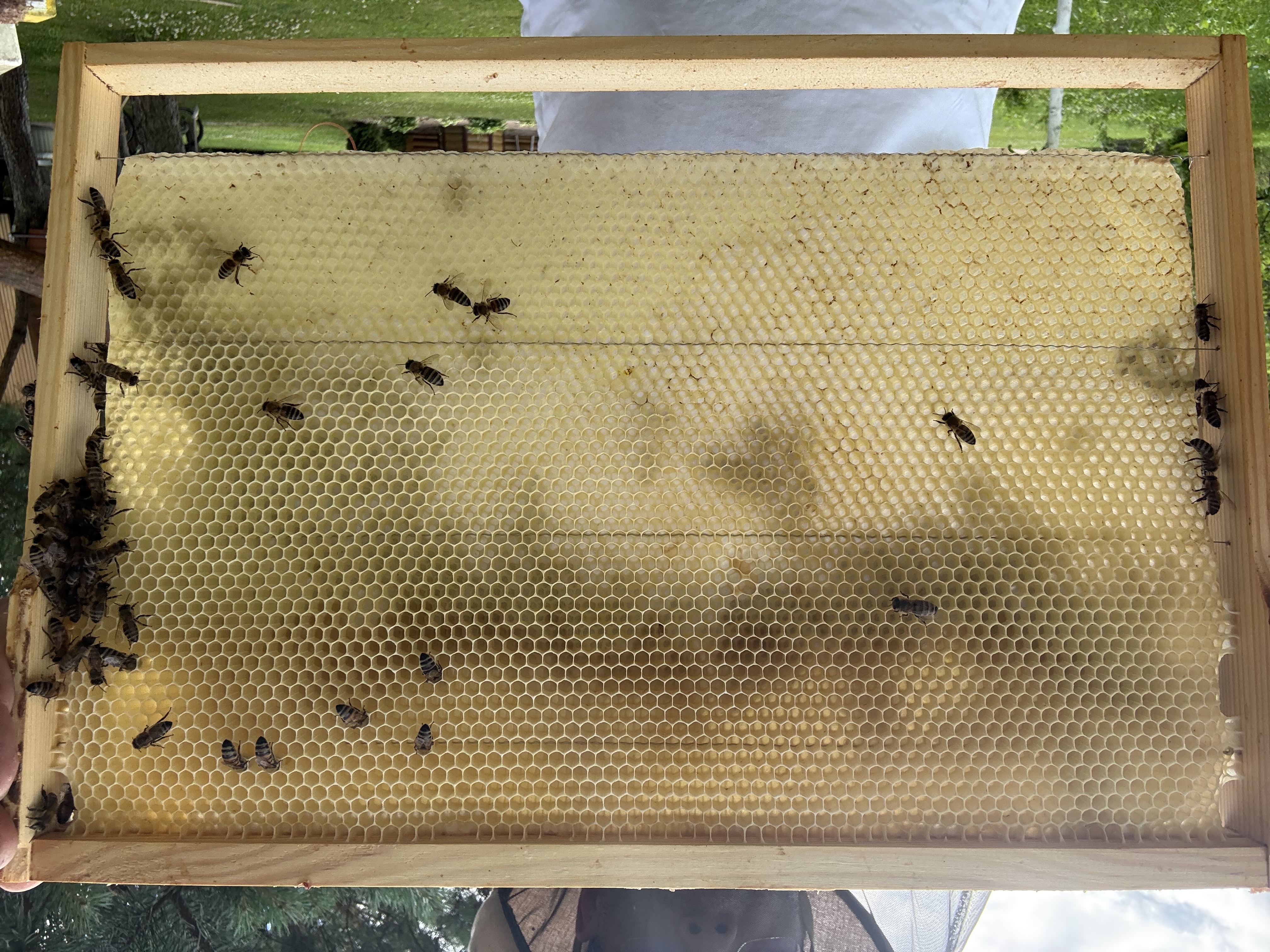
Side A
This side features older, dark comb with a small amount of capped honey at the top and very few bees.
Side B
This side also shows older, dark comb with only a few bees and sparse honey or nectar.
This frame consists mainly of older, dark comb with very few bees and contains minimal honey stores, suggesting it's not a primary brood or significant food storage frame.
Frame 8
Side A
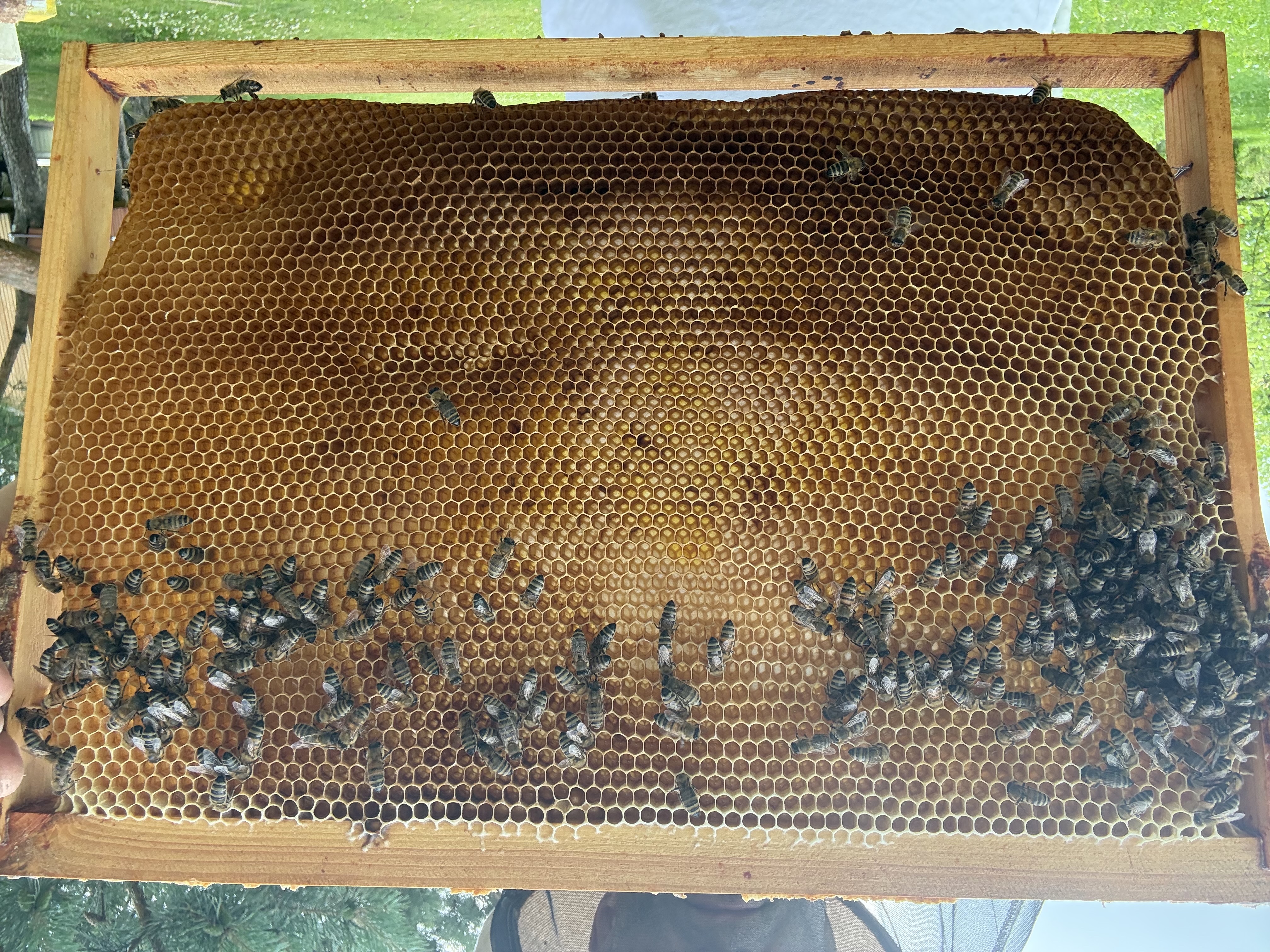
Side B
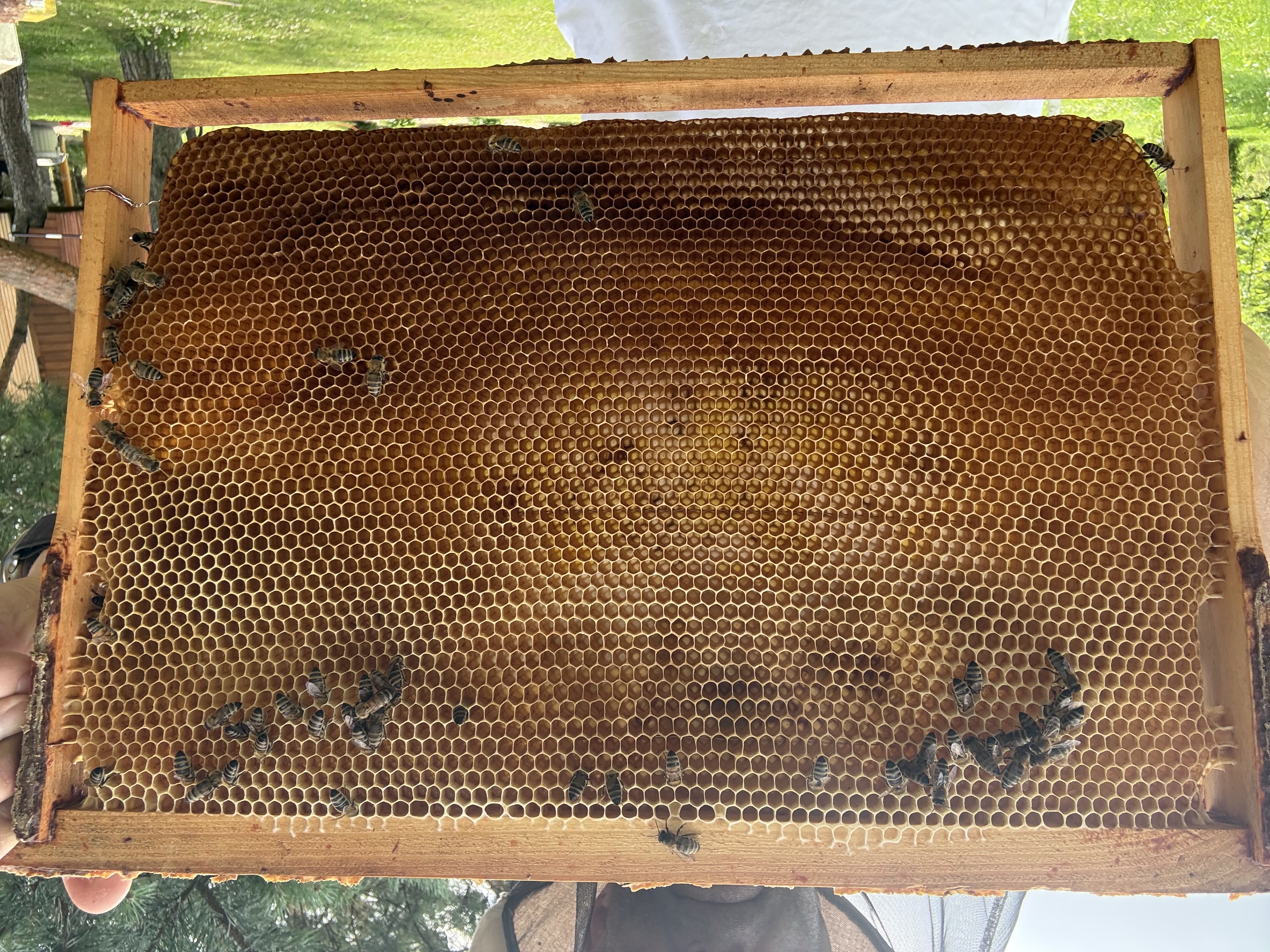
Side A
This side of the frame is almost entirely filled with capped cells, likely containing honey or pollen stores, with very few bees present.
Side B
This side is densely packed with capped cells, primarily indicating honey or pollen reserves, and has a very low bee presence.
This frame is primarily a storage frame, heavily laden with capped honey or pollen on both sides, and has very few bees attending it. It serves as a significant food reserve for the colony.
Frame 9
Side A
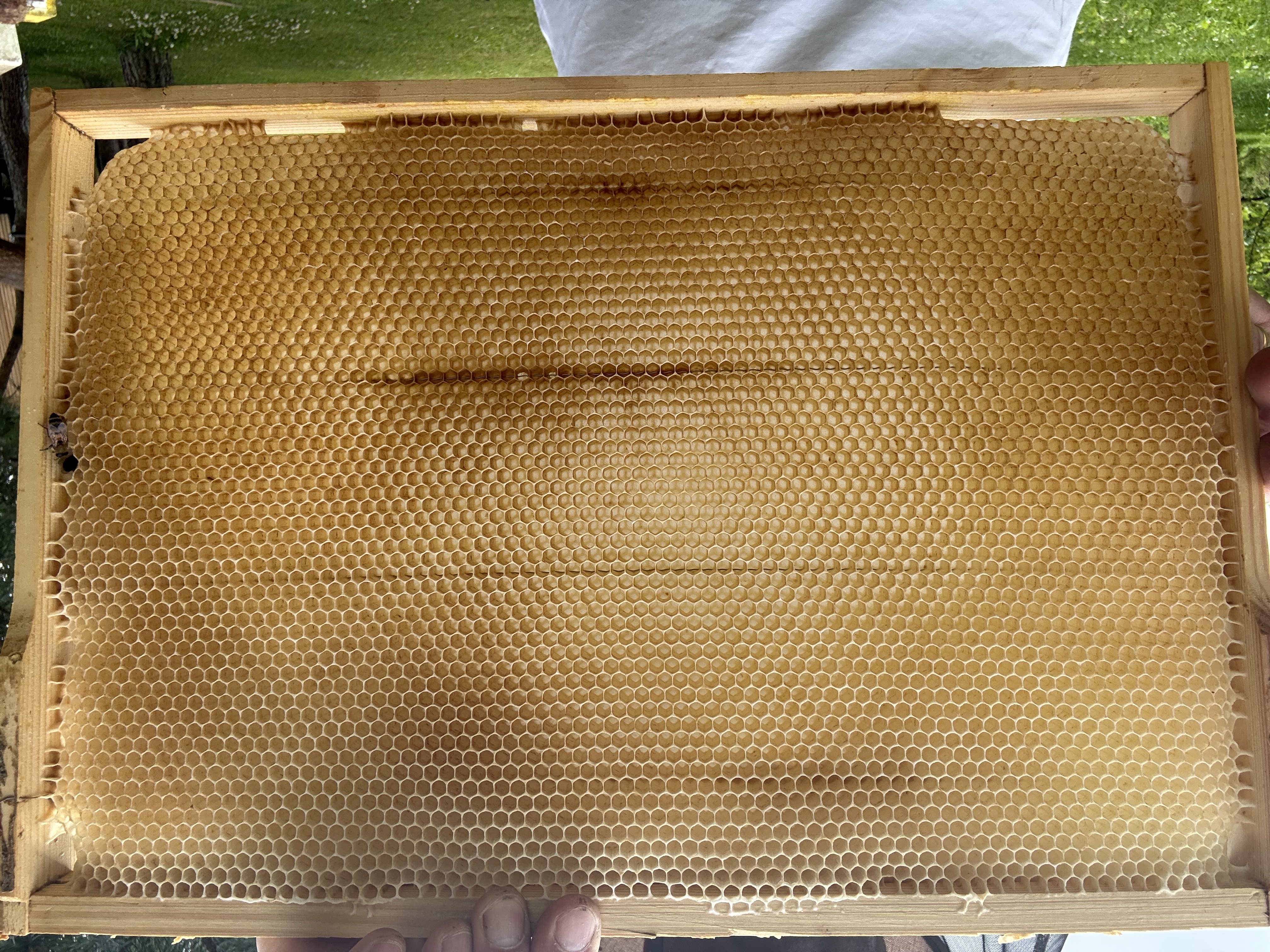
Side B
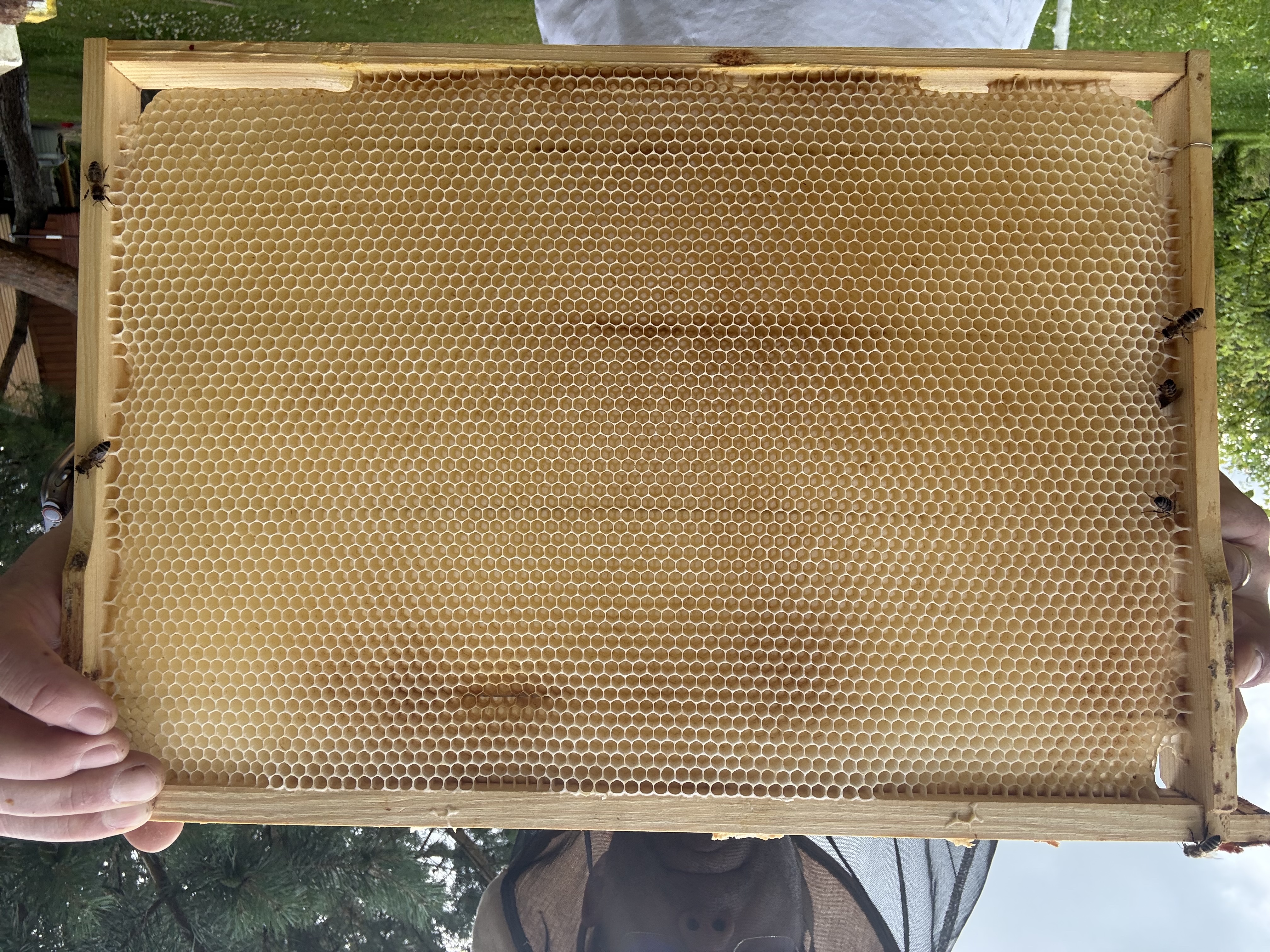
Side A
This side of the frame shows mostly empty, drawn-out comb with no visible bees, brood, or honey.
Side B
This side of the frame also displays largely empty comb with a few bees present on the edges.
Both sides of this frame consist primarily of empty, drawn-out comb with minimal bee activity. There is no visible brood or honey storage on either side, suggesting it might be a new frame being prepared or a recently emptied one.