Inspection Results
27 Jun 2026
Hive #9 · 20 frame sides captured
90
Colony Strength
Strong
It is recommended to consider supplemental feeding to build up honey reserves. Plan for varroa mite monitoring soon, as no data was collected during this inspection.
Queen Status
Not spotted, but strong brood indicates presence and laying
Brood Pattern
Strong and consistent
Honey Stores
Low, requires monitoring
Varroa Risk
Undetermined (no data provided)
AI Observations
The inspection covered all 10 frames, revealing a strong and populous colony with 6319 bees. Brood development is excellent and widespread, averaging 48% coverage across 8 frames, strongly indicating a productive queen, though she was not directly observed. Honey stores are currently low at an average of 12%.
Frame Analysis — 10 frames
Frame 1
Side A
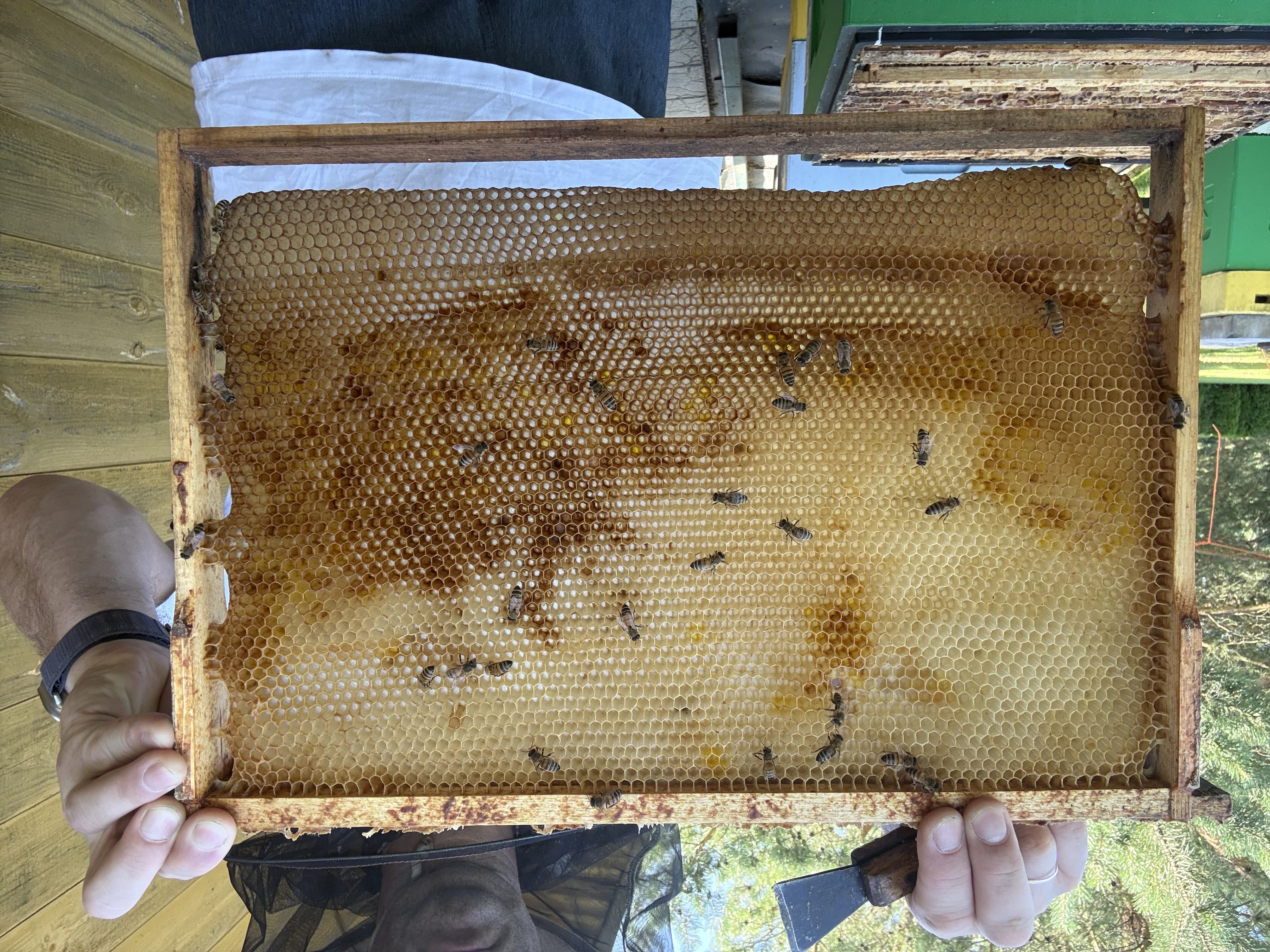
Side B
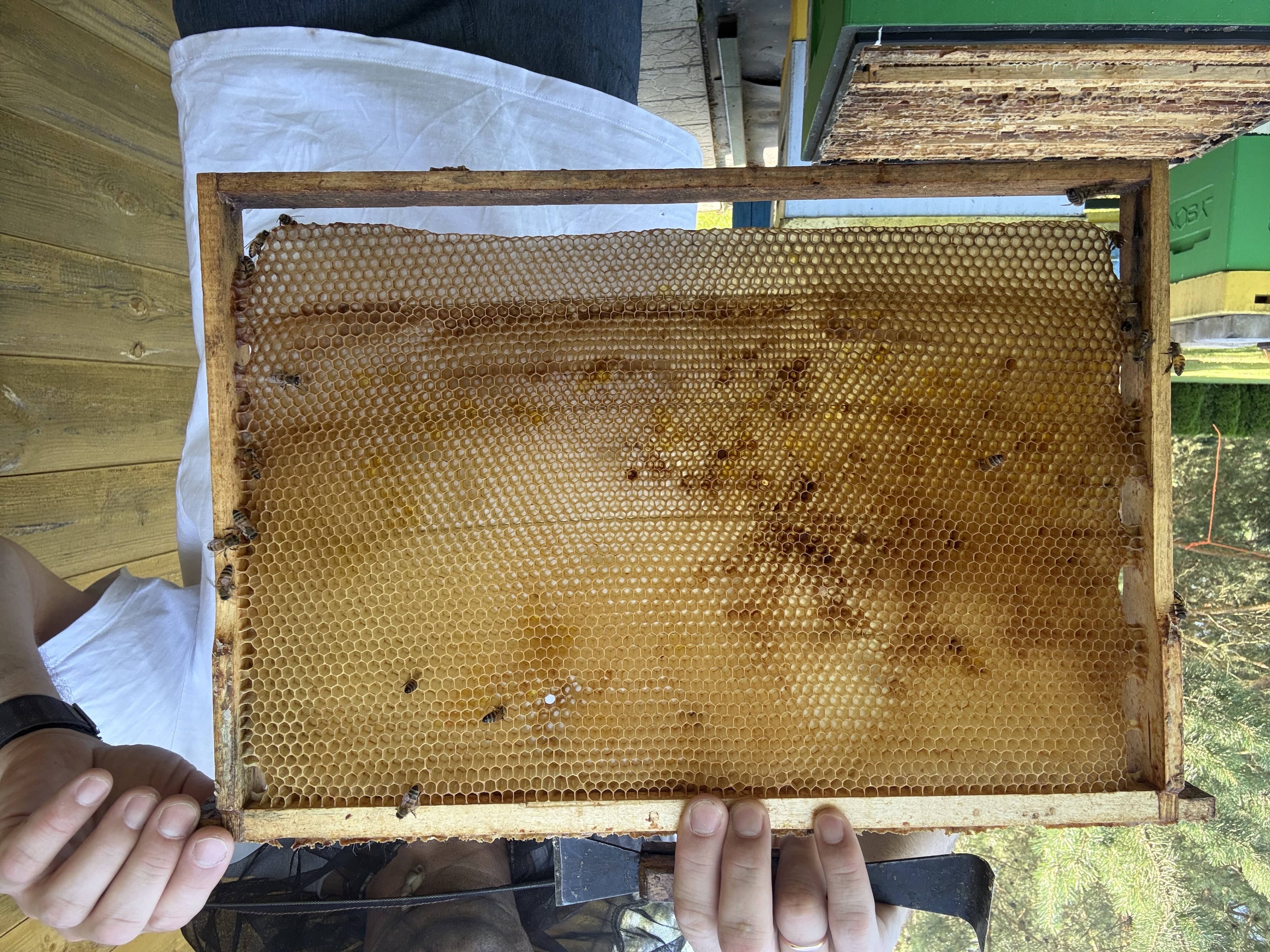
Side A
This side of the frame shows mostly empty comb with a few scattered bees and minimal honey stores.
Side B
The reverse side of the frame also largely consists of empty comb with a low bee count and sparse honey.
This frame is mostly empty, indicating it might be a new or recently drawn comb, or placed at the edge of the brood nest. It contains very few bees and minimal stores of honey, with no visible brood.
Frame 2
Side A
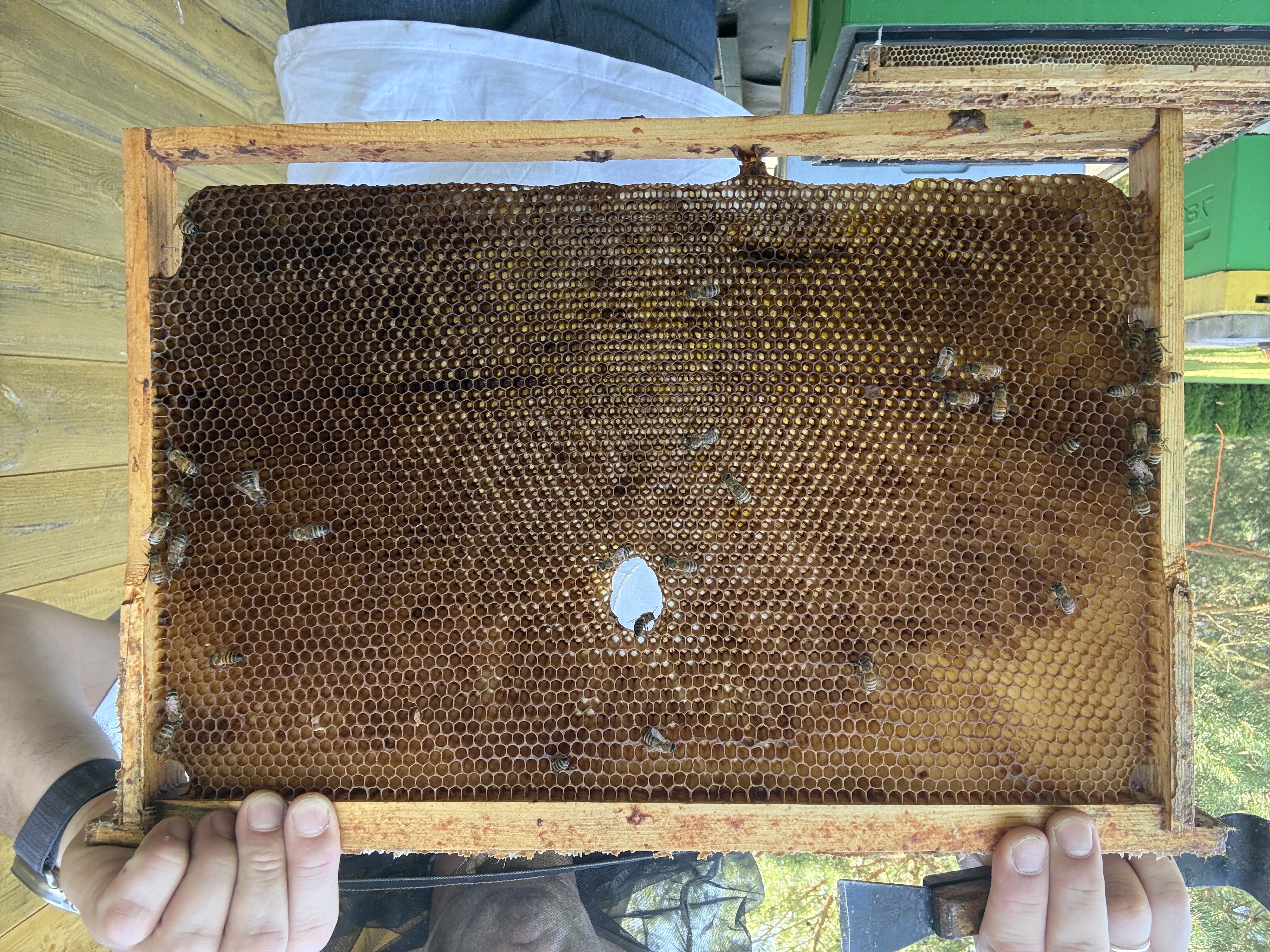
Side B
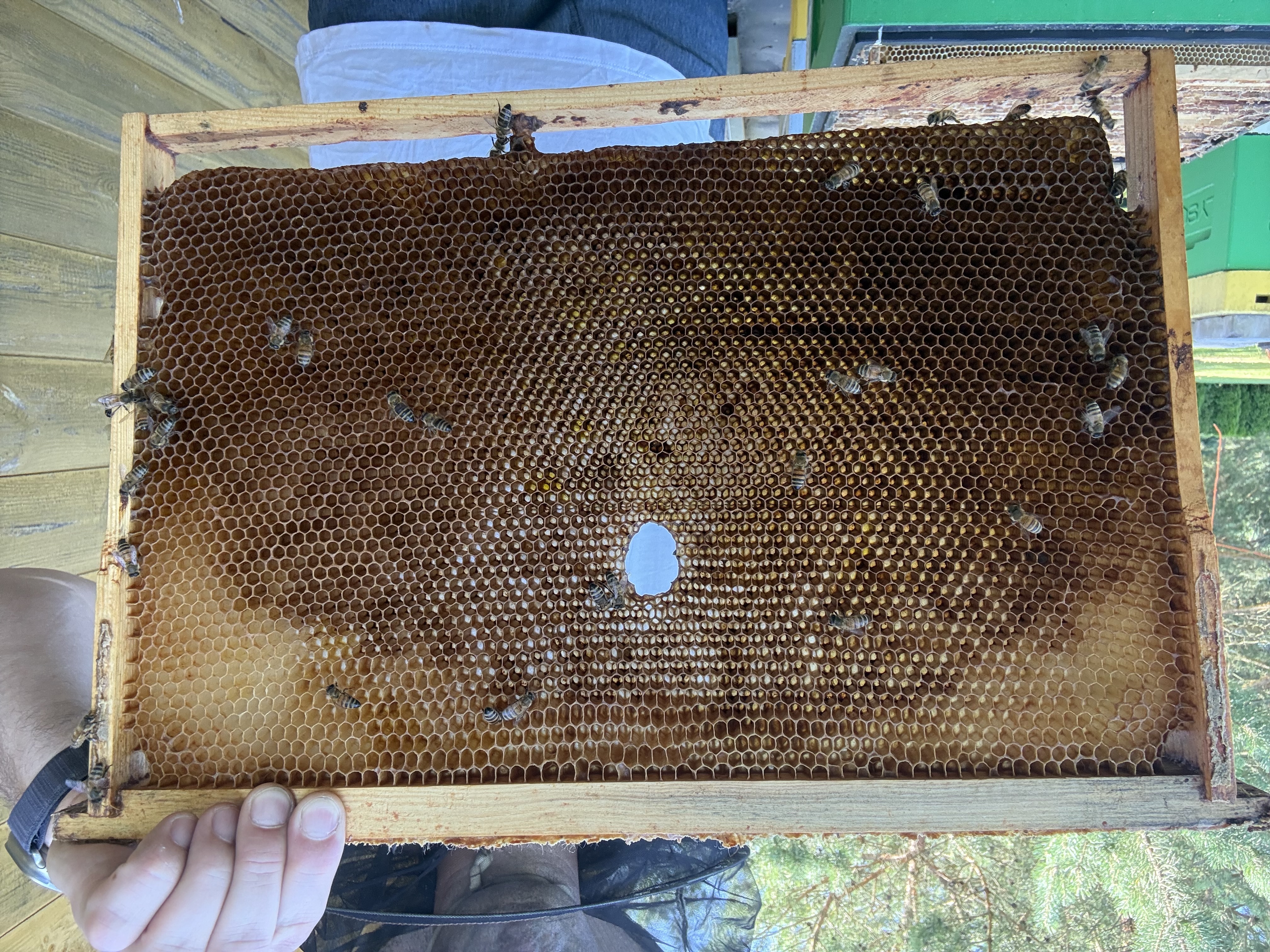
Side A
This side of the frame features mostly empty or partially filled cells and a distinctive circular cut-out in the center of the comb.
Side B
The opposite side of the frame also displays largely empty comb with some honey, along with the distinctive circular hole.
This frame shows mainly empty comb with some sparse honey, and a large circular section of comb has been removed from the center on both sides. It appears to be a foundation-less or experimental comb where a queen cell might have been harvested, or perhaps to encourage new comb building.
Frame 3
Side A
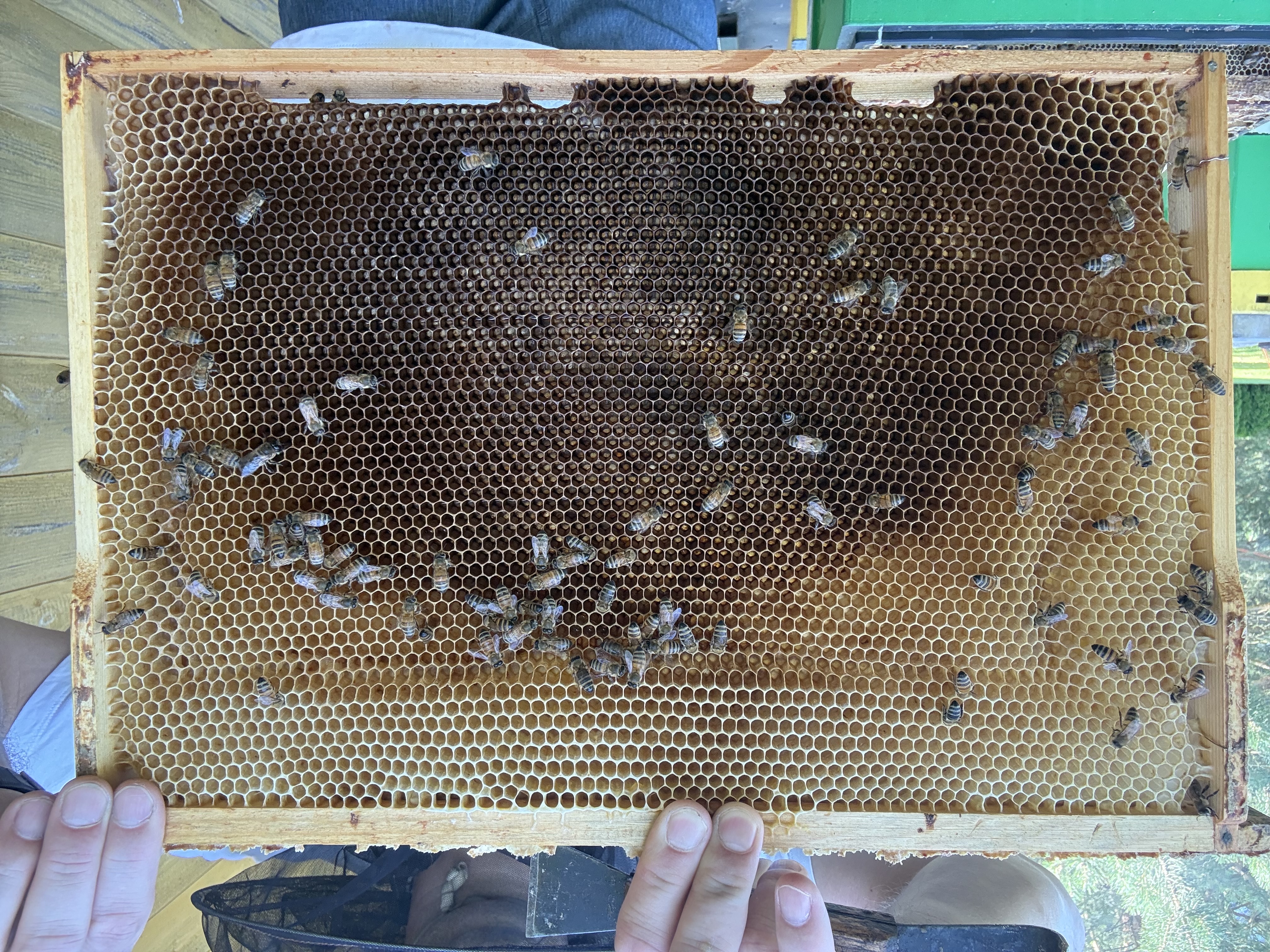
Side B
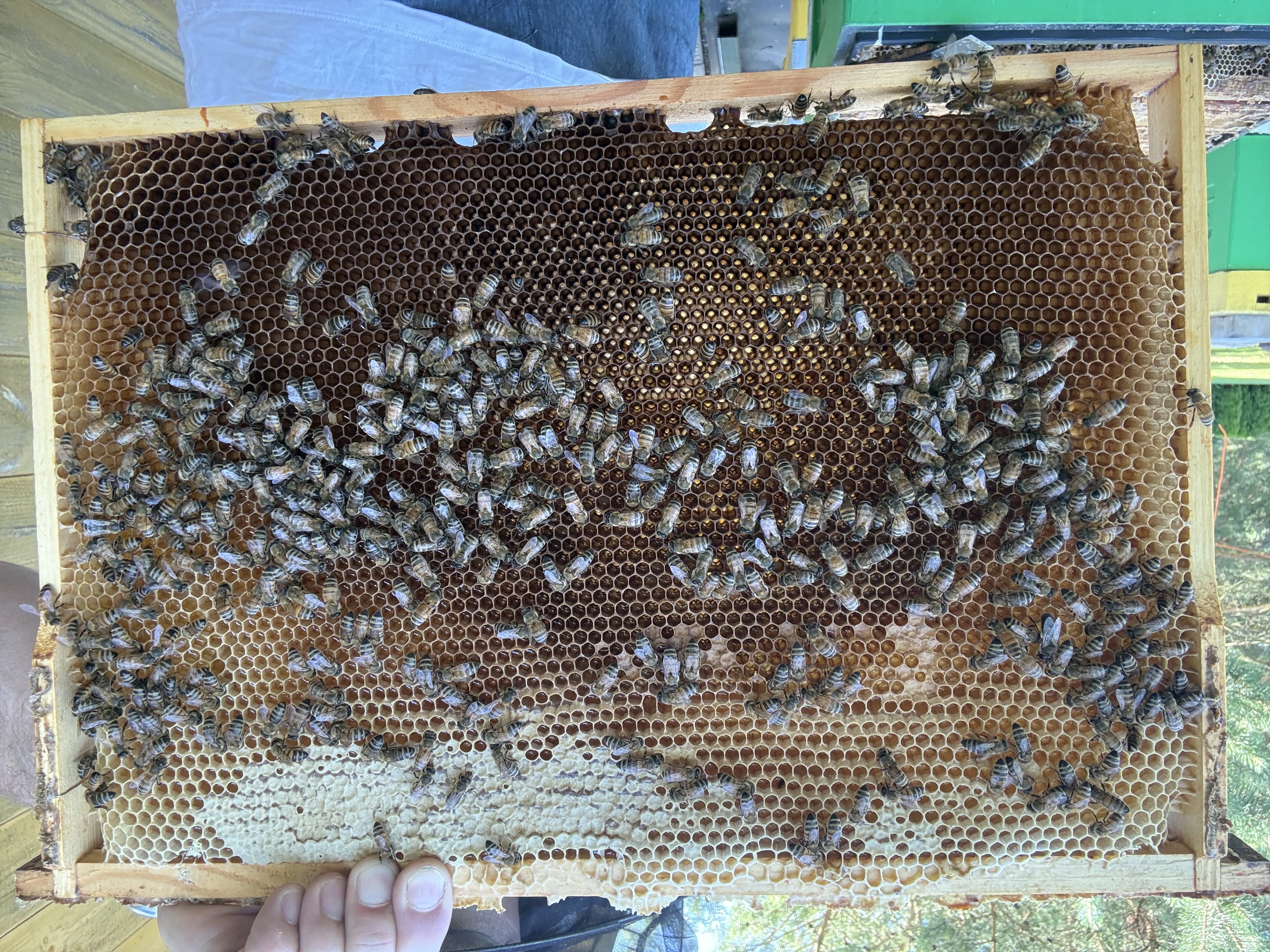
Side A
This frame shows a decent population of bees, with a central area of capped brood and some honey stores towards the top.
Side B
The reverse side is heavily populated with bees, displaying a larger area of mixed capped and uncapped brood, along with some honey.
This frame is well-populated with bees and contains a significant amount of brood, indicating an active laying queen. Honey stores are also present, primarily at the top of the frame.
Frame 4
Side A
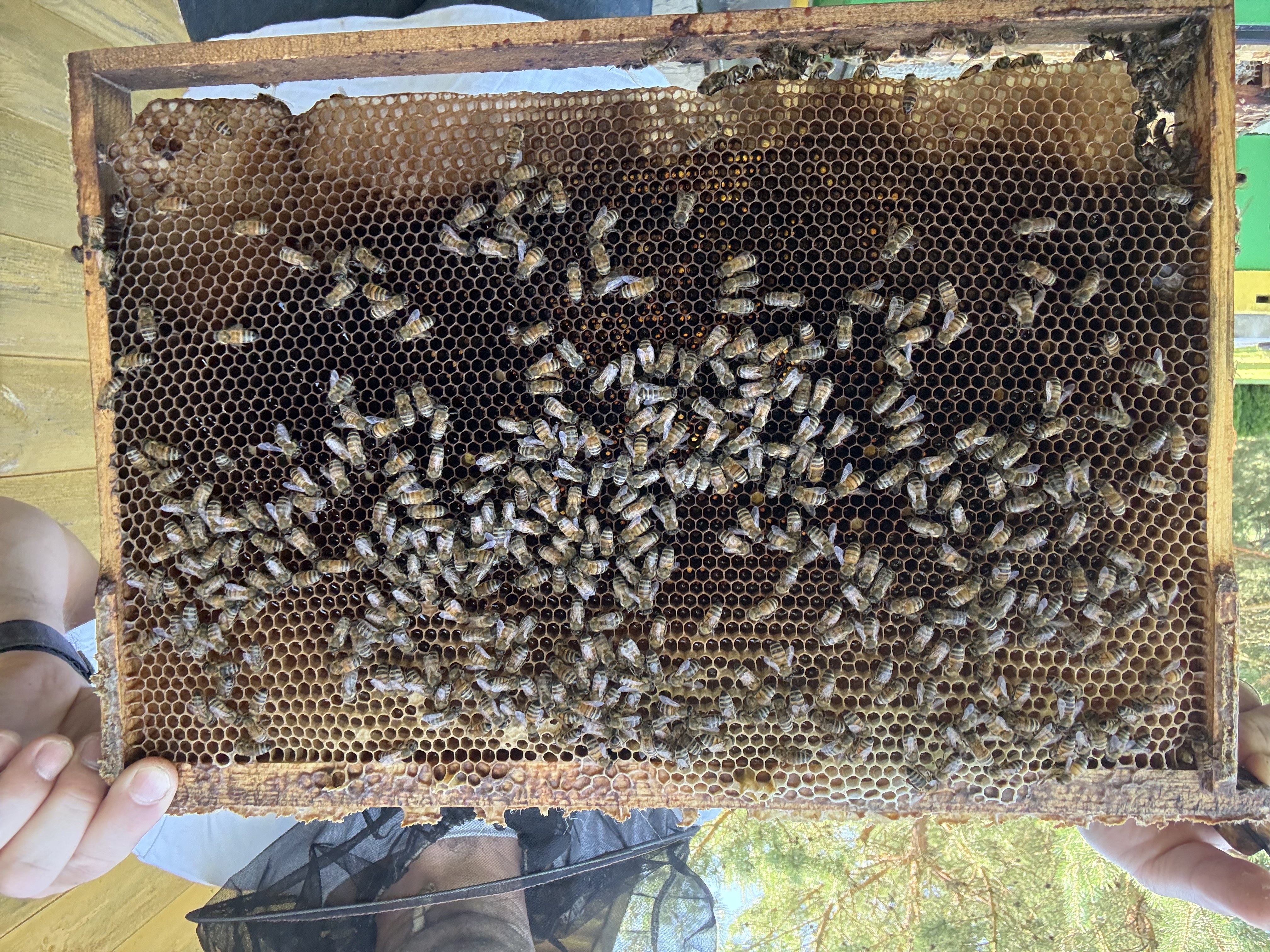
Side B
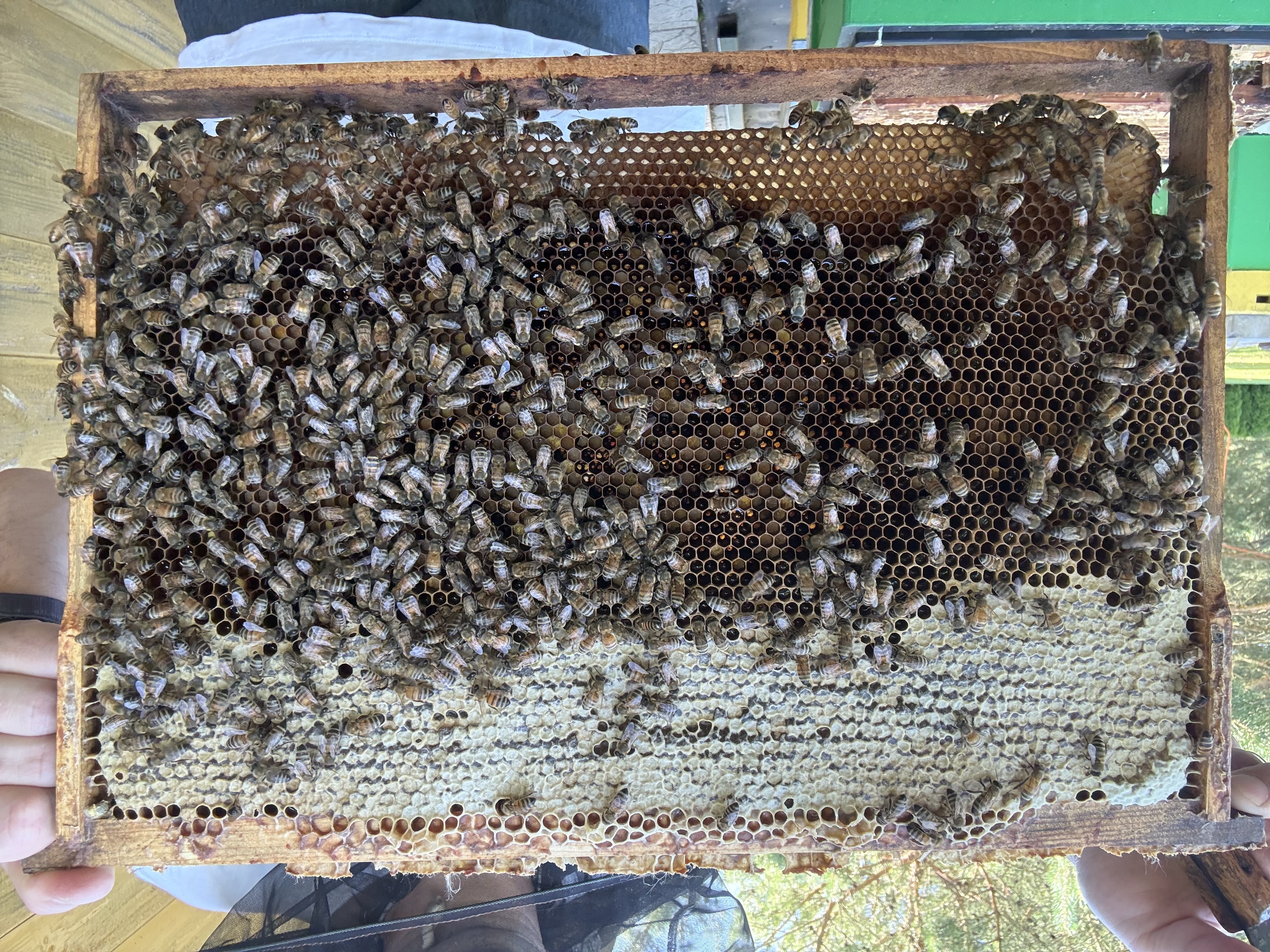
Side A
This side of the frame is densely packed with bees, making it difficult to assess the underlying comb composition but indicating a strong brood area.
Side B
The entire surface of this frame is blanketed with bees, with a small band of capped honey visible at the very top.
This frame is teeming with bees on both sides, suggesting a very strong and healthy colony. While the comb contents are largely obscured by the bee population, it is likely a central brood frame with some surrounding honey.
Frame 5
Side A
Side B
Side A
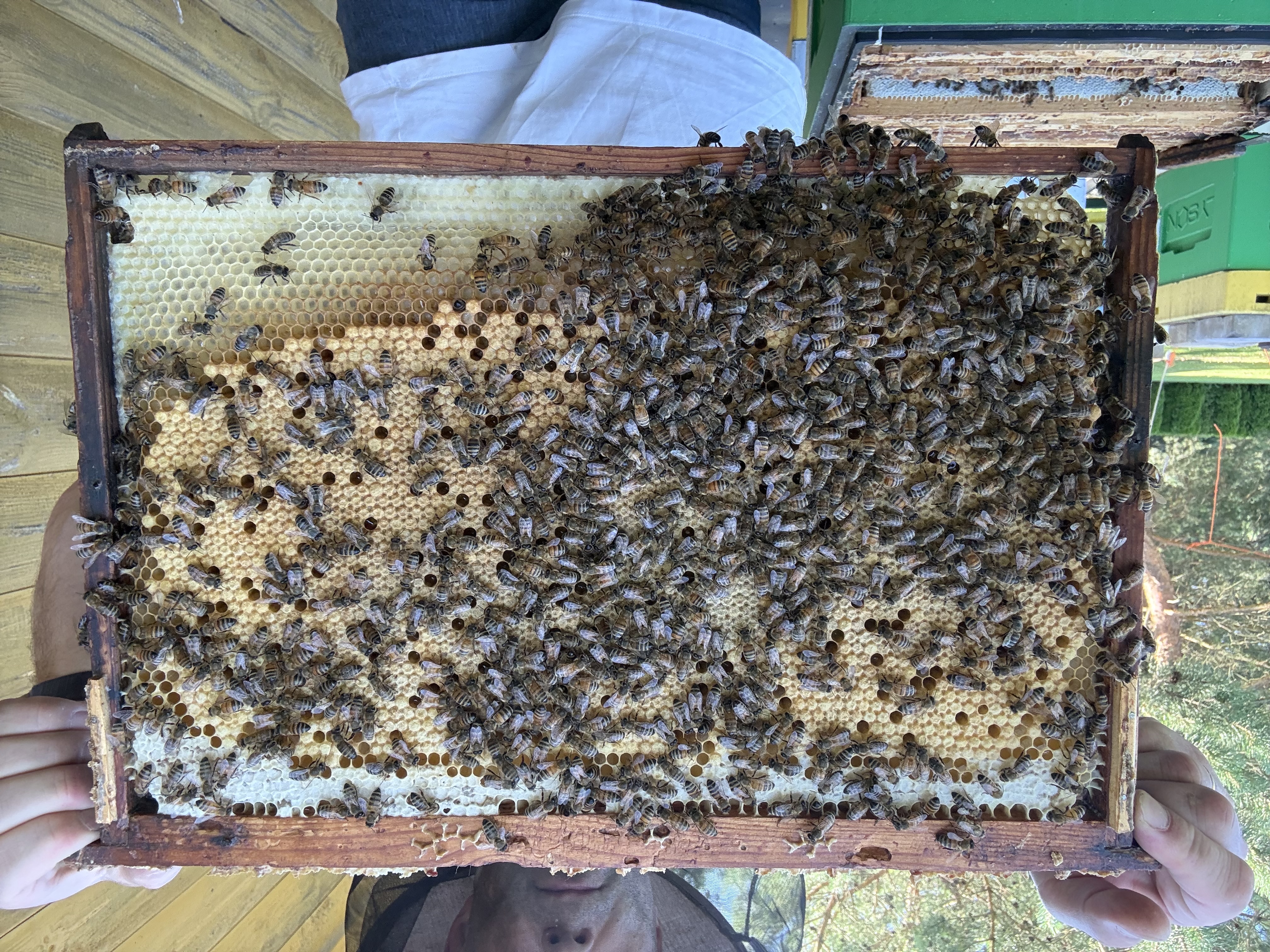
This frame shows a strong population of bees covering a large area of capped brood and some capped honey at the top.
Side B
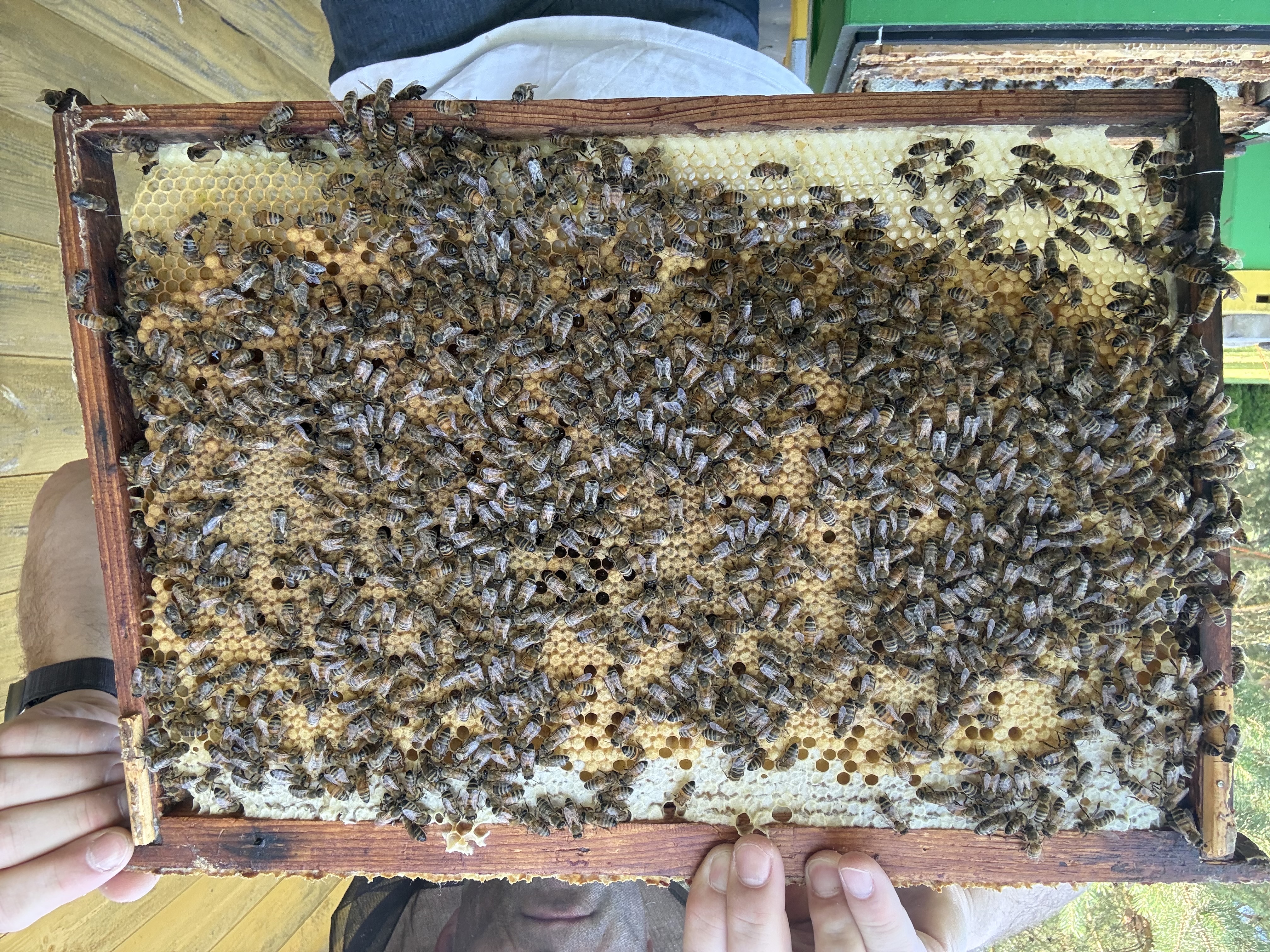
The reverse side is also heavily covered with bees, displaying extensive capped brood and a larger band of capped honey.
This frame is highly active with a large bee population, predominantly featuring extensive capped brood. It also contains significant capped honey stores, suggesting a robust and productive part of the hive.
Frame 6
Side A
Side B
Side A
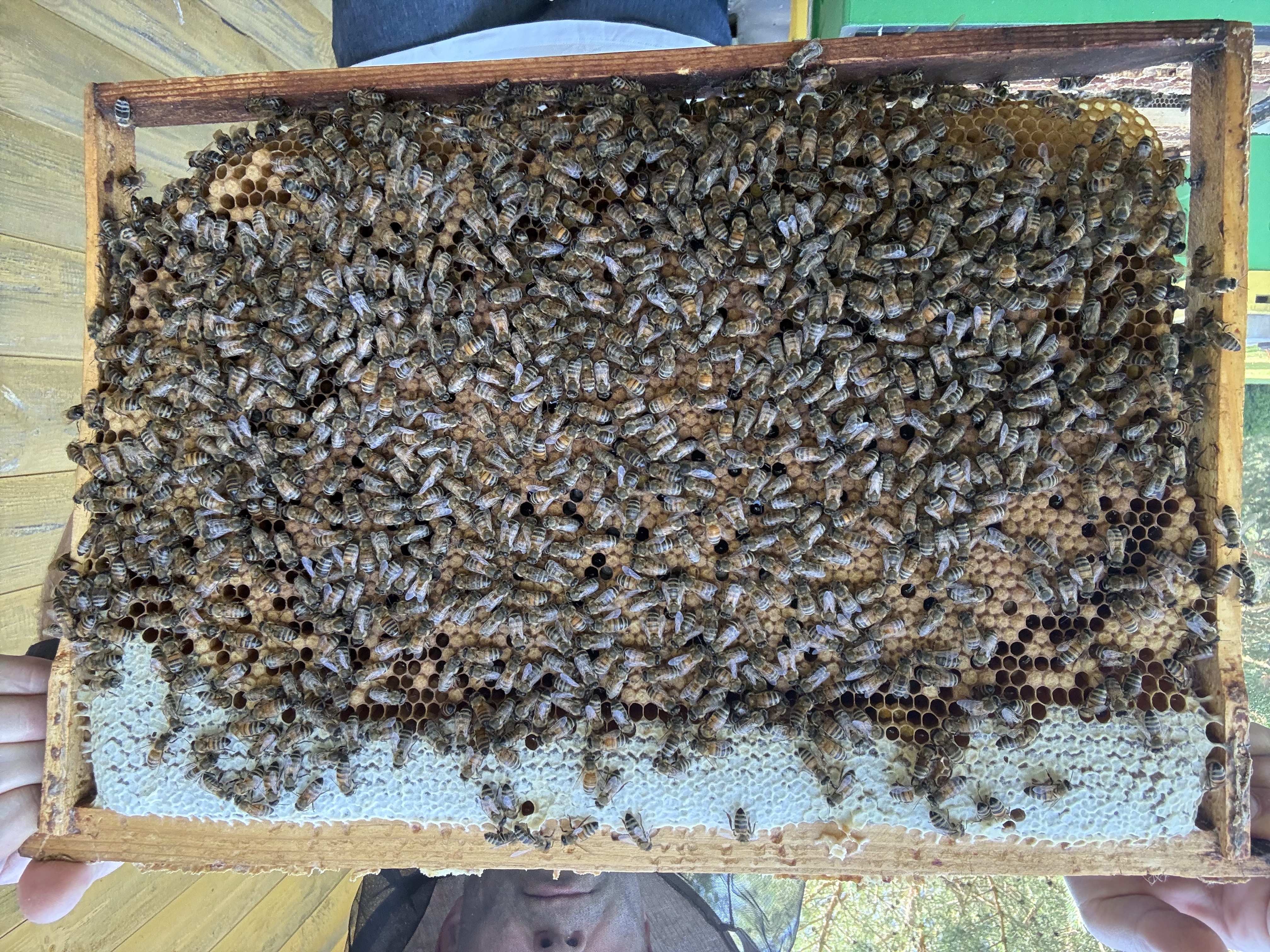
This side of the frame is densely populated with bees, revealing a large area of brood, likely mixed with pollen, and capped honey along the top.
Side B
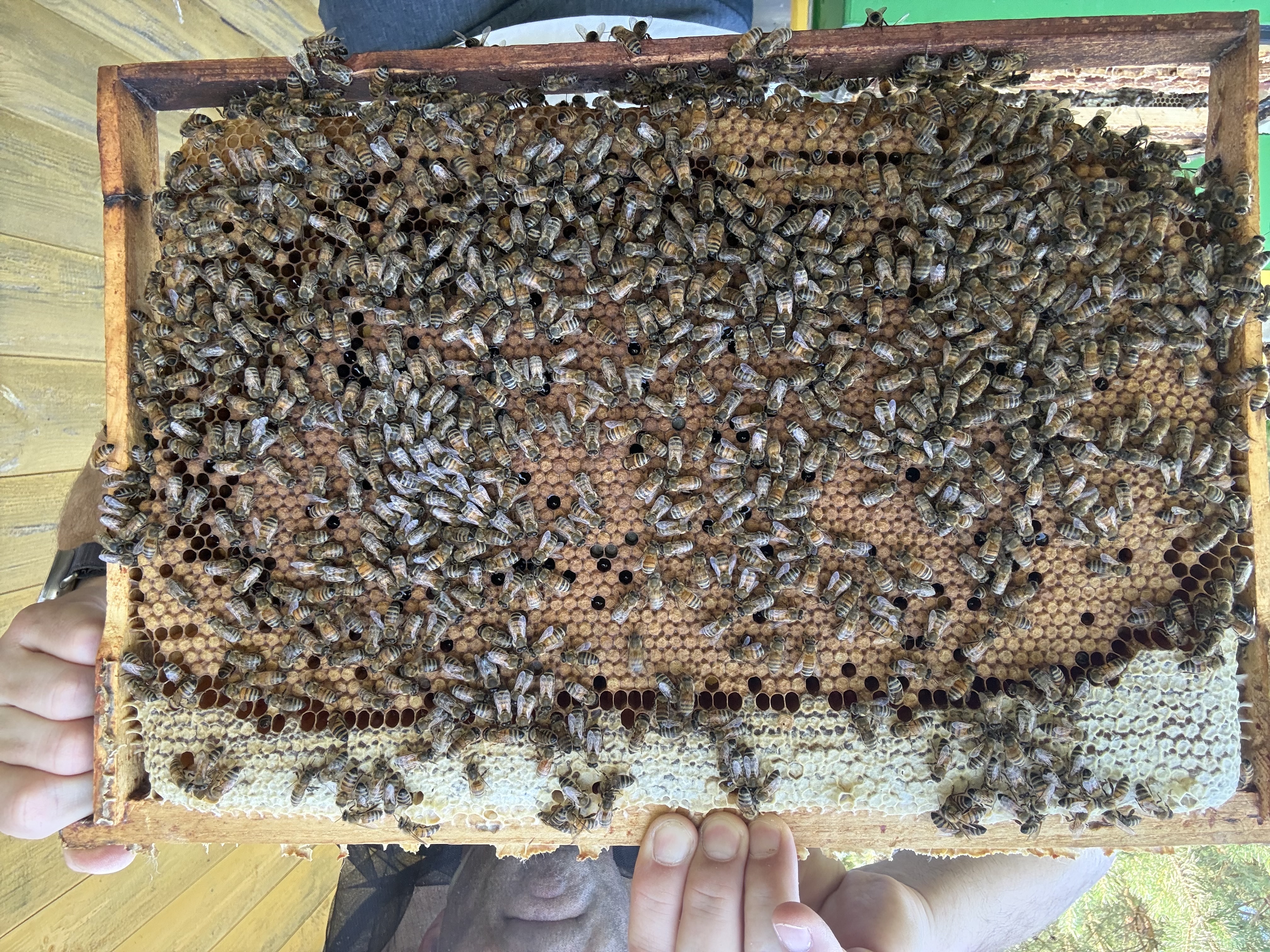
The reverse side is heavily covered with bees, showing a large central area of capped brood interspersed with pollen, and a substantial band of capped honey at the top.
This frame exhibits a thriving bee population, with both sides showing extensive capped brood and significant amounts of pollen. It also features well-established capped honey stores, primarily at the top of the frame.
Frame 7
Side A
Side B
Side A
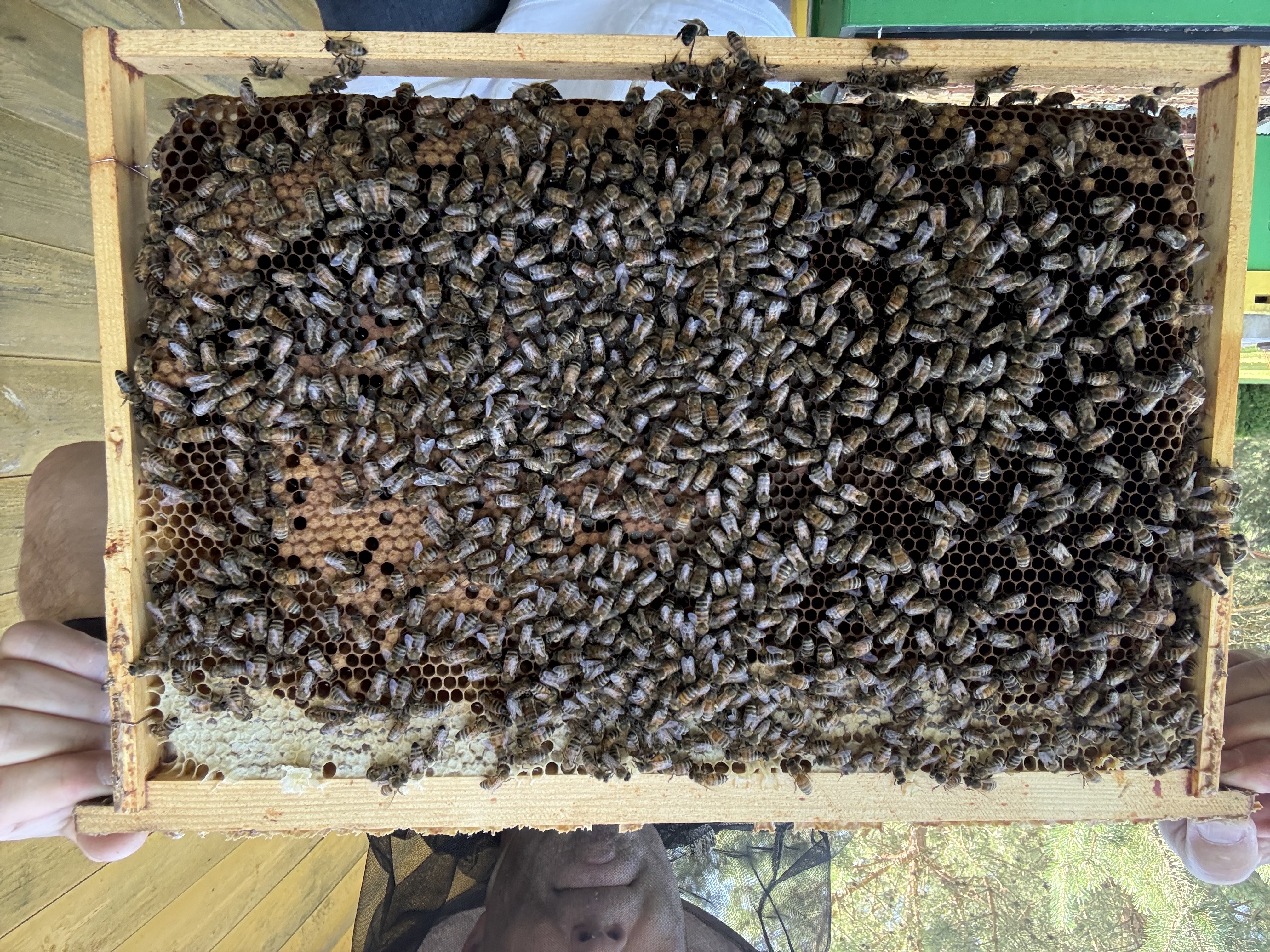
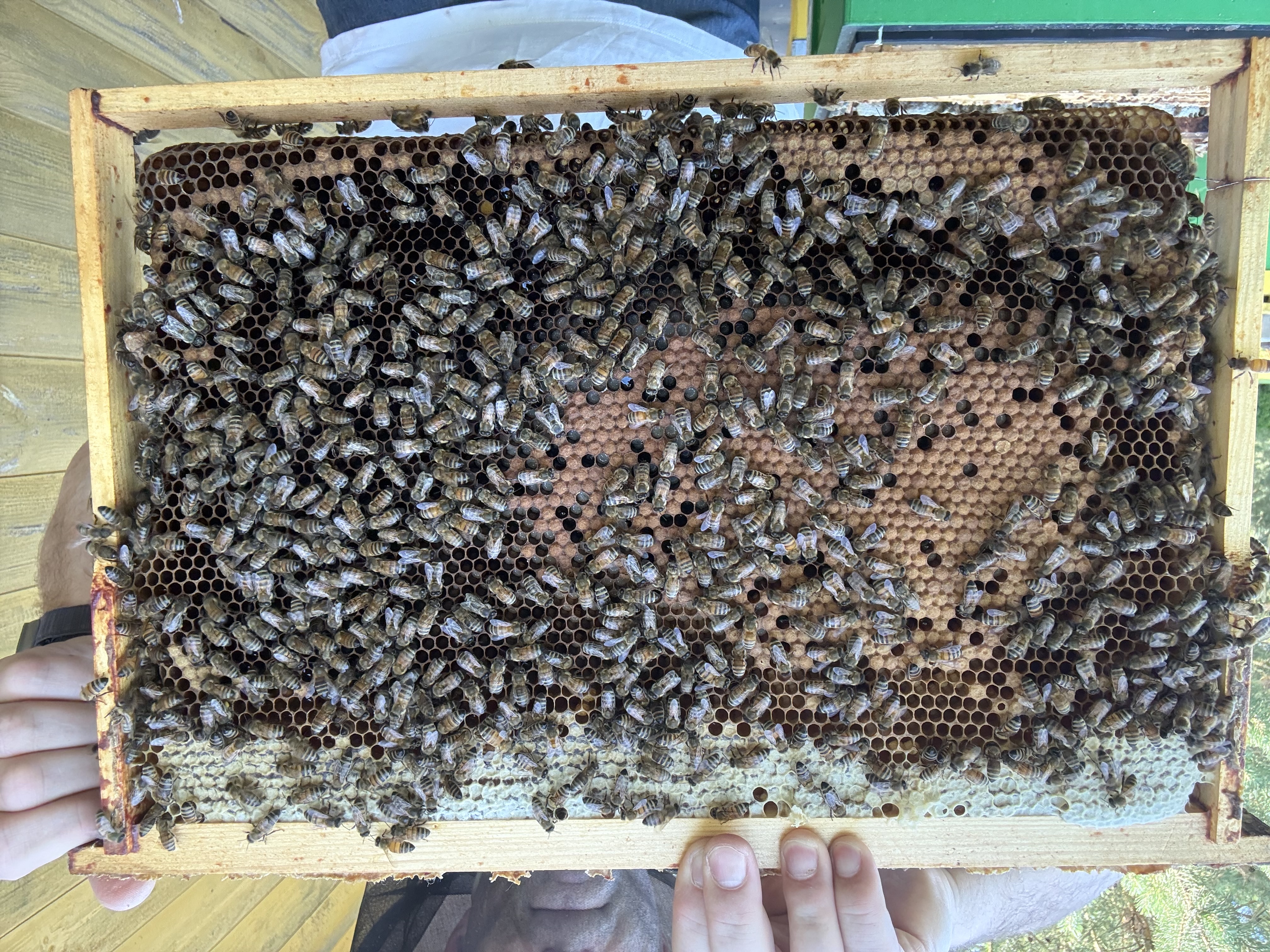
This frame is well-covered with bees, displaying a large central area of capped brood and pollen, bordered by capped honey at the top.
Side B
The reverse side also shows strong bee coverage over extensive capped brood and pollen, with a substantial portion of capped honey.
This frame is rich with activity, showing a high concentration of bees across significant areas of capped brood and pollen on both sides. It is also well-stocked with capped honey, particularly in the upper sections.
Frame 8
Side A
Side B
Side A
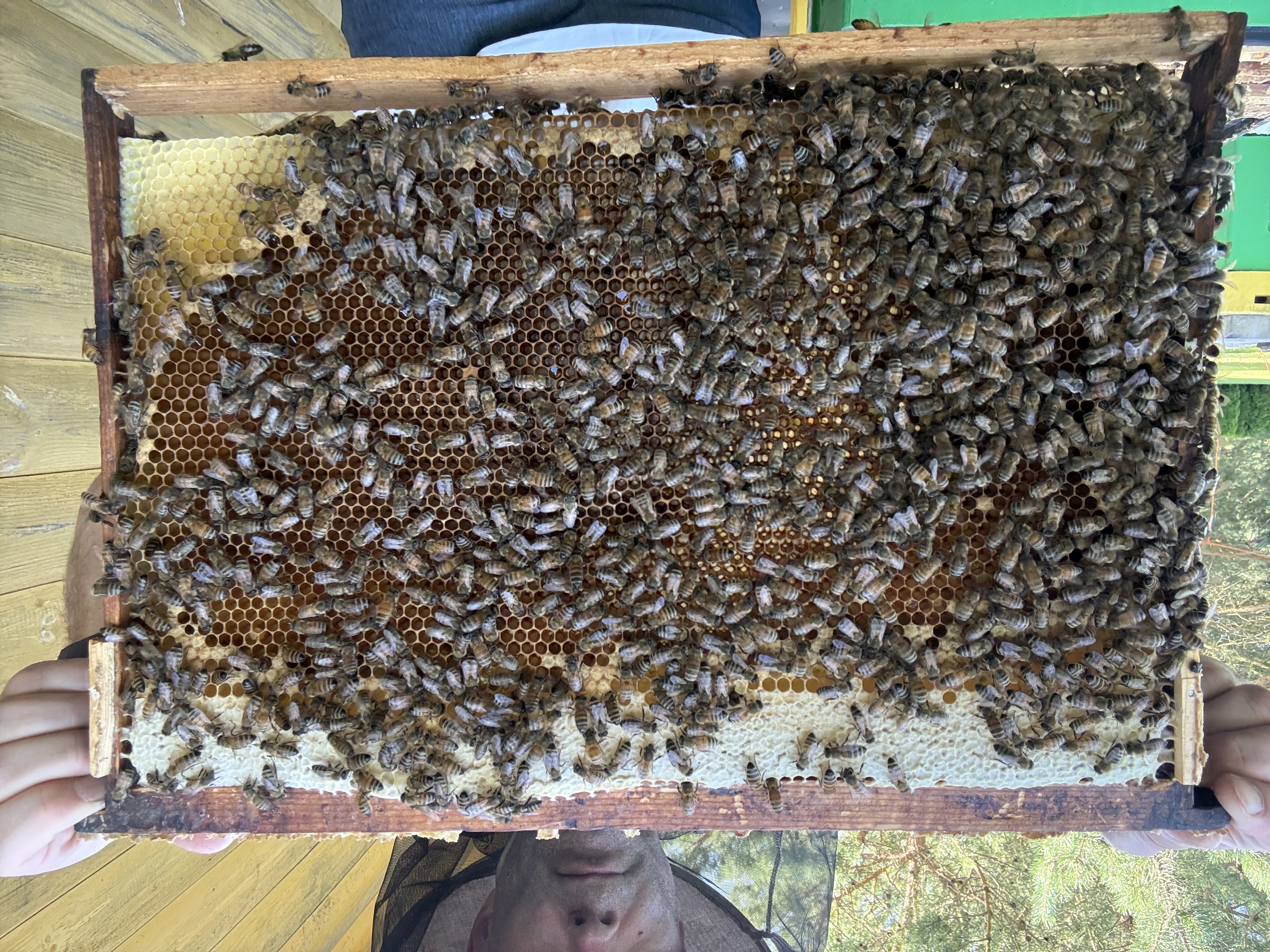
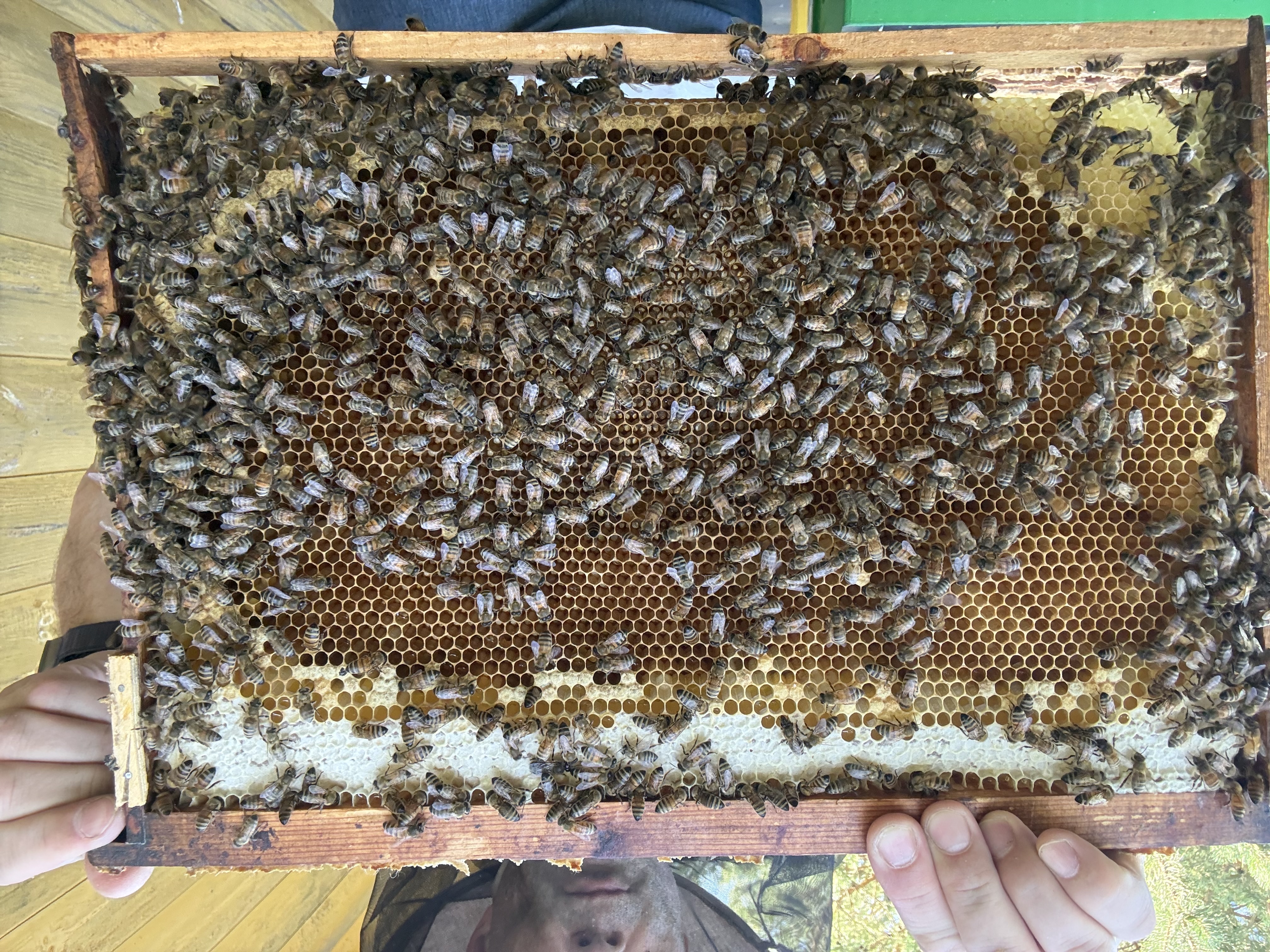
This side of the frame is covered with bees, showing a large area of capped brood and pollen, along with capped honey at the top.
Side B
The final side of the frame also presents a healthy bee population, extensive capped brood and pollen, and a good amount of capped honey stores.
This last frame of the inspection confirms the health of the colony, featuring abundant bees, extensive capped brood, and significant pollen stores. A healthy amount of capped honey is also present, securing resources for the colony.
Frame 9
Side A
Side B
Side A
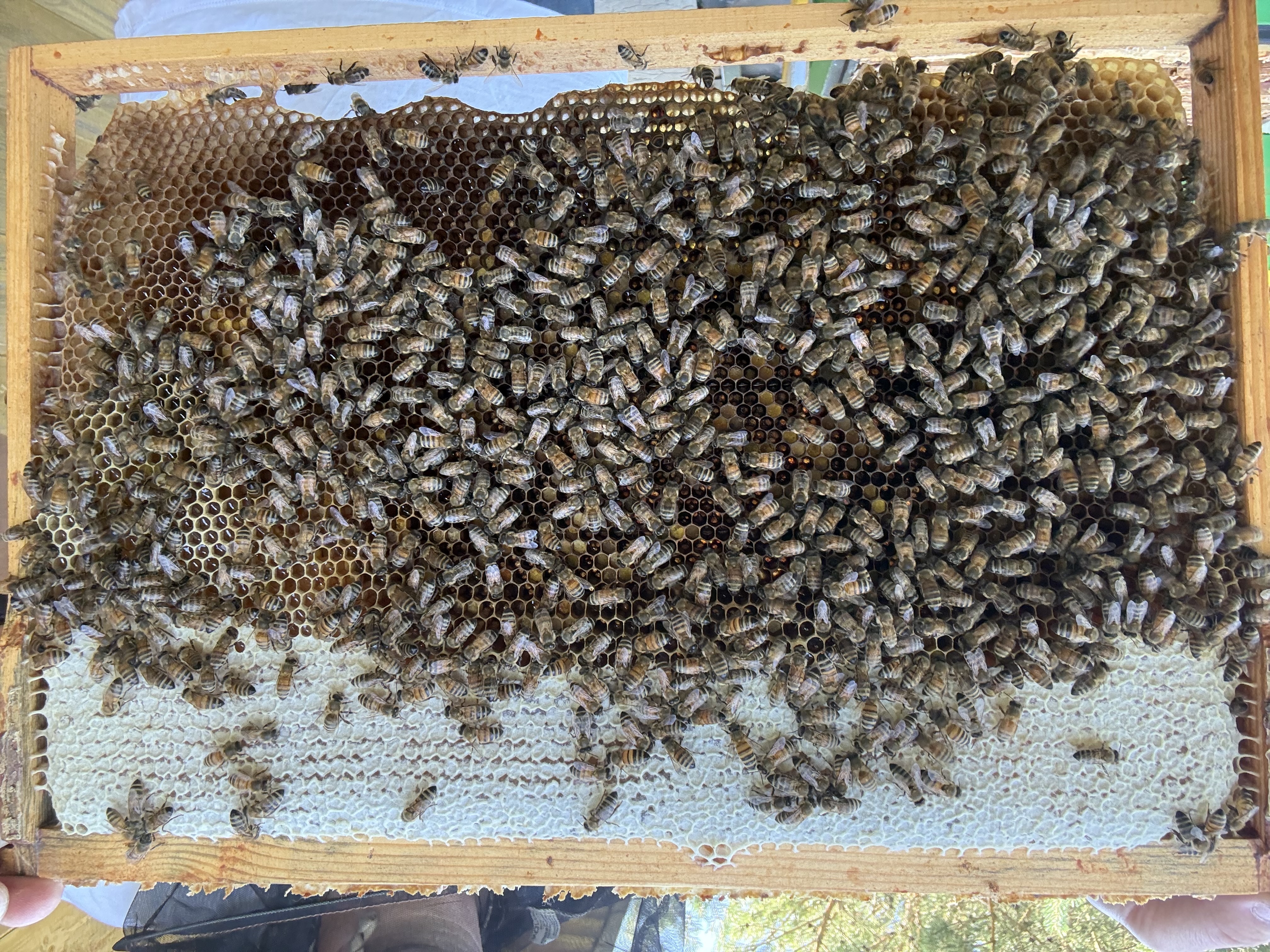
This side of the frame is densely populated with worker bees, showing extensive capped brood in the central and lower sections, and some visible stores at the top.
Side B
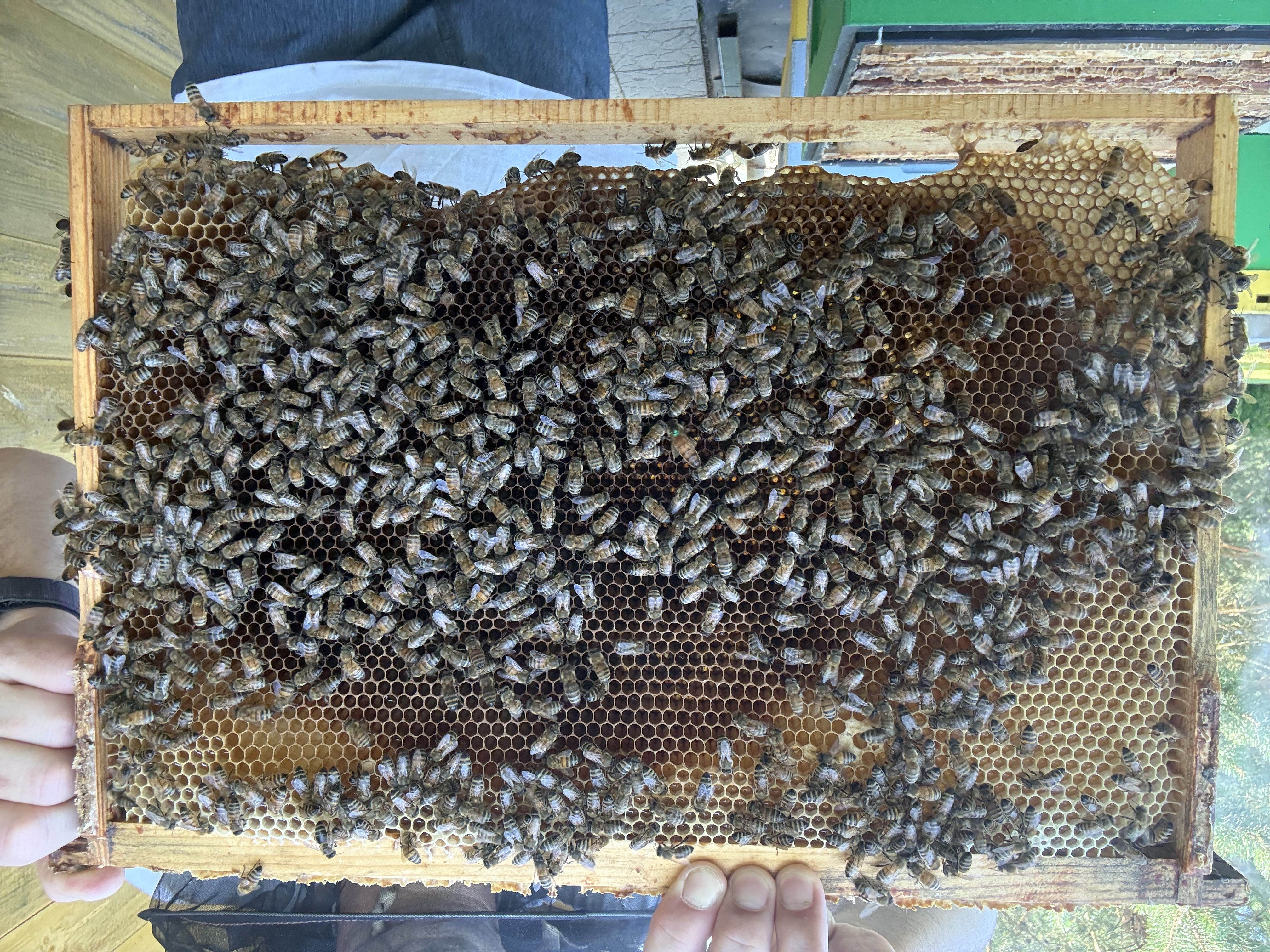
This side features a strong bee presence covering a large area of capped brood and some pollen or honey cells.
Both sides of this frame show high bee activity and substantial brood production. A large proportion of the comb is dedicated to capped brood, indicating a healthy and expanding colony.
Frame 10
Side A
Side B
Side A
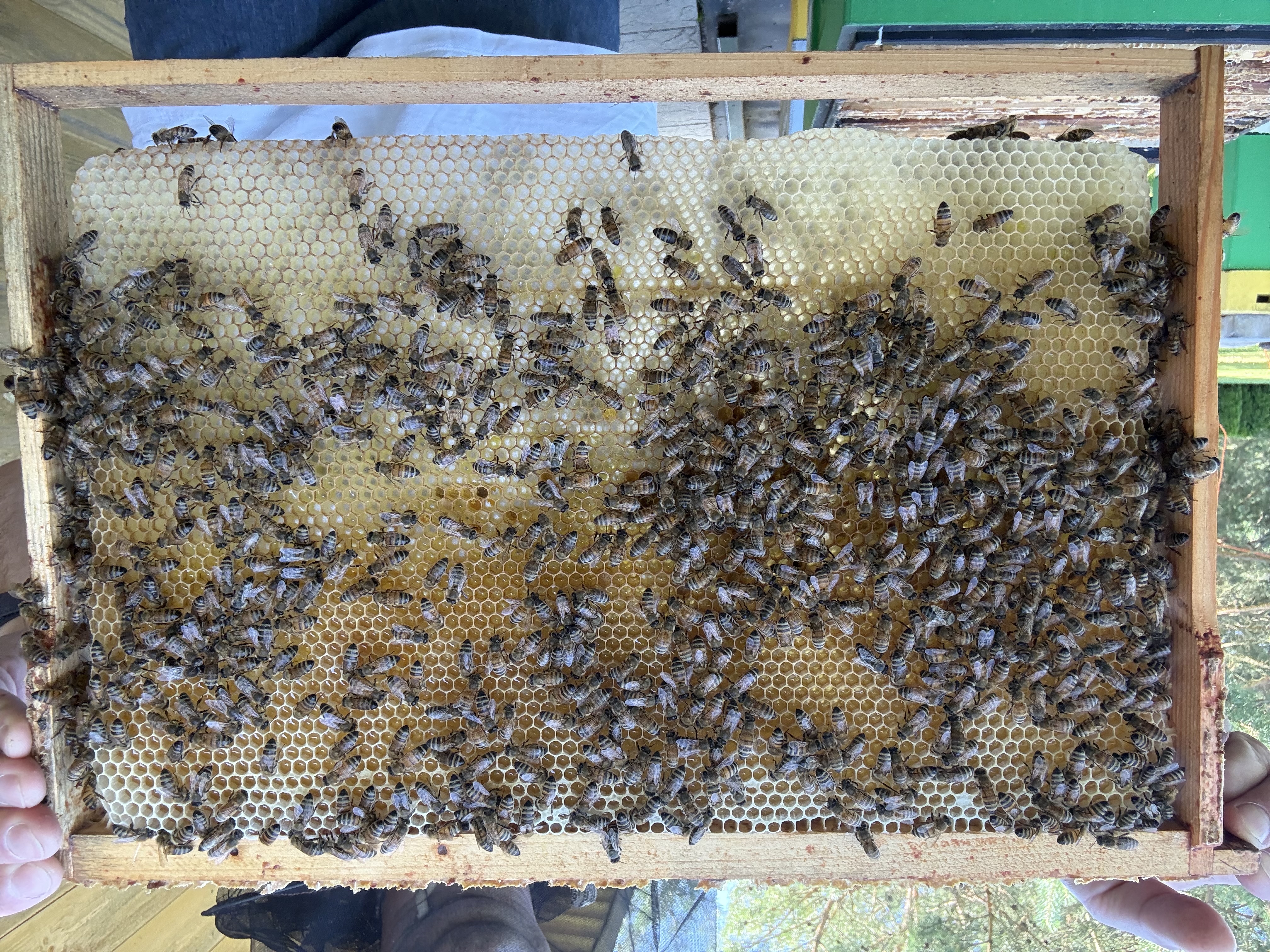
The frame shows a healthy pattern of capped brood across the middle, surrounded by active worker bees, with some nectar or honey visible in the upper corners.
Side B
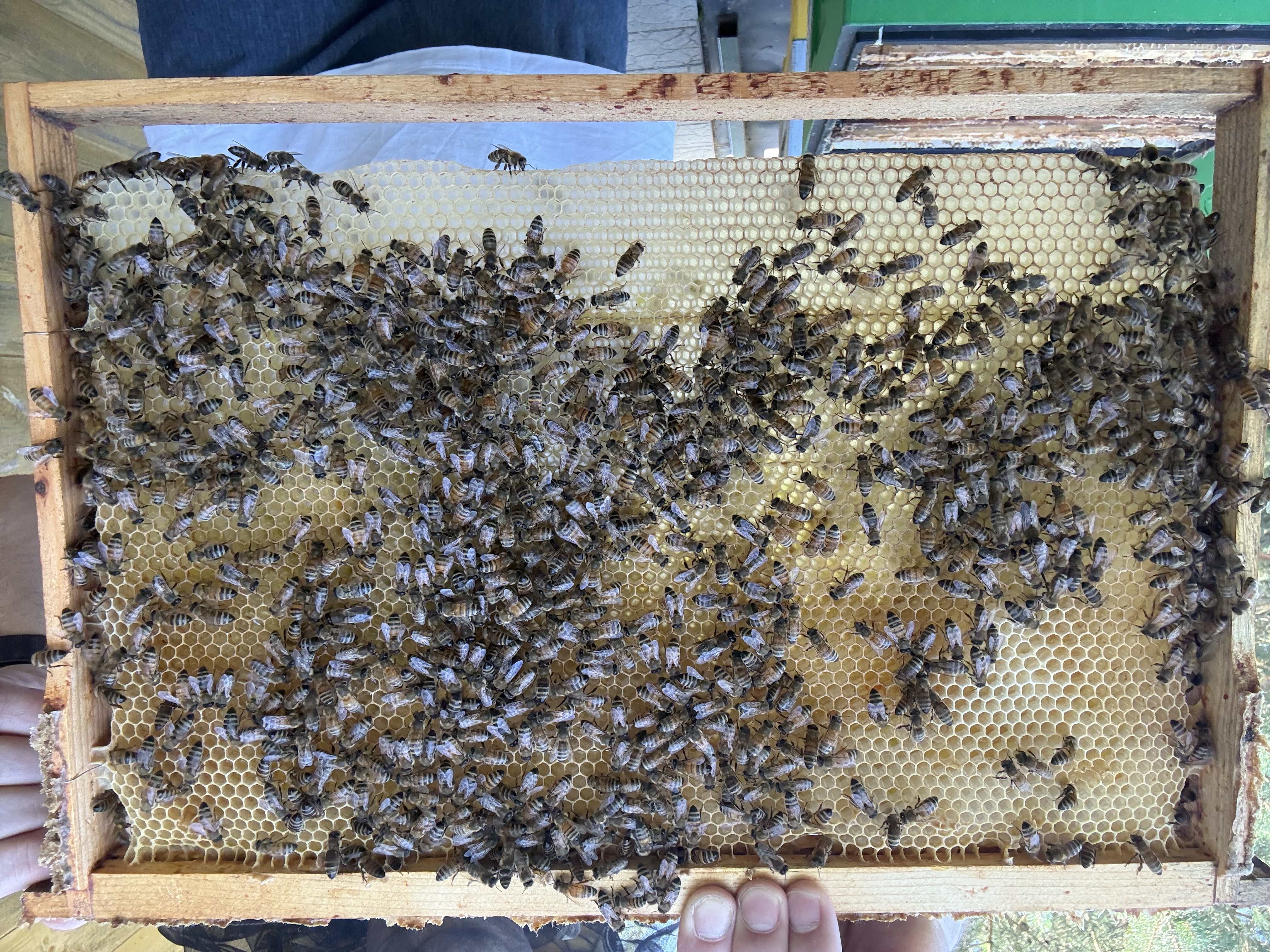
This side displays a moderate bee population with brood concentrated centrally and more significant stores of honey or pollen towards the top and edges.
This frame also demonstrates healthy brood patterns, though with a slightly less dense bee population compared to Group 1. There is a good mix of brood and visible honey or pollen stores, suggesting stable resources.