Inspection Results
27 Jun 2026
Hive #99 · 24 frame sides captured
25
Colony Strength
Weak
Immediately feed the colony with syrup to boost honey stores. Re-inspect for the queen and evidence of fresh eggs or young larvae; if none, consider re-queening or combining with a stronger hive.
Queen Status
Queen not spotted, potential queenlessness or laying issues
Brood Pattern
Poor (low coverage across 3 brood frames)
Honey Stores
Very low, requires immediate attention
Varroa Risk
Undetermined (no varroa data provided)
AI Observations
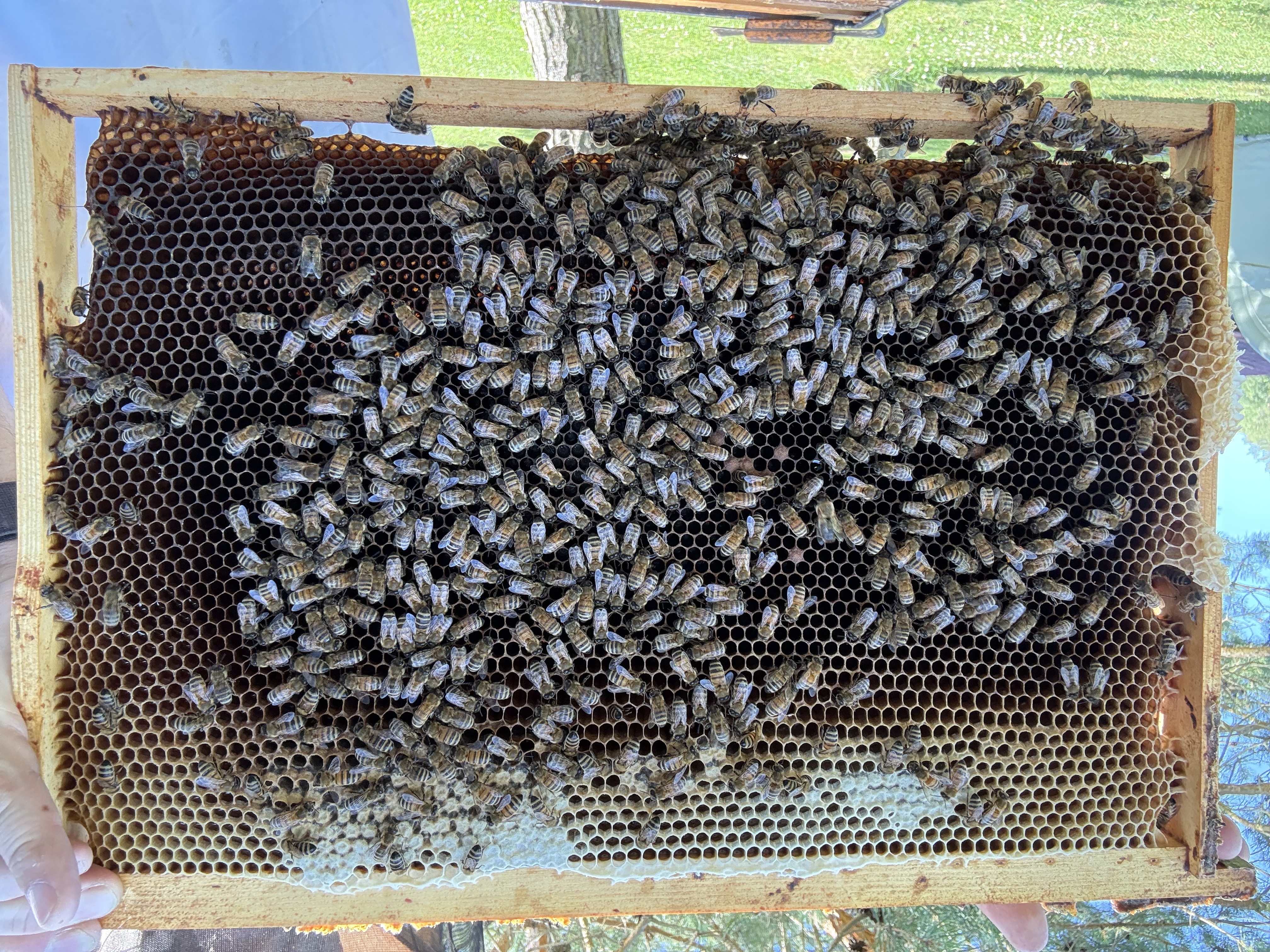
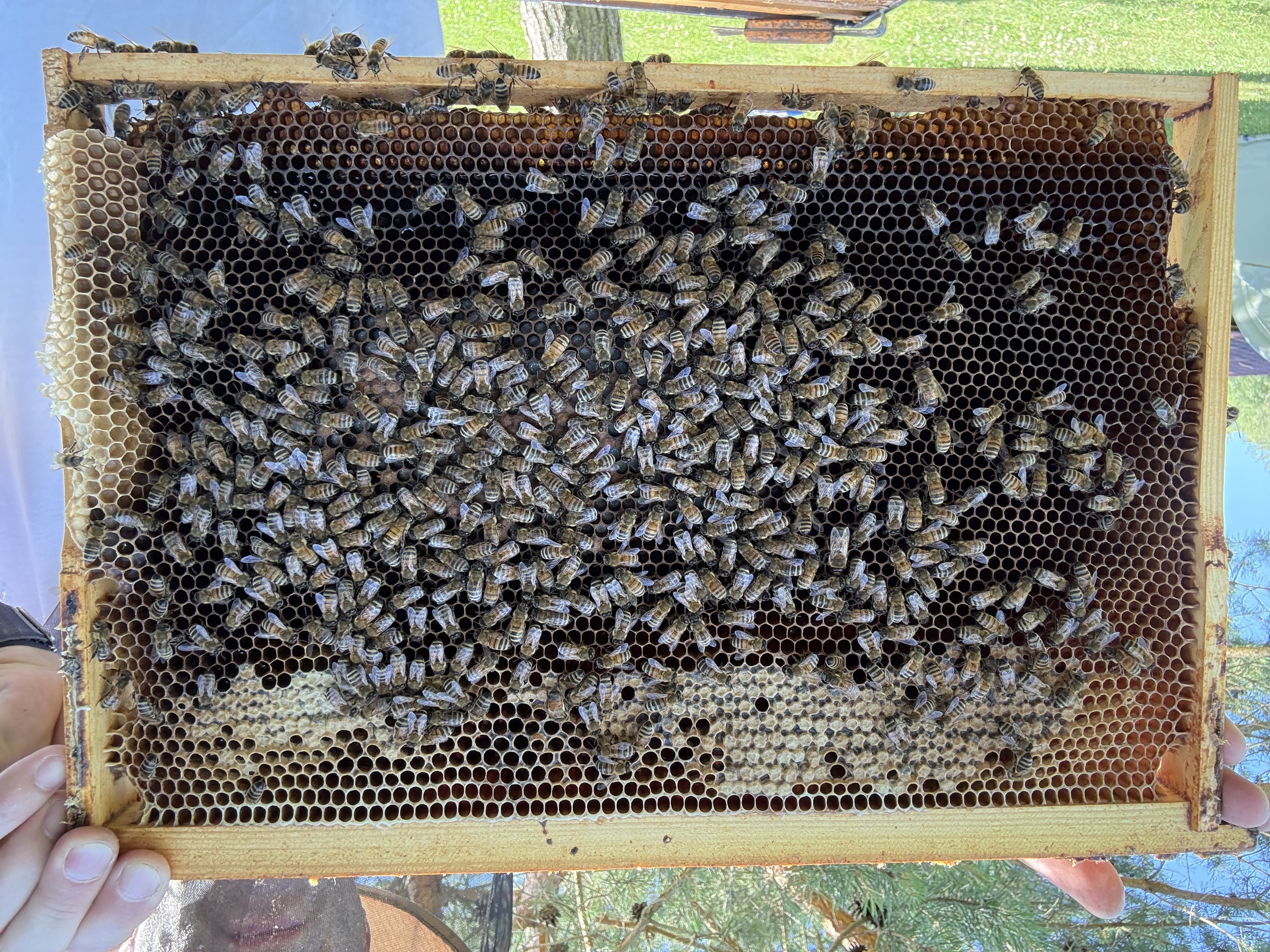
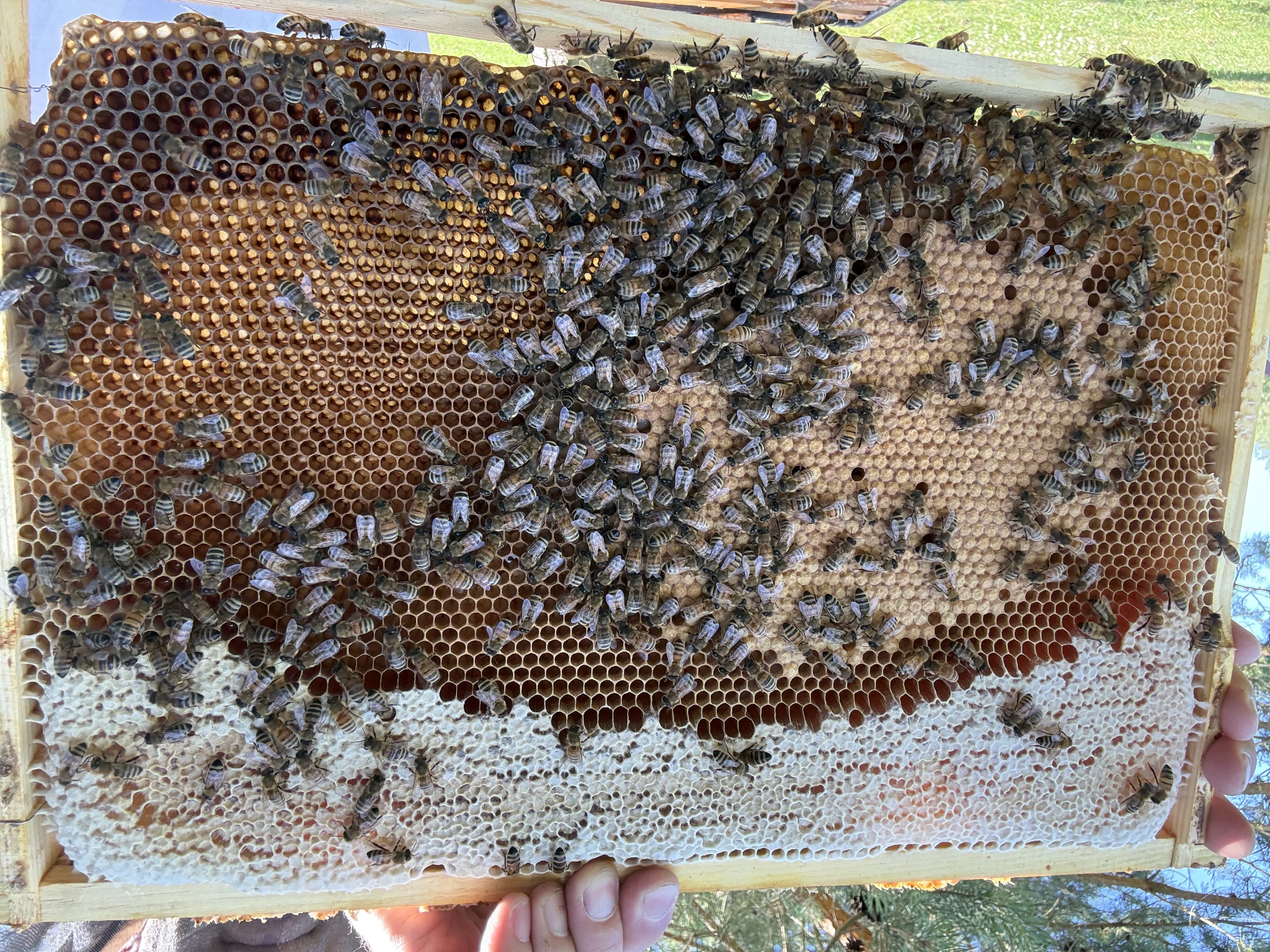
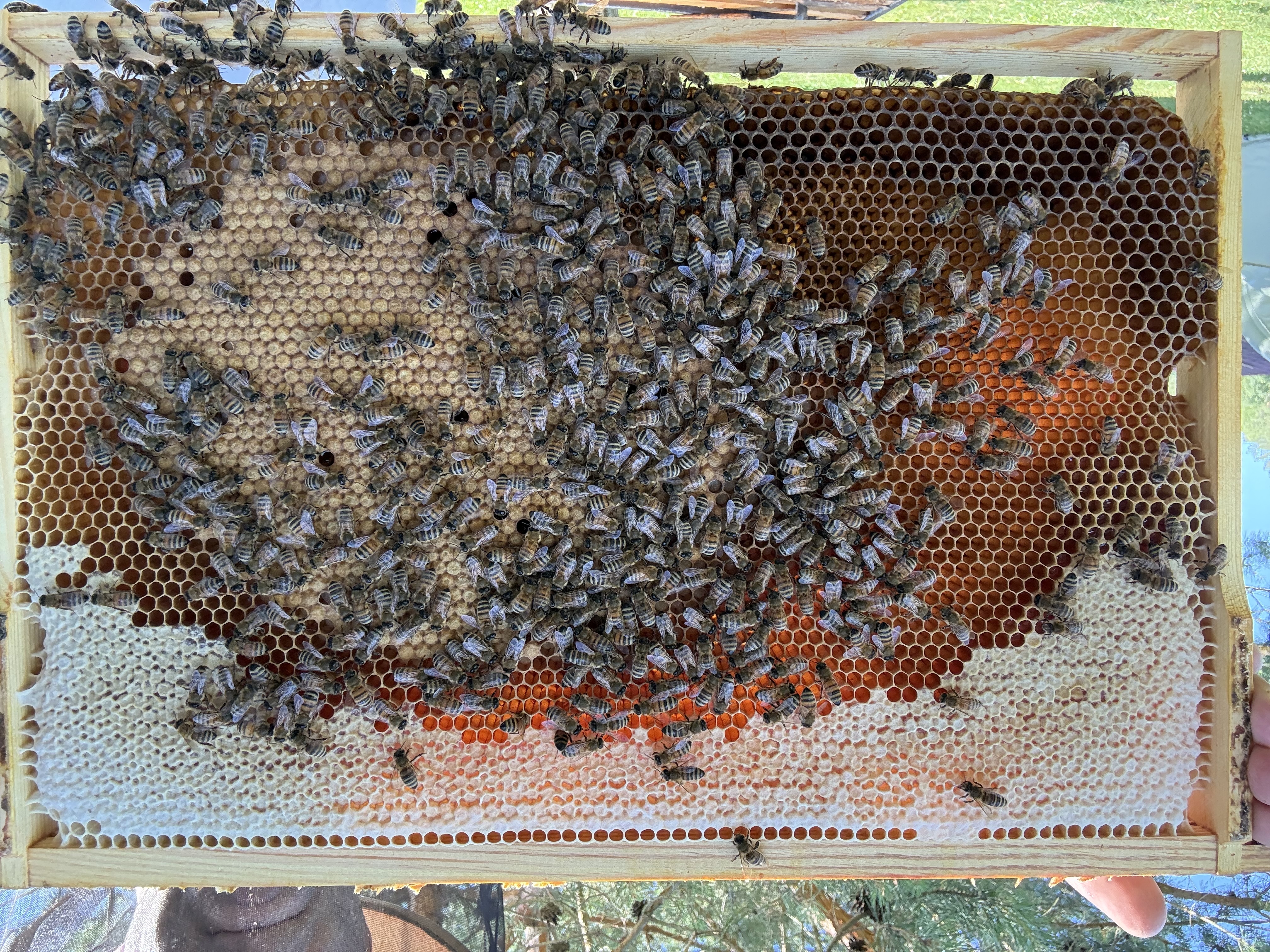
The colony appears very weak with a small bee population (400 bees) and low brood production (13% average coverage across 3 frames). The queen was not spotted during the full 12-frame inspection, raising concerns about her presence or laying ability. Honey stores are critically low at 4%.
Frame Analysis — 12 frames
Frame 1
Side A
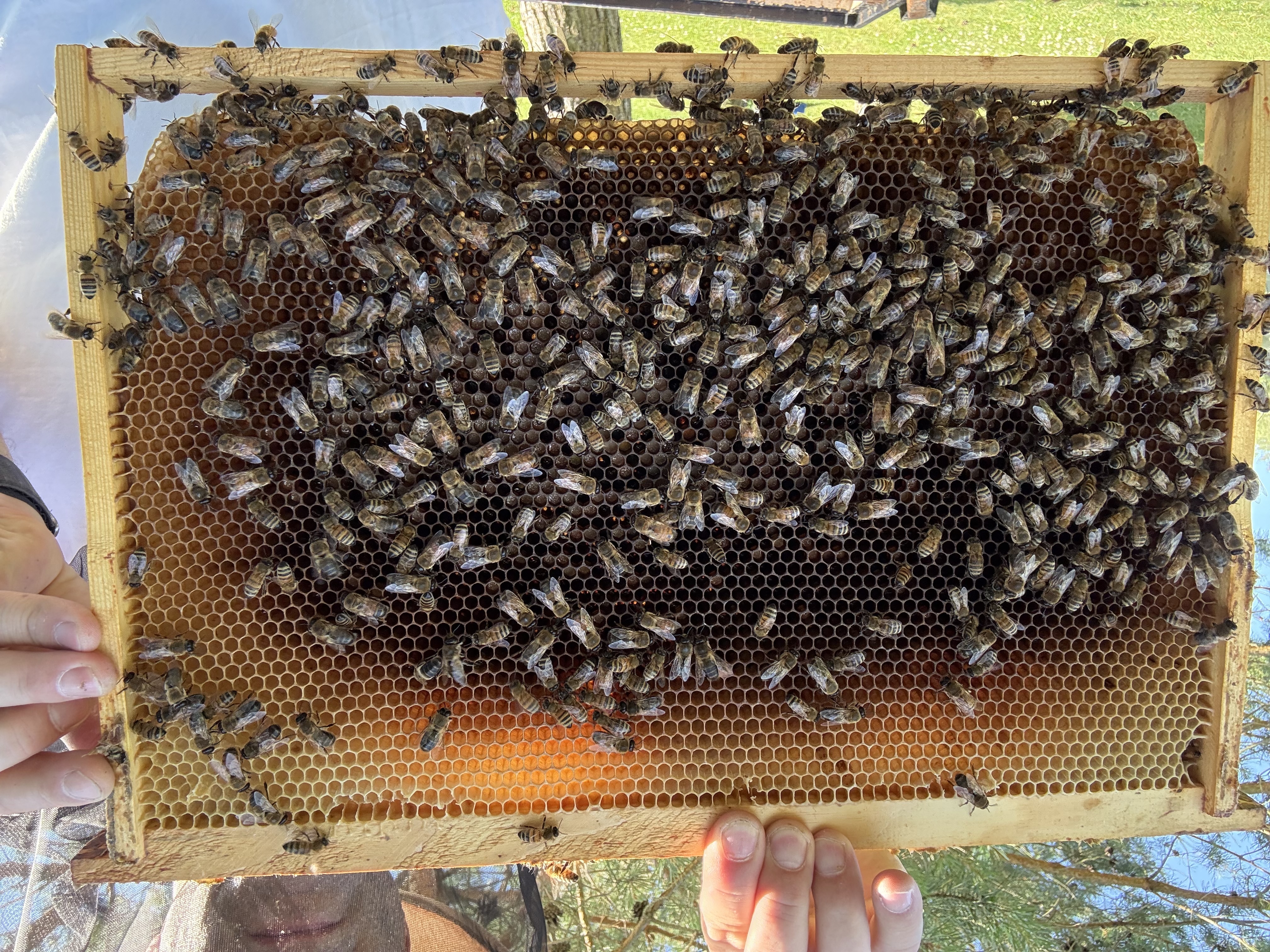
Side B
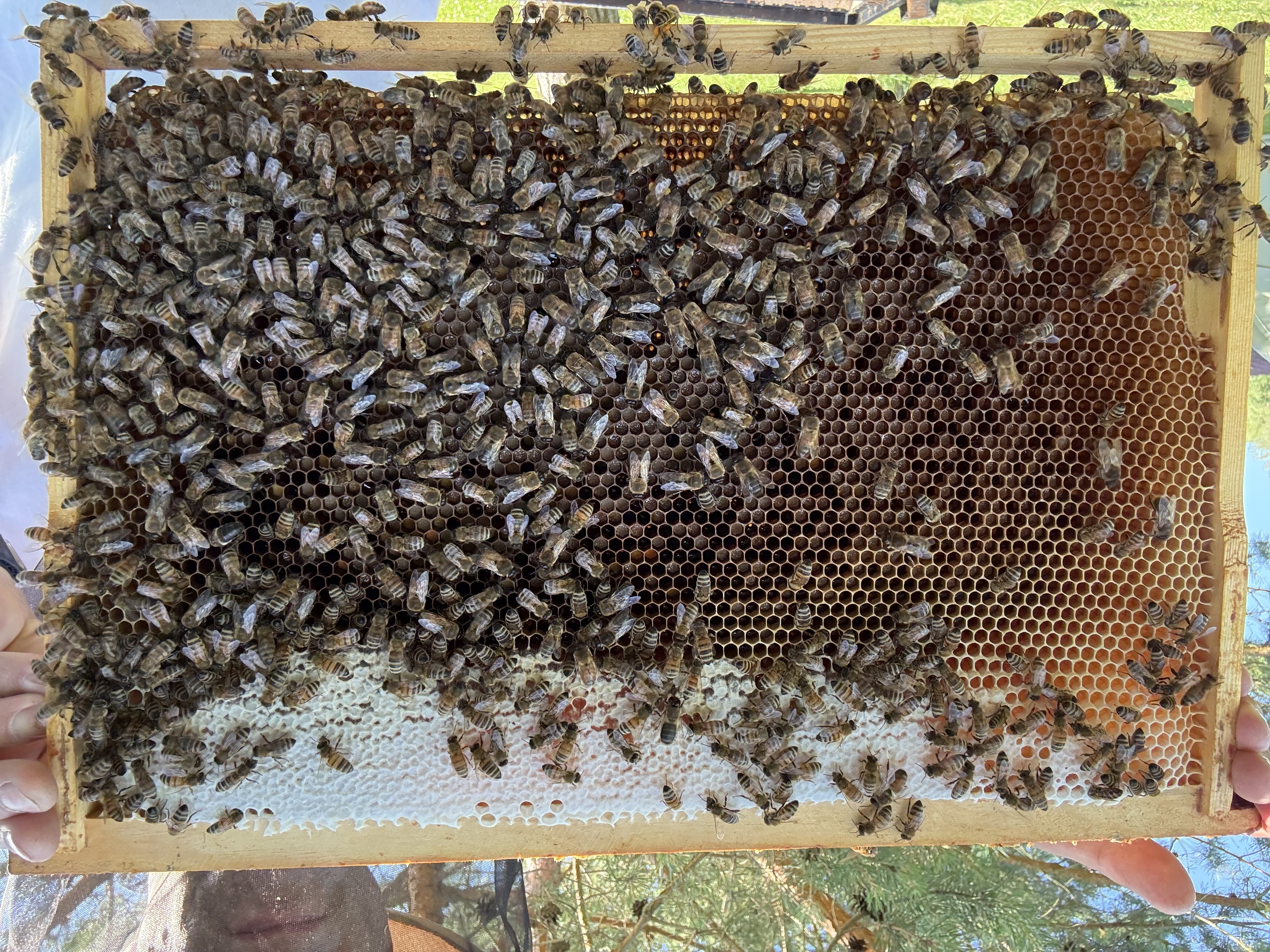
Frame 2
Side A
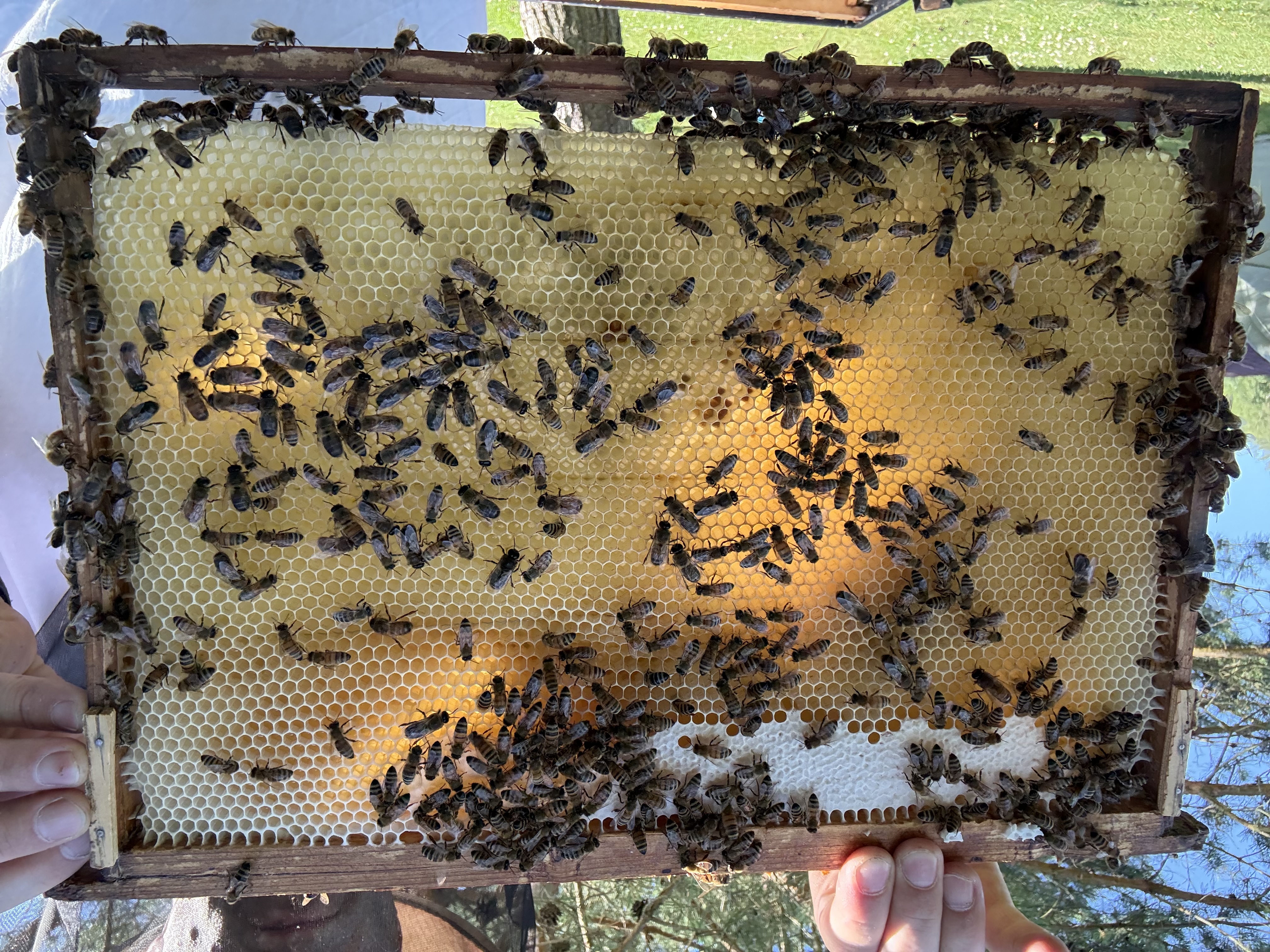
Side B
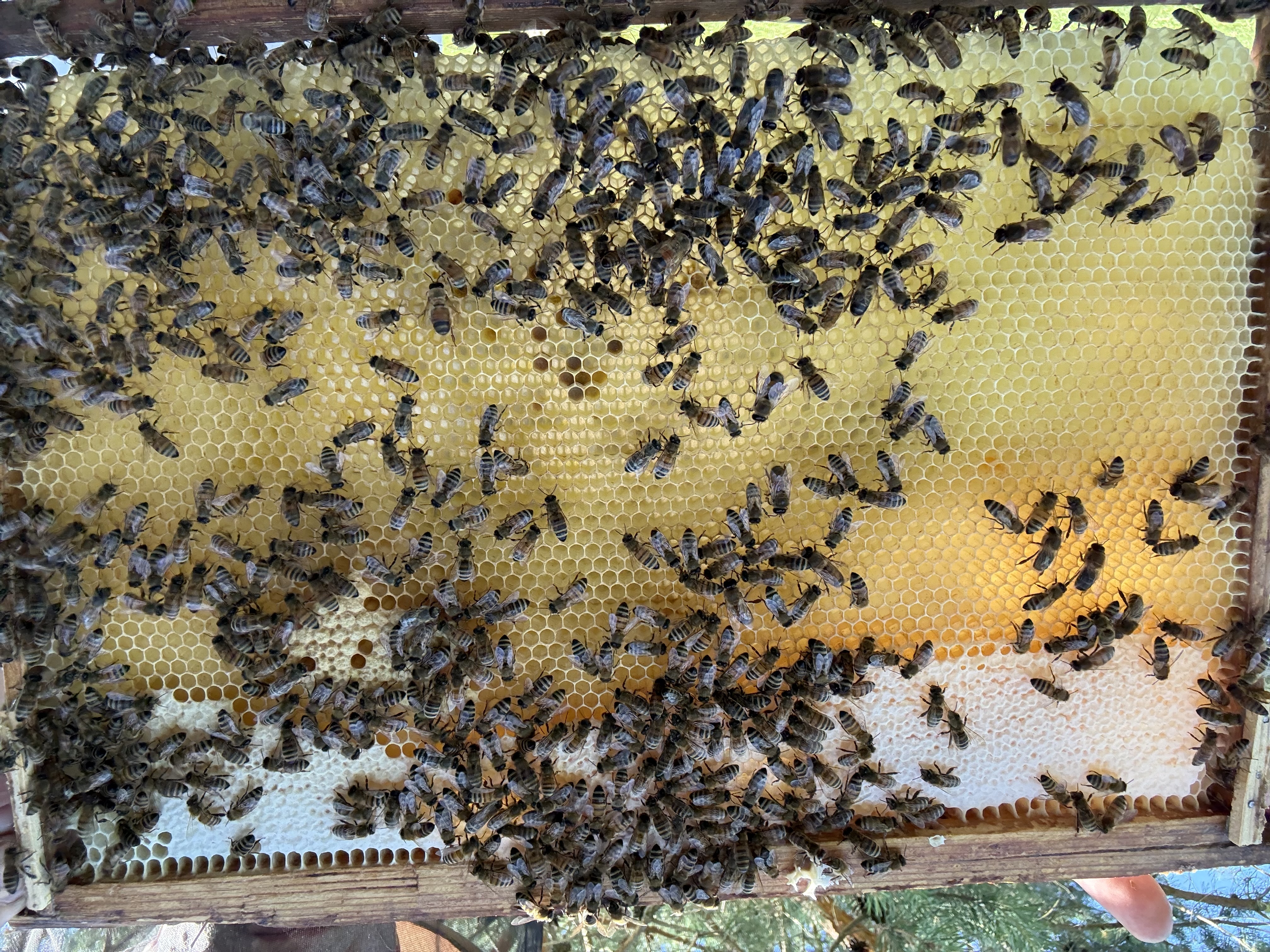
Frame 3
Side A
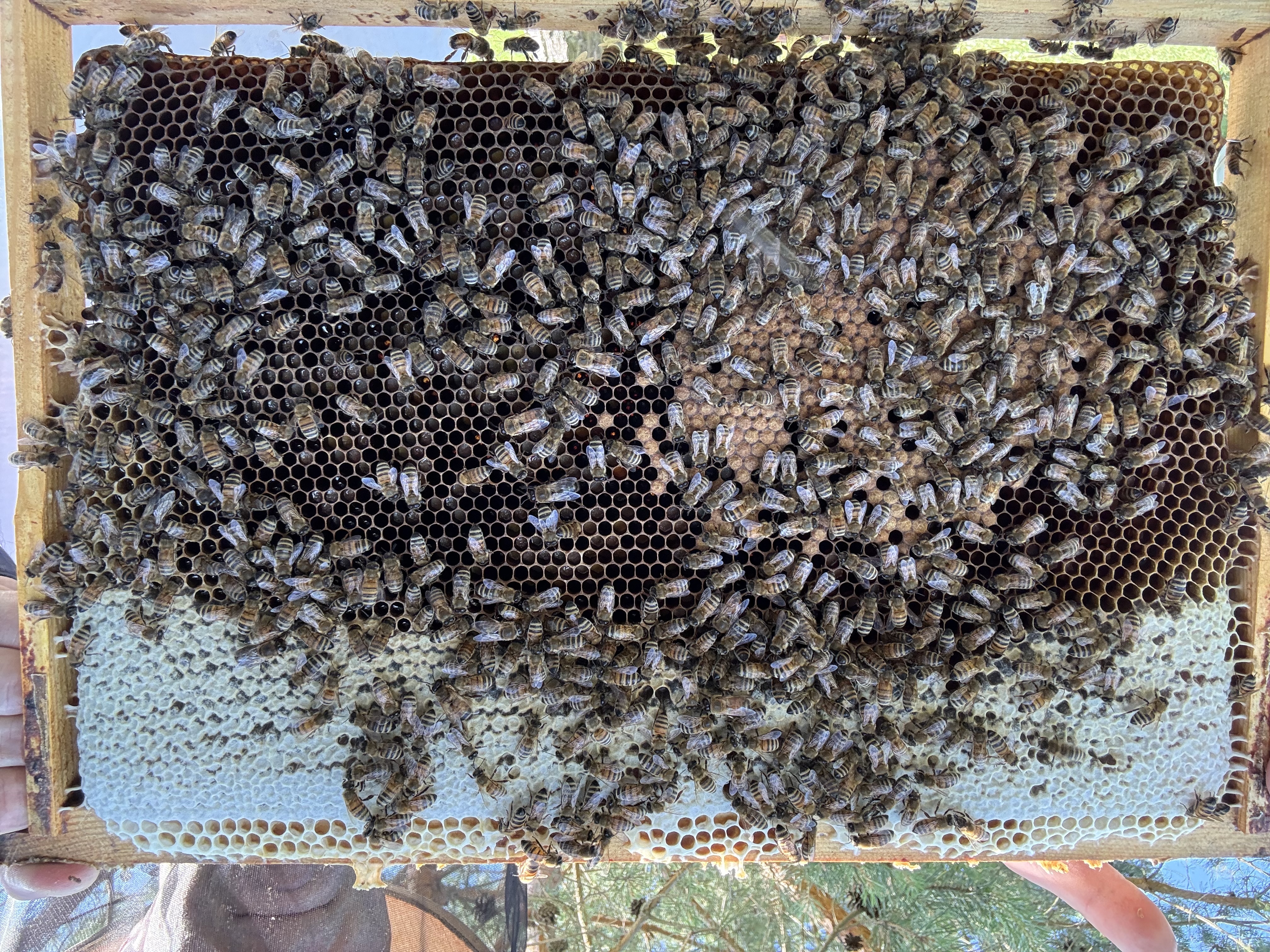
Side B
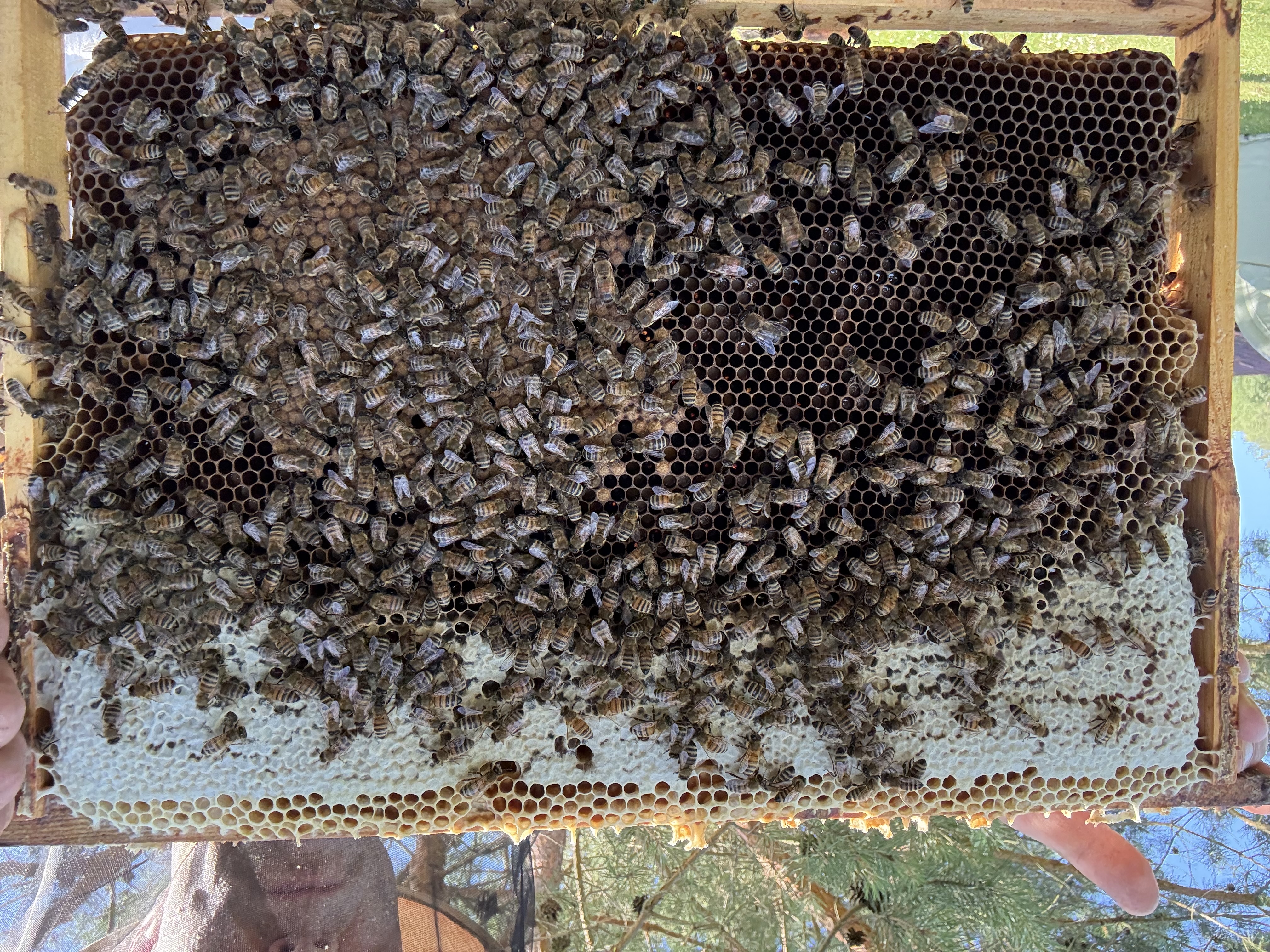
Frame 4
Side A
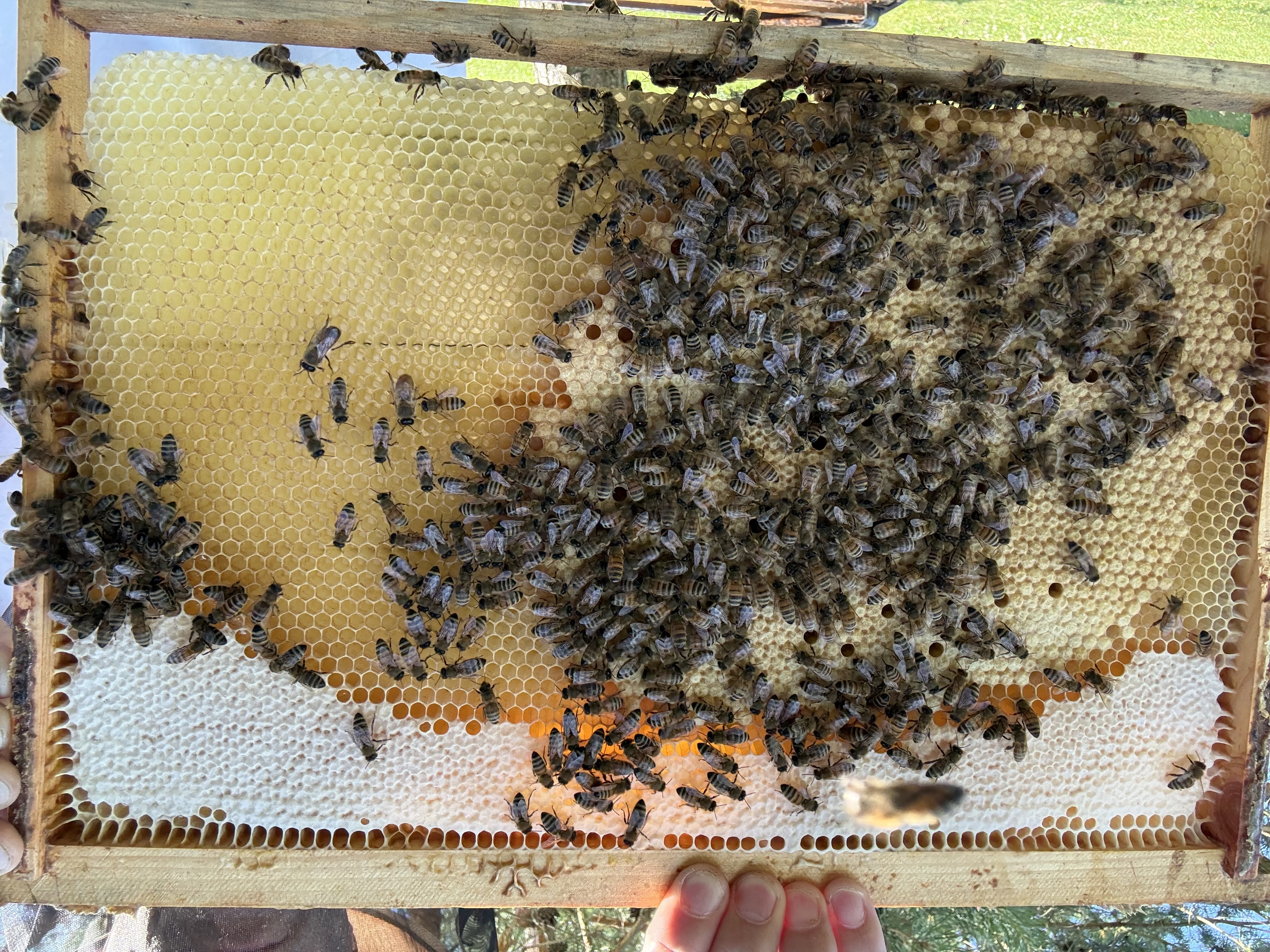
Side B
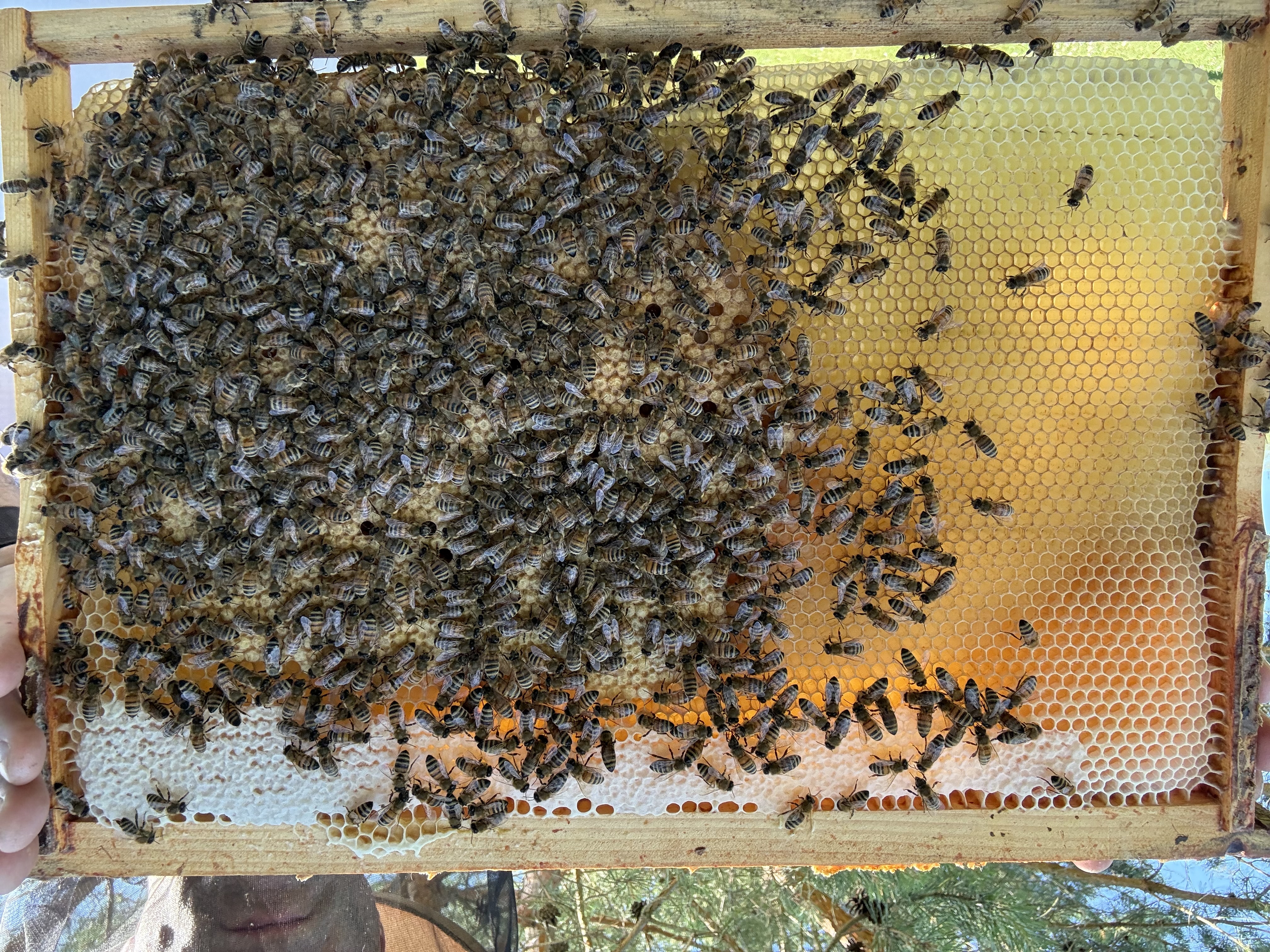
Frame 5
Side A
Side B
Frame 6
Side A
Side B
Frame 7
Side A
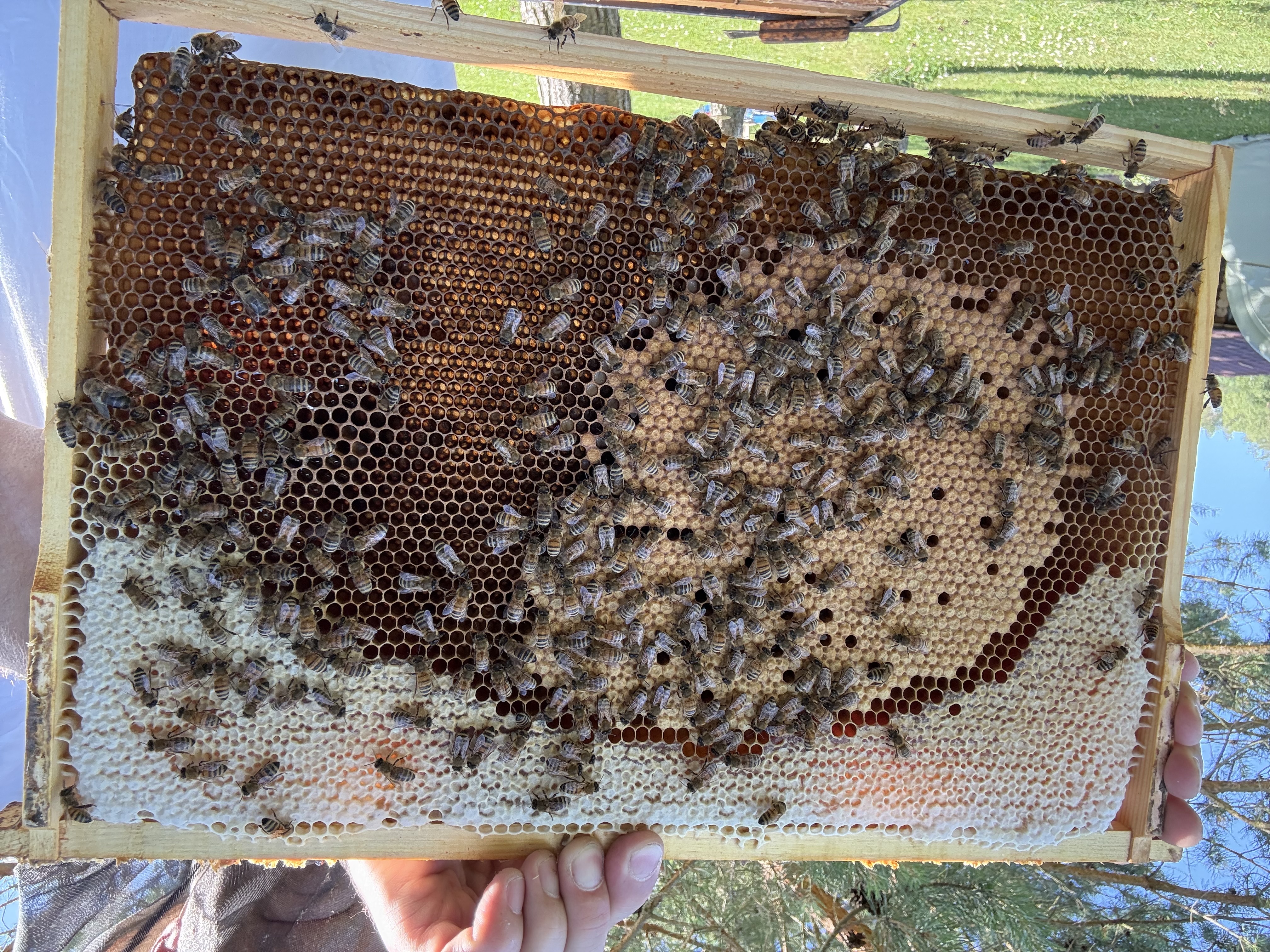
Side B
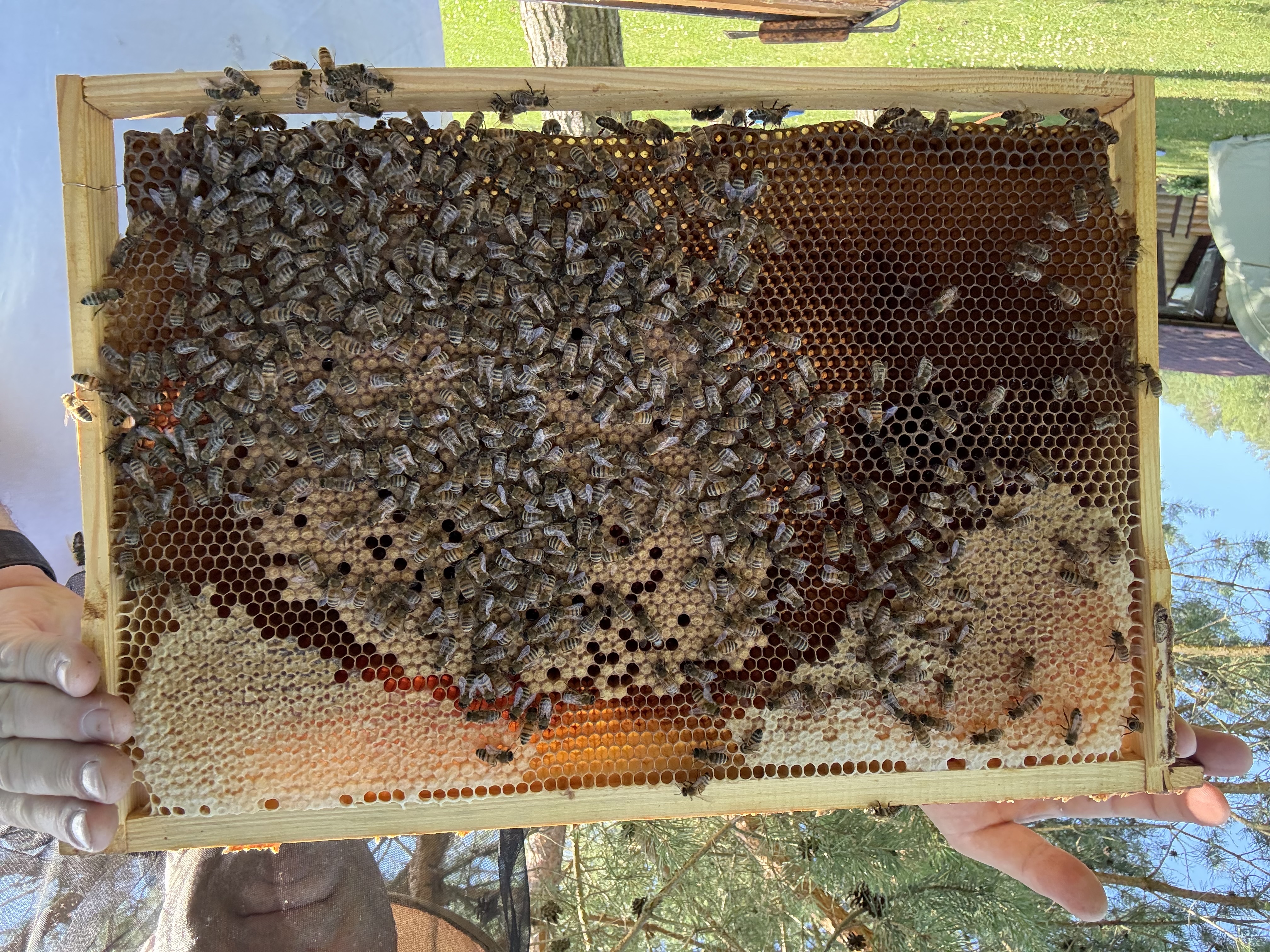
Frame 8
Side A
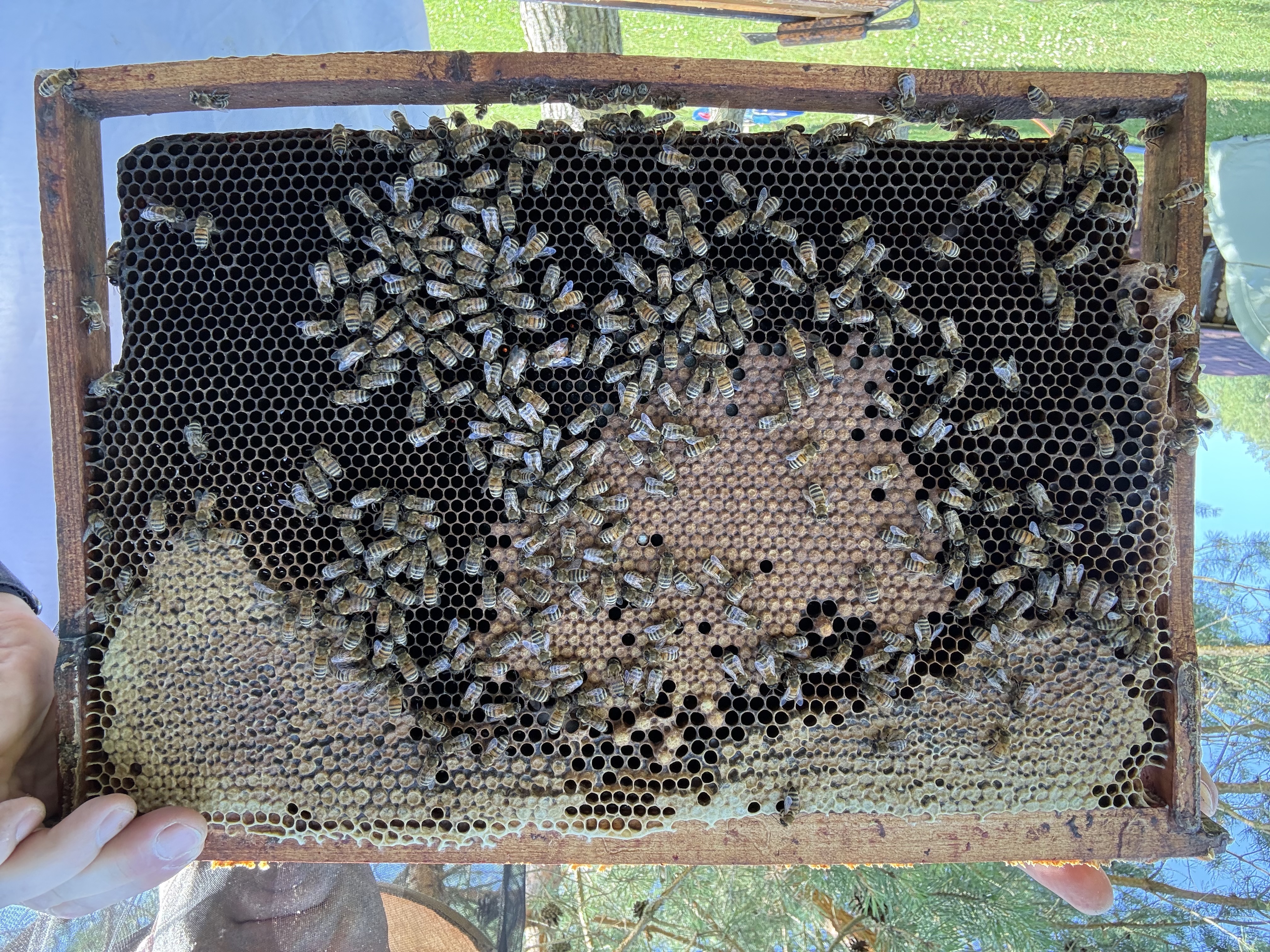
Side B
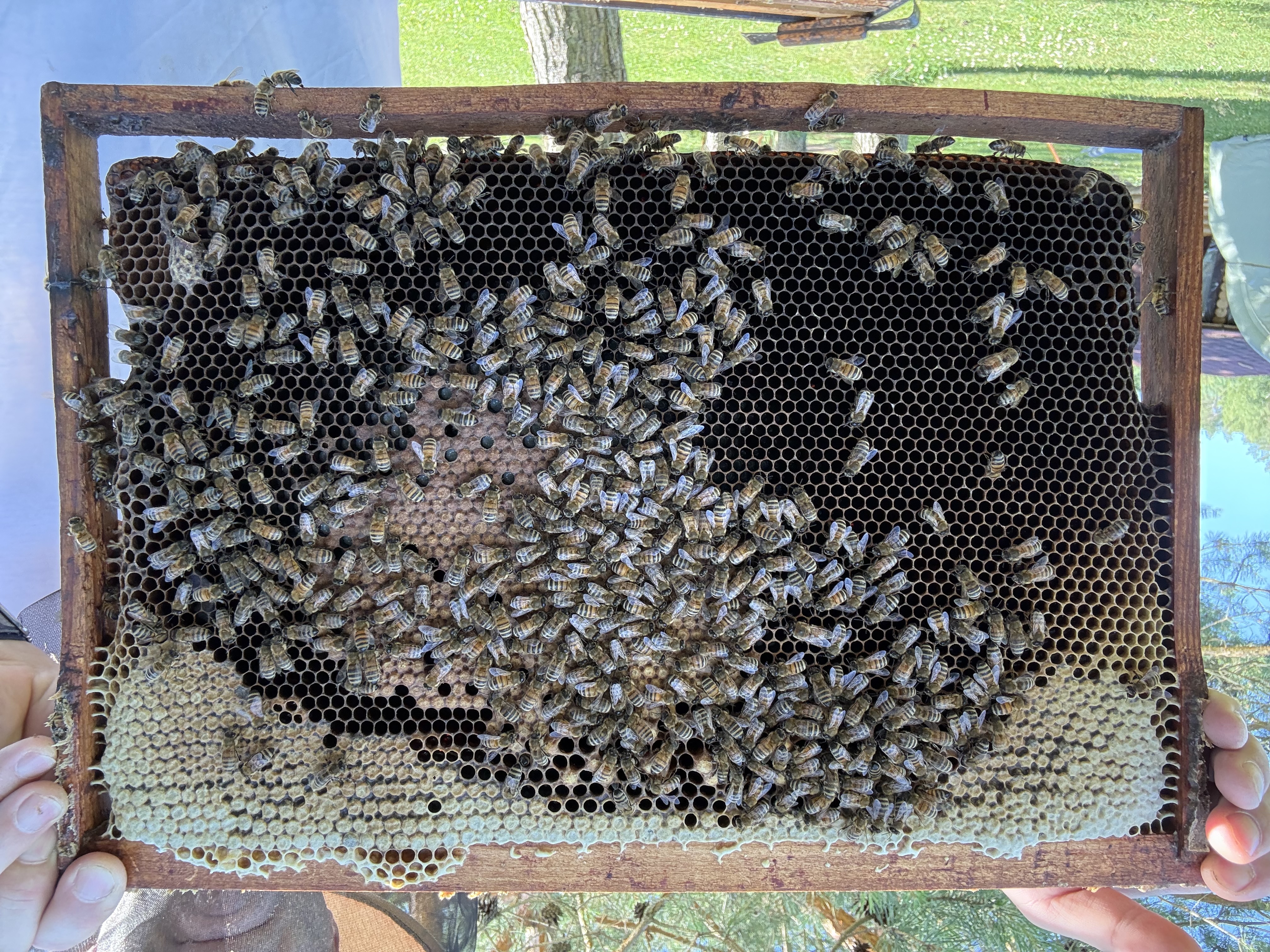
Frame 9
Side A
Side B
Side A
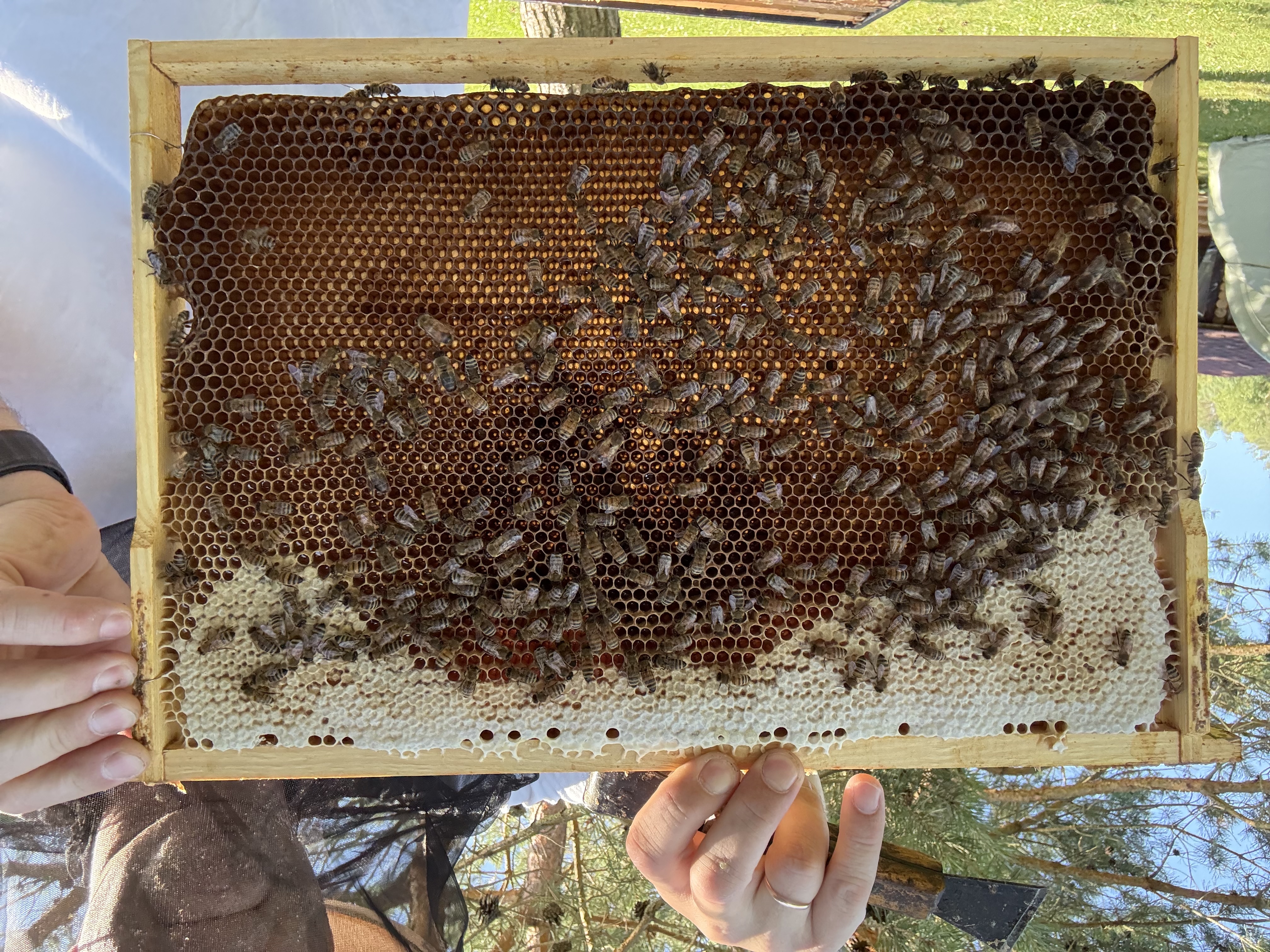
This side of the frame shows a significant area of capped brood surrounded by a band of busy worker bees, with some capped honey at the top.
Side B
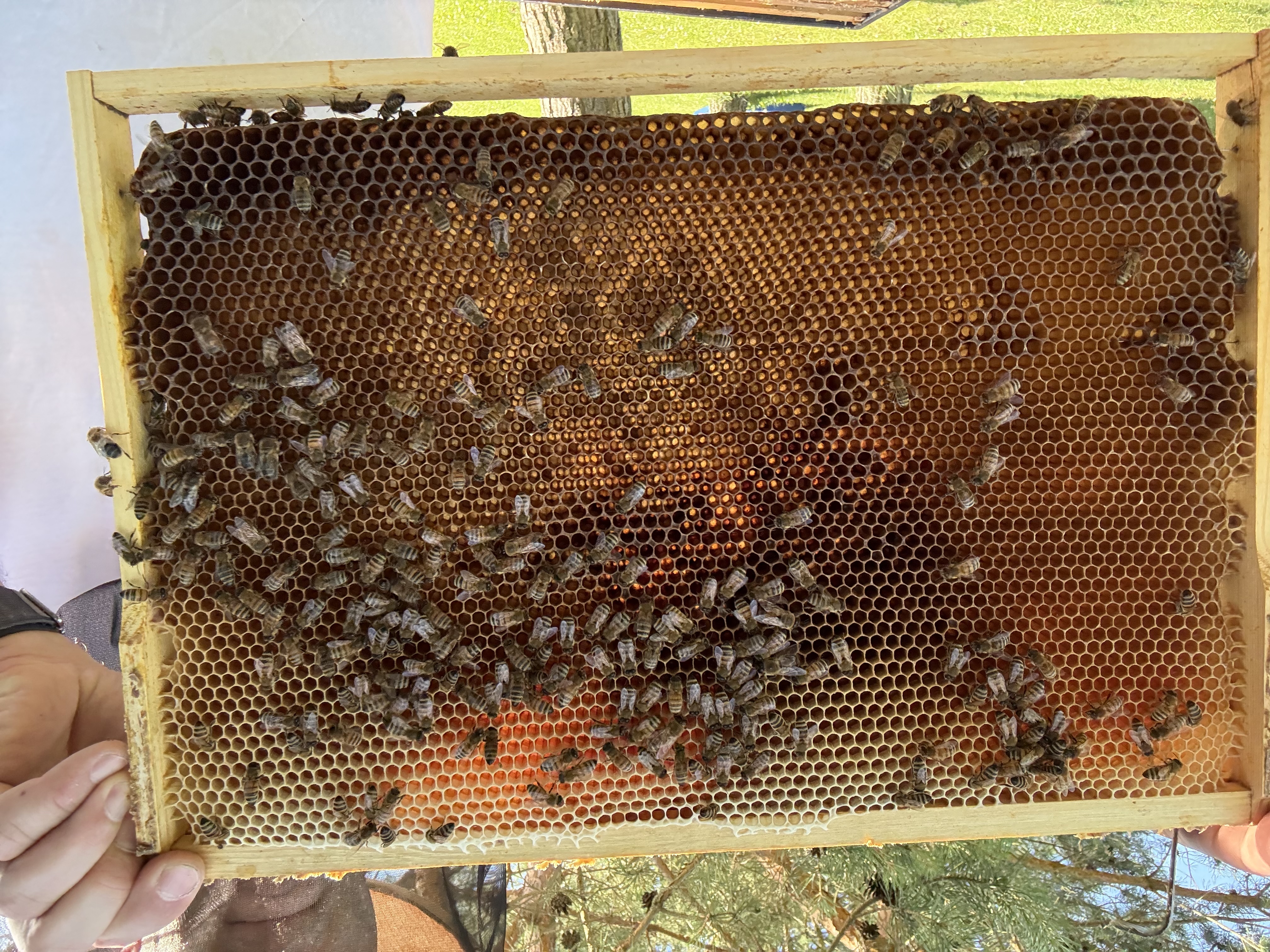
The reverse side of the frame also displays extensive capped brood in the central region, with a noticeable presence of worker bees and a band of honey along the upper edge.
This frame is predominantly used for brood rearing, with a healthy population of worker bees attending to the capped brood on both sides. There is also a small reserve of capped honey present, indicating good food storage.
Frame 10
Side A
Side B
Side A
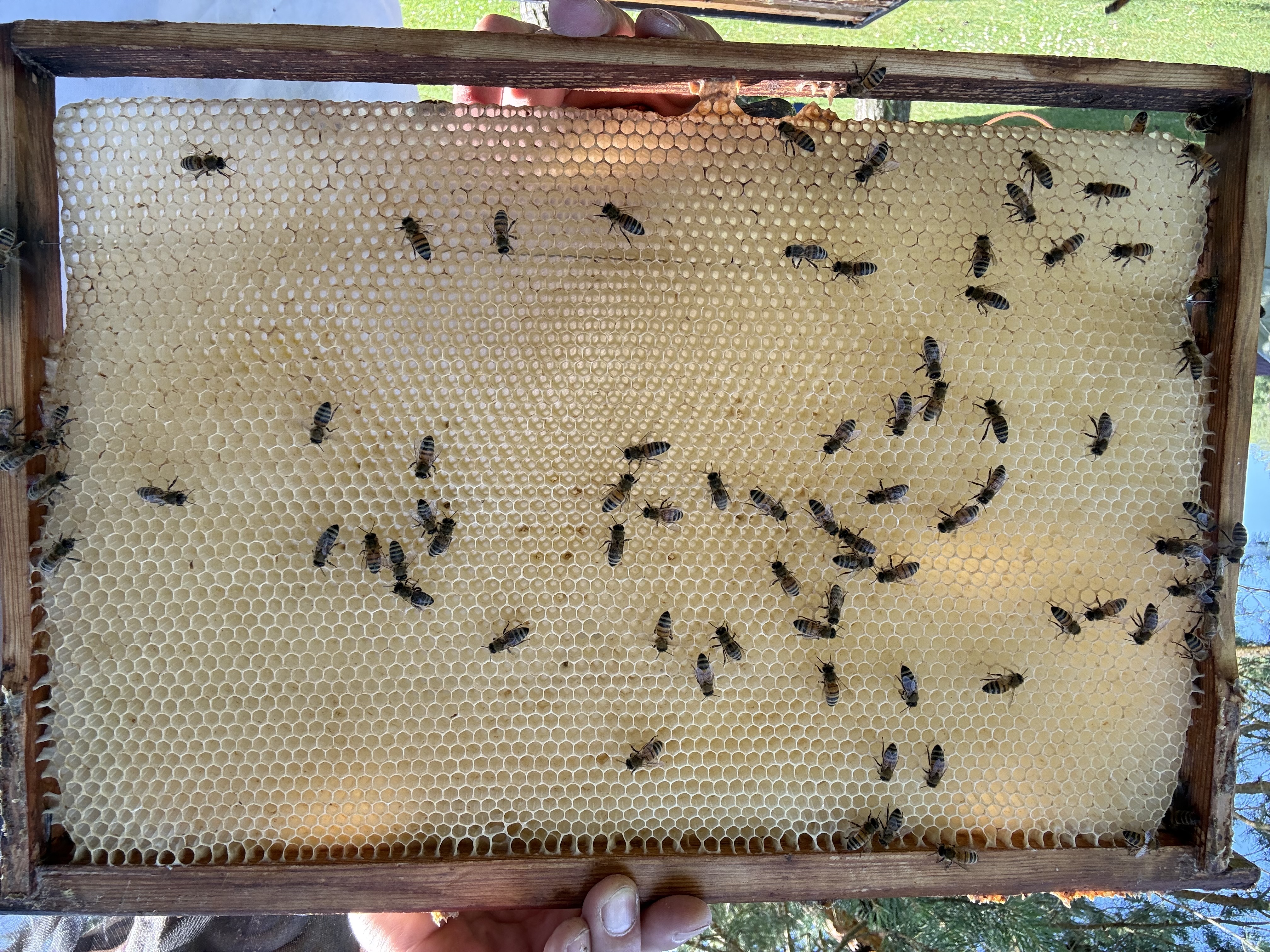
This side of the frame primarily consists of light, newly drawn comb with scattered worker bees and appears to contain mostly empty cells or fresh nectar.
Side B
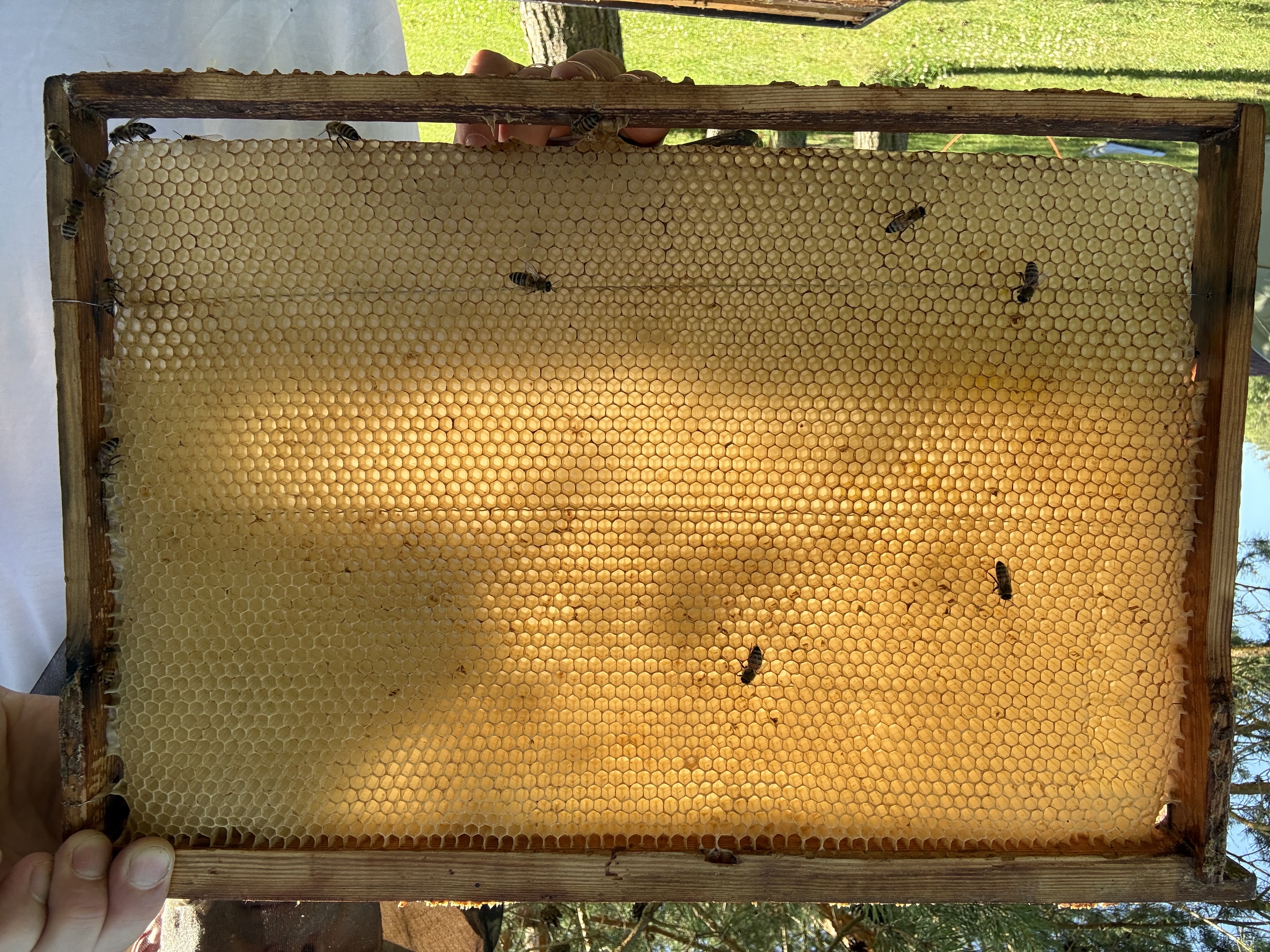
The other side of the frame is largely empty and translucent, with minimal bee activity, suggesting it is either newly constructed comb or a storage area awaiting contents.
This frame predominantly features new or empty comb on both sides, with minimal bee presence. It appears to be a foundation for future expansion, potentially for brood or honey storage.
Frame 11
Side A
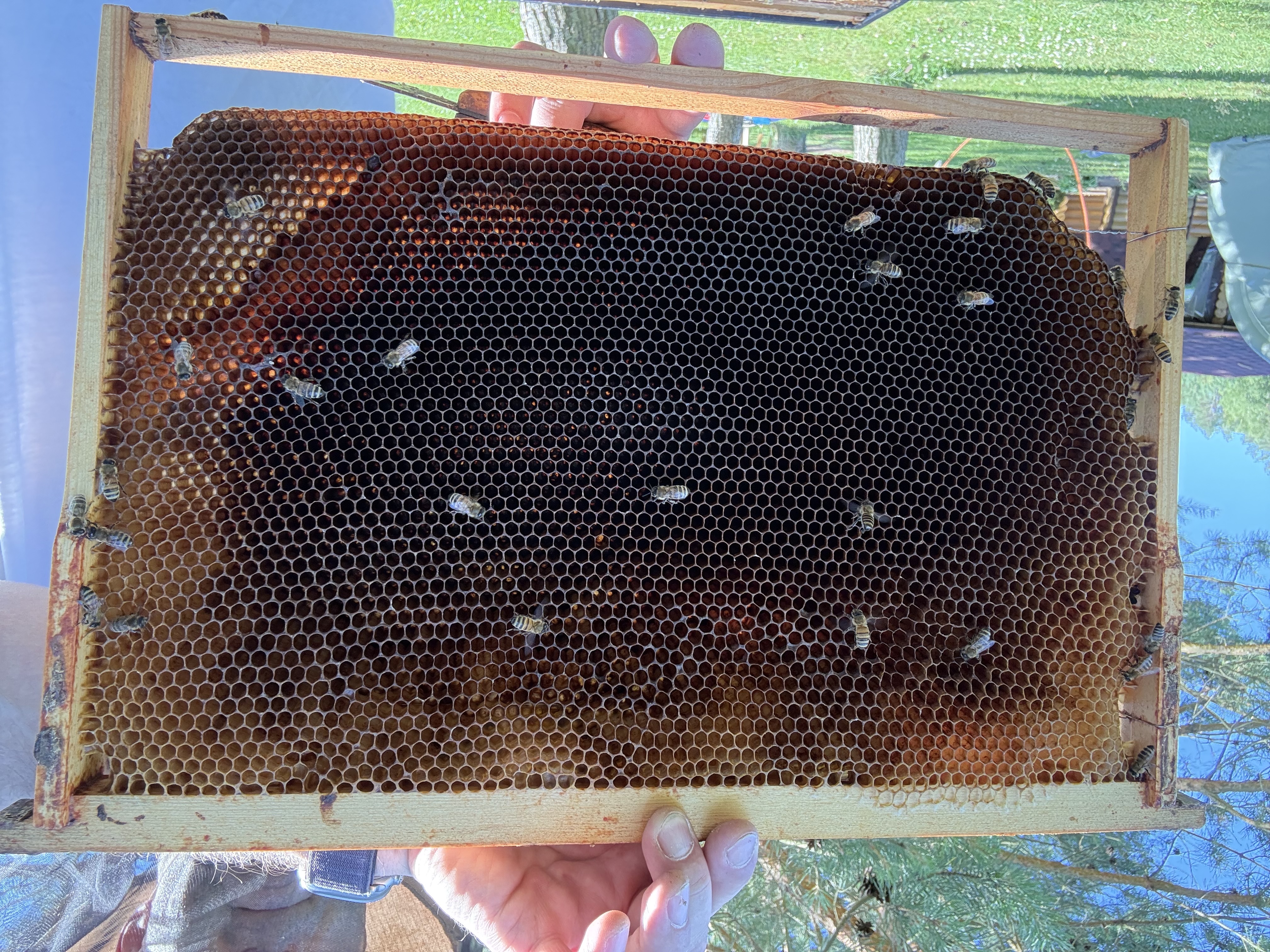
Side B
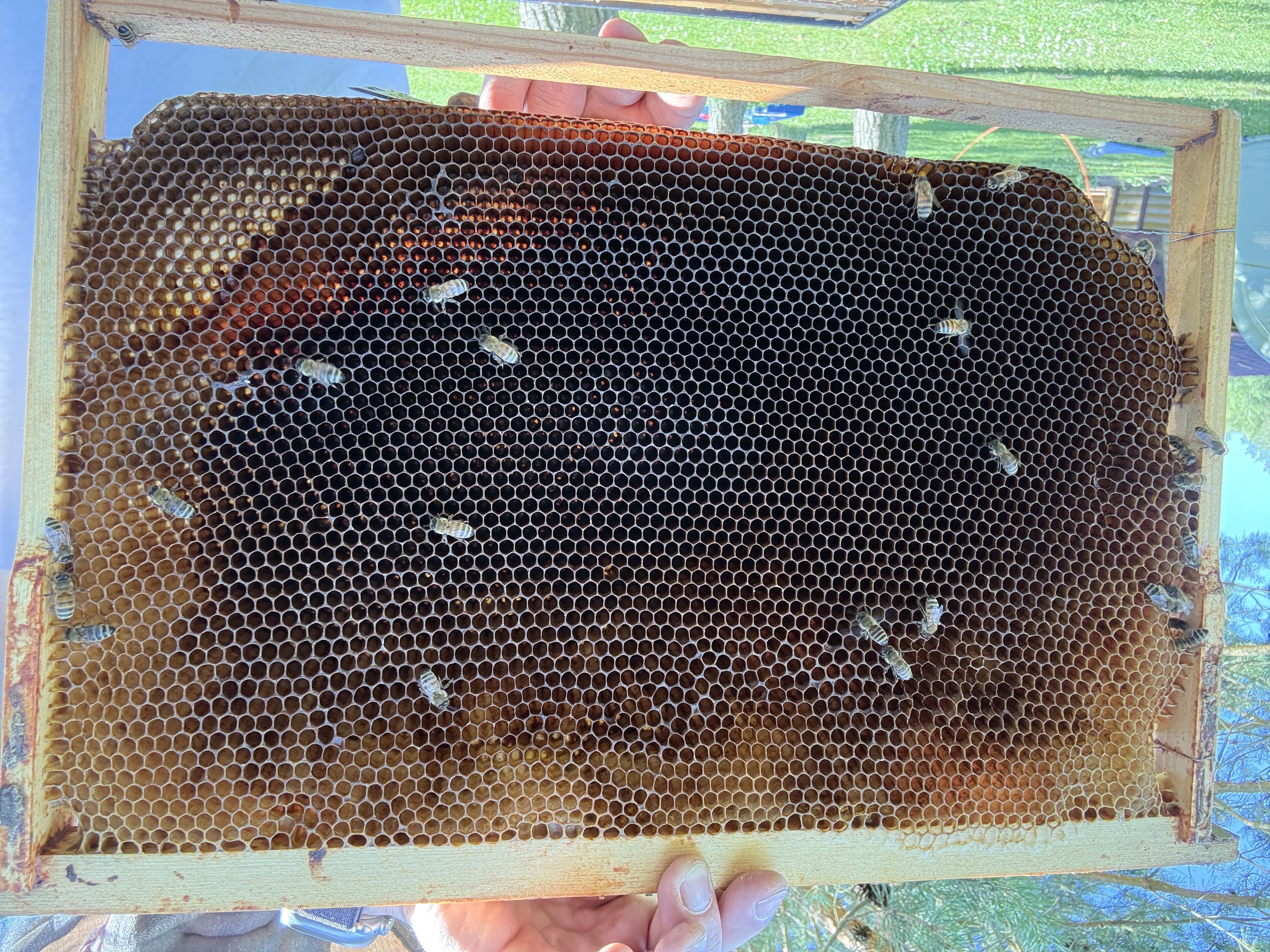
Side A
This side of the frame contains a substantial area of brood, likely mixed ages, with worker bees sparsely distributed and some stored honey visible in peripheral cells.
Side B
The reverse side also shows a significant patch of brood in the center, surrounded by fewer bees and some visible stores of honey or nectar.
This frame exhibits a healthy brood pattern on both sides, indicating active reproduction within the hive. There are also modest honey stores present, supplementing the colony's nutritional needs.
Frame 12
Side A
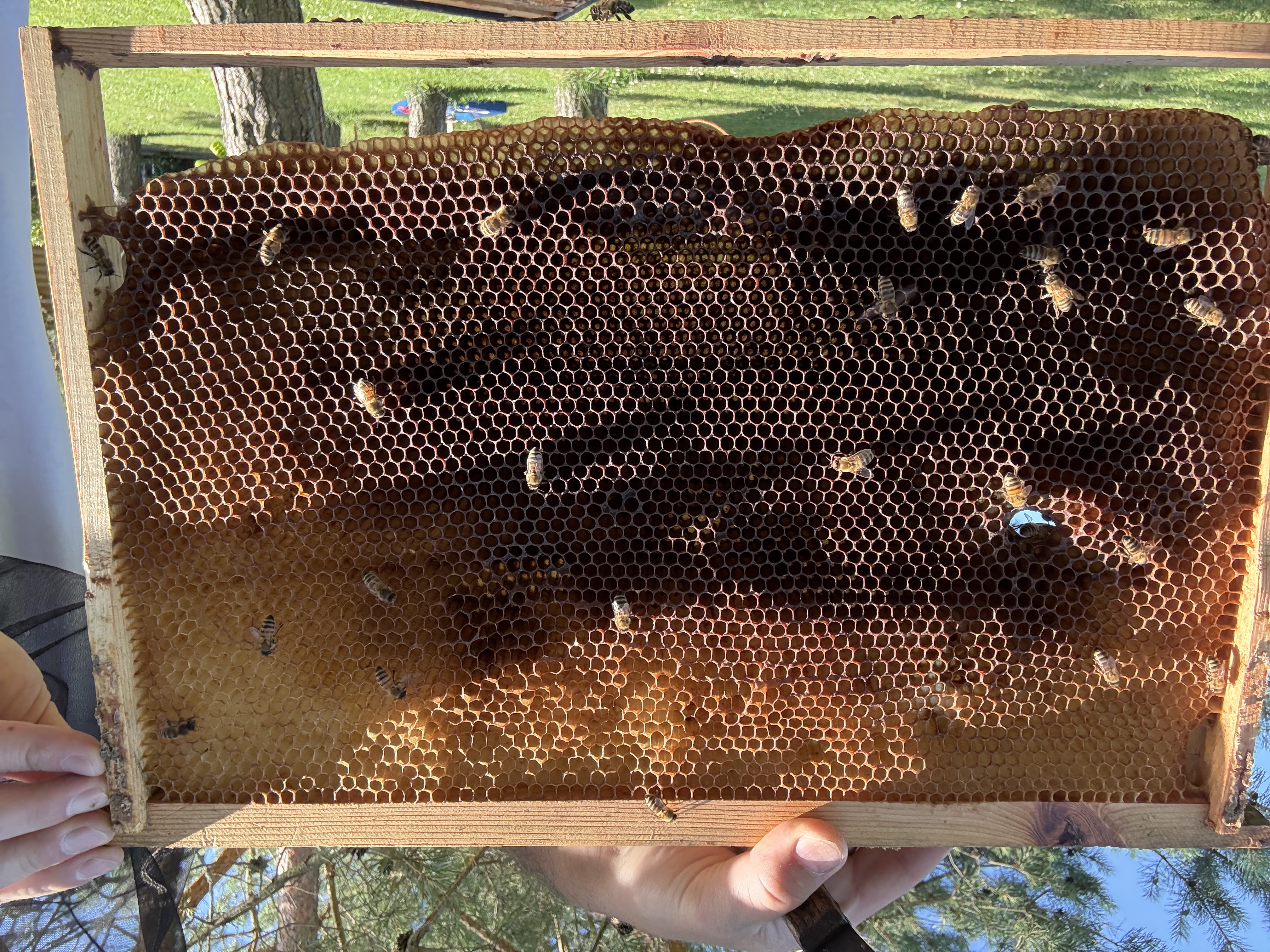
Side B
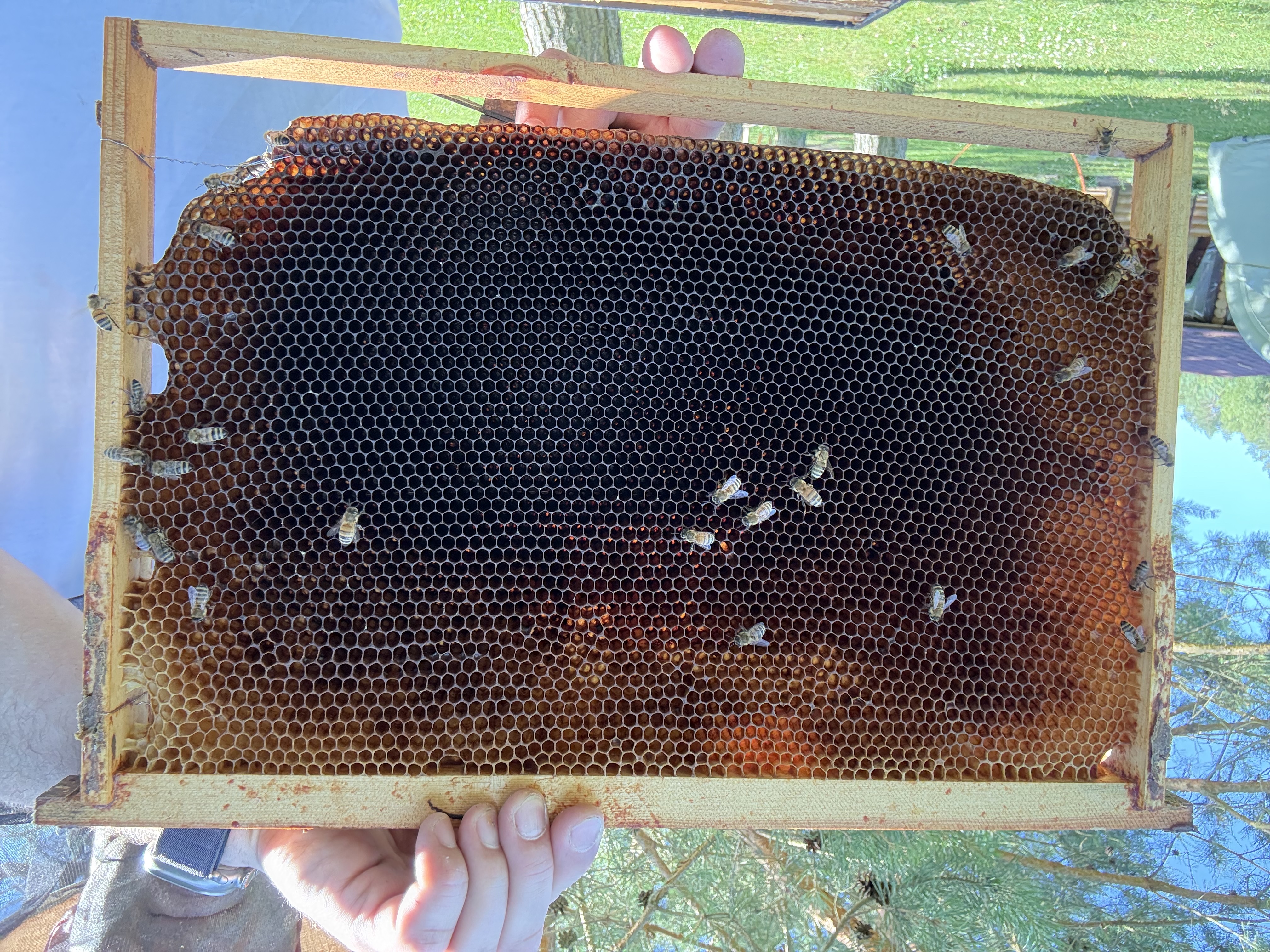
Side A
This side of the frame presents a very dark, dense central area suggesting a combination of older brood comb, capped brood, and significant stores of pollen or dark honey.
Side B
The reverse side mirrors the first, displaying a large dark area consistent with active brood rearing and substantial provisions of pollen or honey in an older comb.
This frame is characterized by very dark, well-established comb on both sides, containing a mix of brood and dense stores of either pollen or dark honey. It represents a mature and productive section of the hive.