Inspection Results
4 Jul 2026
Hive #99 · 22 frame sides captured
70
Colony Strength
Strong
Complete the inspection of the remaining frame to fully assess colony health and confirm the queen's presence. Additionally, conduct a varroa mite check to determine the current risk level.
Queen Status
Queen not sighted
Brood Pattern
Solid and healthy
Honey Stores
Moderate
Varroa Risk
Cannot be assessed
AI Observations
The colony exhibits good strength with 2574 bees and a solid brood pattern, averaging 47% coverage across 8 of the 11 inspected frames. Honey stores are at a moderate level of 27%. The queen was not sighted, and it is important to note that only 11 out of 12 frames were examined during this inspection, leaving one frame uninspected.
Frame Analysis — 11 frames
Frame 1
Side A
Side B
Side A
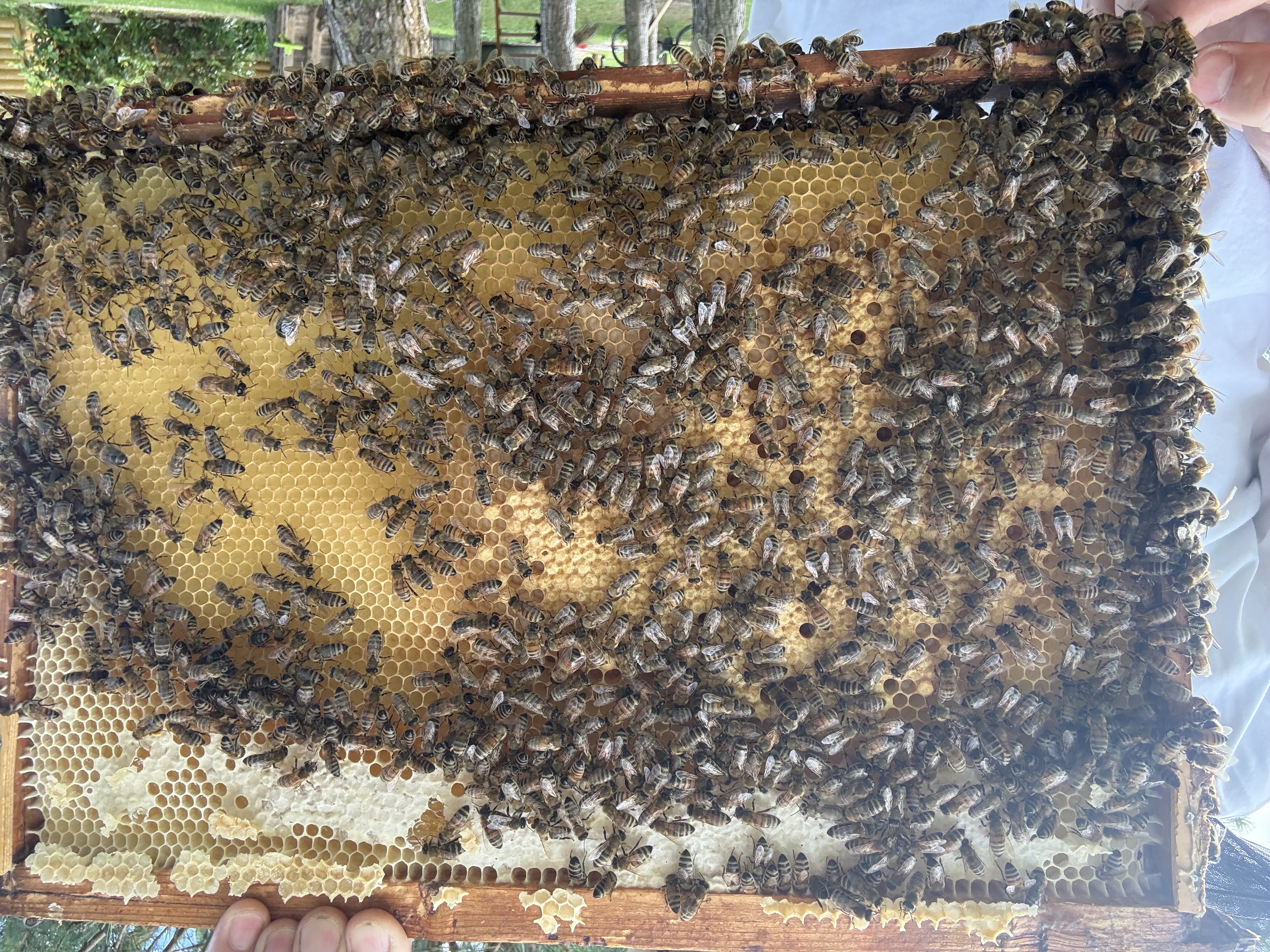
The frame shows a significant area of capped and uncapped brood with a good number of worker bees attending to it, and some honey stored at the top.
Side B
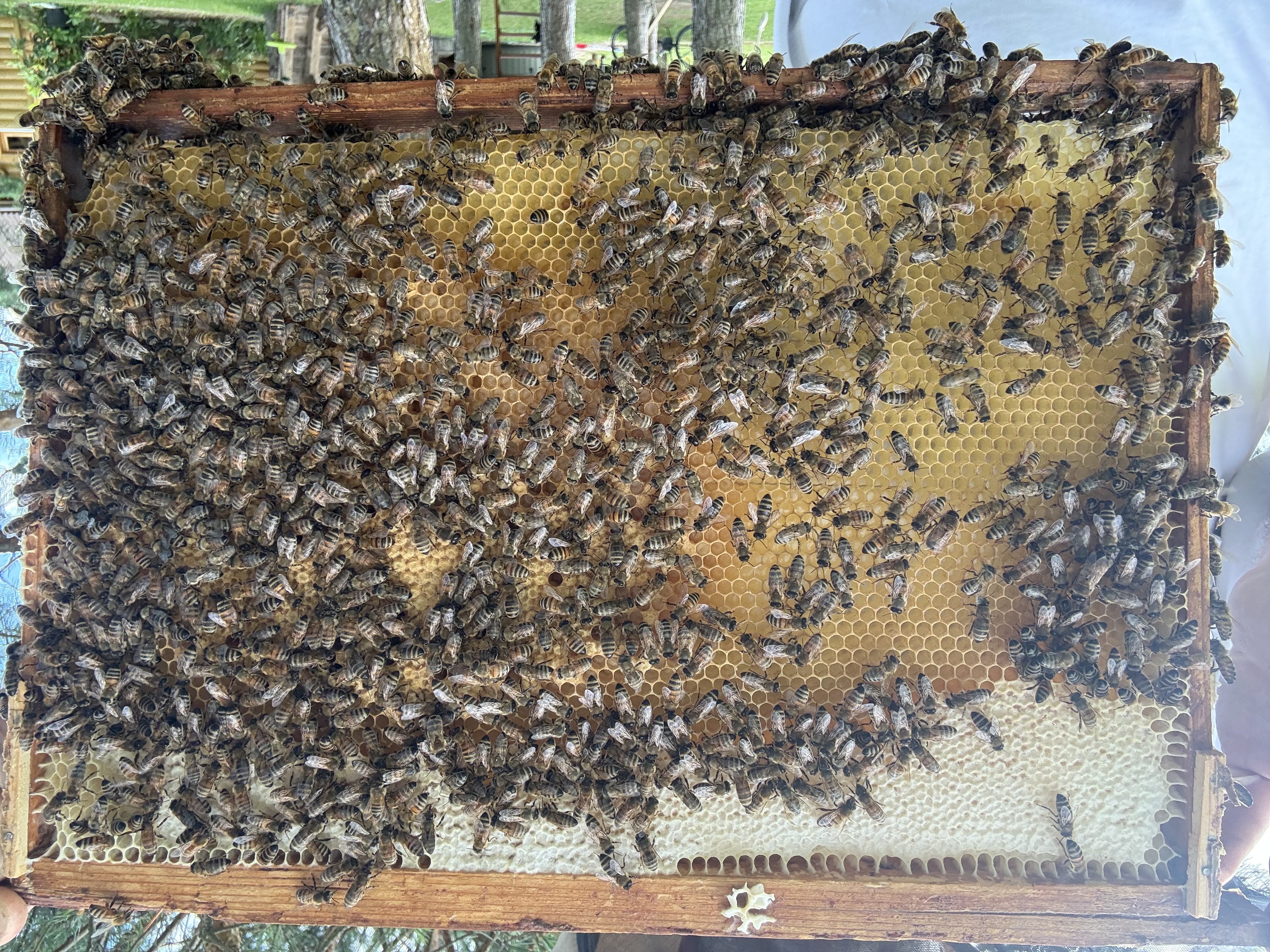
This side of the frame also displays a healthy population of bees covering brood cells and some sections dedicated to honey storage.
Both sides of this frame show a healthy amount of brood being attended by a good population of bees. Honey and pollen are also present, primarily along the top and edges.
Frame 2
Side A
Side B
Side A
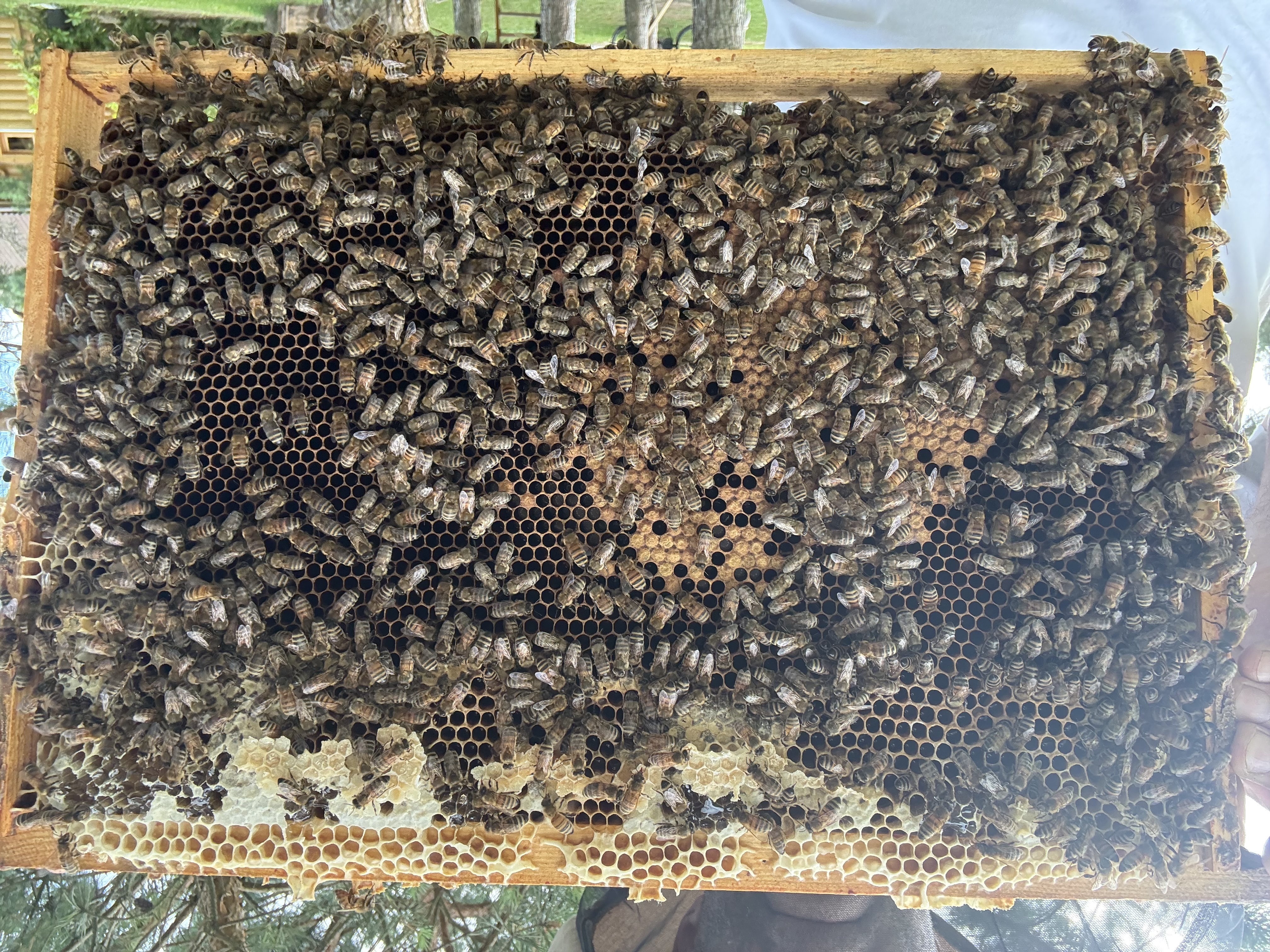
A very active frame side with dense bee coverage over a large patch of developing brood and some honey at the upper edge.
Side B
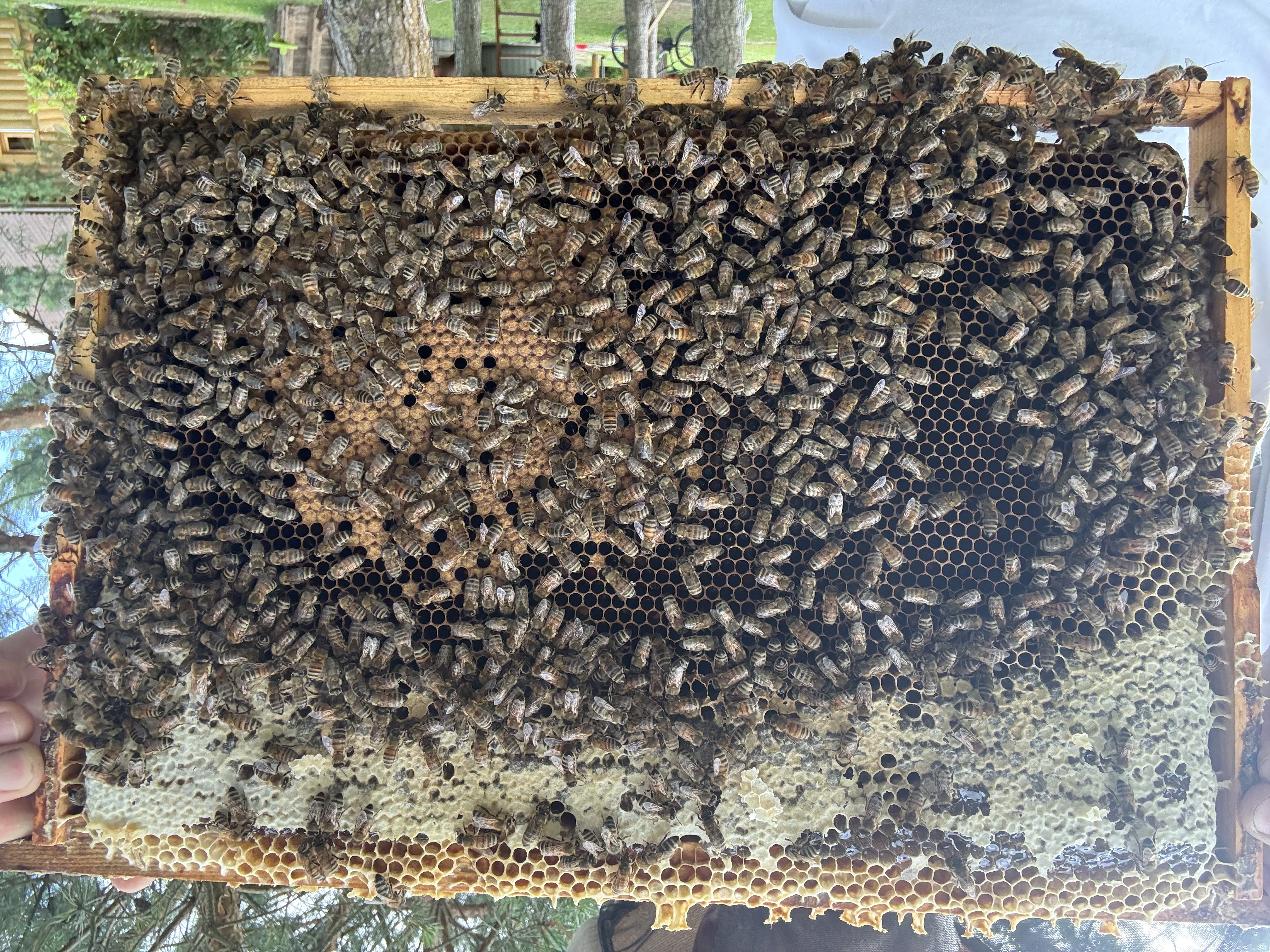
This side is similarly covered with a large concentration of bees tending to brood cells and minimal honey stores.
This frame is densely populated with bees on both sides, actively covering significant areas of developing brood. Honey stores are minimal but present along the top edges.
Frame 3
Side A
Side B
Side A
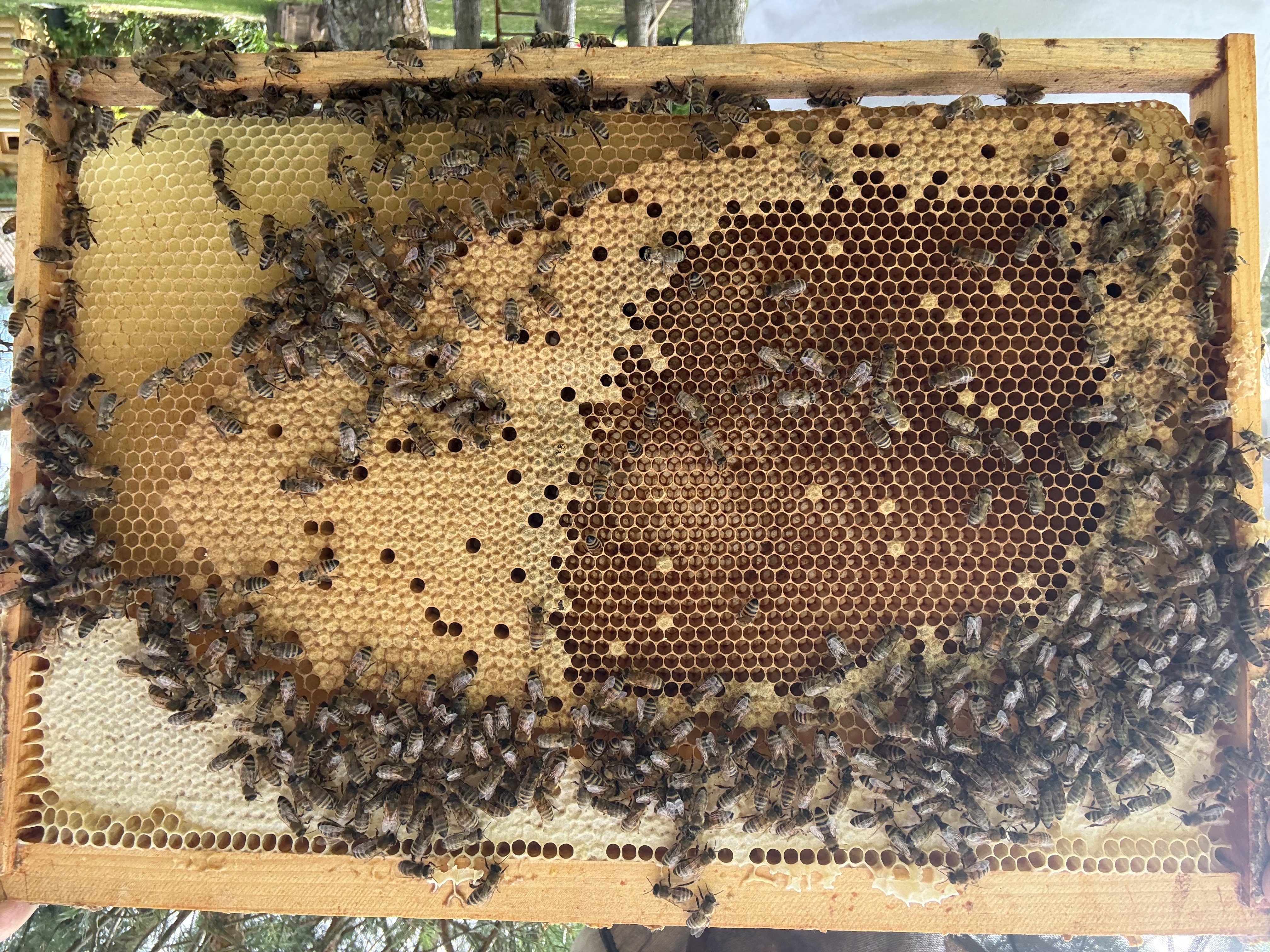
This frame shows a patch of brood surrounded by areas of uncapped honey and pollen, with a moderate number of bees.
Side B
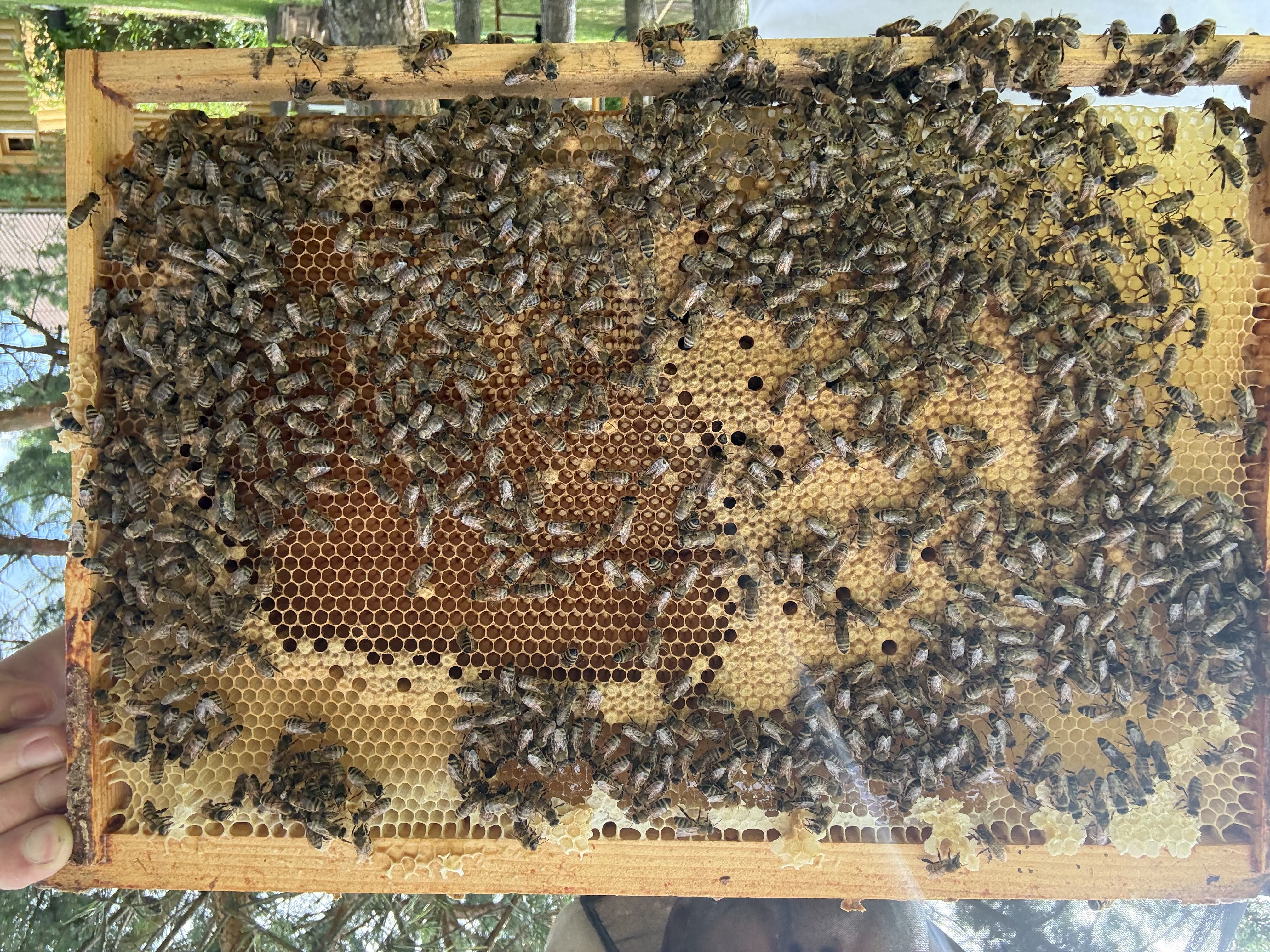
The reverse side also features a mix of brood and substantial uncapped honey and pollen, with active bees dispersed across the surface.
Both sides of this frame present a balanced mix of brood and substantial uncapped honey and pollen stores. The bee population is moderate, distributed across these areas.
Frame 4
Side A
Side B
Side A
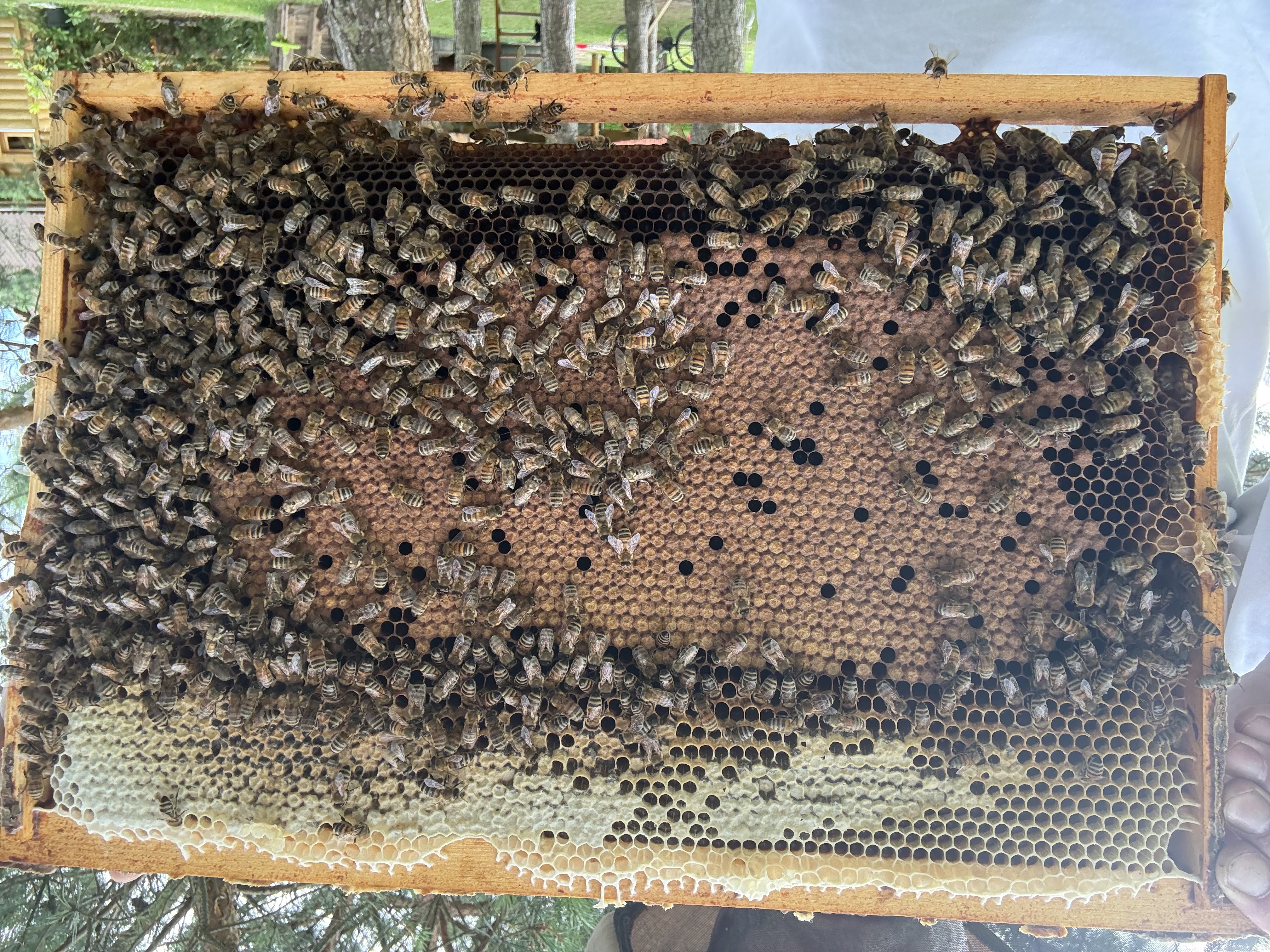
A well-populated frame with a central brood area surrounded by bees, and some capped honey cells at the top.
Side B
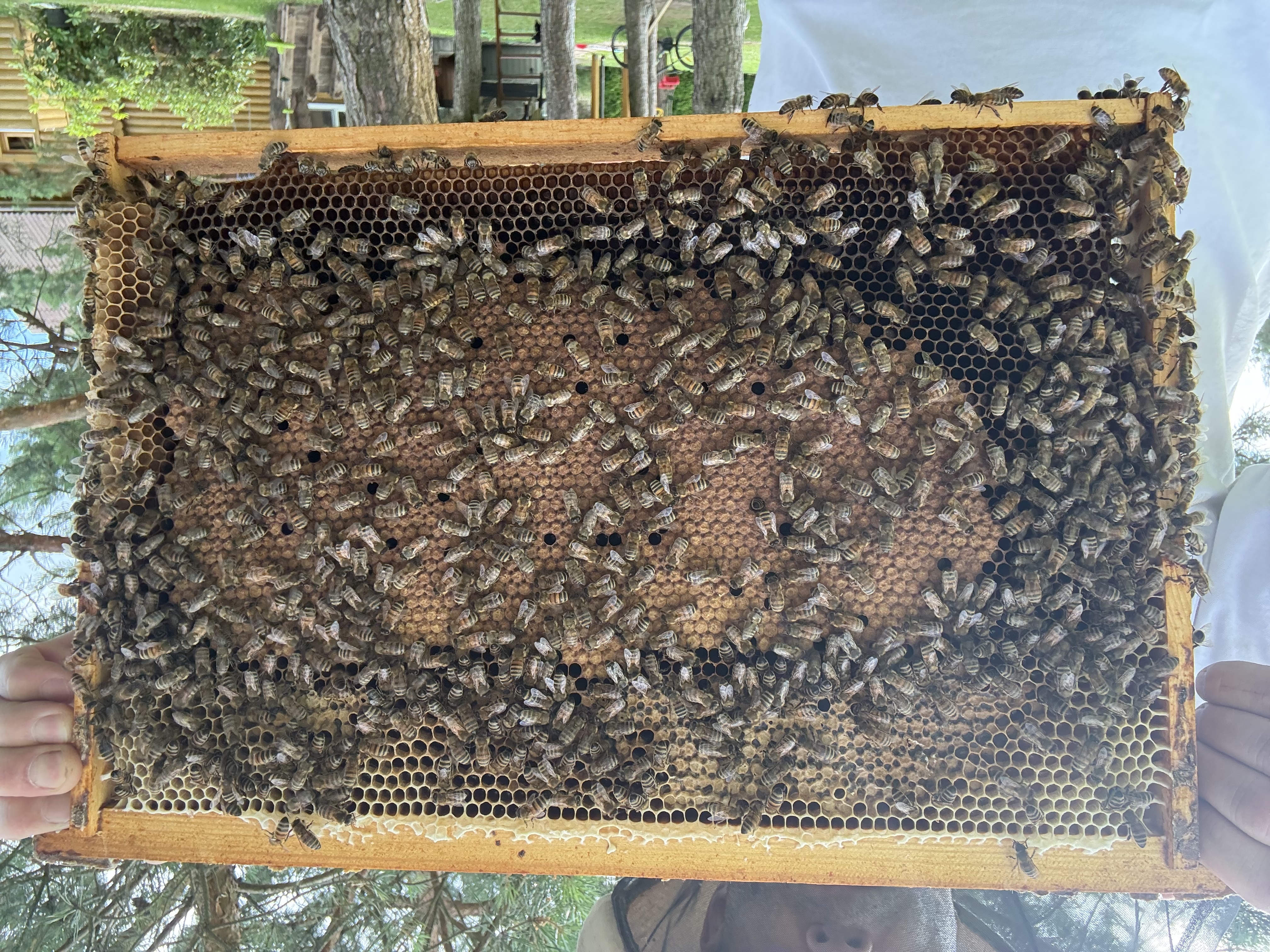
This side presents a strong pattern of brood within the center, attended by numerous bees, and honey stored towards the upper portion of the frame.
The frame exhibits strong brood patterns on both faces, with a healthy number of worker bees attending the central brood area. Capped honey is consistently present in the upper sections.
Frame 5
Side A
Side B
Side A
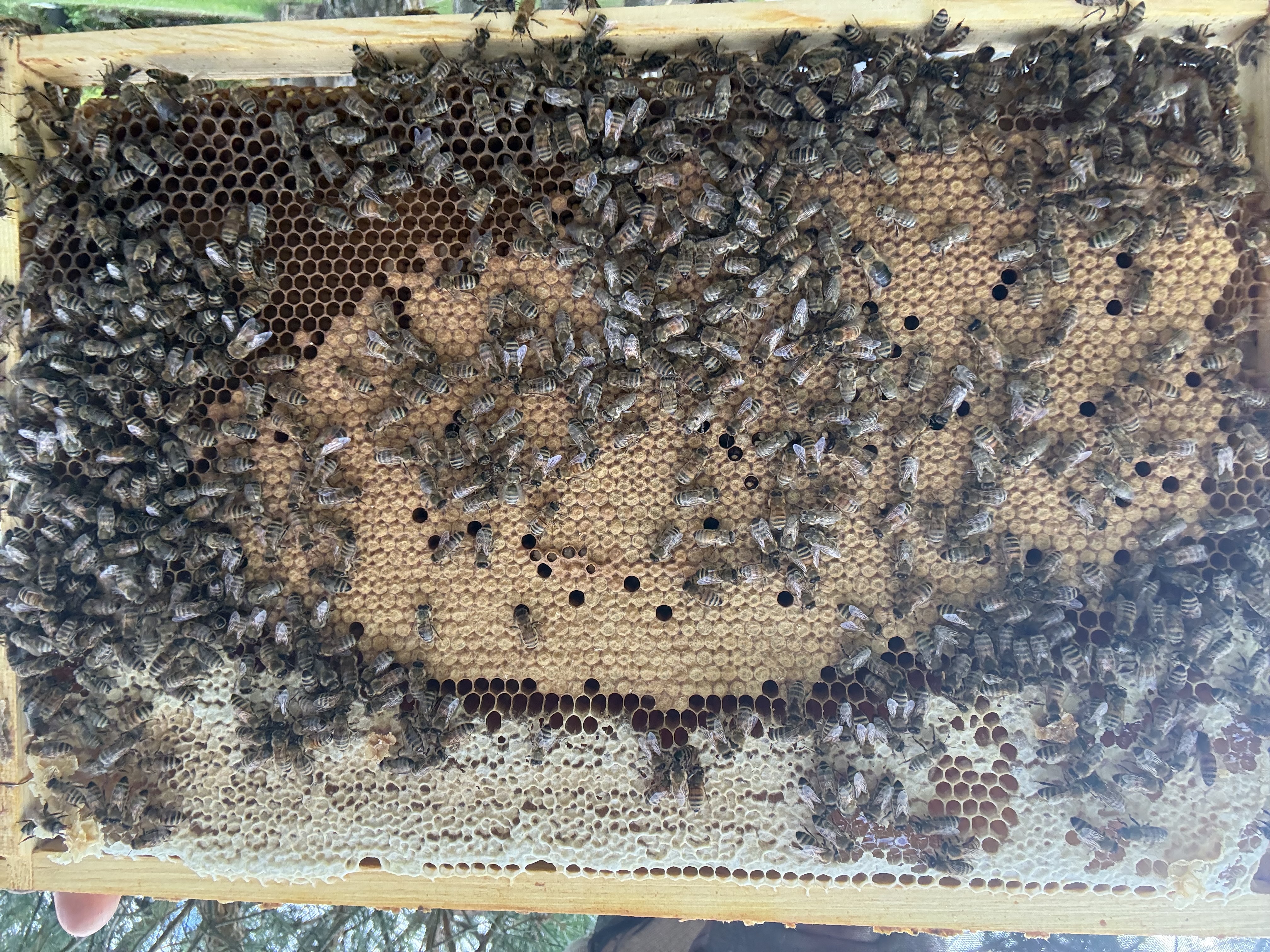
This frame is largely dedicated to honey storage, with a significant area of capped and uncapped honey, and very few bees.
Side B
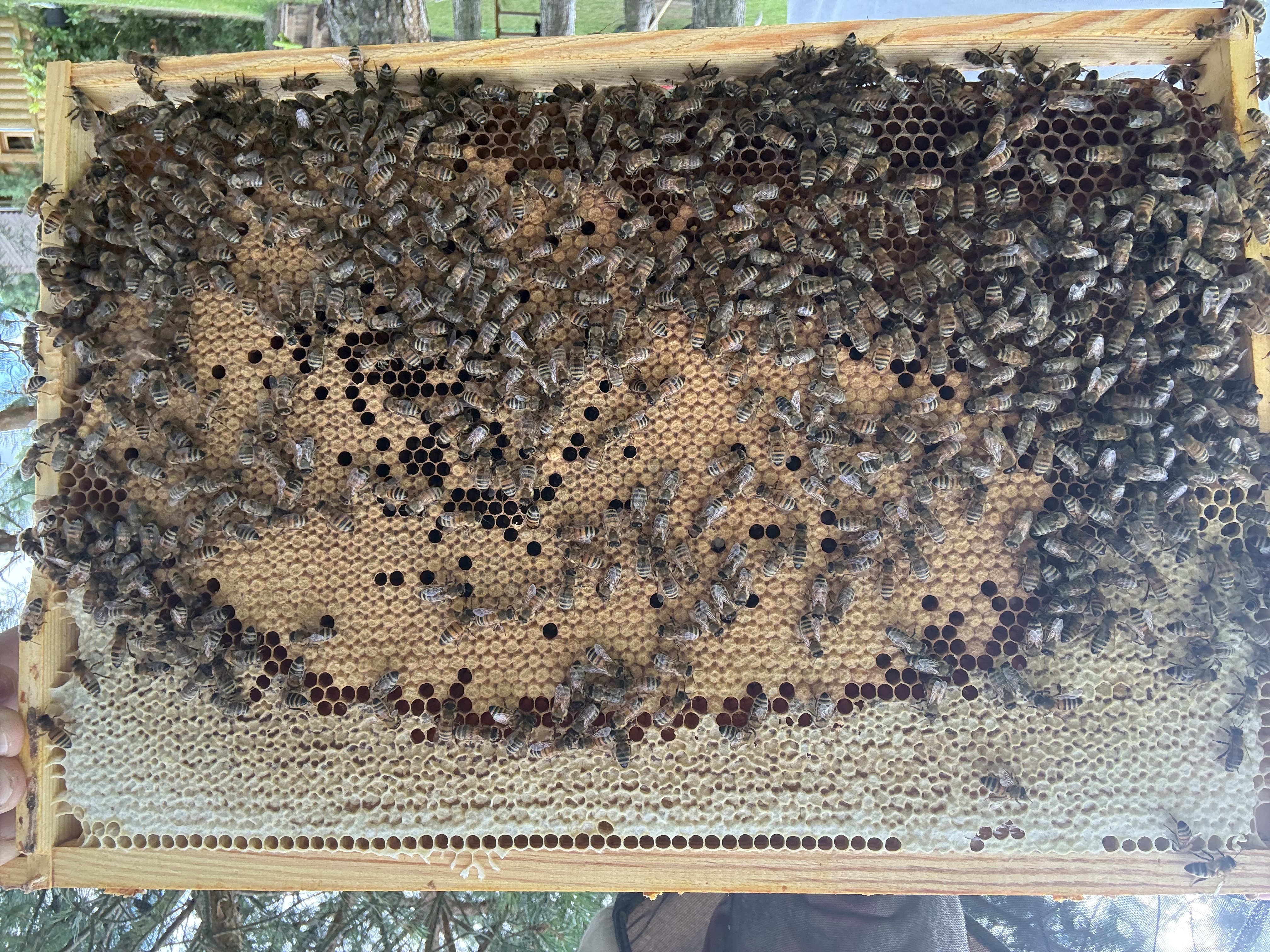
The opposite side also predominantly contains honey and pollen, with a clear band of capped honey at the top and fewer bees present.
This frame is primarily used for storage, showing extensive areas of capped and uncapped honey and pollen on both sides. Brood is scarce, and fewer bees are seen compared to brood frames.
Frame 6
Side A
Side B
Side A
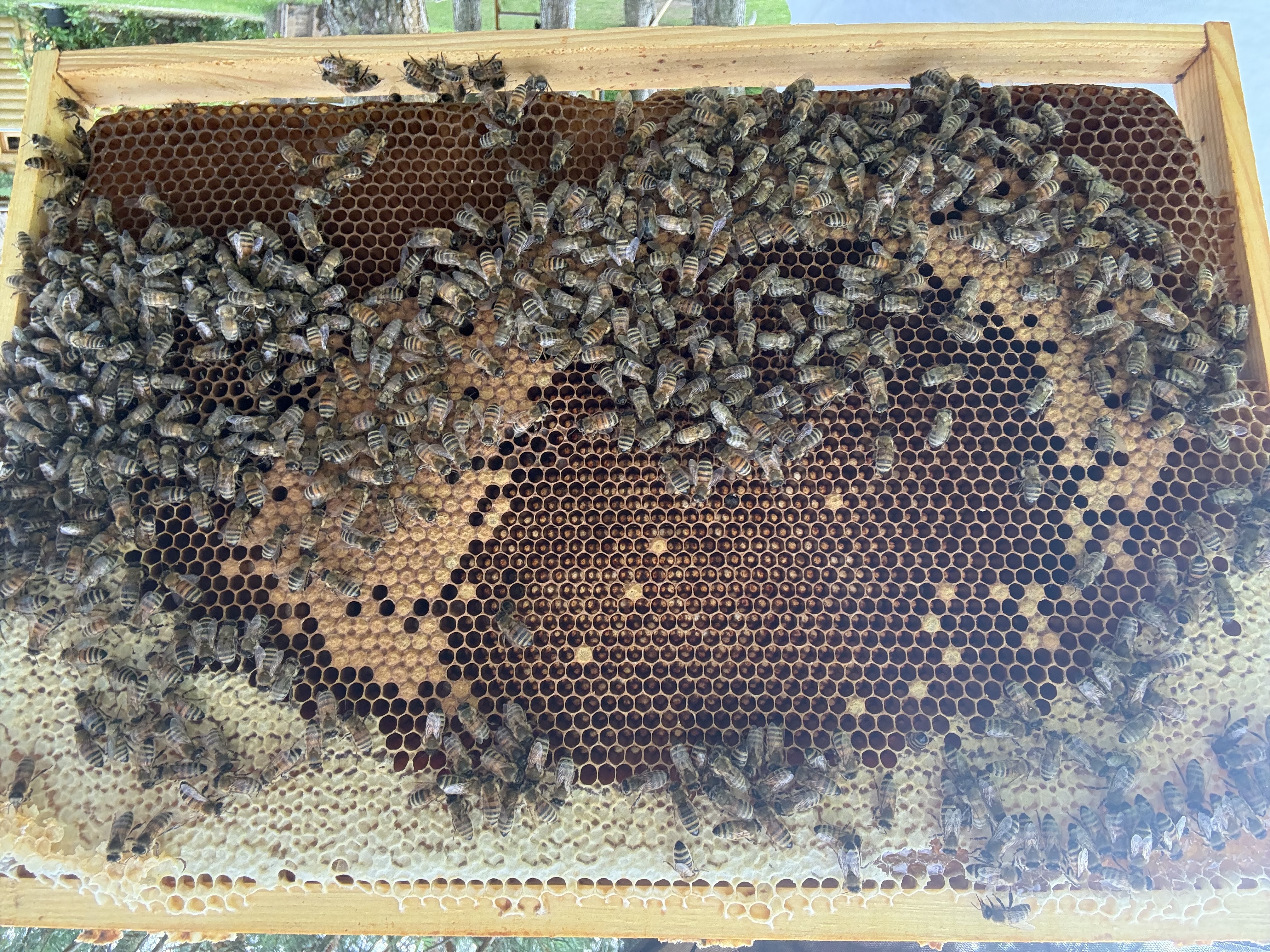
A healthy number of bees cover a central area of developing brood, with some honey stored in the upper section of the comb.
Side B
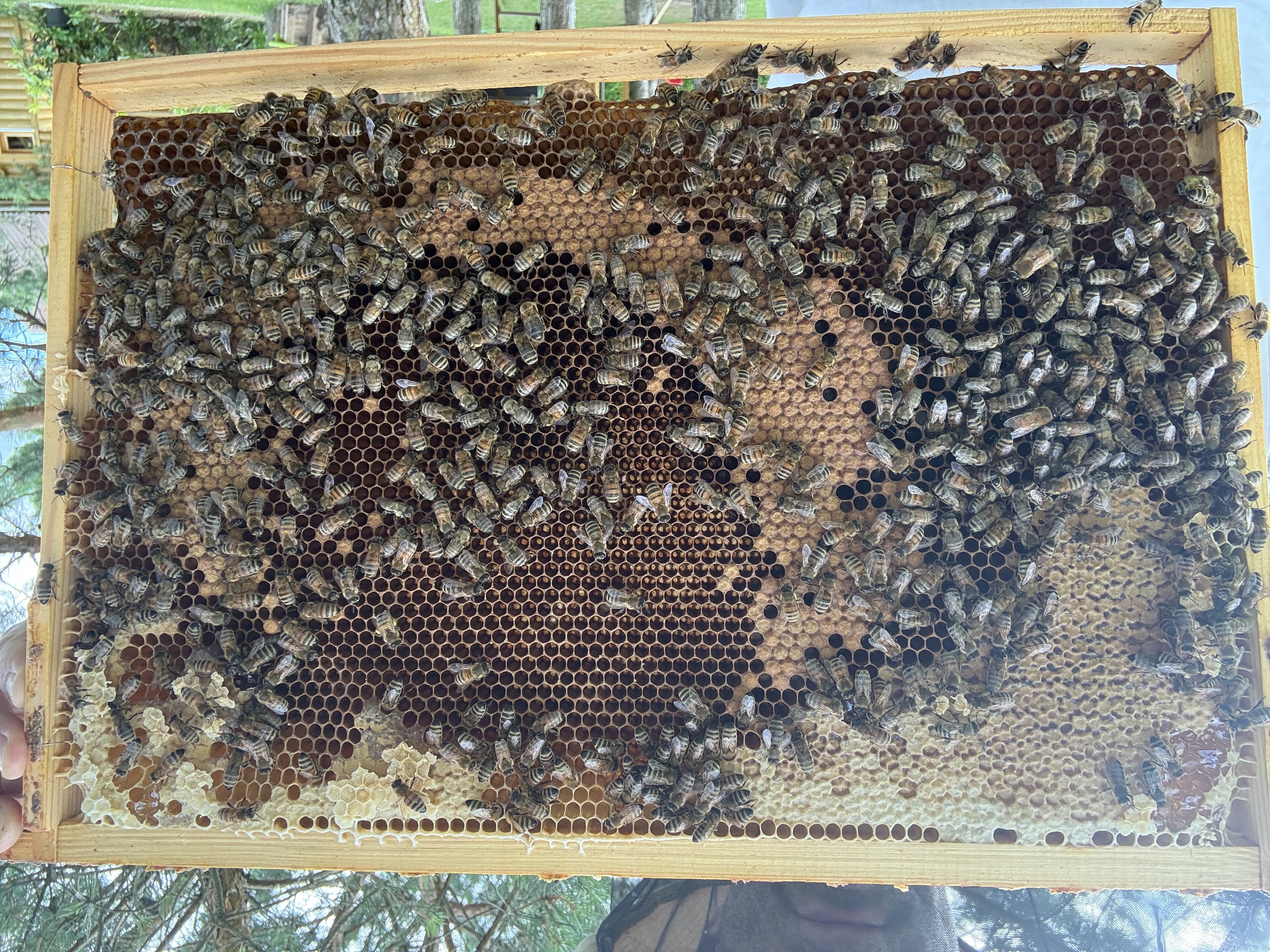
This side mirrors the previous with a strong cluster of bees over brood, complemented by honey-filled cells above.
Both sides of this frame display a robust central brood area actively attended by a good number of bees. Honey is also stored in the upper portions of the comb.
Frame 7
Side A
Side B
Side A
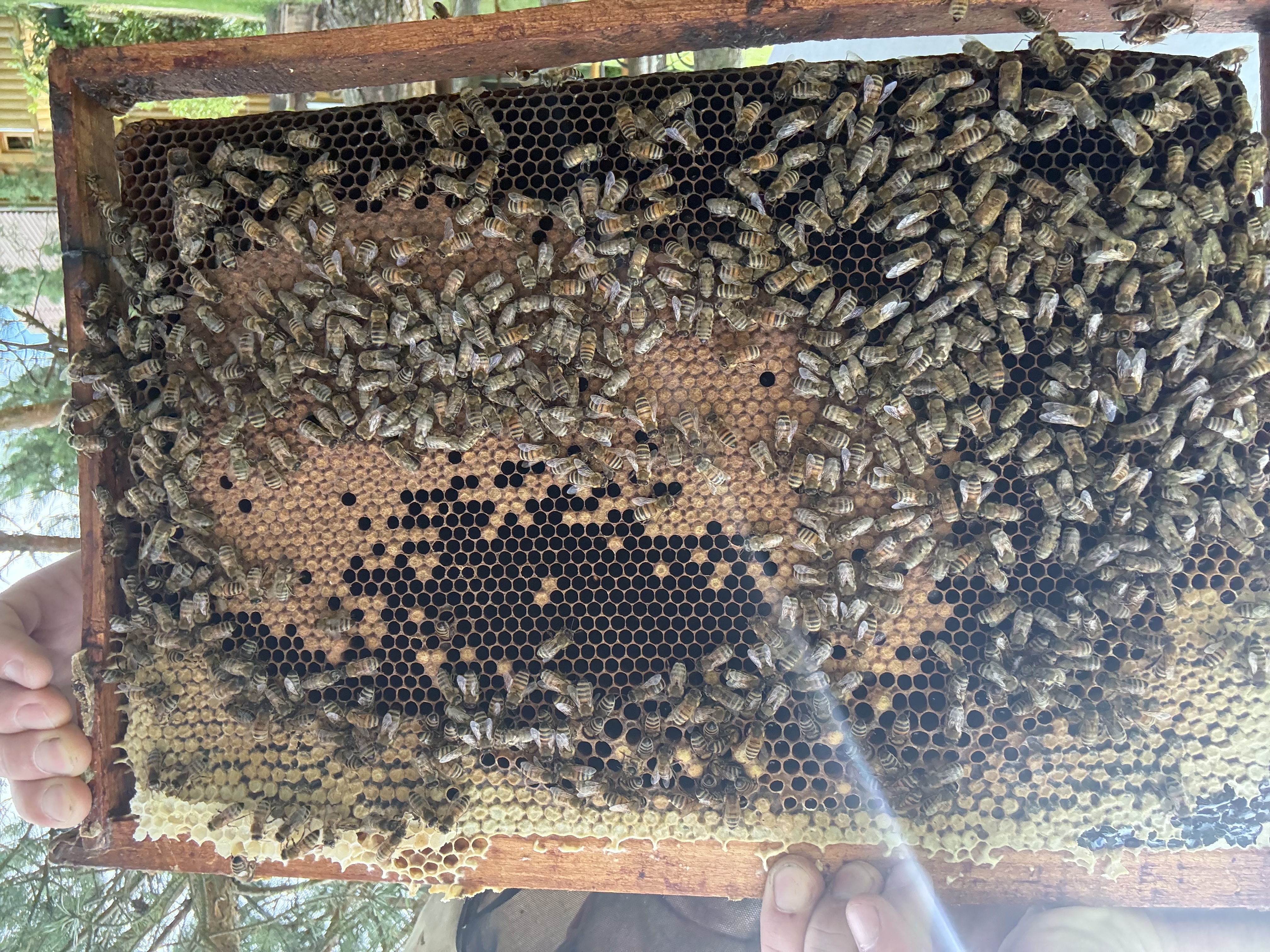
This frame side shows extensive brood coverage with a dense population of bees, and minor honey reserves.
Side B
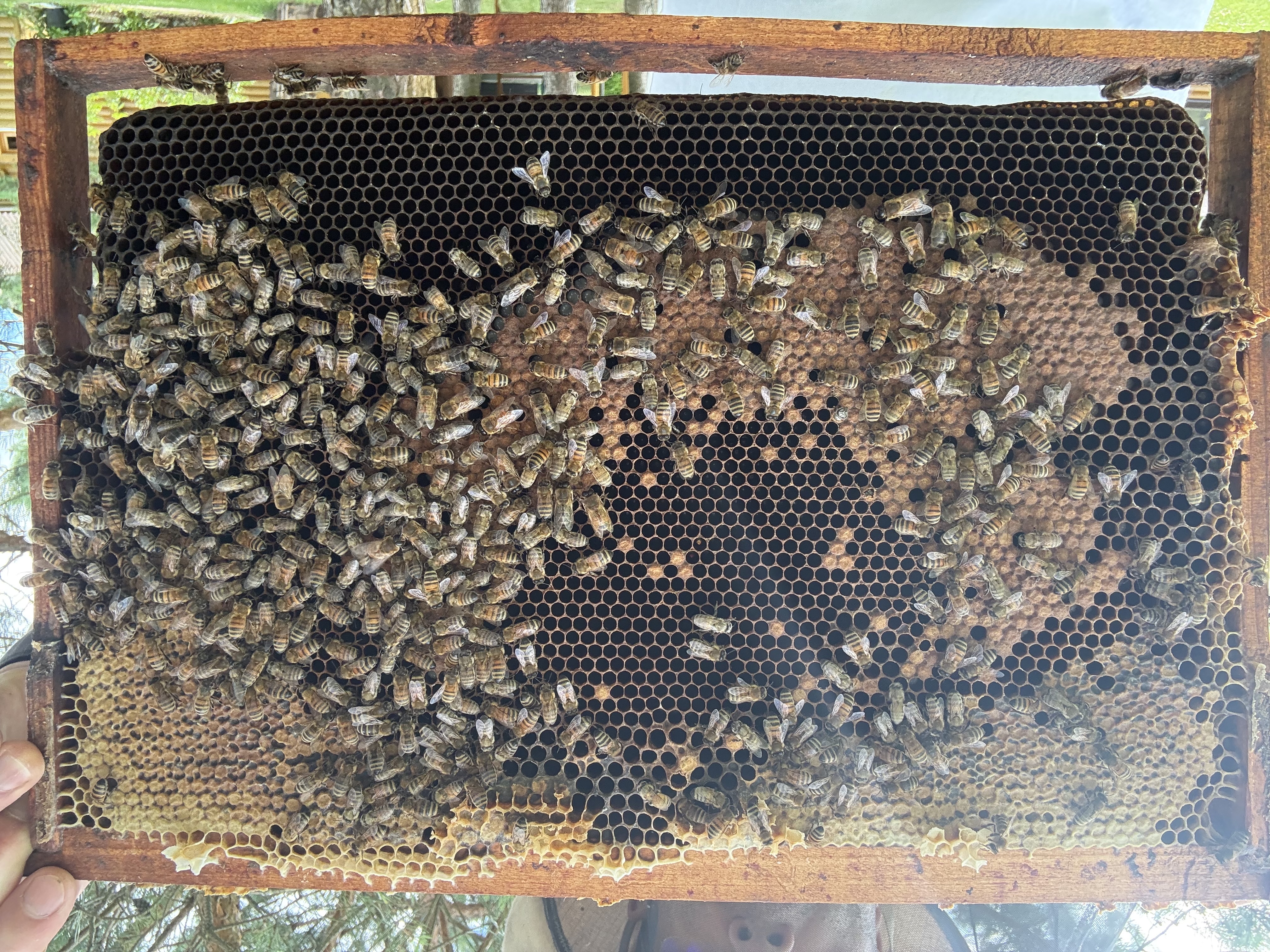
A well-covered frame face, indicating strong brood production and active bee engagement across the comb surface, with some honey stores.
This frame demonstrates excellent brood coverage on both sides, indicating strong egg-laying activity, supported by a dense population of worker bees. Minimal honey stores are visible, suggesting its primary use as a brood nest.
Frame 8
Side A
Side B
Side A
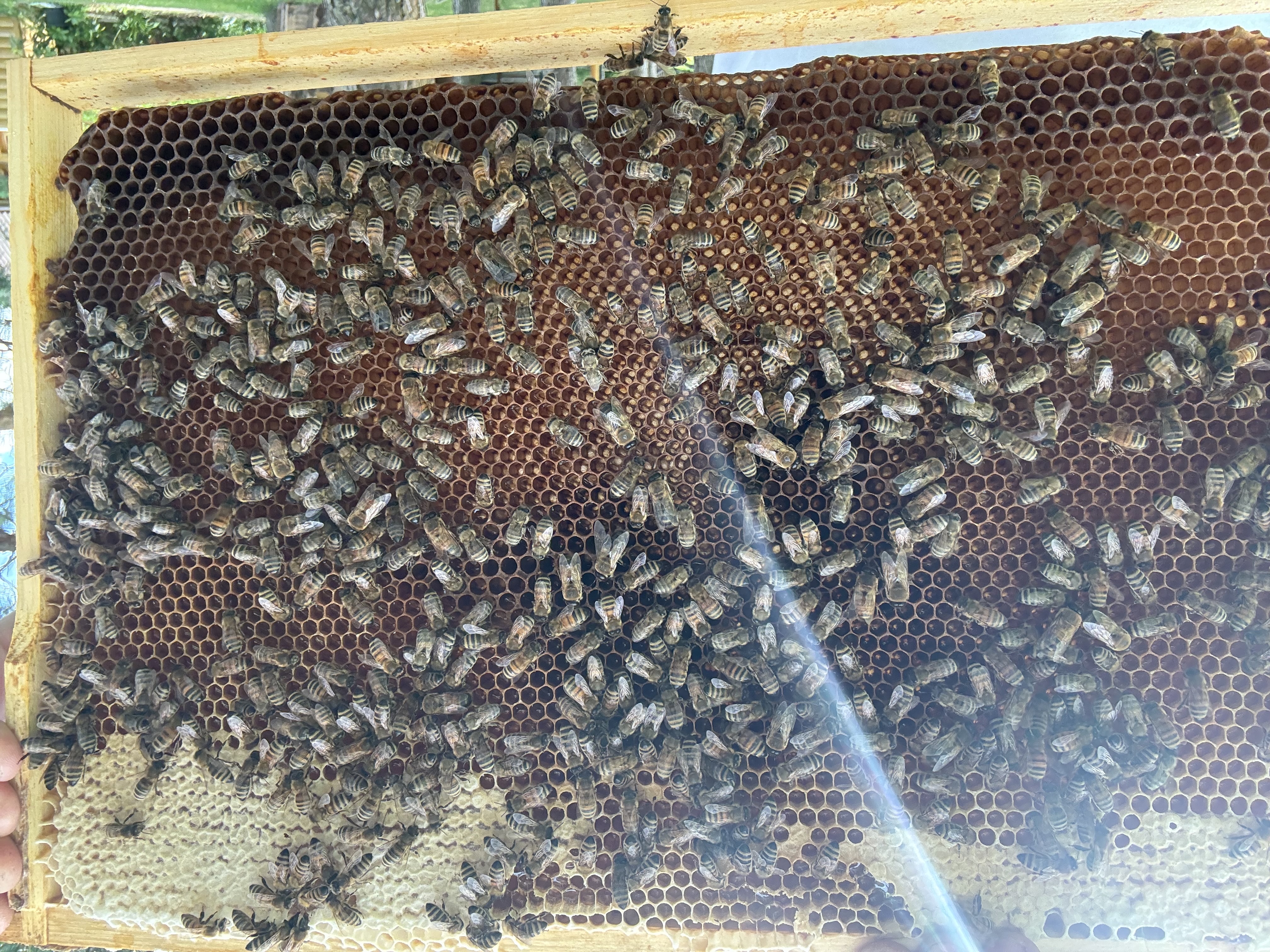
The frame exhibits a large amount of honey and pollen storage, particularly in the upper half, with a lighter bee presence.
Side B
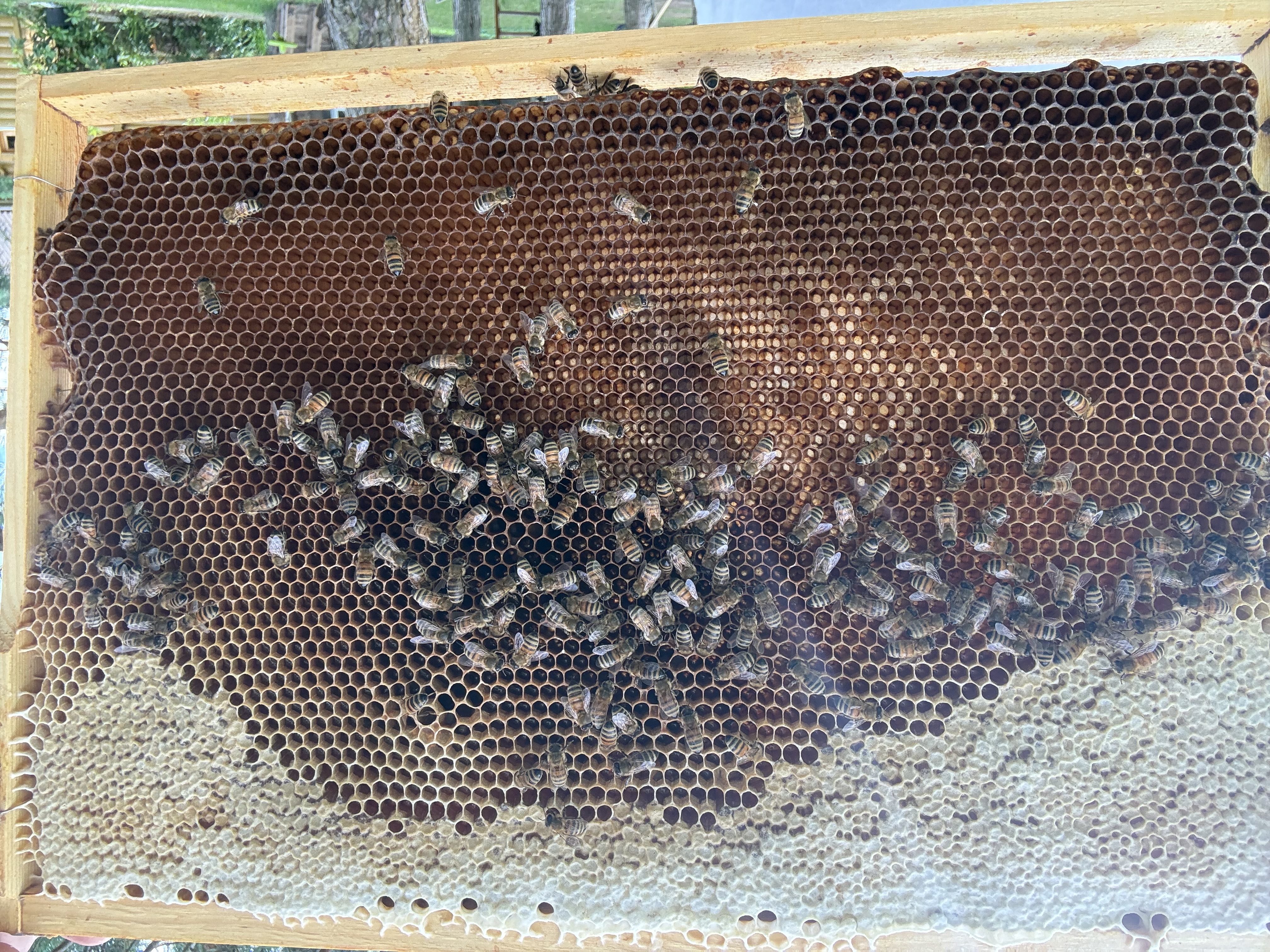
Similar to the other side, this frame contains a substantial amount of stored honey and pollen, with fewer bees visible than on brood frames.
Both faces of this frame are largely filled with stored honey and pollen, with only scattered or minimal brood cells visible. The bee population is lower, consistent with a frame predominantly used for resources.
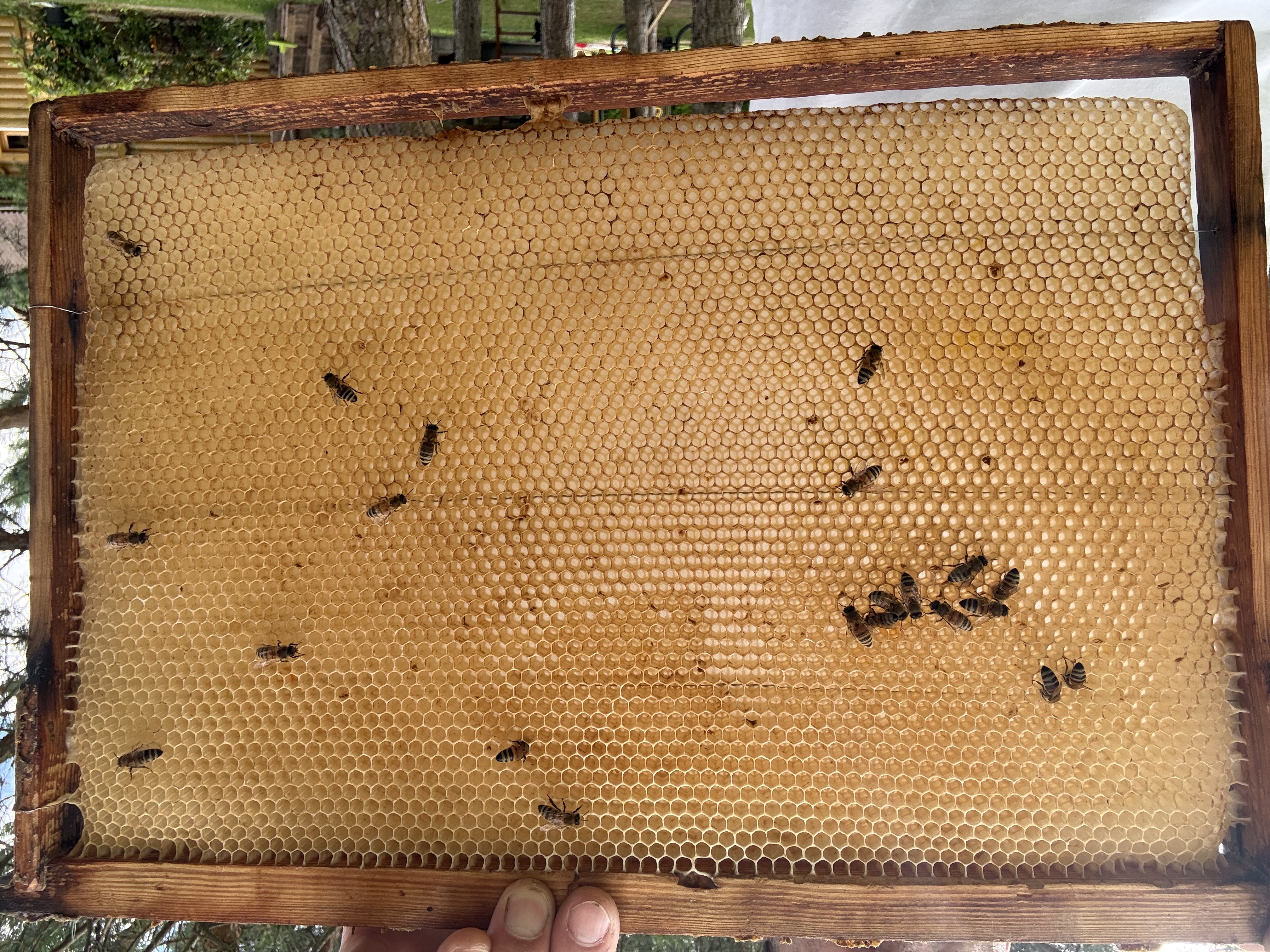
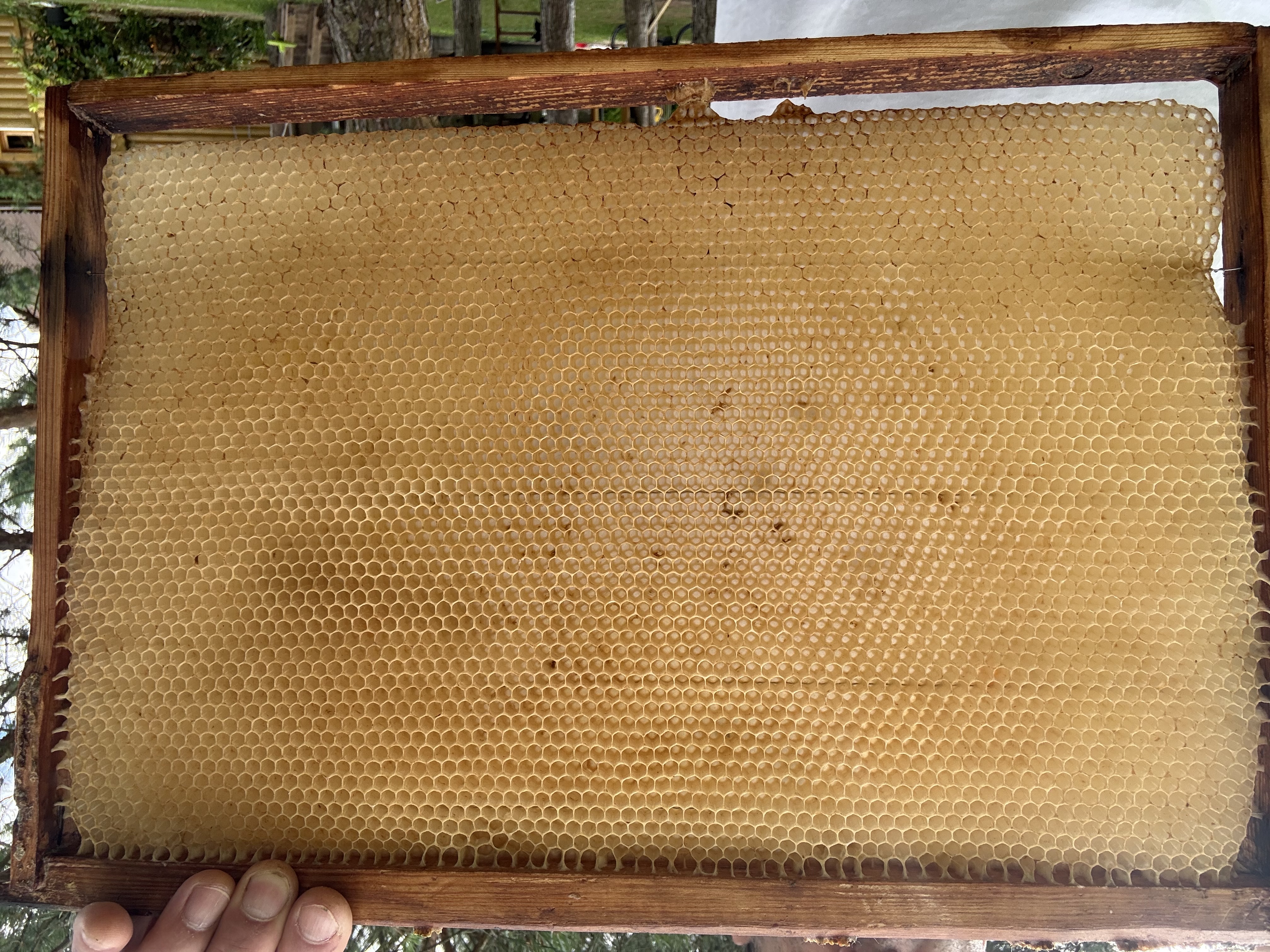
Frame 9
Side A
Side B
Side A
This side of the frame contains numerous worker bees, along with a significant amount of uncapped honey or nectar, and mostly empty or very young brood cells.
Side B
This side of the frame displays a high concentration of uncapped honey or nectar, with very few bees present and no visible brood.
Both sides of this frame primarily consist of empty cells and uncapped honey or nectar. It appears to be a food storage frame with minimal or no visible brood.
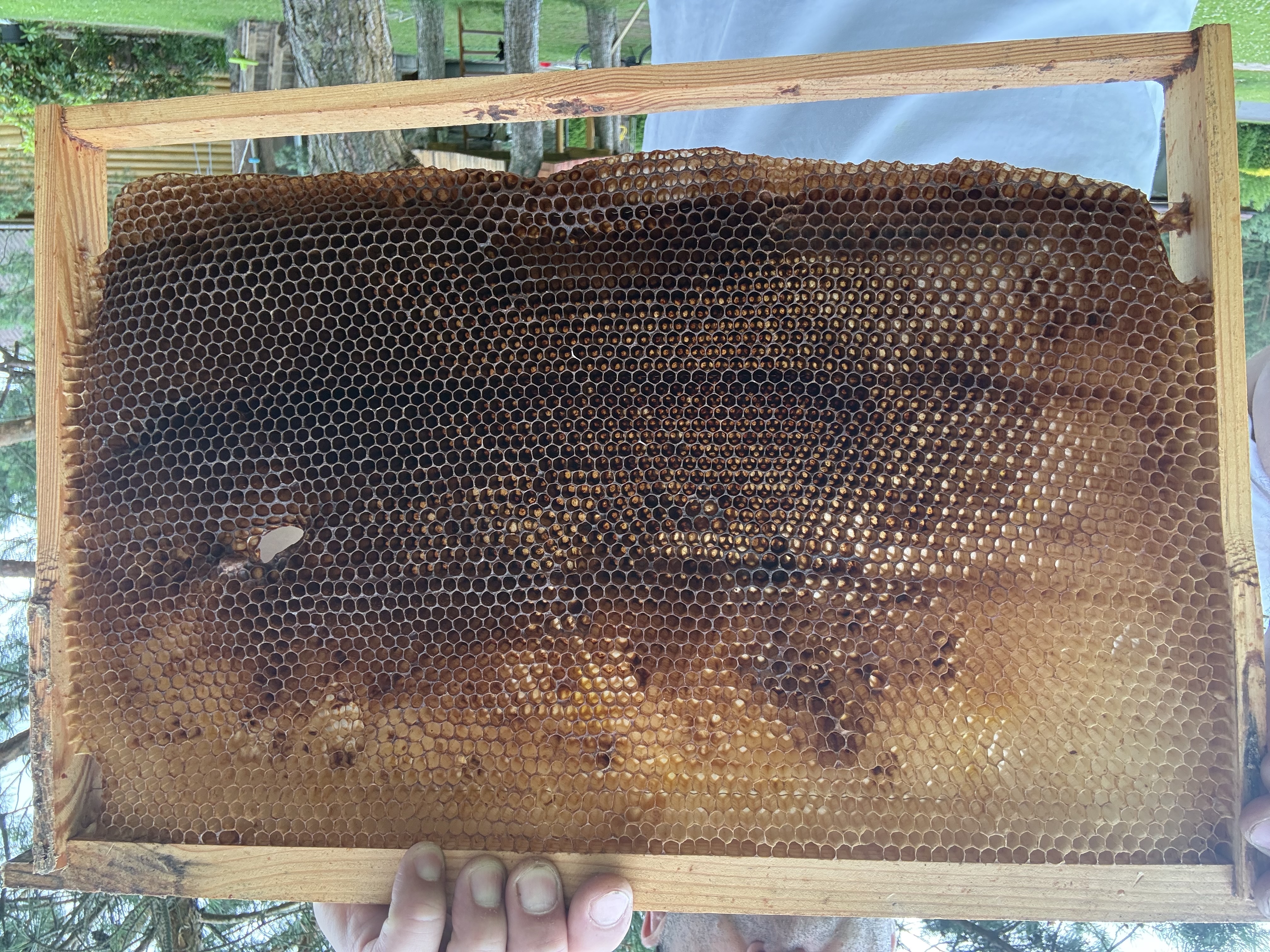
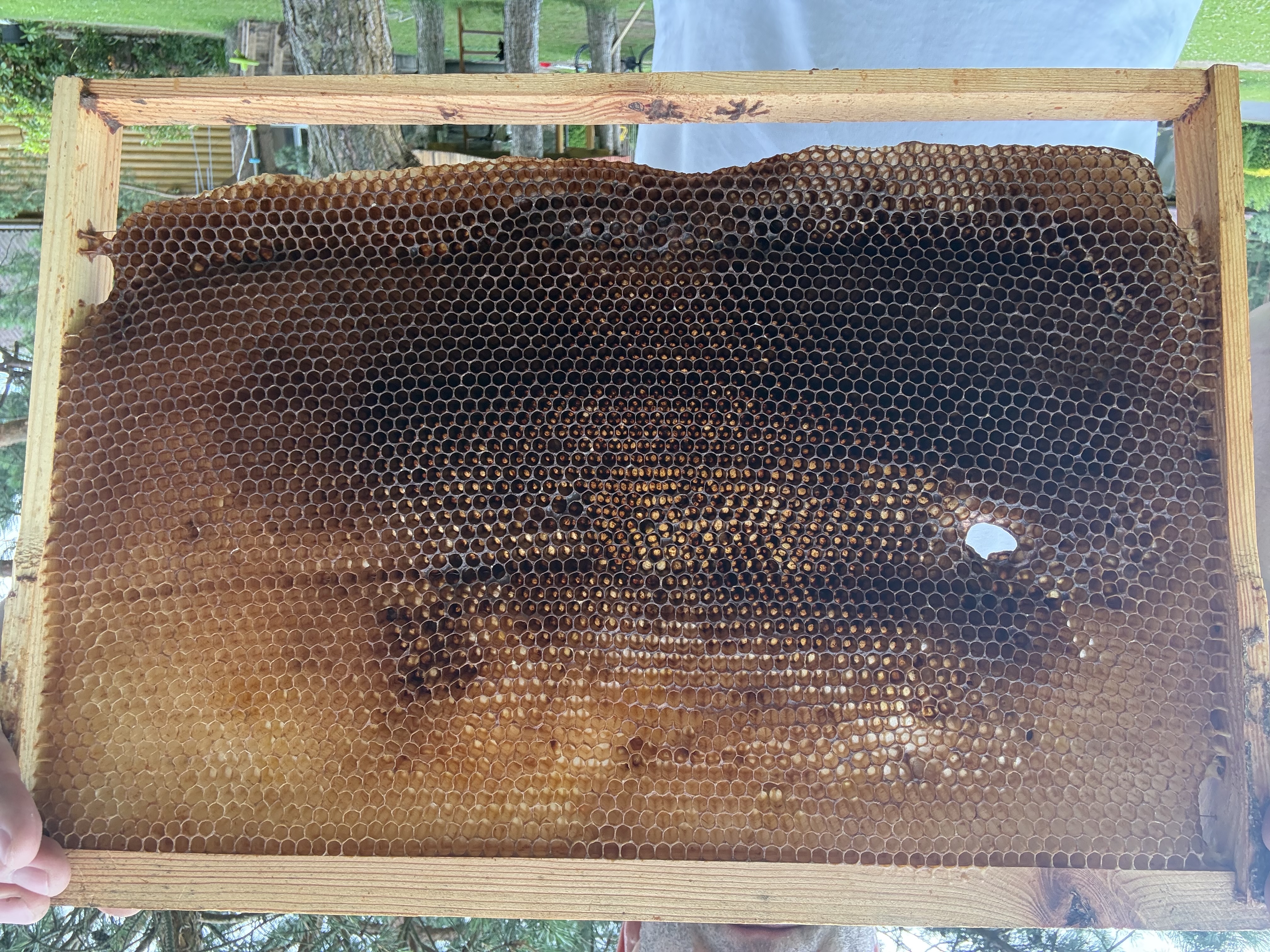
Frame 10
Side A
Side B
Side A
This side of the frame shows a significant central area of dark capped brood, bordered by sections containing honey or nectar.
Side B
This side of the frame is predominantly covered with dark capped brood, with a smaller amount of honey or nectar visible along the top edge.
This frame is largely dedicated to brood production, with both sides showing extensive areas of dark capped brood. There are also visible stores of honey or nectar, primarily around the brood nest.
Frame 11
Side A
Side B
Side A
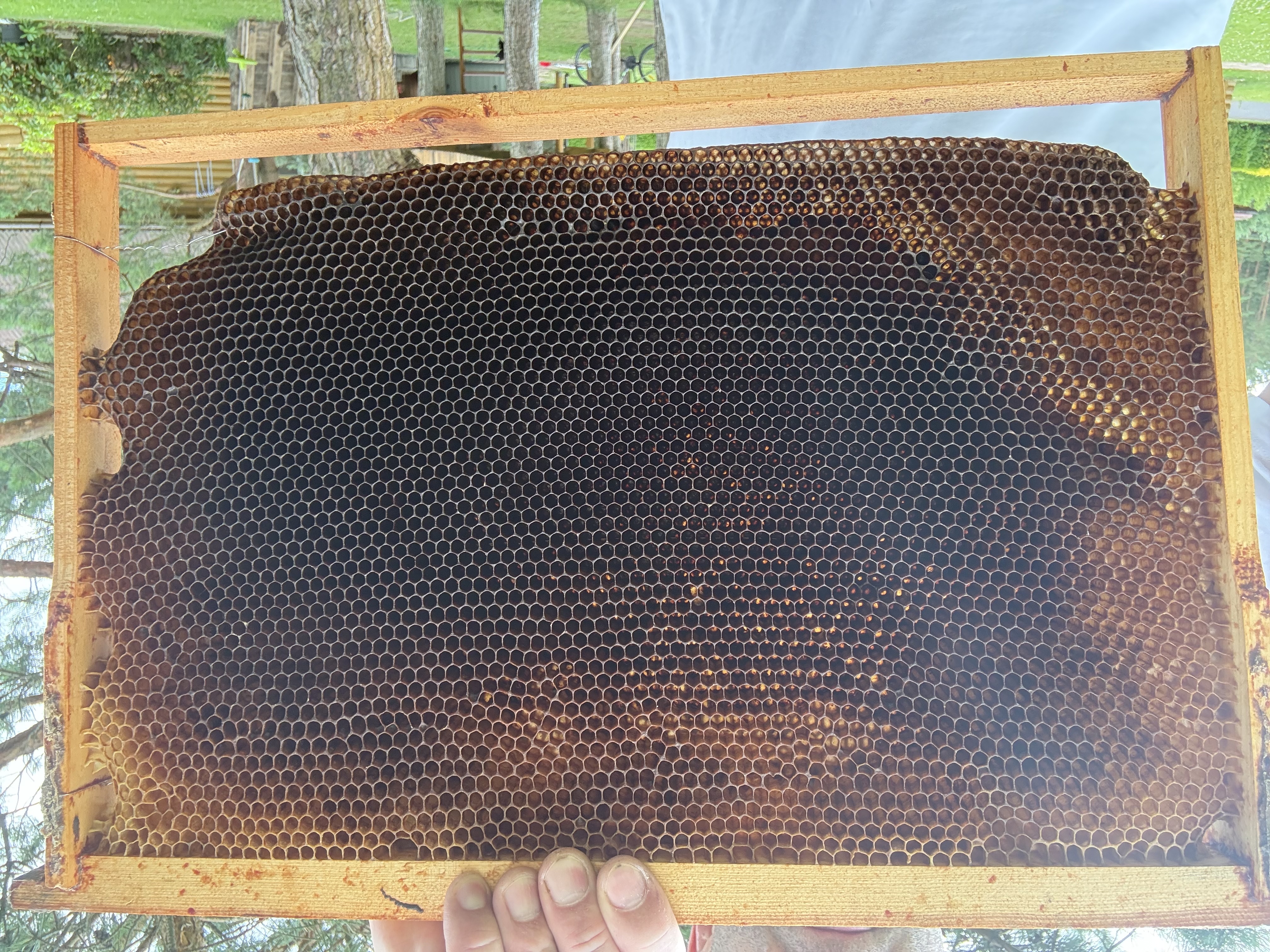
This side of the frame exhibits an extremely high density of dark capped brood, with very little space for honey or other resources.
Side B
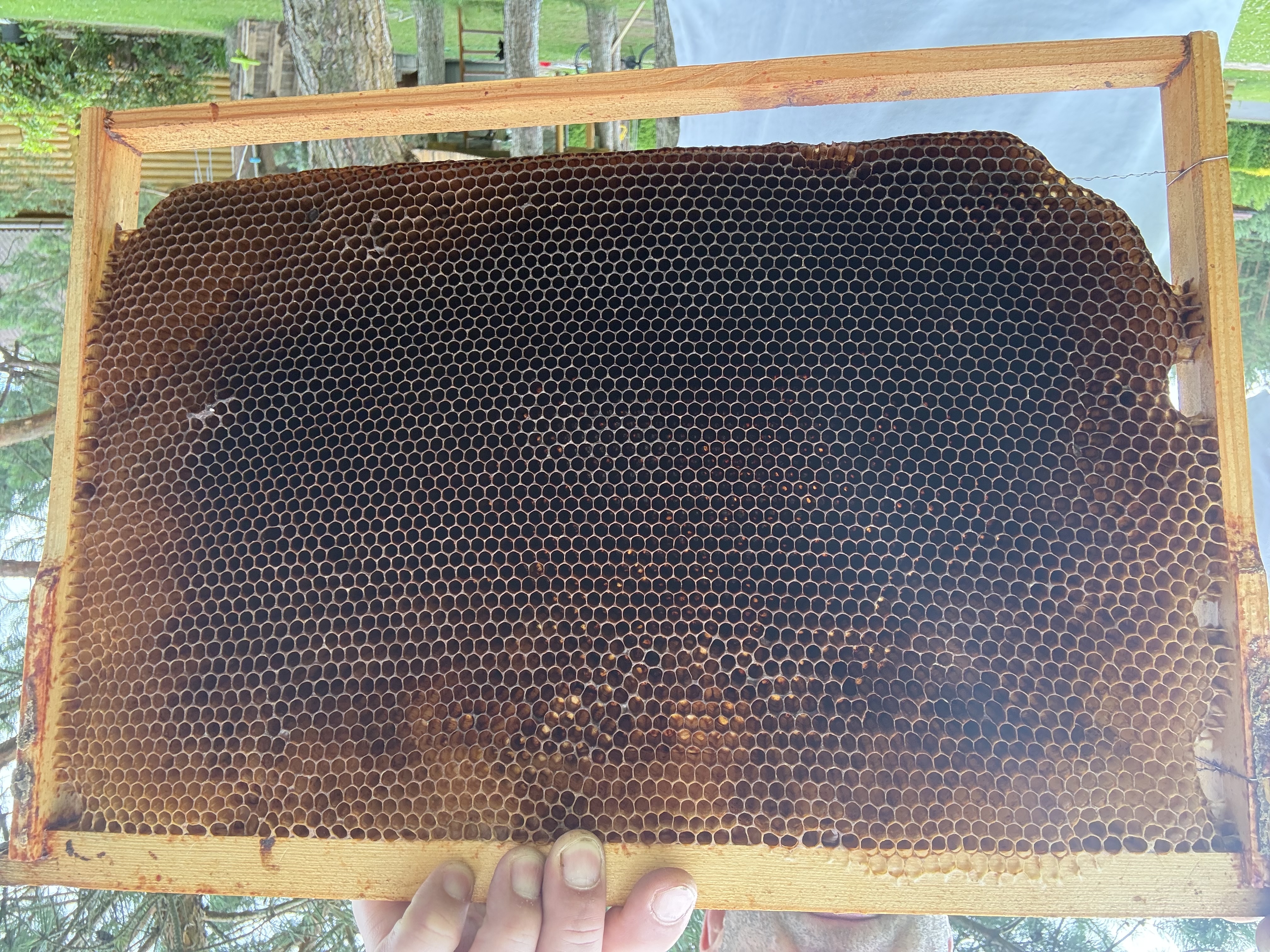
This side of the frame is almost entirely filled with dark capped brood, showing a highly prolific brood pattern.
Both sides of this frame exhibit an extremely high density of dark capped brood, indicating a robust and productive queen. It is primarily a brood frame with very little space dedicated to honey storage.