Inspection Results
27 Jun 2026
Hive #7 · 18 frame sides captured
60
Colony Strength
Good
Complete the inspection of the remaining frame to ensure full coverage. Prioritize increasing honey stores immediately through feeding. Monitor brood development and attempt to locate the queen on the next inspection.
Queen Status
Queen presumed present and laying, but not spotted during inspection.
Brood Pattern
Consistent across 6 inspected frames with moderate coverage (40%).
Honey Stores
Low (17%), requires immediate attention.
Varroa Risk
Unknown, no data provided.
AI Observations
This inspection covered 90% of the hive (9 out of 10 frames), limiting a full assessment. The colony shows good activity with 1750 bees and 6 frames containing brood, indicating a laying queen is present. However, honey stores are low at 17%, and the queen was not visually located.
Frame Analysis — 9 frames
Frame 1
Side A
Side B
Side A
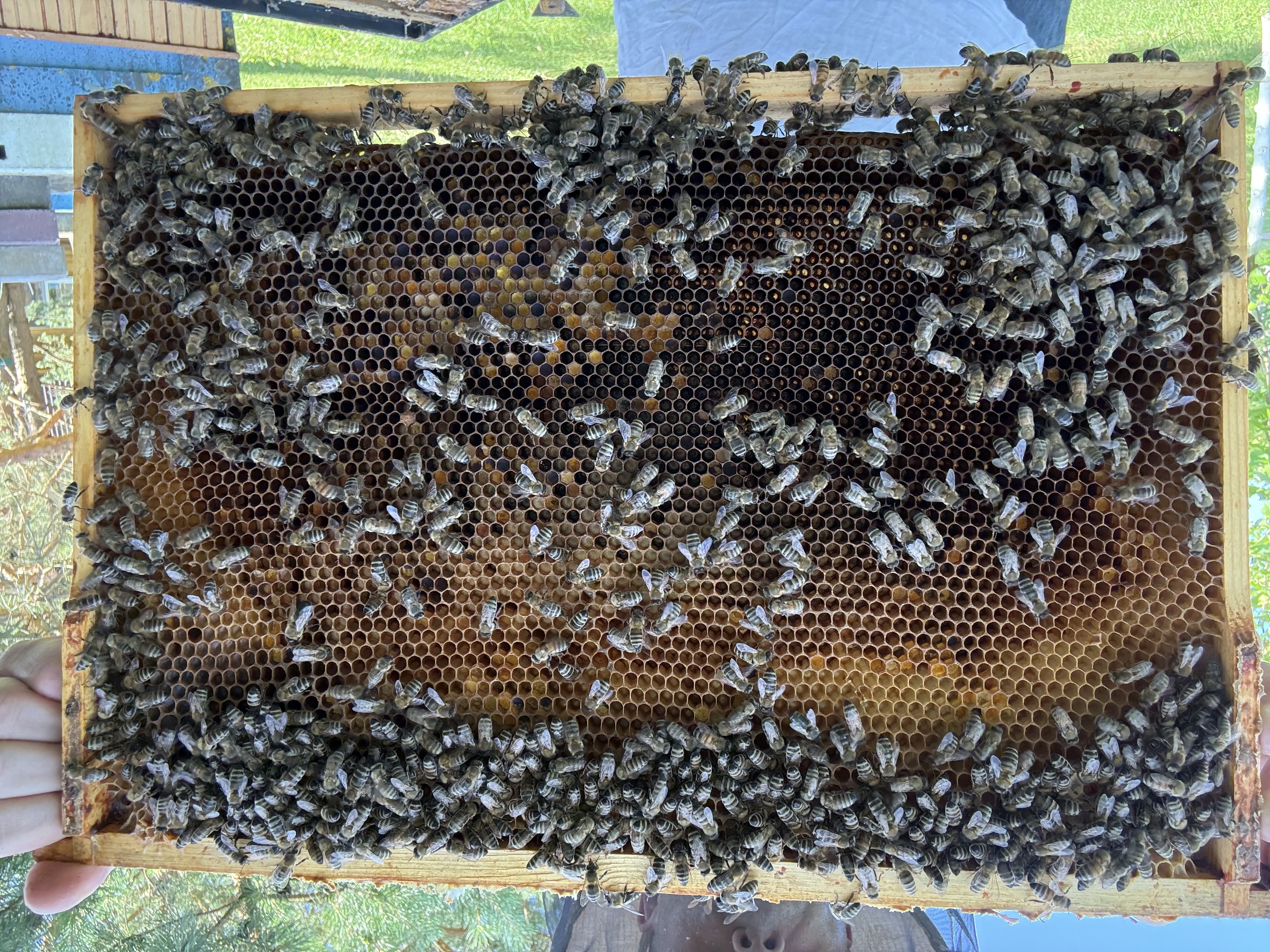
This side of the frame shows a good distribution of worker bees, with a large central area of developing brood and some stored honey in the upper corners.
Side B
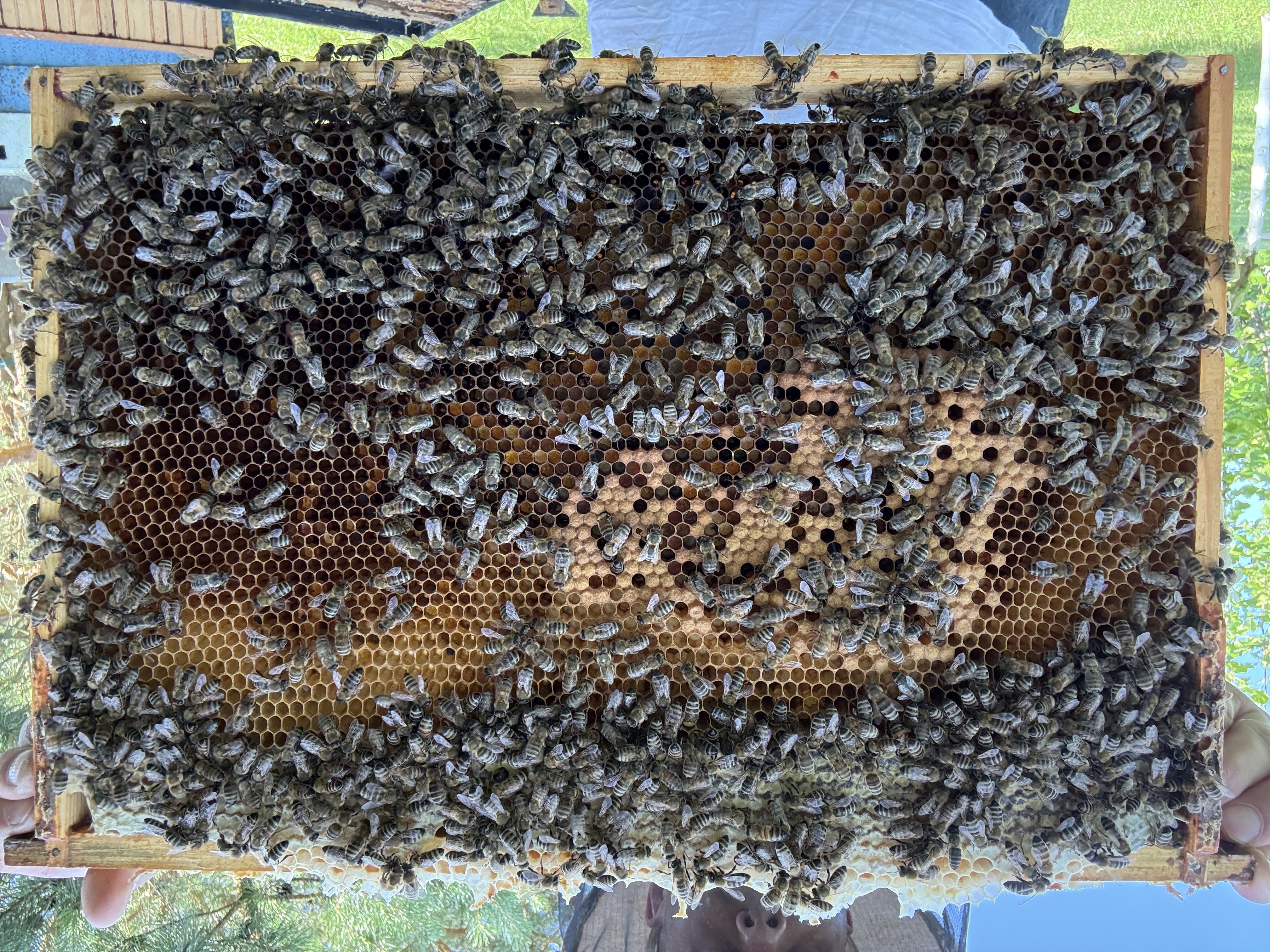
The reverse side of the frame also displays a strong presence of bees actively working on a large section of brood, with a small amount of honey visible.
Both sides of this frame show significant brood rearing activity with a high bee population covering the brood, indicating a healthy and active queen. There is a small amount of honey stored at the top, suggesting the colony is utilizing most resources for brood production.
Frame 2
Side A
Side B
Side A
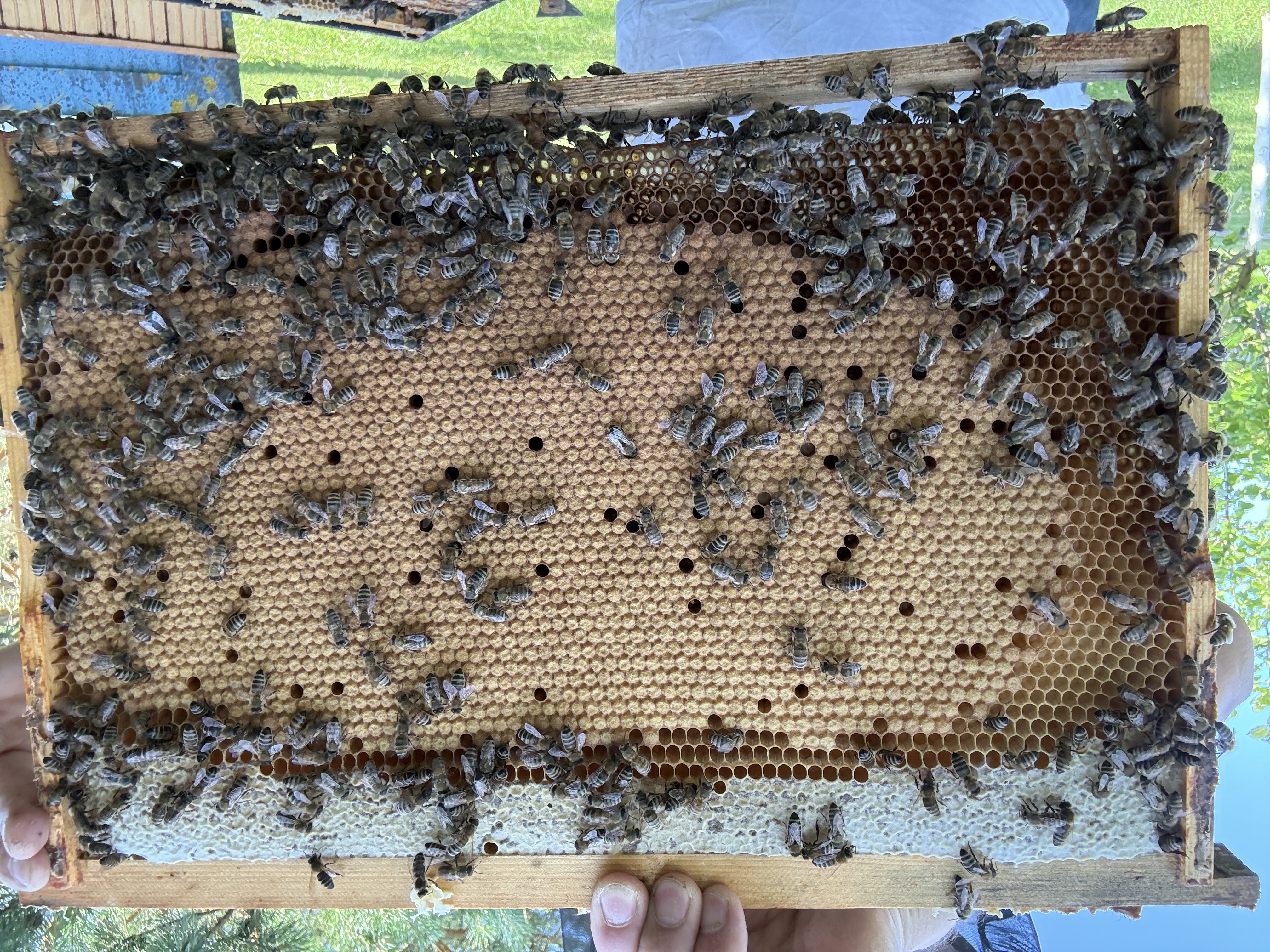
This frame side features a robust pattern of brood surrounded by worker bees, with a noticeable ring of pollen and some capped honey towards the edges.
Side B
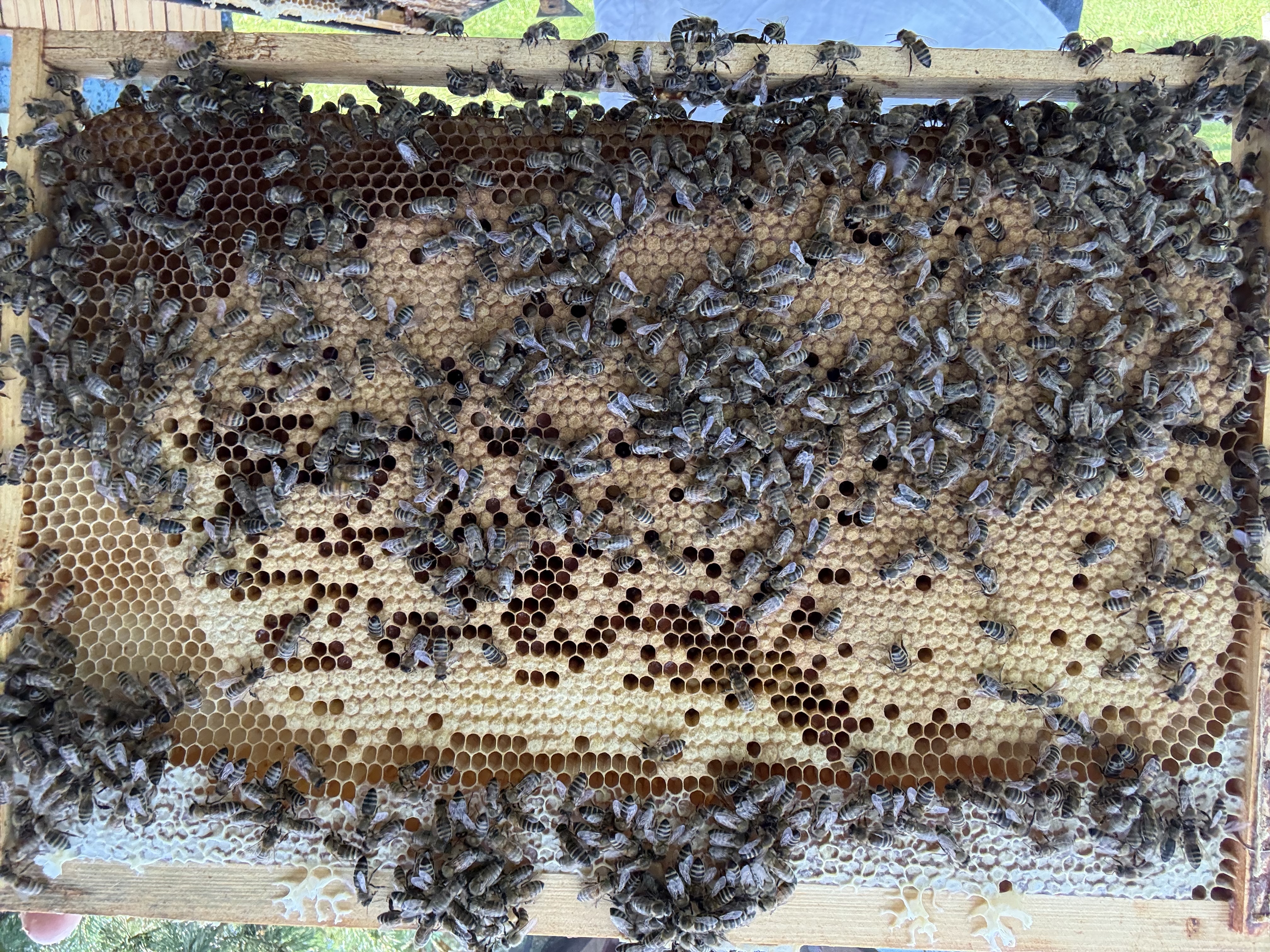
The opposite side of the frame presents a healthy brood area alongside a more prominent crescent of capped honey and pollen, indicating good resource storage.
This frame exhibits a strong brood pattern on both sides, demonstrating active egg-laying by the queen and good colony expansion. The presence of pollen and honey around the brood indicates the bees are well-fed and storing resources.
Frame 3
Side A
Side B
Side A
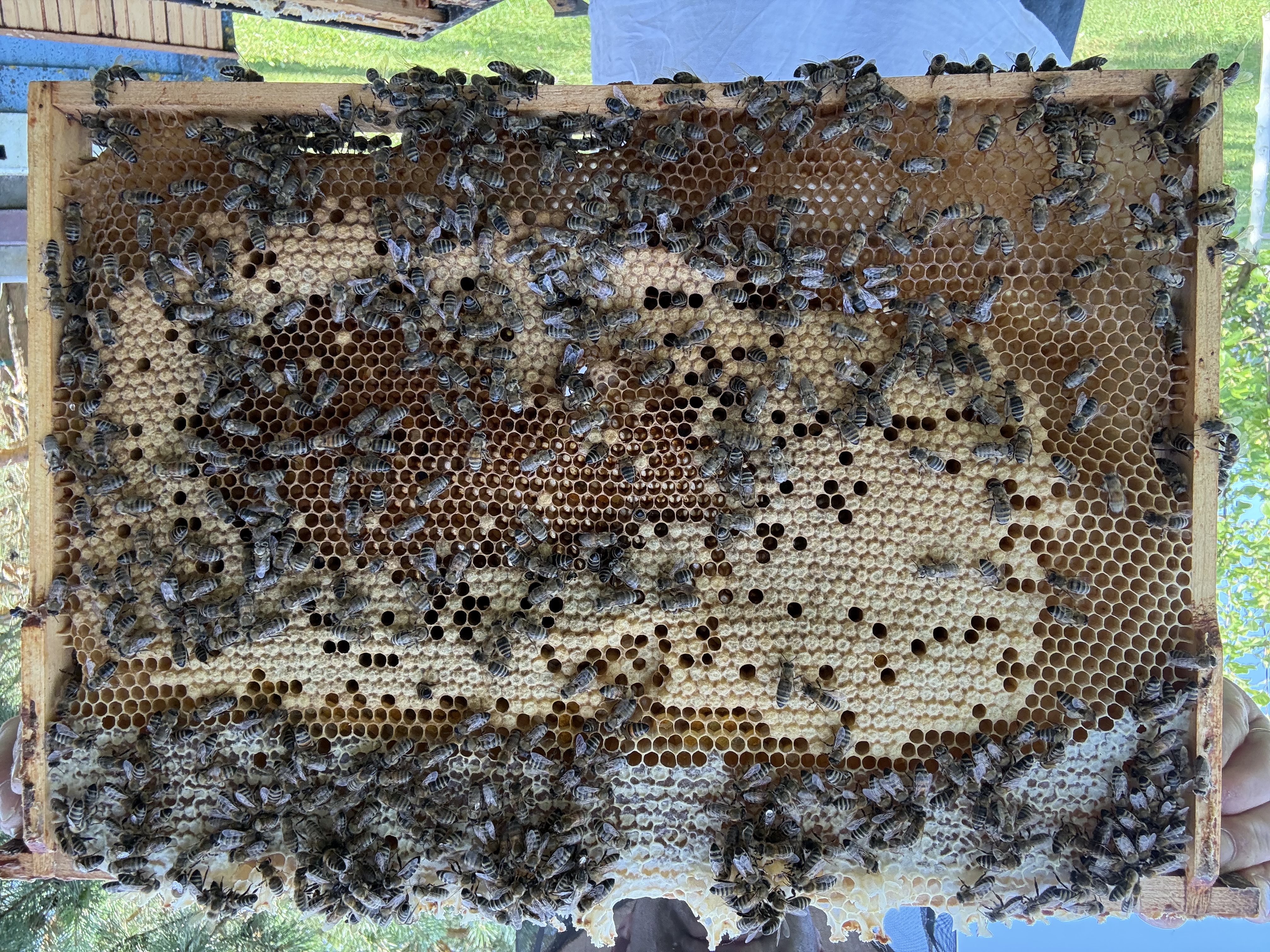
This side of the frame displays a busy brood nest with a mix of worker and what appears to be some drone brood, bordered by a scattering of bees and some stored resources.
Side B
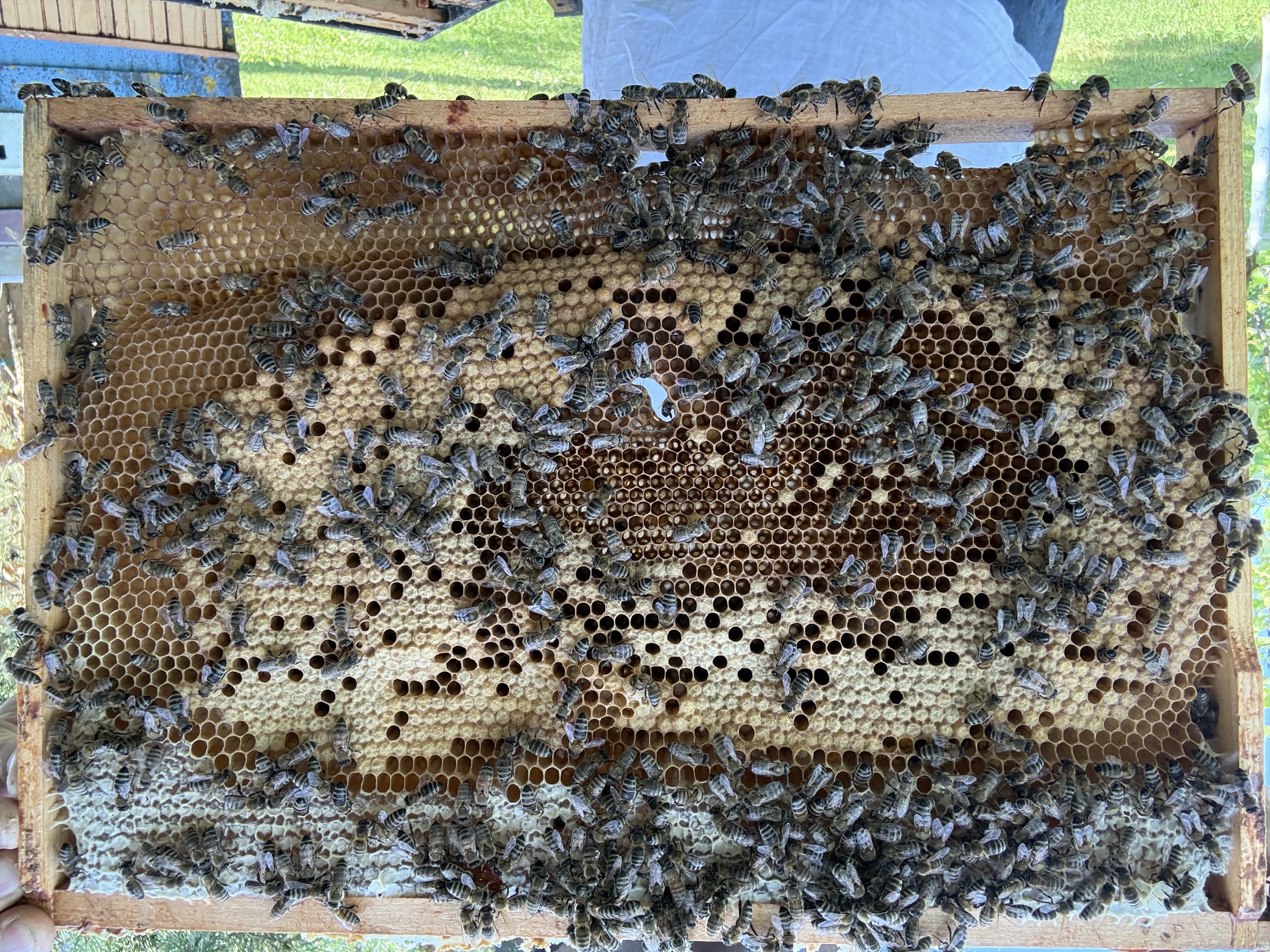
The reverse side shows consistent brood development across a central area, surrounded by a moderate number of bees and some scattered stores.
This frame clearly illustrates a productive brood area on both sides, with a healthy mix of developing bees. The presence of resources like honey and pollen indicates the colony is maintaining its stores while expanding its population.
Frame 4
Side A
Side B
Side A
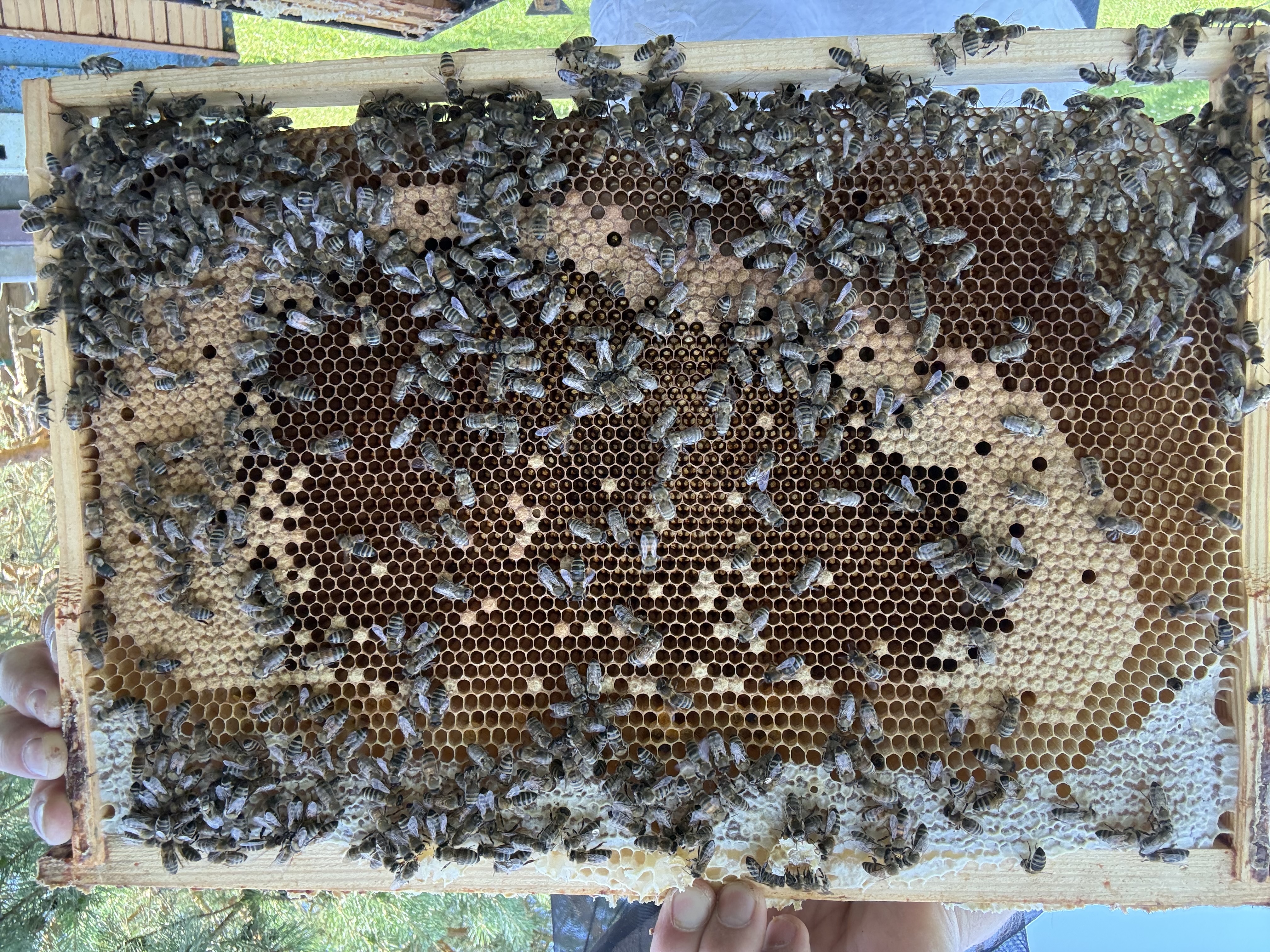
This side of the frame is heavily populated with capped brood, indicating a strong surge in emerging worker bees, with minimal other stores visible.
Side B
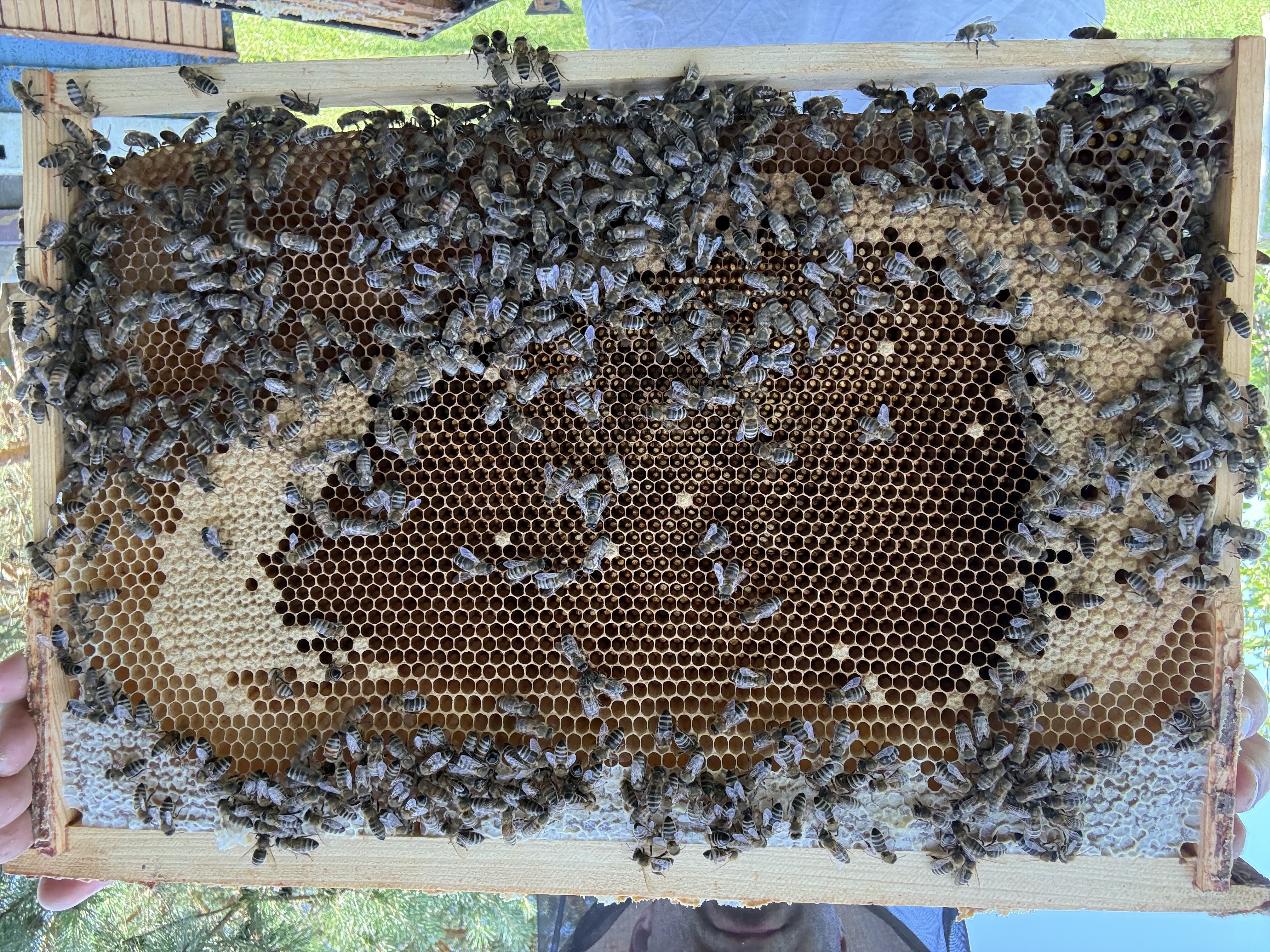
The opposite side also features an extensive area of capped brood, suggesting a substantial number of young bees are about to emerge and contribute to the colony's workforce.
Both sides of this frame are dominated by vast areas of capped brood, signifying a strong and active queen with a large number of emerging bees soon to bolster the colony. The limited visible honey and pollen suggest that resources are primarily being directed towards brood rearing.
Frame 5
Side A
Side B
Side A
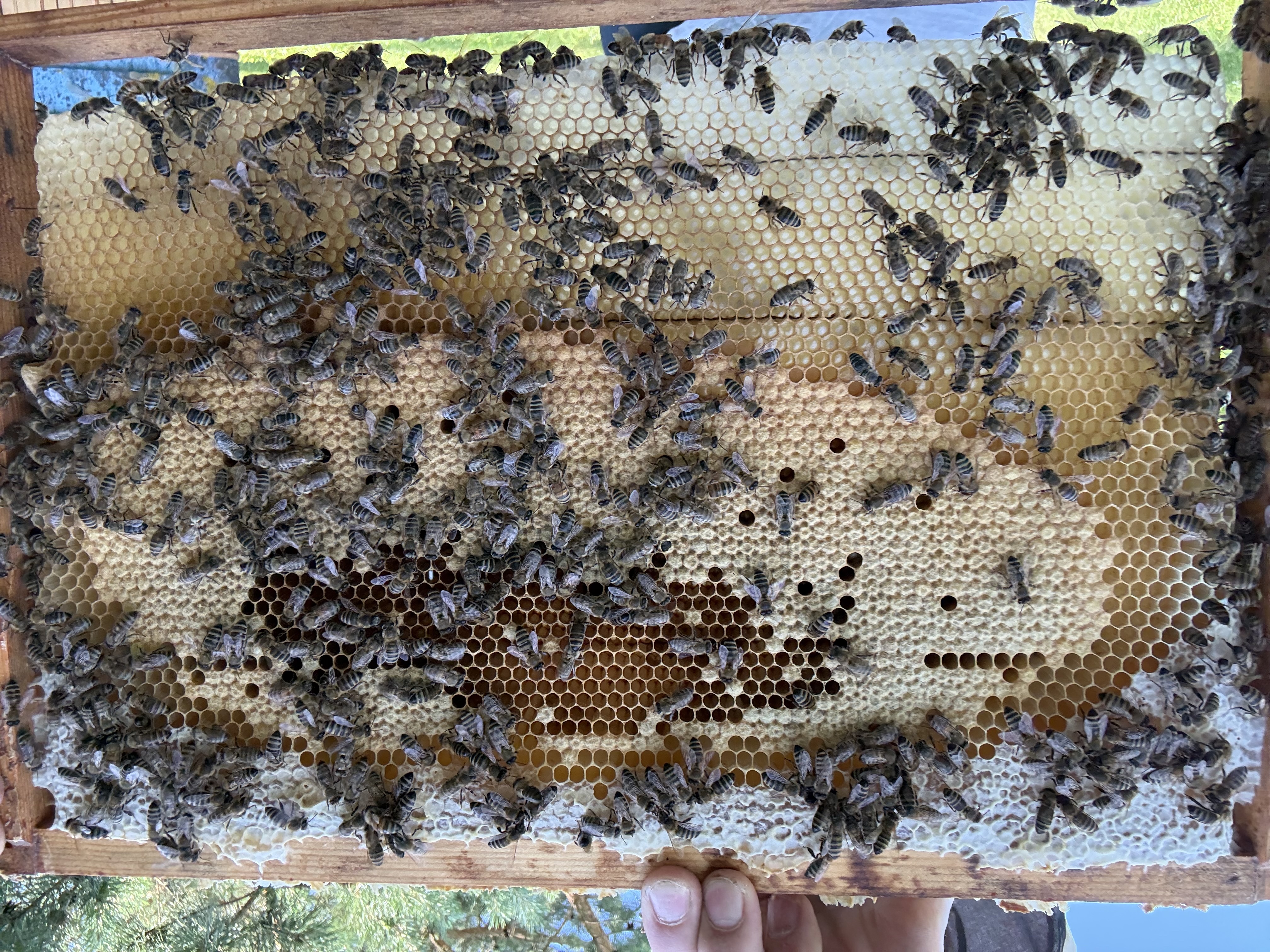
This frame side displays a central brood area surrounded by a moderate number of bees, with a good amount of honey and pollen stored towards the top and edges.
Side B
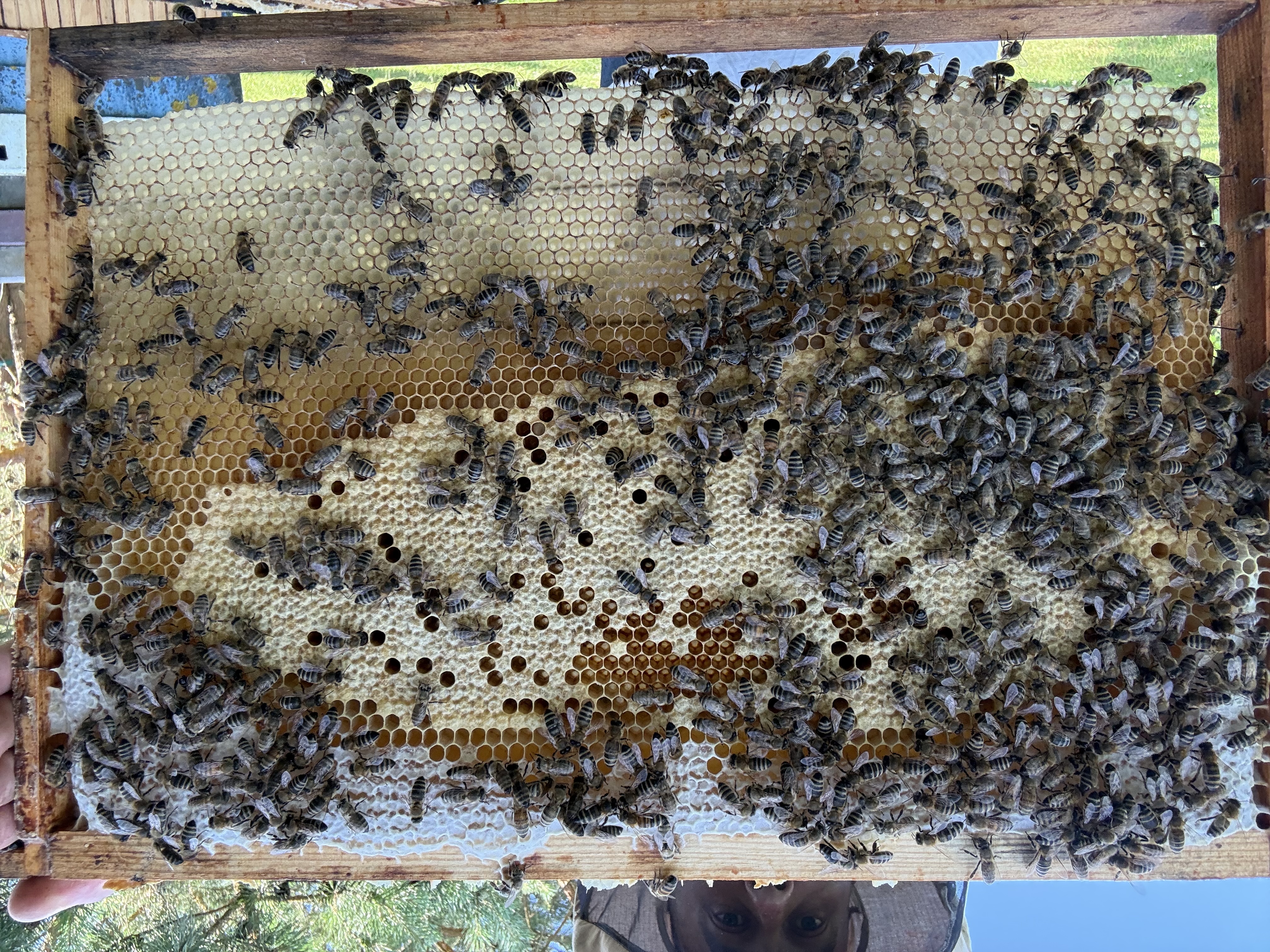
The reverse side features a smaller but healthy brood pattern complemented by a more pronounced arc of capped honey and stored pollen.
This frame shows a healthy balance between brood production and resource storage on both sides, indicating a thriving colony. The presence of significant honey and pollen stores suggests the bees are actively foraging and preparing for future needs.
Frame 6
Side A
Side B
Side A
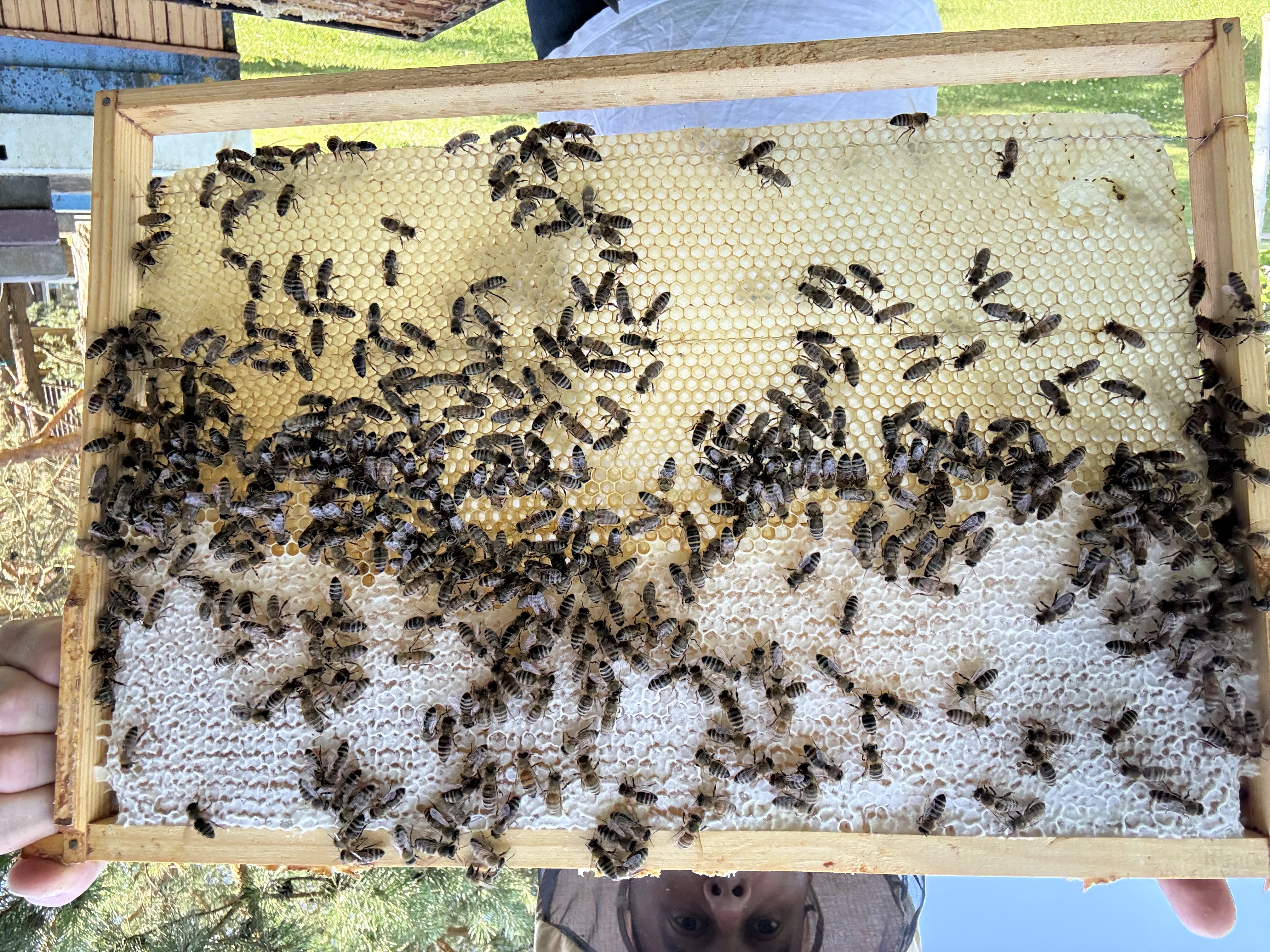
This frame side shows newly drawn comb with a few bees, indicating recent expansion, with limited brood and some honey storage.
Side B
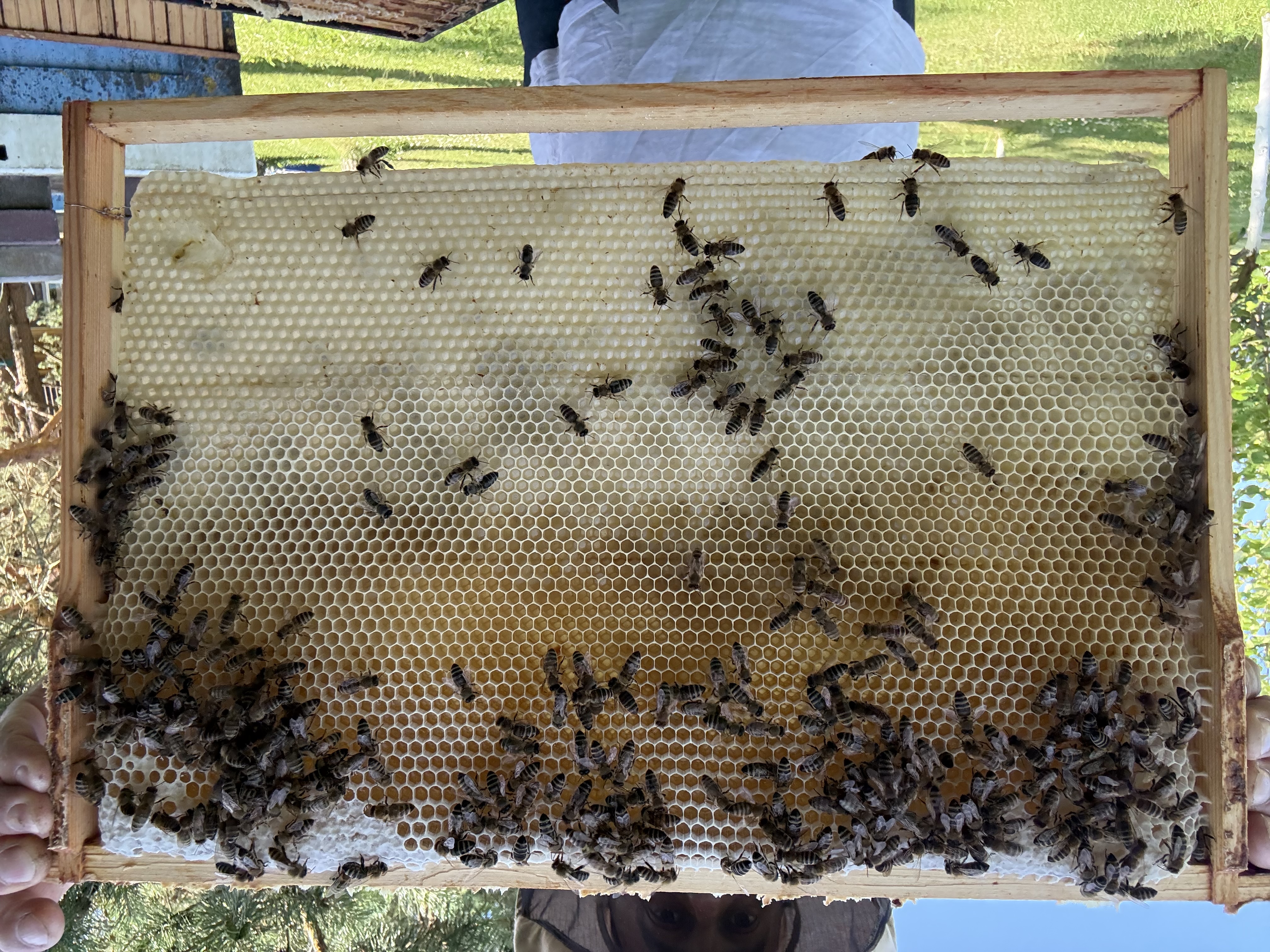
The reverse side primarily consists of freshly drawn comb with scattered bees, suggesting the colony is expanding its comb-building efforts rather than immediate brood rearing on this section.
This frame predominantly consists of newly drawn comb with minimal brood, indicating that the colony is actively expanding its hive structure. While some honey is present, the focus appears to be on comb construction rather than immediate brood expansion on these surfaces.
Frame 7
Side A
Side B
Side A
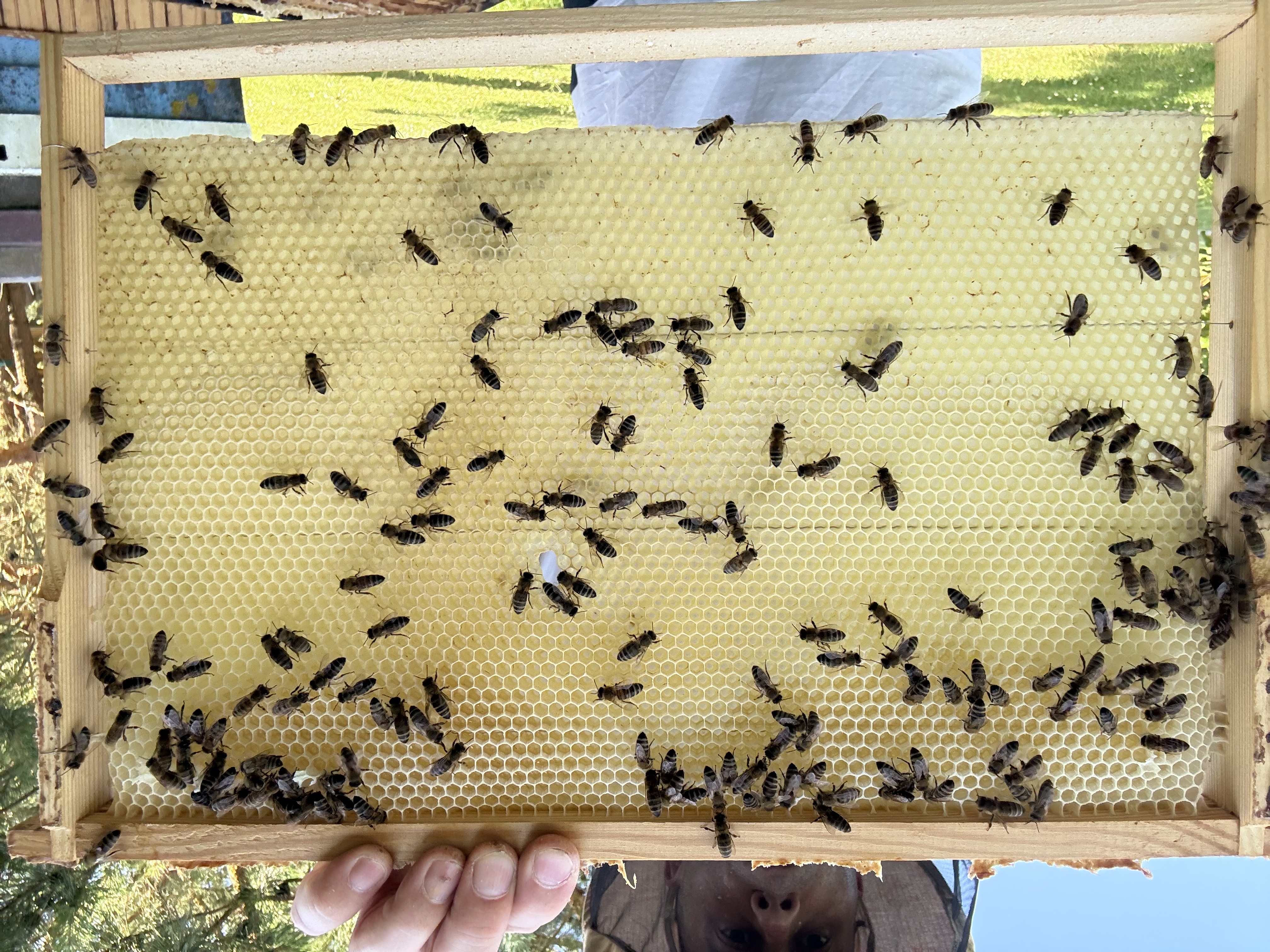
This frame side primarily displays newly drawn comb on a foundation, with very few bees and minimal stores, suggesting it's being prepared for future use.
Side B
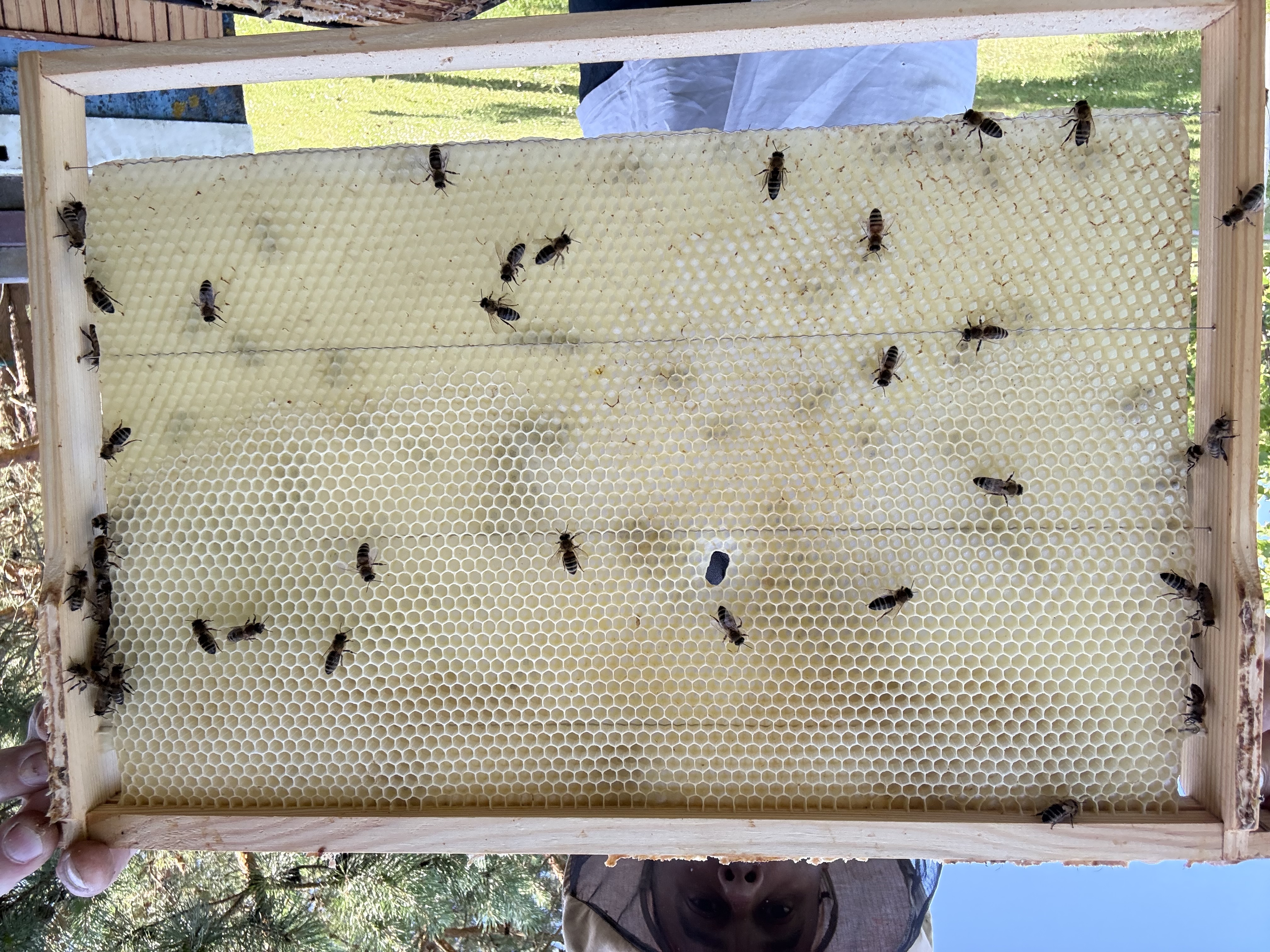
The opposite side of the frame is largely empty foundation with some newly drawn comb, occupied by a sparse number of bees.
This frame mainly consists of newly added foundation that is being drawn out by a small number of bees, with very little evidence of brood or significant honey stores. It appears to be a fresh frame for expansion, not yet fully integrated into the active brood or honey production areas.
Frame 8
Side A
Side B
Side A
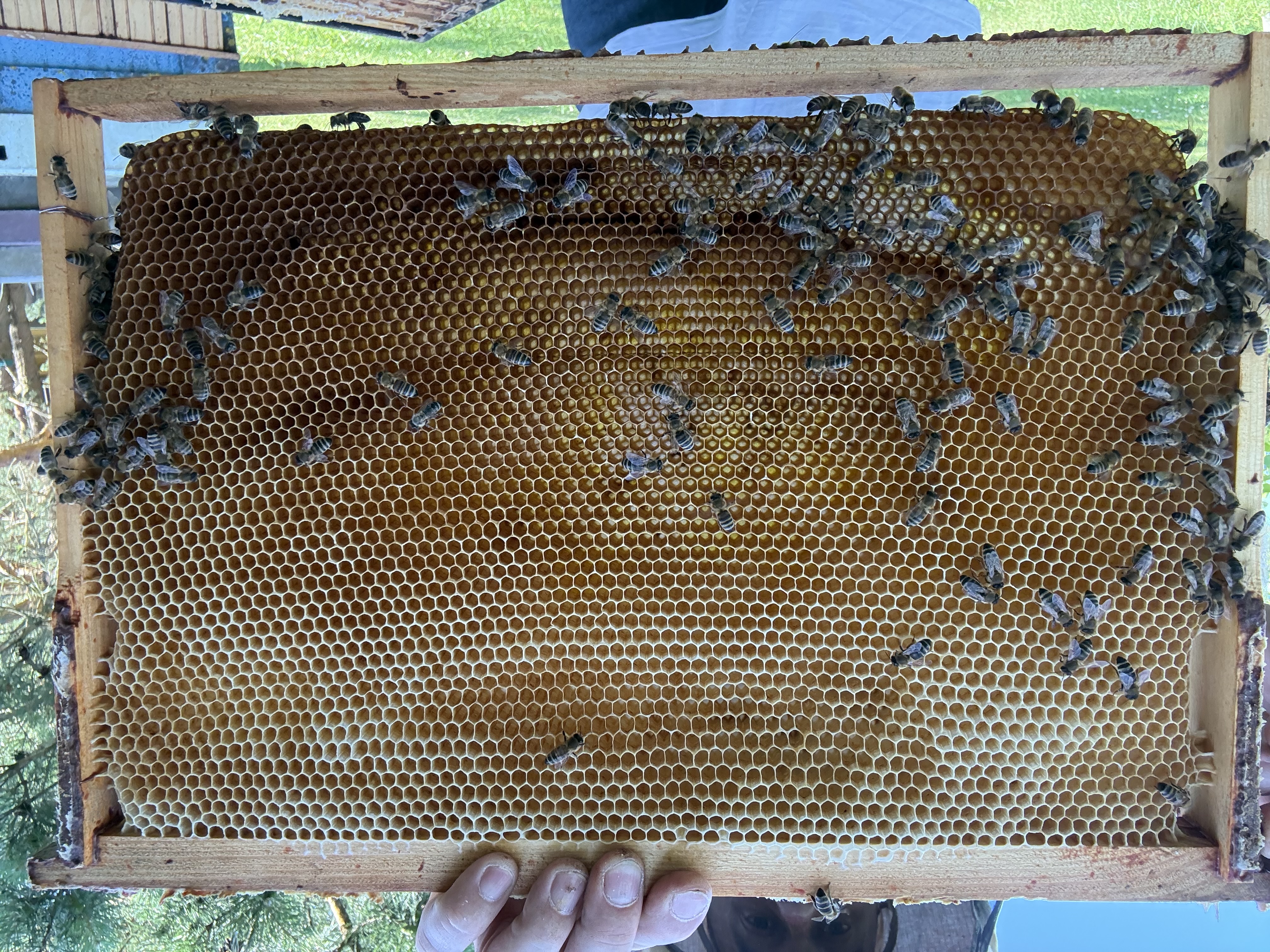
This frame side is almost entirely filled with capped and uncapped honey, with only a few bees present, indicating it's a primary honey storage frame.
Side B
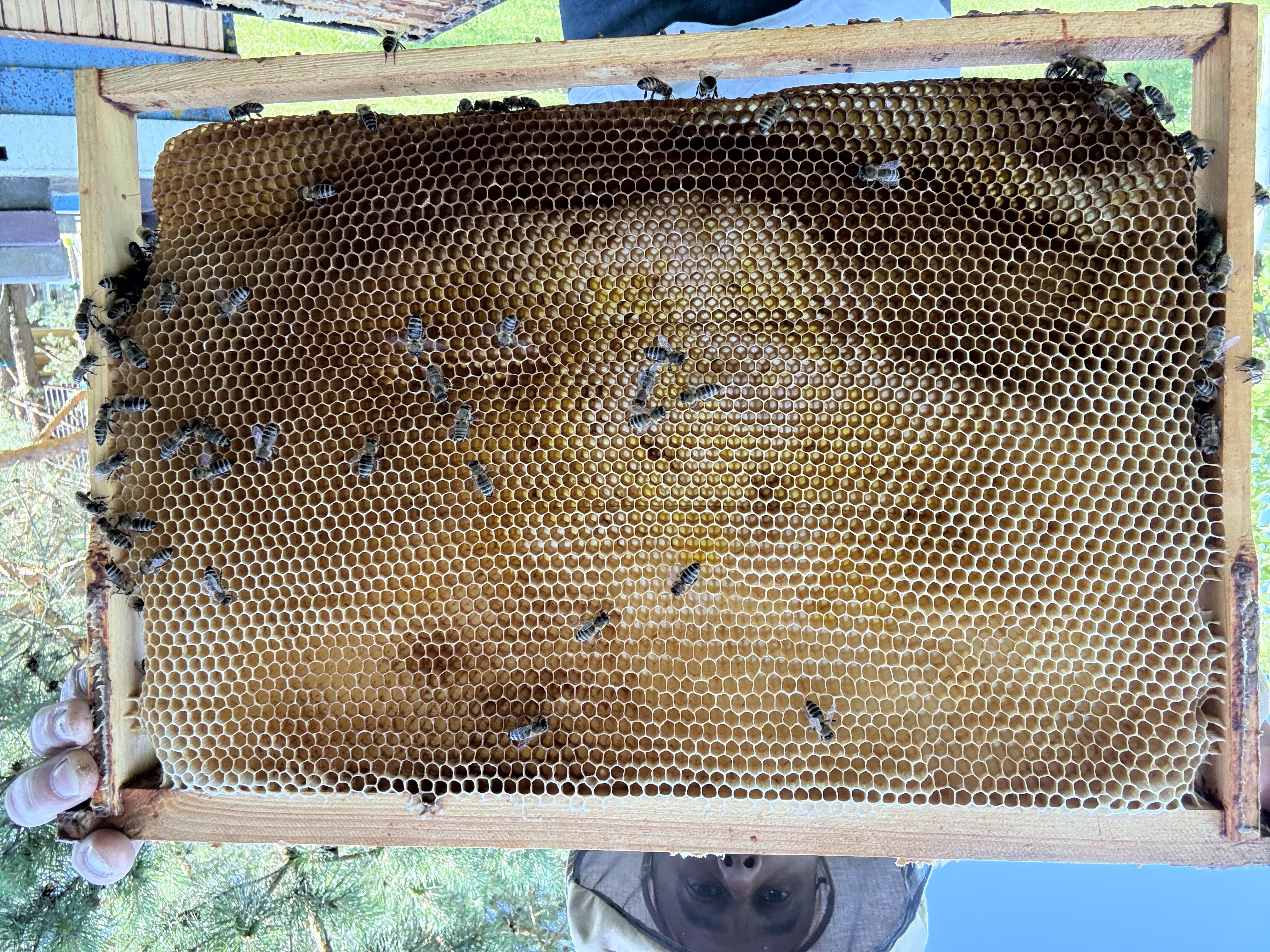
The reverse side is also predominantly covered with abundant honey stores, both capped and uncapped, highlighting its function as a robust food reserve for the colony.
This frame is overwhelmingly dedicated to honey storage on both sides, with a large proportion of cells filled with capped and uncapped honey. It serves as a significant food reserve for the colony, with very little to no brood activity present.
Frame 9
Side A
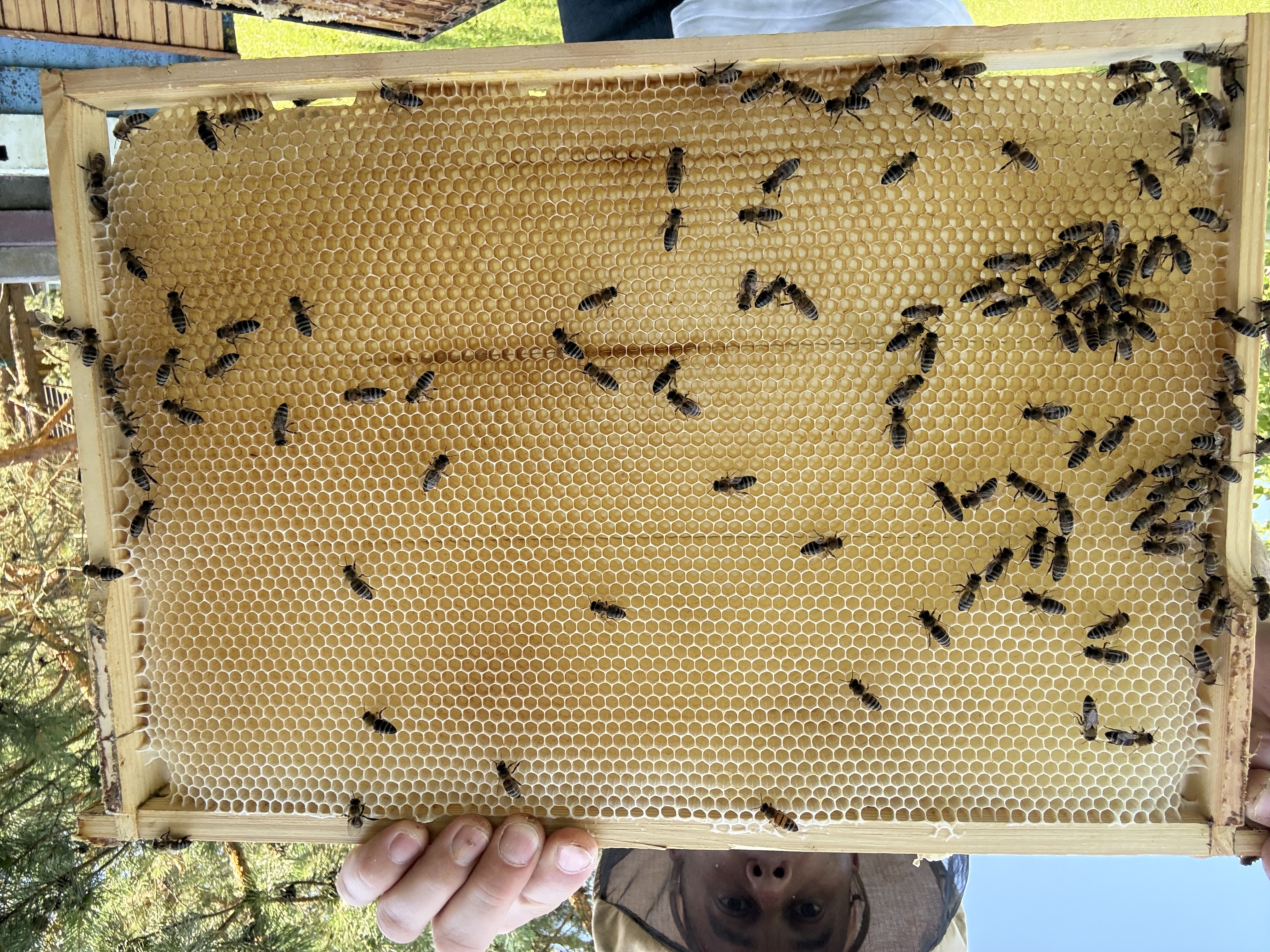
Side B
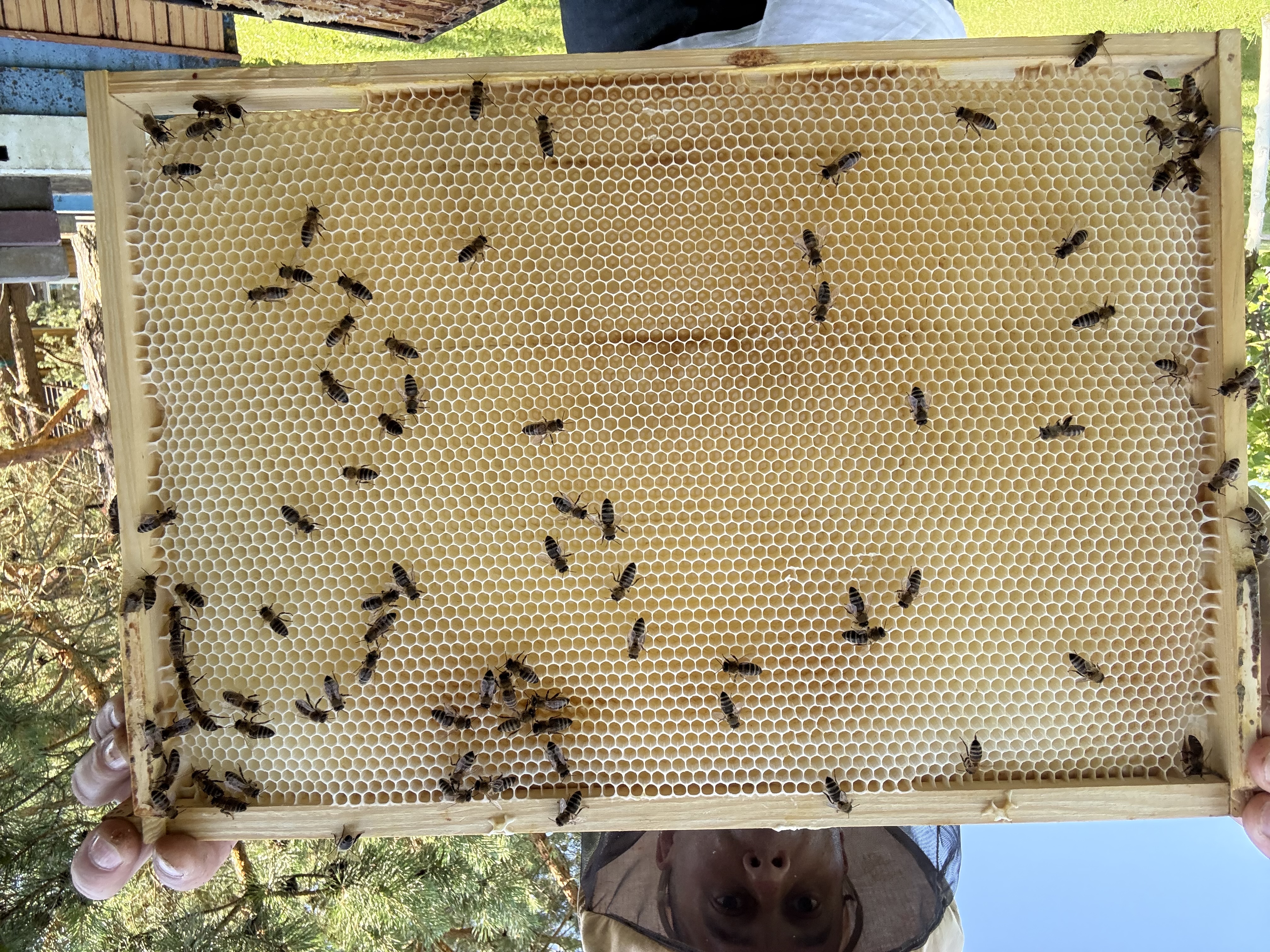
Side A
This side of the frame shows numerous bees actively working on a comb with a mix of empty cells, developing brood, and some scattered nectar.
Side B
The second side of the frame also displays a healthy population of bees tending to a comb primarily dedicated to brood development and containing some uncapped nectar.
Both sides of this frame demonstrate active brood rearing areas, with a substantial number of bees and many empty cells providing space for the queen to lay. While there is no significant capped honey, both sides contain scattered nectar or uncapped honey within the comb.