Inspection Results
25 Jul 2026
Hive #911 · 20 frame sides captured
92
Colony Strength
Very Strong
Monitor honey stores closely and consider supplemental feeding if nectar flow is insufficient. A varroa mite check is strongly recommended to assess parasitic load and determine if treatment is necessary.
Queen Status
Queen present and laying, not visually spotted
Brood Pattern
Excellent and consistent
Honey Stores
Low
Varroa Risk
Unknown (not assessed)
AI Observations
This comprehensive 10-frame inspection indicates a very strong colony with an exceptionally high bee count and excellent, consistent brood development across all frames. The queen is clearly performing well, though she was not visually spotted. Honey stores are currently low.
Frame Analysis — 10 frames
Frame 1
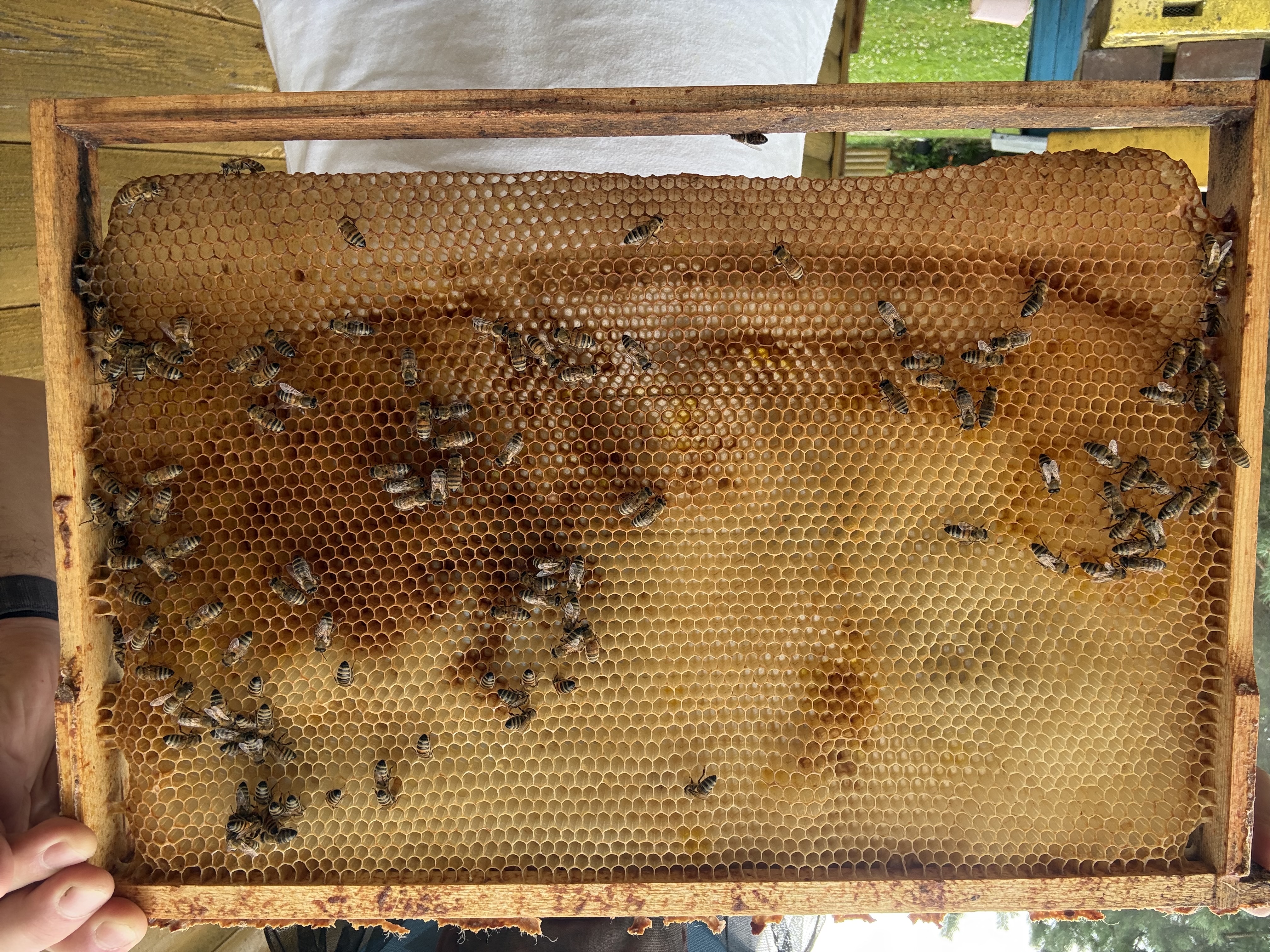
Side A
Side B
Side A
This side of the frame shows a mix of open and capped brood, with some peripheral honey stores and a moderate bee population.
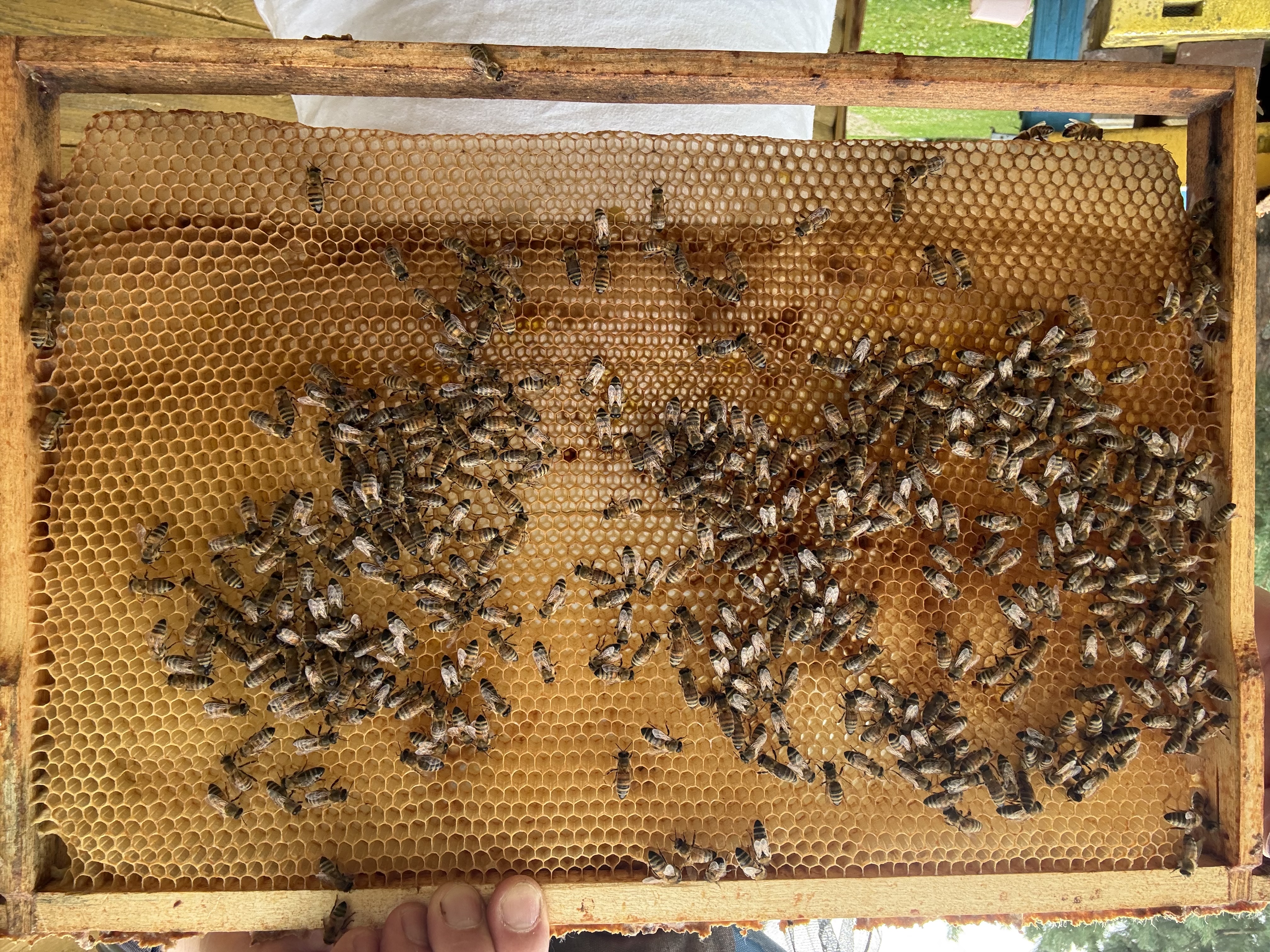
Side B
This side is densely populated with bees covering a significant area of mixed brood, along with some uncapped honey.
Both sides of this frame show a healthy amount of mixed brood, indicating active egg-laying. The bee population is substantial, particularly on Side B, and there are modest honey stores.
Frame 2
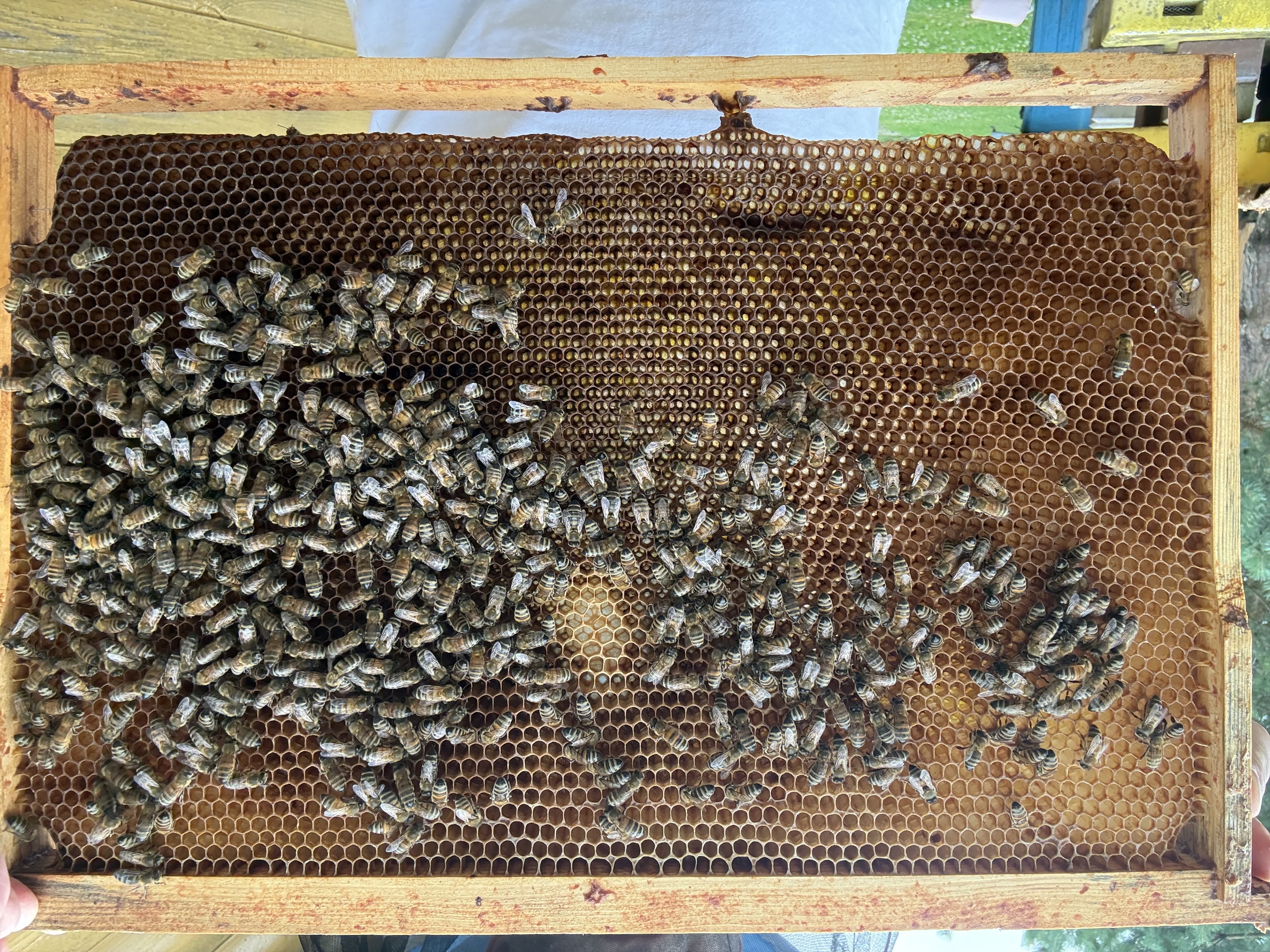
Side A
Side B
Side A
This side features a concentrated cluster of bees actively tending to a large area of developing brood and some marginal honey.
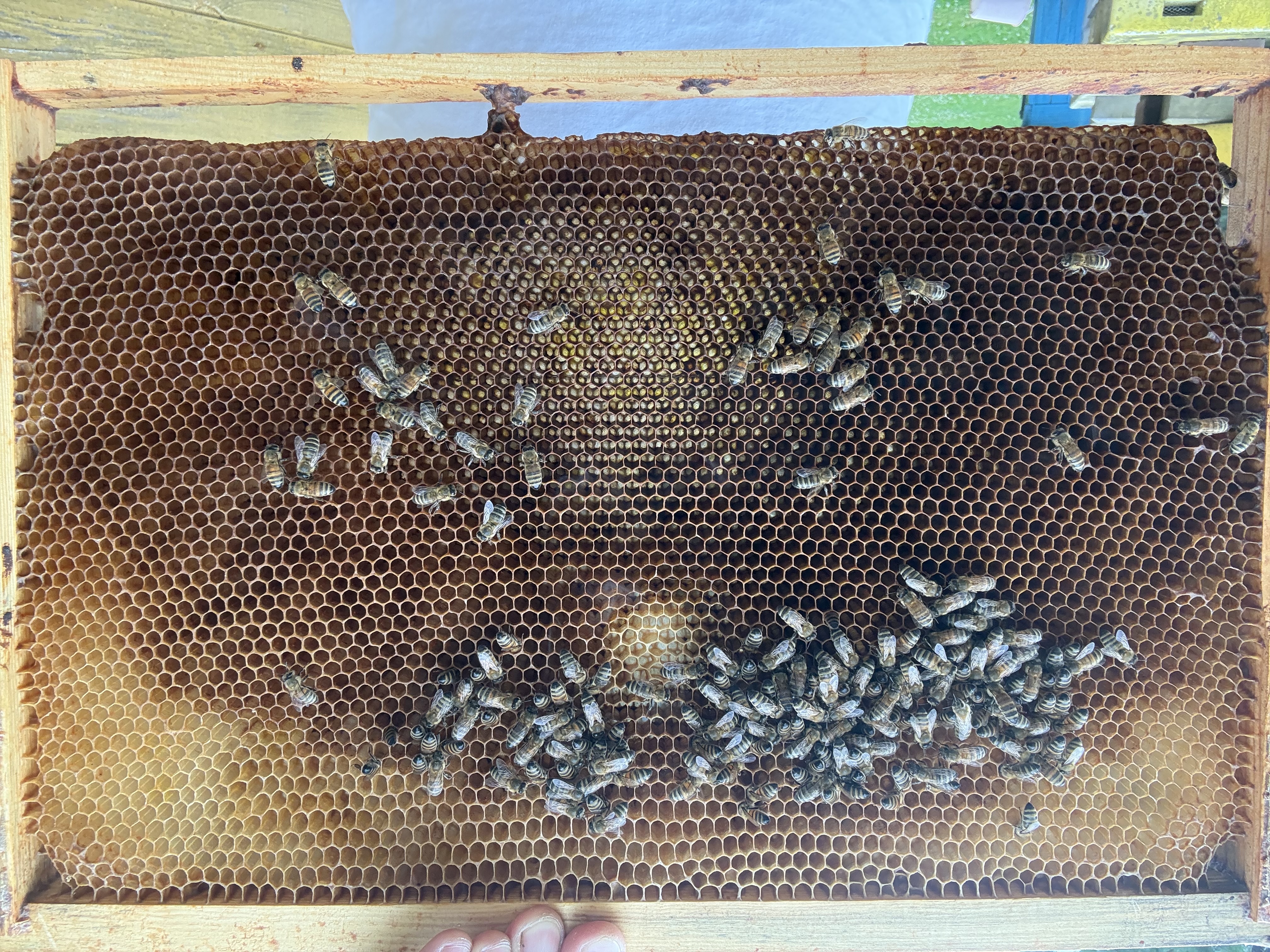
Side B
This side has fewer bees, revealing a central patch of capped brood and many empty cells with some honey.
Side A of this frame is heavily populated with bees covering extensive brood, while Side B shows a lighter bee presence and less brood with more empty cells. The frame suggests a varying distribution of resources and bee activity across its surfaces.
Frame 3
Side A
Side B
Side A
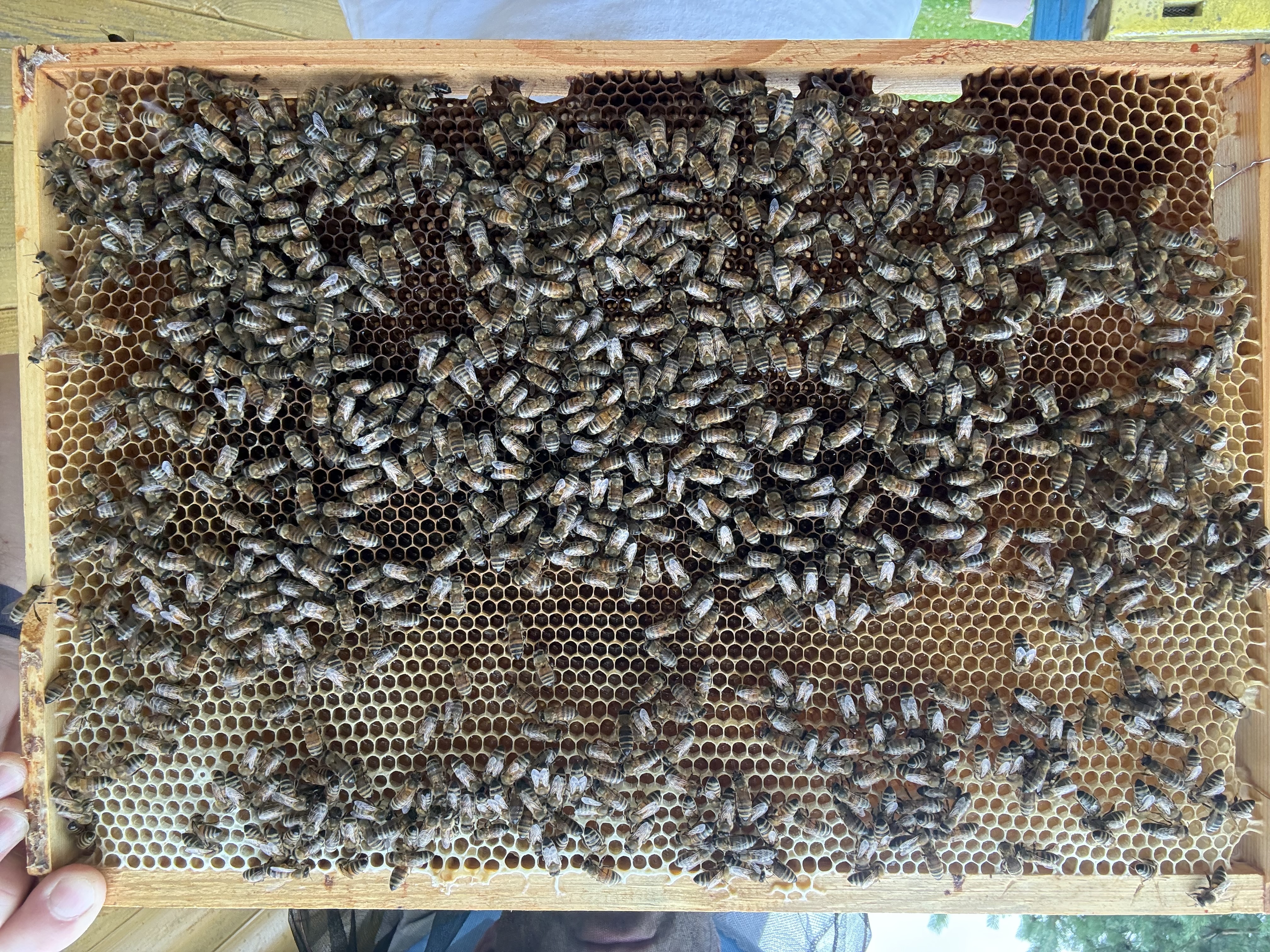
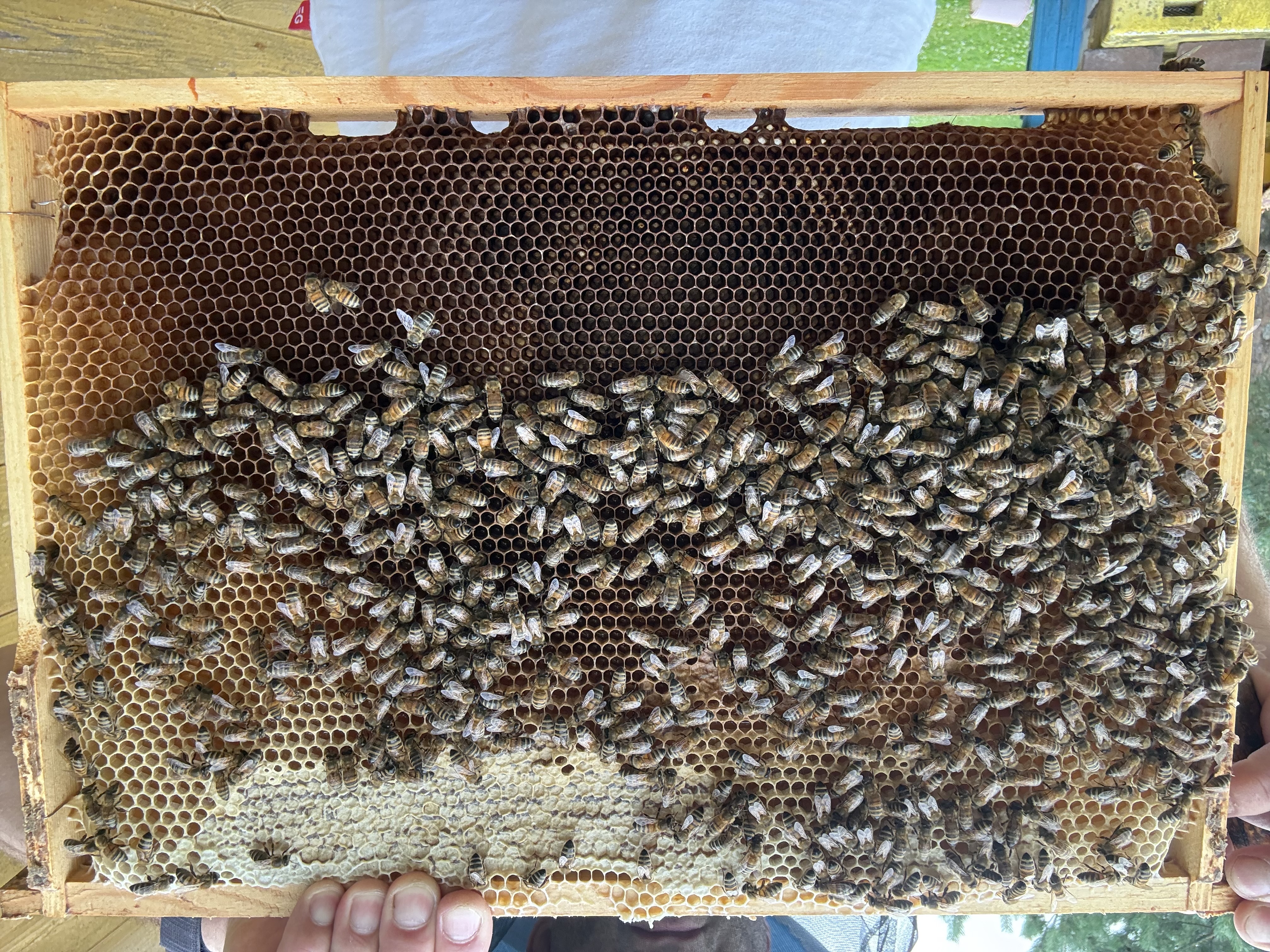
This side is heavily covered by bees, suggesting a substantial amount of hidden brood and active colony management.
Side B
This side exhibits a dense population of bees, likely obscuring a large area of brood with minimal visible honey.
Both sides of this frame are very well-populated with bees, indicating a strong cluster likely covering extensive brood. The high bee density suggests a robust and active brood nest within this frame.
Frame 4
Side A
Side B
Side A
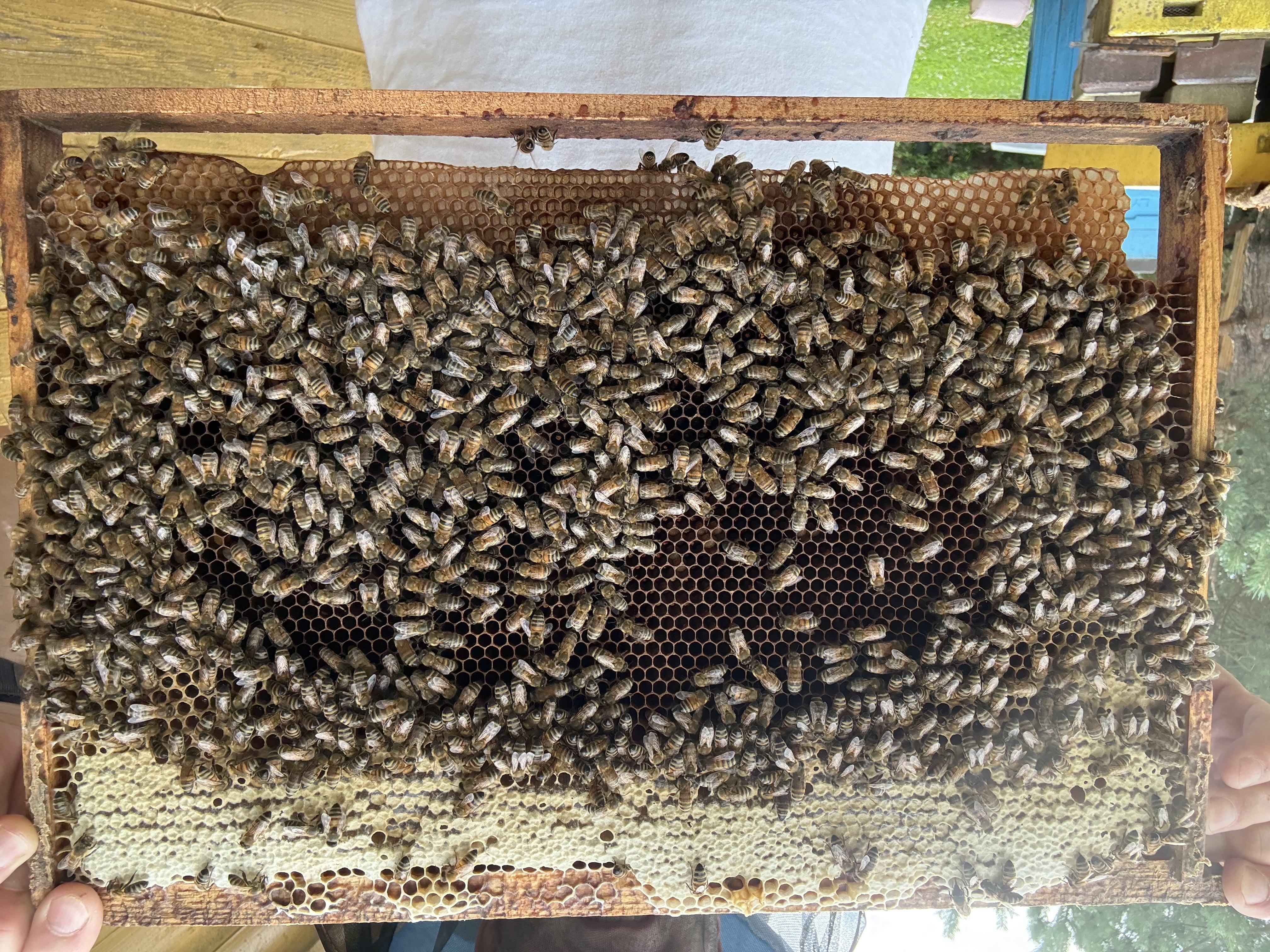
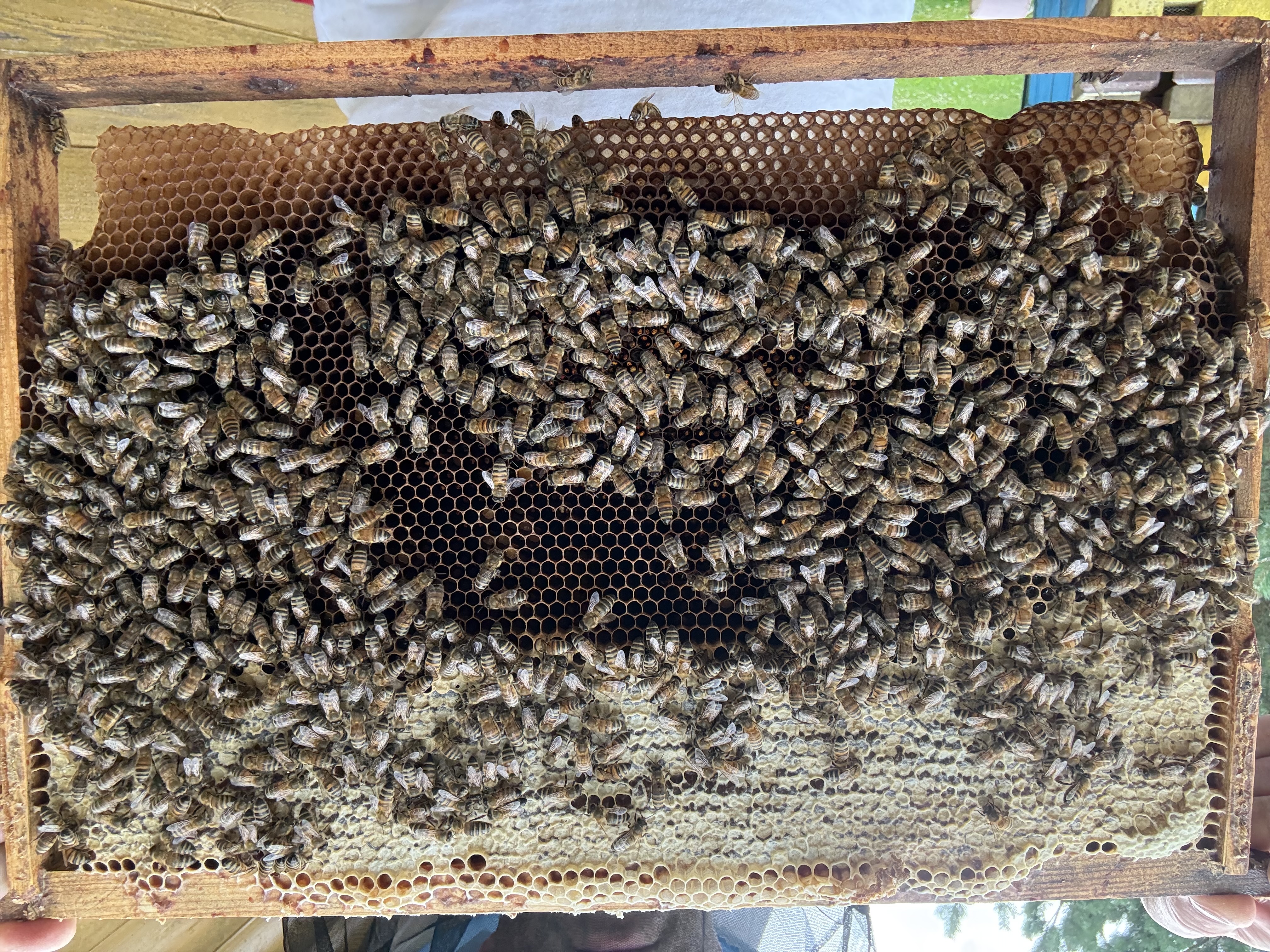
This side of the frame is teeming with bees, actively working over a large area of mixed brood and very little honey.
Side B
This side is also densely covered with bees, attending to a vast expanse of developing brood with minimal honey stores.
Both sides of this frame are exceptionally well-populated with bees, completely covering the comb surface. There is a high concentration of active brood, indicating this frame is a core part of the brood nest.
Frame 5
Side A
Side B
Side A
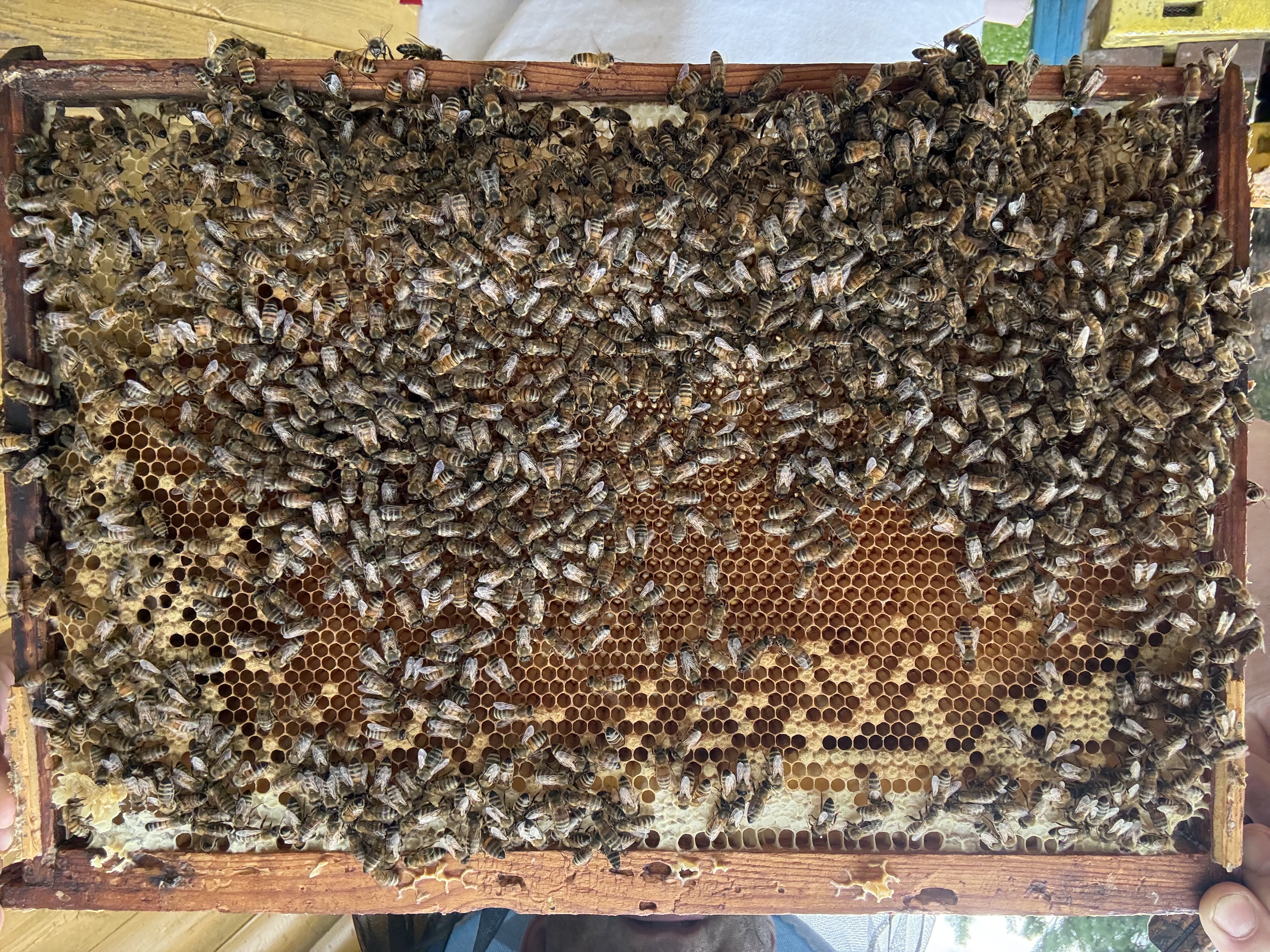
This side shows a strong bee presence covering a substantial area of mixed brood, with some uncapped honey visible.
Side B
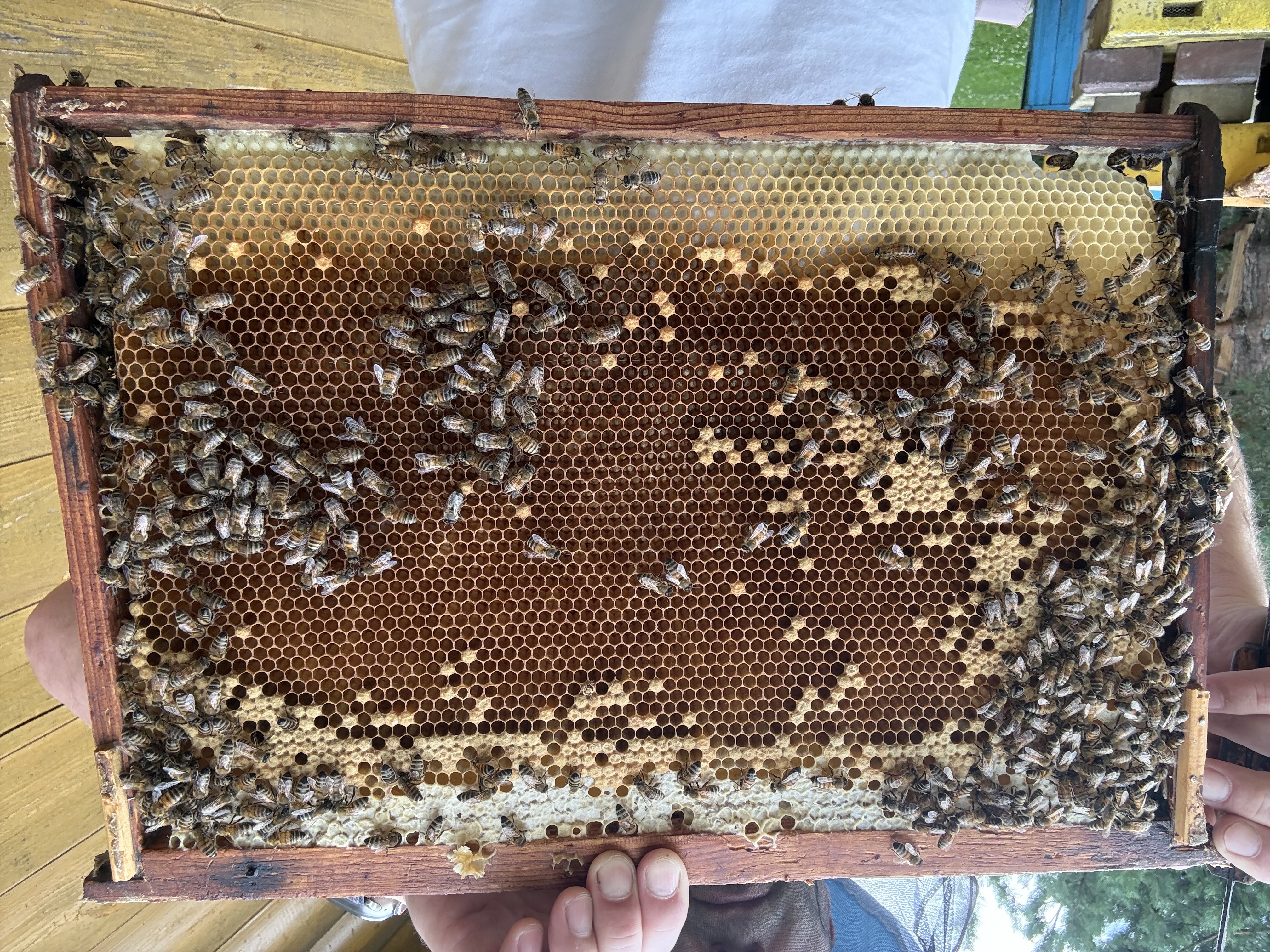
This side has fewer bees, revealing a central brood pattern surrounded by some honey and empty cells.
Side A of this frame is heavily populated with bees over a large area of brood, while Side B displays fewer bees and a more concentrated brood patch. This suggests a varied utilization of the comb space, with Side A being more active for brood rearing.
Frame 6
Side A
Side B
Side A
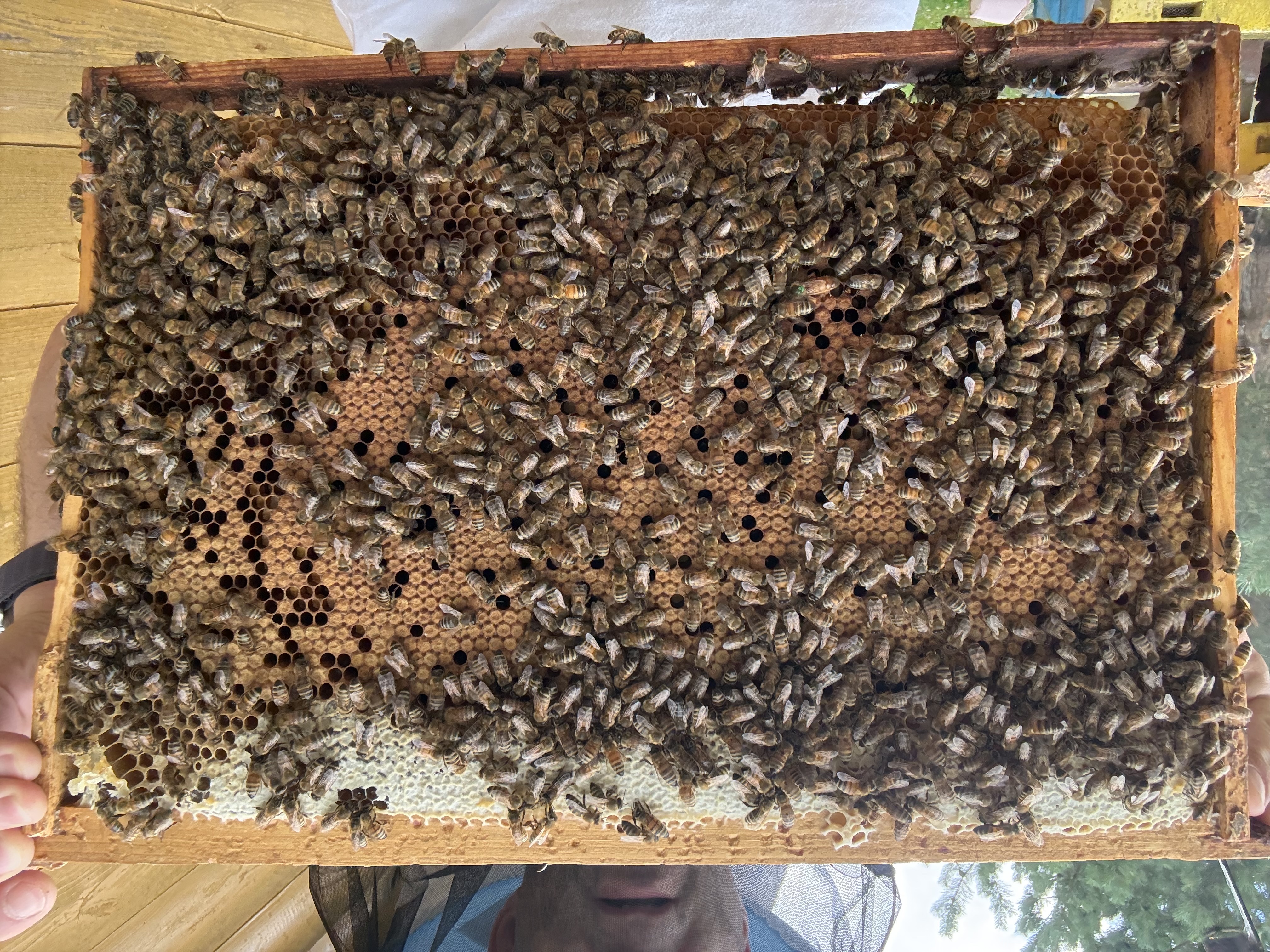
This side is densely packed with bees caring for a vast and healthy brood pattern with very little visible honey.
Side B
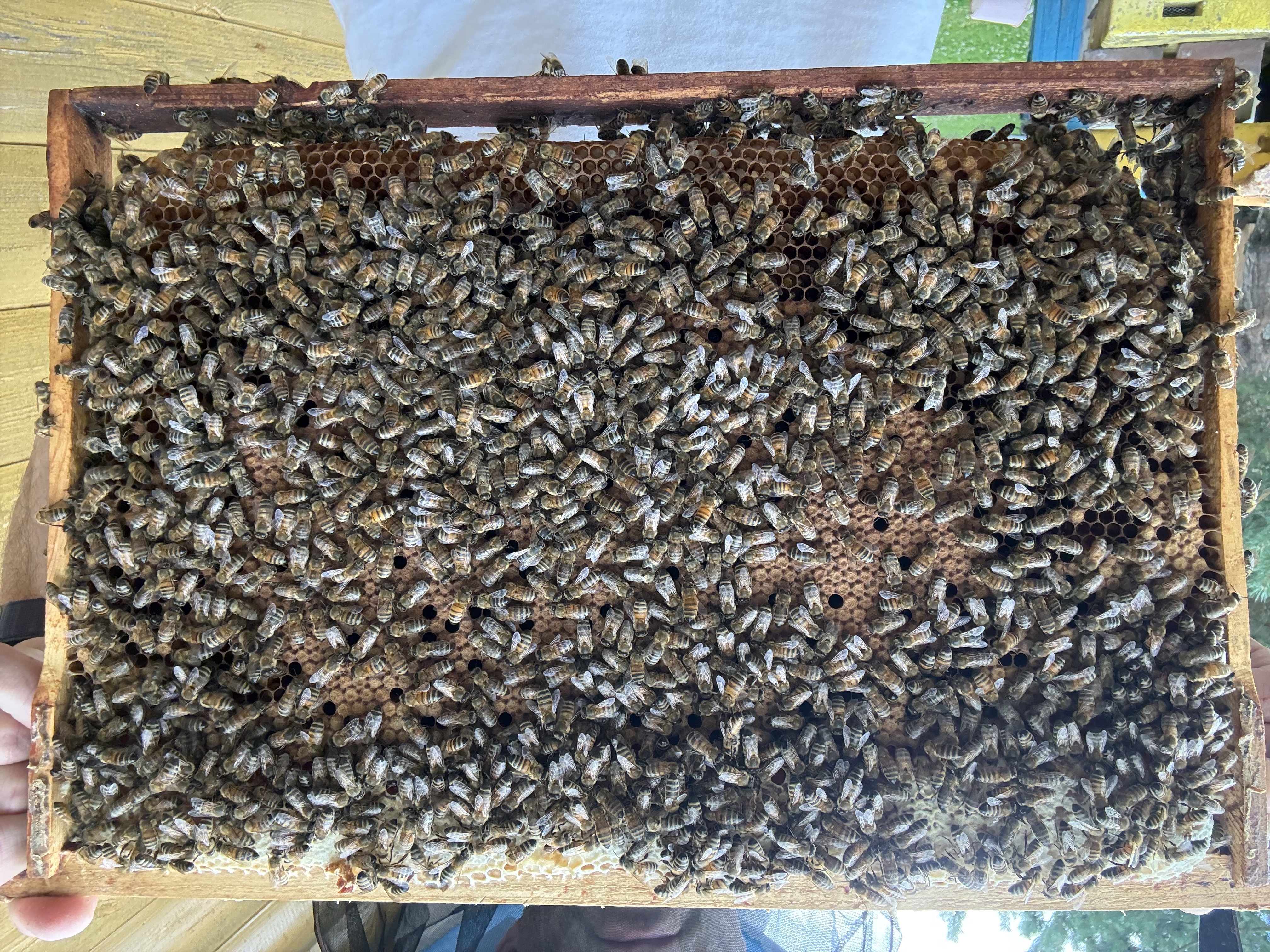
This side mirrors Side A, displaying a high density of bees across an extensive brood area with minimal honey.
Both sides of this frame are exceptionally rich in brood, indicating a very active and healthy queen. The dense bee coverage further confirms this frame is central to the colony's reproduction and growth.
Frame 7
Side A
Side B
Side A
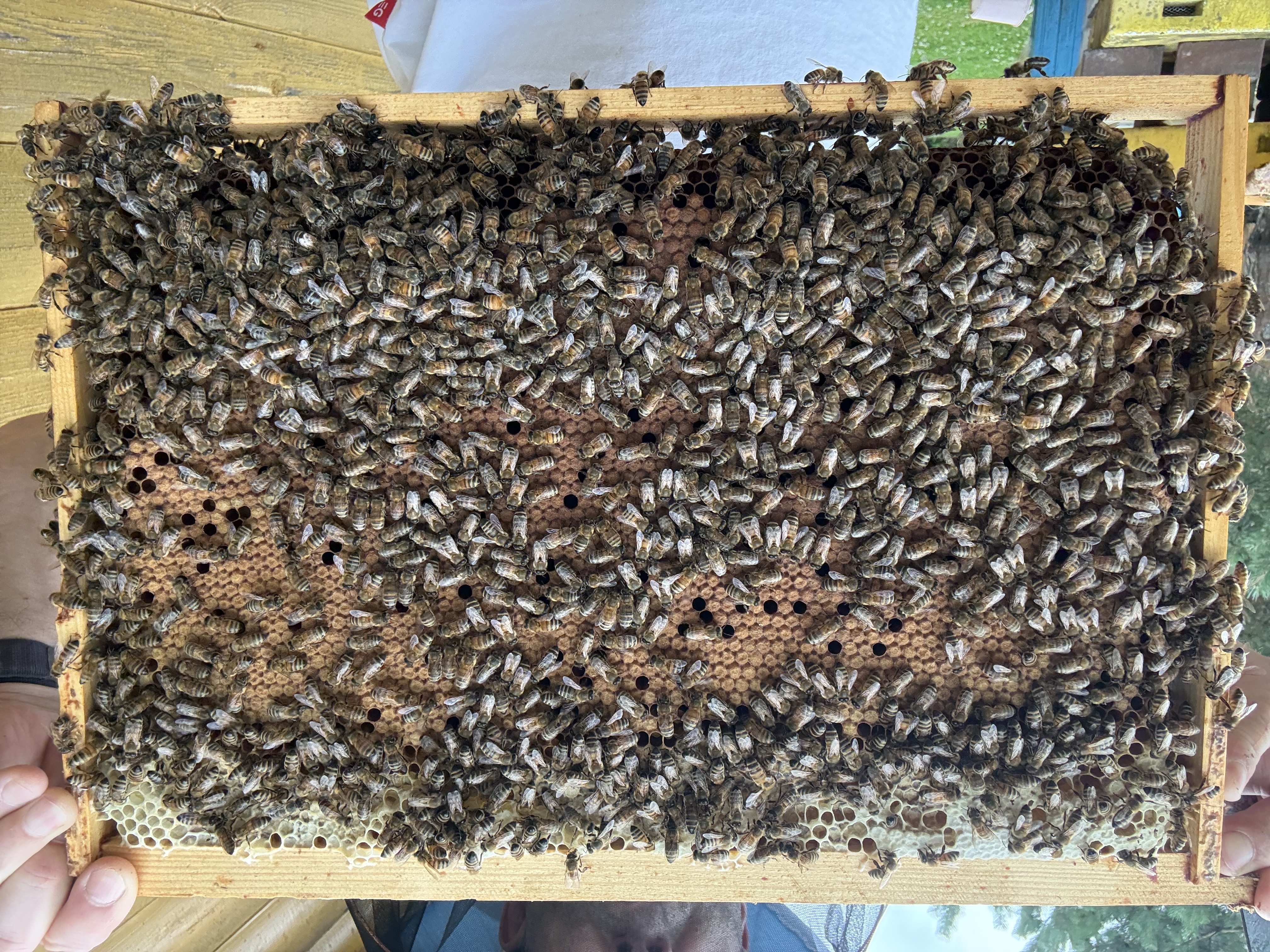
This side is heavily covered with bees, diligently attending to a large, thriving brood area with some capped honey at the top.
Side B
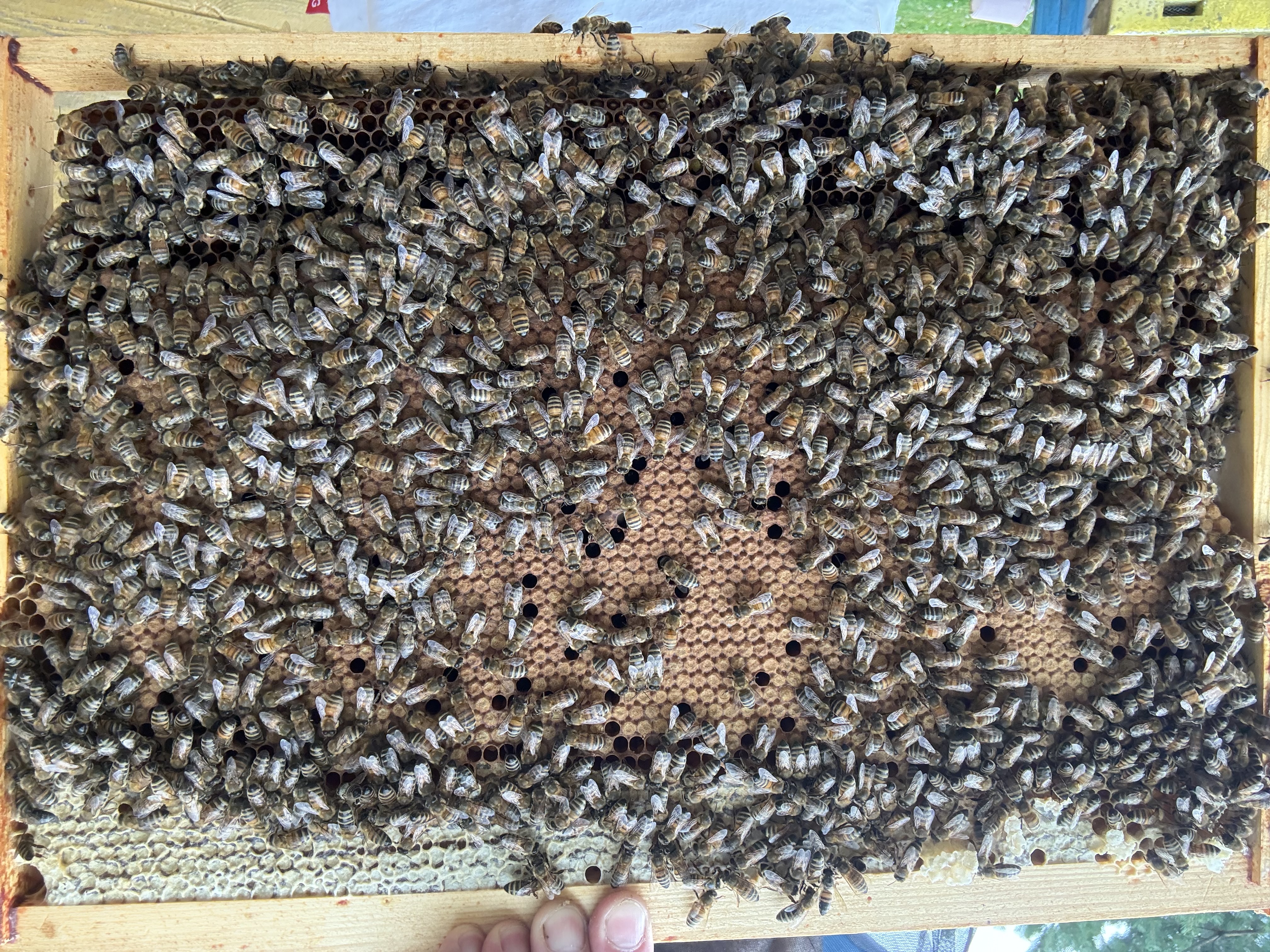
This side is also densely populated, with bees actively managing a broad region of developing brood and some honey.
Both sides of this frame show a very strong bee presence and extensive brood, indicating a robust and healthy brood nest. The consistent pattern across both surfaces suggests this frame is a critical component of the colony's ongoing development.
Frame 8
Side A
Side B
Side A
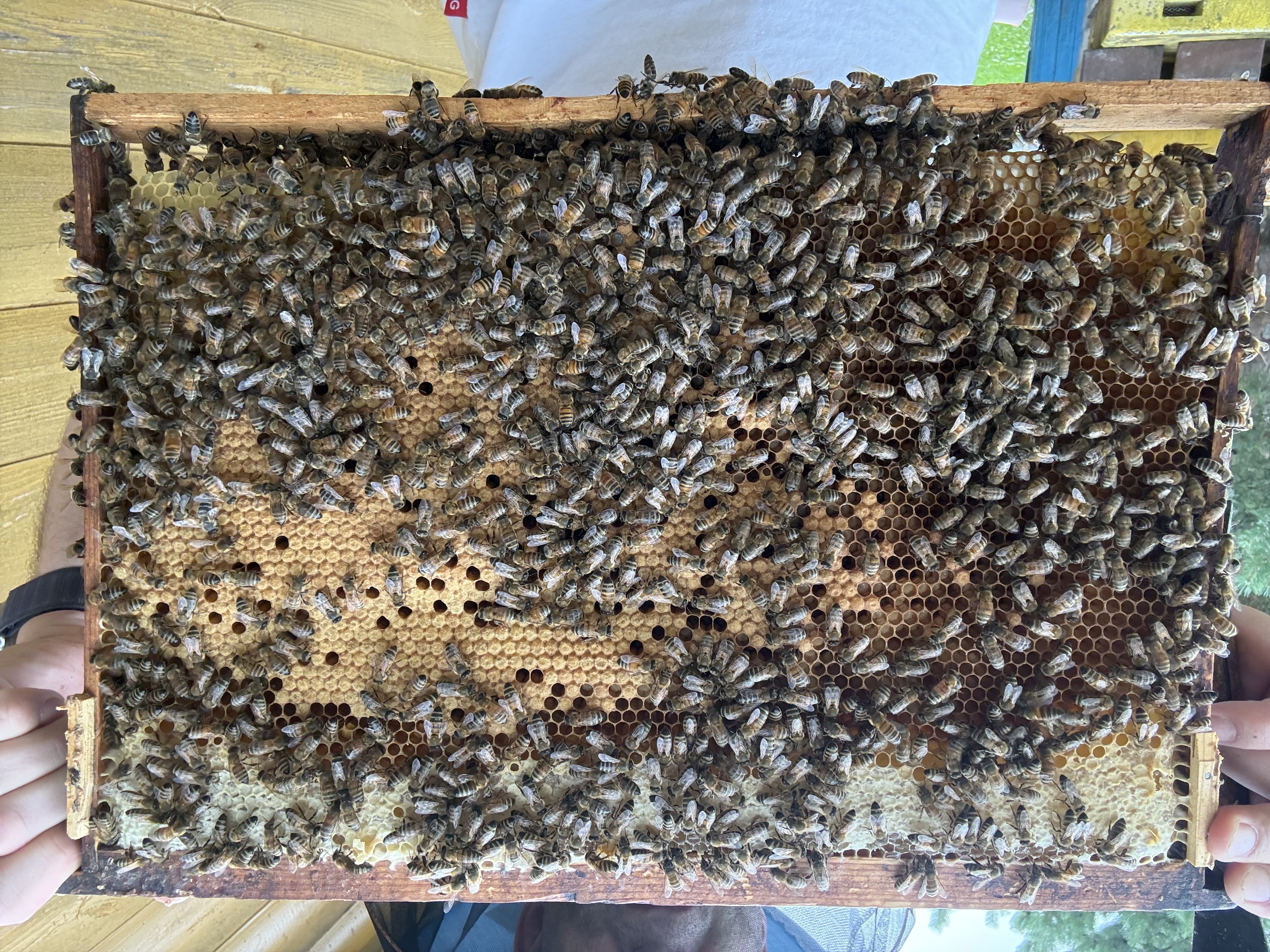
This side is well-covered with bees, revealing a substantial central area of mixed brood and some peripheral honey stores.
Side B
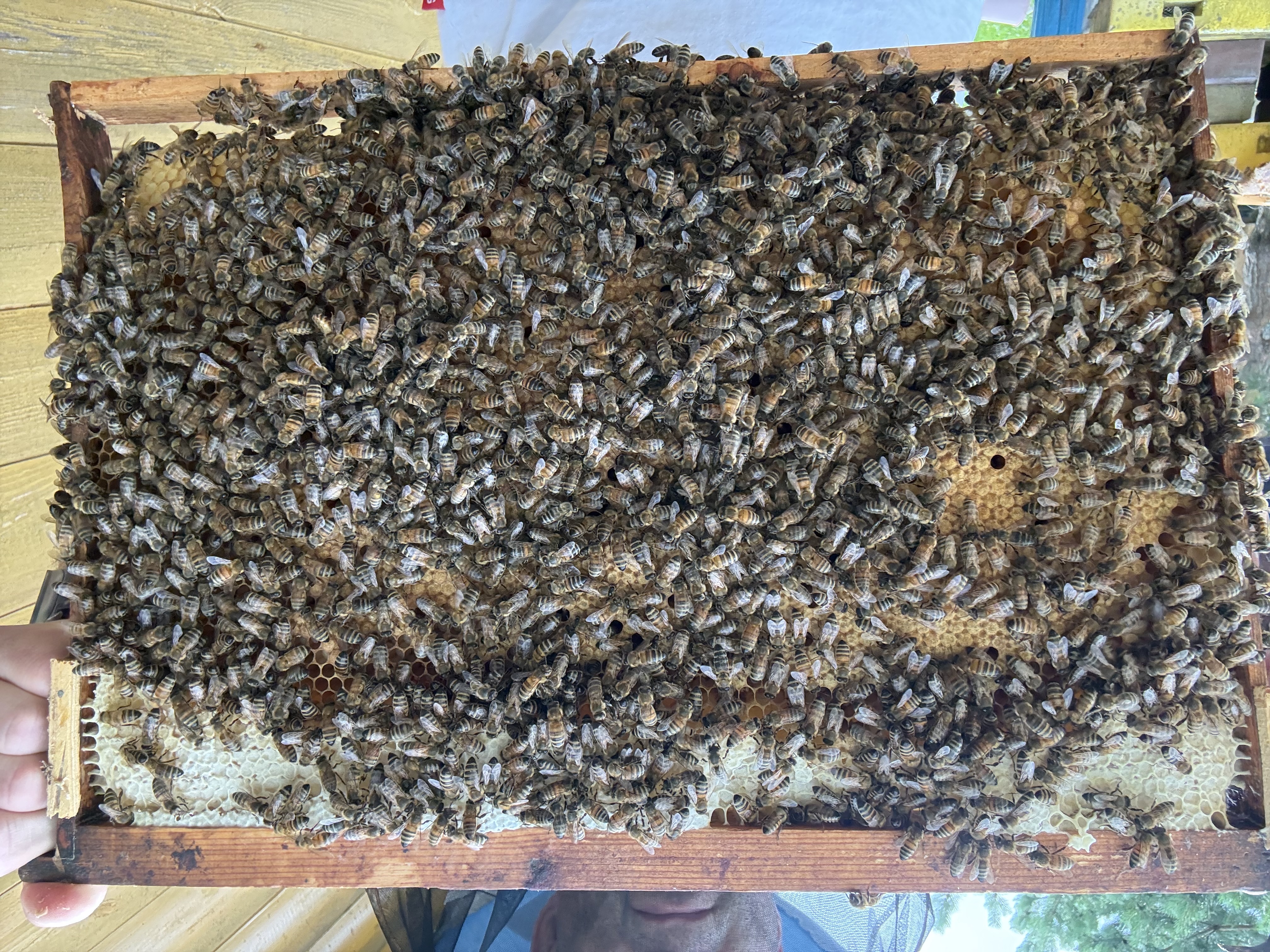
This side also shows a strong bee population distributed over a large brood pattern with honey around the top.
Both sides of this frame exhibit a strong bee presence covering a significant amount of mixed brood, along with noticeable honey stores. This indicates a healthy frame contributing to both reproduction and resource storage.
Frame 9
Side A
Side B
Side A
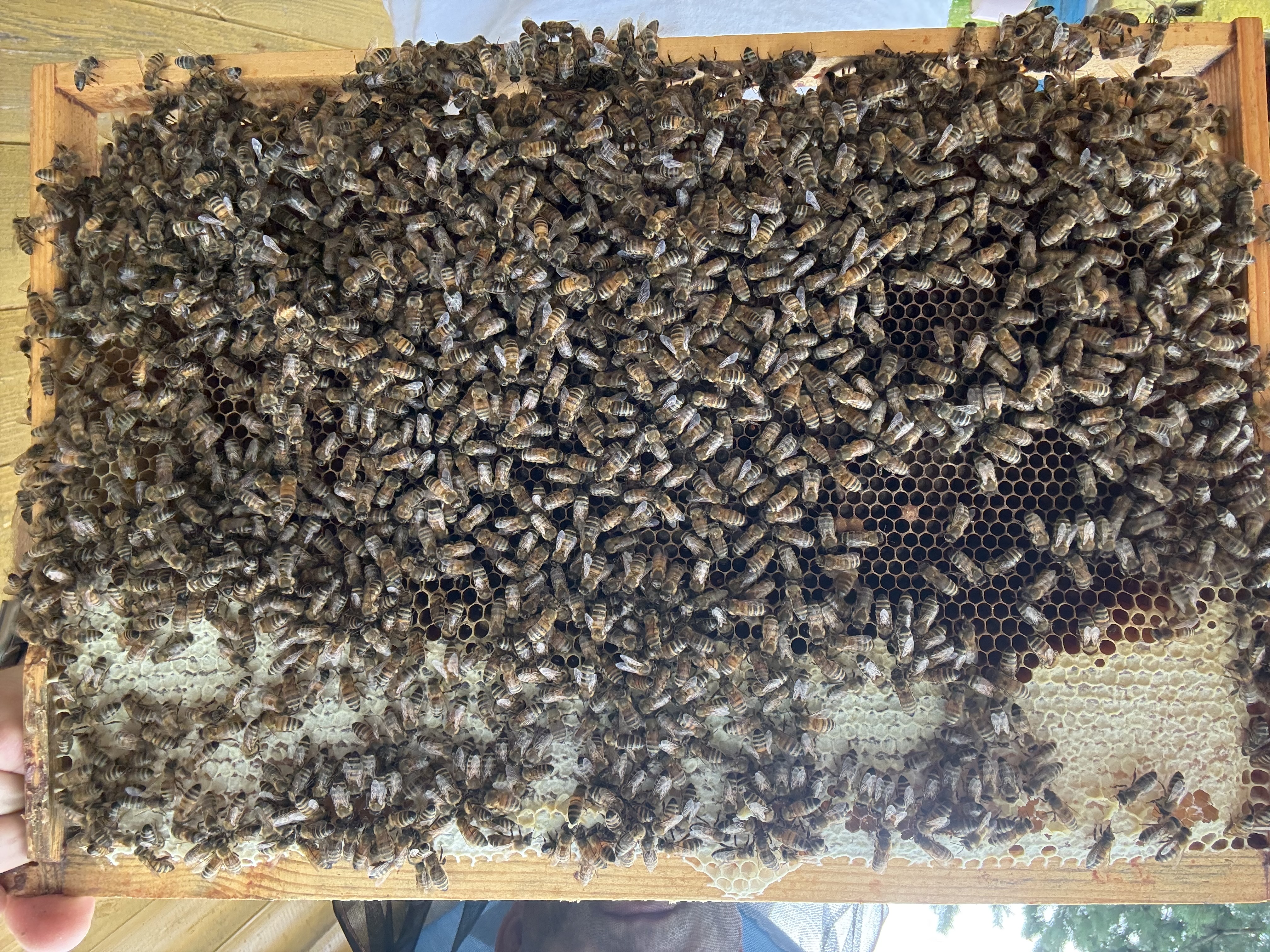
This frame side is densely populated with bees, displaying a significant area of capped and uncapped brood along with some capped honey in the upper left.
Side B
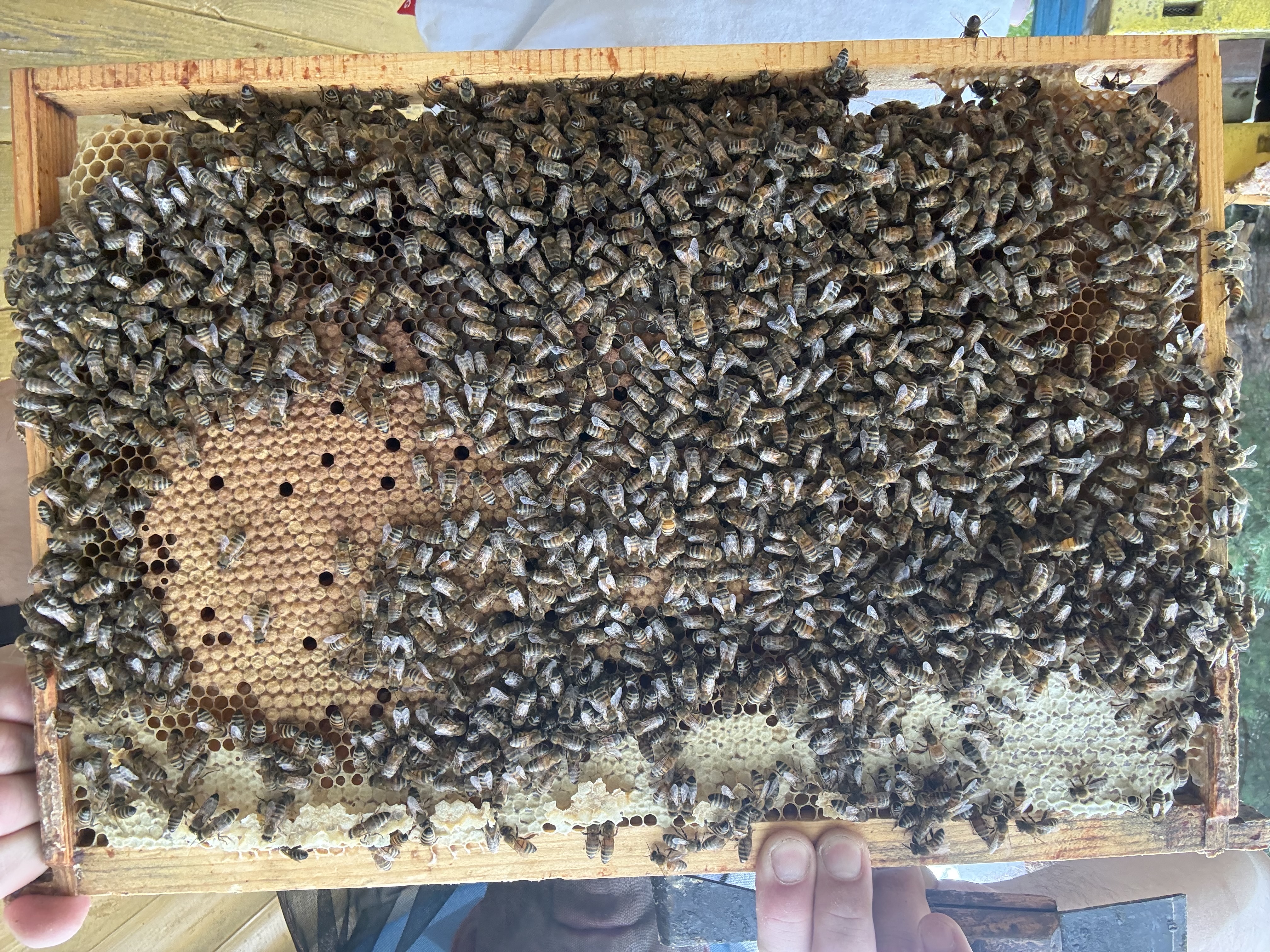
The reverse side of the frame also shows a strong bee presence and active brood rearing, with various cells containing developing honey stores.
This frame (Group 1) is heavily populated with bees on both sides, indicating a strong and healthy colony. It exhibits substantial brood production across the frame, with modest honey stores also being accumulated.
Frame 10
Side A
Side B
Side A
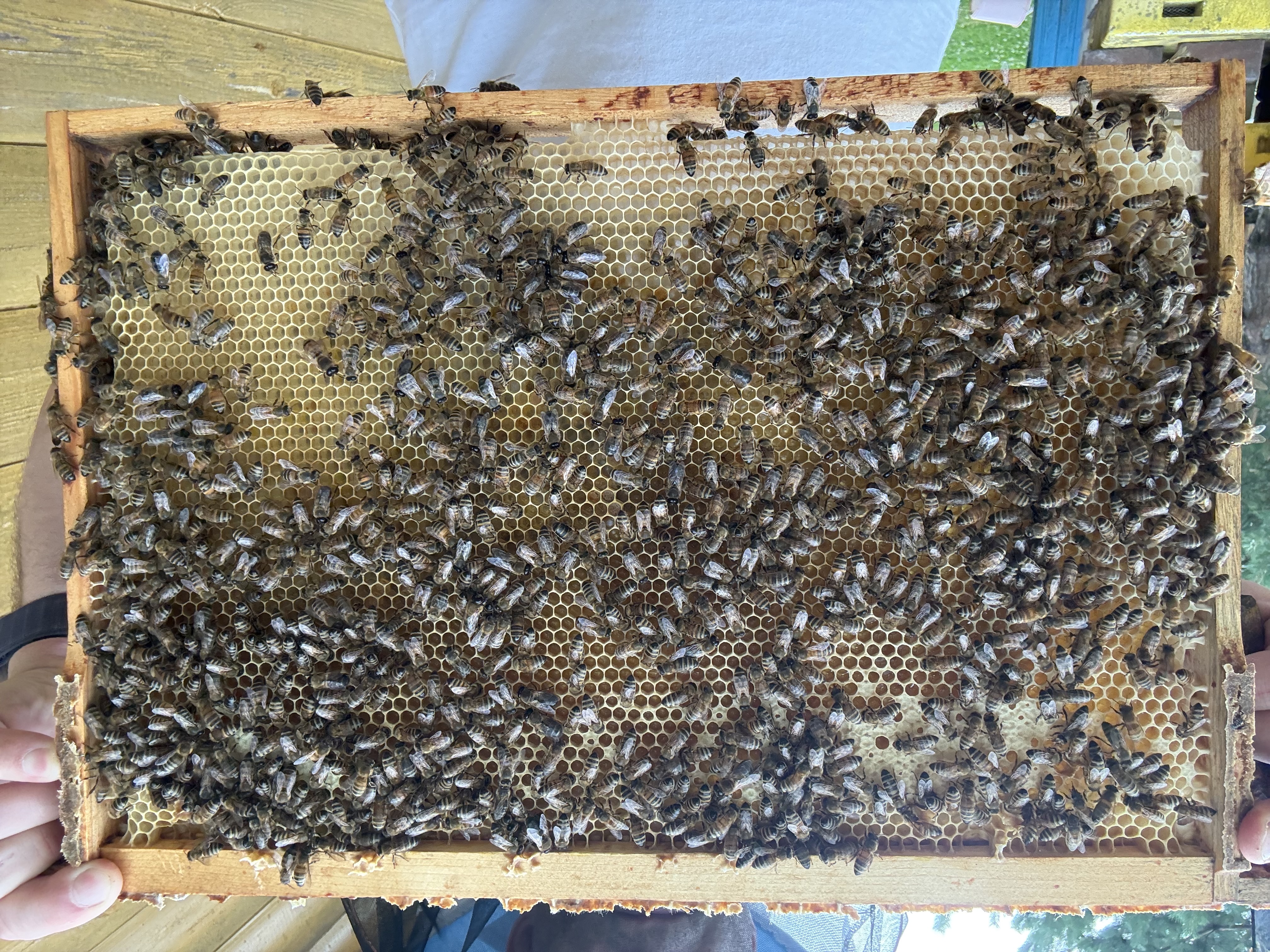
This frame side features a moderate bee population with patchy brood development and some visible honey reserves in the upper sections.
Side B
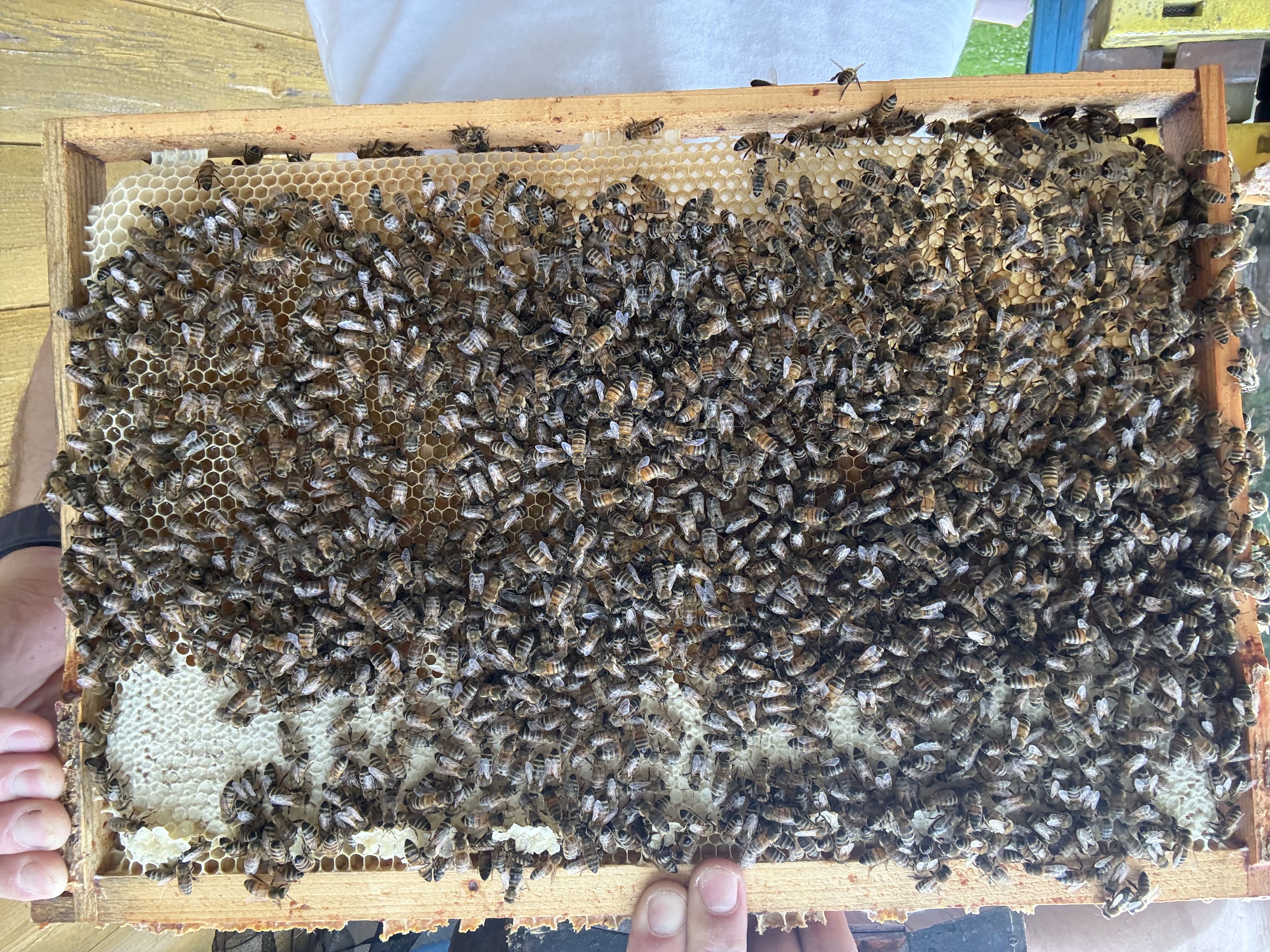
The other side of this frame has a healthy number of bees, contains some brood, and shows a noticeable amount of capped honey, especially in the top right.
This frame (Group 2) maintains a moderate bee population and shows active, albeit less dense, brood rearing. It also functions significantly for storage, with noticeable honey accumulation particularly on one side.