Inspection Results
4 Jul 2026
Hive #9 · 19 frame sides captured
92
Colony Strength
Strong
Provide immediate supplemental feeding to address critically low honey stores. Schedule a varroa mite check soon to assess and manage potential parasitic loads.
Queen Status
Queen not visually spotted, but strong brood pattern and extensive brood frames indicate her presence and active laying.
Brood Pattern
Excellent and extensive, covering 8.5 frames with an average of 55% coverage.
Honey Stores
Critically low, averaging only 7% across frames.
Varroa Risk
Not assessed, monitoring recommended.
AI Observations
A thorough inspection of all 10 frames reveals a strong and populous colony with approximately 8620 bees. Brood production is excellent, spanning 8.5 frames, confirming a healthy and actively laying queen despite not being visually sighted. However, honey stores are critically low, indicating a potential resource deficit.
Frame Analysis — 10 frames
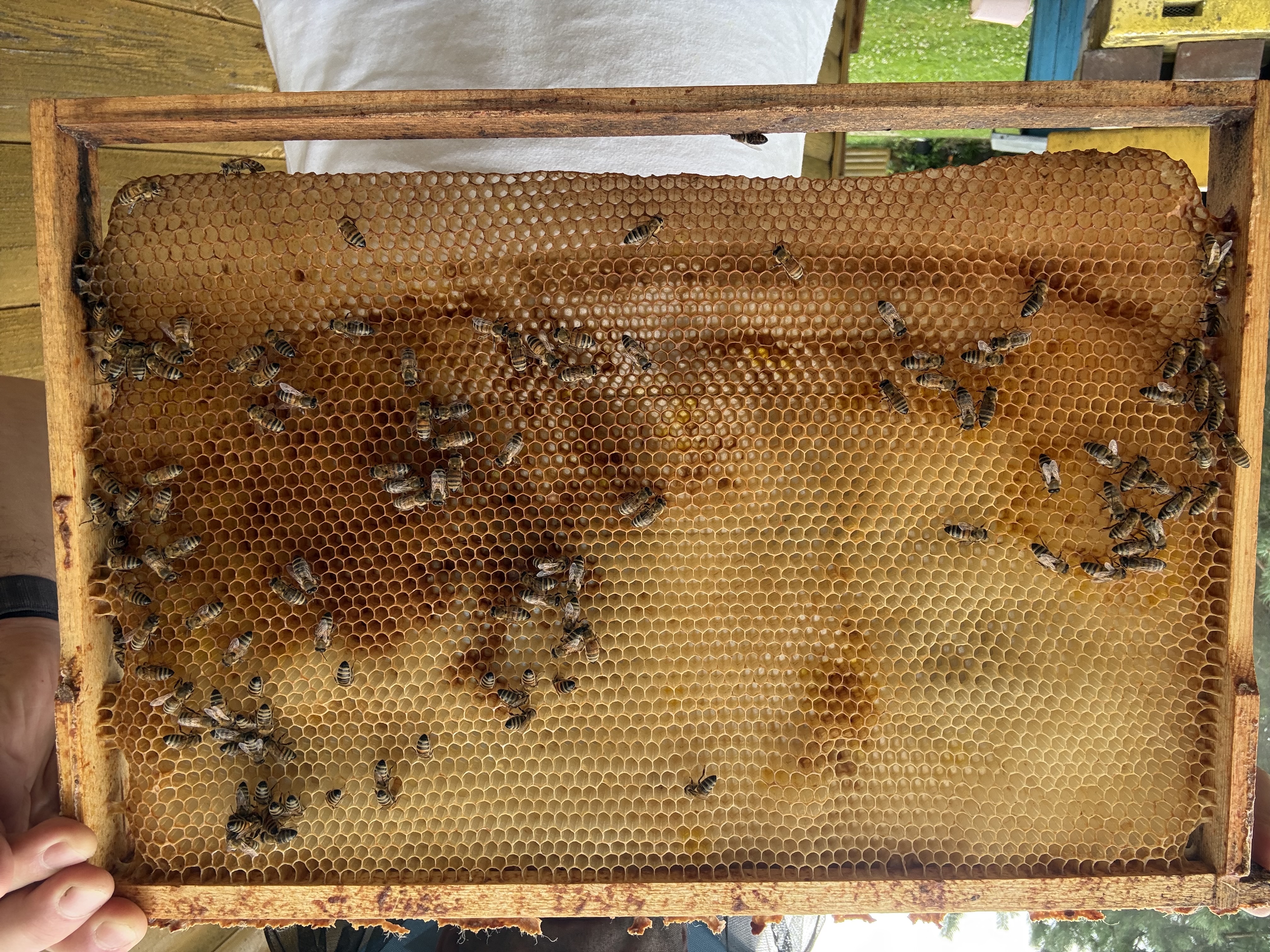
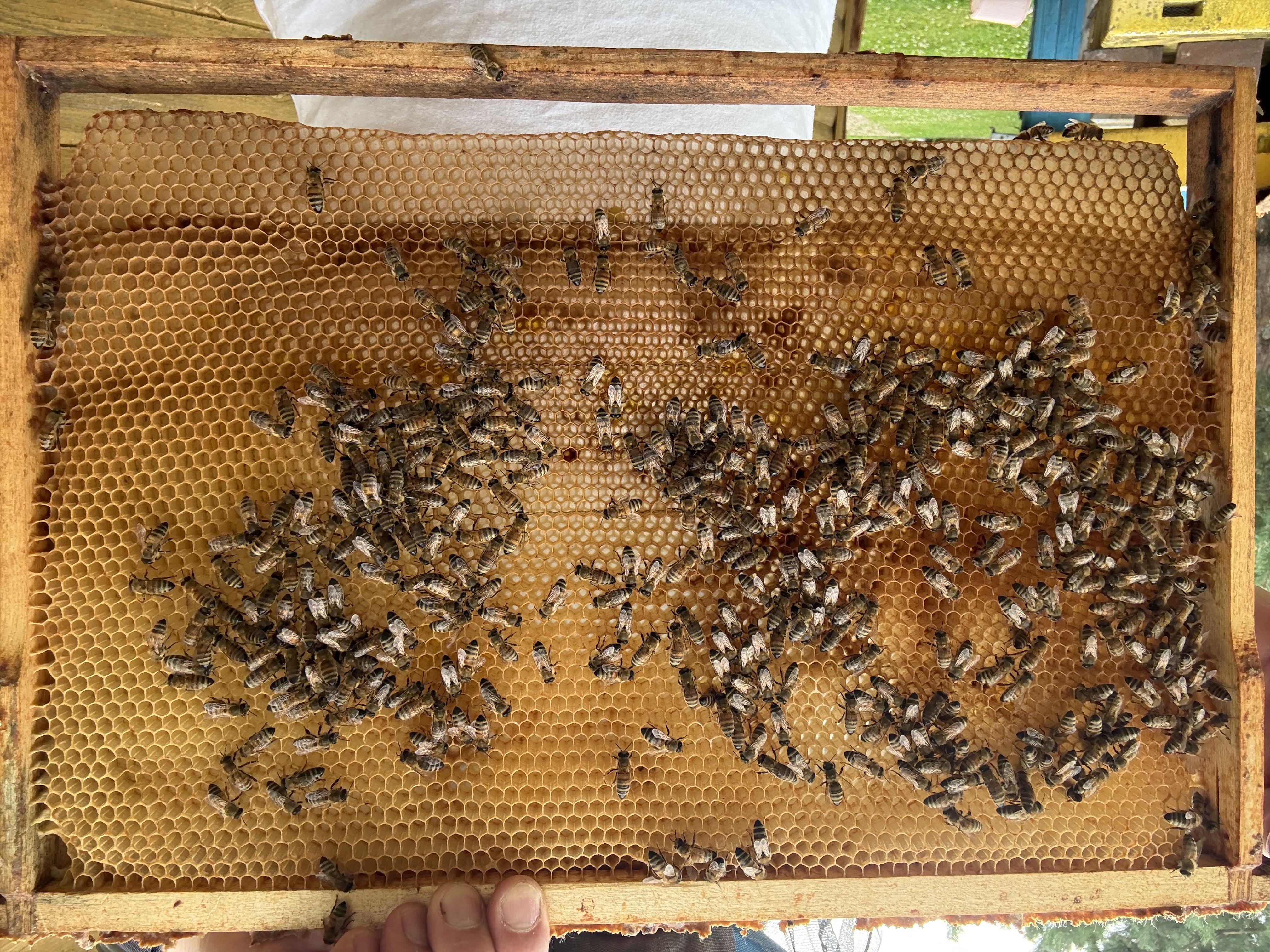
Frame 1
Side A
Side B
Side A
This side of the frame shows scattered bees, with some open cells containing what appears to be nectar or very young brood, and very little capped honey.
Side B
The reverse side also features scattered bees with open cells, some containing nectar or young brood, and minimal capped honey.
Both sides of this frame show scattered bee activity across cells that are mostly empty or contain young brood and nectar, indicating it is likely an outer frame or one being drawn out. There is little evidence of extensive capped brood or honey storage.
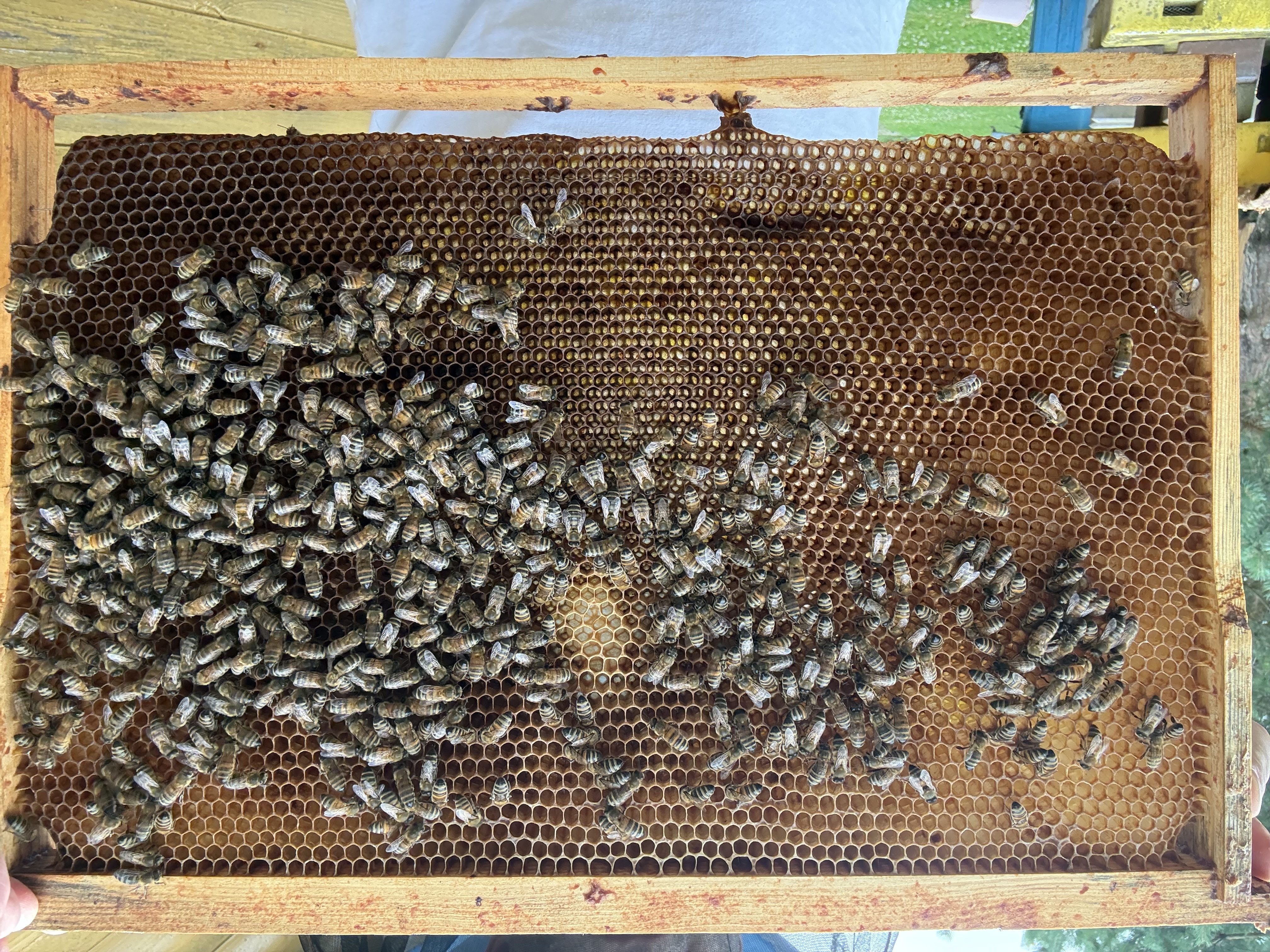
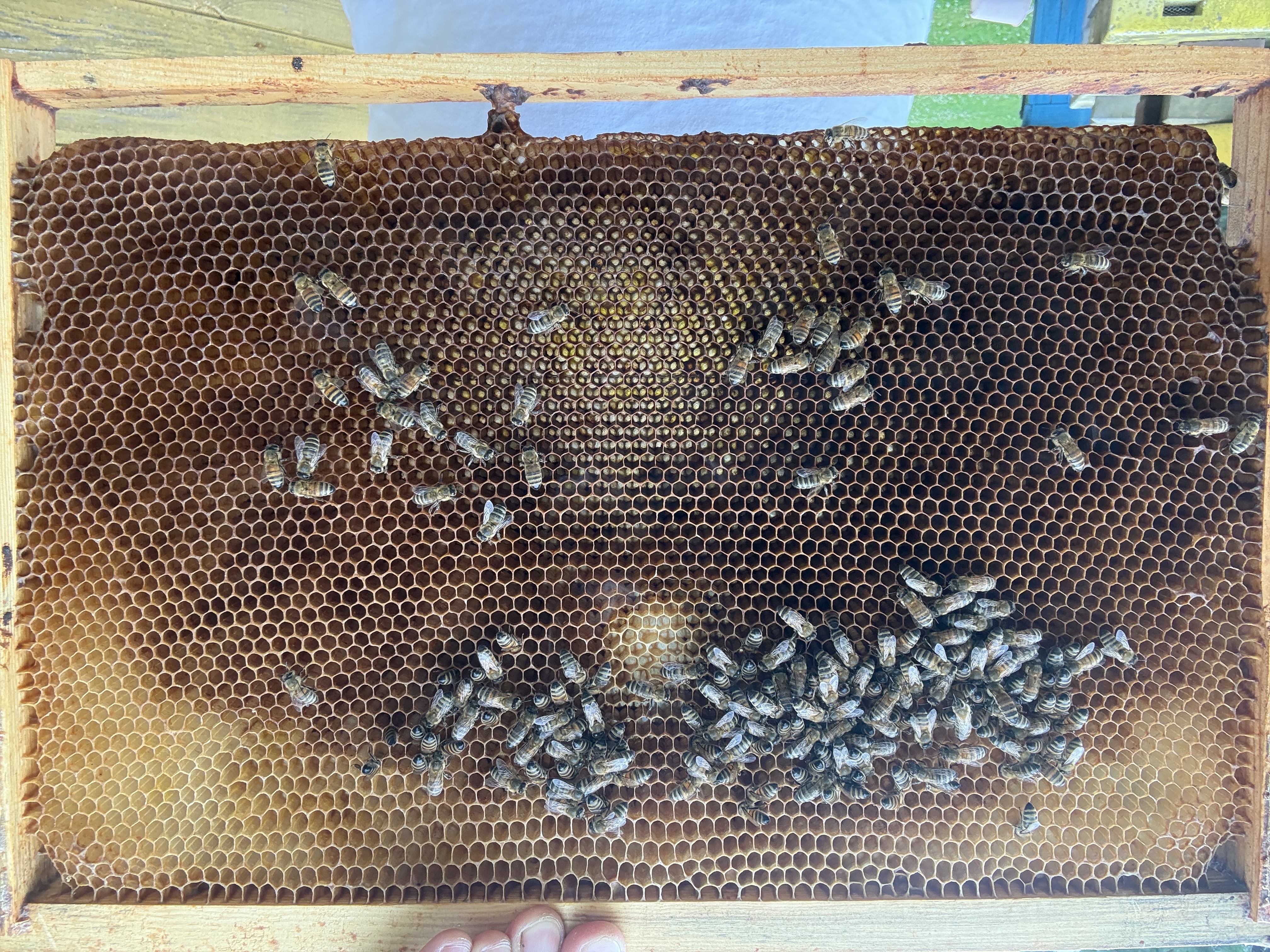
Frame 2
Side A
Side B
Side A
This frame side is covered by a moderate number of bees, with a central patch of capped brood surrounded by areas of open cells and possibly young larvae.
Side B
The other side of the frame has fewer bees, with a smaller and more isolated patch of capped brood in the center.
One side of this frame shows a moderate bee population with a good central brood pattern, while the other side has significantly fewer bees and a sparser brood area. This suggests a less uniform development across the frame.
Frame 3
Side A
Side B
Side A
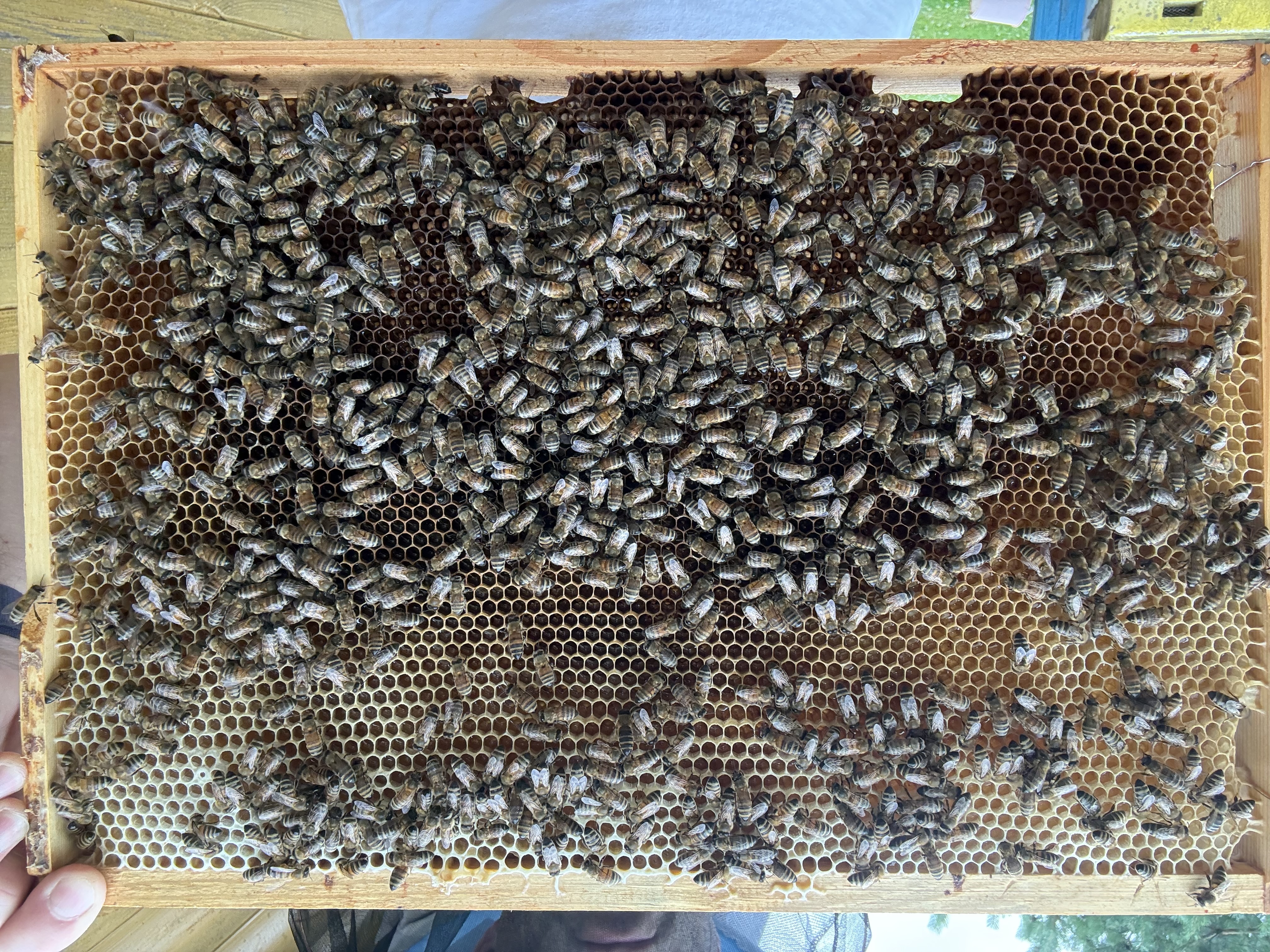
This side of the frame is well-populated with bees and features a substantial, mostly capped brood area in the middle.
Side B
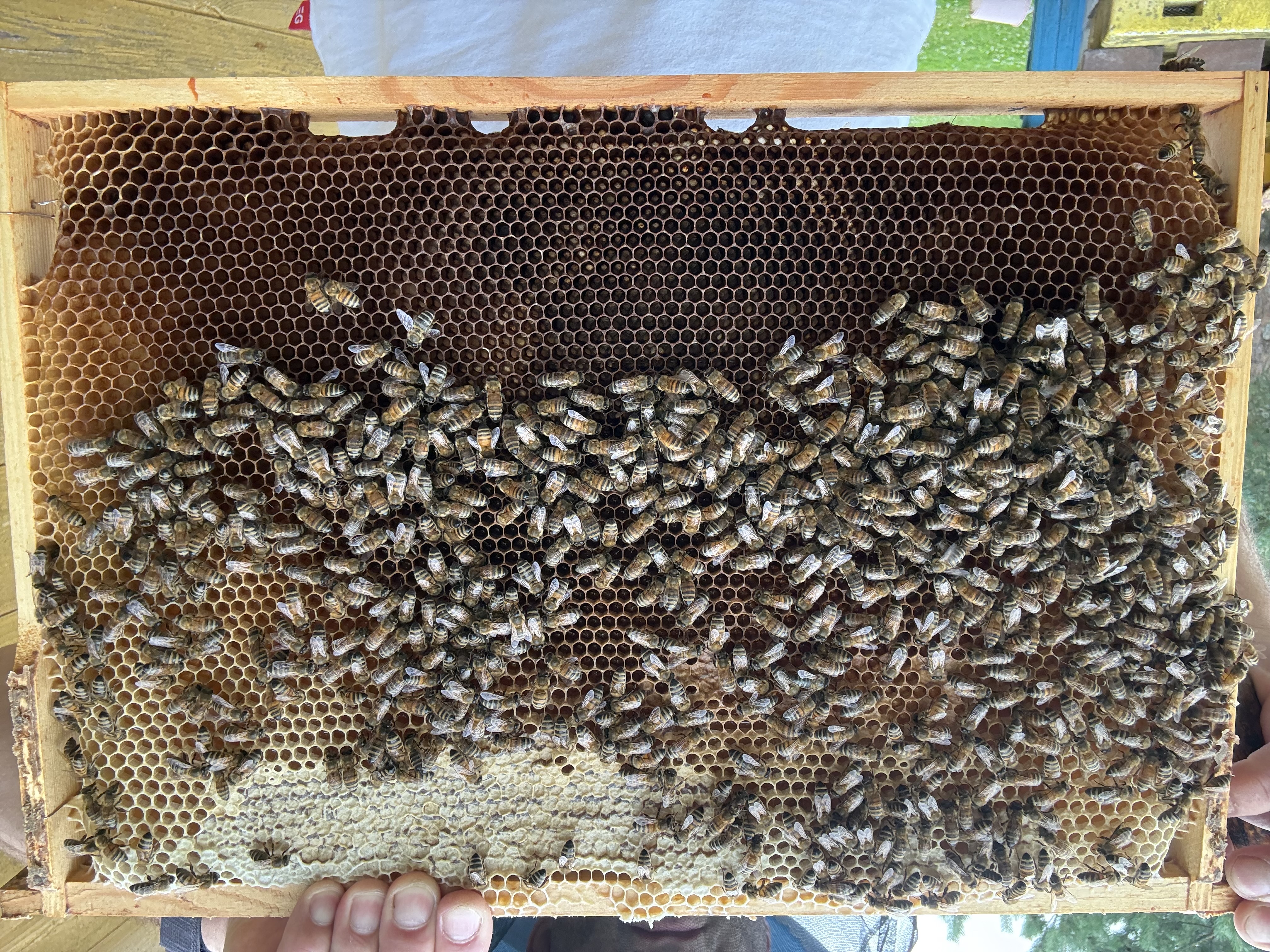
The reverse side is also heavily covered with bees and displays a dense pattern of capped brood across a significant portion of the frame.
Both sides of this frame exhibit strong bee coverage and extensive areas of capped brood, indicating a healthy and active brood nest. There is minimal honey visible, suggesting its primary function is brood rearing.
Frame 4
Side A
Side B
Side A
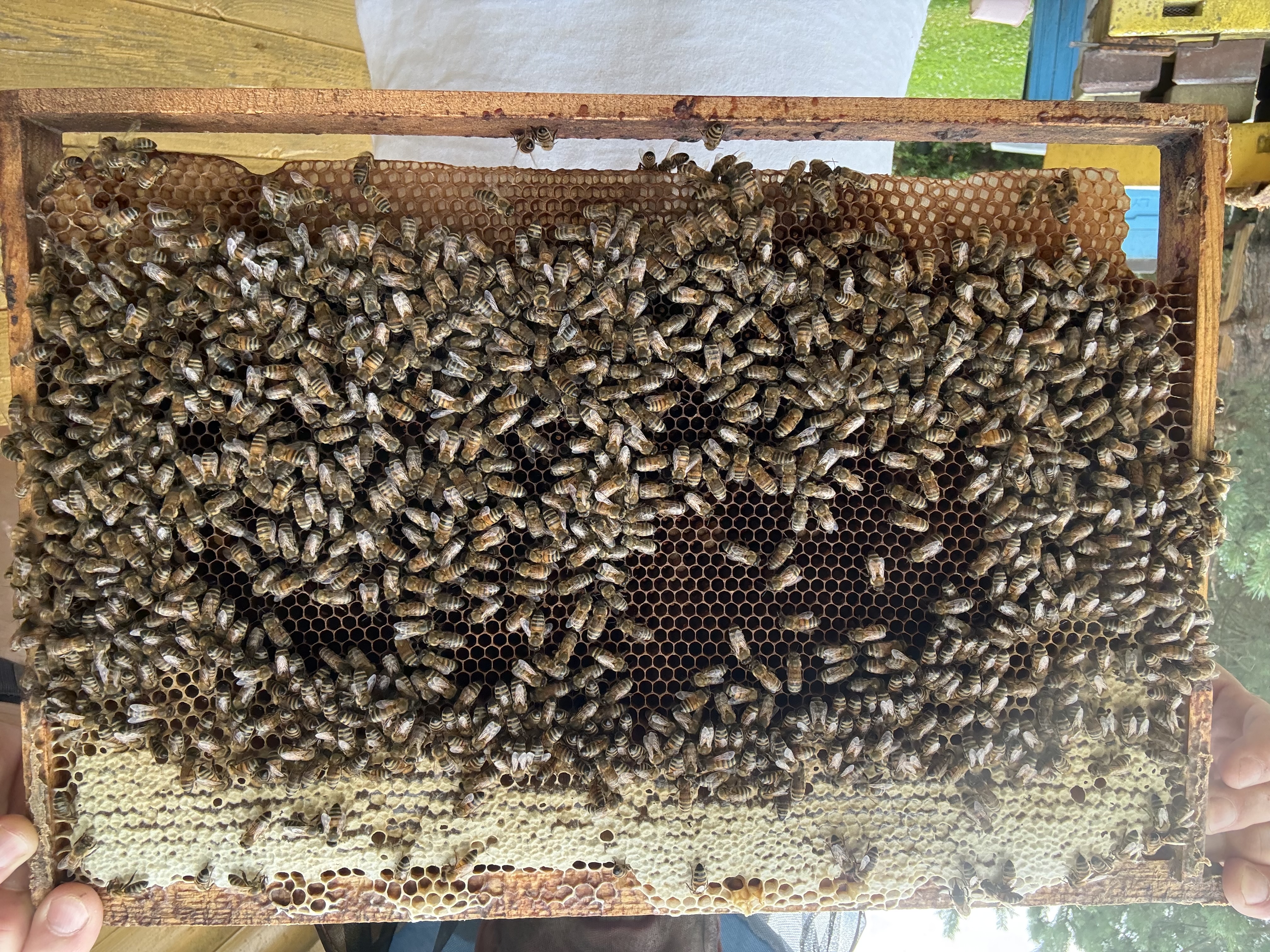
This frame side is heavily covered with bees, revealing a very dense and well-established pattern of capped brood cells.
Side B
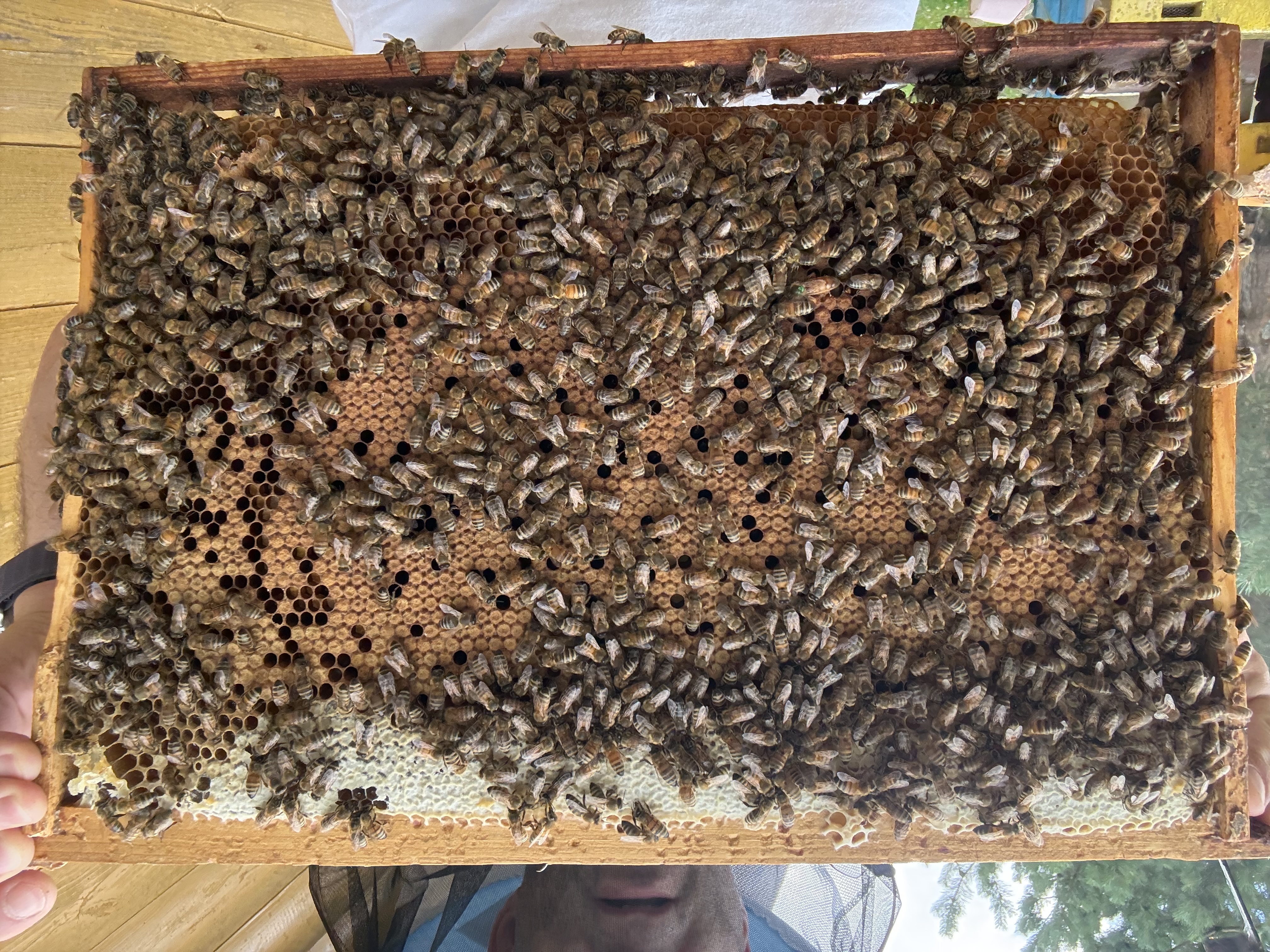
The reverse side is equally bustling with bees and shows an even more extensive and uniform area of capped brood.
Both sides of this frame are thickly covered with bees and exhibit exceptional, dense patterns of capped brood, indicating a robust and productive queen. The frame is primarily dedicated to brood rearing with only marginal honey stores.
Frame 5
Side A
Side B
Side A
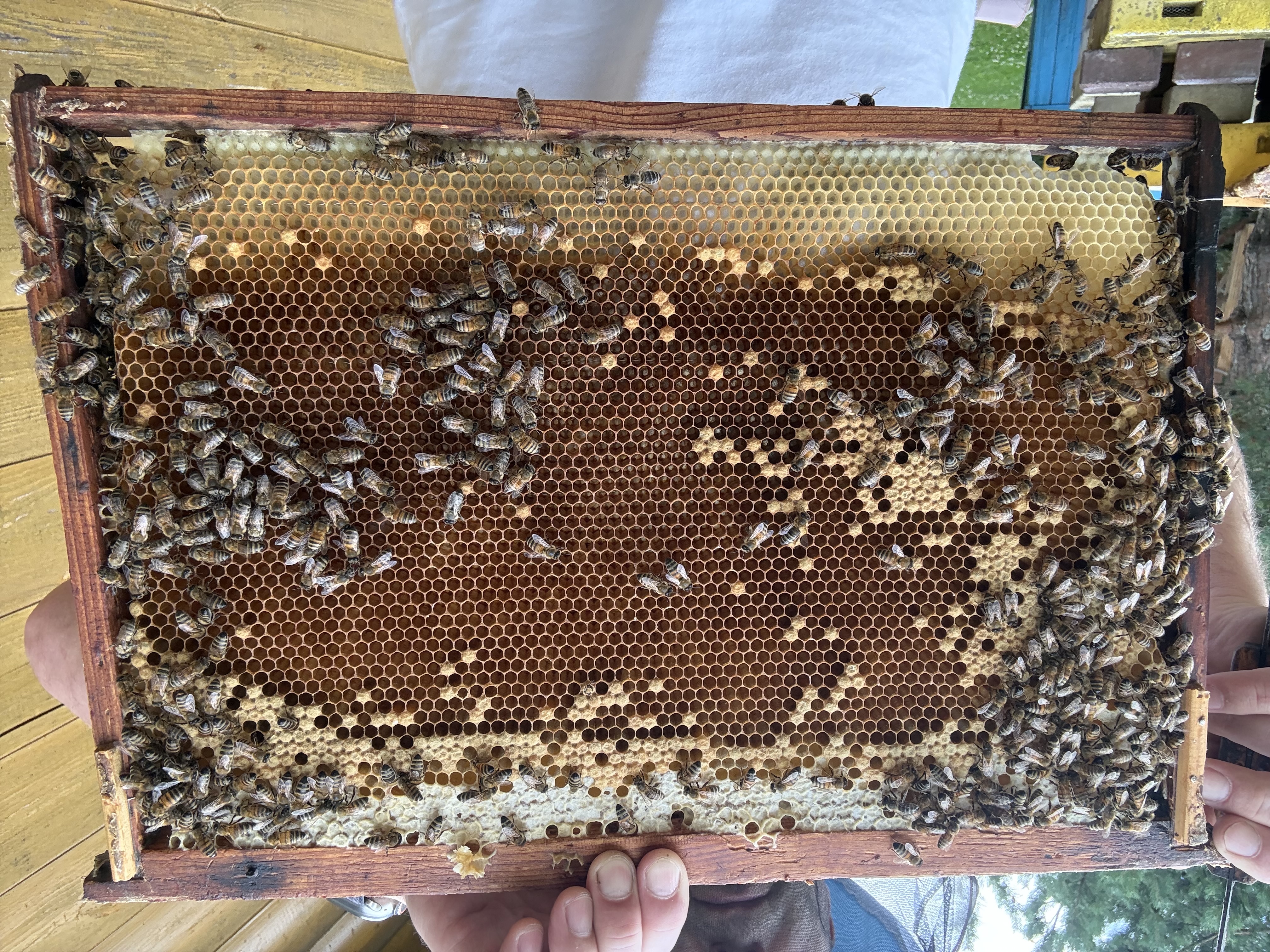
This frame side has moderate bee coverage with a patchy area of capped brood on the left and a central section of open cells and some pollen.
Side B
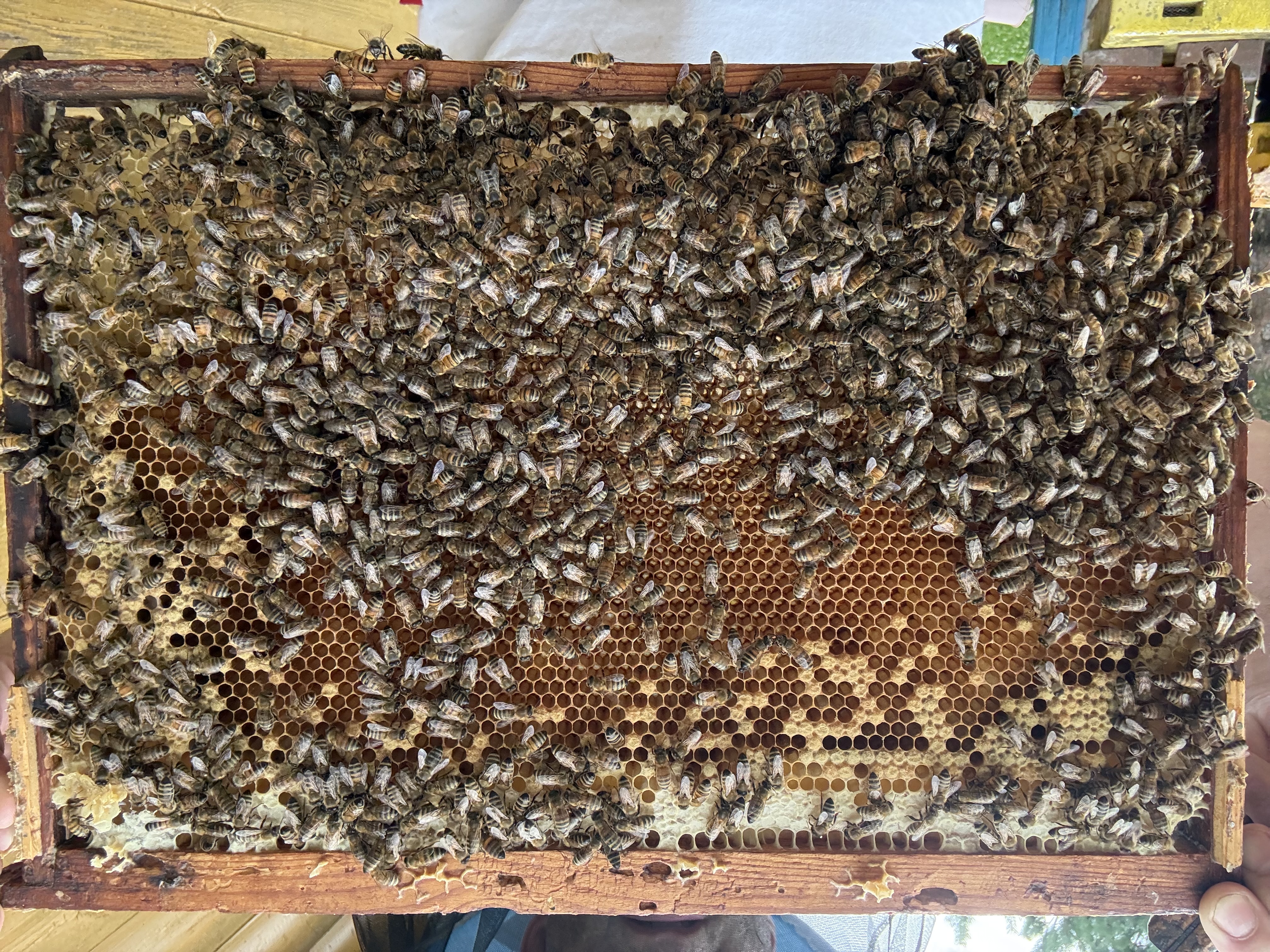
The other side of the frame is densely packed with bees, displaying a large and uniform patch of capped brood.
One side of this frame shows moderate bee activity with a mixed brood pattern and open cells, while the other side is heavily populated with bees and features a significant, dense area of capped brood. This frame demonstrates uneven brood development, with one side clearly more active.
Frame 6
Side A
Side B
Side A
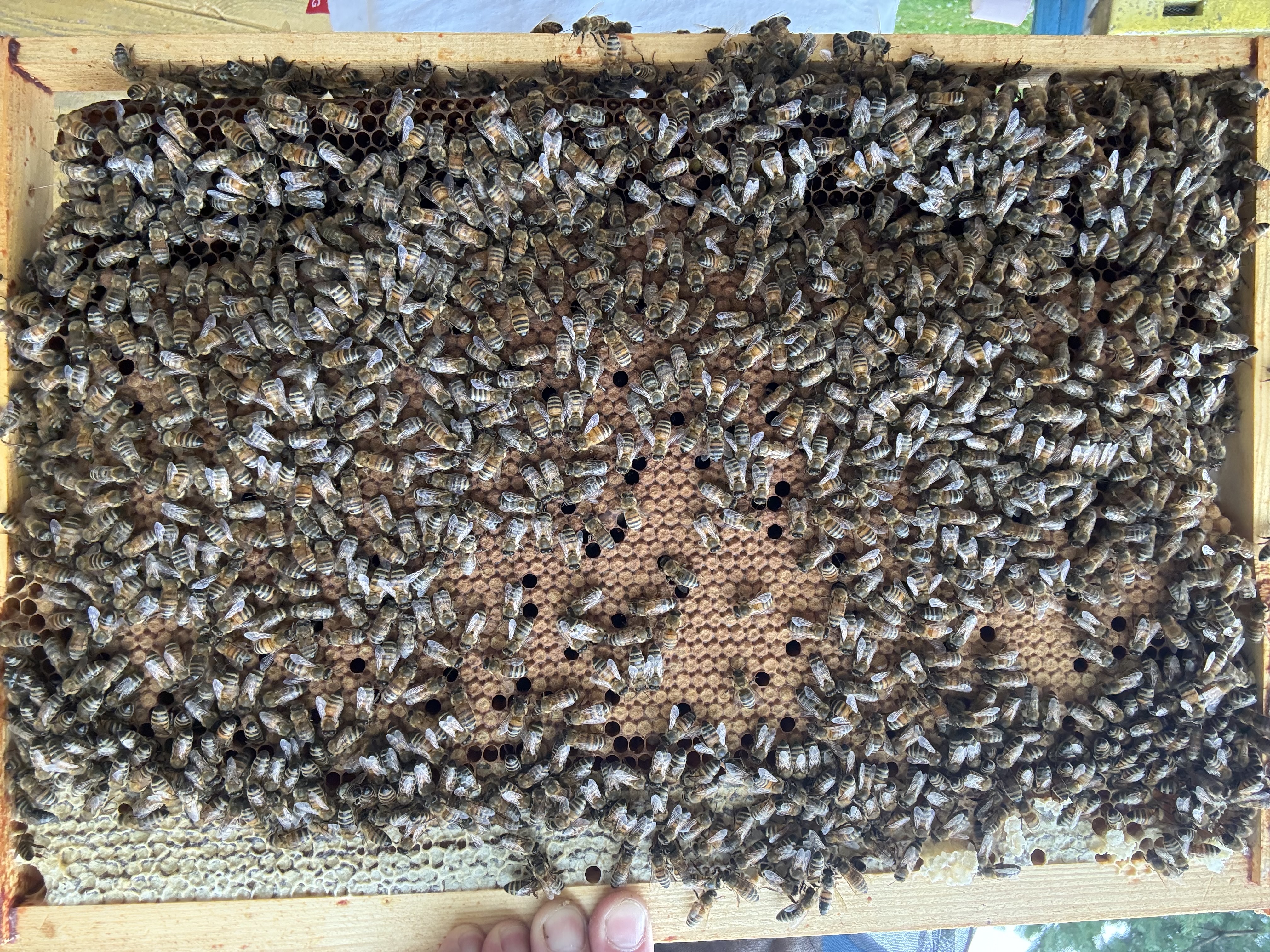
This frame side is heavily laden with bees and presents a very extensive and solid pattern of capped brood across most of its surface.
Side B
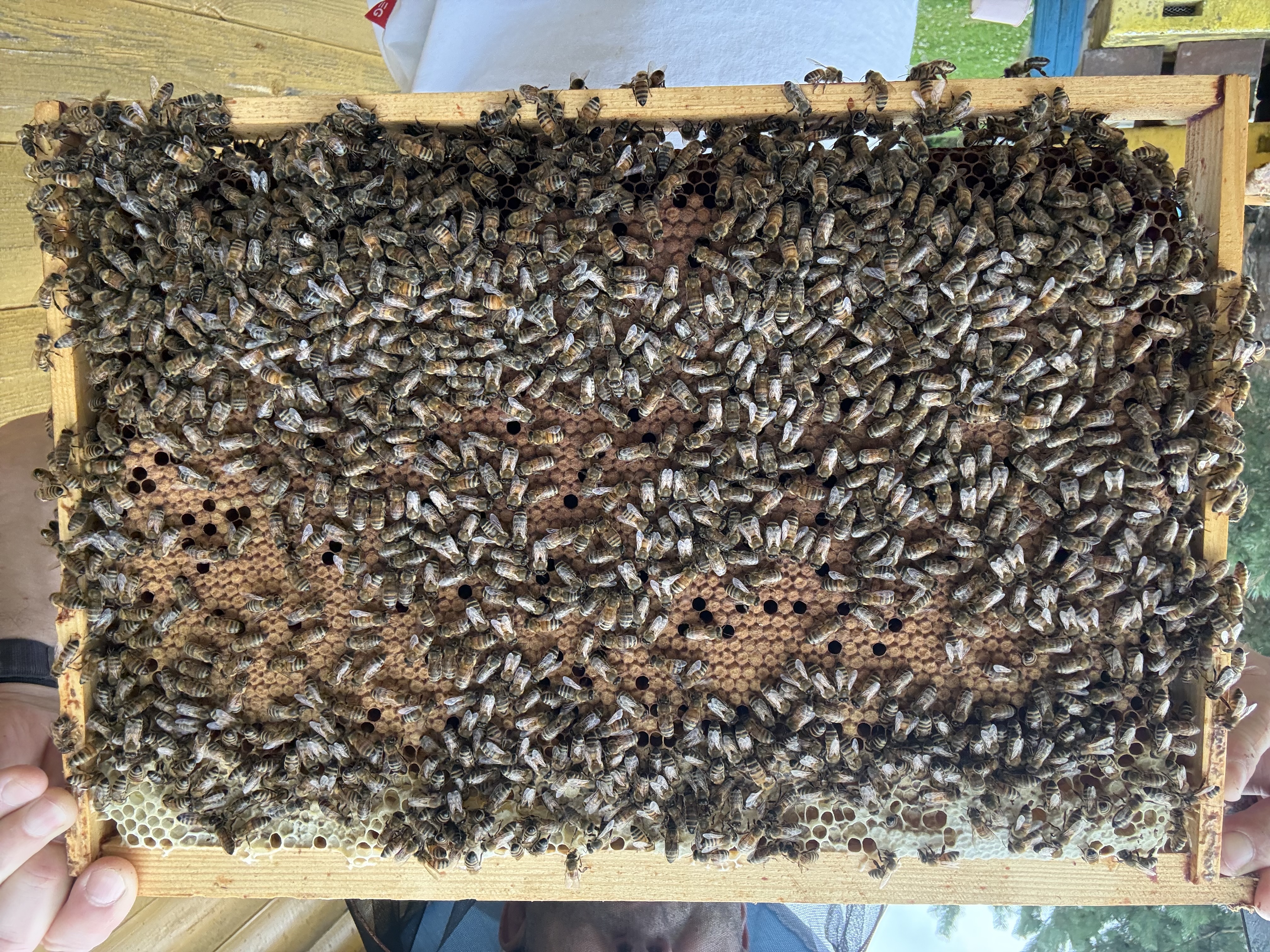
The reverse side is also densely populated with bees and exhibits an extremely large and consistent area of capped brood.
Both sides of this frame are exceptionally well-covered with bees and feature very dense, uniform patterns of capped brood, indicating a highly productive brood nest. This frame is a strong indicator of a healthy and expanding colony.
Frame 7
Side A
Side B
Side A
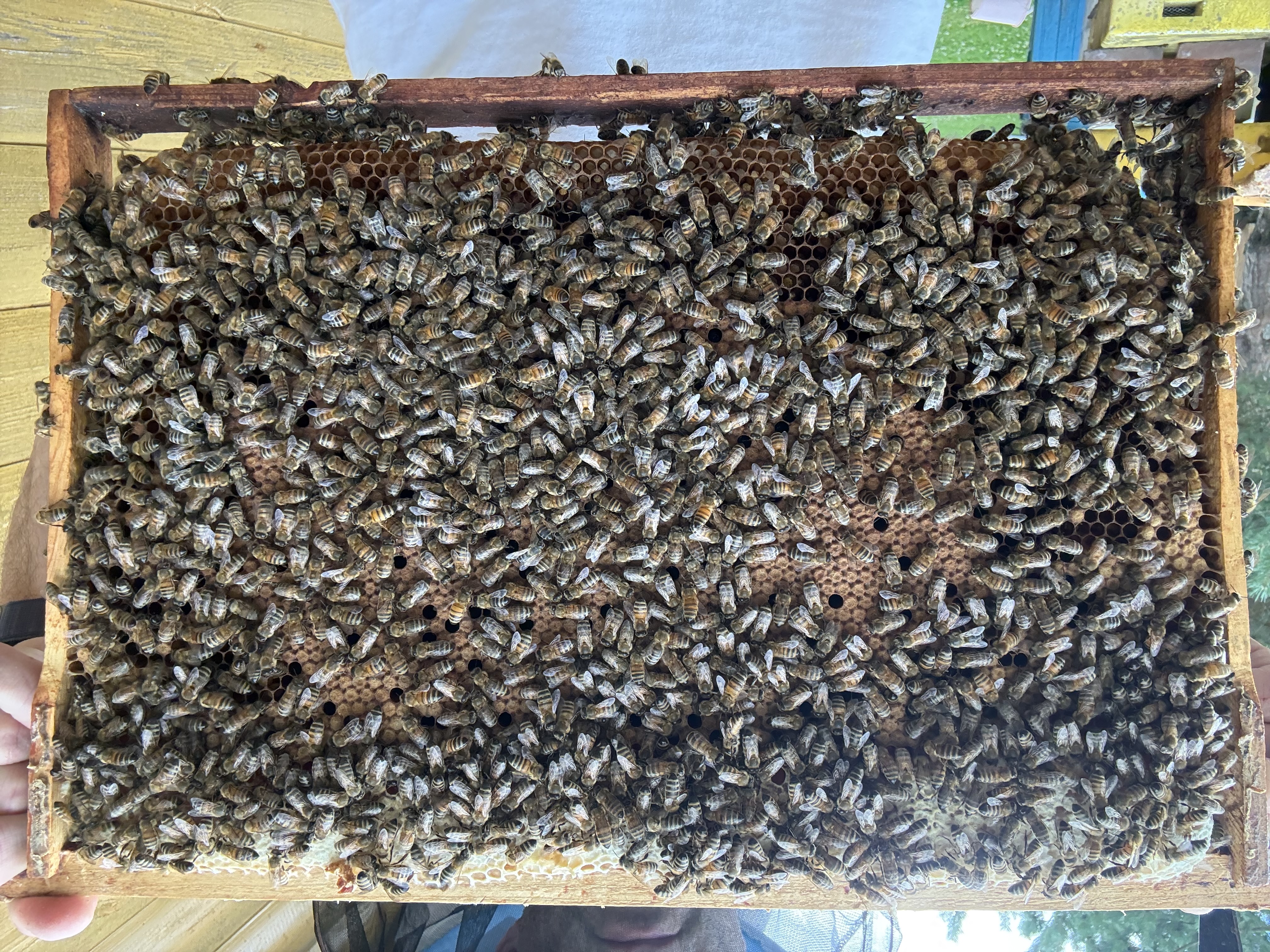
This frame side is moderately covered with bees and features a substantial central area of capped brood, with some capped honey visible in the upper left corner.
Side B
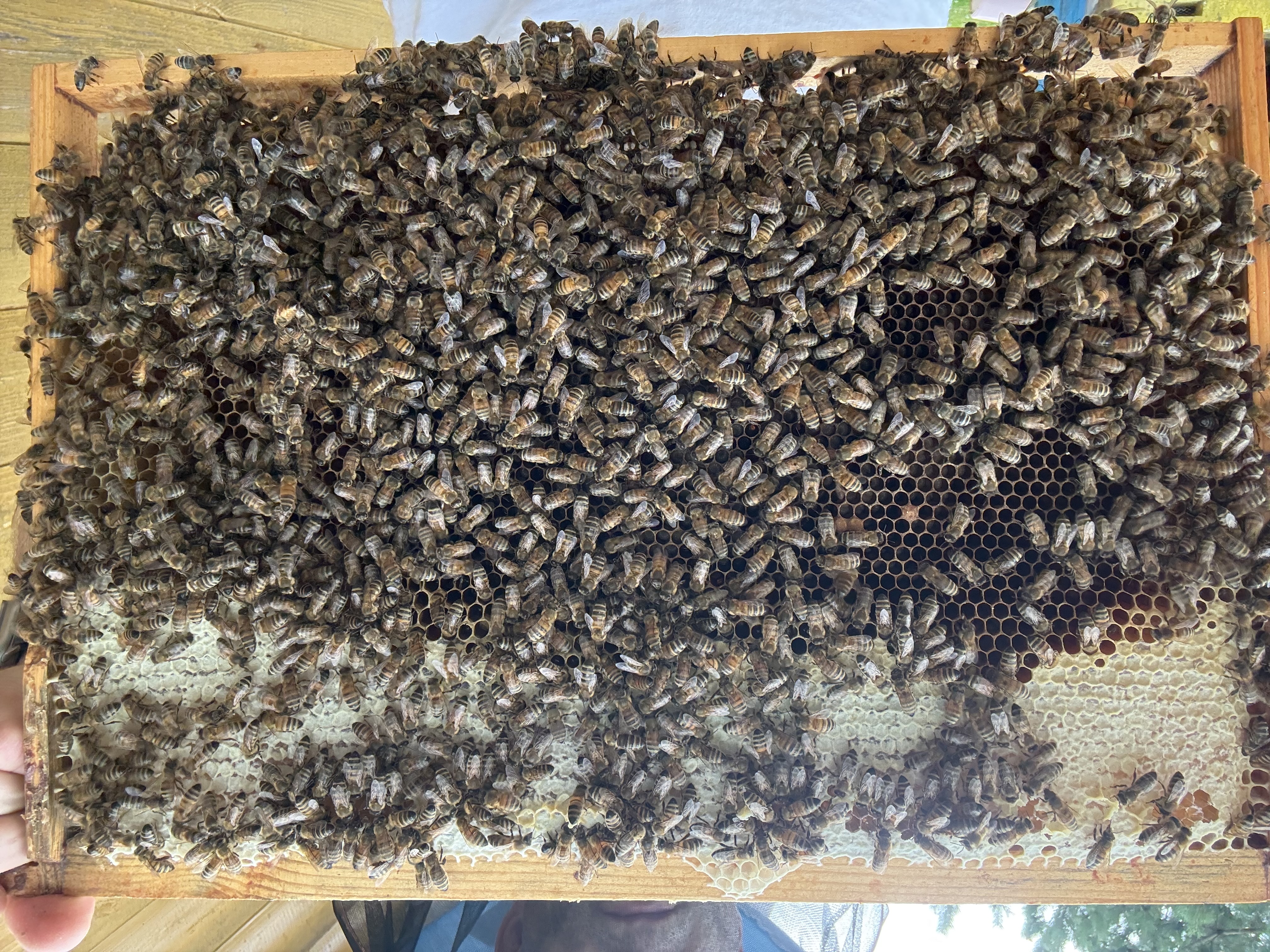
The reverse side also shows moderate bee coverage and a good central patch of capped brood, with a band of capped honey along the top.
Both sides of this frame show good bee coverage and substantial central areas of capped brood, demonstrating active brood rearing. There are also noticeable bands of capped honey along the top edges, indicating some food storage.
Frame 8
Side A
Side B
Side A
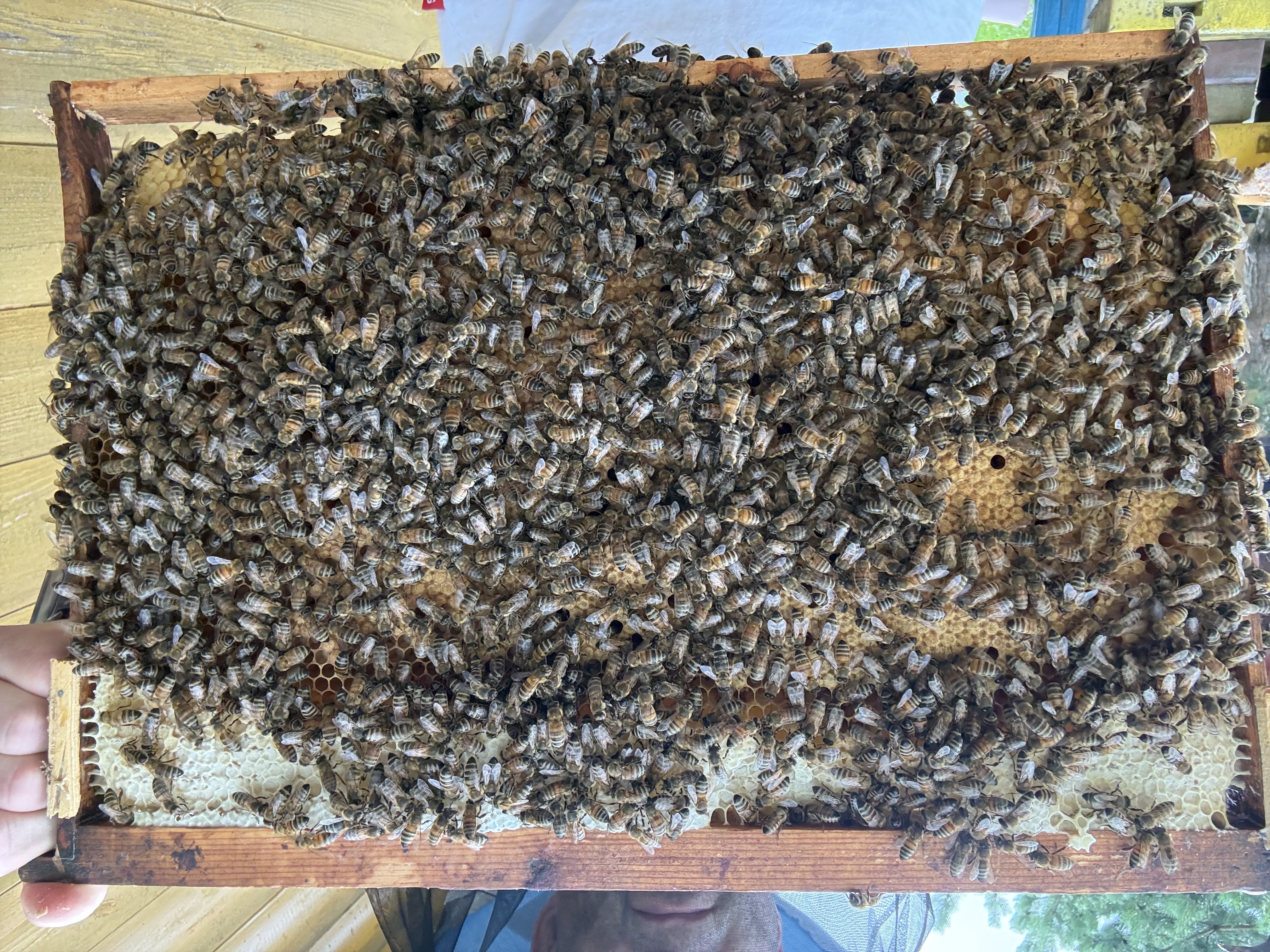
This frame side is heavily populated with bees and exhibits a dense pattern of capped brood in its central region, with some capped honey at the top.
Side B
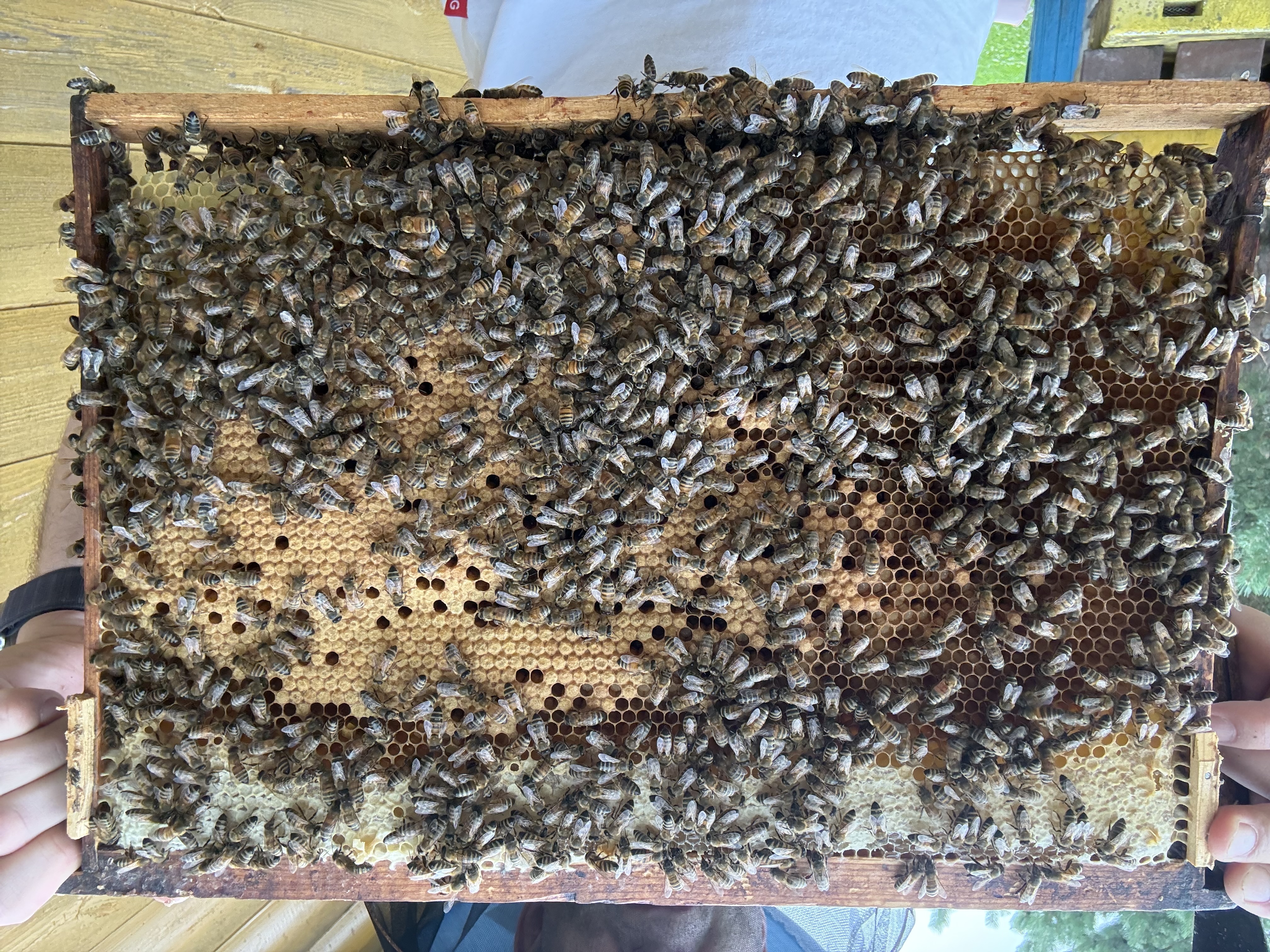
The reverse side is also heavily covered with bees and features an extensive area of capped brood, accompanied by a band of capped honey along the top.
Both sides of this frame are robustly covered with bees and display significant, dense patterns of capped brood, indicating a strong and healthy brood nest. Additionally, consistent bands of capped honey are visible across the top of both sides, suggesting a good balance of brood and stores.
Frame 9
Side A
Side B
Side A
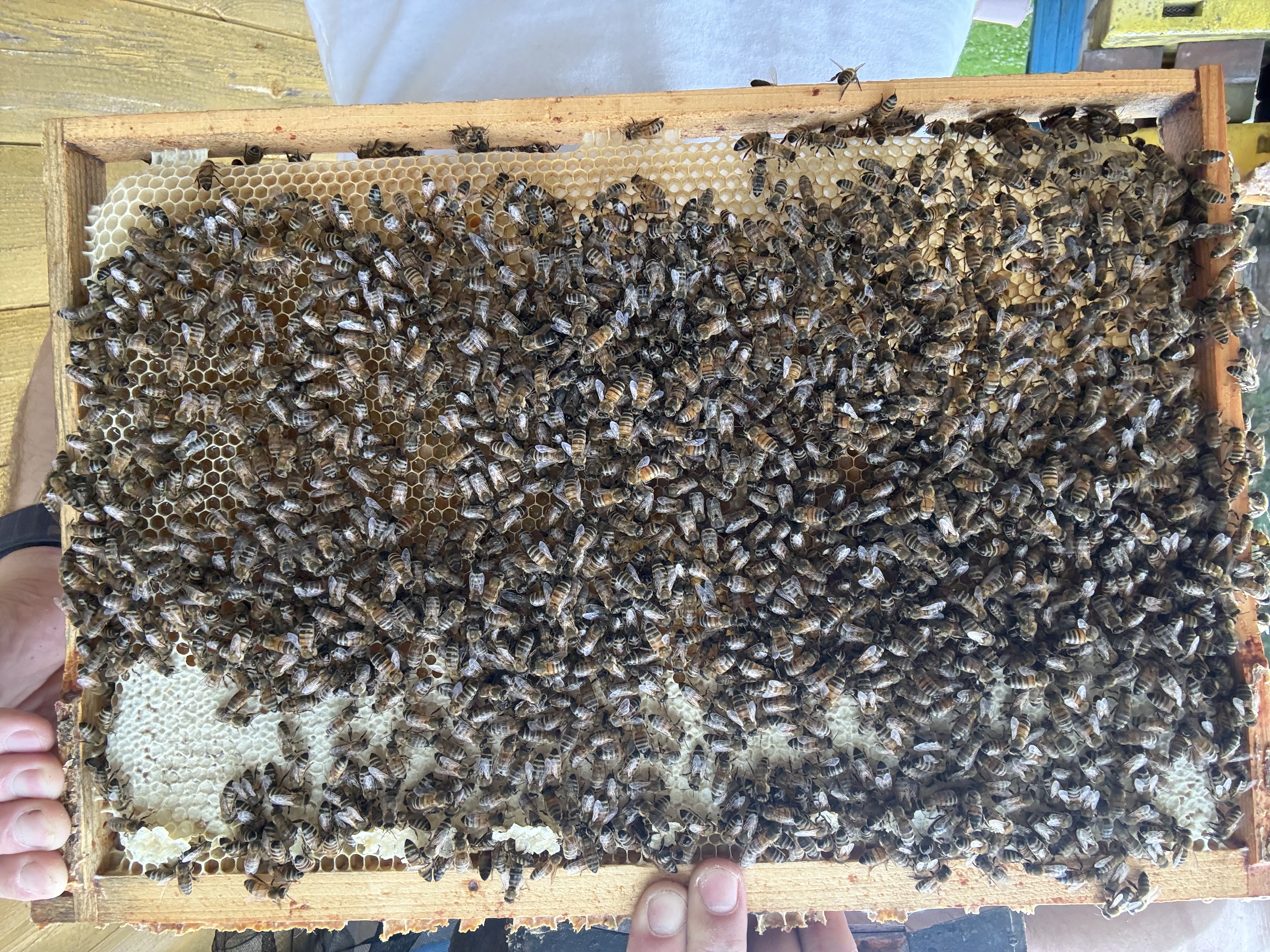
This side of the frame displays a high density of bees actively covering a well-established pattern of capped brood, with some honey present in the upper left corner.
Side B
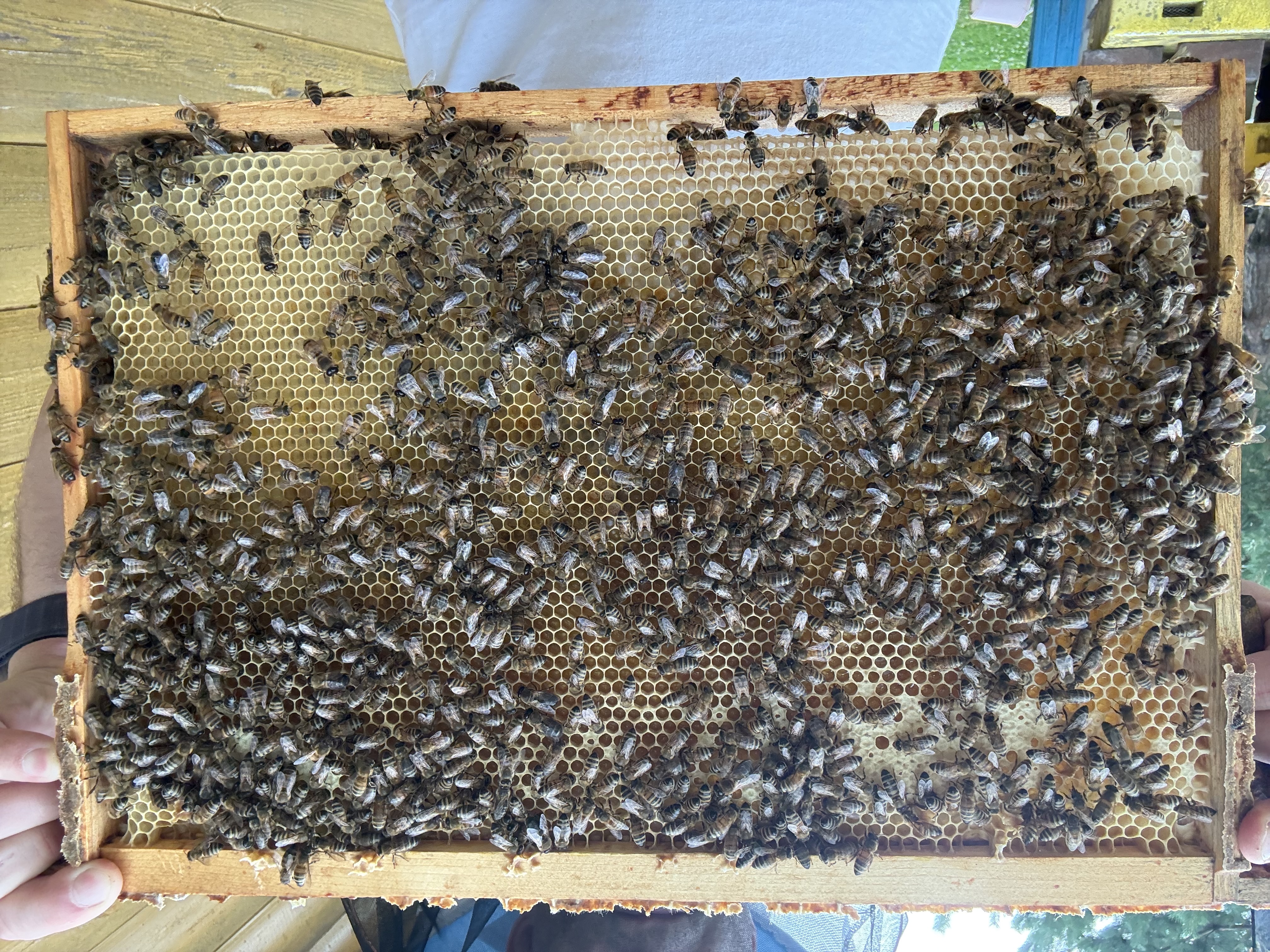
The reverse side of the frame also shows a thriving bee population and a healthy central area of capped brood, accompanied by some capped honey primarily on the upper right side.
Both sides of this frame exhibit a robust bee population actively tending to a significant amount of capped brood, indicating a strong and healthy colony. The presence of honey on both sides further suggests good resource management and overall colony vitality.
Frame 10
Side A
Side A
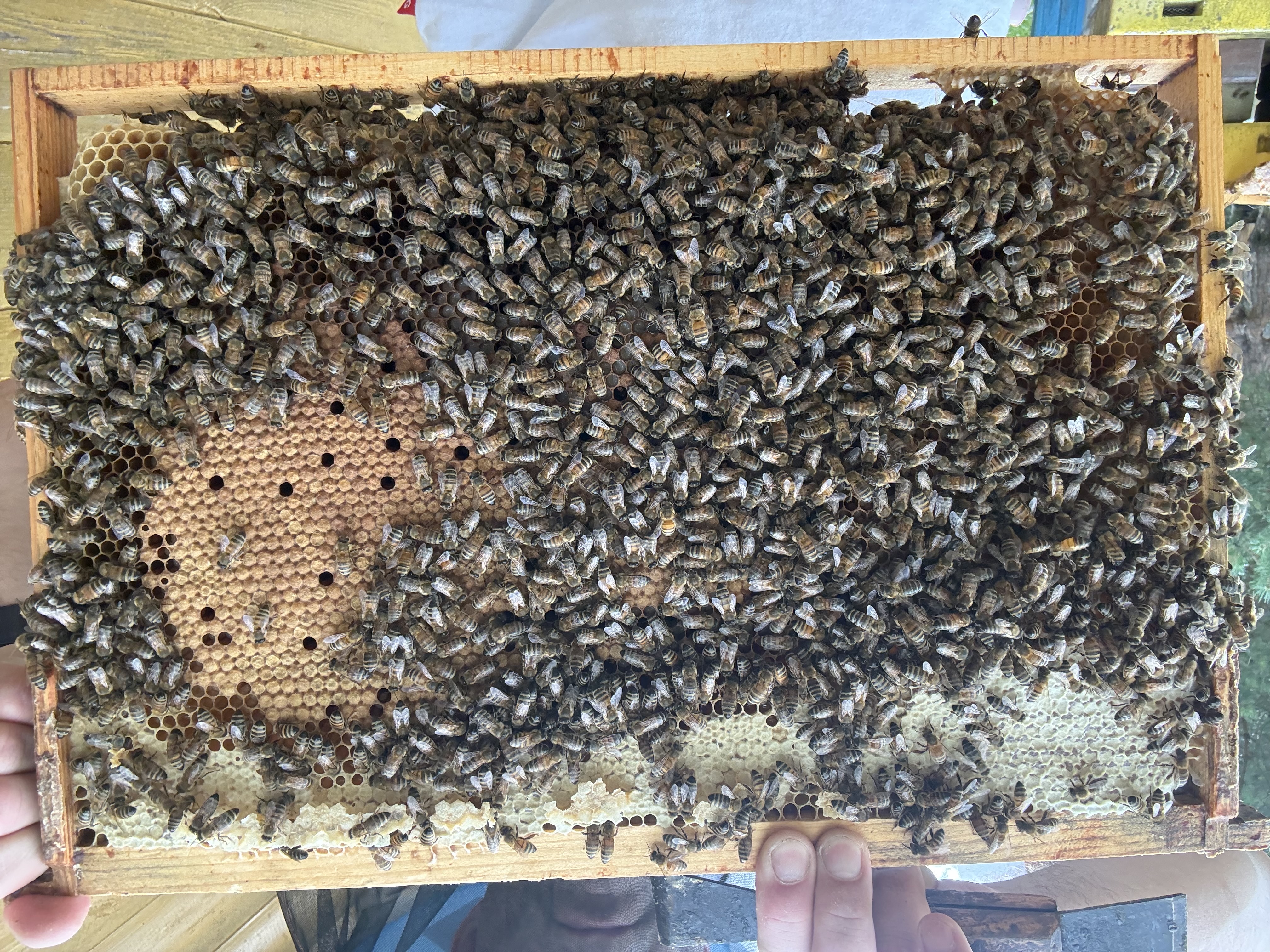
This frame features a moderate bee population with a distinct area of brood on the right, while the left side contains mostly empty drawn comb and a small amount of nectar.