Inspection Results
25 Jul 2026
Hive #0 · 40 frame sides captured
75
Colony Strength
Strong
Given the low honey stores, supplemental feeding is highly recommended to support colony growth and provide adequate reserves. Monitor for signs of the queen, such as eggs or young larvae, during the next inspection to confirm her presence, as she was not directly observed today.
Queen Status
Queen not sighted
Brood Pattern
Good and consistent
Honey Stores
Low
Varroa Risk
Unknown
AI Observations
The inspection achieved full coverage across all 10 frames, revealing a strong colony with a substantial population of 9150 bees. Brood activity is good, with an average coverage of 40% across the frames, and a high BIAS score of 12.5 brood frames indicates significant brood potential. However, the queen was not sighted during this inspection, and honey stores are notably low at only 6%.
Frame Analysis — 20 frames
Frame 1
Side A
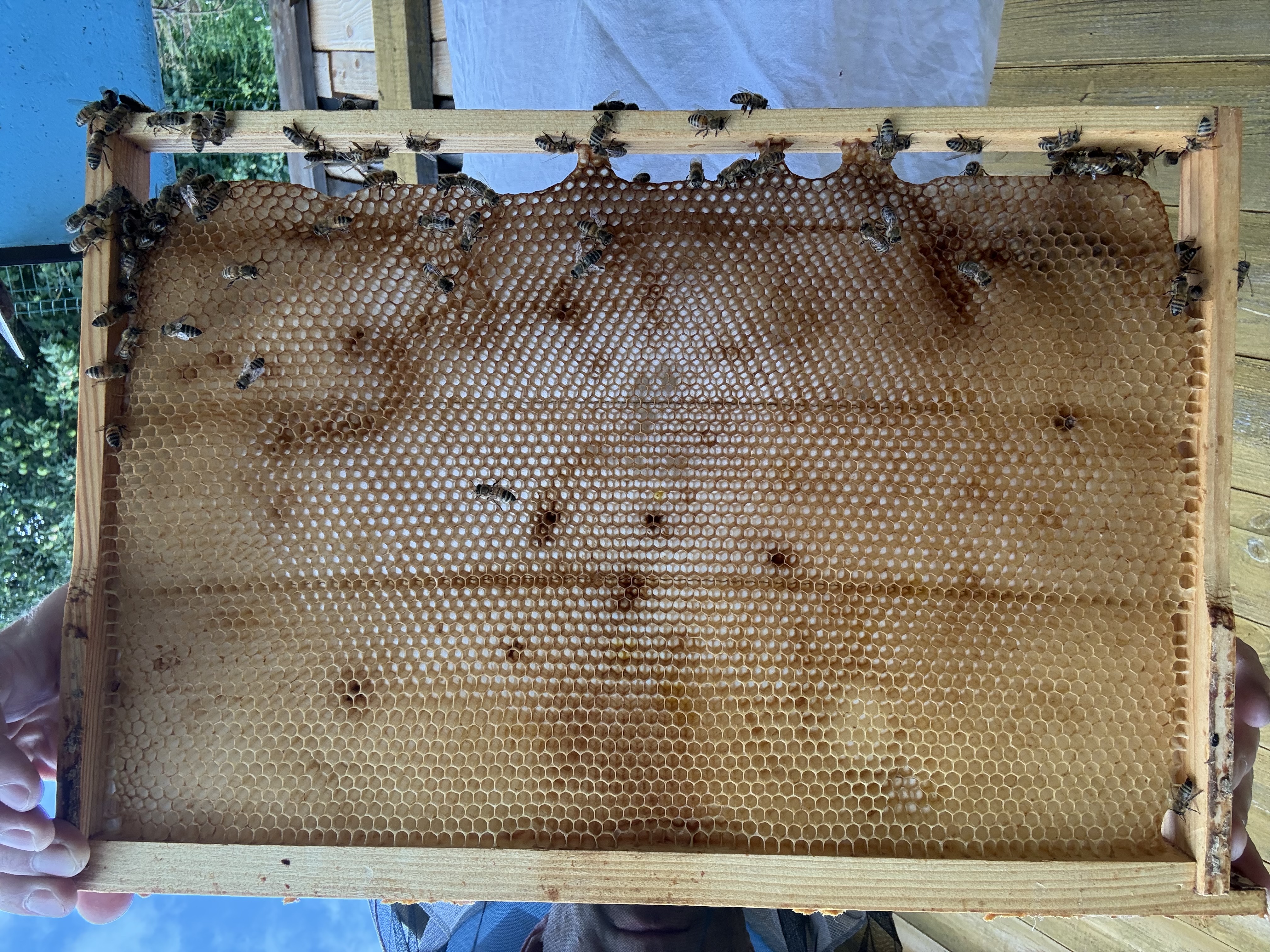
Side B
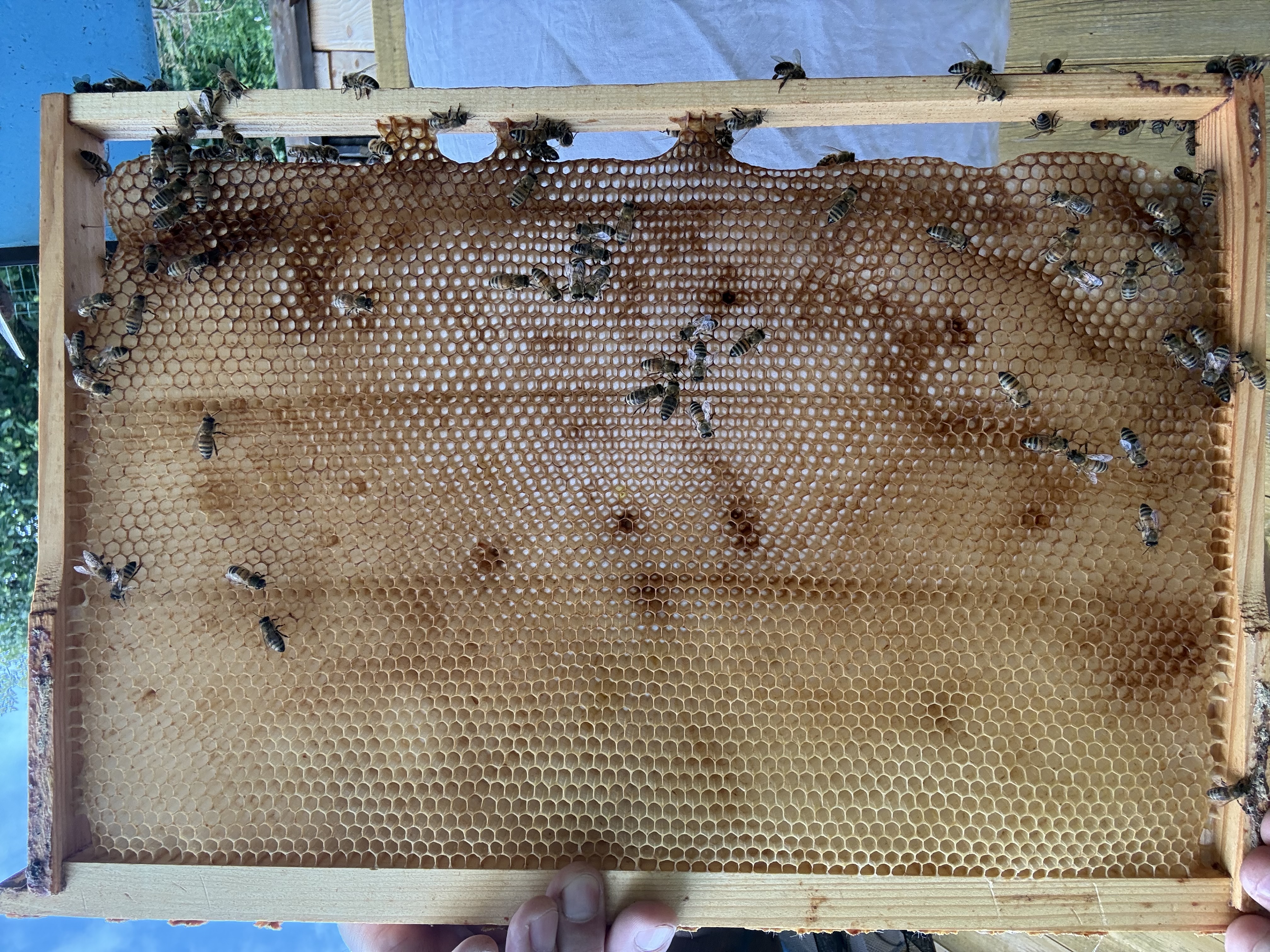
Side A
This side of the frame exhibits scattered bee activity on dark, older comb with limited patches of capped brood and honey.
Side B
This side features scattered bees on dark comb, displaying a small central area of capped brood and a trace of honey.
This frame exhibits scattered bee activity across both sides, which are largely covered in dark, older comb. There is some visible capped brood on both sides and a small amount of uncapped honey.
Frame 2
Side A
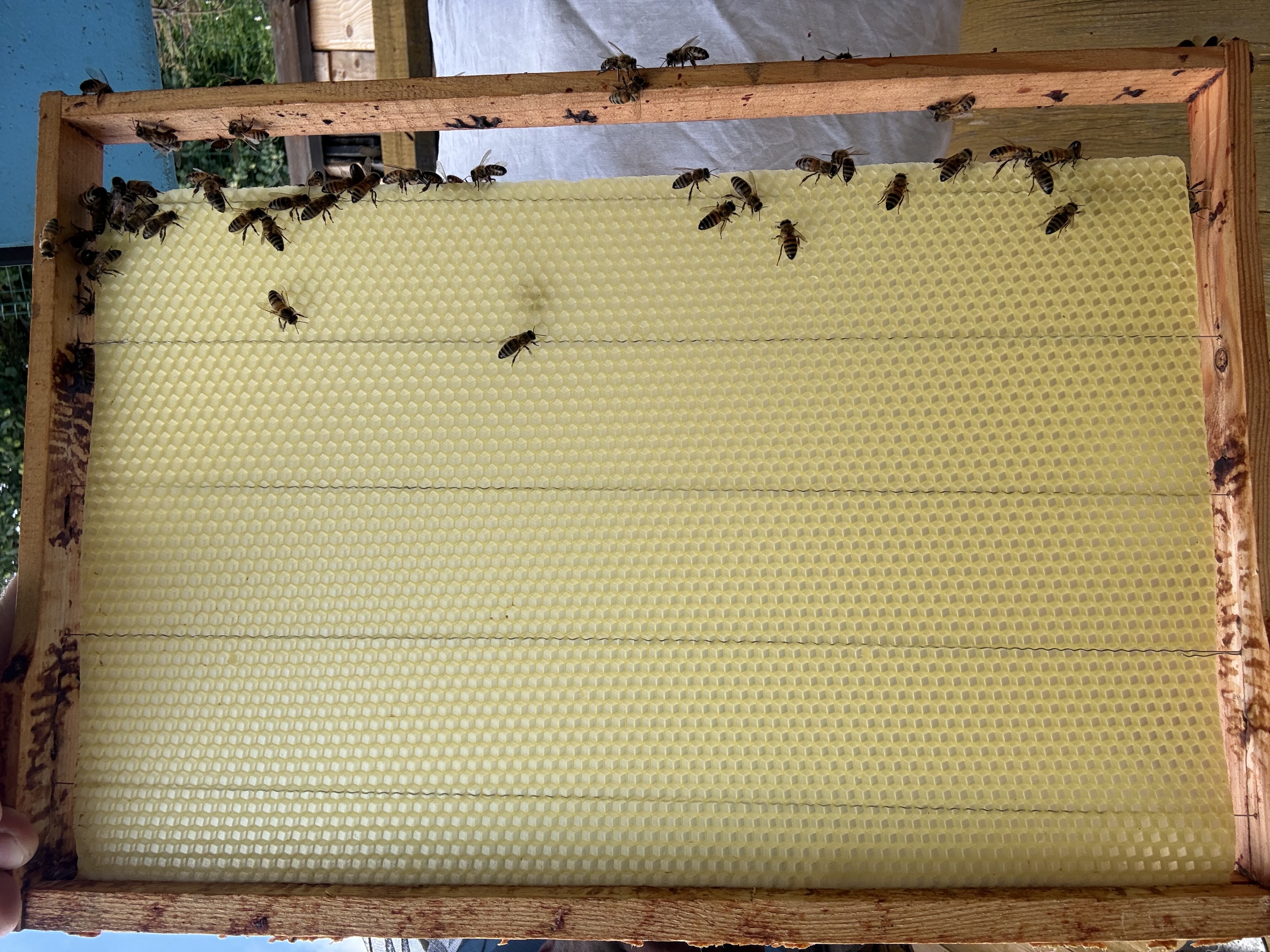
Side B
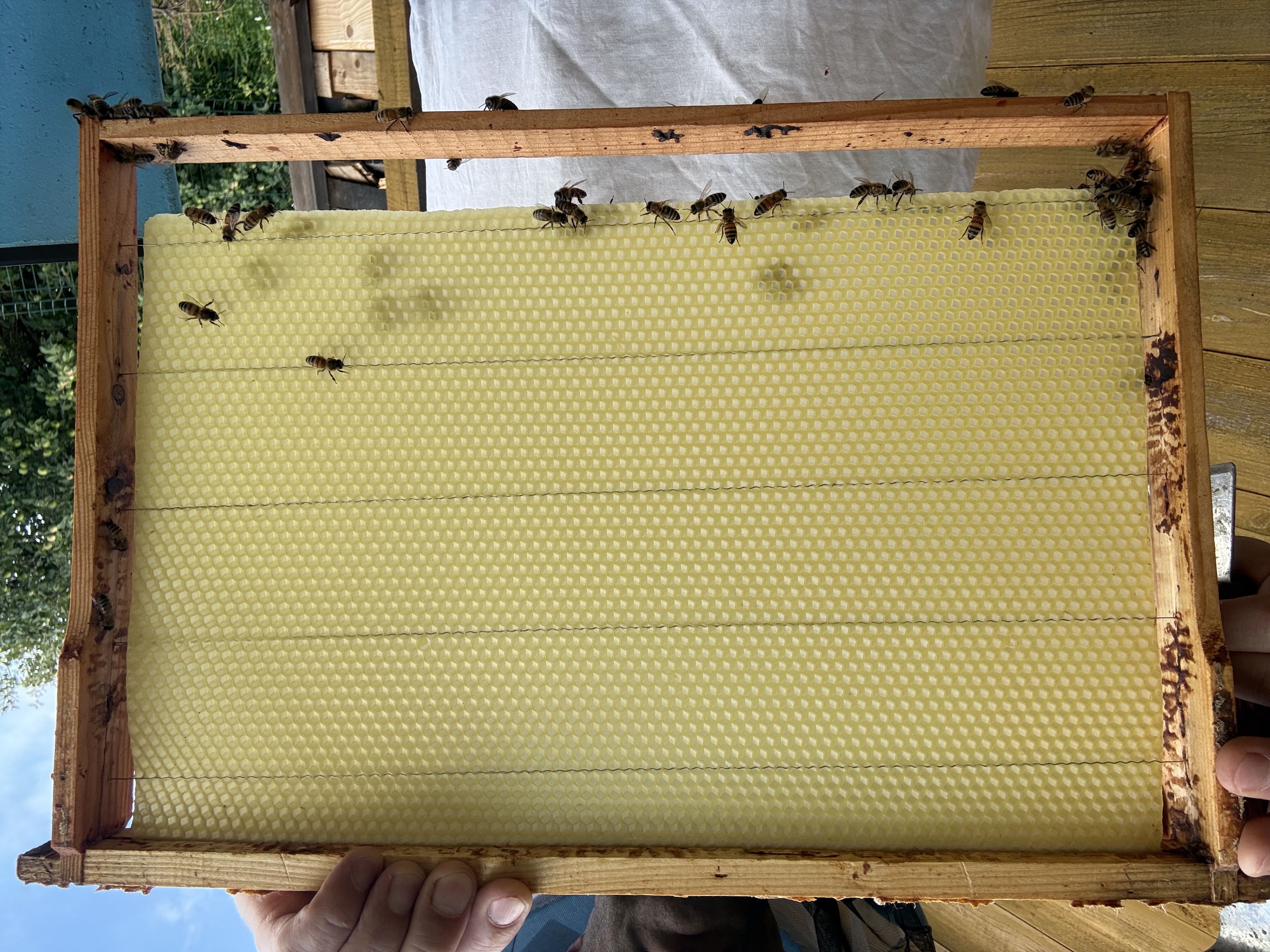
Side A
This side of the frame is largely composed of new, yellow foundation with only a few bees present at the bottom.
Side B
This side displays new yellow foundation with minimal bee activity, primarily at the lower edge.
This frame consists almost entirely of new, unused foundation, with only a small number of bees present on its lower edges. There is no brood or honey visible on either side, indicating it's a new frame for drawing out comb.
Frame 3
Side A
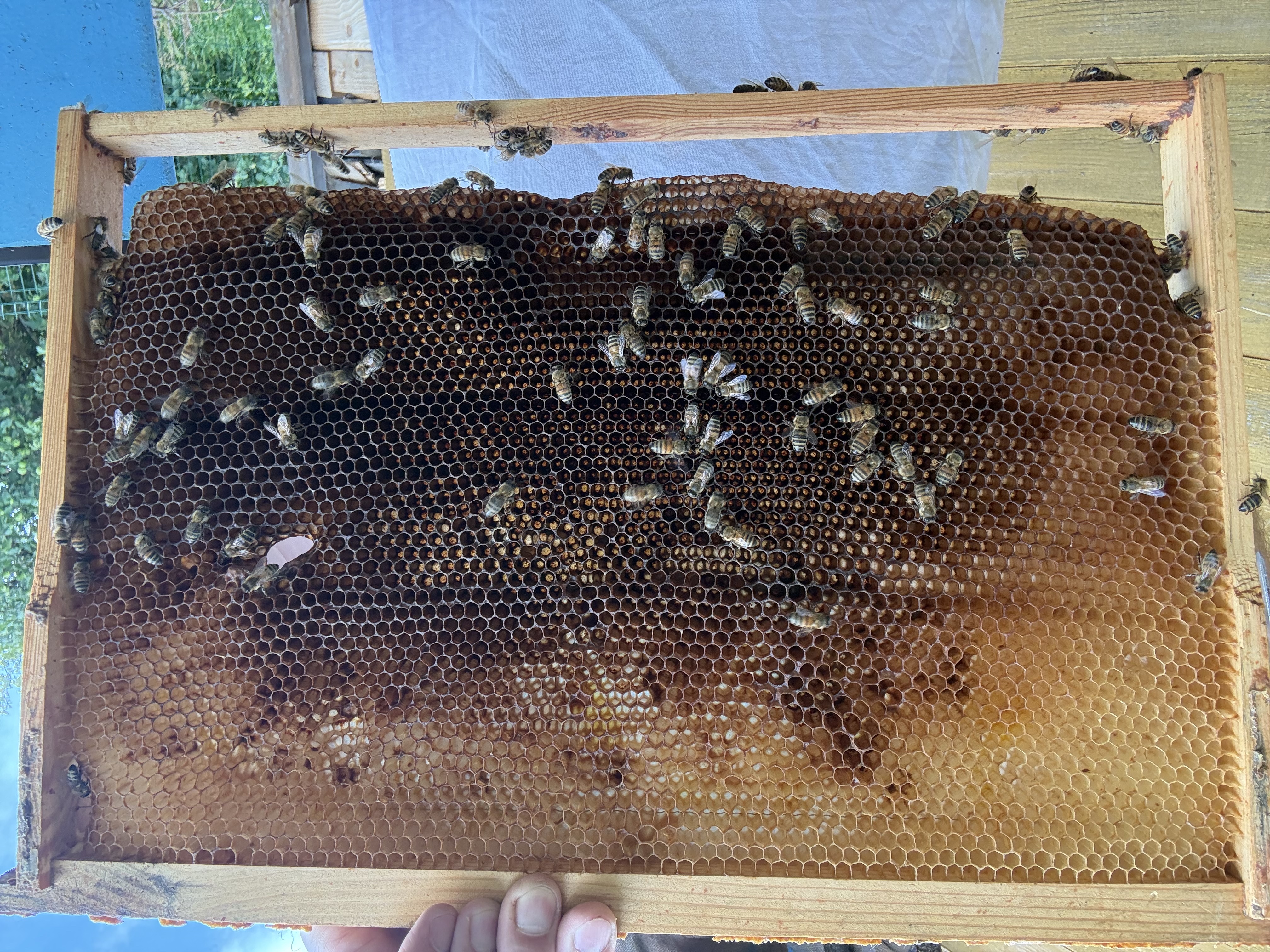
Side B
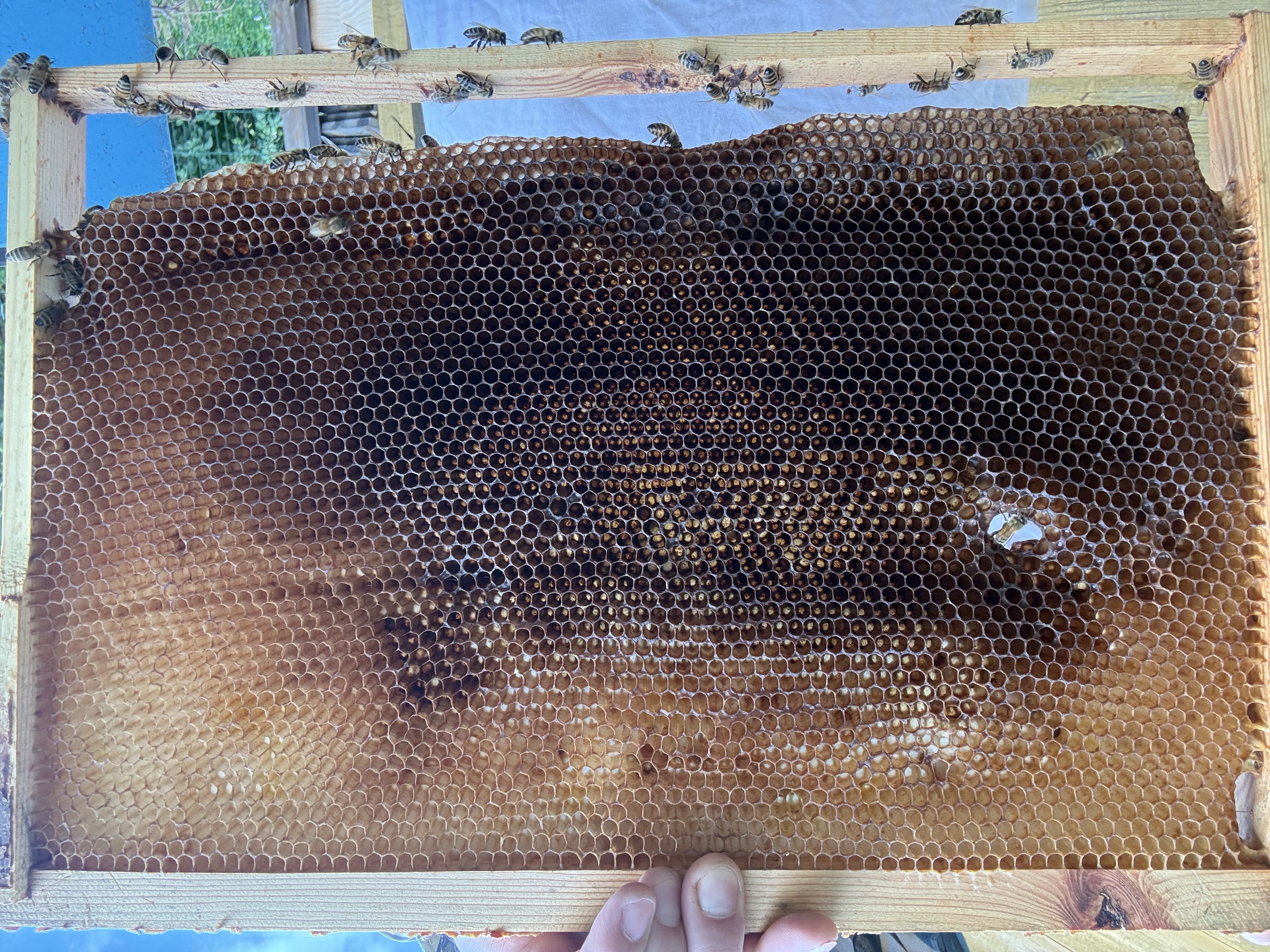
Side A
This side of the frame features a substantial central area of capped brood bordered by a visible band of honey and active bees.
Side B
This side presents a large, dark central area of older comb, likely containing some pollen or scattered brood, with fewer bees and minimal honey.
This frame contains a substantial amount of capped brood on one side, flanked by a band of honey. The reverse side shows older, darker comb with fewer bees and less defined areas of brood or honey.
Frame 4
Side A
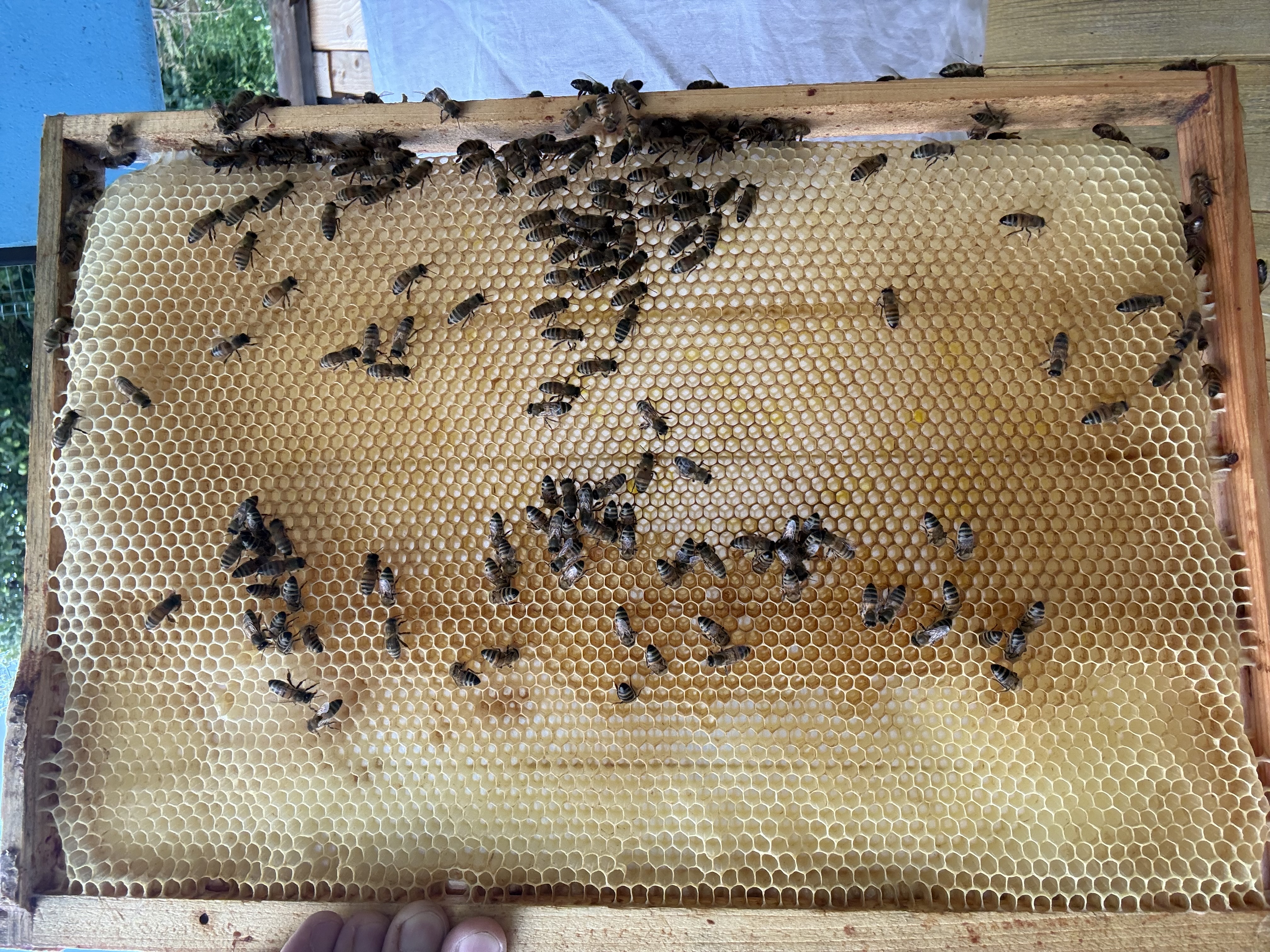
Side B
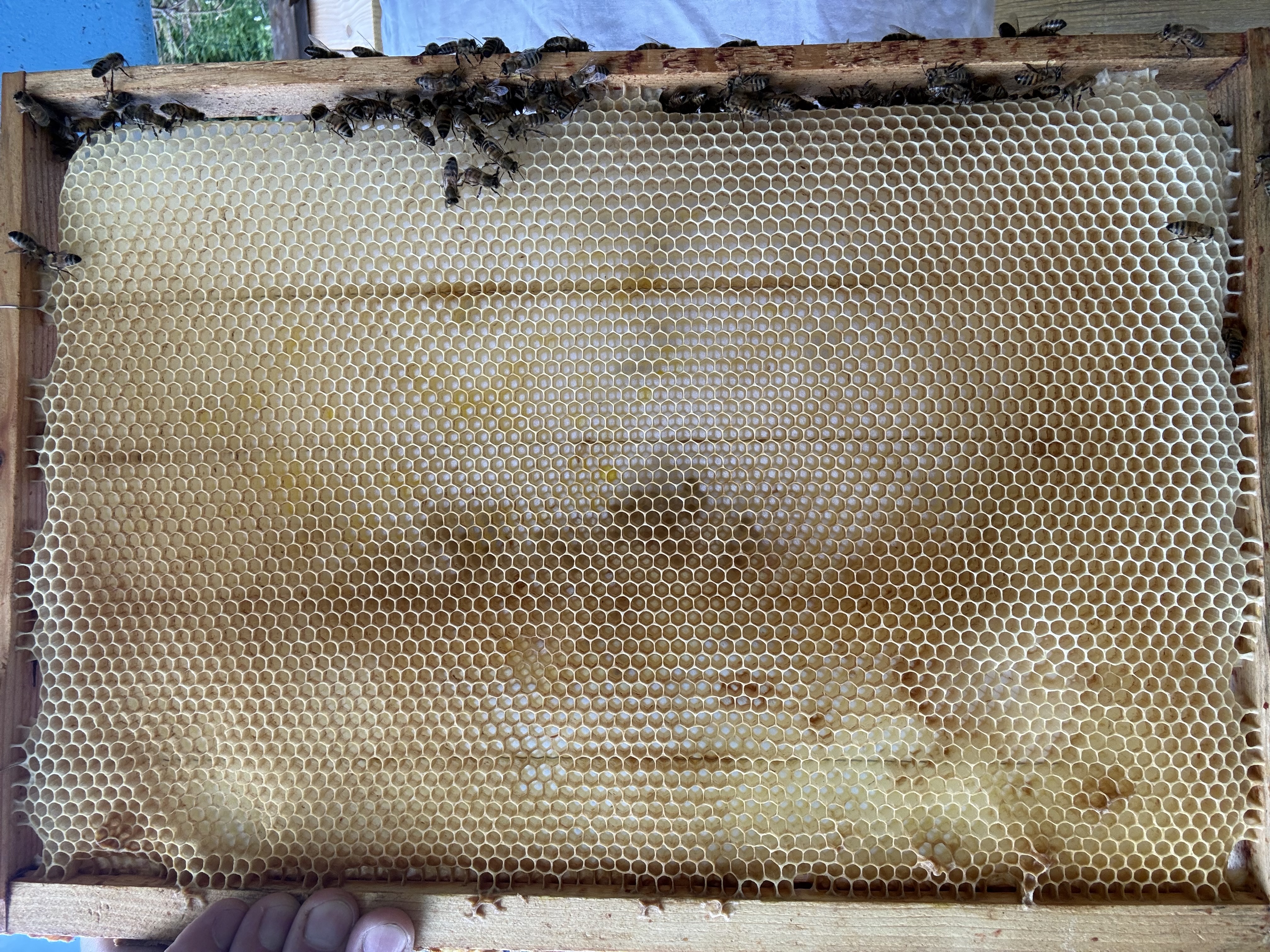
Side A
This side of the frame shows a good population of bees gathered around a central area of what appears to be capped brood, with honey present at the top.
Side B
This side features fewer bees on lighter, drawn comb, showing some patchy areas of potential brood or pollen and visible honey at the edges.
One side of this frame has a good population of bees on a significant central brood area with some surrounding honey. The other side is lighter, with fewer bees, less distinct brood development, and a small amount of honey.
Frame 5
Side A
Side B
Side A
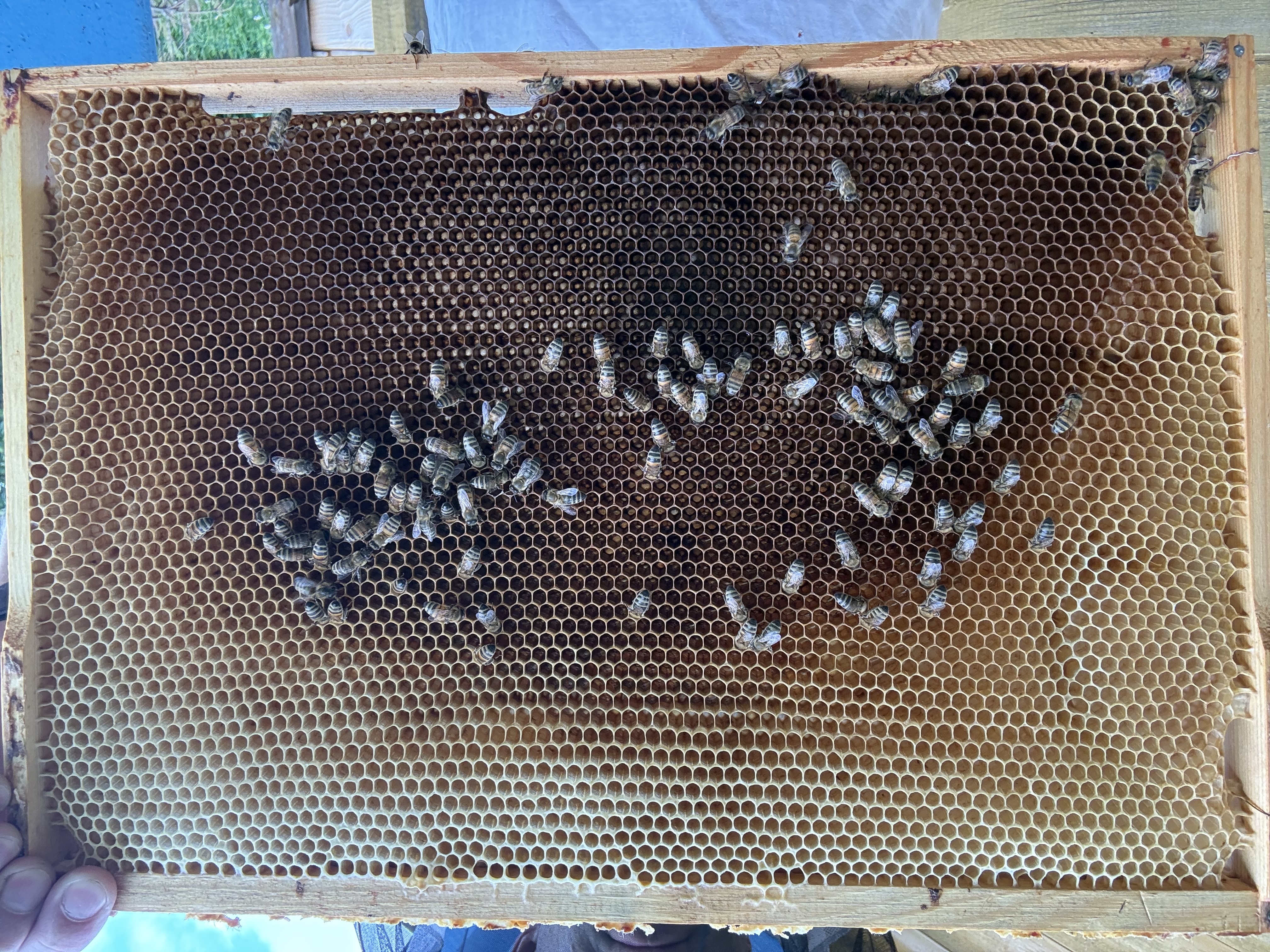
This side of the frame is densely populated with bees, congregating over a central dark comb area, strongly suggesting an active brood nest.
Side B
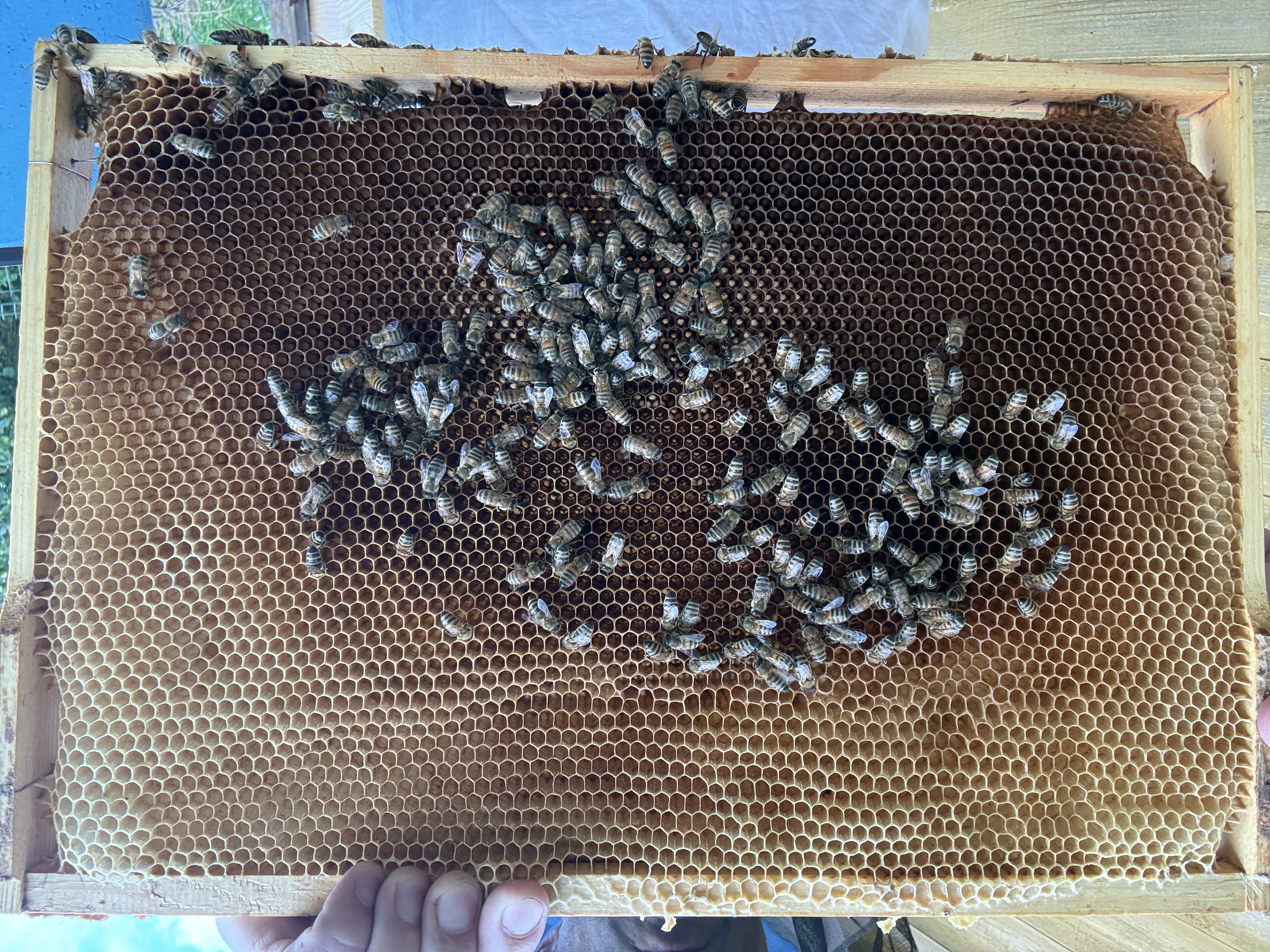
This side shows an exceptionally dense cluster of bees, almost completely covering the central comb, which points to a very robust brood area.
This frame is densely populated with bees on both sides, with the majority clustered over large central areas of dark comb, strongly indicating active brood production. While honey is present, it is largely obscured by the high bee count.
Frame 6
Side A
Side B
Side A
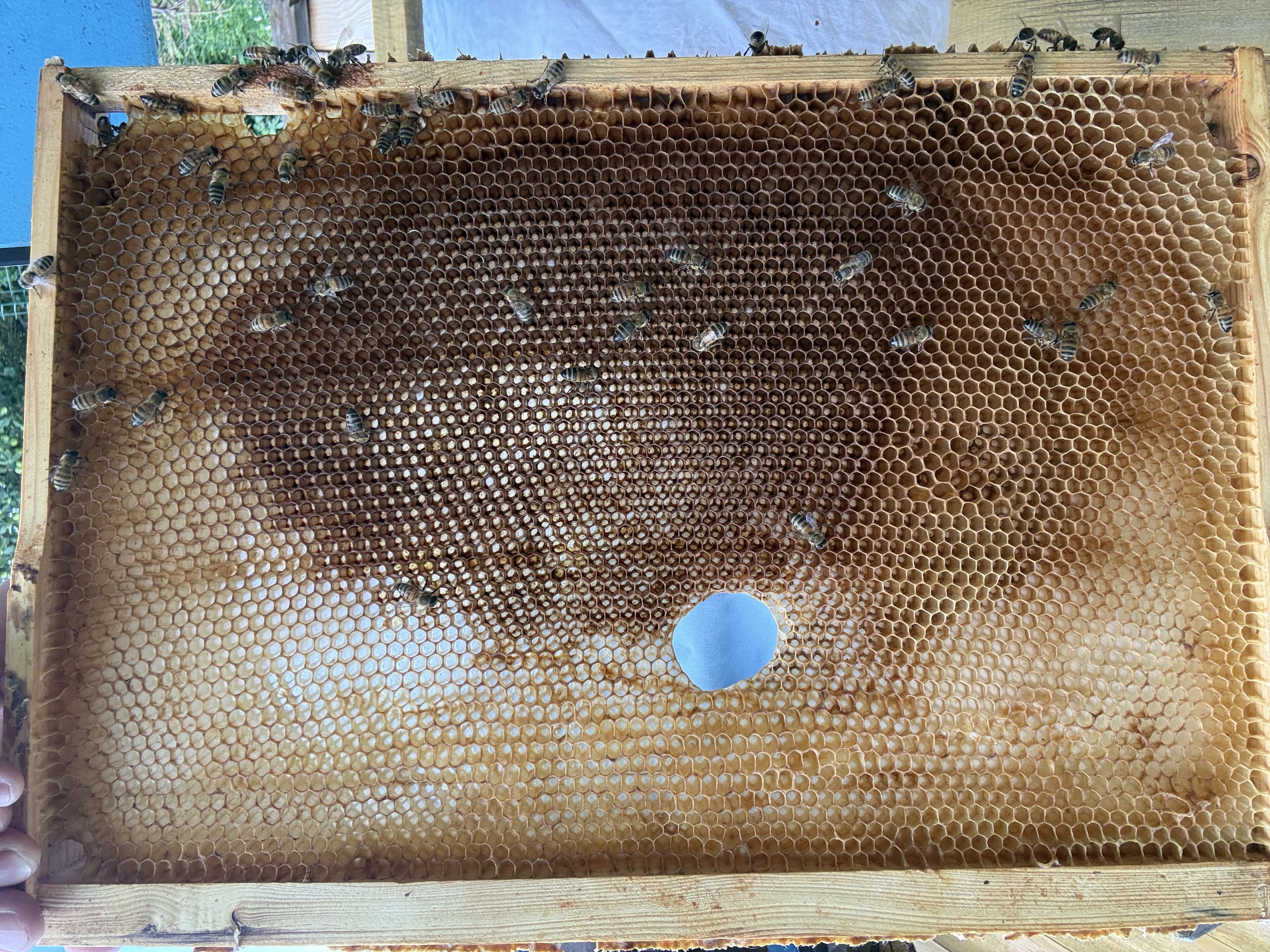
This side of the frame reveals mostly empty, dark drawn comb with a few scattered bees and minimal honey at the top.
Side B
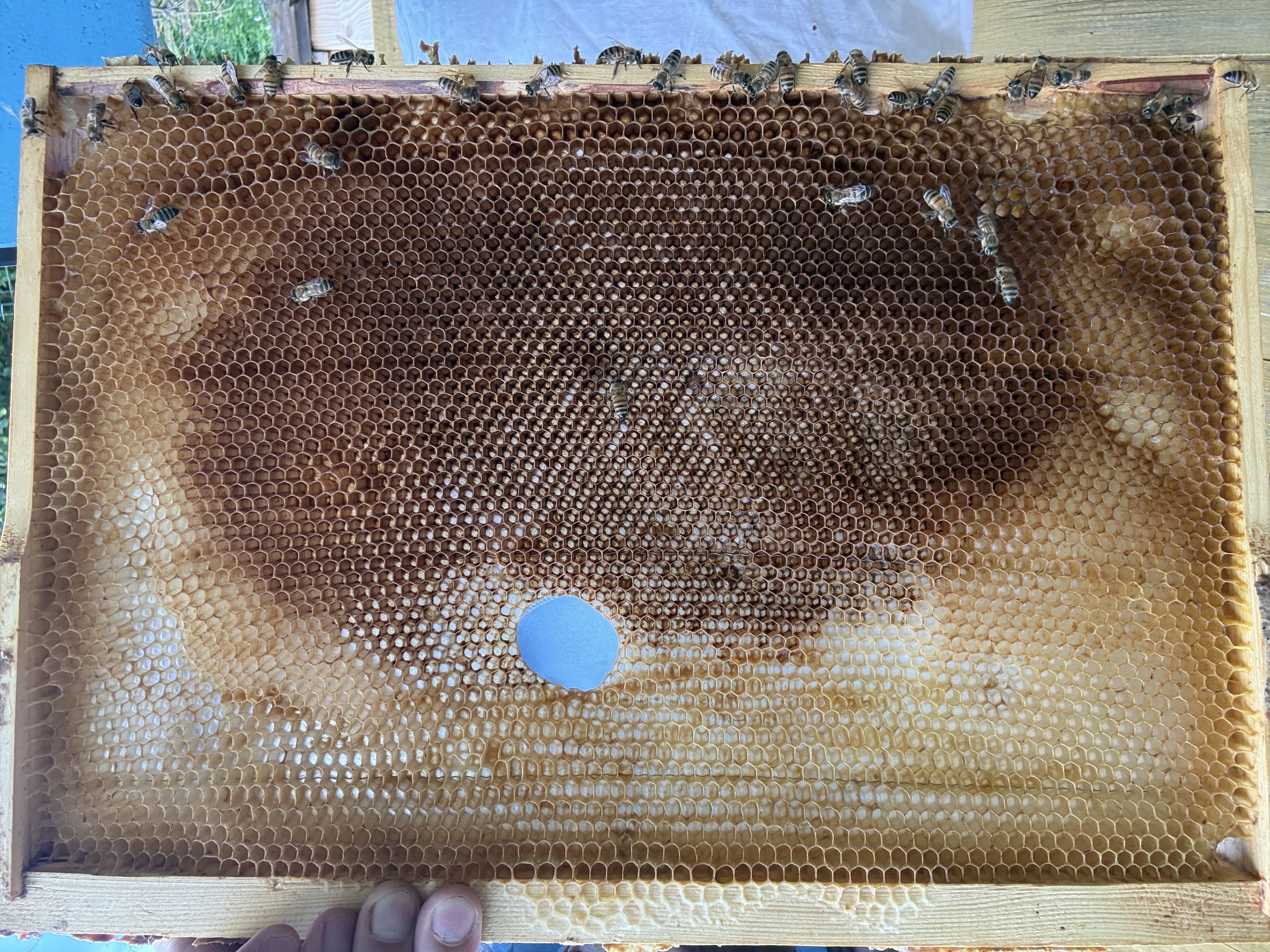
This side features empty, dark drawn comb with very few bees and only a small amount of visible honey.
This frame consists primarily of dark, older comb that appears to be largely empty of brood. Both sides show sparse bee activity and only trace amounts of honey, suggesting it might be an older, less active frame.
Frame 7
Side A
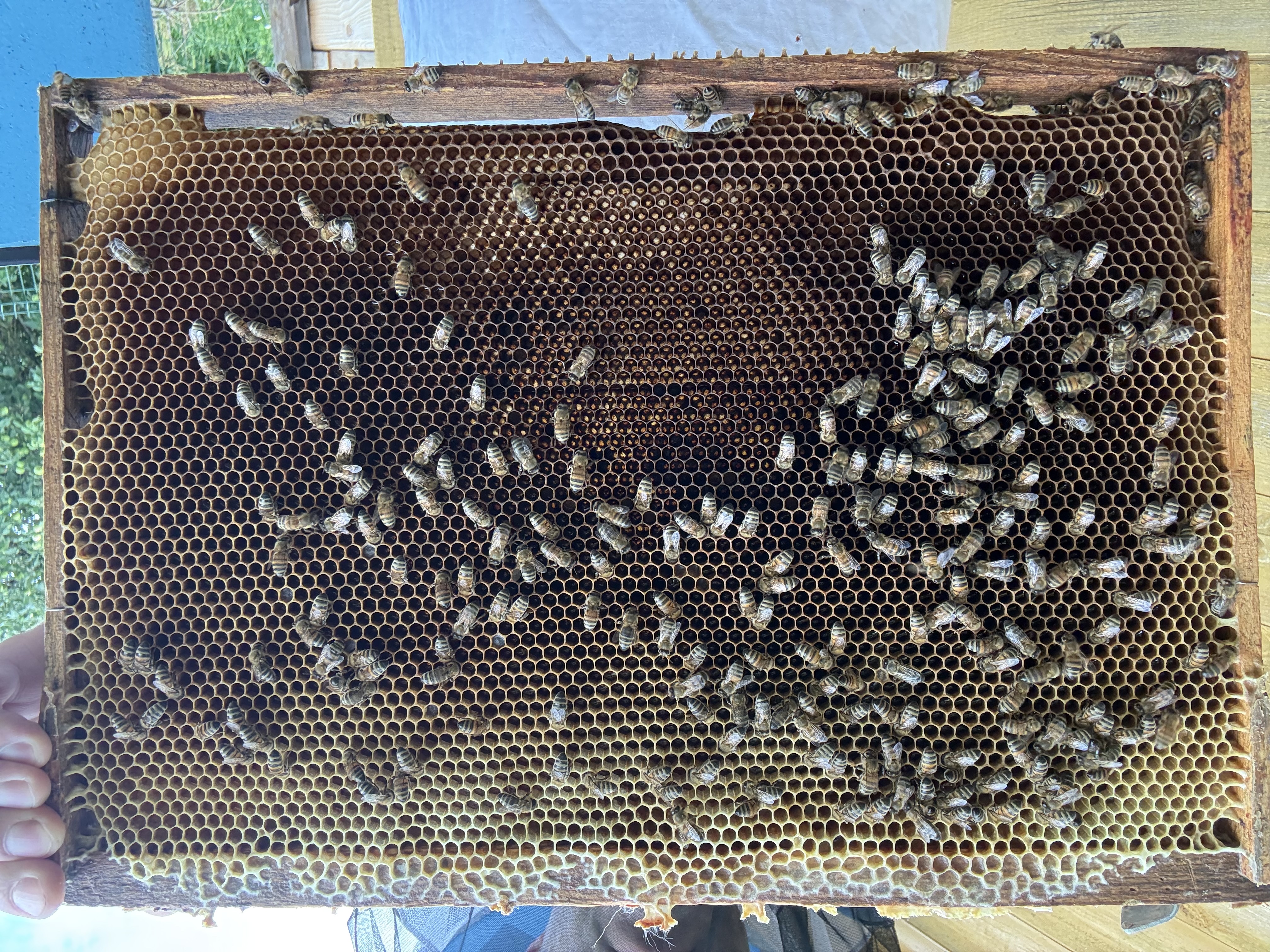
Side B
Side A
This side of the frame is well-covered by bees, with a strong central area of likely brood and a noticeable band of honey across the top.
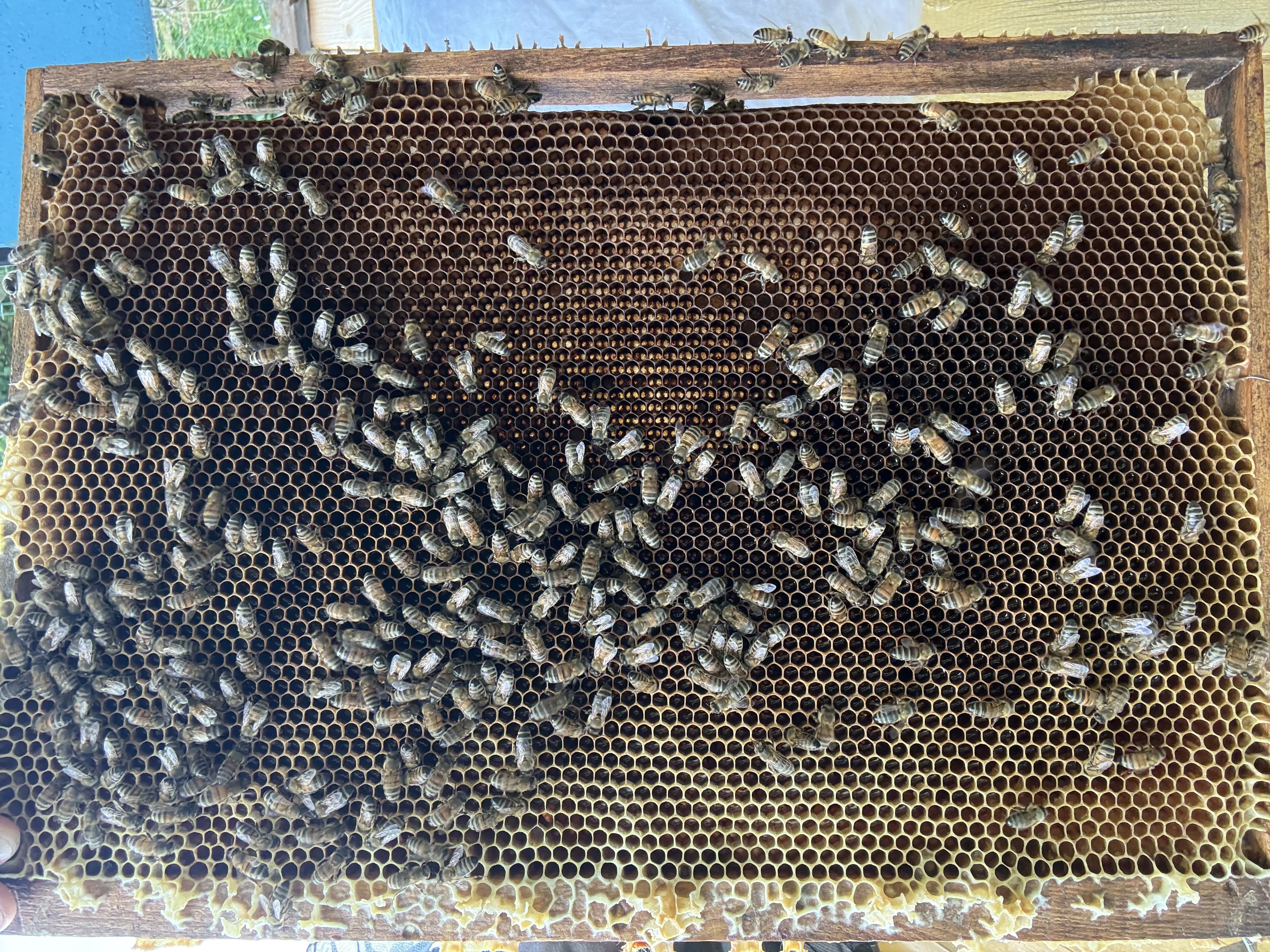
Side B
This side presents an extremely high density of bees, almost completely obscuring the comb and pointing to a highly active brood nest.
This frame is very heavily populated with bees on both sides, forming dense clusters over large central areas. Both sides indicate significant brood activity, though much of the comb is obscured by the high number of bees, with some visible capped honey on one side.
Frame 8
Side A
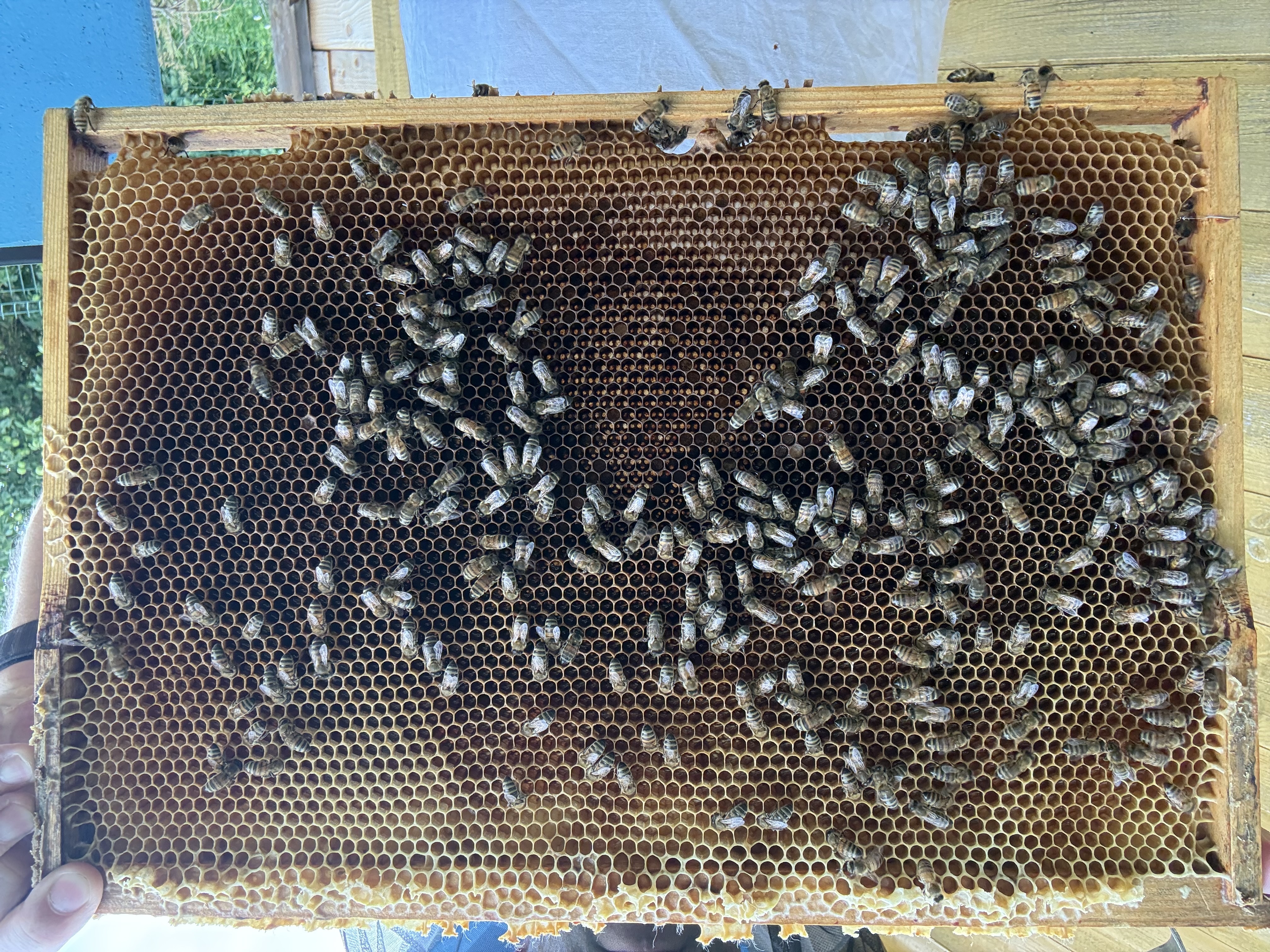
Side B
Side A
This side is densely populated with bees, especially in the central area, indicating an active brood nest with minimal visible honey.
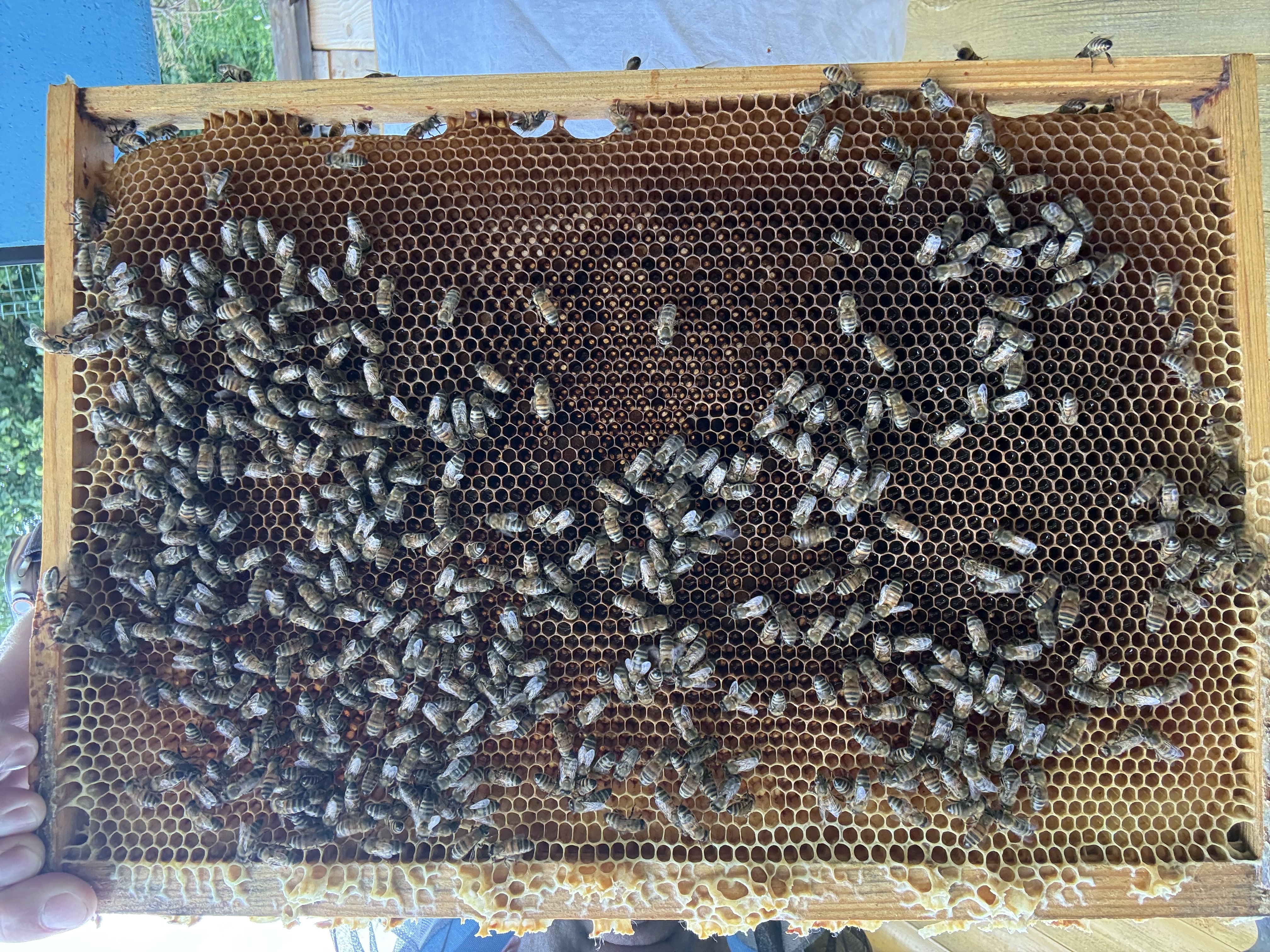
Side B
This side shows an exceptionally high concentration of bees, almost entirely concealing the comb, signifying a very strong and active brood area.
This frame is overwhelmingly populated by bees on both sides, with an exceptionally high density over the central comb areas. This indicates a very strong and active brood nest, with little honey visible due to the number of bees.
Frame 9
Side A
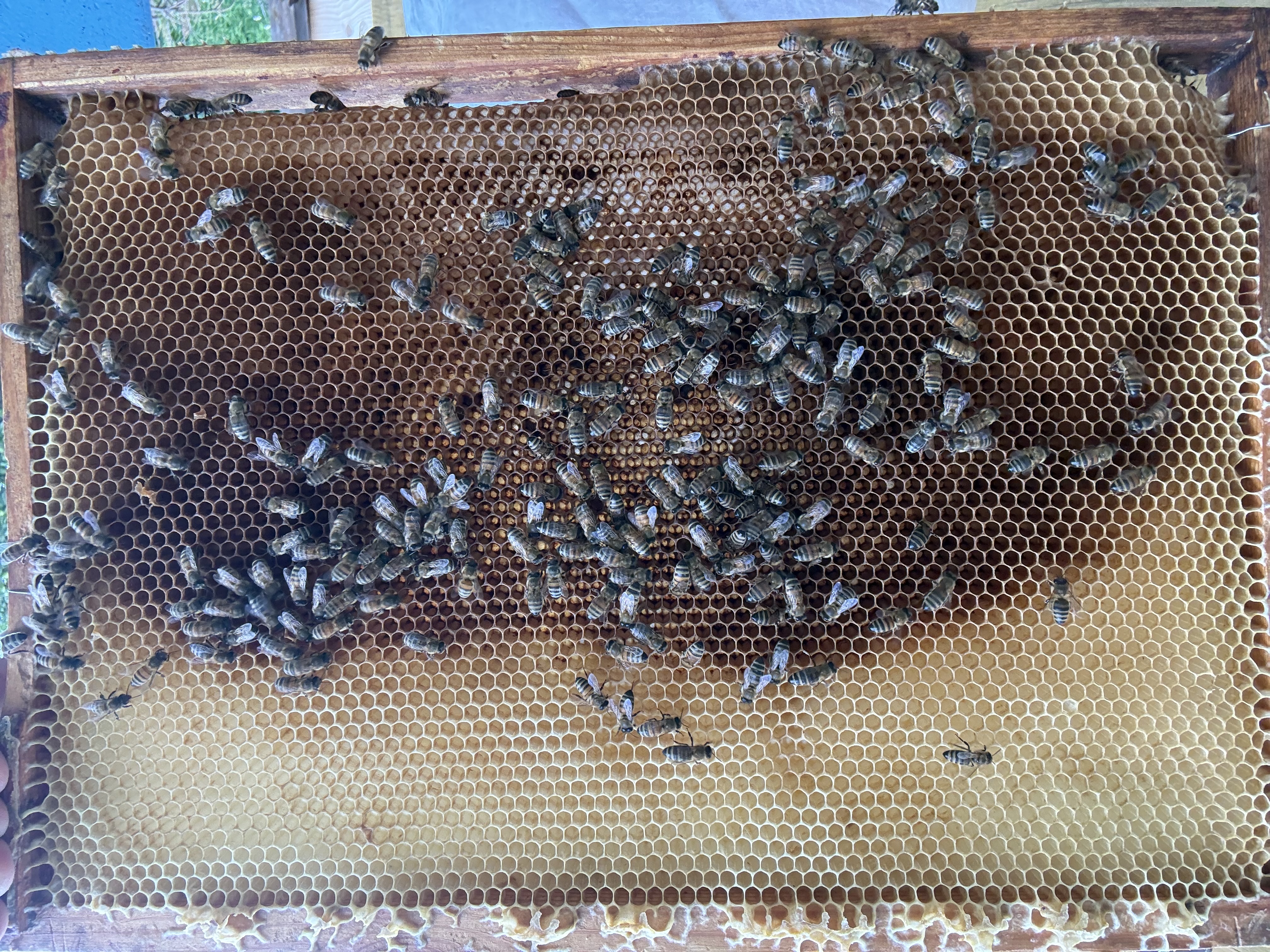
Side B
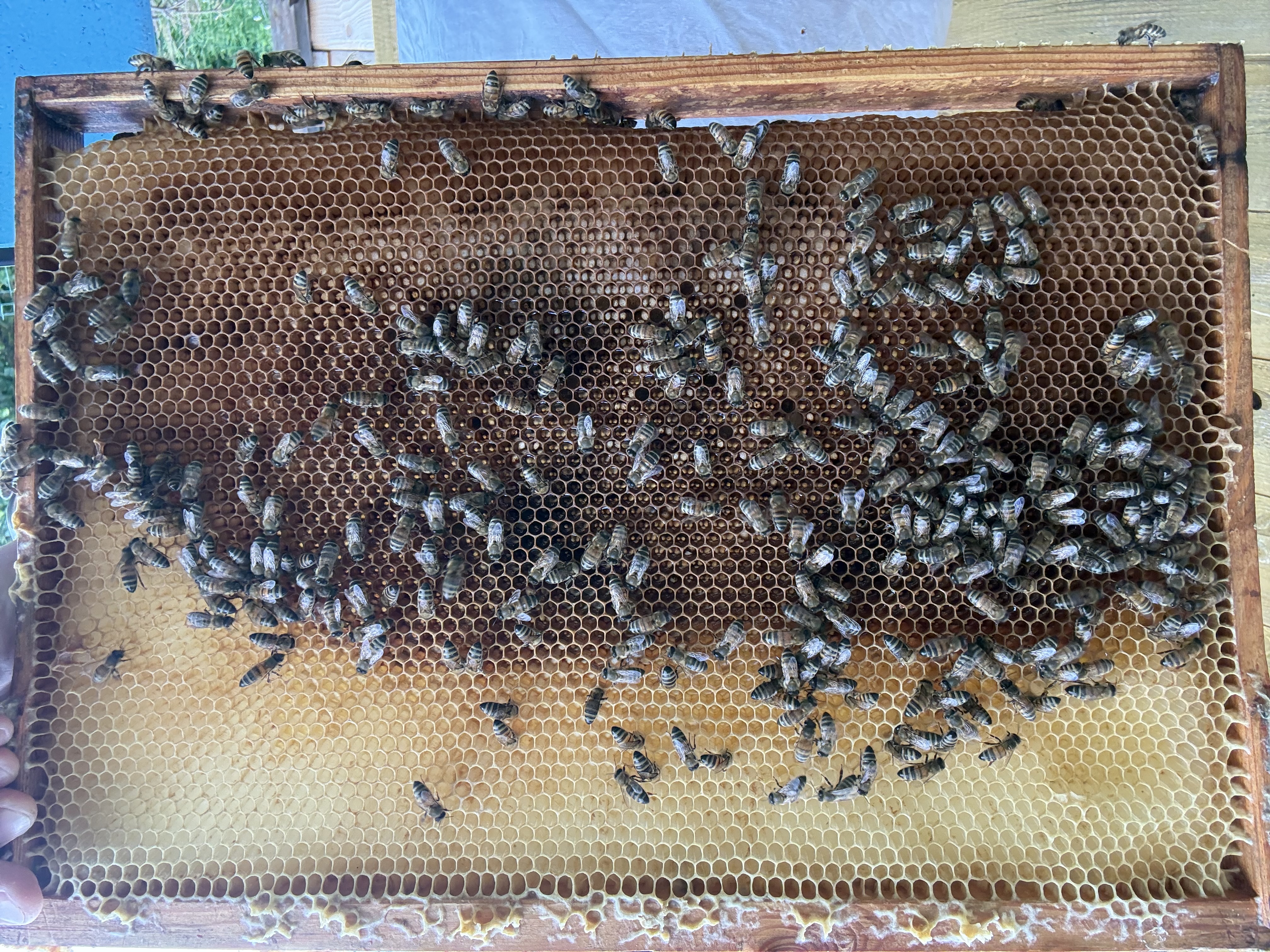
Side A
This side of the frame shows a significant population of bees clustered around a central brood area, with some capped honey at the top.
Side B
The reverse side of the frame also displays a large number of bees covering a central region of brood, with a band of capped honey above.
This frame is well-populated with bees on both sides, demonstrating a healthy brood pattern in the center and a good amount of capped honey at the top. The colony appears to be active in both brood rearing and honey storage on this frame.
Frame 10
Side A
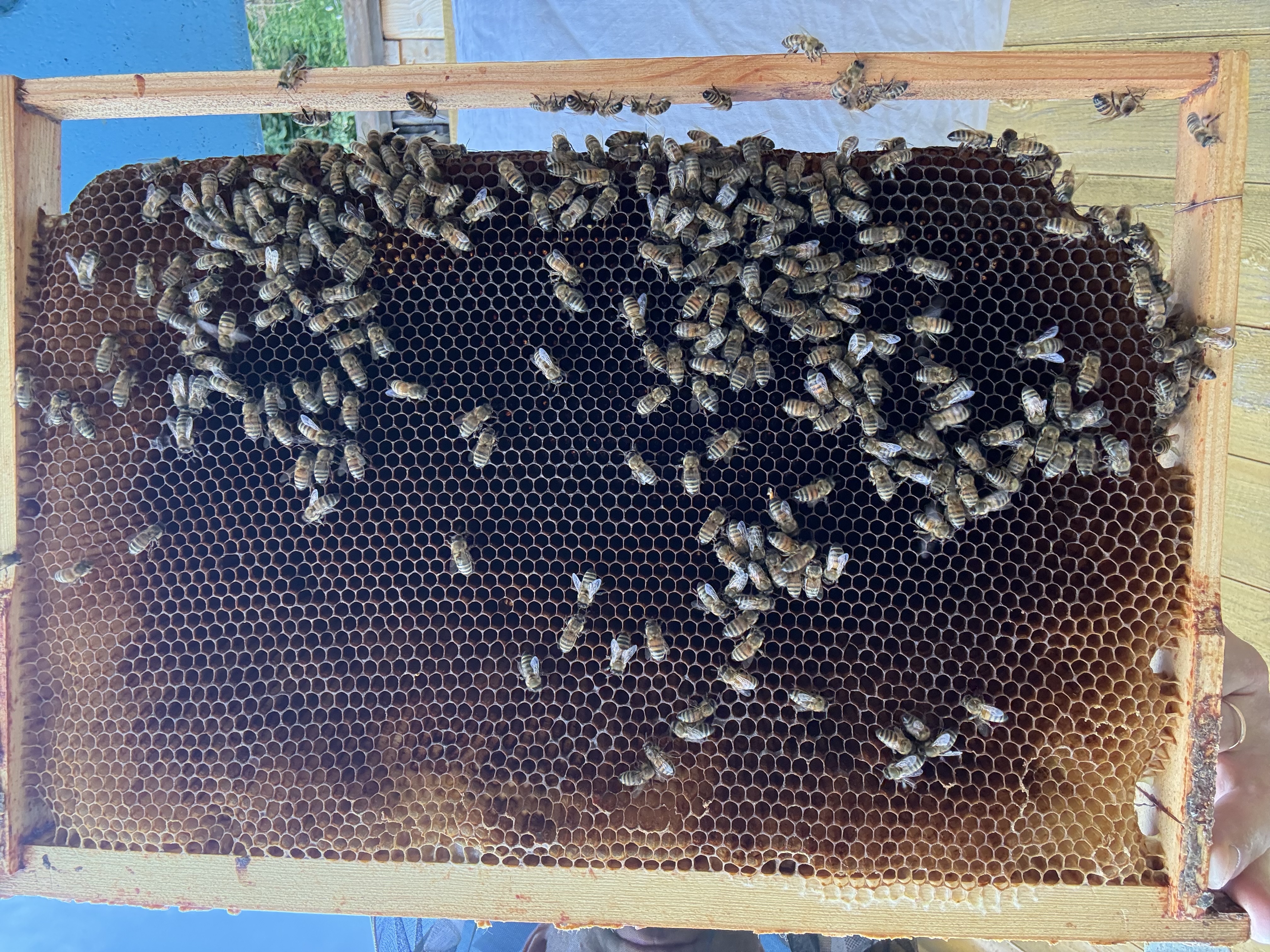
Side B
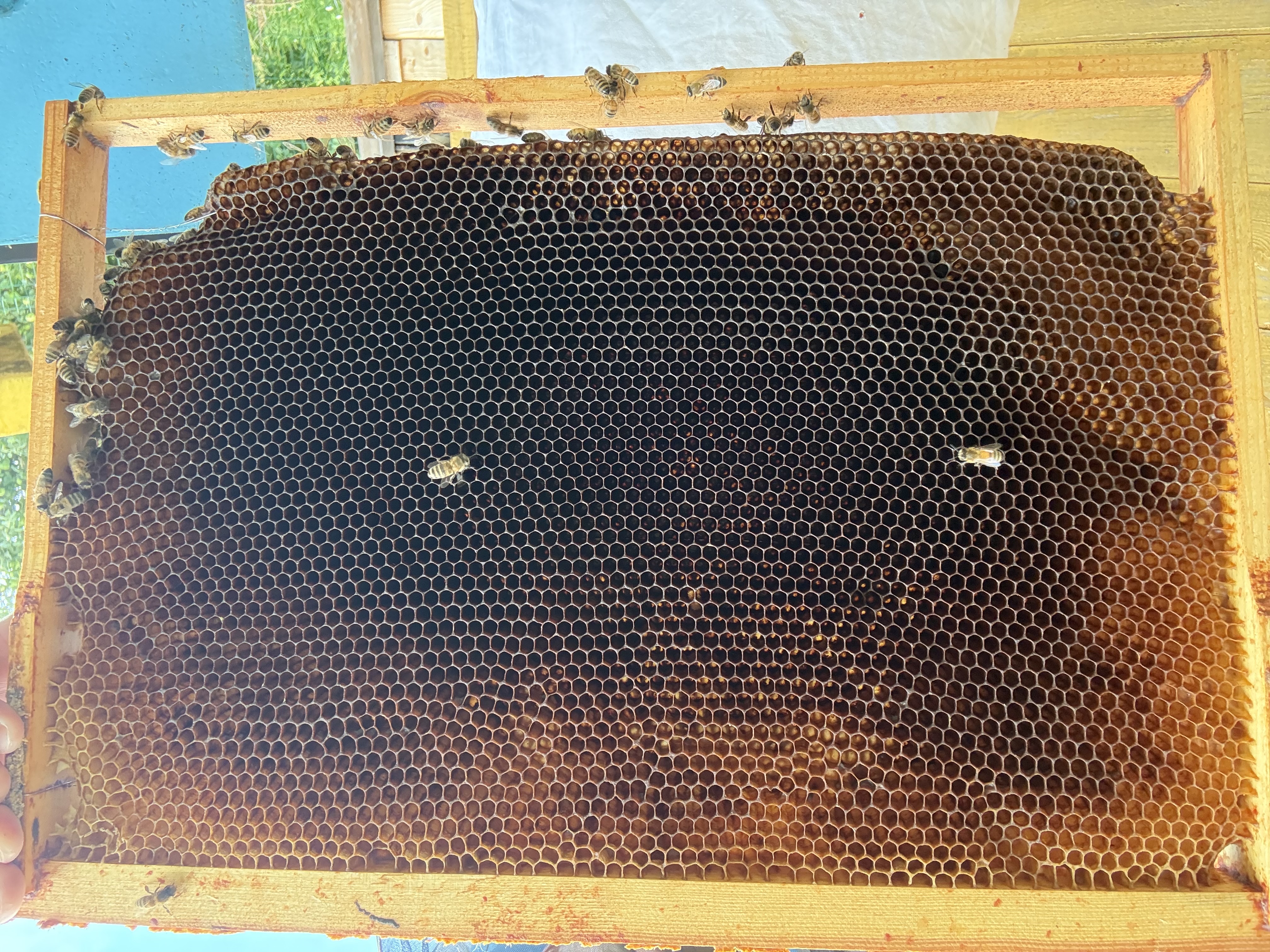
Side A
This frame side features a dense cluster of bees on a large area of predominantly capped brood, with minimal honey stores visible at the very top.
Side B
This side is largely empty of bees, revealing mostly dark, empty comb with a few scattered bees.
One side of this frame is heavily covered with bees over a dense area of capped brood, indicating active development. However, the other side is largely empty of bees and comb contents, suggesting either recent emergence or an area not currently in use.
Frame 11
Side A
Side B
Side A
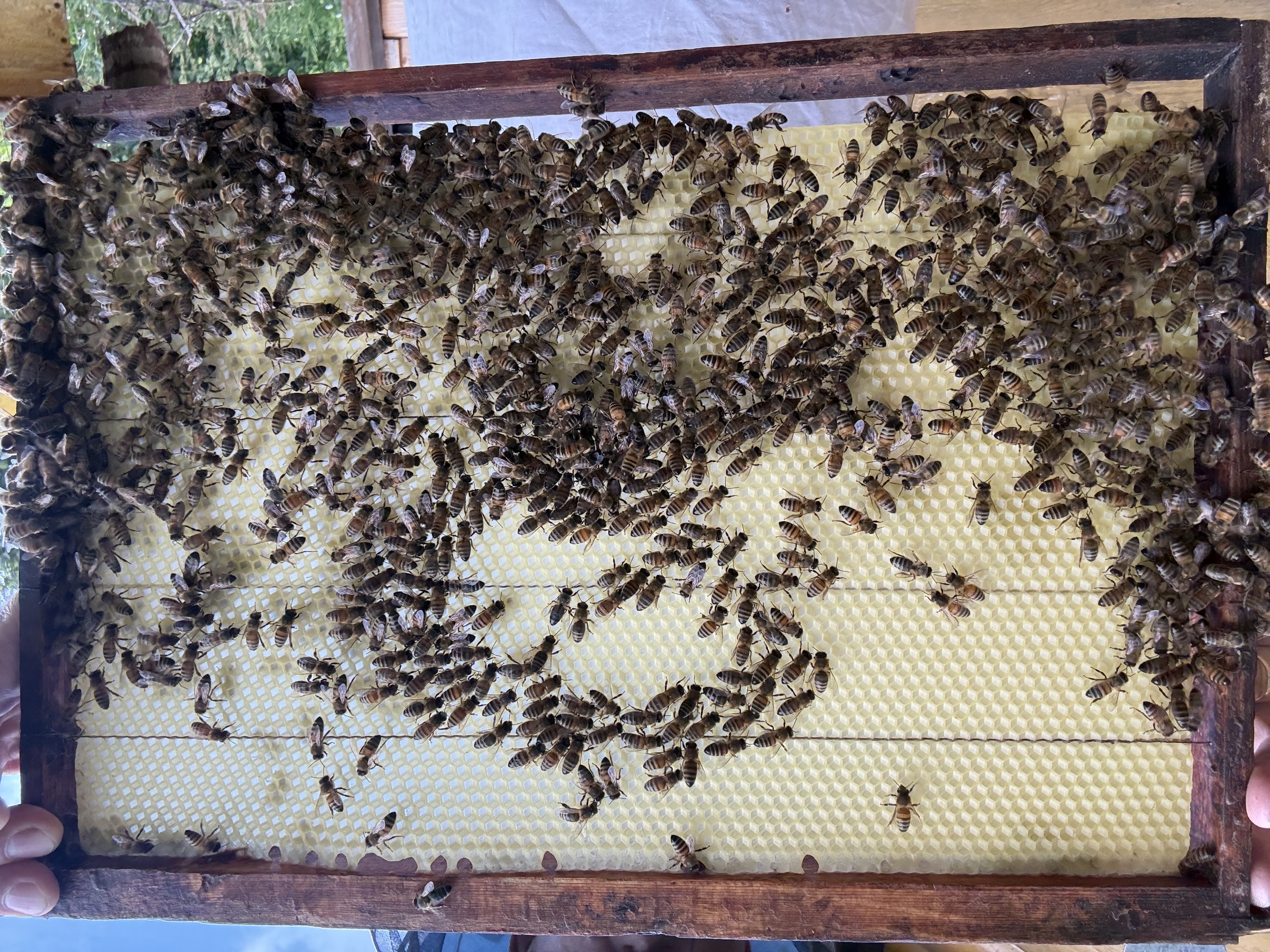
This frame displays numerous bees actively working on a new, undrawn yellow foundation.
Side B
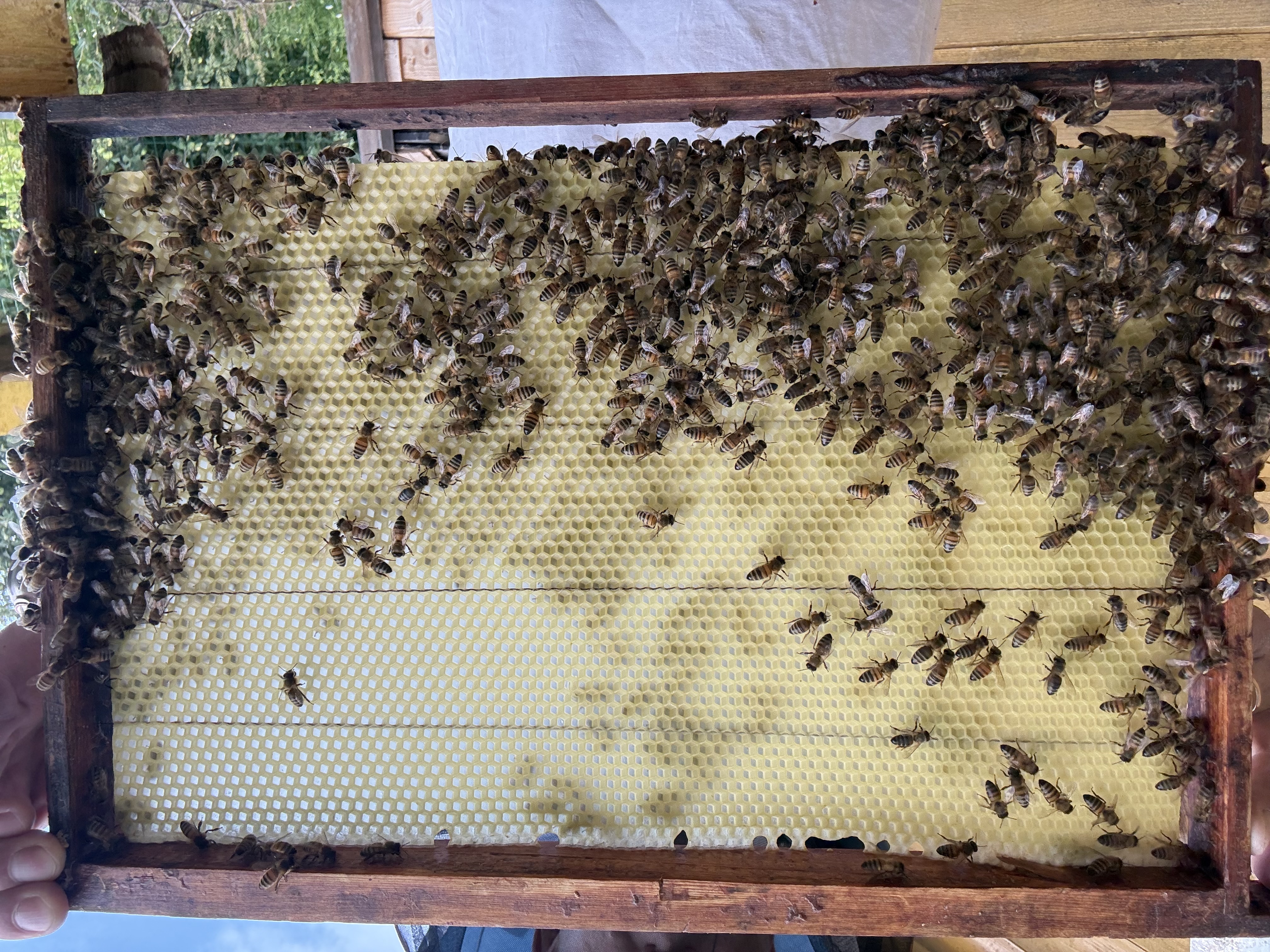
The opposite side of the frame also shows a high density of bees beginning to draw comb on the yellow foundation.
Both sides of this frame are covered with numerous bees actively drawing new comb on a yellow foundation. There is no visible brood or honey as the comb is still under construction.
Frame 12
Side A
Side B
Side A
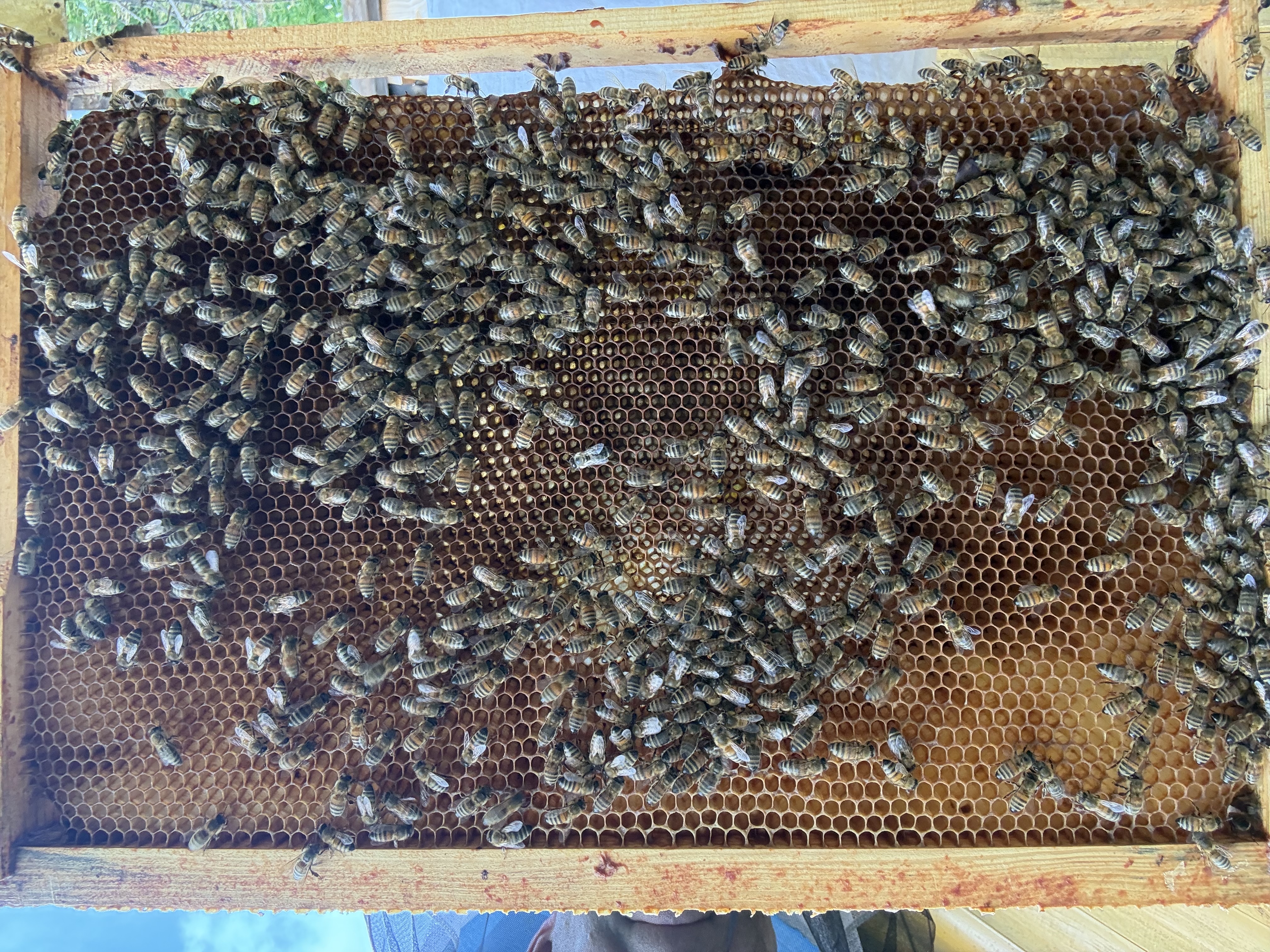
A significant population of bees covers a central area of drawn comb, likely containing brood, with some capped honey around the perimeter.
Side B
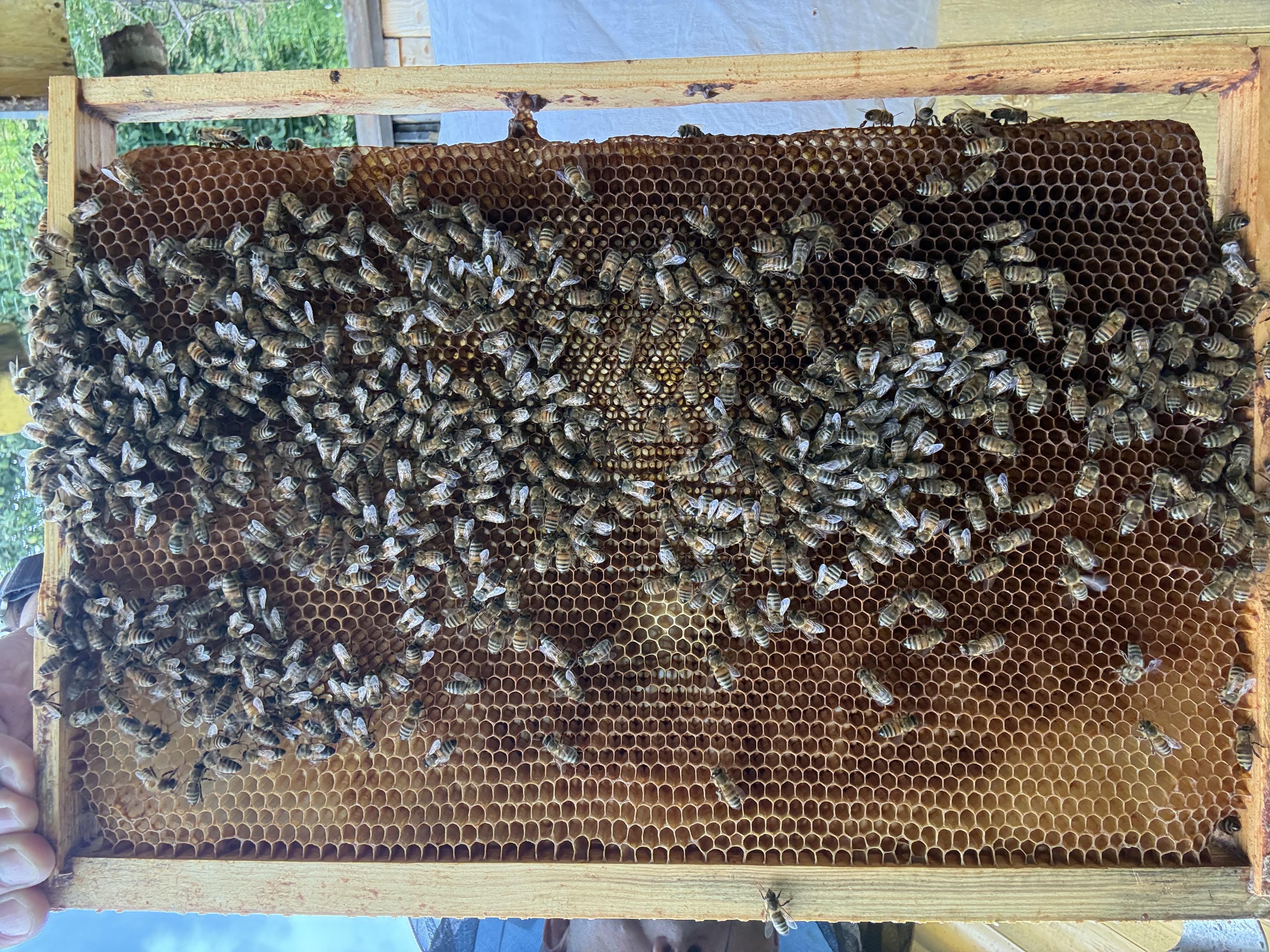
This side also shows a substantial number of bees working on a central brood area, with noticeable capped honey toward the top of the frame.
This frame is well-attended by bees on both sides, featuring prominent central areas of brood. A healthy amount of capped honey is also present towards the top of the comb.
Frame 13
Side A
Side B
Side A
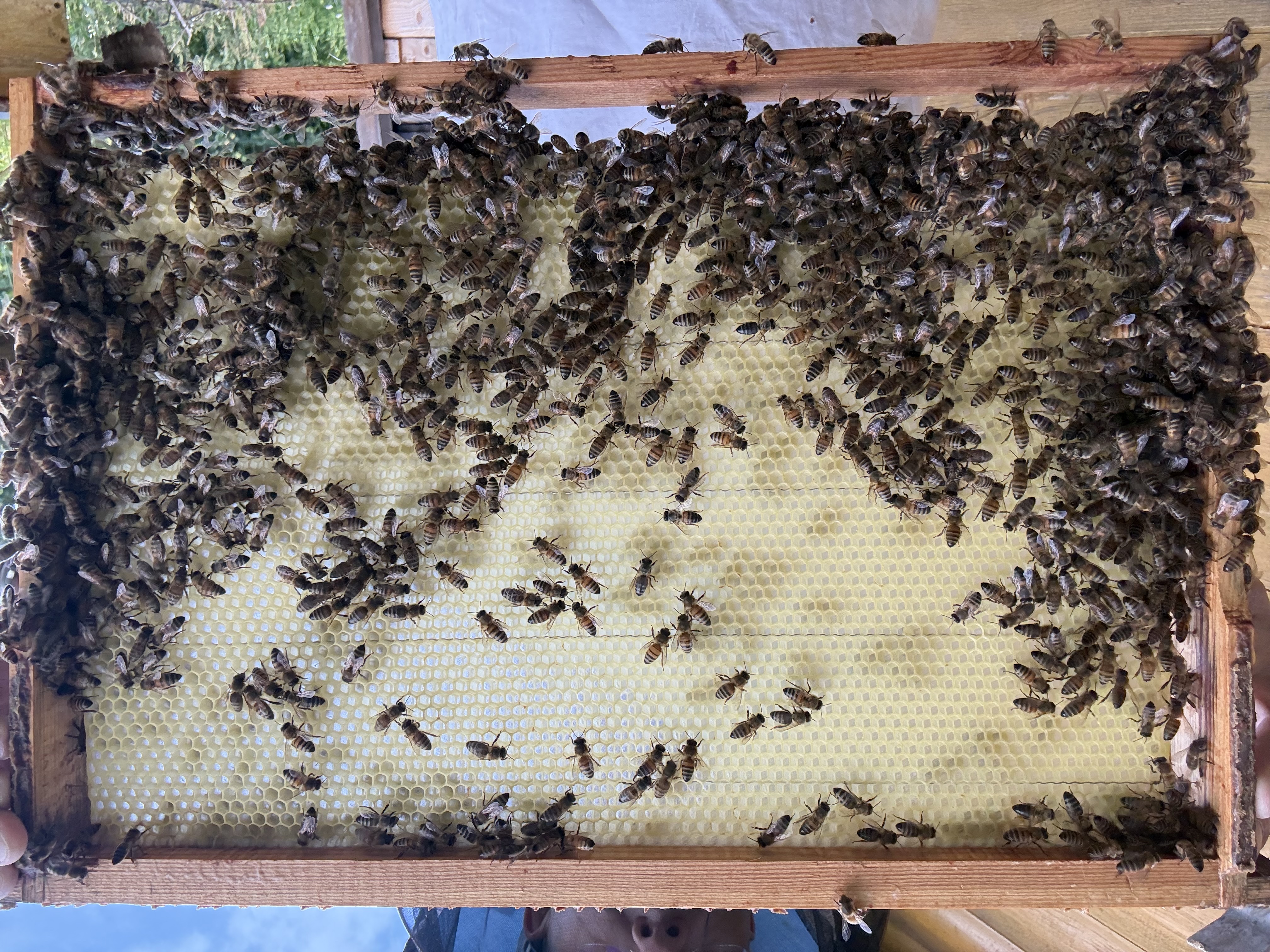
This frame is populated by many bees engaged in building comb on a fresh yellow foundation.
Side B
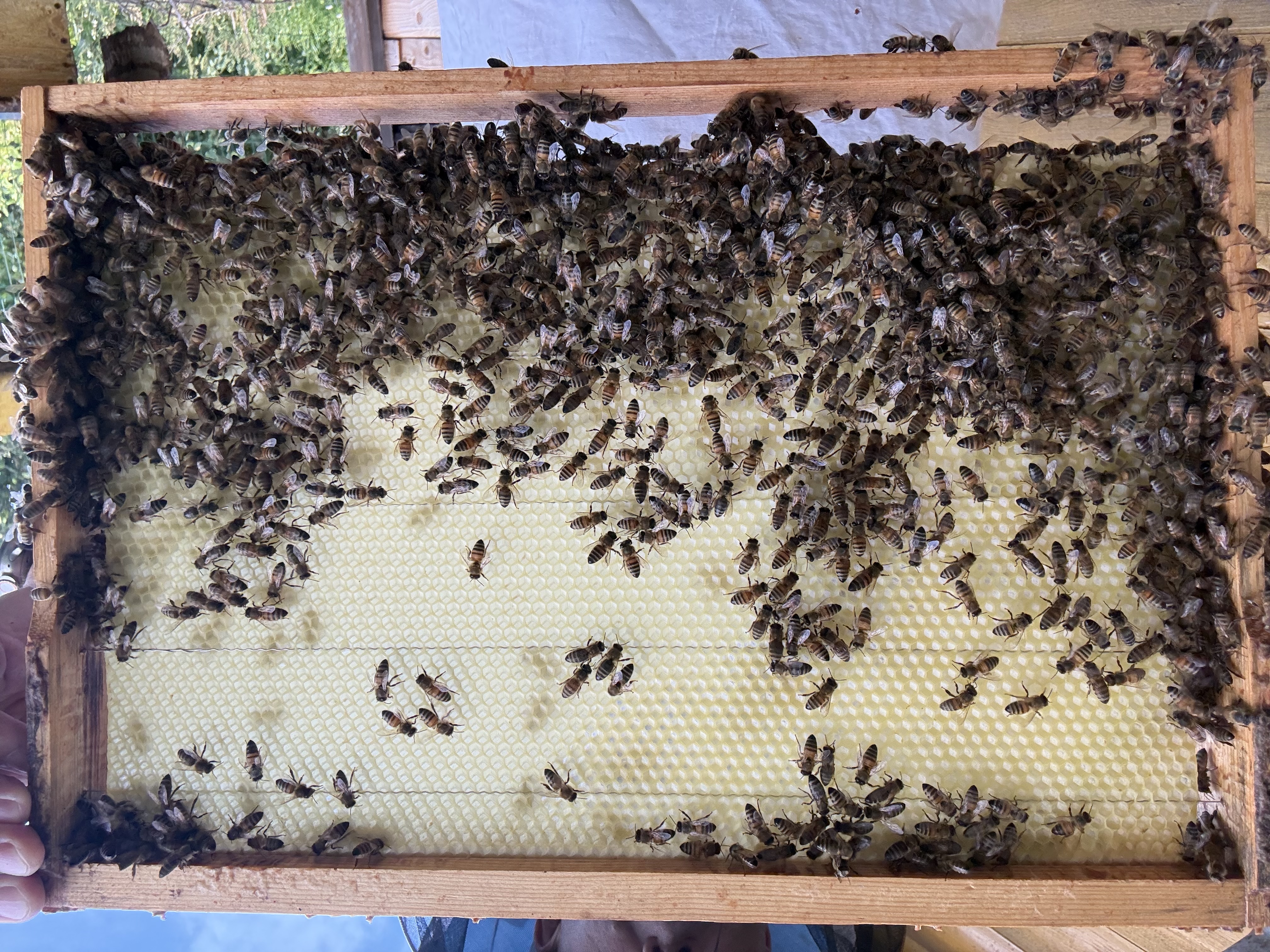
The reverse side of the frame also shows numerous bees covering the yellow foundation, actively drawing new comb.
Bees are densely populating both sides of this frame, actively working to build comb on the new yellow foundation. Currently, there is no visible brood or honey stored on this frame.
Frame 14
Side A
Side B
Side A
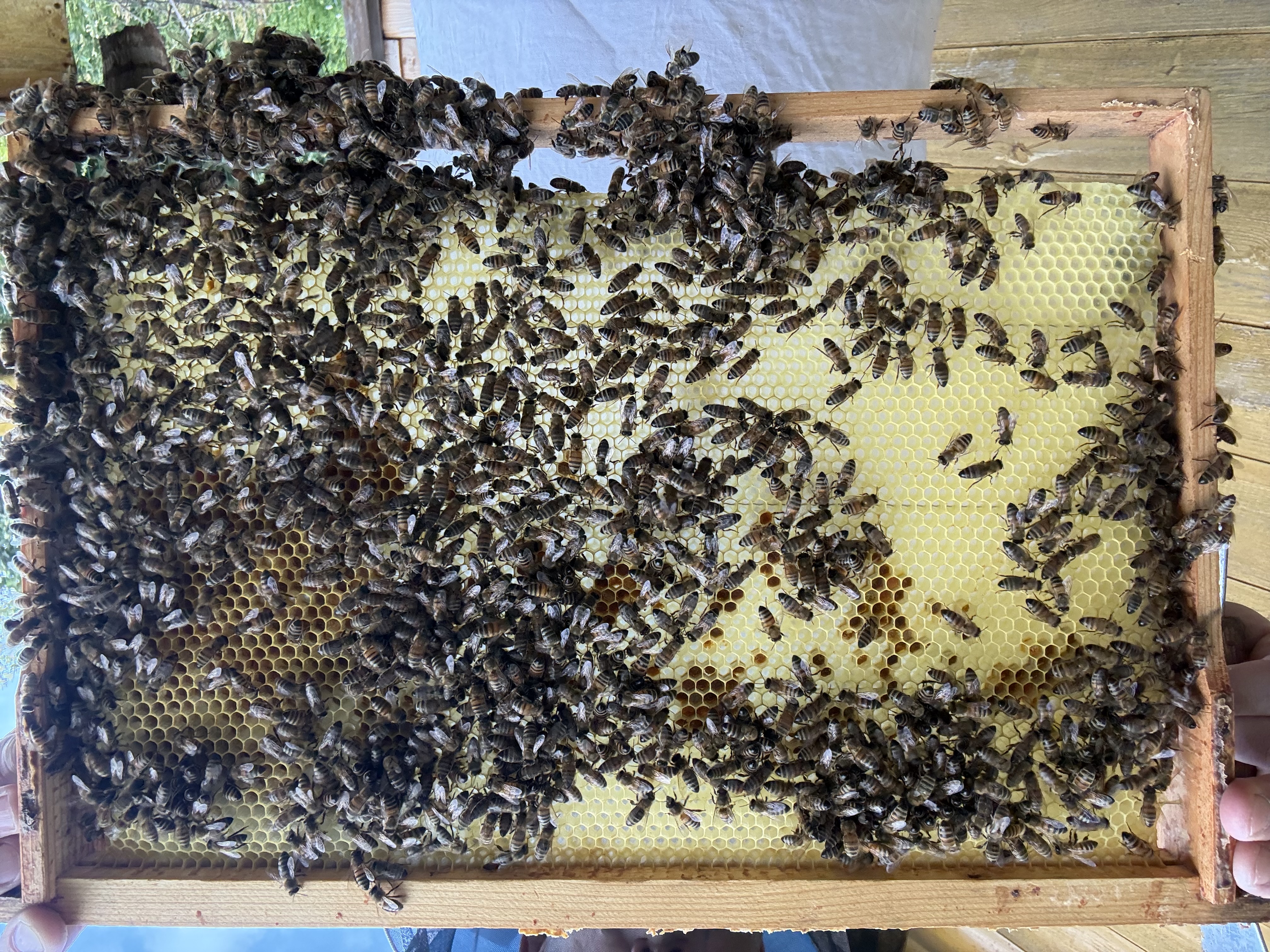
Bees are spread across partially drawn comb, with a mix of new wax and some darker areas.
Side B
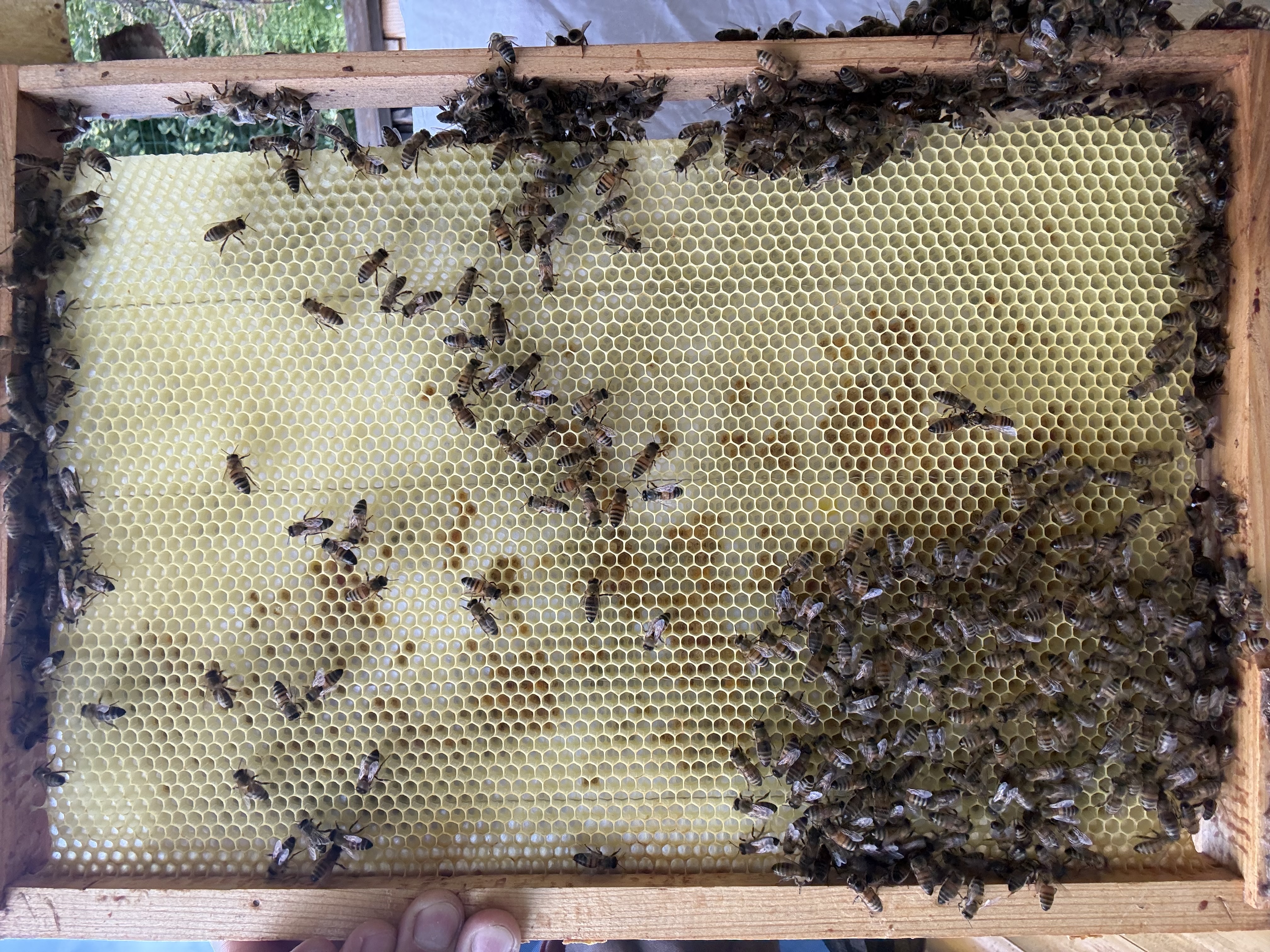
This side shows fewer bees, with a significant portion of the comb still undrawn or sparsely filled.
This frame shows bees in the process of drawing comb on both sides, with one side having more activity and partially filled cells. Overall, there is minimal brood and honey, indicating a newer or less active area of the hive.
Frame 15
Side A
Side B
Side A
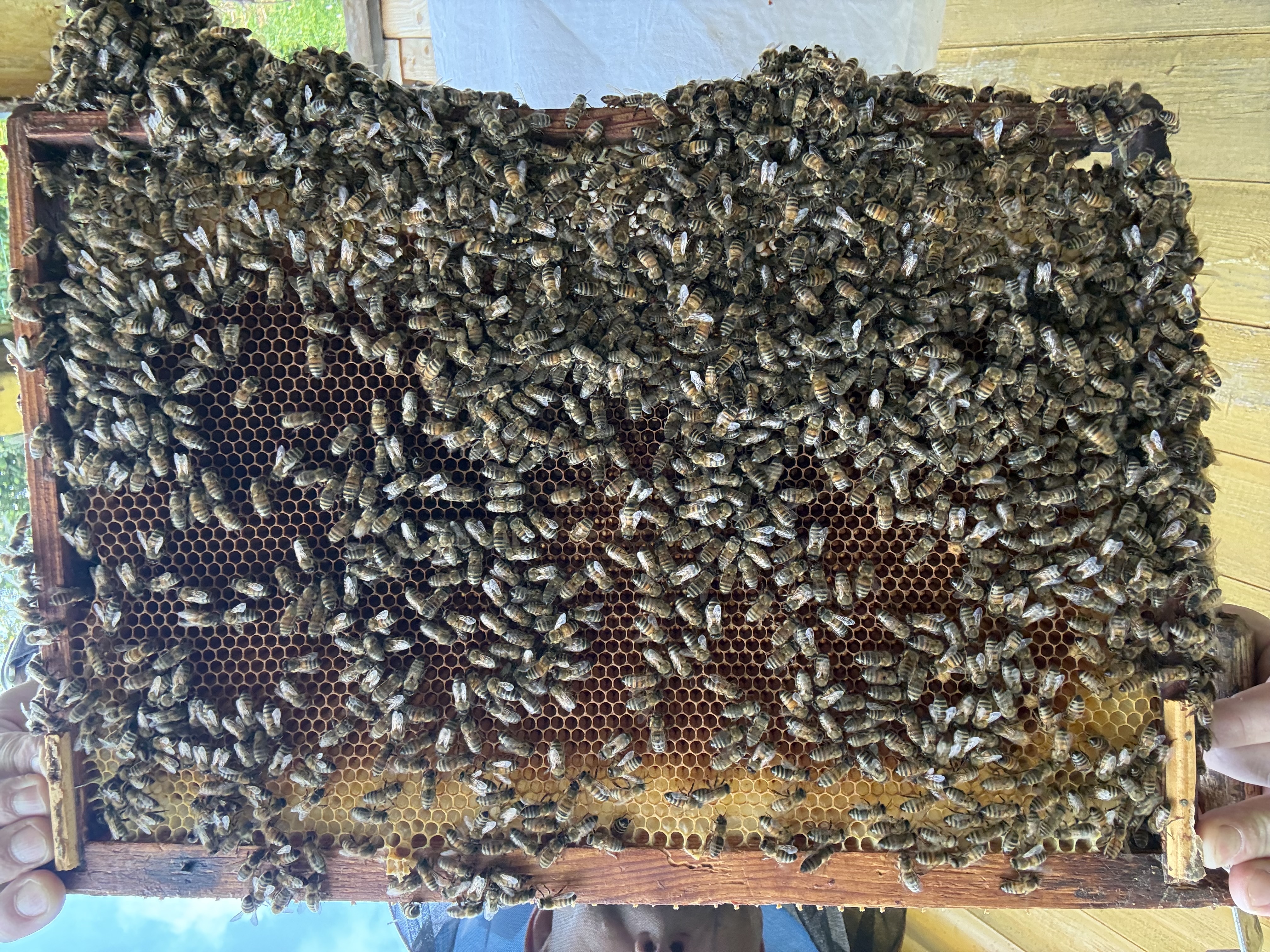
This frame is densely packed with bees covering a large, central area that likely contains brood, bordered by capped honey.
Side B
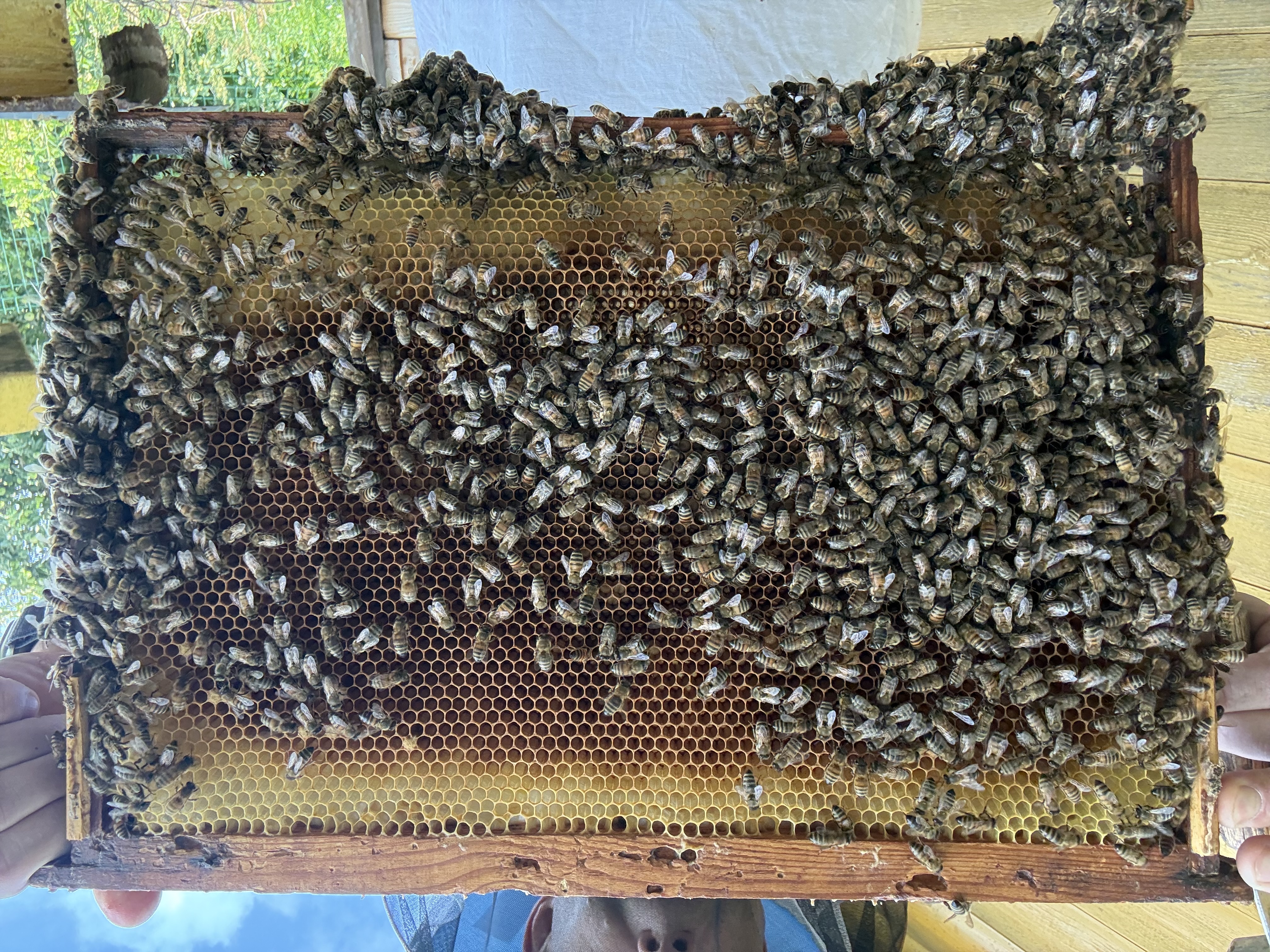
The opposite side of the frame is also teeming with bees, obscuring a central brood pattern and showing some capped honey.
Both sides of this frame are densely packed with bees, indicating a strong presence and probable extensive brood development in the central area. There is also a good visible amount of capped honey along the upper edges.
Frame 16
Side A
Side B
Side A
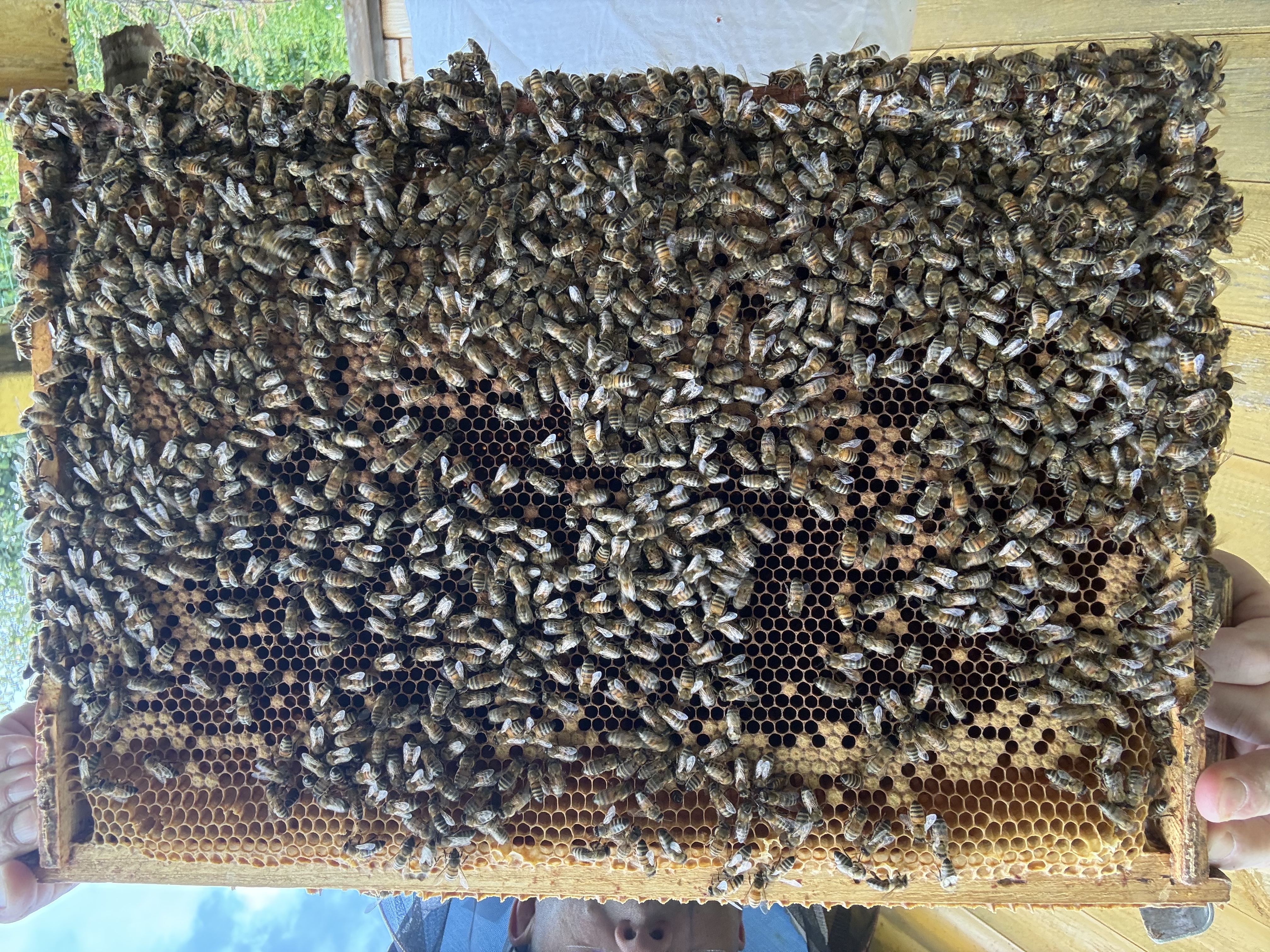
This frame is completely blanketed by a dense population of bees, suggesting a robust colony presence over a large brood area.
Side B
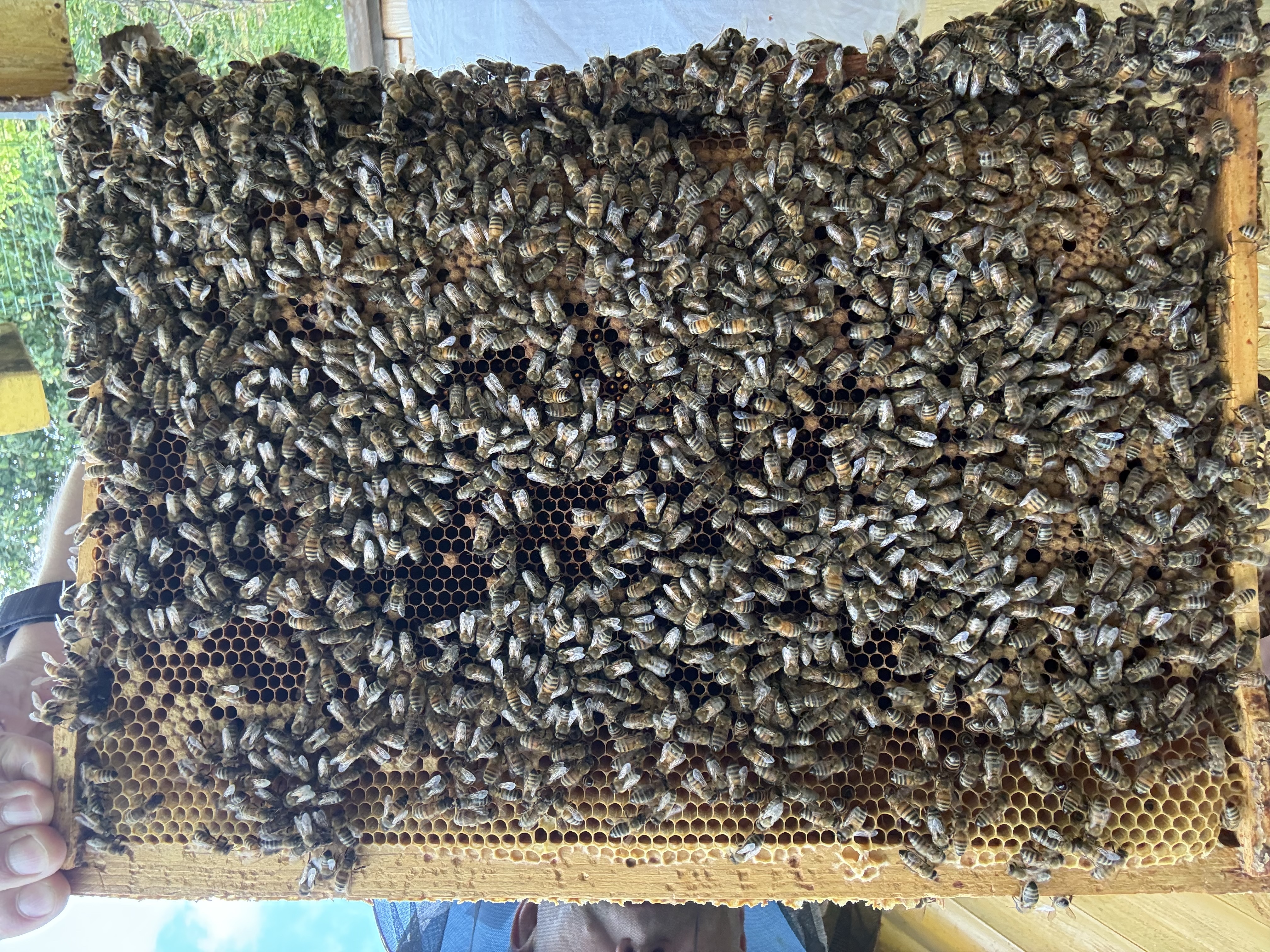
The reverse side is equally covered by a very high number of bees, indicating a strong cluster likely protecting extensive brood.
This frame is exceptionally densely covered with bees on both sides, making it difficult to assess the comb contents directly. The high bee population strongly suggests a very active brood nest and healthy honey stores beneath.
Frame 17
Side A
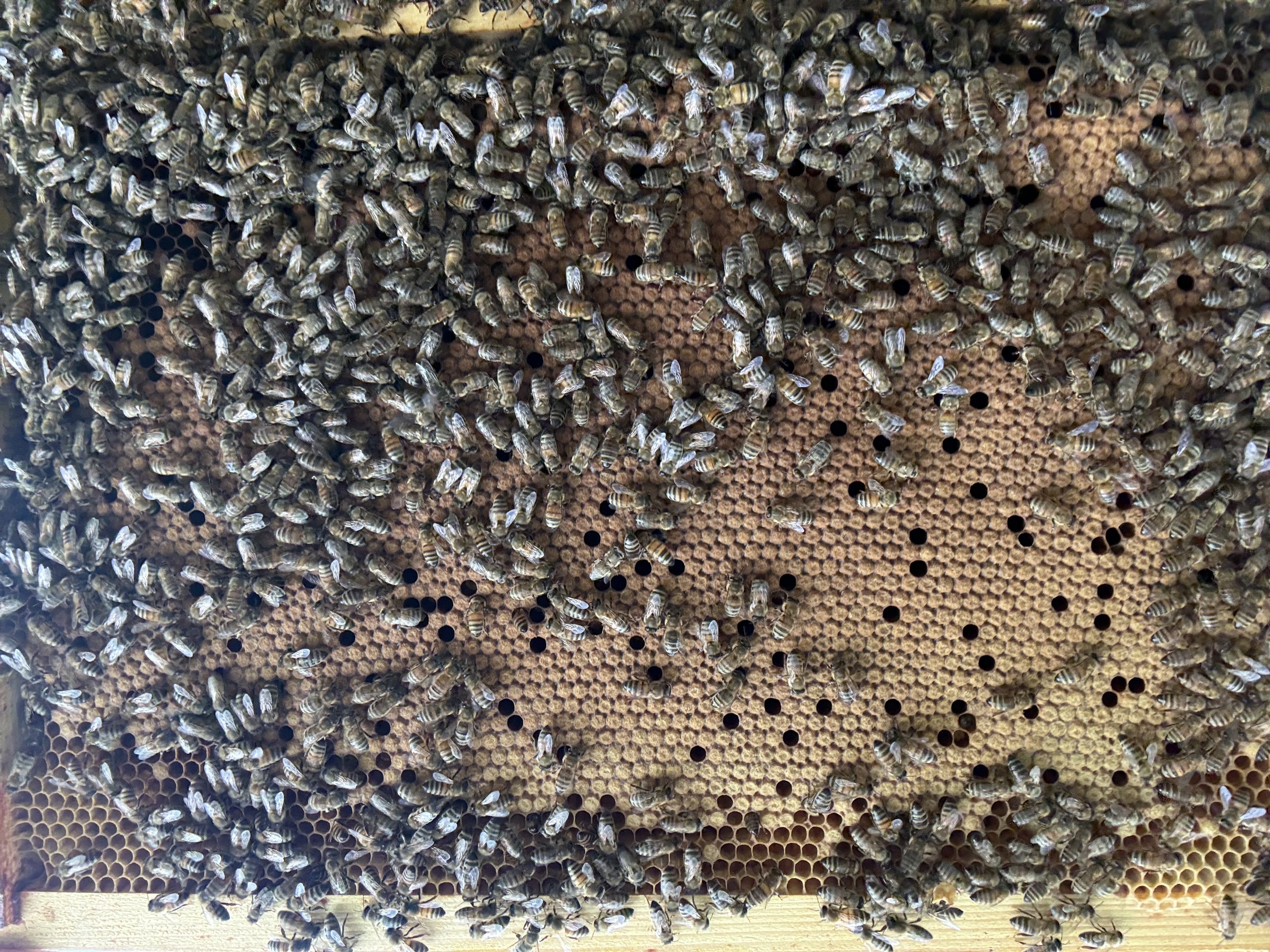
Side B
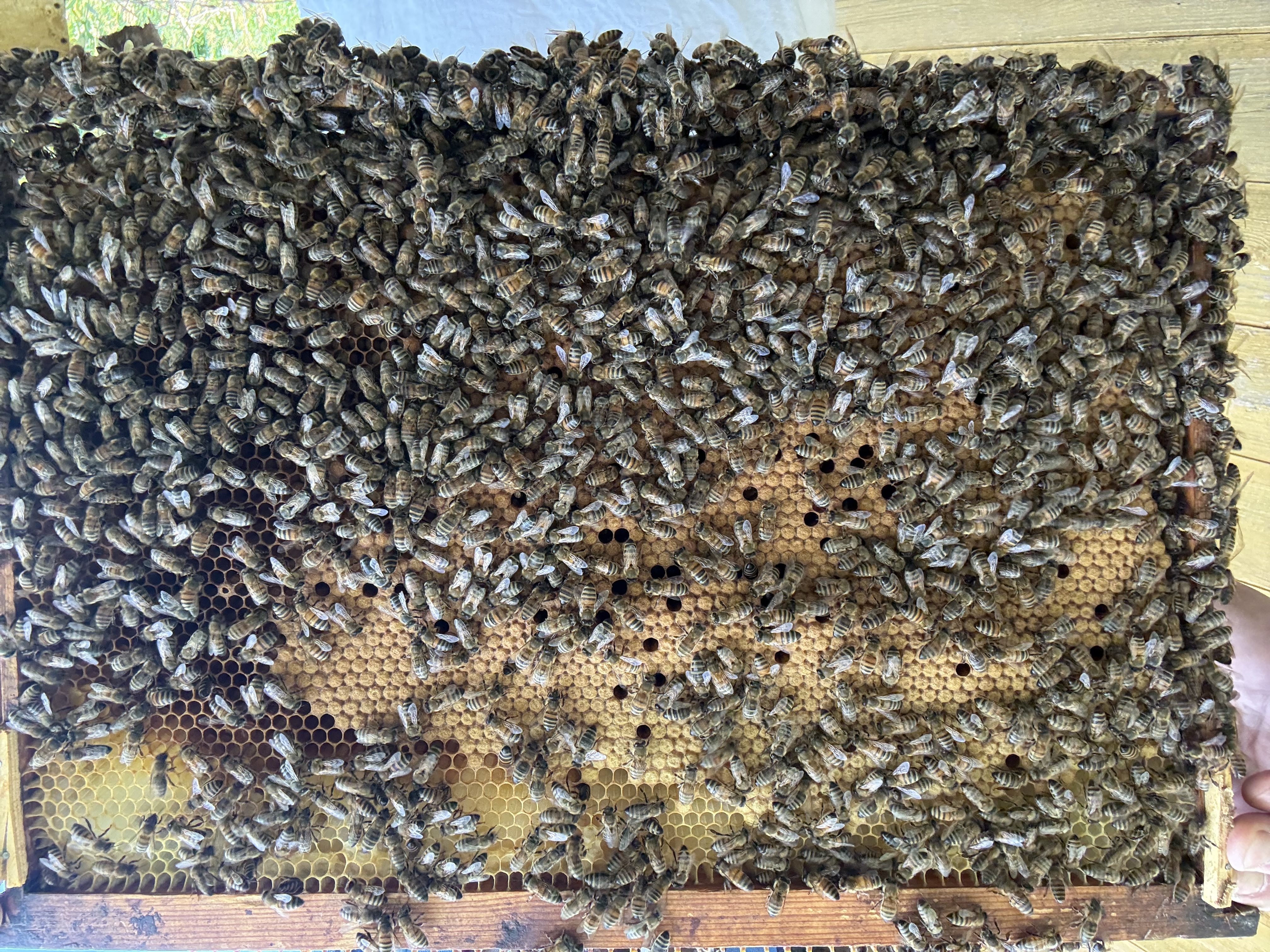
Side A
This side of the frame shows significant capped brood in the center, surrounded by numerous bees and minimal visible honey stores.
Side B
The second side of the frame exhibits a dense cluster of bees around a large area of capped brood, with sparse honey present.
Both sides of this frame are heavily populated with bees and display substantial capped brood, indicating a strong laying pattern. Honey stores are noticeably low, suggesting active foraging or consumption.
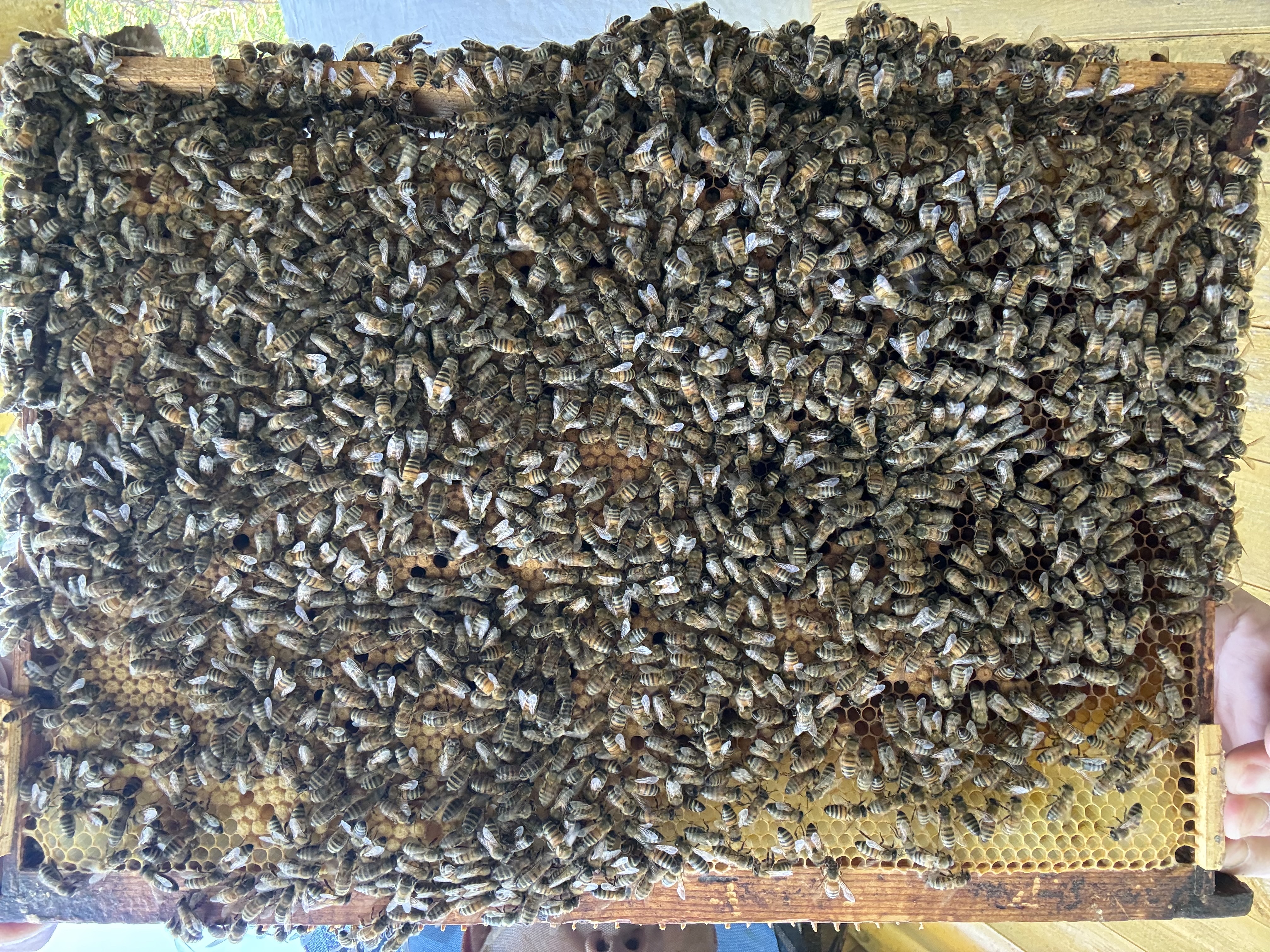
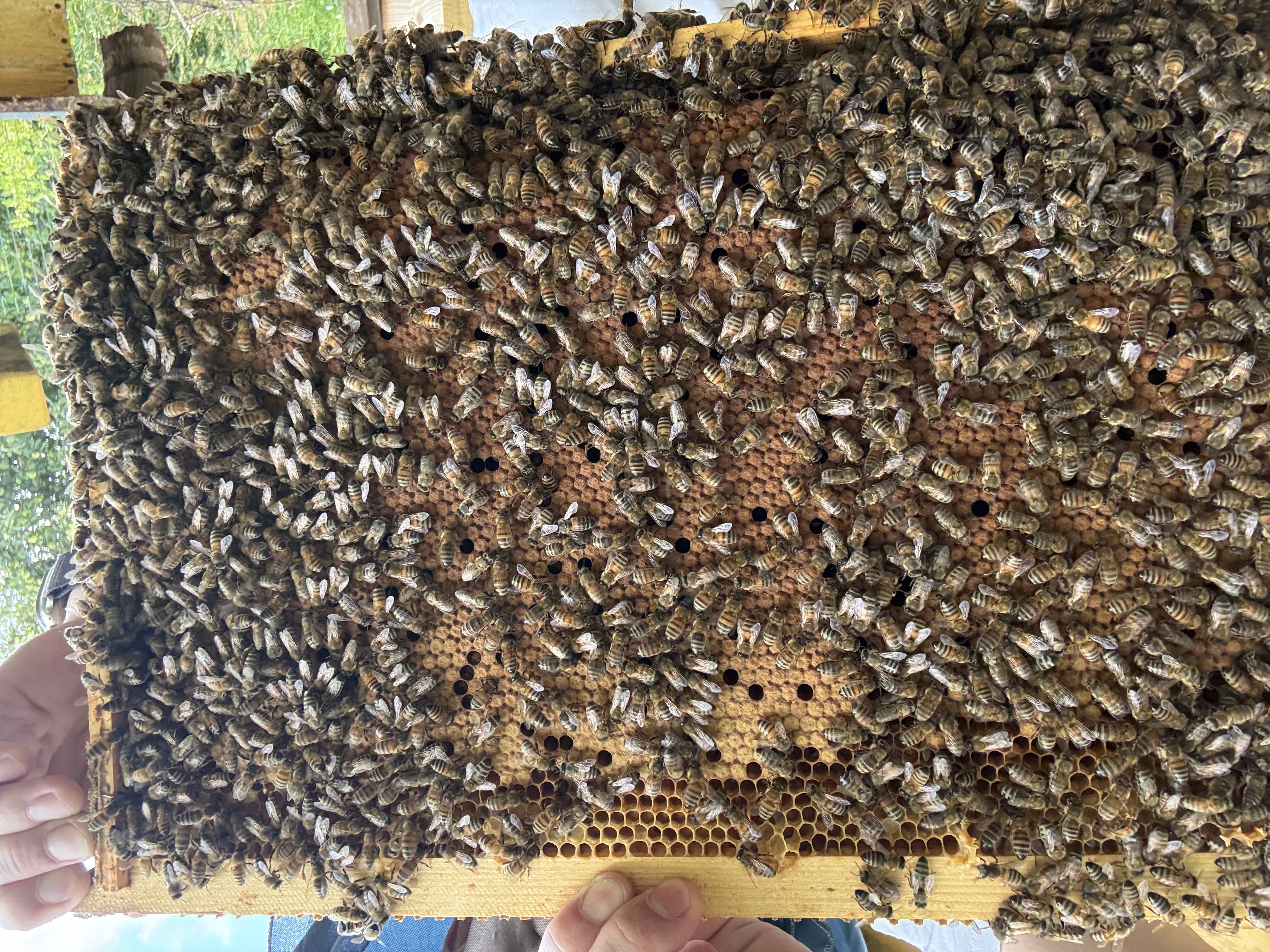
Frame 18
Side A
Side B
Side A
This frame side features a robust area of capped brood in the middle, with a good number of bees tending to it and limited honey stores at the top.
Side B
The second side of the frame is well-covered with bees and displays a significant amount of capped brood, with minimal honey storage visible.
This frame shows consistent and healthy brood patterns on both sides, indicating a productive queen and a growing colony. The available honey appears to be limited, suggesting the need for continued foraging or supplementary feeding.
Frame 19
Side A
Side B
Side A
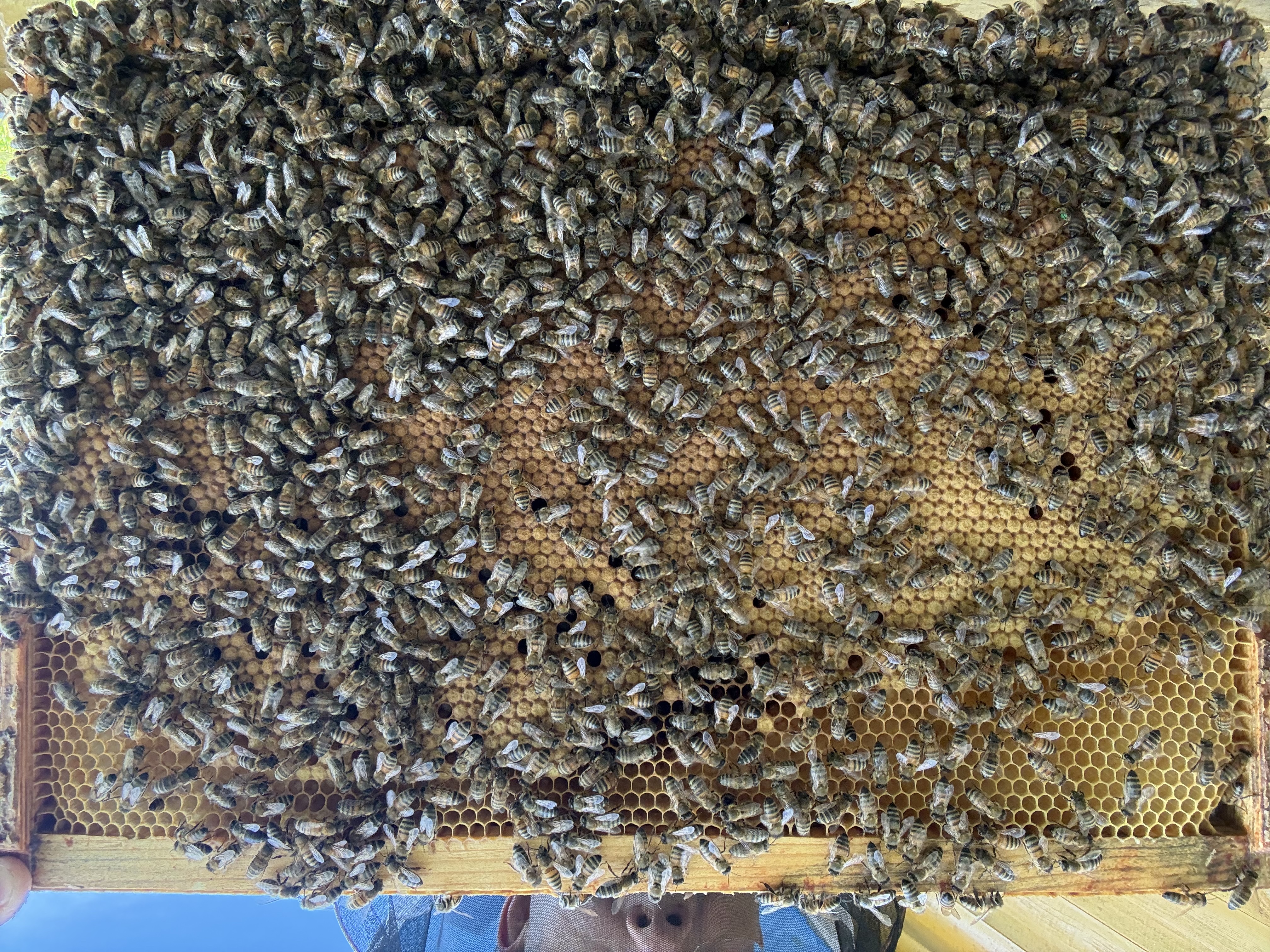
This side of the frame is densely populated with bees, mostly covering extensive capped brood with very little visible honey.
Side B
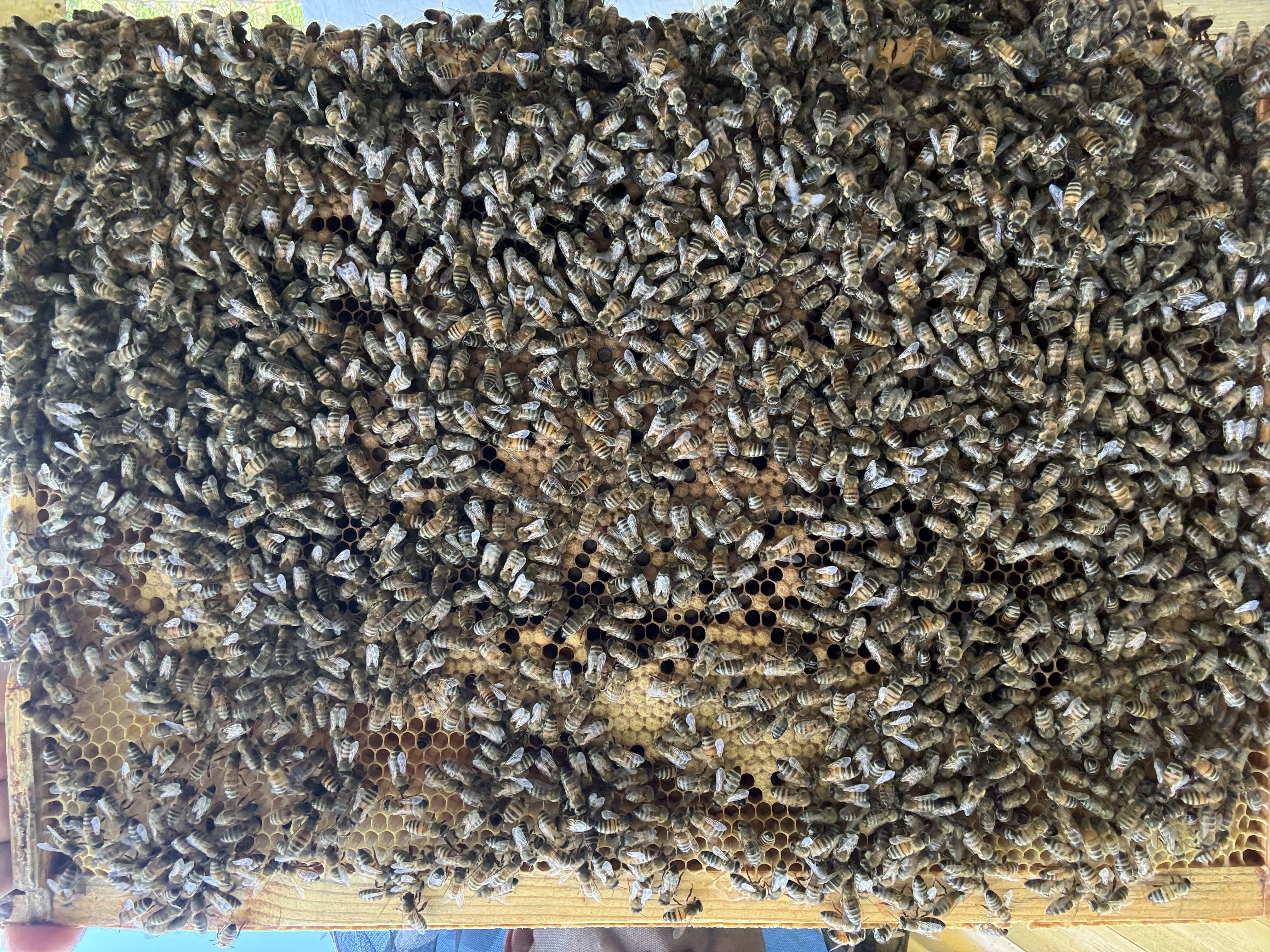
The reverse side of the frame is also heavily covered in bees and exhibits a large area of capped brood, with minimal honey visible.
Frame three is exceptionally rich in brood on both sides, demonstrating a high level of queen activity and colony expansion. The honey stores are extremely scarce, indicating that most of the frame's resources are dedicated to brood rearing.
Frame 20
Side A
Side B
Side A
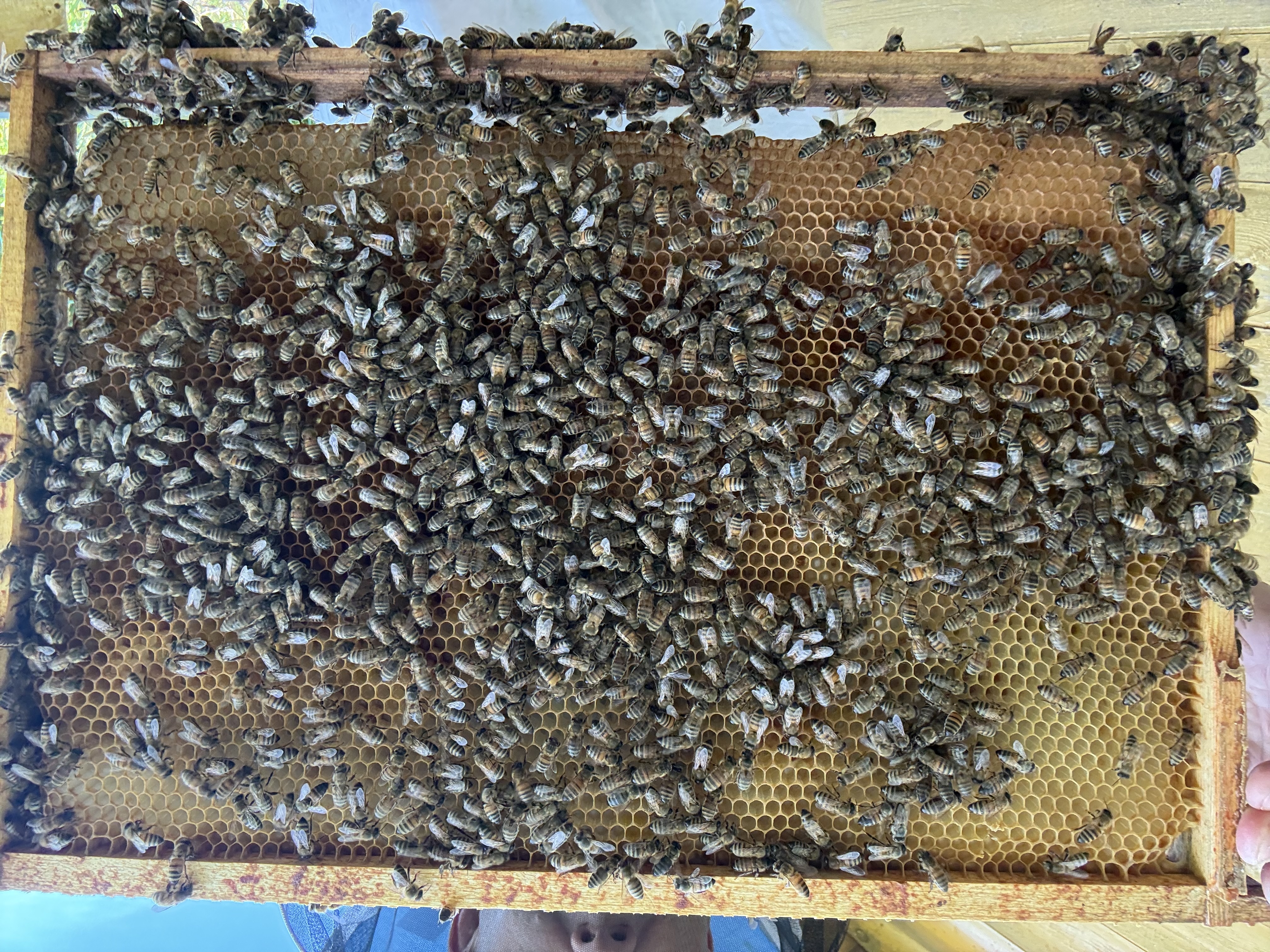
This frame side shows a moderate number of bees, with a less concentrated area of brood and more scattered open cells, potentially containing nectar or pollen.
Side B
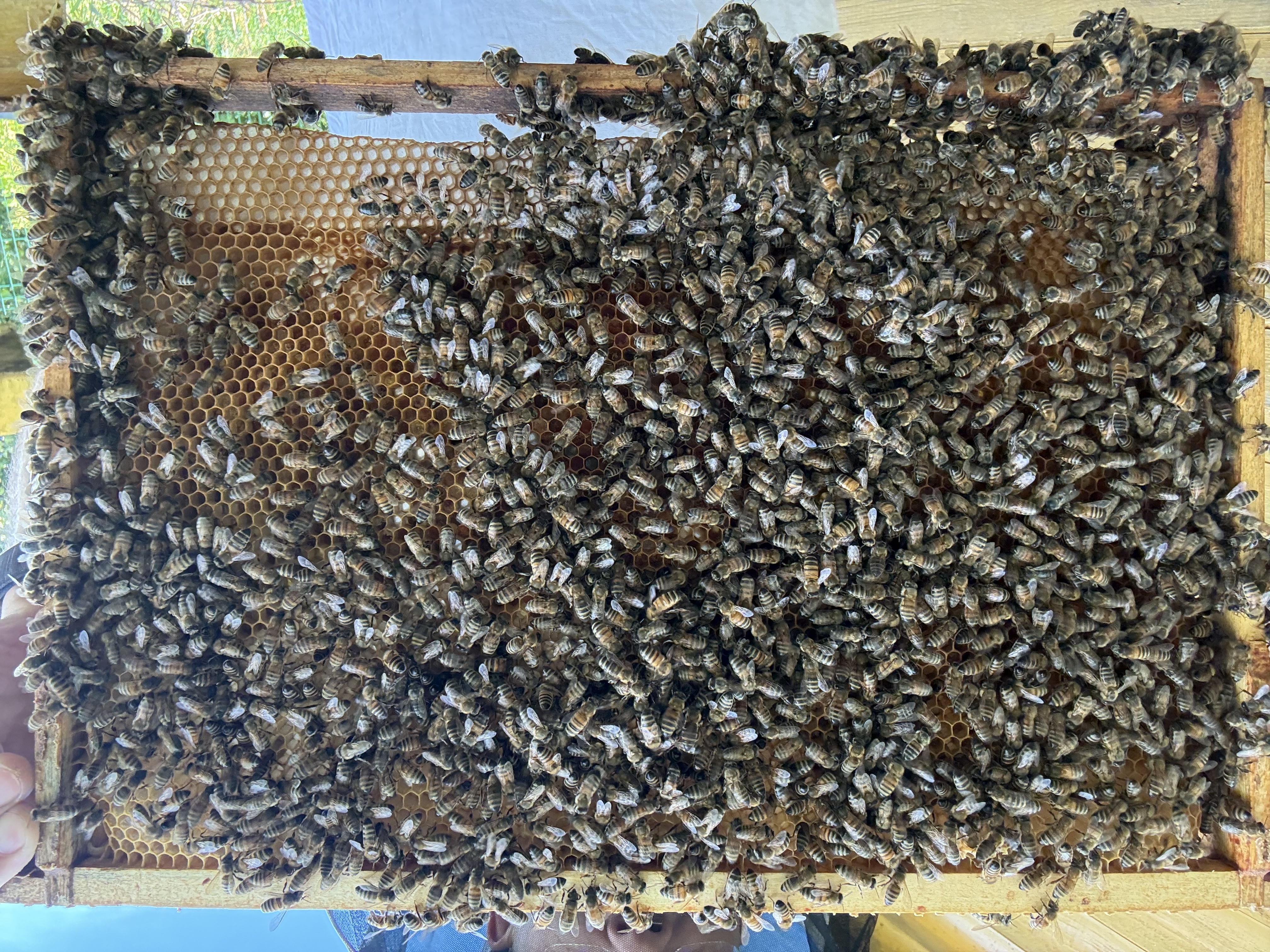
The final side of the frame is also less dense with bees, showing a patch of brood alongside more empty and open cells that may contain fresh nectar or pollen.
Frame four shows a slightly less dense bee population and more varied contents, including brood and more open cells possibly with nectar or pollen. The brood area is less uniform and extensive compared to the previous frames, suggesting this might be a periphery frame or an area being actively filled.