Inspection Results
4 Jul 2026
Hive #1 · 18 frame sides captured
85
Colony Strength
Strong
Monitor honey stores closely and consider supplemental feeding to prevent starvation, especially during periods of low nectar flow. It is highly recommended to complete the inspection of the remaining frame at the next opportunity to ensure a comprehensive assessment of the hive's overall health and resources.
Queen Status
Presumed present and laying well, not directly observed
Brood Pattern
Strong and consistent brood pattern across most inspected frames
Honey Stores
Limited honey stores, indicating potential need for supplementation
Varroa Risk
Undetermined; no specific mite count data available
AI Observations
The colony exhibits strong vitality with extensive brood coverage across the inspected frames, suggesting a healthy and productive queen, although she was not directly sighted. However, honey stores are notably low, which could pose a risk if not addressed. It is important to note that only 90% of the frames were inspected.
Frame Analysis — 9 frames
Frame 1
Side A
Side B
Side A
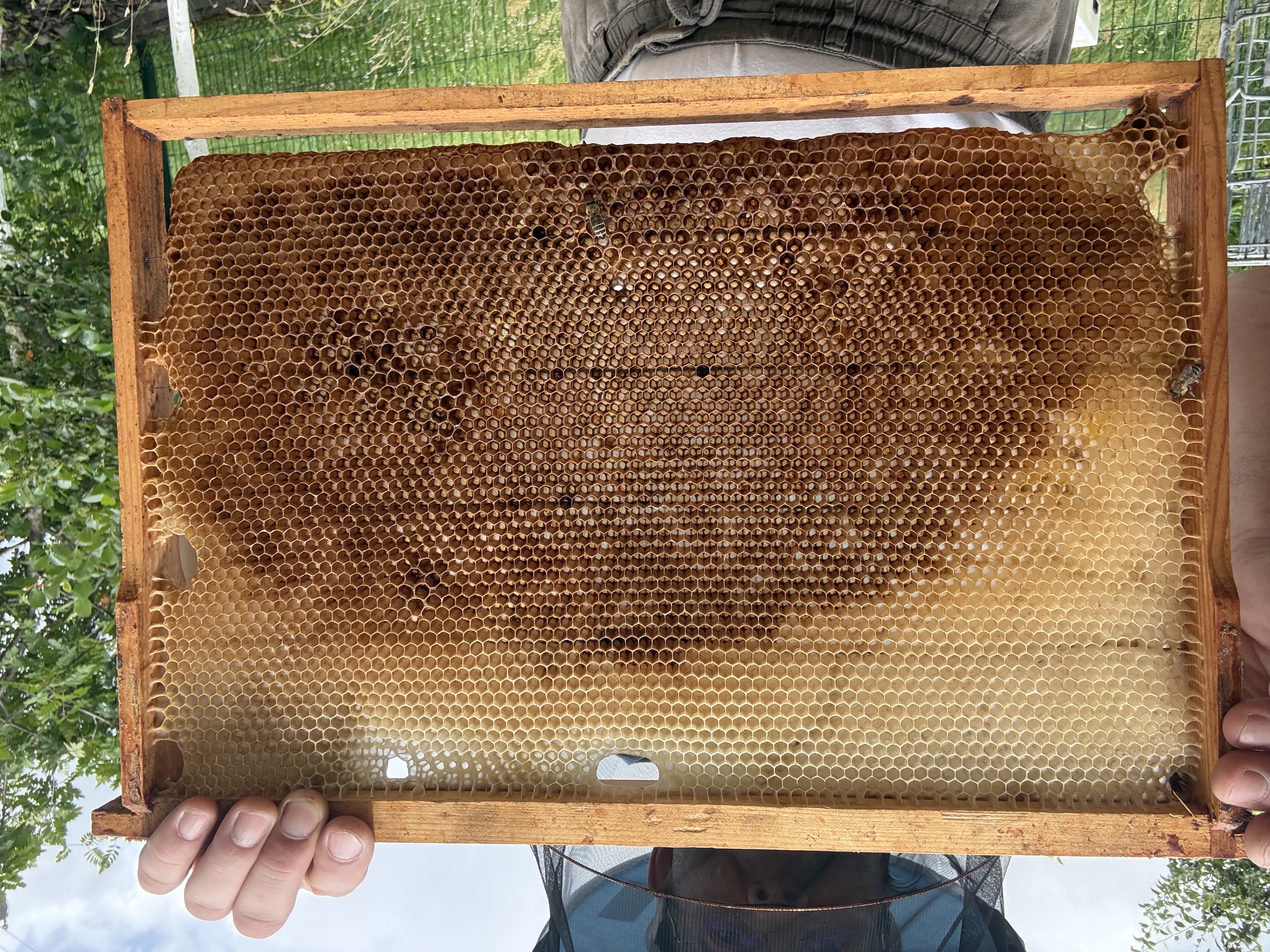
This side of the frame shows a significant area of capped brood surrounded by some partially filled honey cells.
Side B
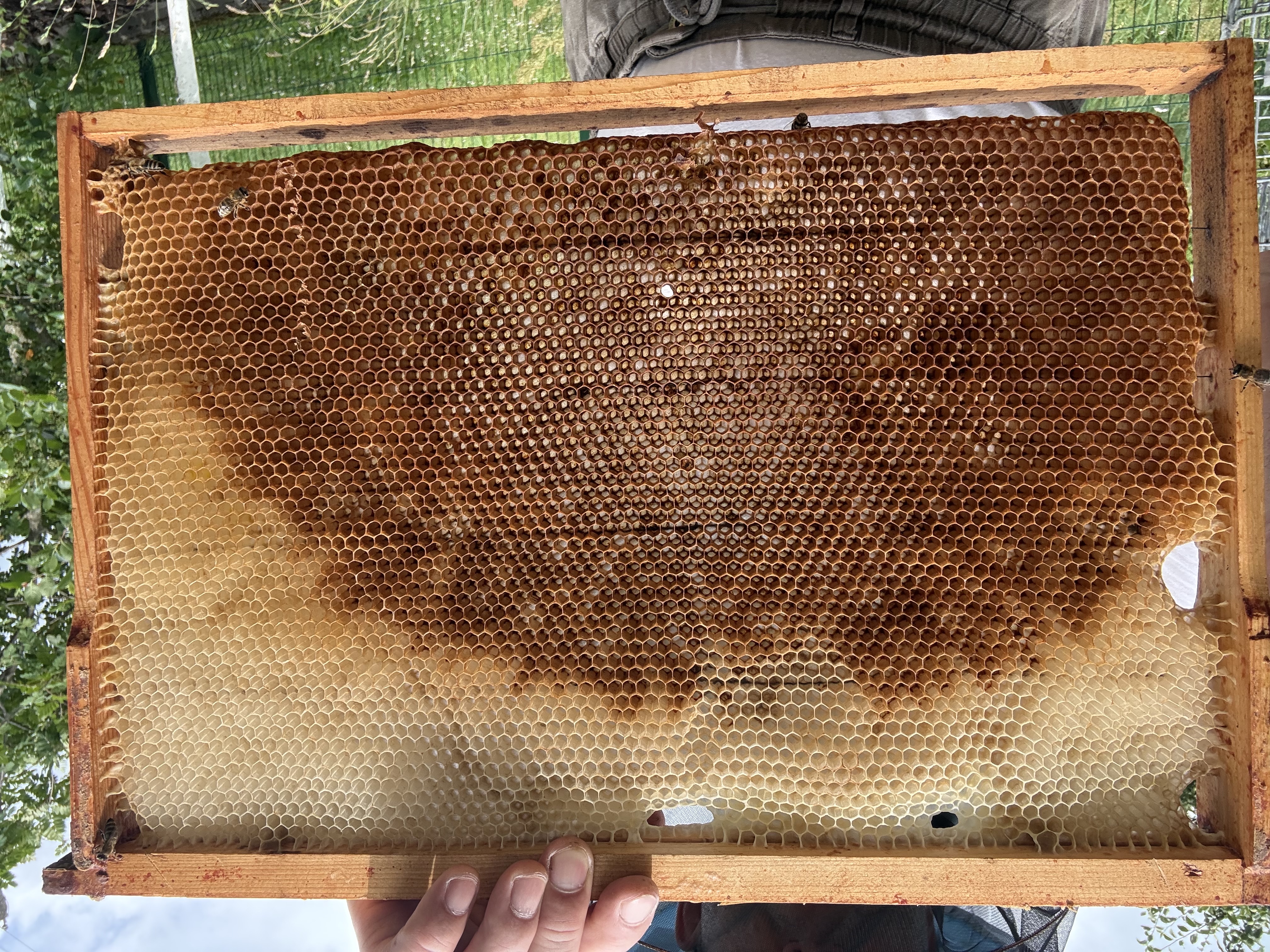
The reverse side of the frame features a large central patch of capped brood with lighter honey cells visible towards the top.
Both sides of this frame display a healthy amount of capped brood, indicating active rearing. Peripheral areas show some honey stores, suggesting a balance of brood production and resource collection.
Frame 2
Side A
Side B
Side A
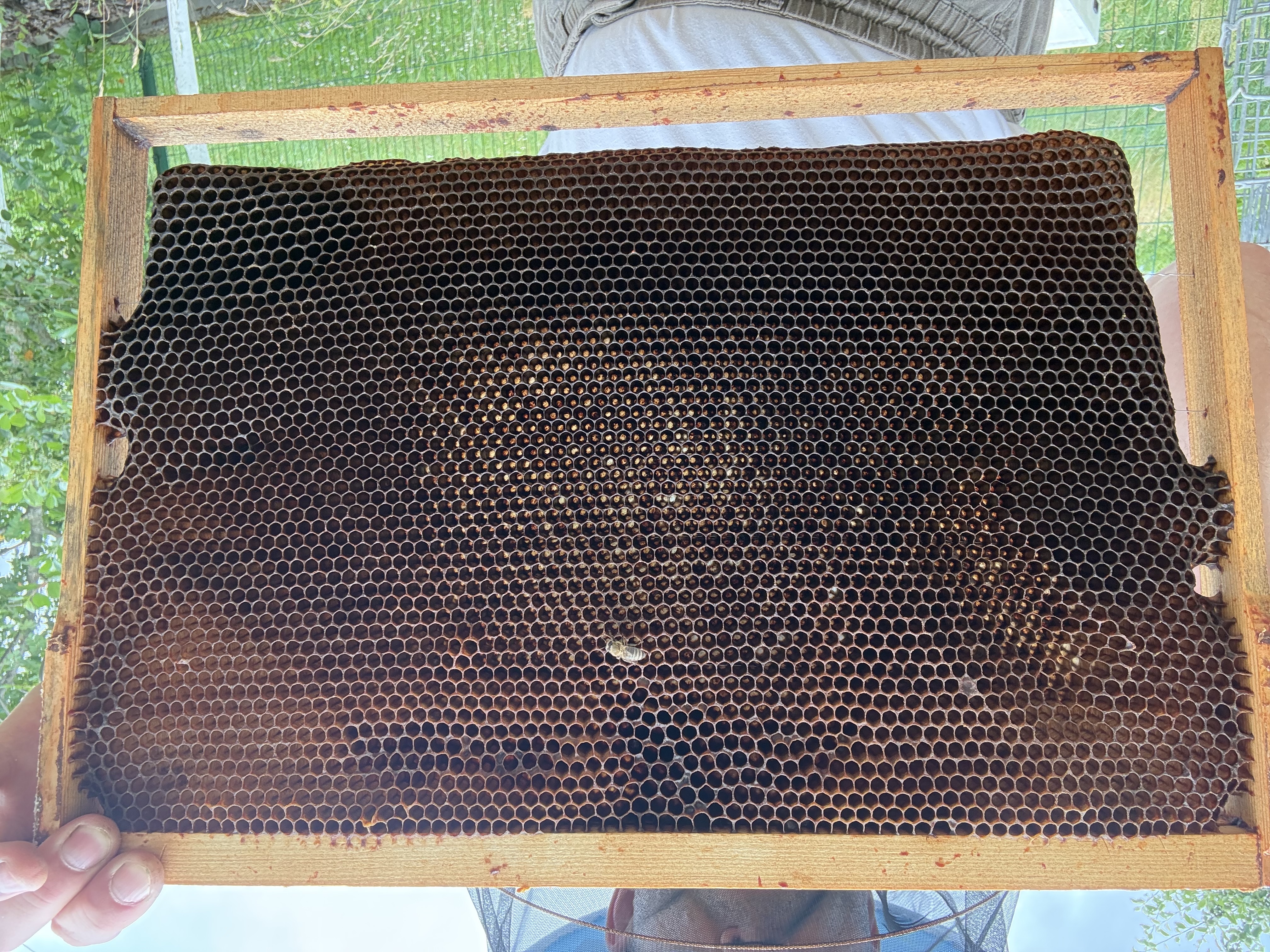
This frame side is nearly completely filled with dark capped brood, indicating a strong brood cycle.
Side B
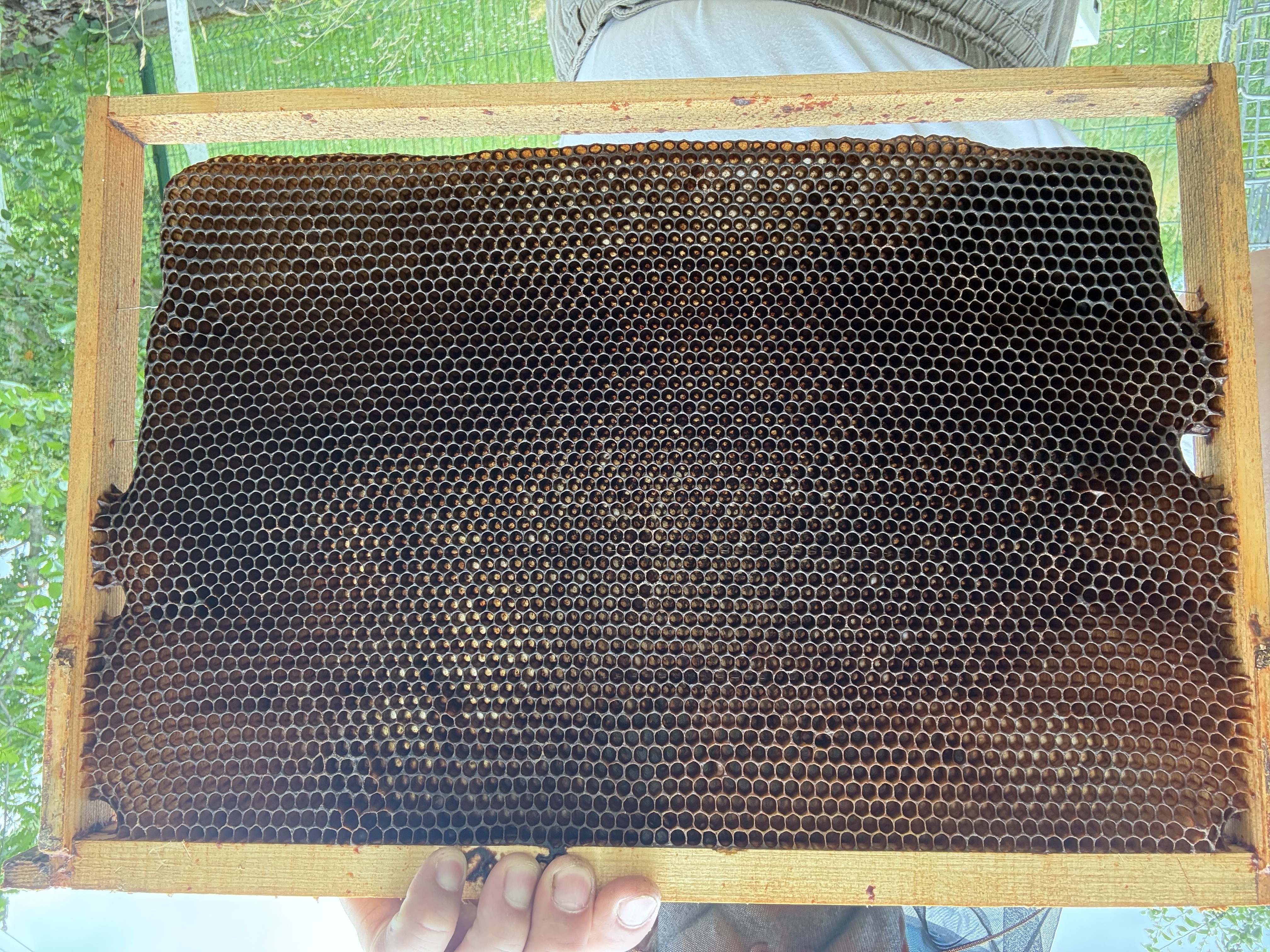
The reverse side of the frame also displays extensive dark capped brood with minimal areas for honey.
This frame is almost entirely dedicated to dark capped brood on both sides, demonstrating very strong and consistent brood production. Minimal space is allocated for honey, highlighting its primary role as a brood frame.
Frame 3
Side A
Side B
Side A
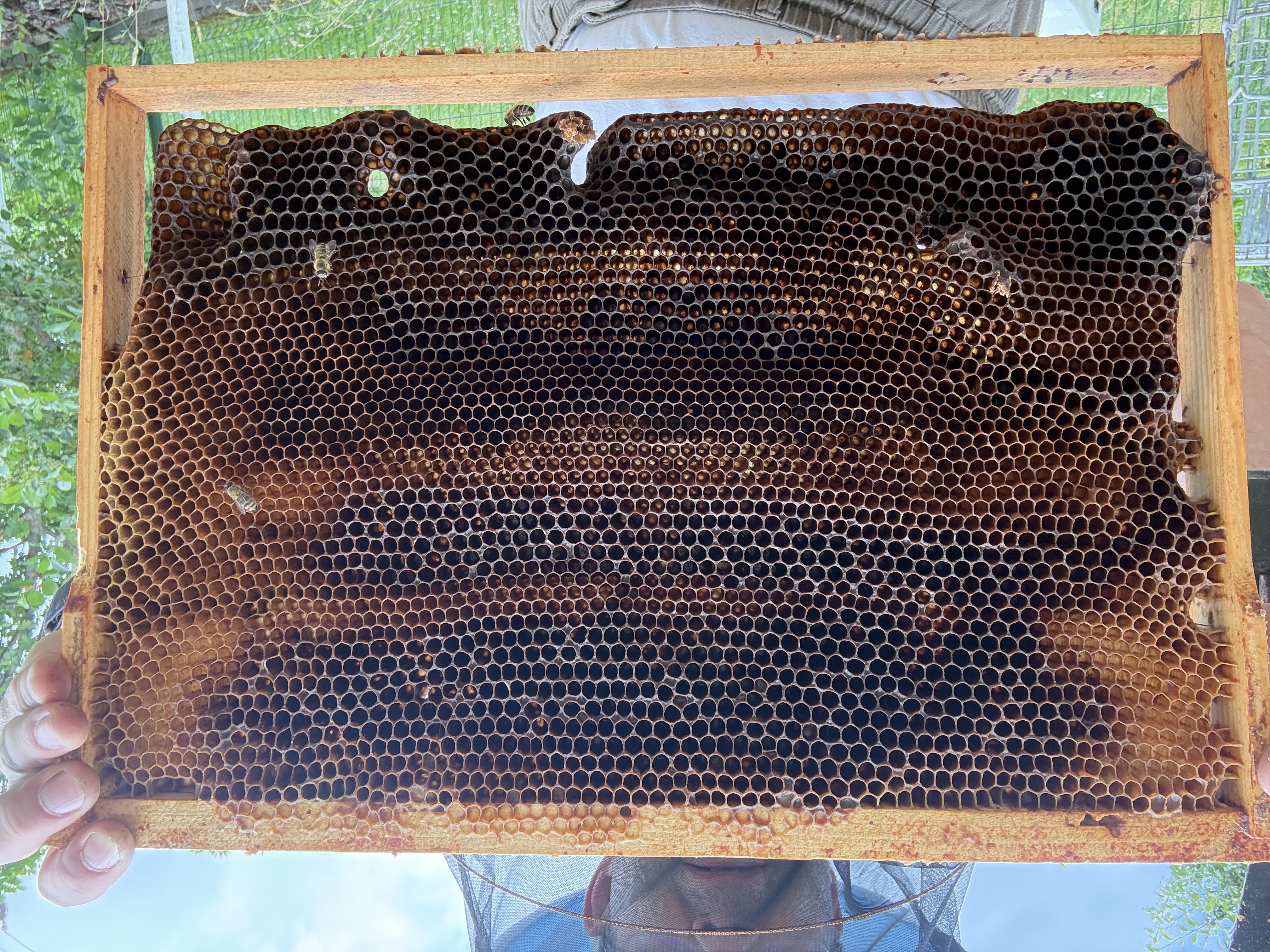
This side of the frame presents a substantial central brood area with scattered open cells and some honey along the top.
Side B
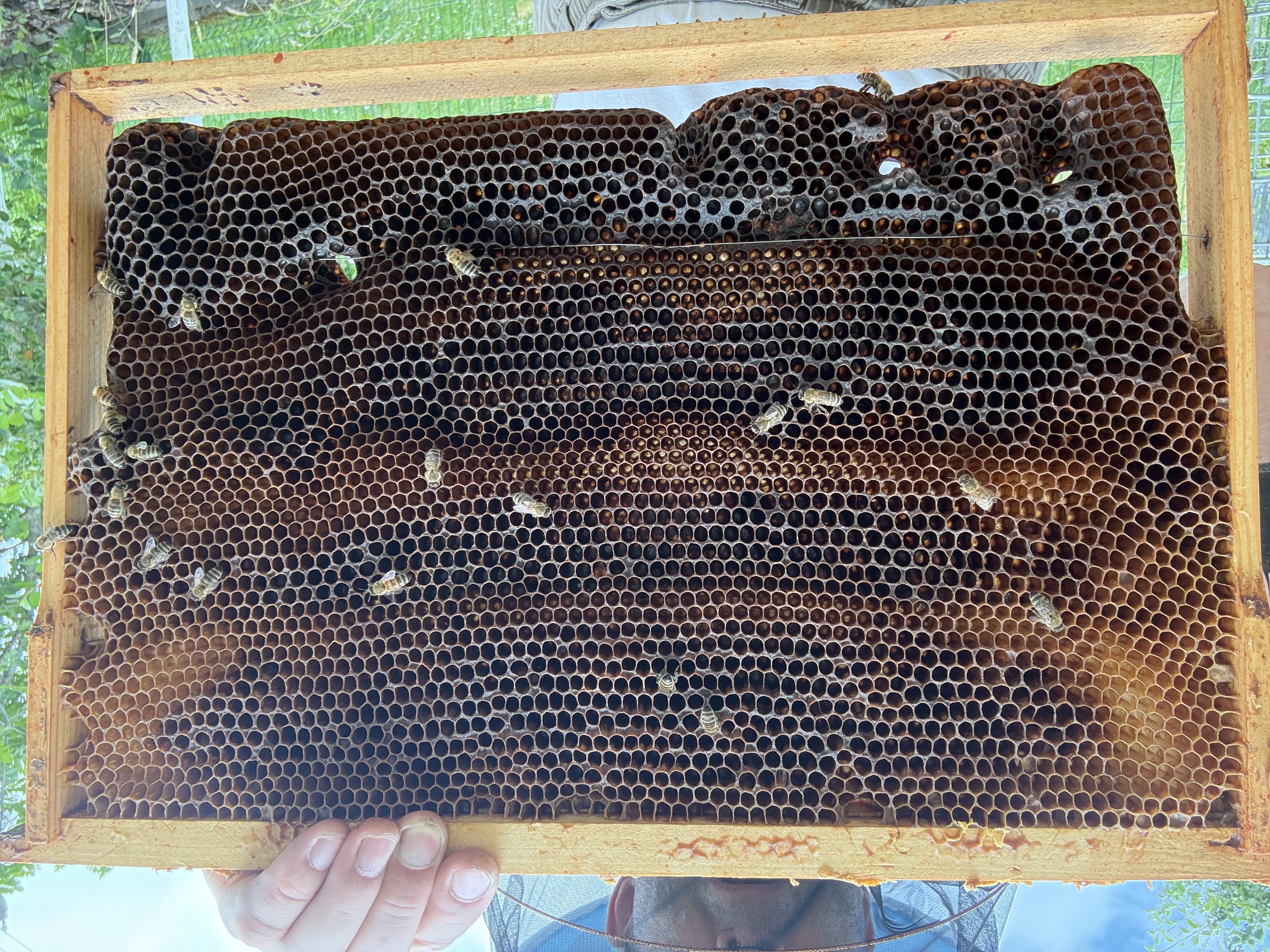
The reverse side shows a similar pattern of capped brood and open cells, with a slightly higher concentration of scattered bees.
Both sides feature large central areas of capped brood interspersed with some open cells, indicating ongoing brood rearing. There are also visible honey stores at the top, showing continued resource accumulation.
Frame 4
Side A
Side B
Side A
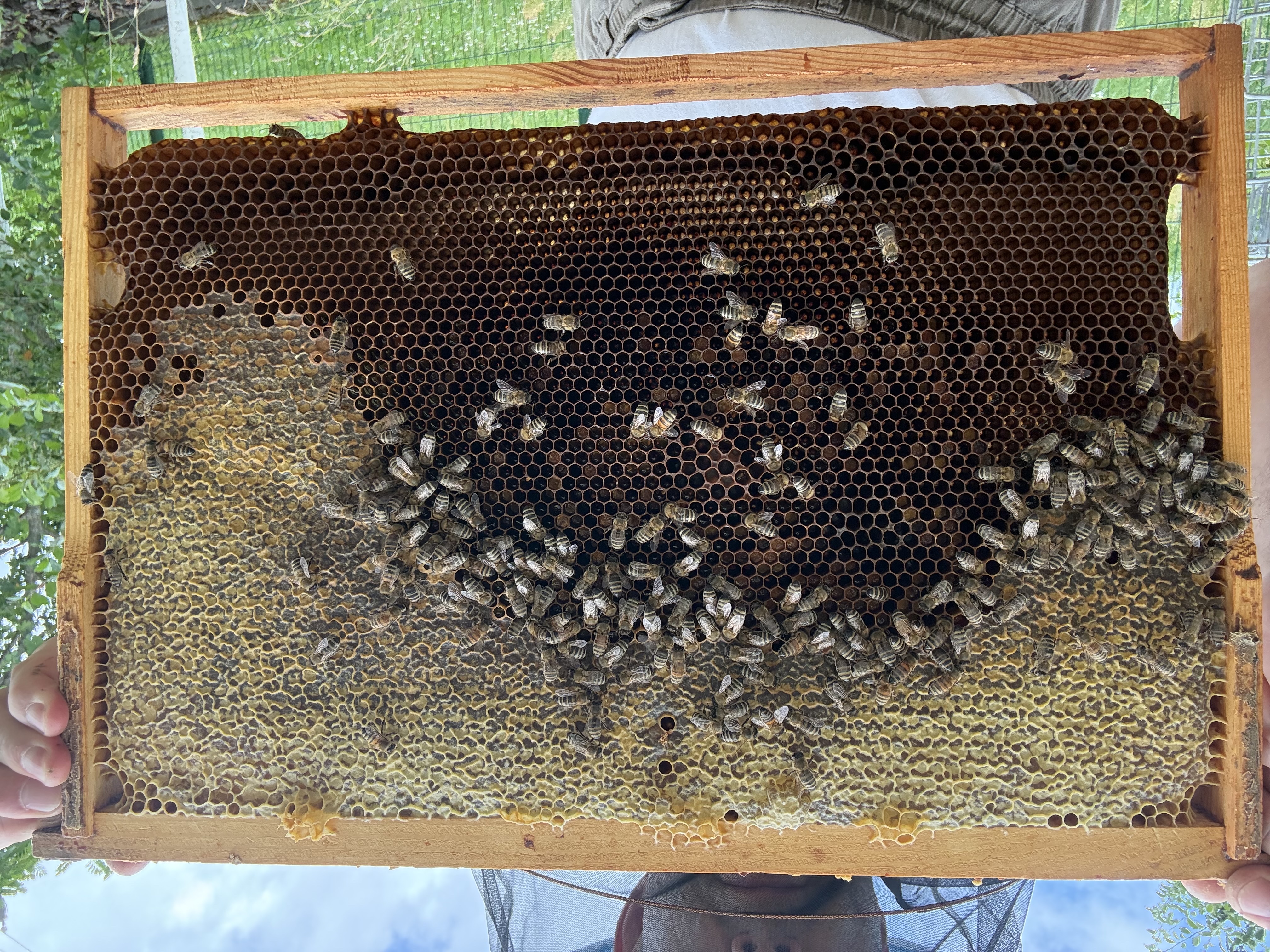
This frame side is bustling with bees, covering a mix of capped brood, open cells, and a significant band of honey and pollen at the top.
Side B
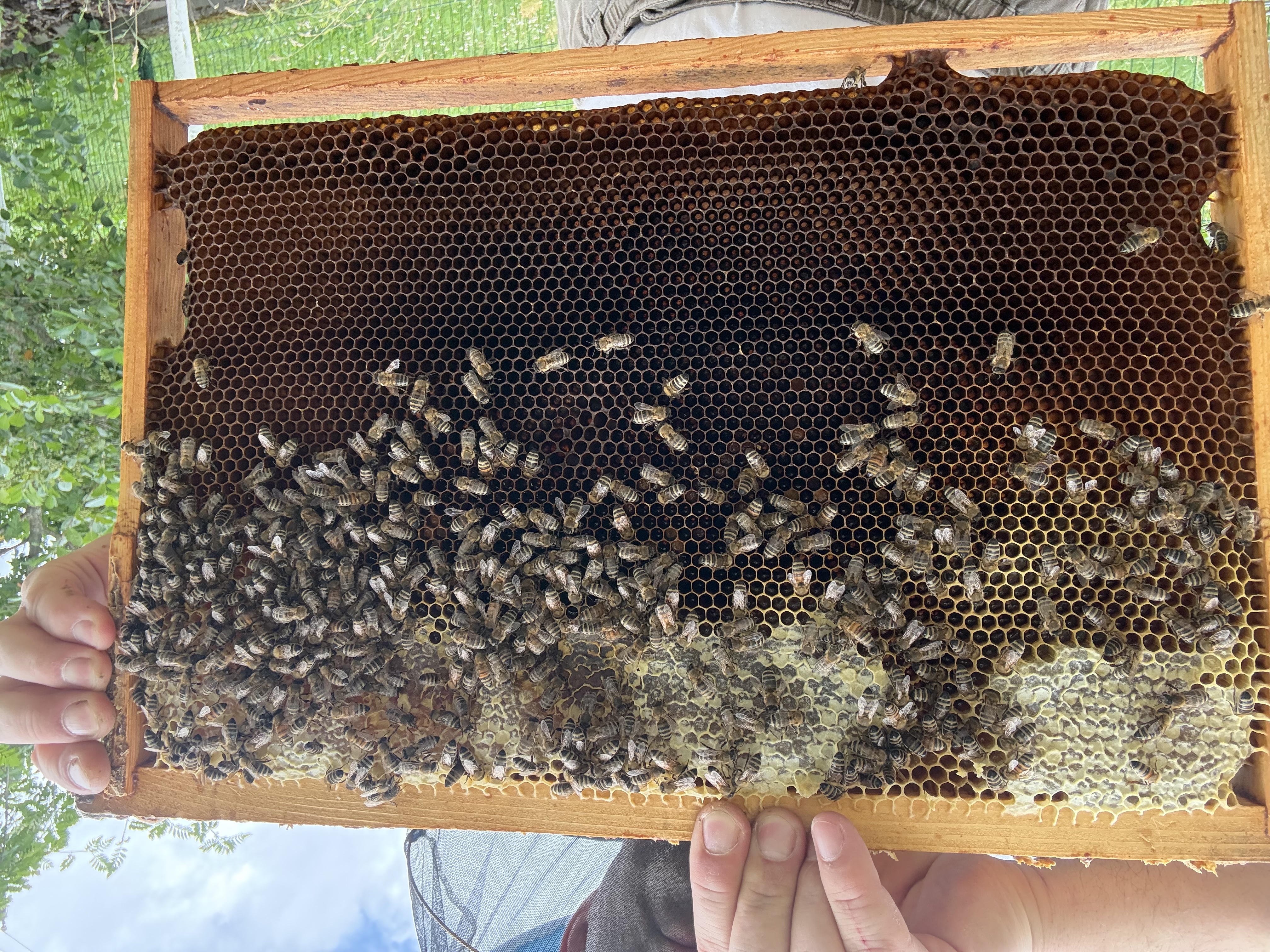
The reverse side is densely populated with bees, mostly covering a large central area of capped brood and some honey stores.
Both sides of this frame are densely covered with bees, revealing a large central brood patch and a good amount of honey and pollen stores. This frame is a vital part of the brood nest with strong bee activity.
Frame 5
Side A
Side B
Side A
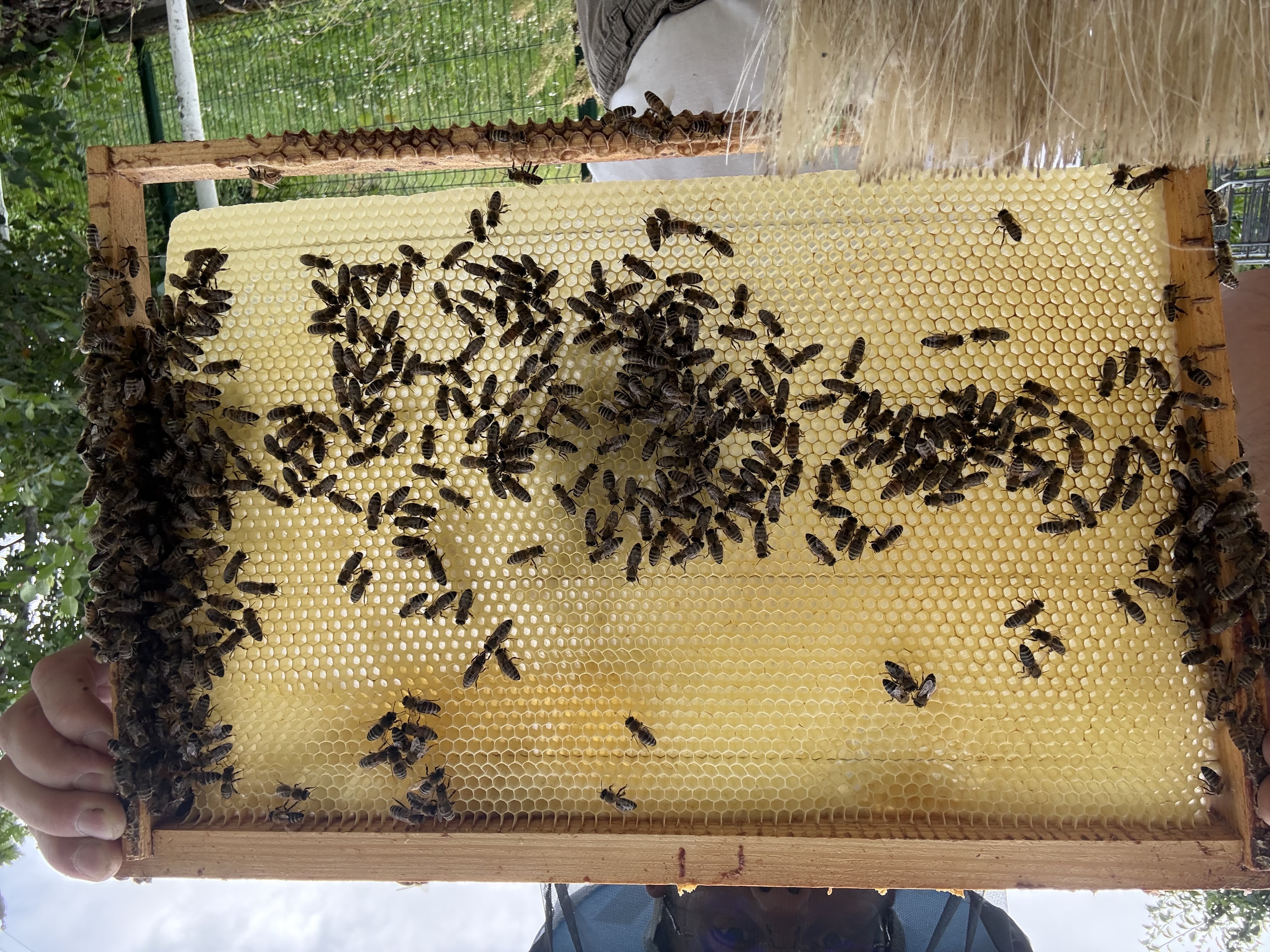
This light-colored comb is mostly new, with bees drawing out cells and very minimal visible brood or significant honey stores.
Side B
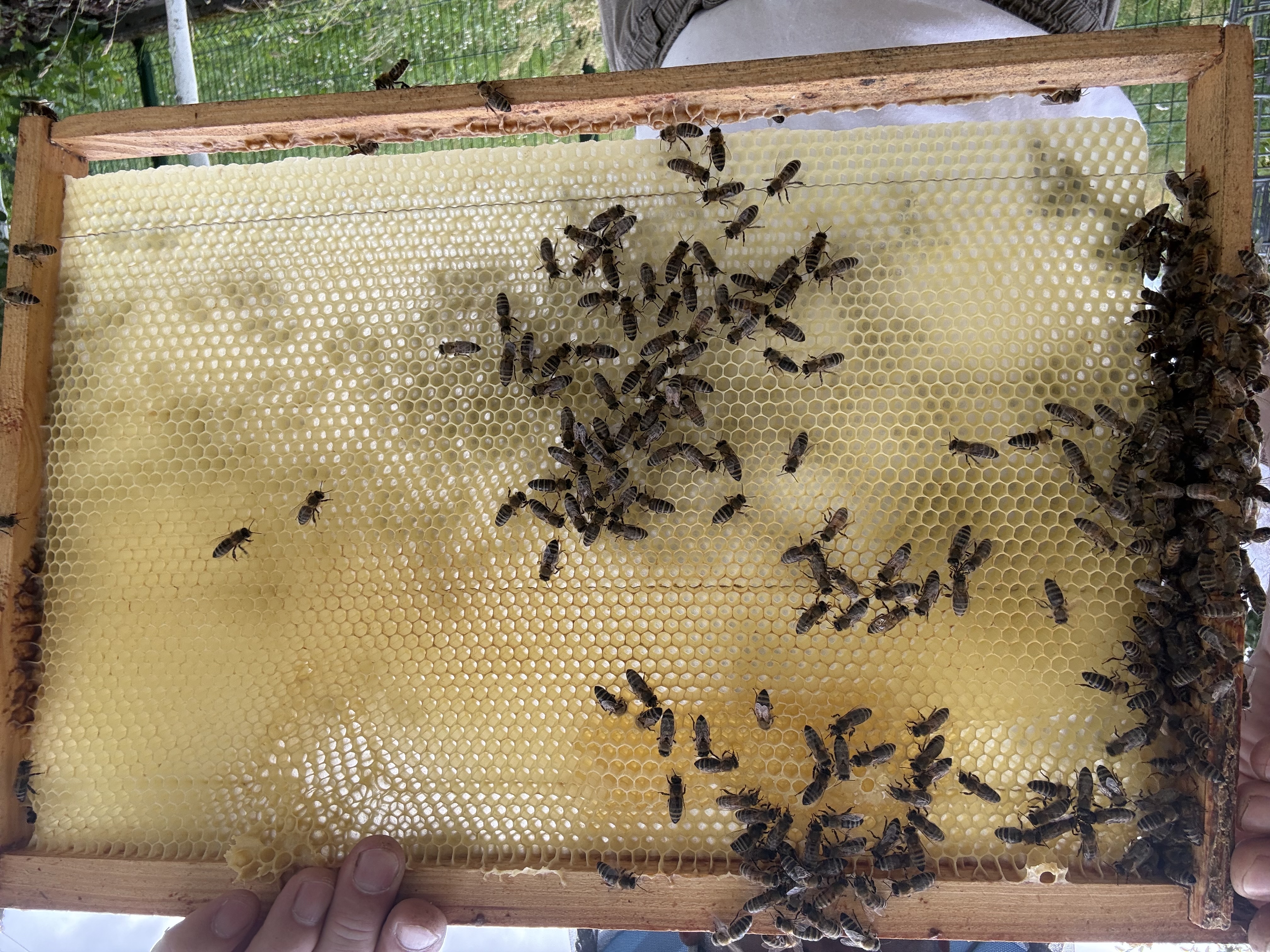
The reverse side of the light comb is also primarily new construction, featuring many bees working on drawing out cells with scant brood or honey.
Both sides of this frame consist primarily of new, light comb being actively drawn out by a moderate number of bees. There is very little visible brood or significant honey, suggesting it's primarily for expansion and new cell construction.
Frame 6
Side A
Side B
Side A
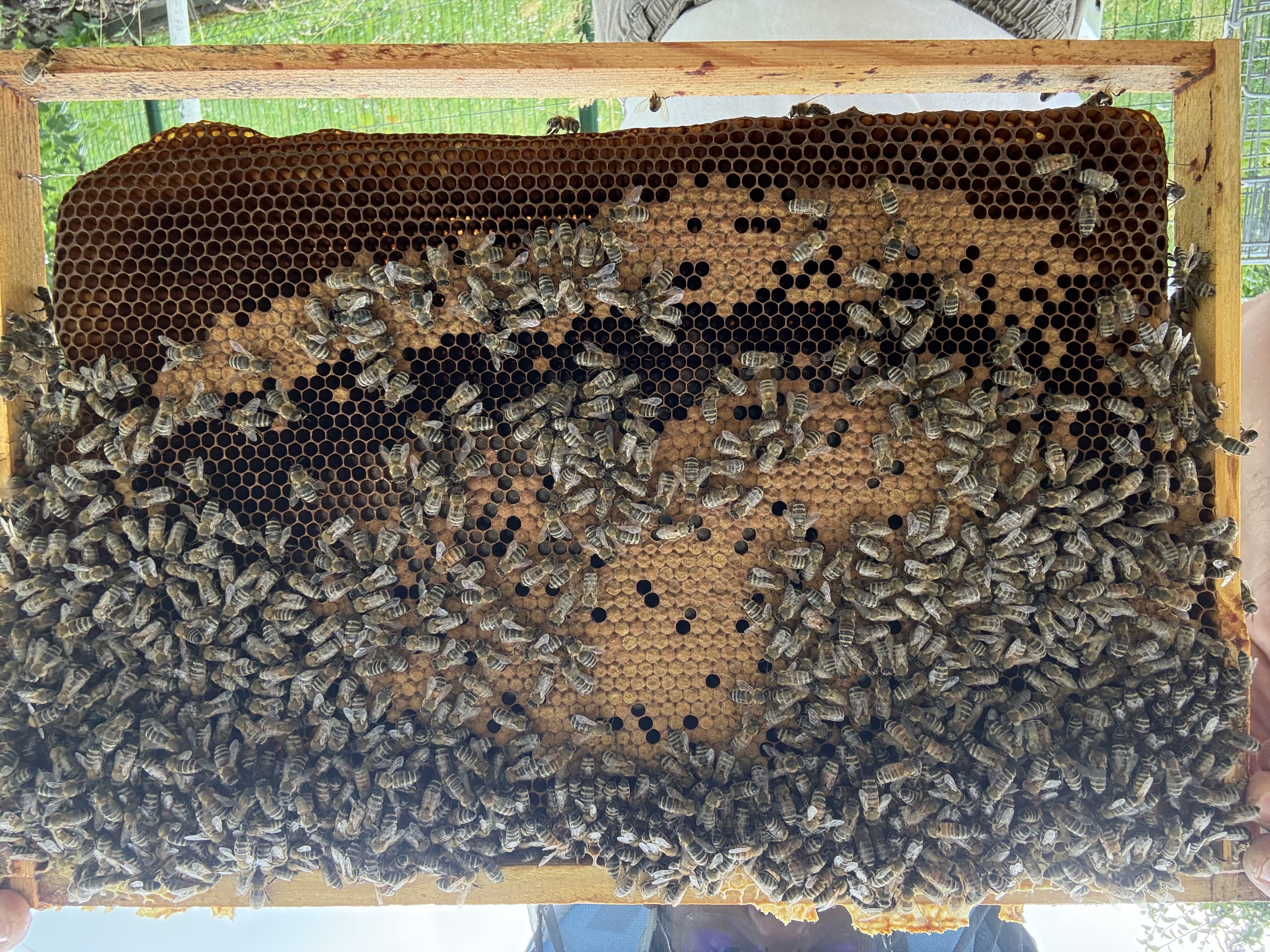
This frame is heavily populated with bees, likely obscuring a substantial central brood nest and some peripheral honey stores.
Side B
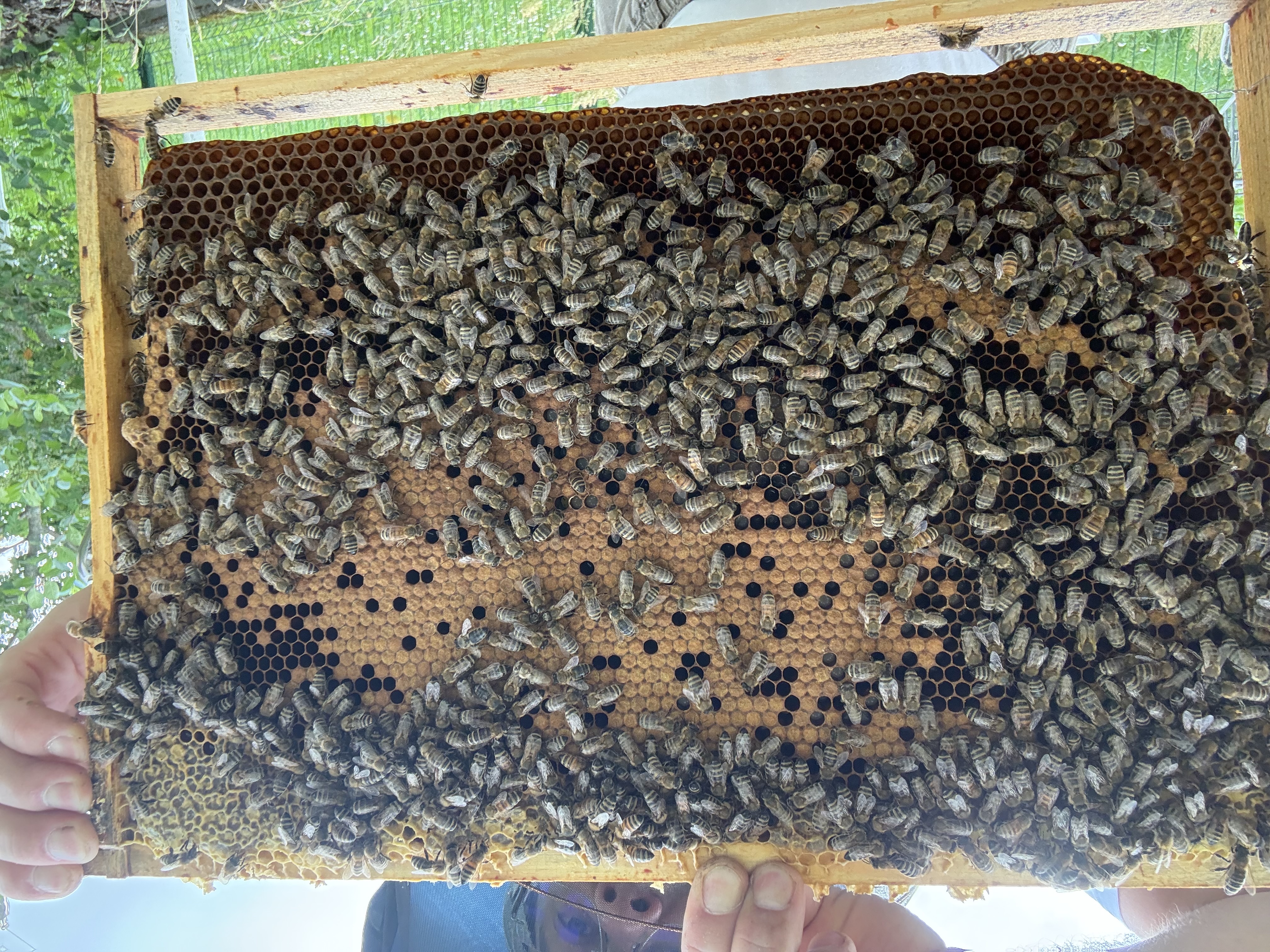
The reverse side is almost entirely covered by a dense cluster of bees, suggesting a robust population likely covering brood and some honey.
This frame is heavily populated with bees on both sides, likely covering extensive brood and some honey stores beneath. This indicates a very strong bee population actively caring for the brood nest.
Frame 7
Side A
Side B
Side A
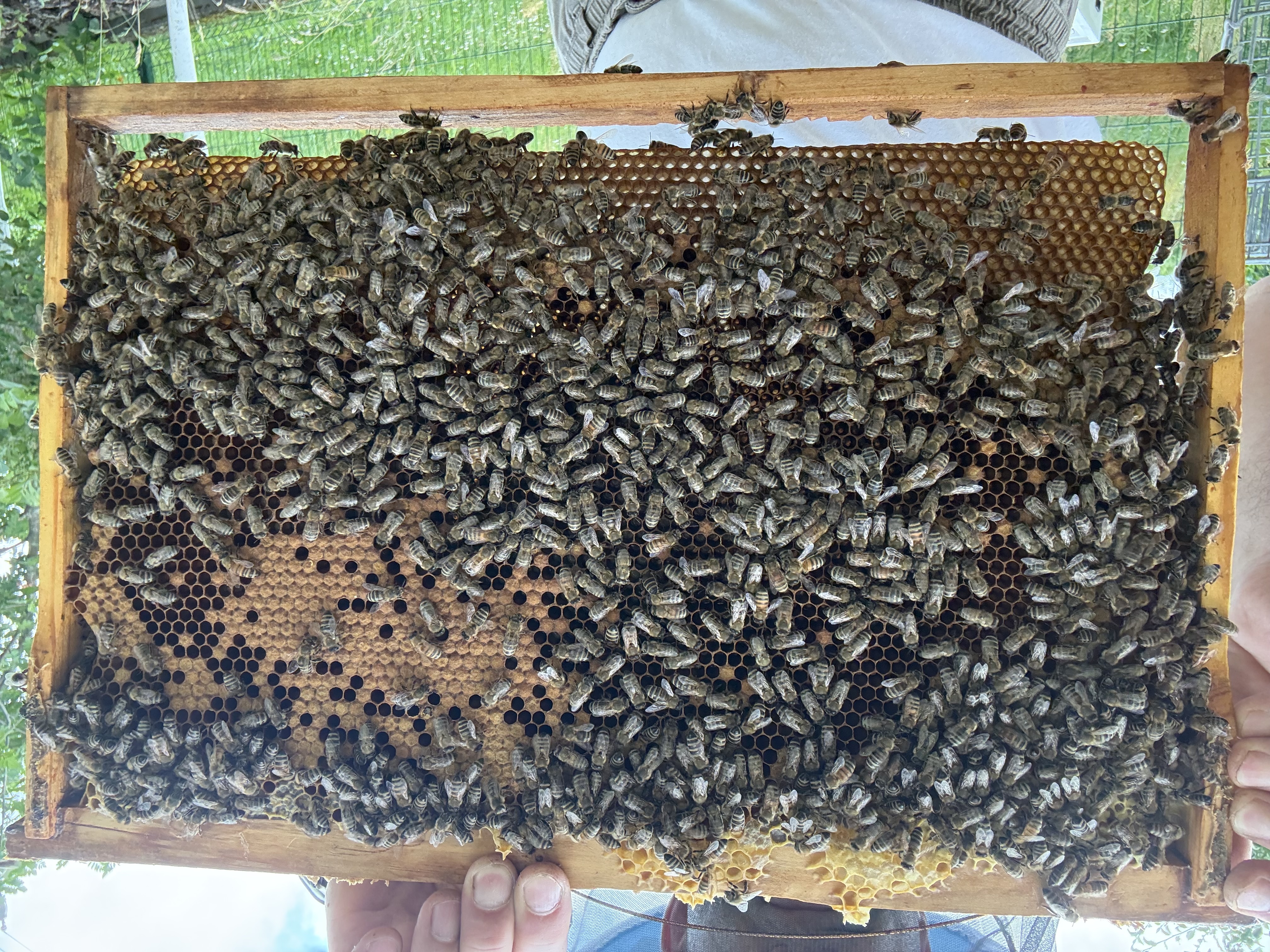
A very strong population of bees covers this entire frame side, likely indicating a healthy brood area underneath and some honey stores.
Side B
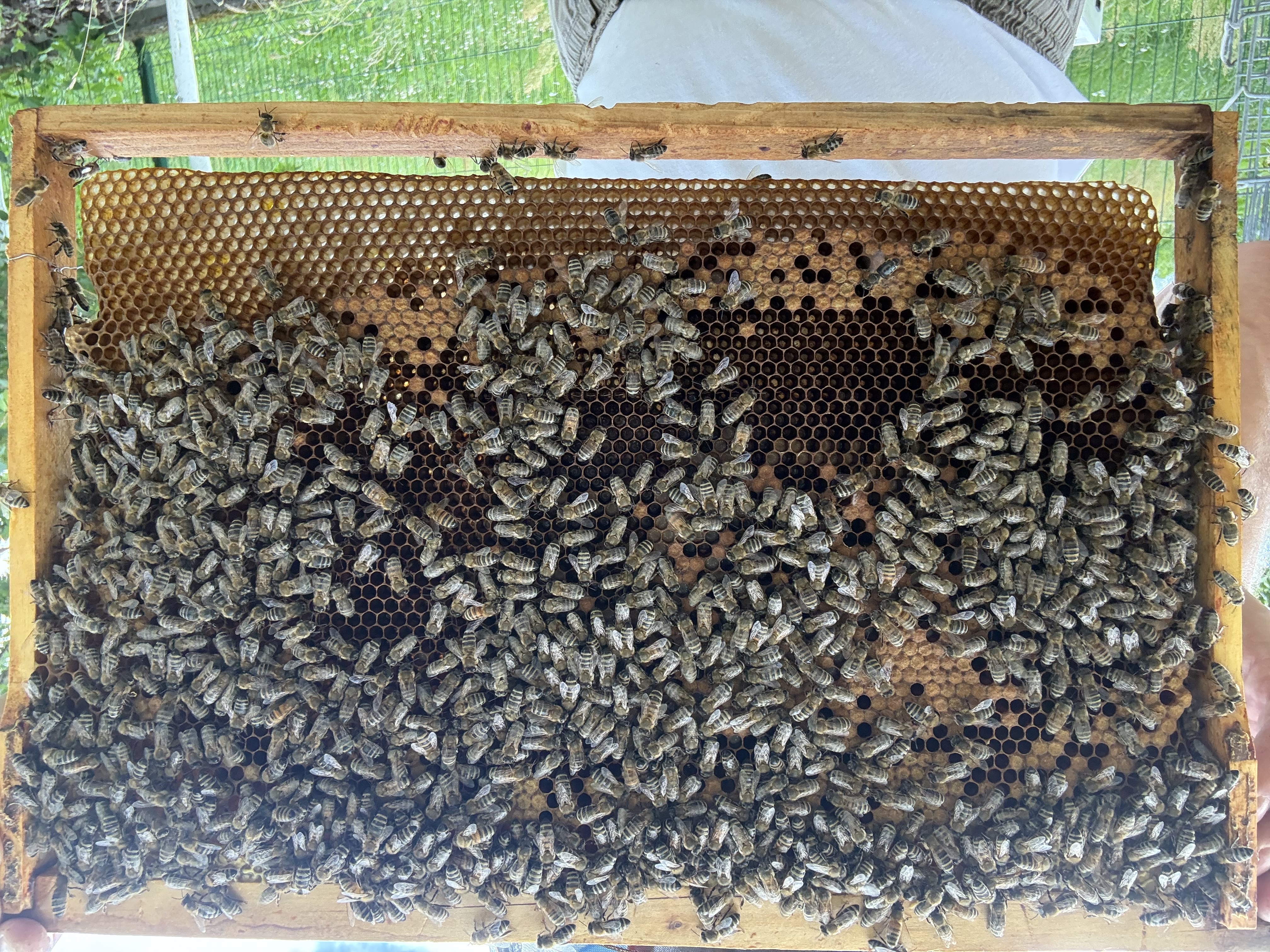
The reverse side is almost completely obscured by a dense layer of bees, suggesting a very active and populated area of the hive.
Both sides of this frame are extremely dense with bees, indicating a robust and healthy colony covering a large area of brood and surrounding resources. This frame is a central part of the hive's activity and population.
Frame 8
Side A
Side B
Side A
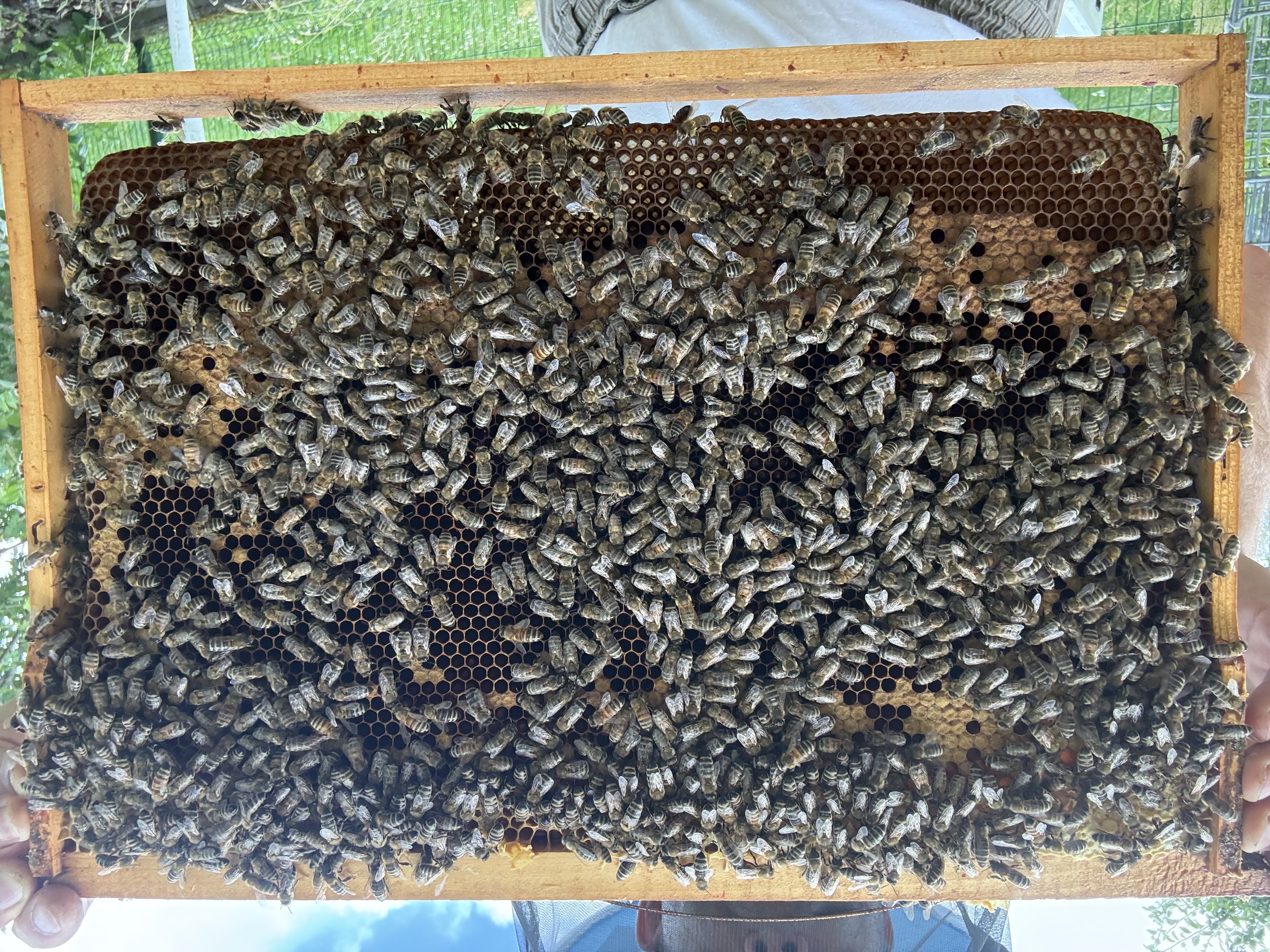
This final frame side is teeming with bees, which conceal most of the comb structure, indicating a thriving and well-populated section.
Side B
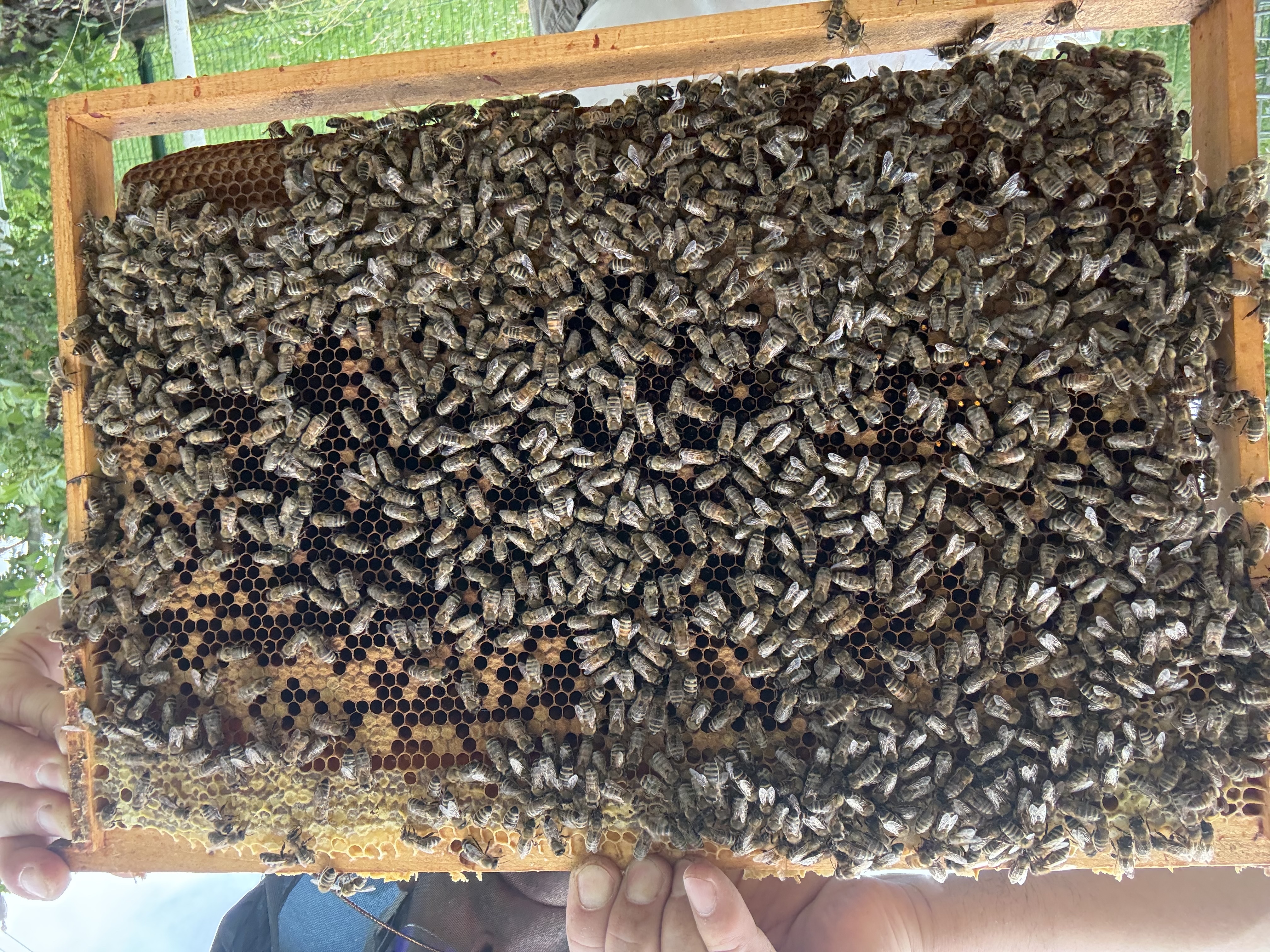
The reverse side is the most heavily covered with bees, suggesting the heart of the colony's activity, likely with brood and ample resources.
This frame is almost entirely obscured by a very dense cluster of bees on both sides, suggesting the core of the brood nest and heavy bee activity. This frame represents the peak of the colony's population and brood rearing.
Frame 9
Side A
Side B
Side A
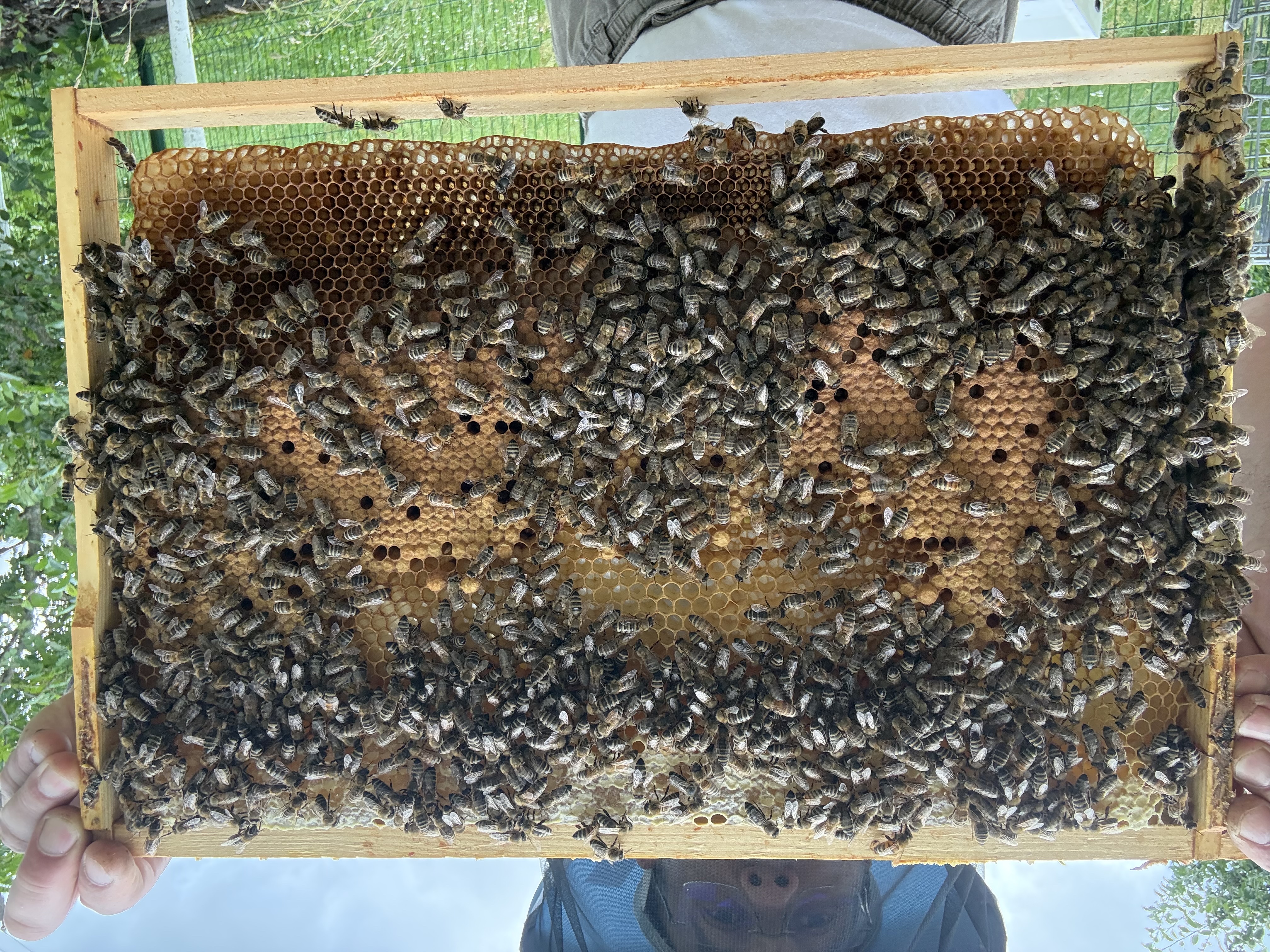
This side of the frame shows a bustling bee population attending to a large area of healthy brood, with some honey visible in the upper corner.
Side B
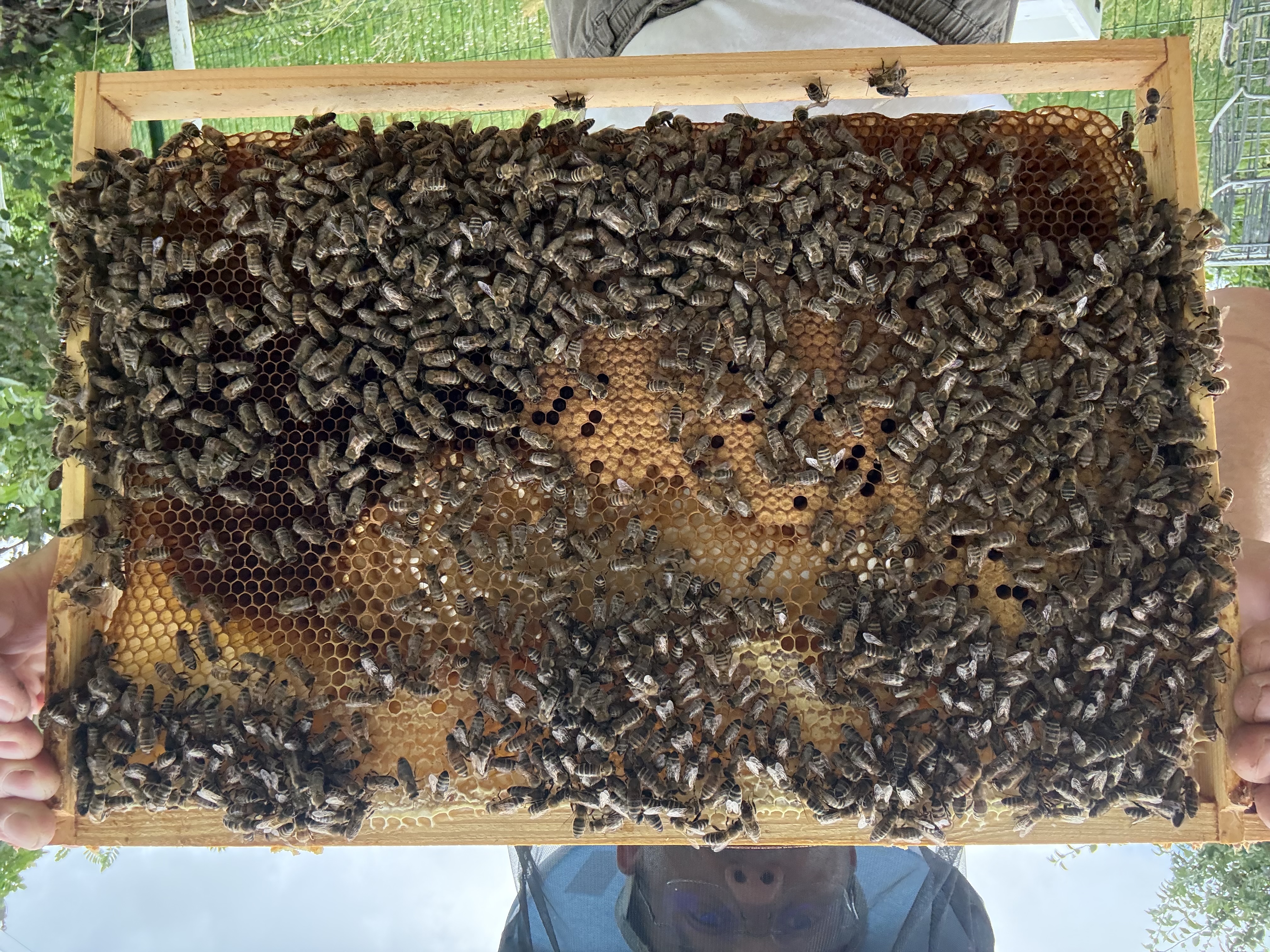
The reverse side of the frame reveals a continued strong presence of worker bees, a healthy brood pattern, and additional honey stores in the upper right section.
Both sides of this frame demonstrate a thriving colony with extensive brood patterns, indicating a laying queen is active within the hive. The frame also contains a mix of developing brood, worker bees, and modest honey and pollen stores to support the growing population.