Inspection Results
26 Aug 2026
Hive #909 · 20 frame sides captured
92
Colony Strength
Strong
Monitor honey stores closely and consider supplemental feeding if the natural nectar flow is insufficient, particularly to support the large brood-rearing efforts. Perform a varroa mite check to ensure colony health.
Queen Status
Queen present and actively laying, though not visually spotted
Brood Pattern
Excellent and consistent, with high coverage across most frames
Honey Stores
Low. Supplementation may be required, especially if nectar flow diminishes.
Varroa Risk
Unknown; recommend performing a mite wash or sugar roll to assess
AI Observations
The colony is robust and thriving with a large bee population and an excellent brood pattern, indicating a strong and actively laying queen, even though she was not sighted. However, honey stores are notably low, which could become problematic.
Frame Analysis — 10 frames
Frame 1
Side A
Side B
Side A
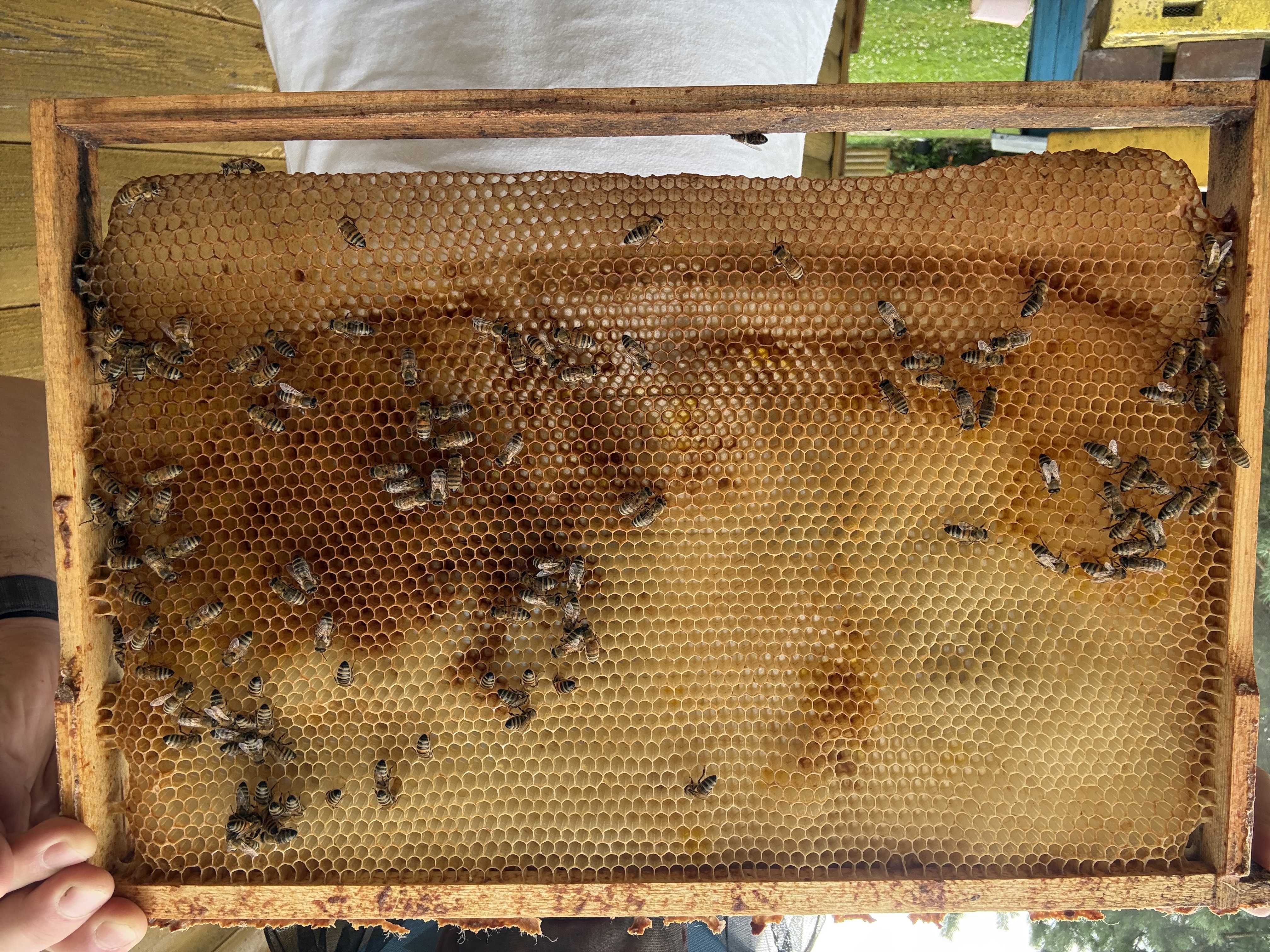
This side of the frame shows scattered bees, a mix of open and capped cells, likely containing brood and pollen, with a small area of capped honey in the top left.
Side B
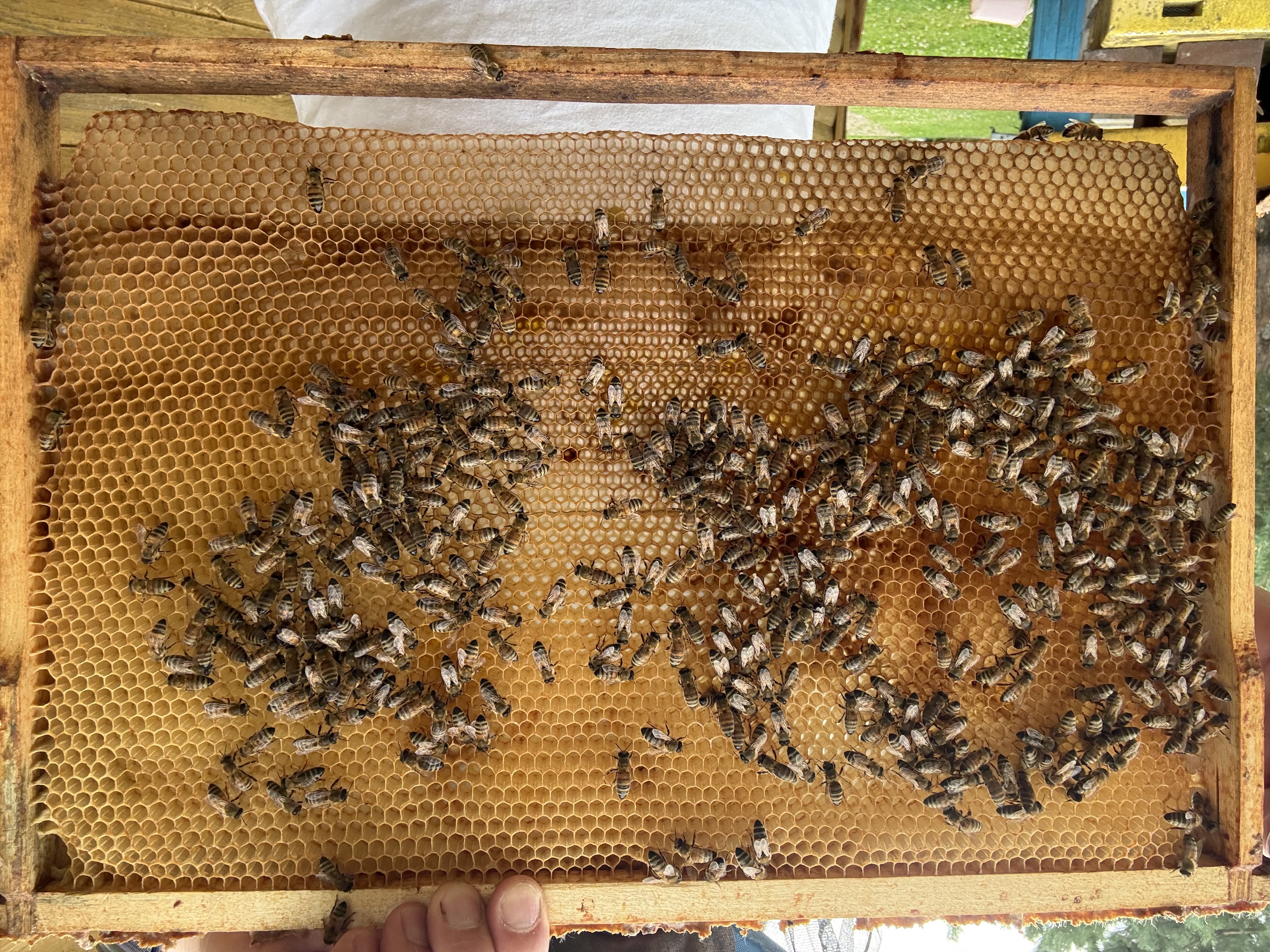
This side features more bees than the first, with a central area containing open and capped cells, suggesting active brood and pollen storage, and minor honey reserves.
Side A shows scattered bees with a mix of brood/pollen and a small amount of honey, while Side B has more bees, a central brood/pollen area, and minor honey reserves. This frame is actively used for brood and pollen storage, with minimal honey.
Frame 2
Side A
Side B
Side A
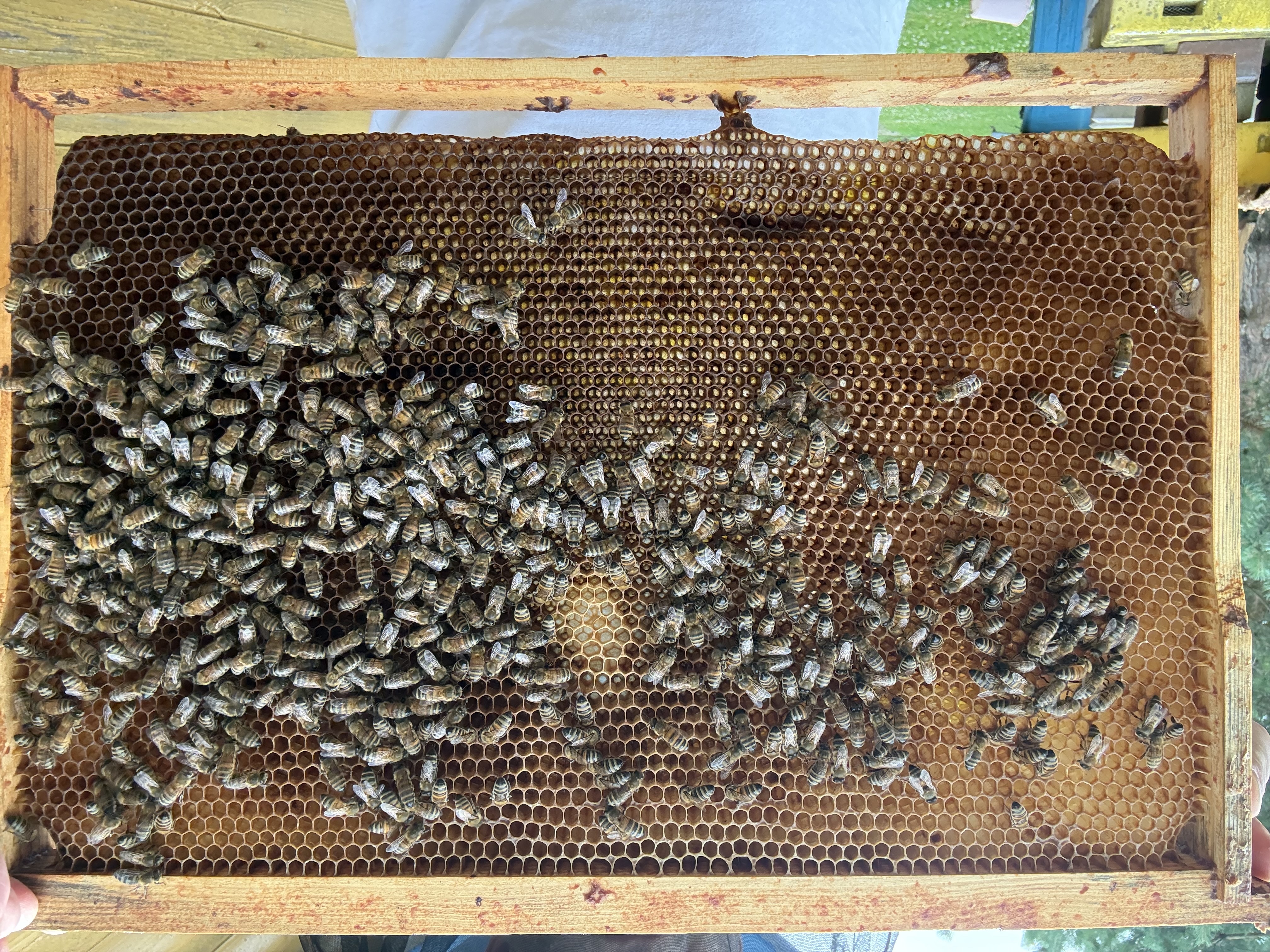
A dense cluster of bees occupies the majority of this frame side, likely attending to a substantial amount of brood, with minimal honey visible at the top edge.
Side B
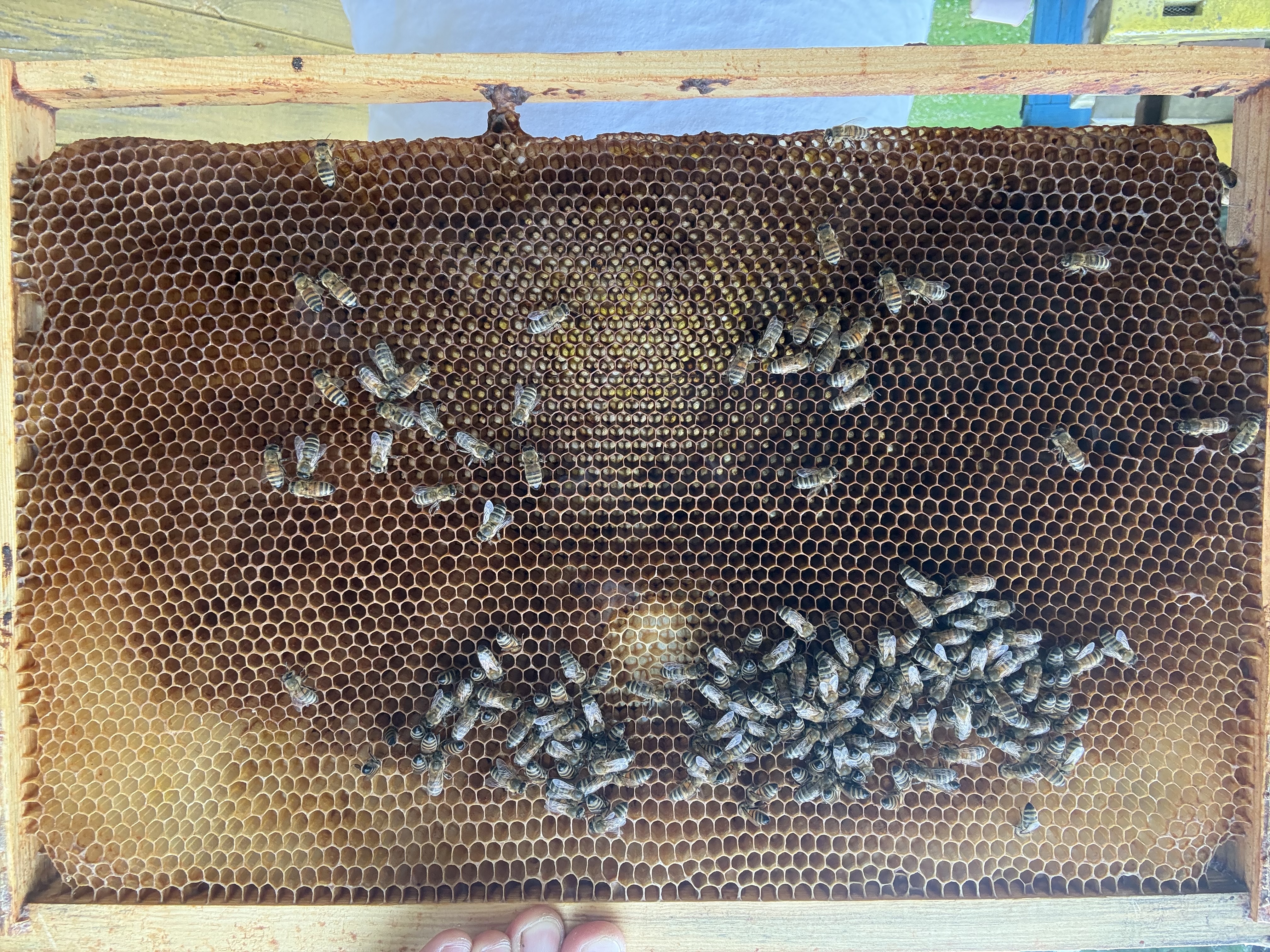
This side has fewer bees, revealing a central patch of dark, possibly capped brood, with some darker cells, likely honey, located in the upper corners.
Side A is densely covered with bees, likely attending to a large brood area, with little honey, whereas Side B has fewer bees, revealing a central patch of capped brood and some honey in the upper corners. This frame displays a good amount of brood, with a significant bee population concentrated on one side.
Frame 3
Side A
Side B
Side A
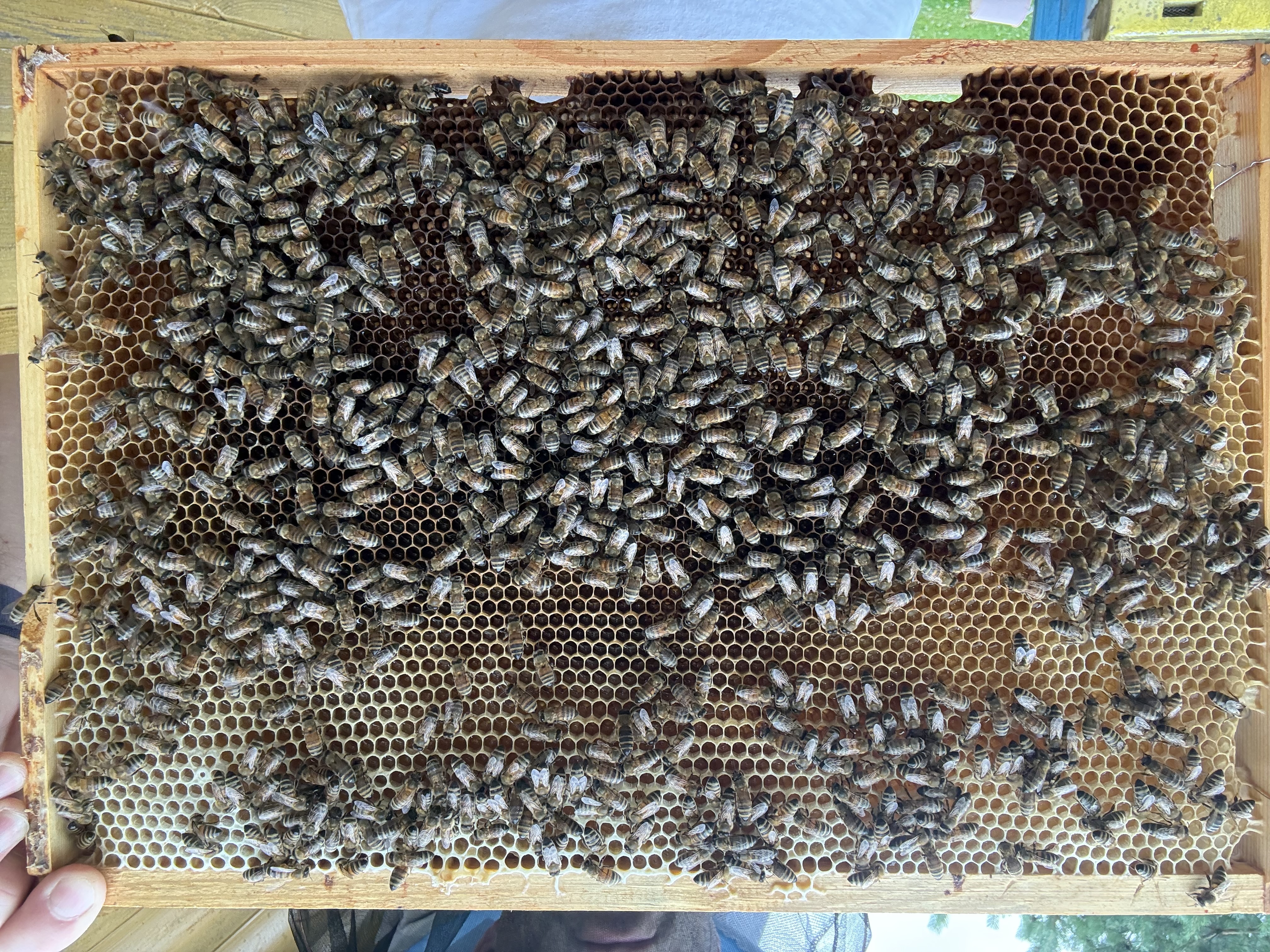
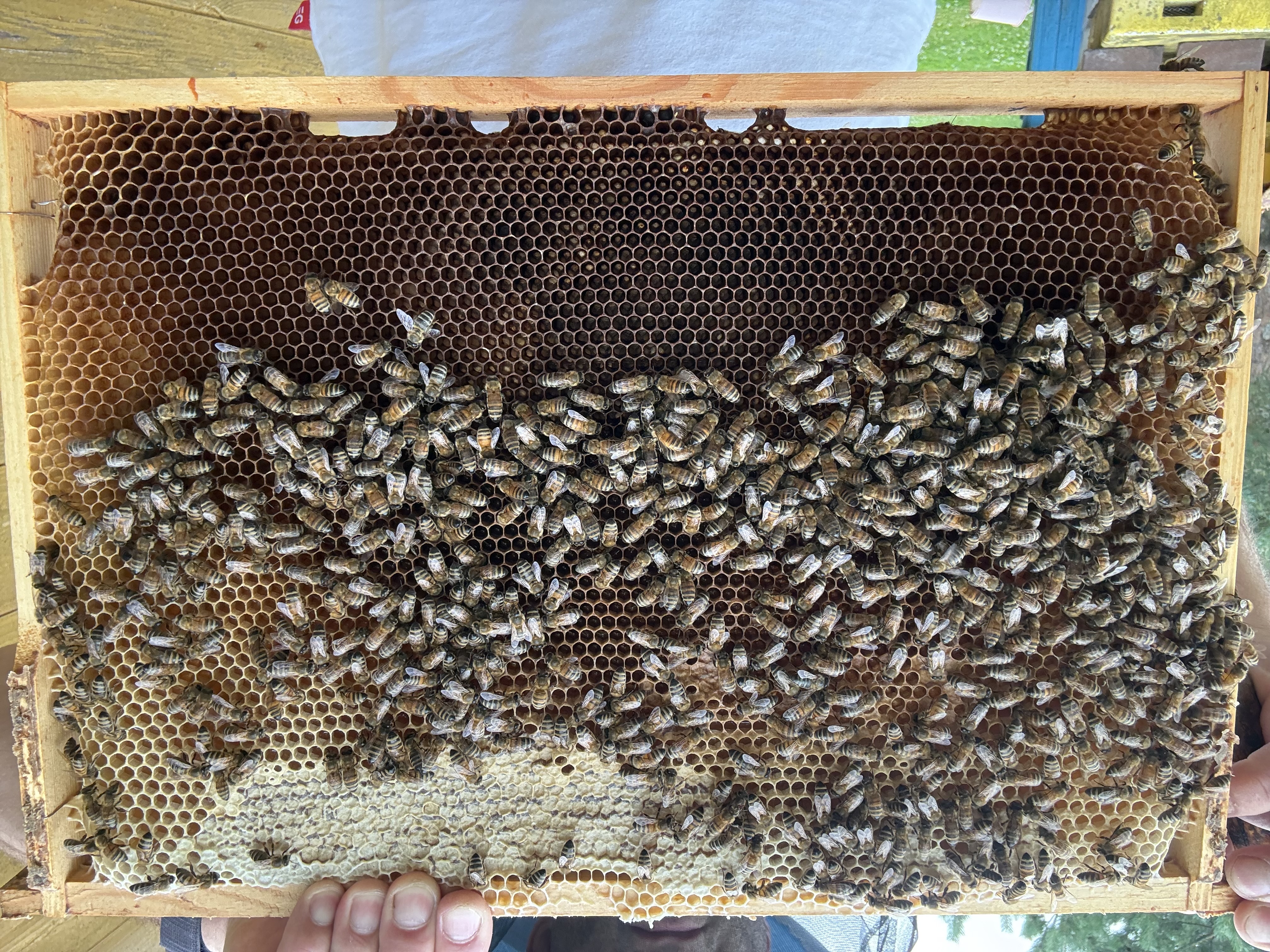
This frame side is heavily covered with a large cluster of bees, indicating a strong presence and likely extensive brood activity beneath them.
Side B
An even larger and denser cluster of bees covers this side of the frame, strongly suggesting a healthy amount of brood and capped honey in the upper right.
Both sides of this frame are heavily covered with very dense clusters of bees, implying substantial brood activity beneath them, with Side B also showing some capped honey in the upper right. This frame is teeming with bees, strongly suggesting a large brood nest and some honey stores.
Frame 4
Side A
Side B
Side A
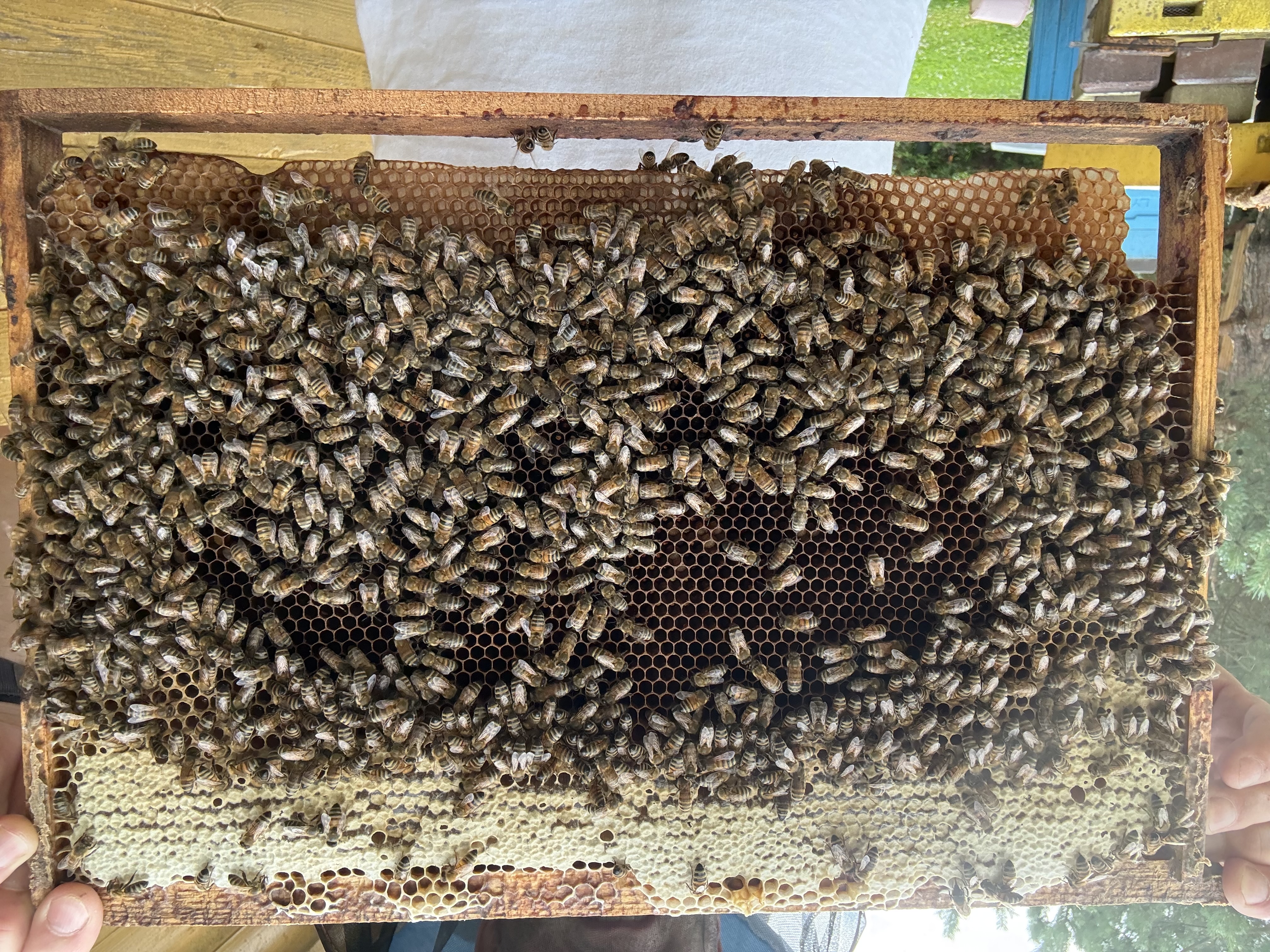
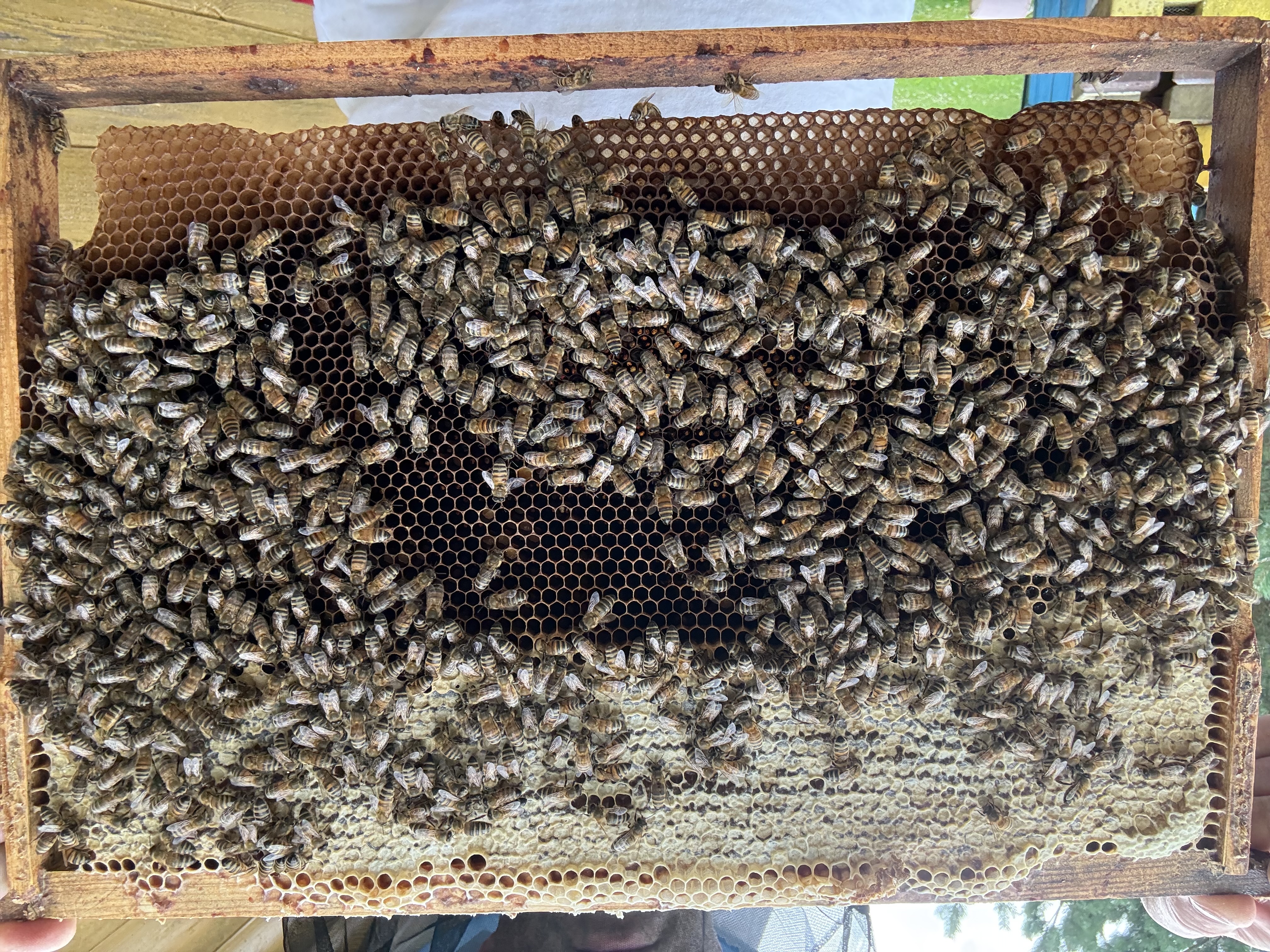
This frame side is almost entirely obscured by a very dense population of bees, indicating a robust and active brood nest.
Side B
A large number of bees cover most of this side, with a noticeable band of capped honey present across the upper portion of the frame.
Both frame sides are almost entirely obscured by very dense bee populations, indicating robust and active brood nests. Side B features a more noticeable band of capped honey across its upper portion. This frame is heavily populated with bees, indicative of a strong brood nest and some capped honey.
Frame 5
Side A
Side B
Side A
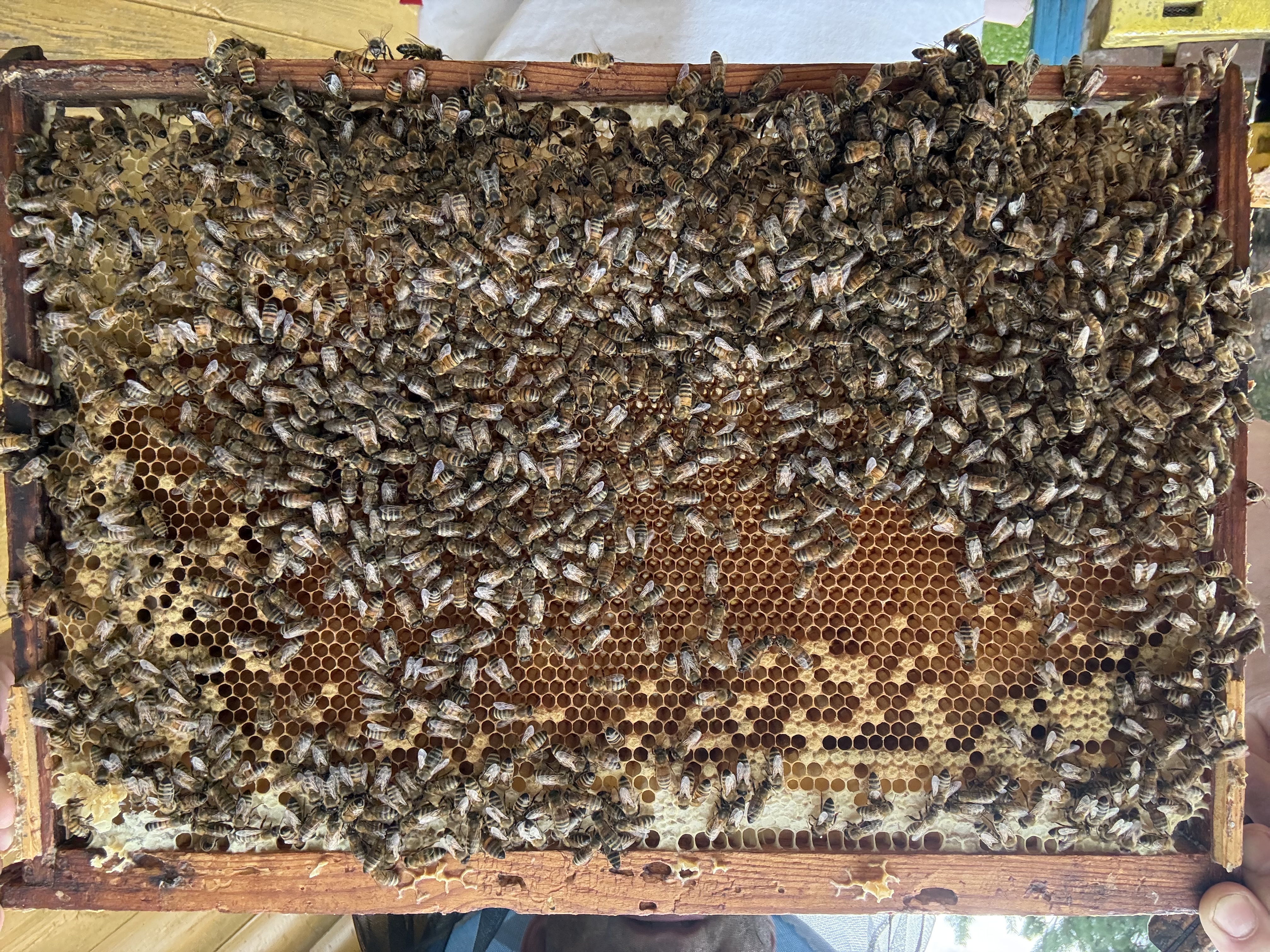
Many bees are spread across this frame side, densely populating the central areas where brood is presumed to be.
Side B
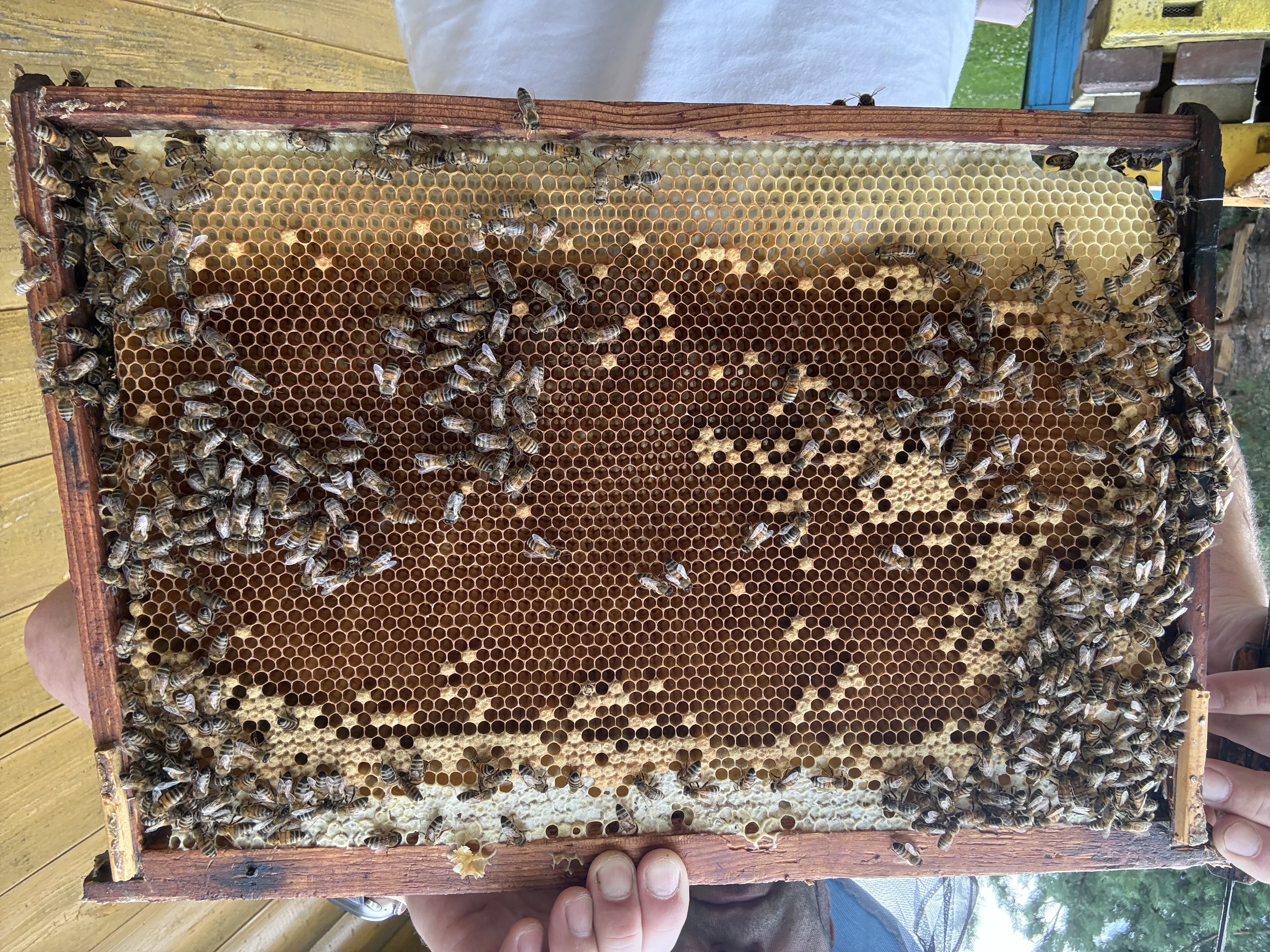
This side has fewer bees, revealing a central region of open and capped cells, likely housing young brood and pollen, topped by a band of stored honey.
Side A is covered by many bees, densely populating central areas with presumed brood, while Side B has fewer bees, revealing a central region of young brood and pollen, topped by a band of stored honey. This frame shows a strong bee presence on one side, with the other side revealing a mix of brood, pollen, and honey stores.
Frame 6
Side A
Side B
Side A
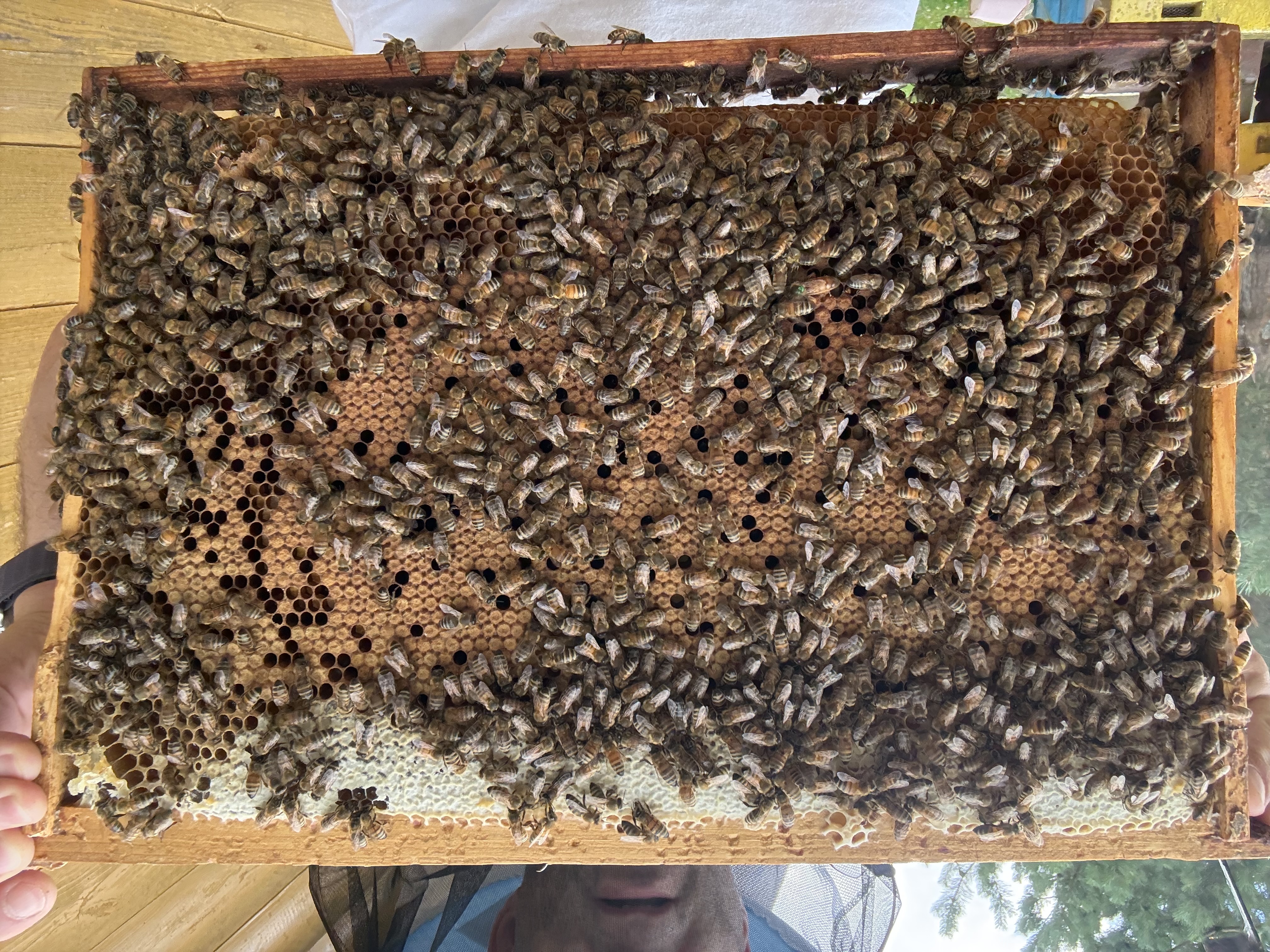
A very high density of bees covers nearly the entire frame side, indicating strong activity and an extensive brood area.
Side B
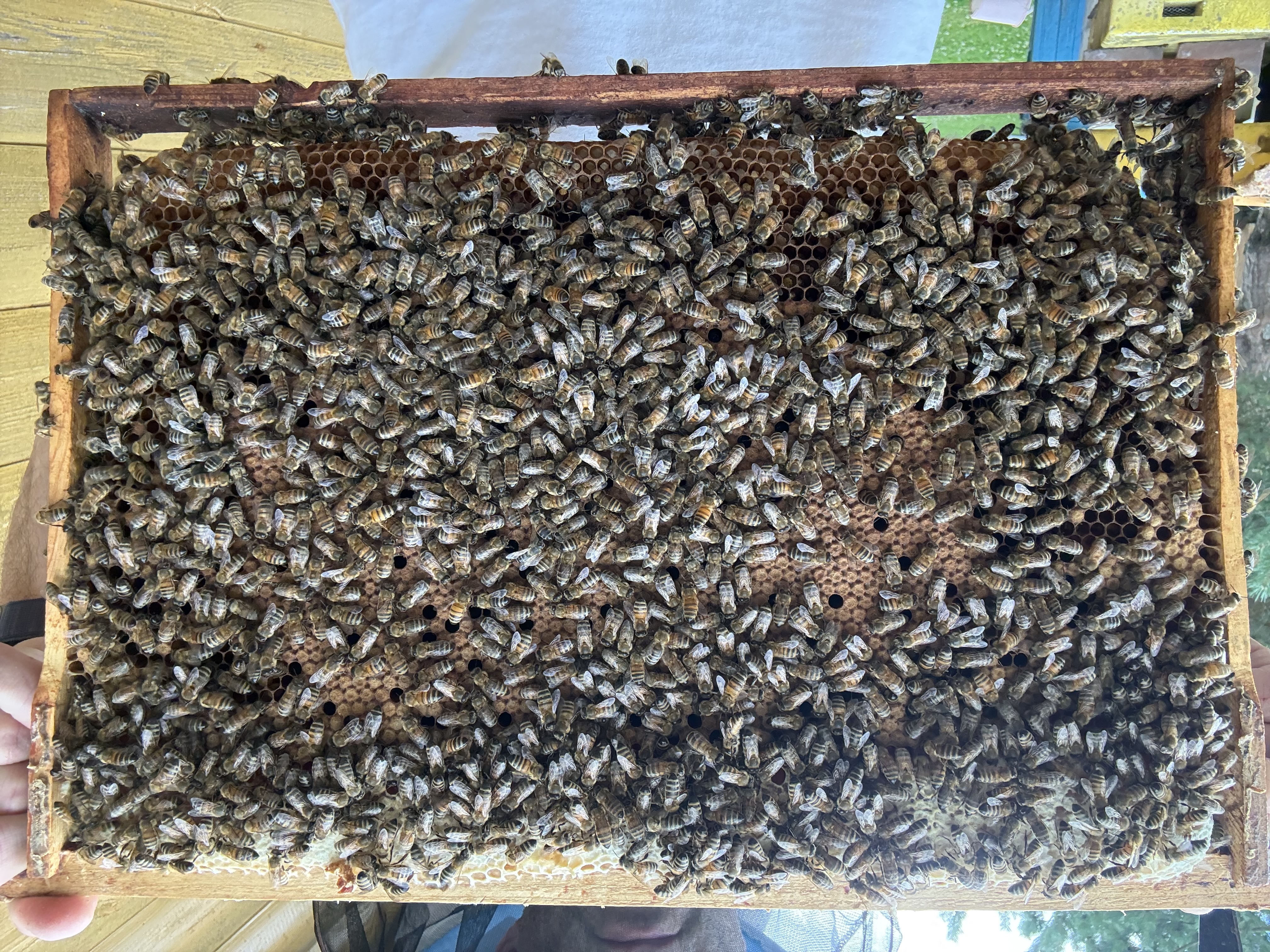
This frame side is almost completely packed with bees, suggesting a robust population and a very large brood nest.
Both frame sides exhibit extremely dense bee coverage, suggesting a robust population and extensive brood areas, with Side B being almost completely packed with bees, indicating a very large brood nest. This frame is exceptionally populous, pointing to a healthy and very active brood rearing environment.
Frame 7
Side A
Side B
Side A
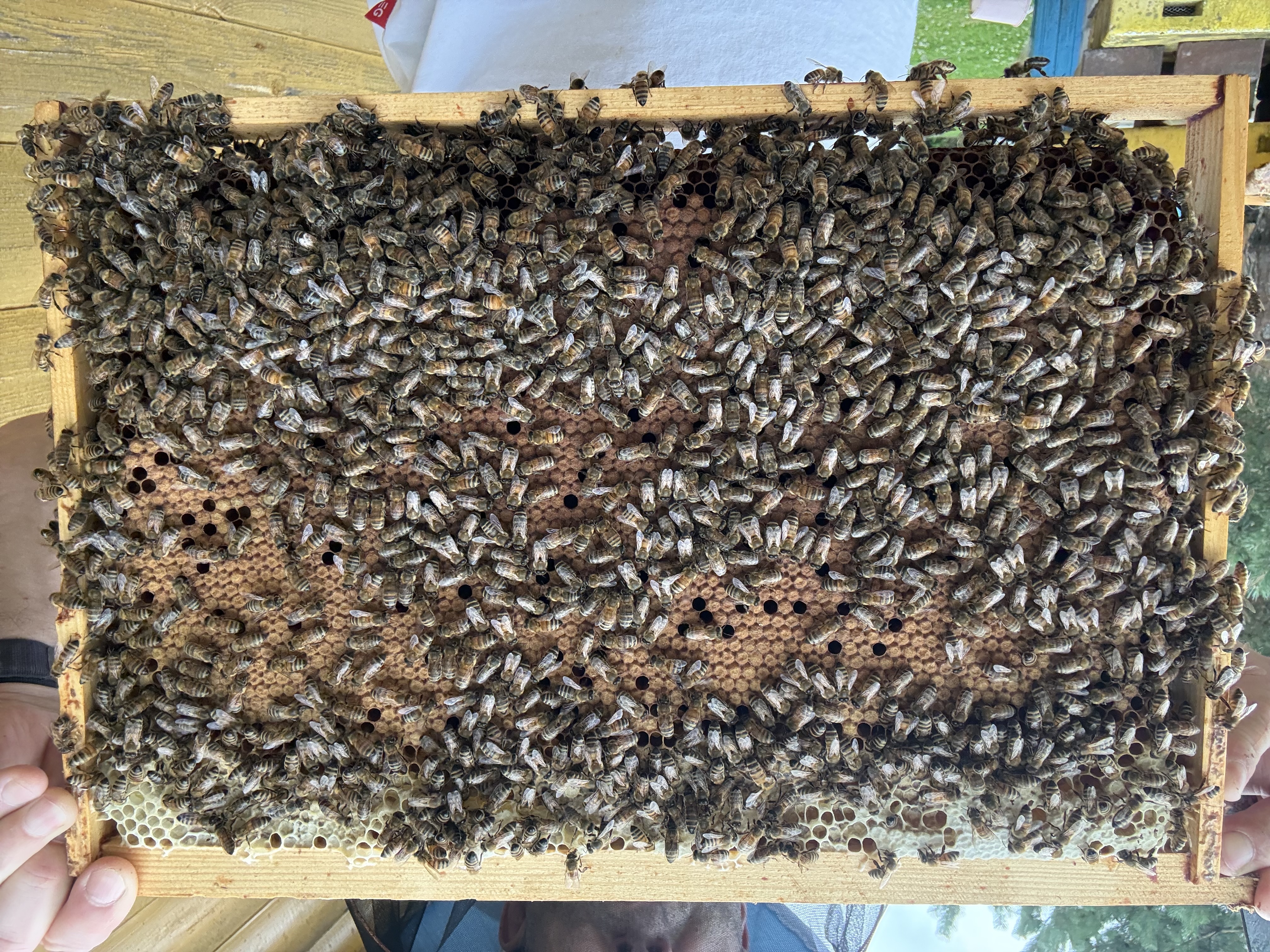
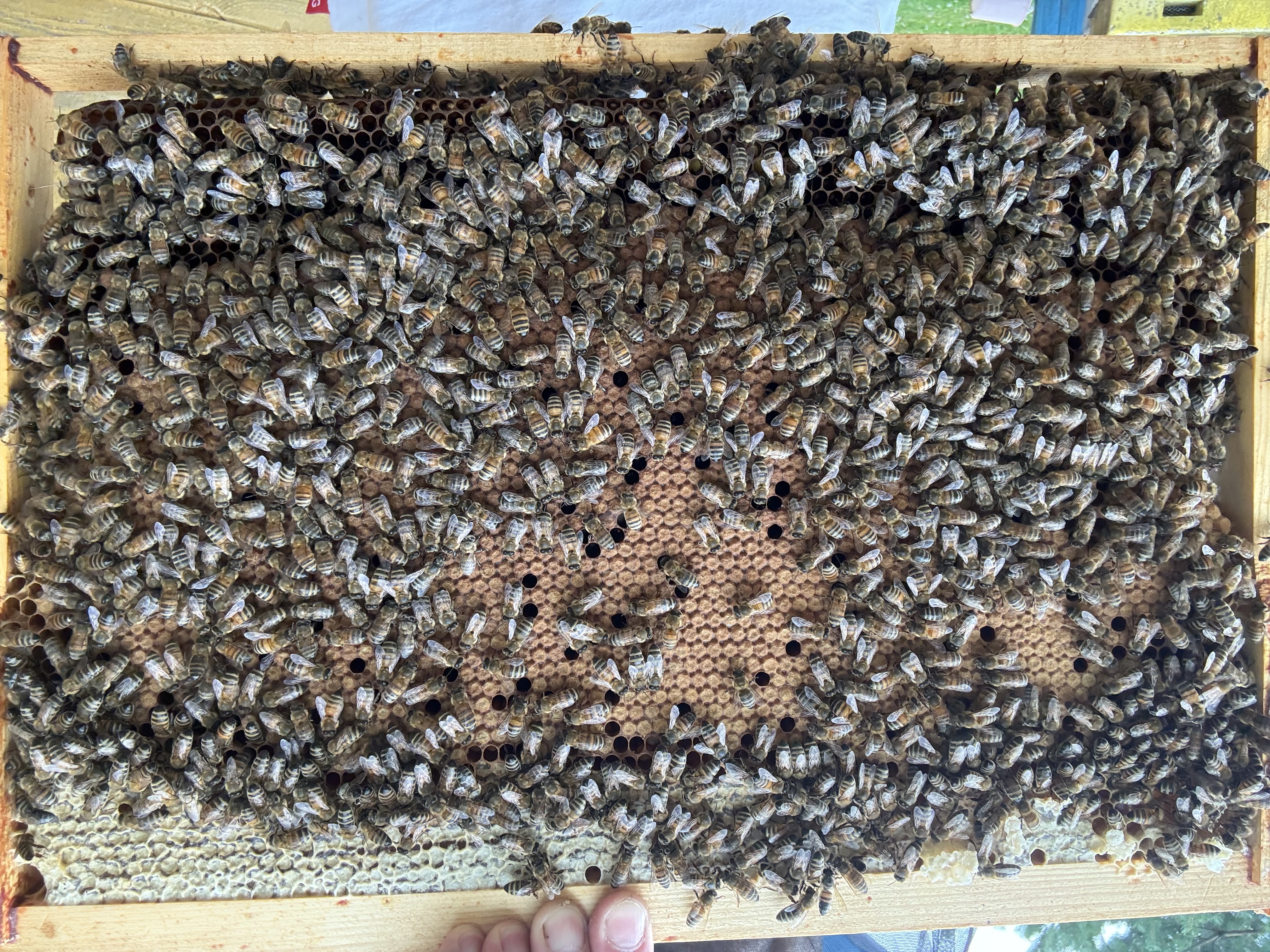
An extremely dense cluster of bees blankets this frame side, pointing to an active and extensive brood area.
Side B
The majority of this frame side is covered by a thriving bee population, suggesting significant brood rearing activity.
Both frame sides are almost entirely blanketed by extremely dense clusters of bees, indicating active and extensive brood areas, with the majority of both sides covered by a thriving bee population. This frame is densely packed with bees, confirming a very strong and active brood nest.
Frame 8
Side A
Side B
Side A
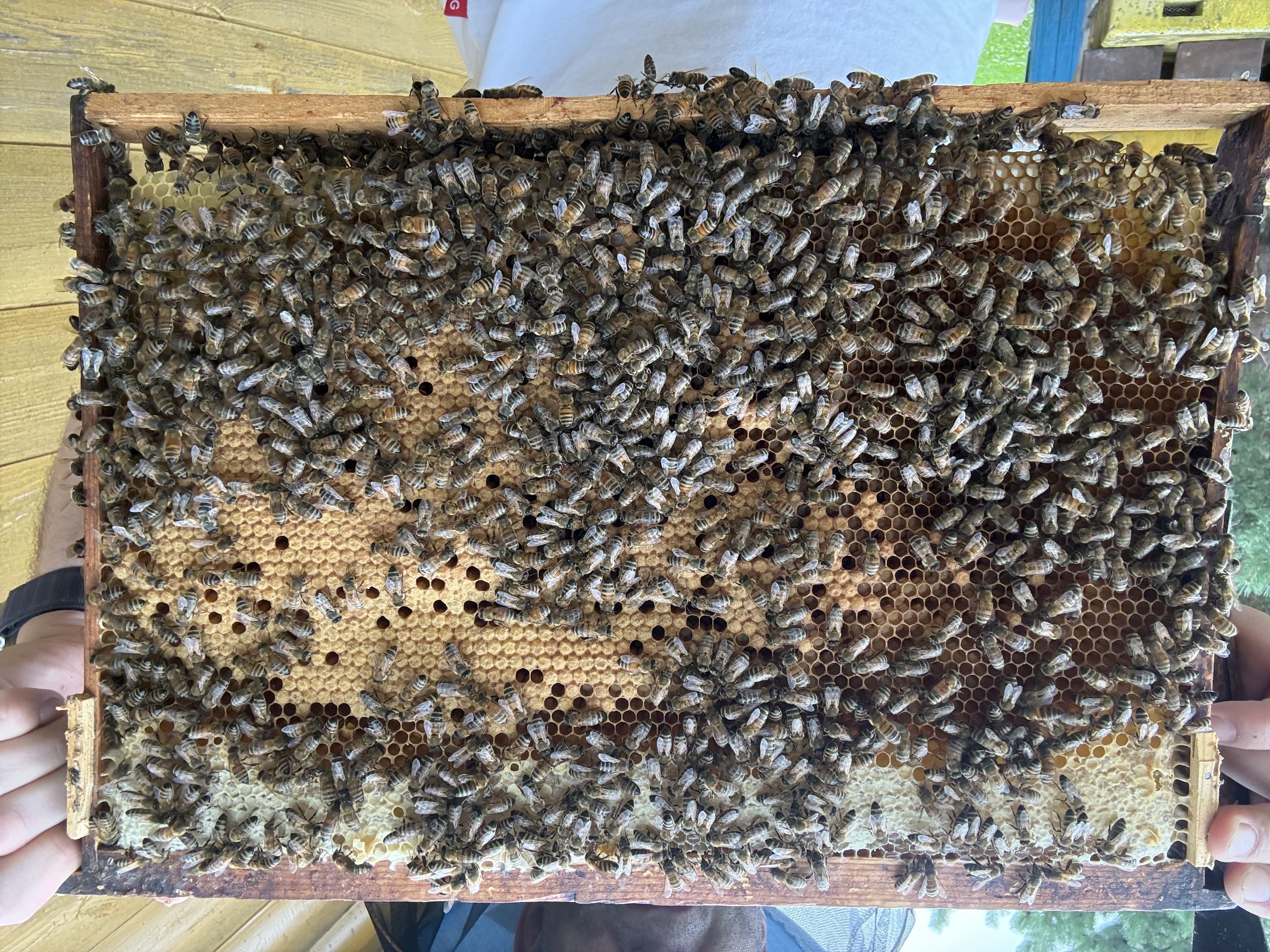
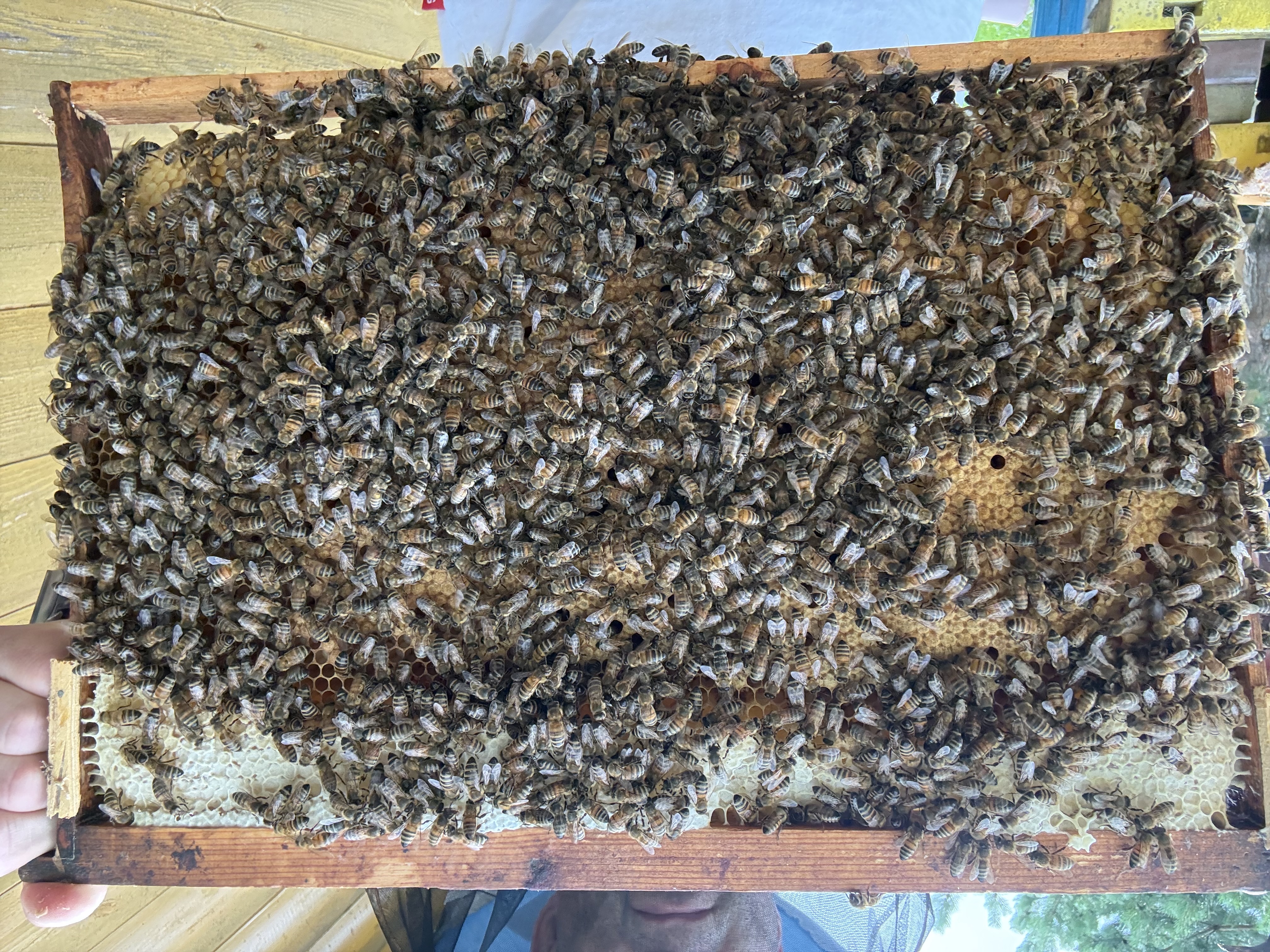
This frame side is well-covered with bees, indicating a healthy brood nest with some capped honey at the top.
Side B
A substantial number of bees populate this frame side, suggesting active brood rearing and modest honey stores along the upper edge.
Both frame sides are well-covered with substantial numbers of bees, suggesting active brood rearing and modest honey stores along the upper edges. The frames indicate a healthy brood nest with some capped honey. This frame displays a healthy bee population actively engaged in brood rearing, with noticeable honey stores.
Frame 9
Side A
Side B
Side A
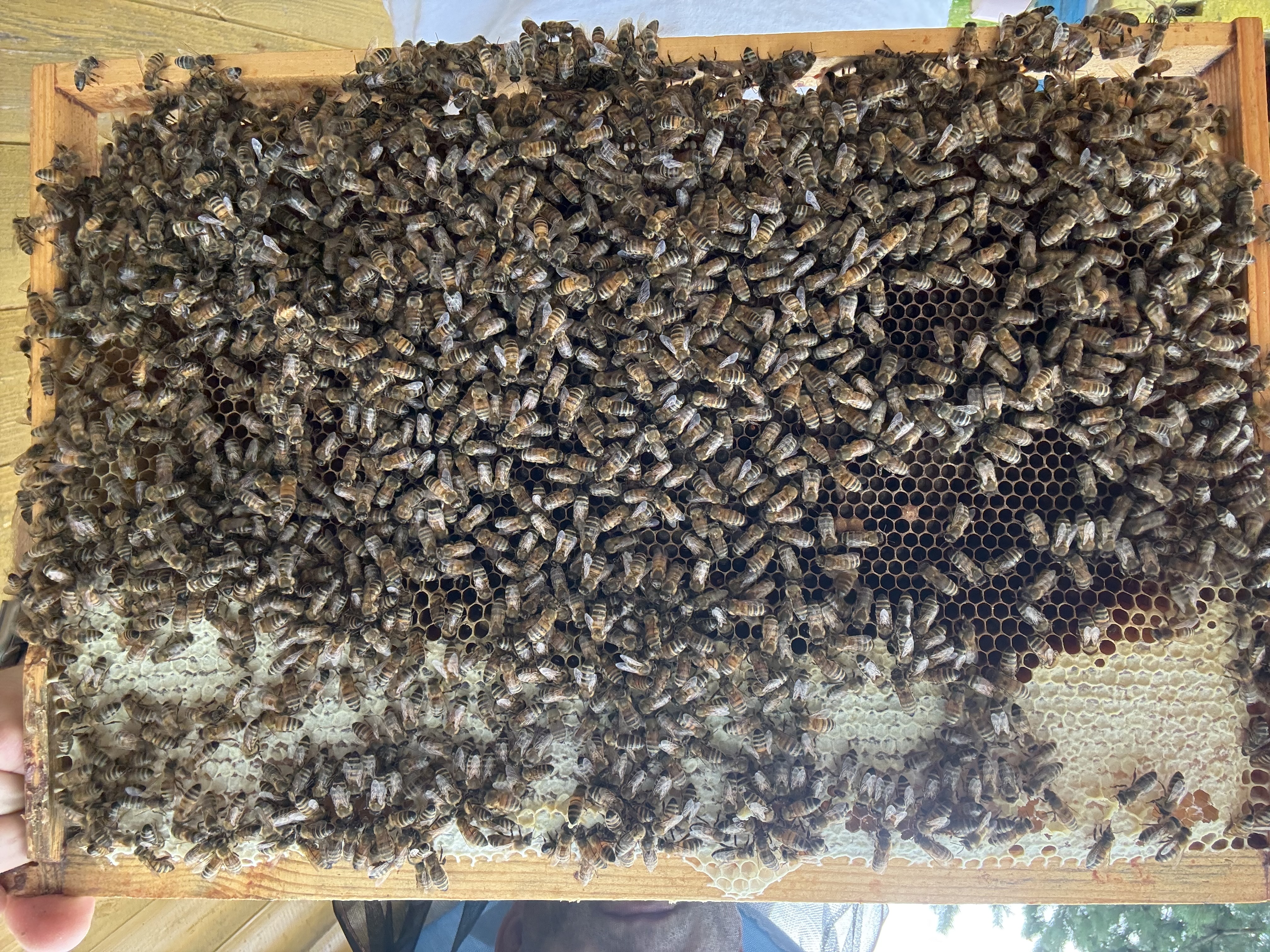
This side of the frame is rich with both capped and uncapped brood, indicating a strong laying pattern, complemented by moderate honey and pollen stores in the upper section.
Side B
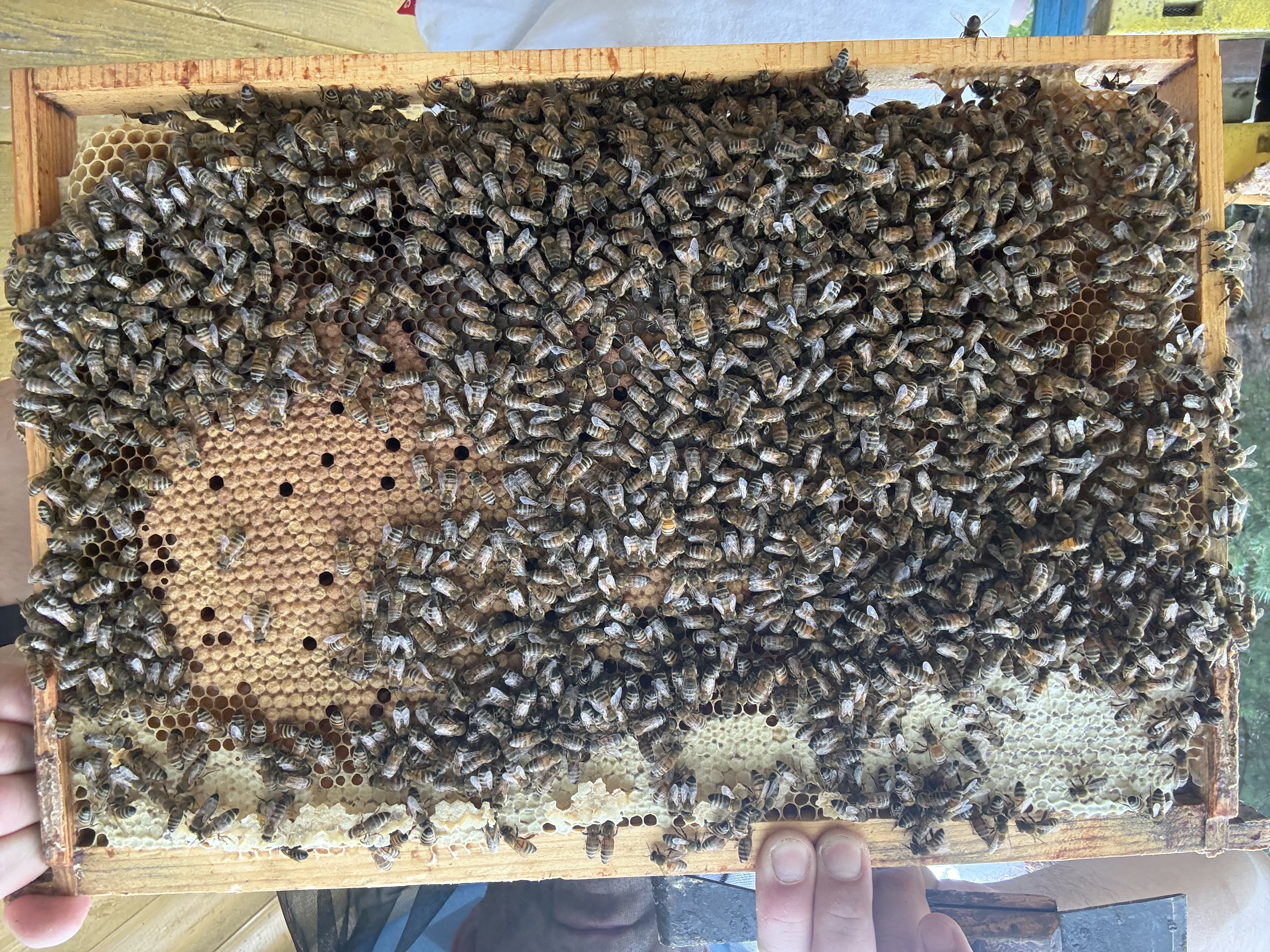
Featuring abundant capped and uncapped brood, this side confirms vigorous queen activity, while also showing some honey resources along the frame's perimeter.
Both sides of this frame show extensive brood production, primarily capped brood, indicating a healthy and actively laying queen, with moderate honey reserves. The frame is densely covered with bees, suggesting a strong colony population.
Frame 10
Side A
Side B
Side A
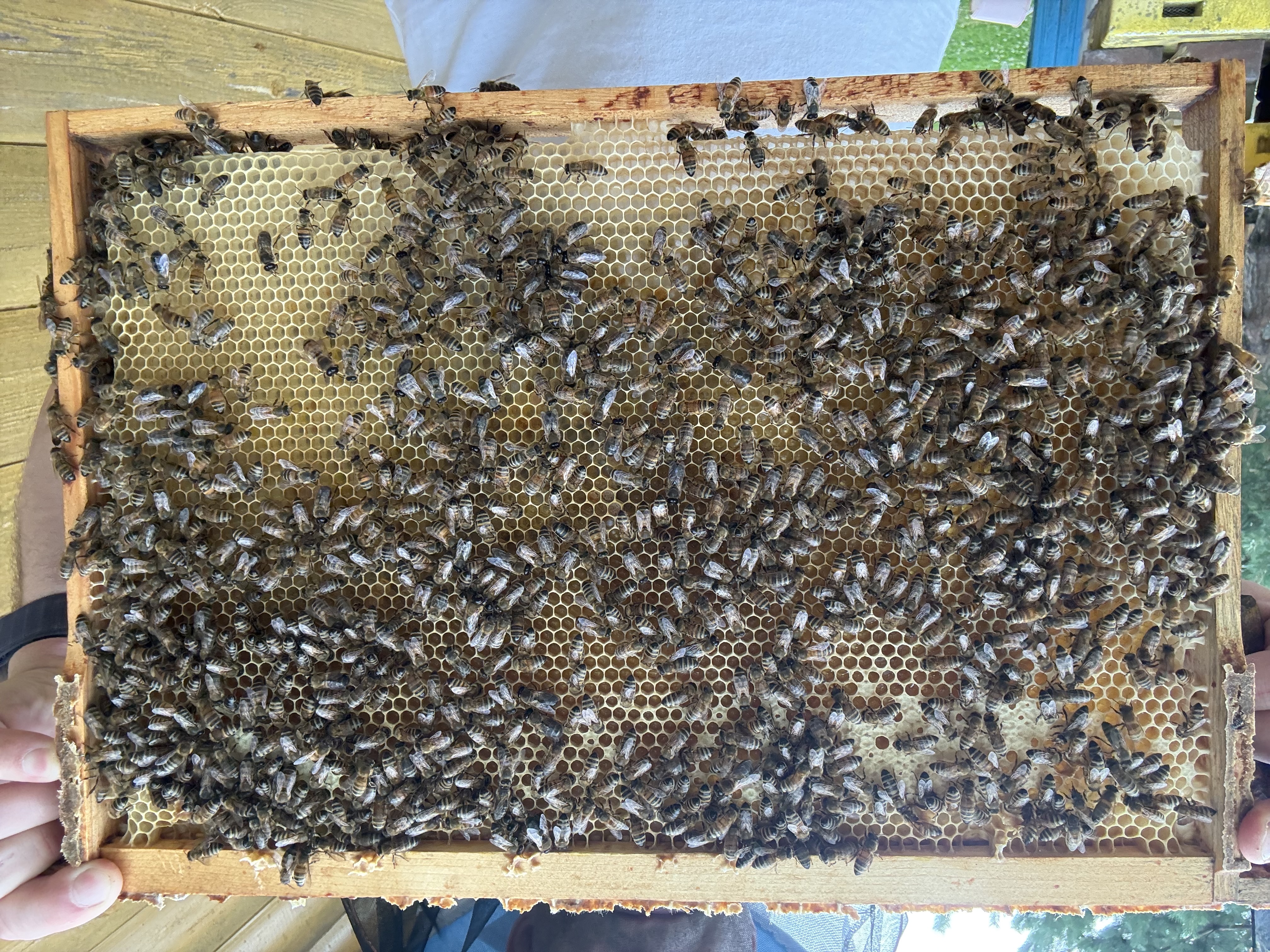
This frame side is largely dedicated to capped honey storage in the upper regions, with bees occupying most of the surface and minimal discernible brood.
Side B
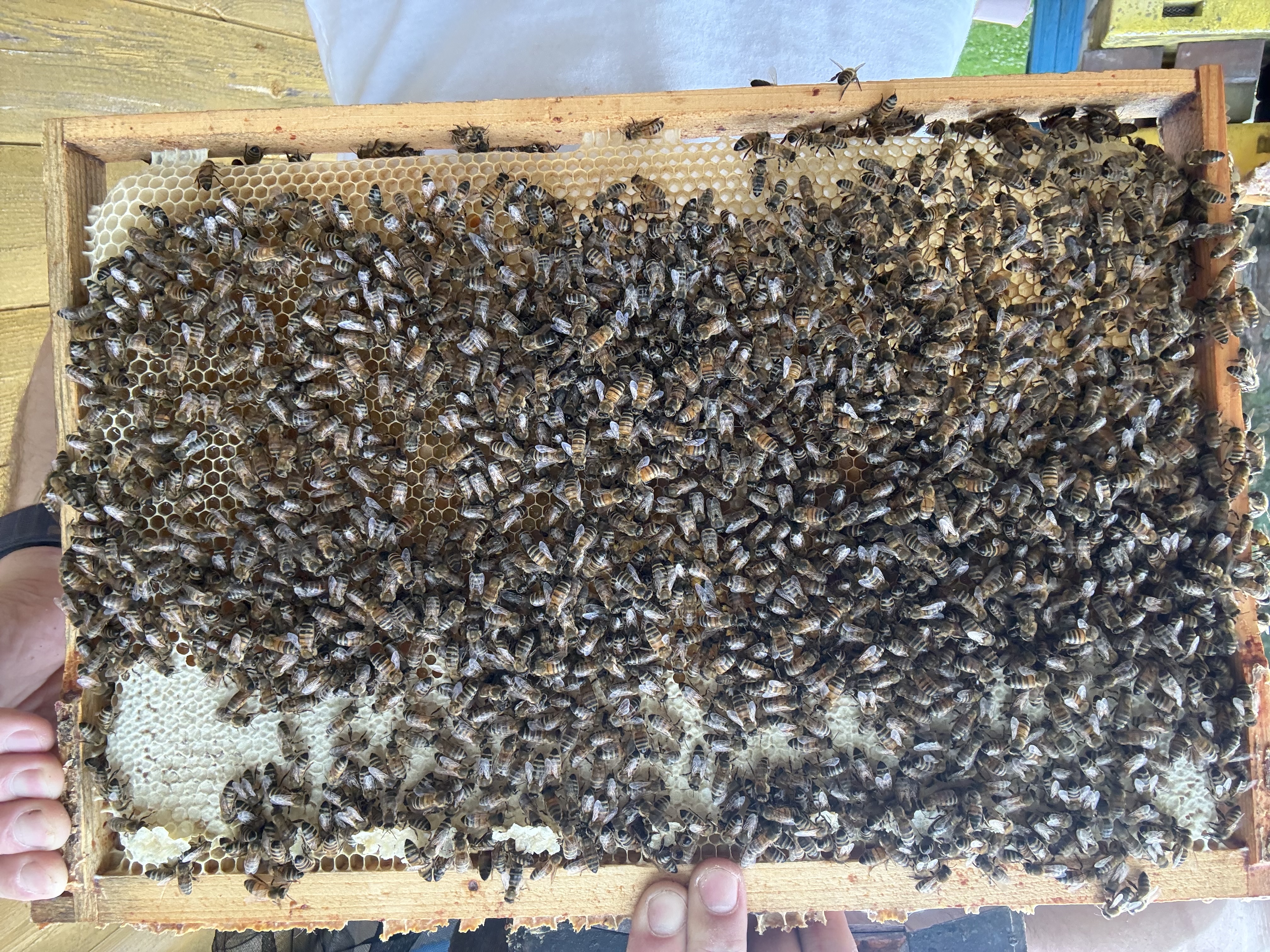
Dominated by substantial capped honey stores across its surface, this side suggests a primary function of food storage, with a dense bee population and negligible visible brood.
Both sides of this frame are heavily laden with capped honey, signifying strong nectar flow and robust provisioning by the colony. While densely covered with bees, it appears to be primarily a storage frame with very little visible brood.