Inspection Results
25 Aug 2026
Hive #0 · 20 frame sides captured
90
Colony Strength
Strong
Continue to monitor honey stores to ensure adequate reserves, especially leading into colder periods. Regular varroa mite checks are recommended to maintain colony health.
Queen Status
Queen present and laying, not sighted.
Brood Pattern
Good, solid pattern across multiple frames.
Honey Stores
Moderate
Varroa Risk
Requires monitoring
AI Observations
The colony is strong with a high bee population (6125 bees) and robust brood activity across 8 frames, indicating a healthy and active queen despite not being sighted. Honey stores are moderate. All 10 frames were thoroughly inspected, providing full coverage.
Frame Analysis — 10 frames
Frame 1
Side A
Side B
Side A
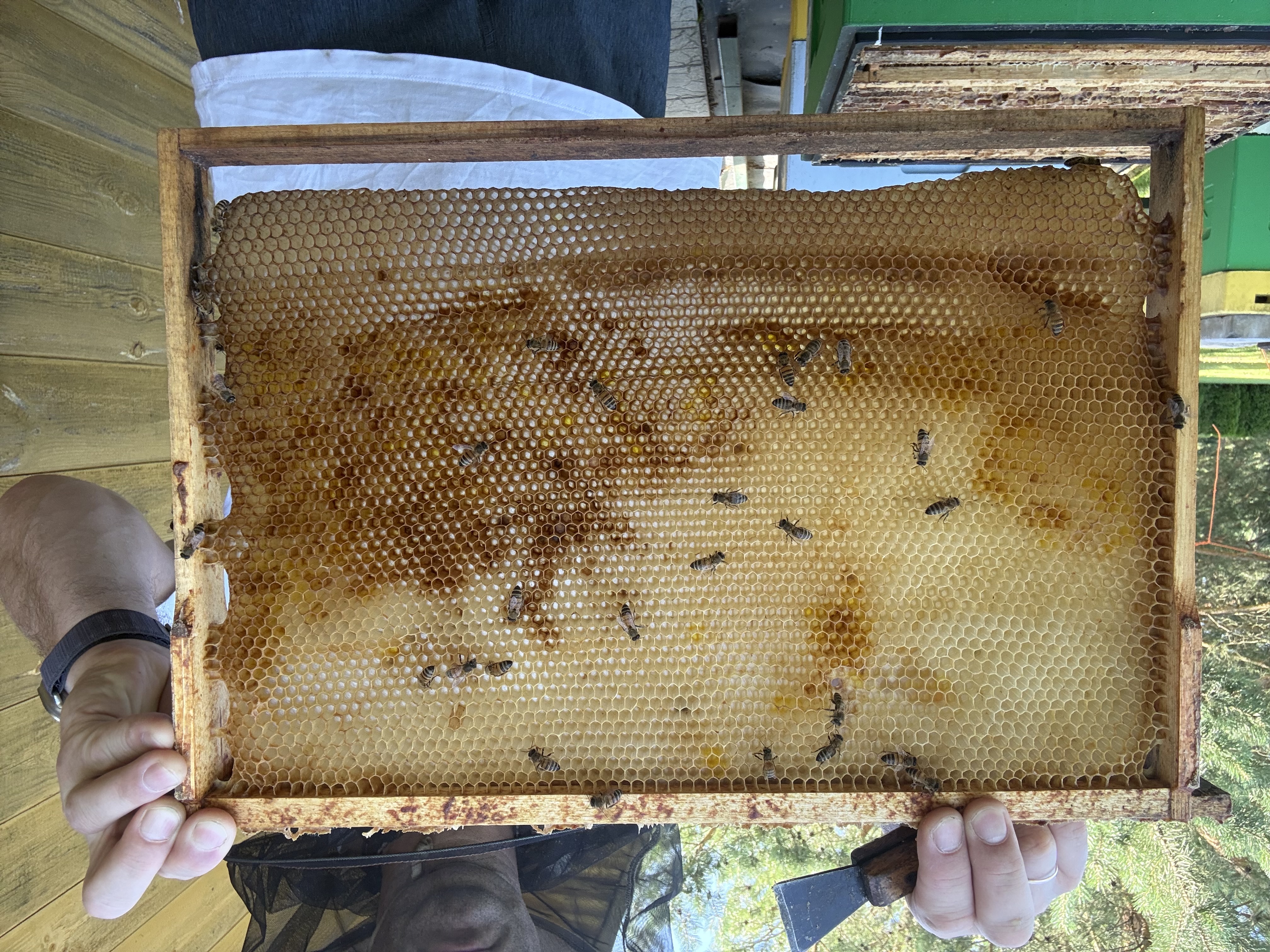
This frame shows a mix of empty cells, some uncapped honey, and a small area of capped brood with a sparse bee population.
Side B
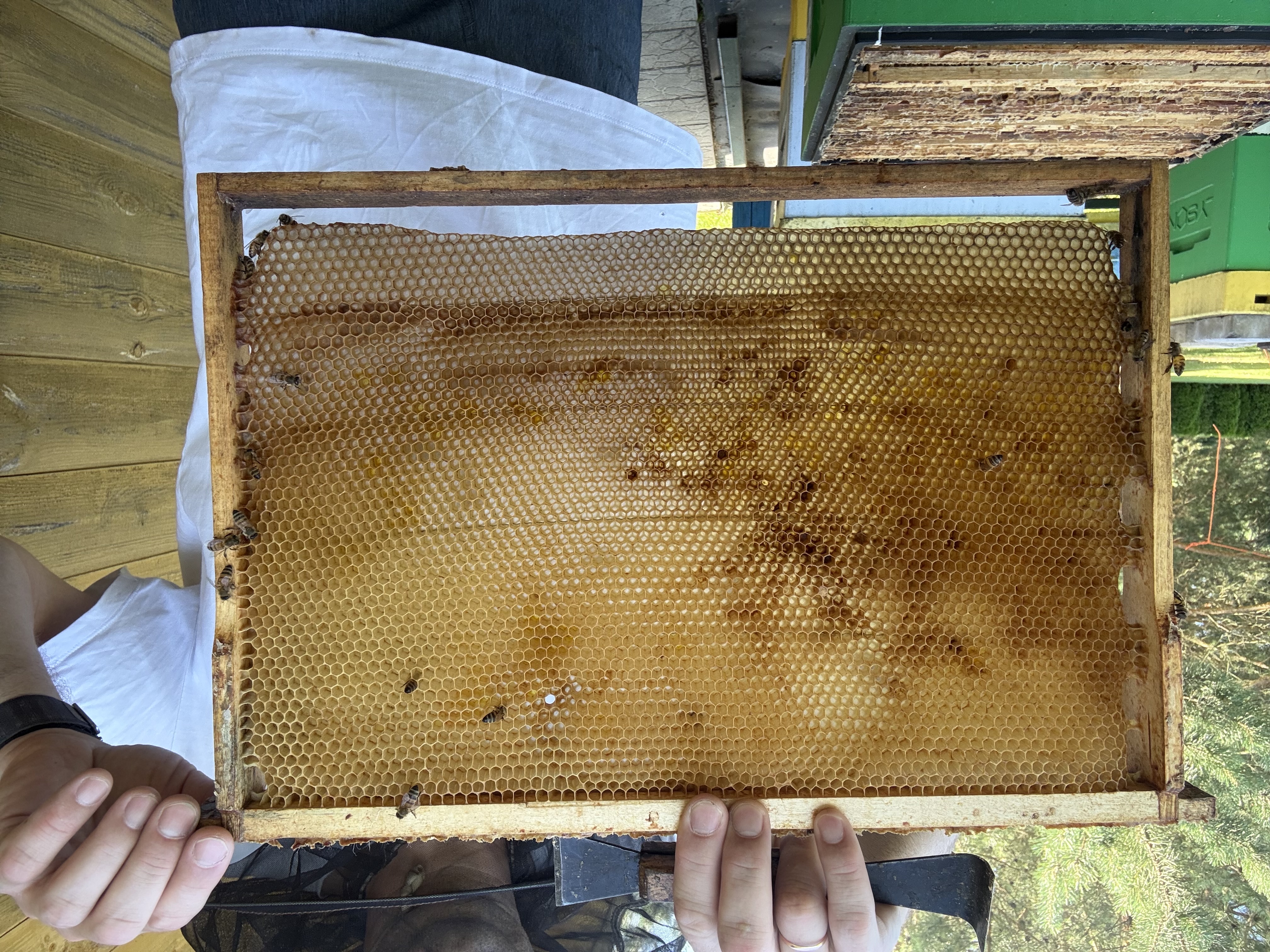
This side of the frame also presents sparse bees, a patch of capped brood, and visible uncapped honey or nectar.
This frame, on both sides, shows a low bee population, a moderate amount of uncapped honey, and a small area of capped brood in the center. The frame is generally sparse, suggesting it might be an outer frame or recently introduced.
Frame 2
Side A
Side B
Side A
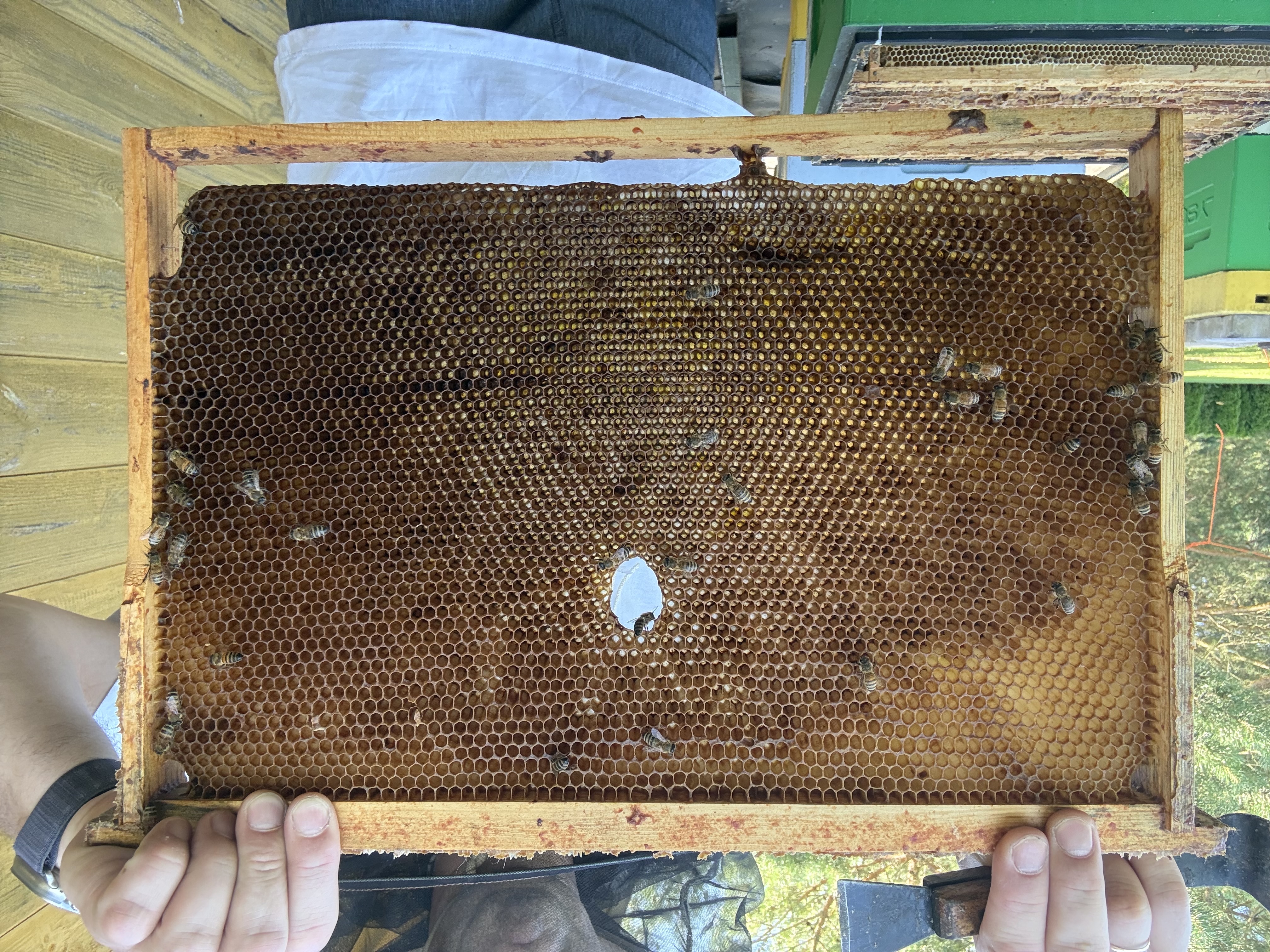
This frame contains a small cluster of bees, a central area of what appears to be old comb or dark brood, and some peripheral uncapped honey, with a notable circular hole in the center.
Side B
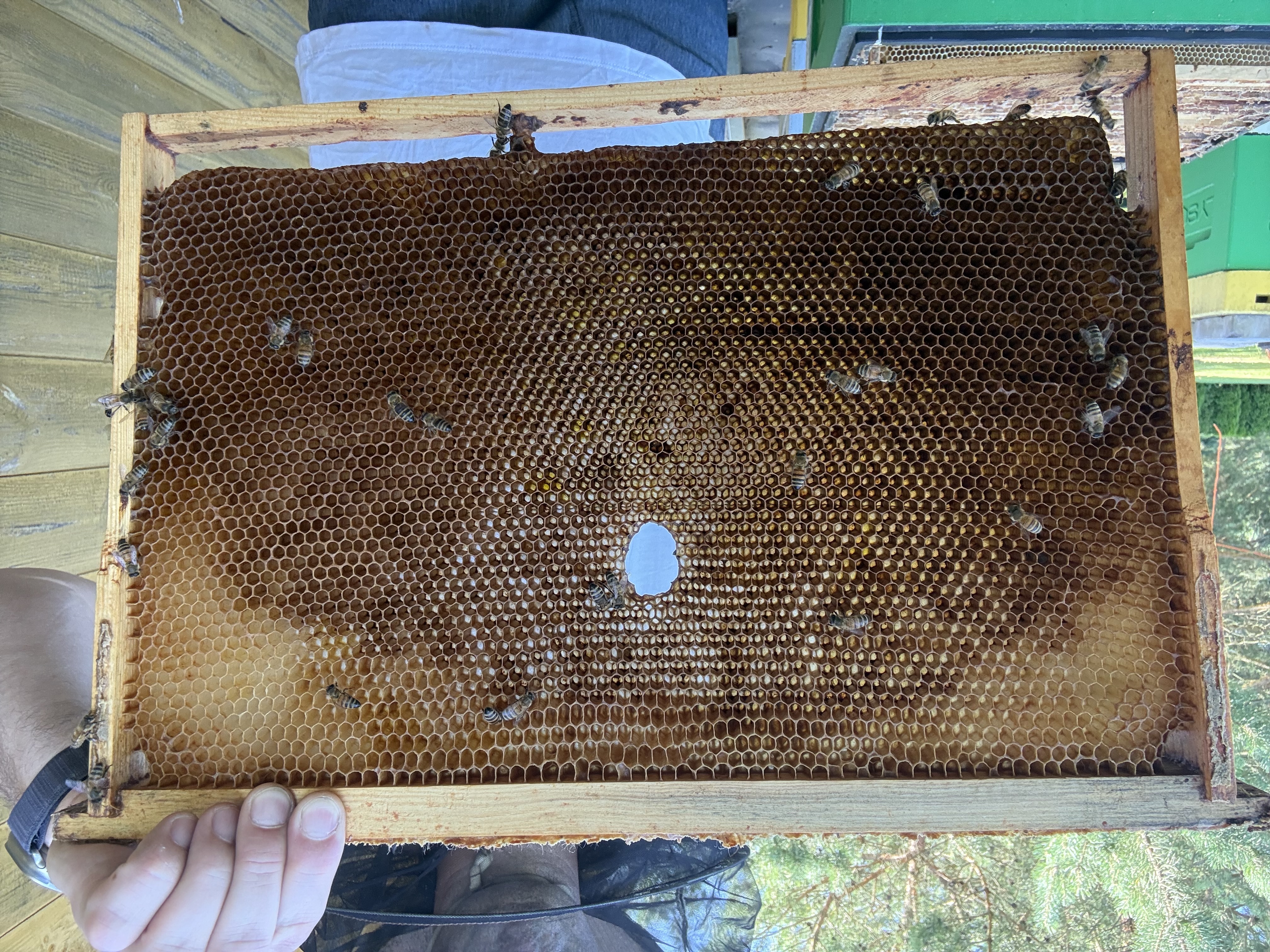
The reverse side of the frame displays a slightly higher bee count, a similar central dark area, and uncapped honey, also featuring the distinctive circular hole.
Both sides of this frame show a low to moderate bee presence, with a central region of dark comb, likely old brood comb, and some uncapped honey. A distinctive circular hole is present through the center of the frame, indicating missing comb.
Frame 3
Side A
Side B
Side A
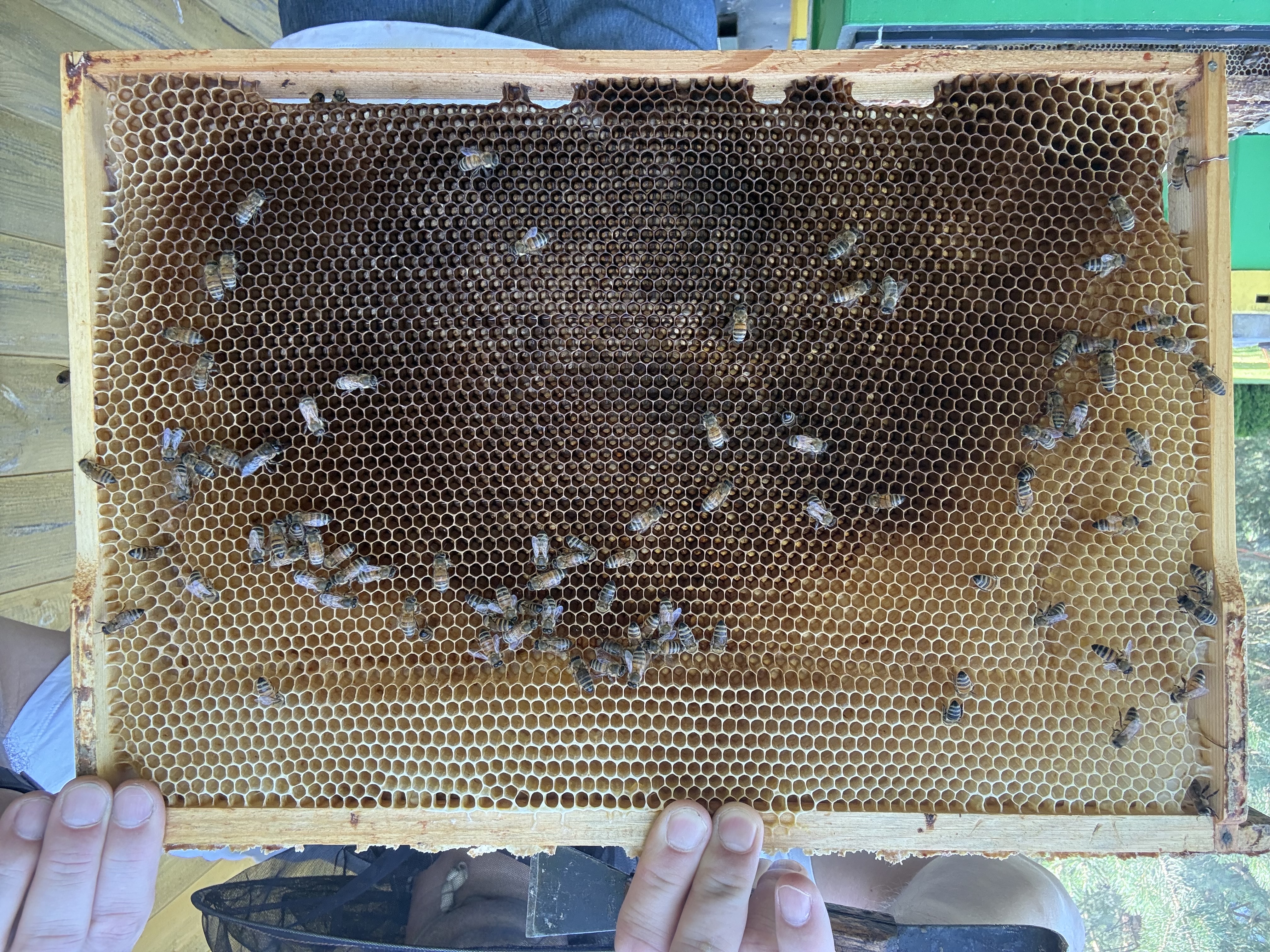
This frame features a moderate number of bees clustered around a central area of capped brood, with limited uncapped honey visible at the edges.
Side B
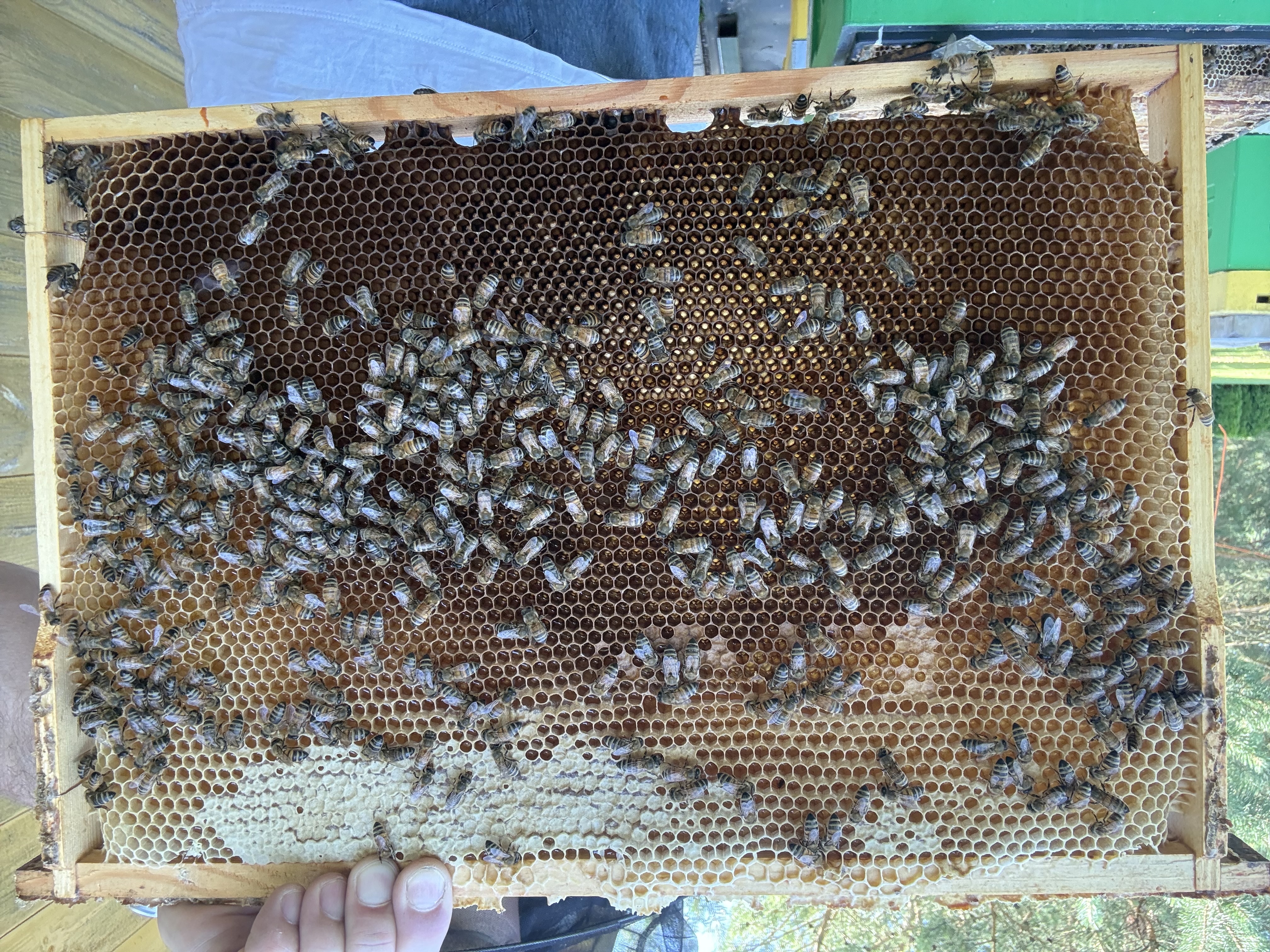
This side shows a much denser population of bees covering a significant area of capped brood, with a small amount of capped and uncapped honey at the top and edges.
This frame shows an increasing bee population from Side A to Side B, with a clear focus on brood production. Side A has a moderate amount of capped brood, while Side B is heavily populated with bees covering a substantial area of capped brood.
Frame 4
Side A
Side B
Side A
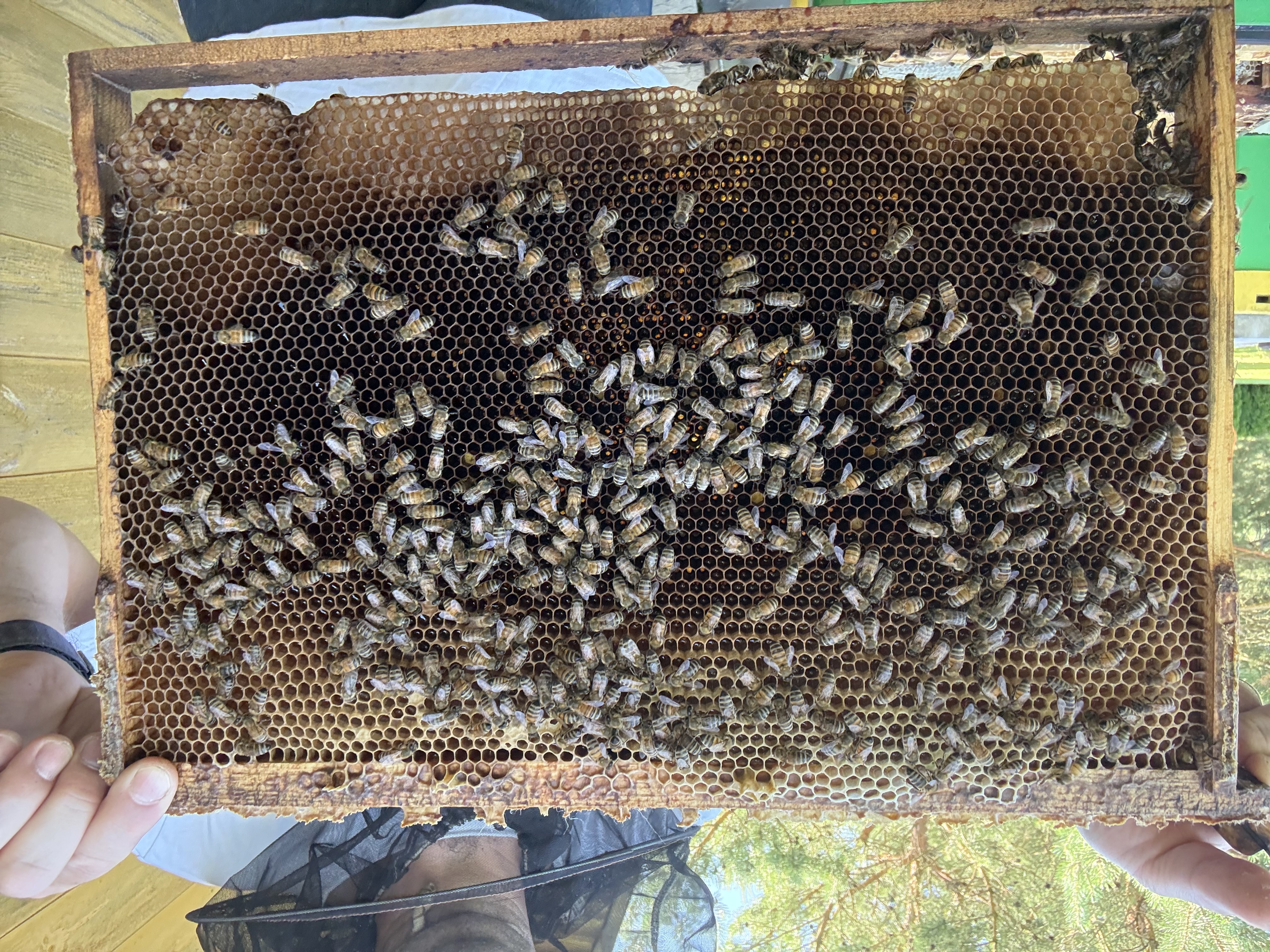
A large number of bees are actively working on this frame, which is dominated by a robust patch of capped brood and features a band of capped honey along the top.
Side B
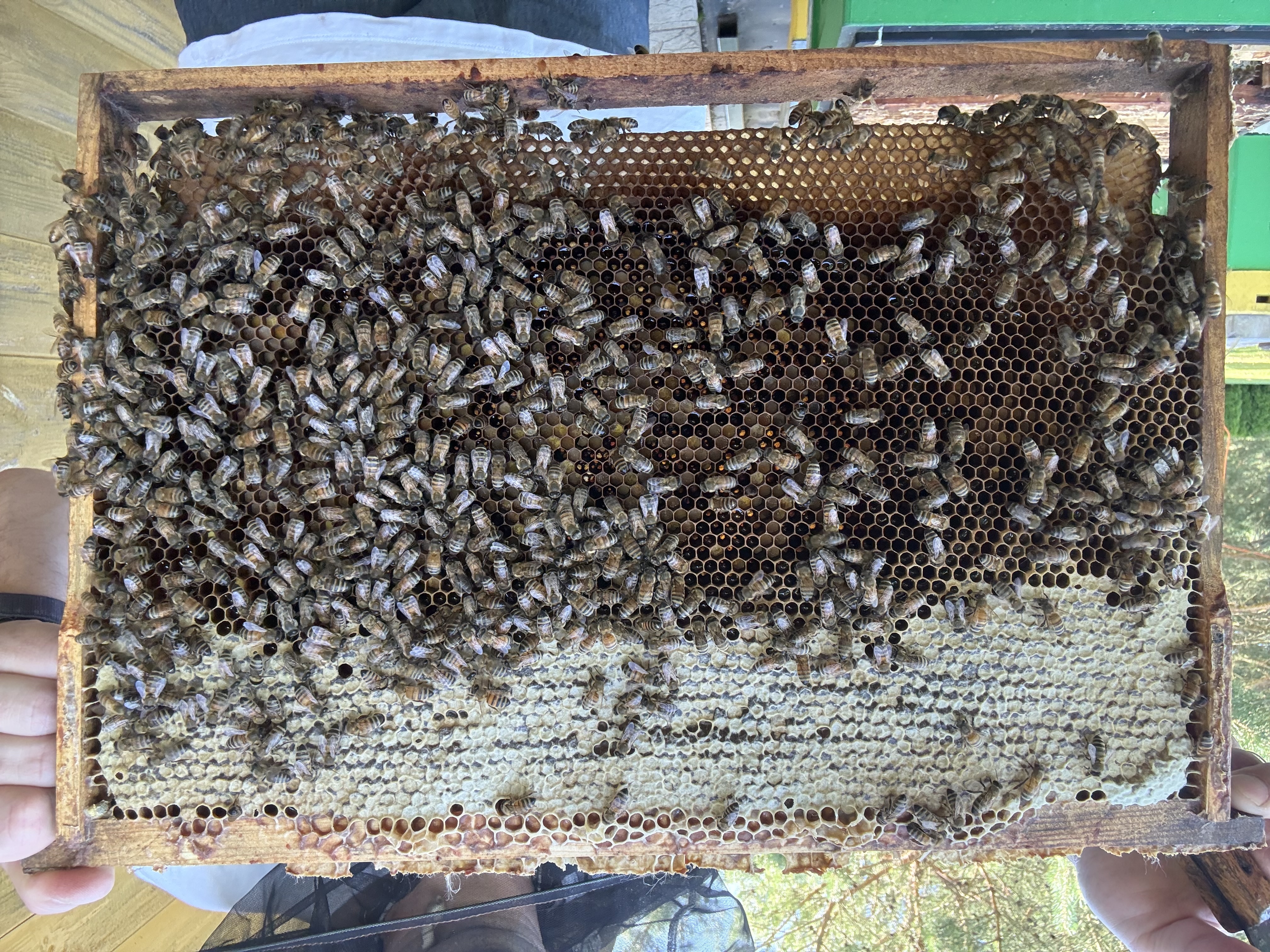
This side also shows a high density of bees across a large area of capped brood, complemented by a substantial band of capped honey at the upper edge.
This frame is highly active and productive, with both sides heavily covered by bees tending to extensive areas of capped brood. Both sides also feature a good amount of capped honey, indicating a strong colony.
Frame 5
Side A
Side B
Side A
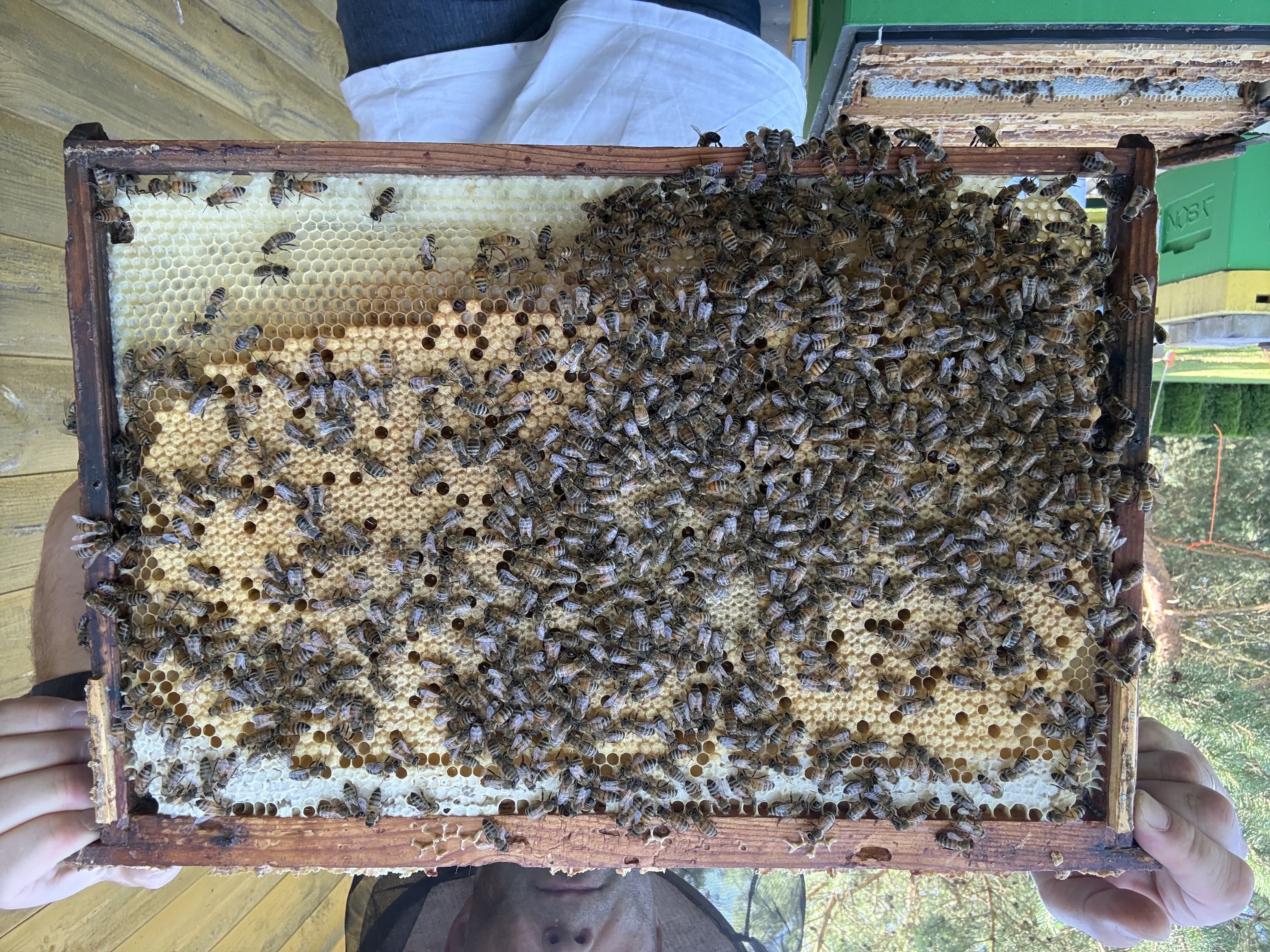
The frame is teeming with bees, actively engaged around a prominent central zone of capped brood and surrounded by areas of both capped and uncapped honey.
Side B
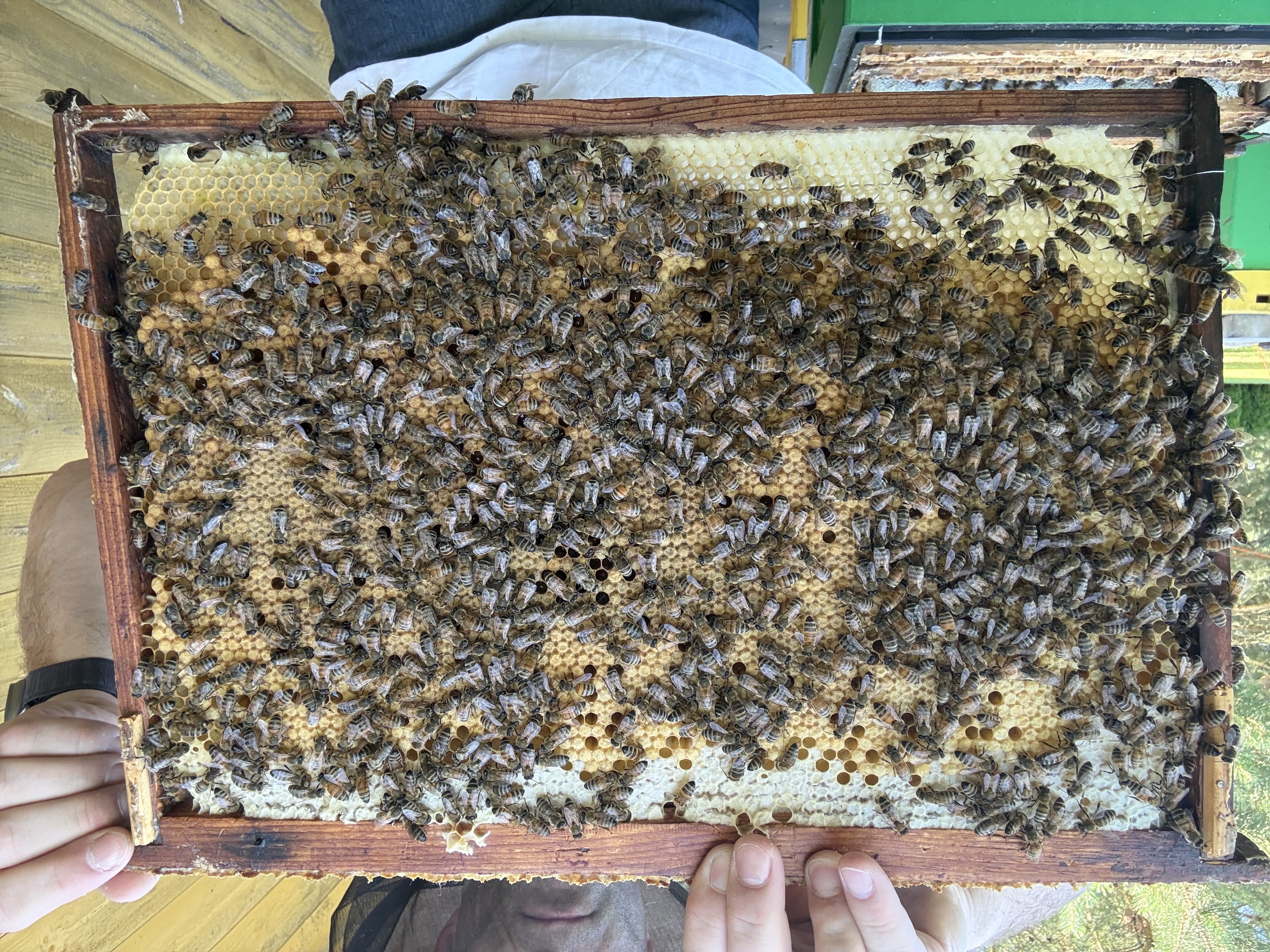
This side of the frame exhibits an even greater concentration of bees, covering an extensive patch of capped and uncapped brood, along with a top band of capped honey.
Both sides of this frame indicate a very strong and expanding brood nest, with a high density of bees. There is significant coverage of both capped and uncapped brood, alongside noticeable reserves of capped honey.
Frame 6
Side A
Side B
Side A
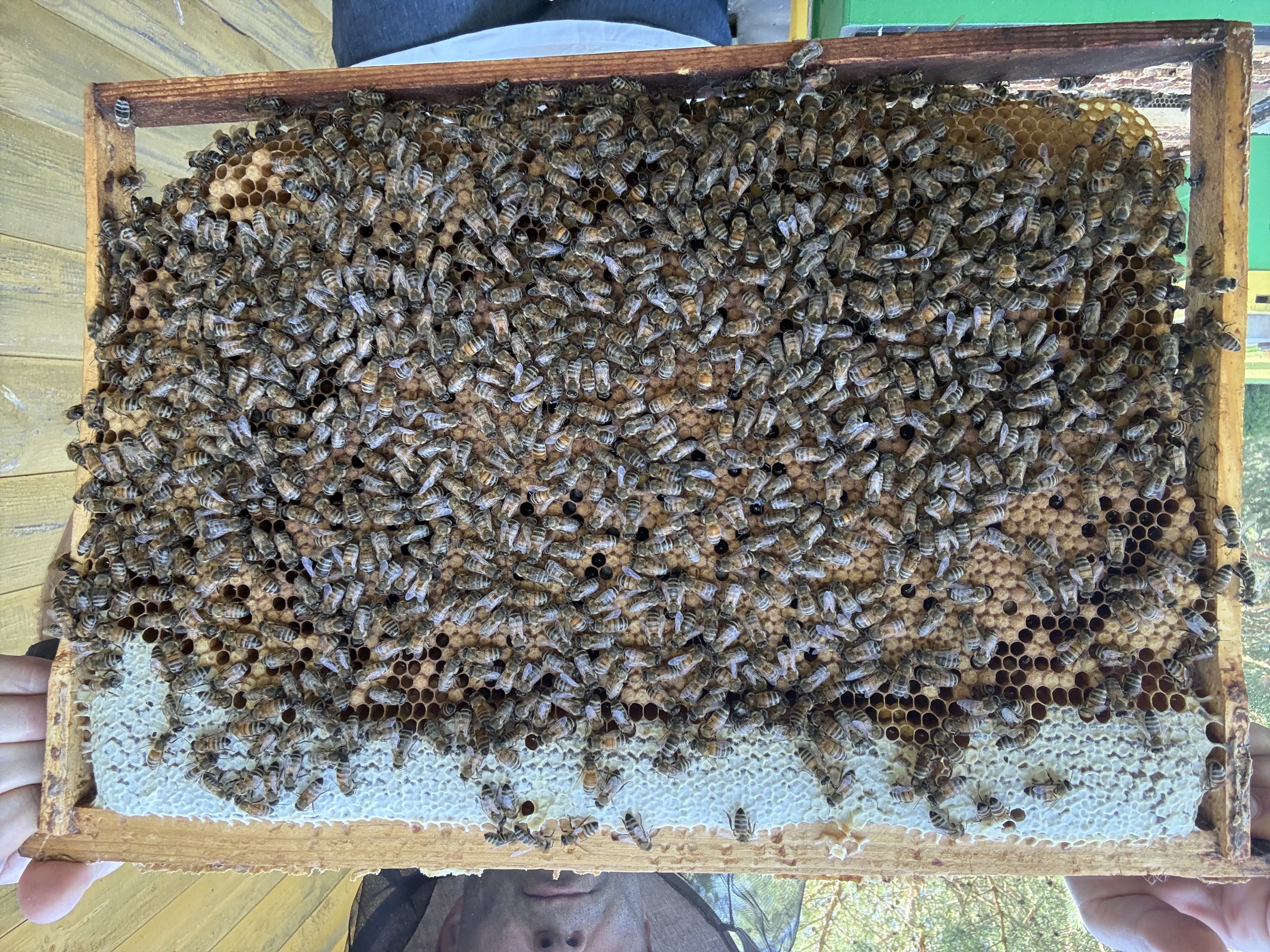
This frame is fully covered with bees, showing a large, active brood area with capped brood and open cells, and a band of capped honey at the top.
Side B
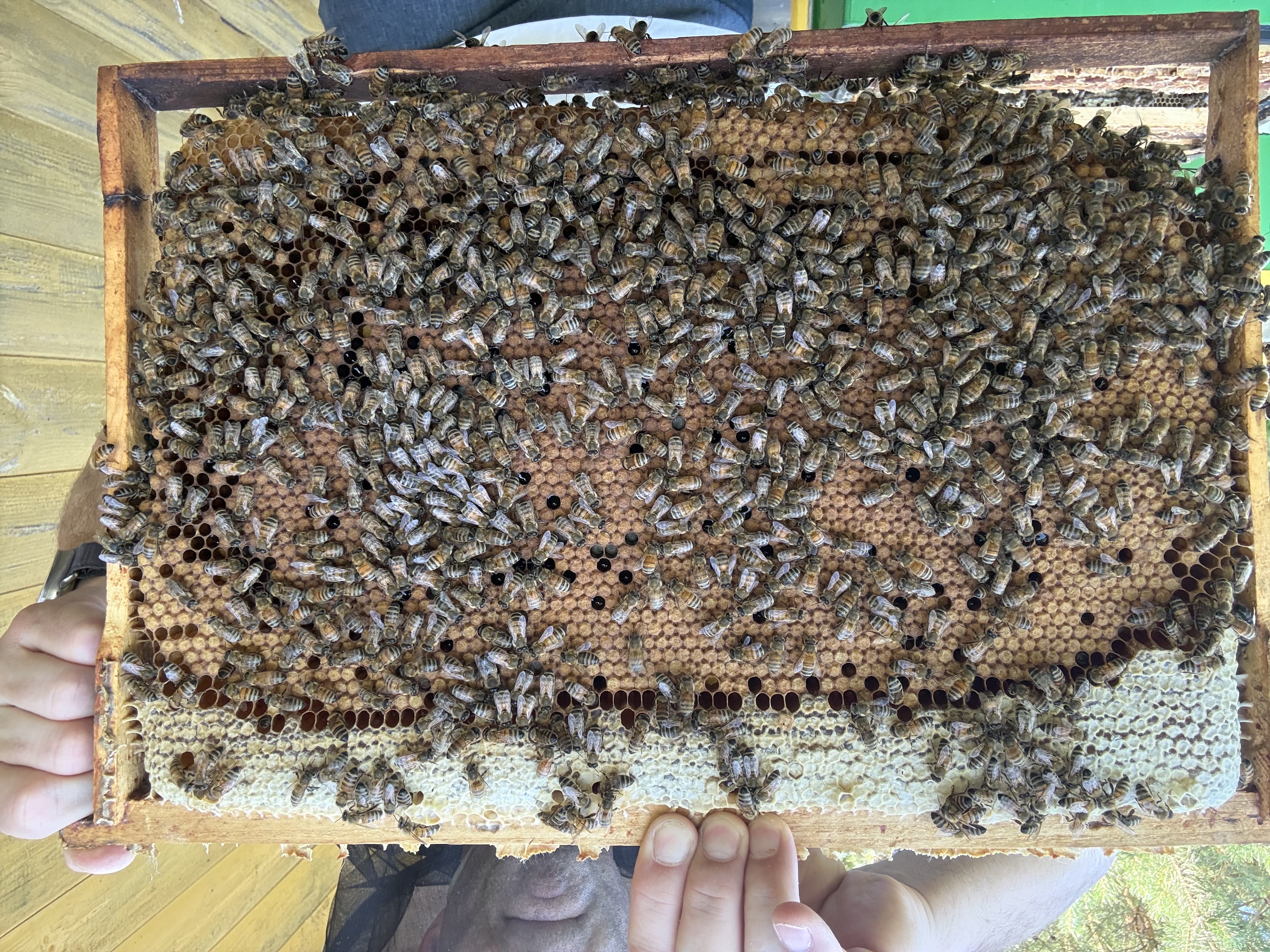
Similar to the other side, this frame is heavily populated with bees, displaying a significant area of capped brood and some pollen or larvae, topped with capped honey.
This frame is a very active central brood frame, with both sides almost entirely covered by bees and showing extensive healthy areas of capped brood. This indicates strong queen activity, with some capped honey at the top.
Frame 7
Side A
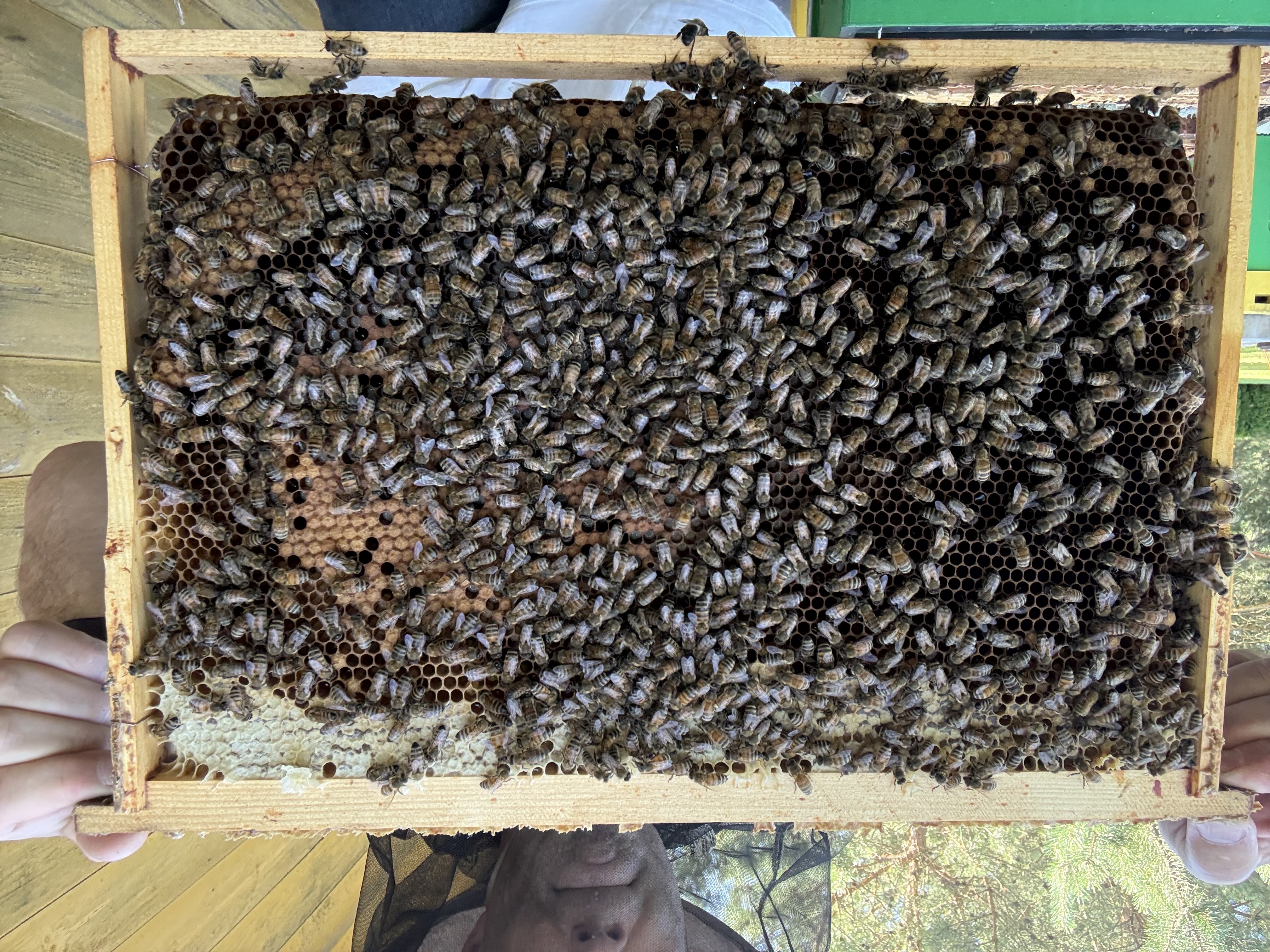
Side B
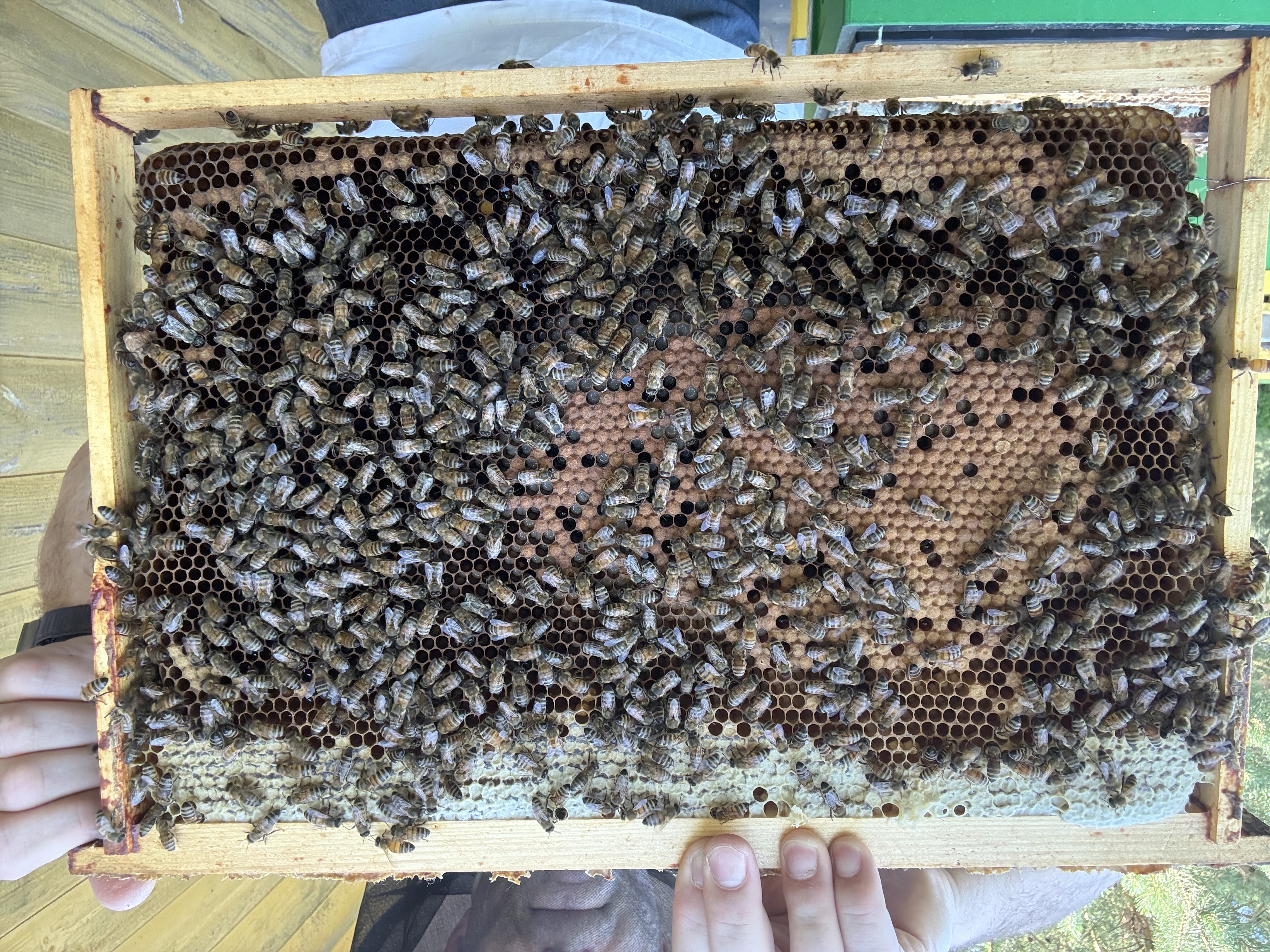
Side A
A very dense population of bees occupies this frame, featuring a large area of mixed capped and uncapped brood, along with a top section of capped honey.
Side B
This side is also heavily populated with bees, showcasing a large brood area consisting of capped brood and likely pollen or larvae, and a band of capped honey at the top.
This frame represents a thriving section of the hive, with both sides completely covered in bees and extensive healthy brood areas. Both capped brood and uncapped cells, likely containing pollen or larvae, are prominent, along with a good supply of capped honey.
Frame 8
Side A
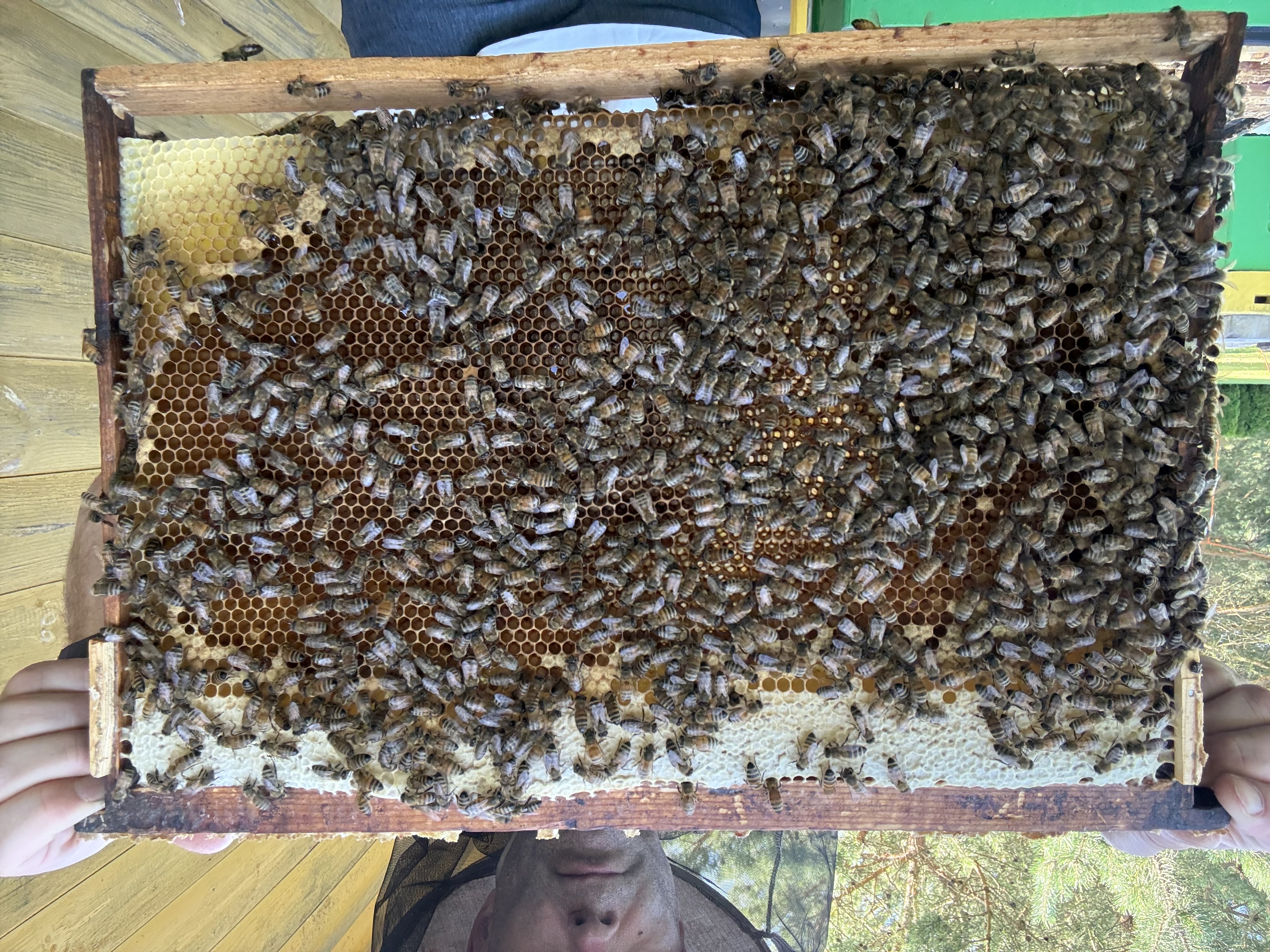
Side B
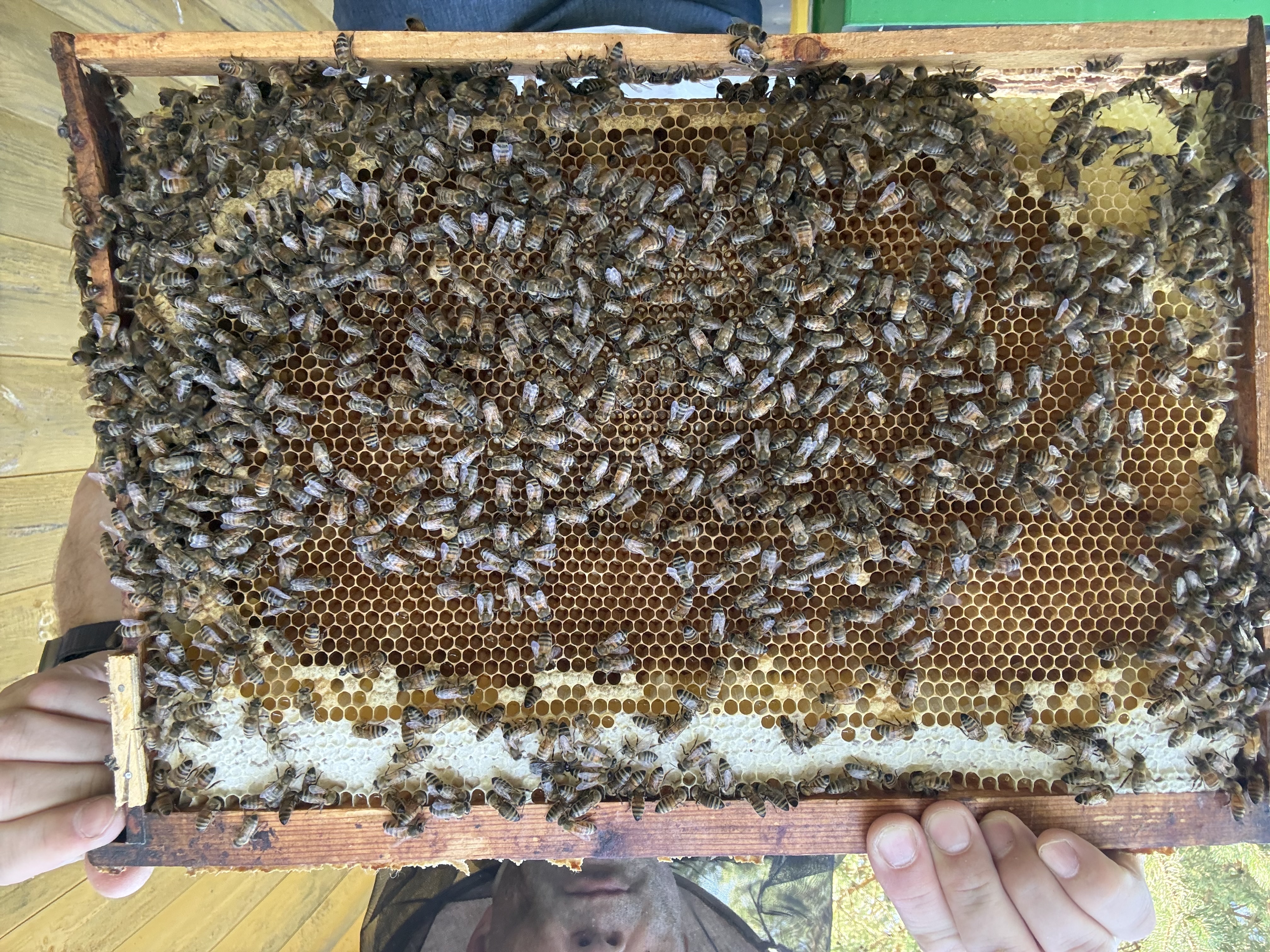
Side A
The frame is fully covered by a dense bee population, actively working on a large area of mixed brood and storing capped honey at the top.
Side B
This side also shows a high bee density, a significant area of combined capped brood and open cells, and a band of capped honey along the upper part.
This frame is a strong, active part of the colony, with both sides fully populated by bees and showing substantial brood development. There are large areas of capped brood and pollen/larvae, along with noticeable reserves of capped honey.
Frame 9
Side A
Side B
Side A
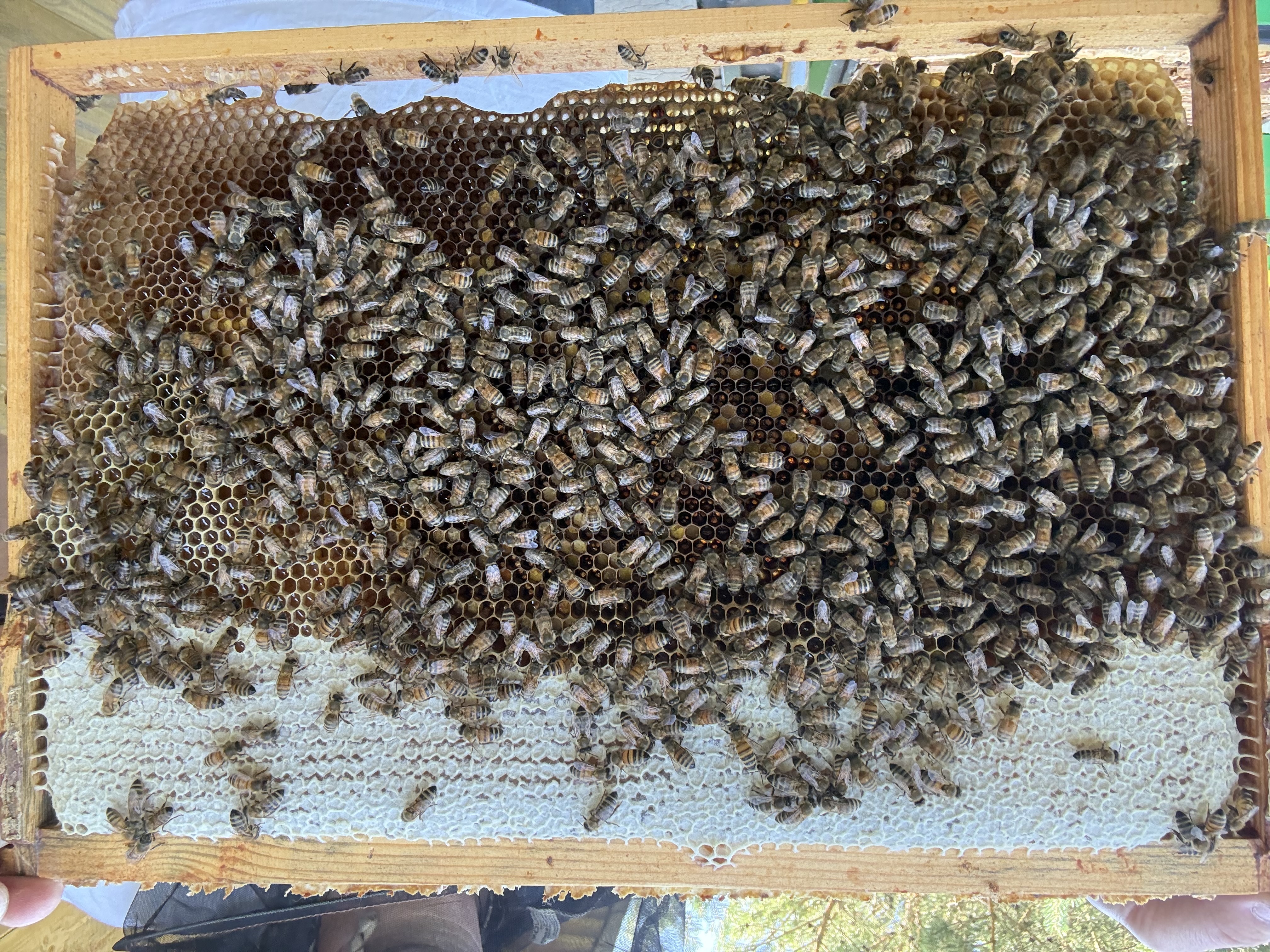
This side of the frame shows significant capped brood in the center and bottom left, with uncapped nectar and some capped honey along the top, all heavily populated by worker bees.
Side B
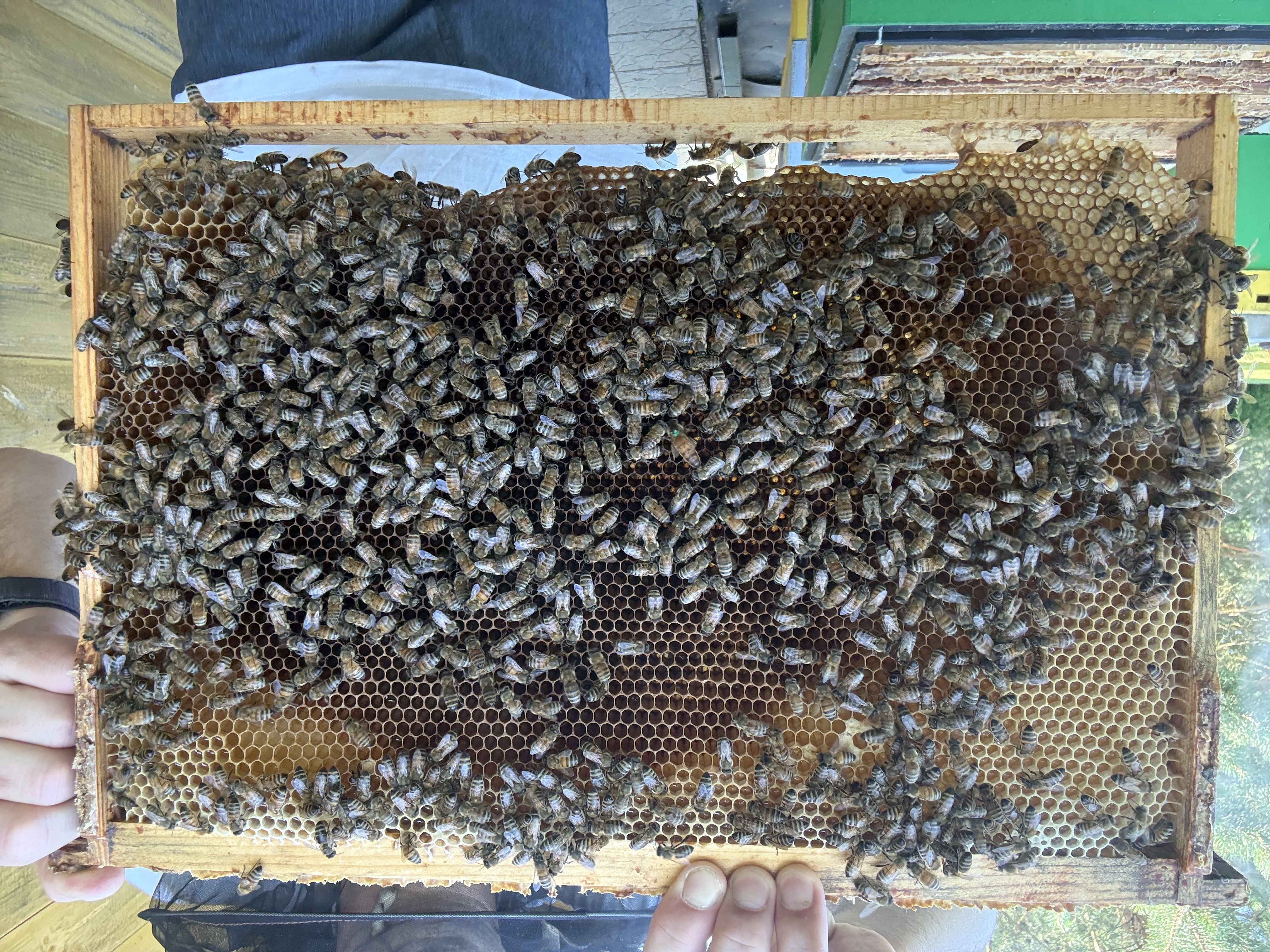
This side is densely covered with worker bees, obscuring much of the comb's contents, though areas of capped brood and some nectar are visible beneath them.
Frame 1 is a robust brood frame, heavily populated with bees on both sides, indicating a healthy and thriving colony. It contains a substantial amount of capped and open brood, complemented by stored honey and nectar at the top.
Frame 10
Side A
Side B
Side A
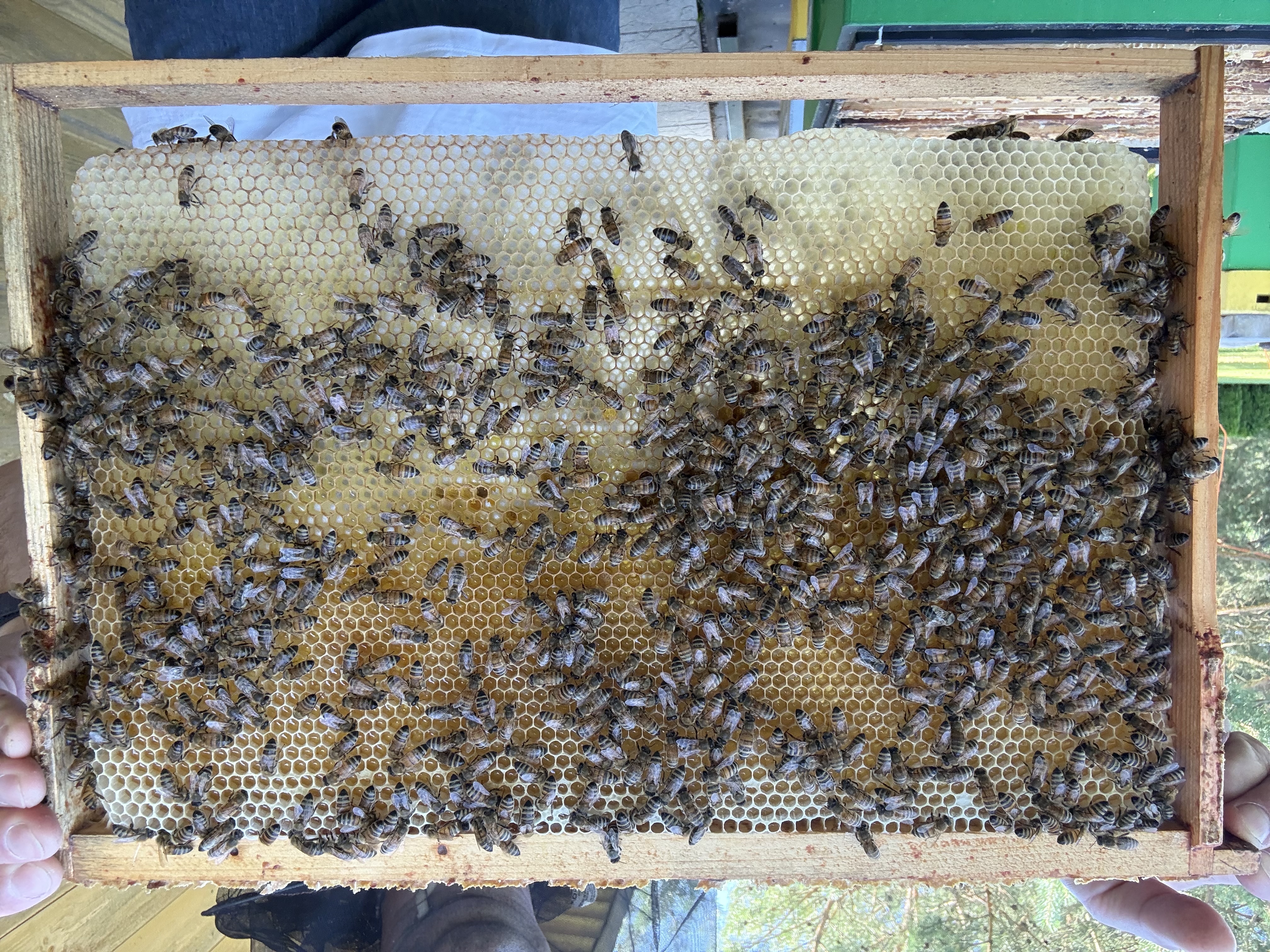
This frame side displays a newly drawn comb with scattered worker bees, containing patches of open brood and larvae alongside some uncapped nectar.
Side B
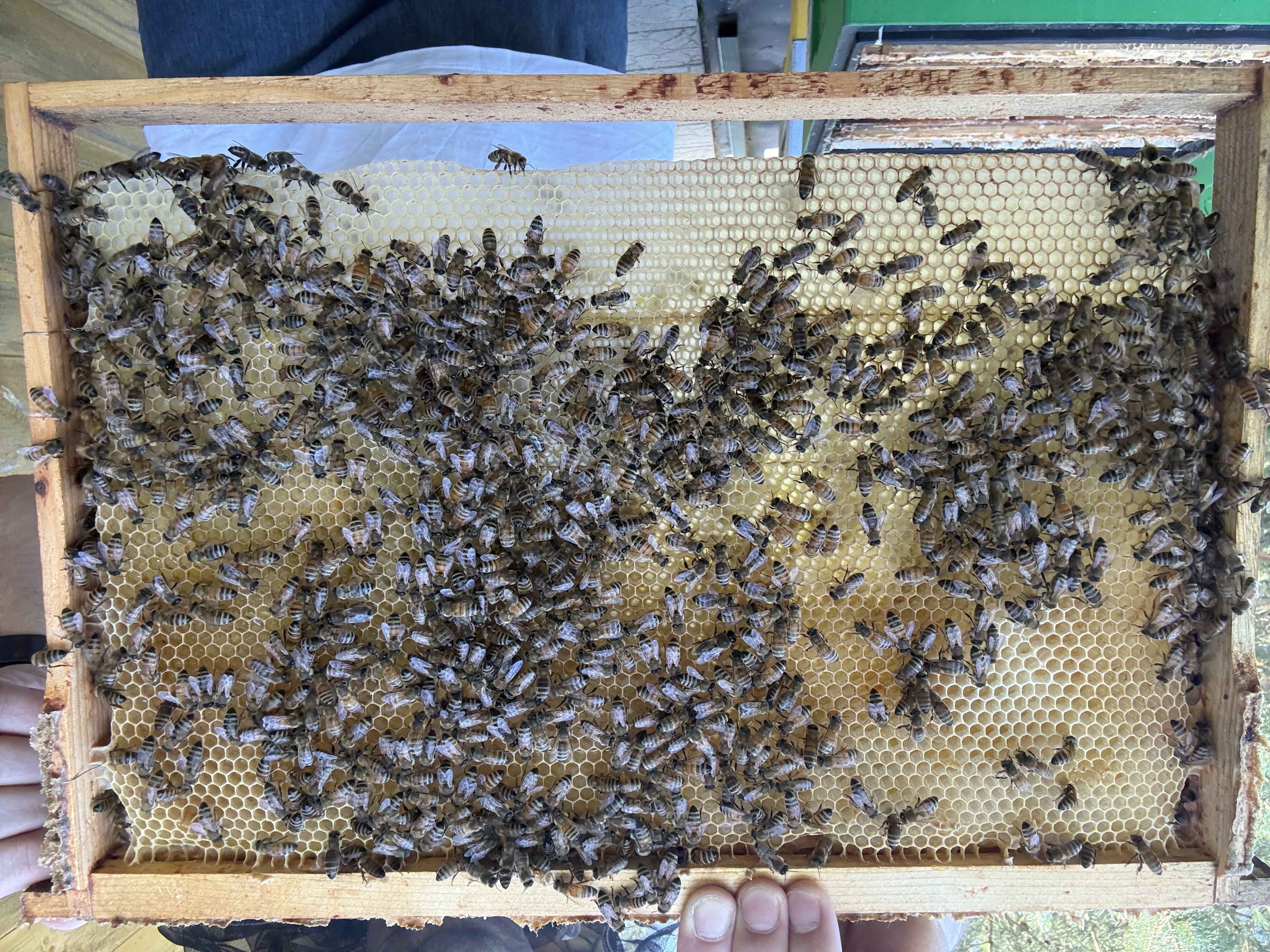
Similar to the other side, this newer comb features open brood, young larvae, and some cells filled with uncapped nectar, indicating active expansion and resource gathering.
Frame 2 showcases newer comb development, with a moderate bee population focused on expanding the hive. It primarily contains open brood and larvae, along with uncapped nectar, suggesting active foraging and brood rearing.