Inspection Results
26 Aug 2026
Hive #909 · 20 frame sides captured
85
Colony Strength
Strong
Given the low honey stores, it is recommended to monitor the colony's food reserves frequently and consider supplemental feeding if local nectar flow is not robust. A varroa mite count should also be performed soon to assess and manage parasite levels.
Queen Status
Queen present and active (not sighted)
Brood Pattern
Good and consistent across most frames
Honey Stores
Limited, monitor closely
Varroa Risk
Undetermined (no varroa specific data)
AI Observations
This colony exhibits strong activity with an estimated 9000 bees and excellent brood development, evident across 7.5 frames inspected. Although the queen was not directly sighted, her active laying is confirmed by the robust brood pattern. However, honey stores are currently quite low, averaging only 14% across the frames.
Frame Analysis — 10 frames
Frame 1
Side A
Side B
Side A
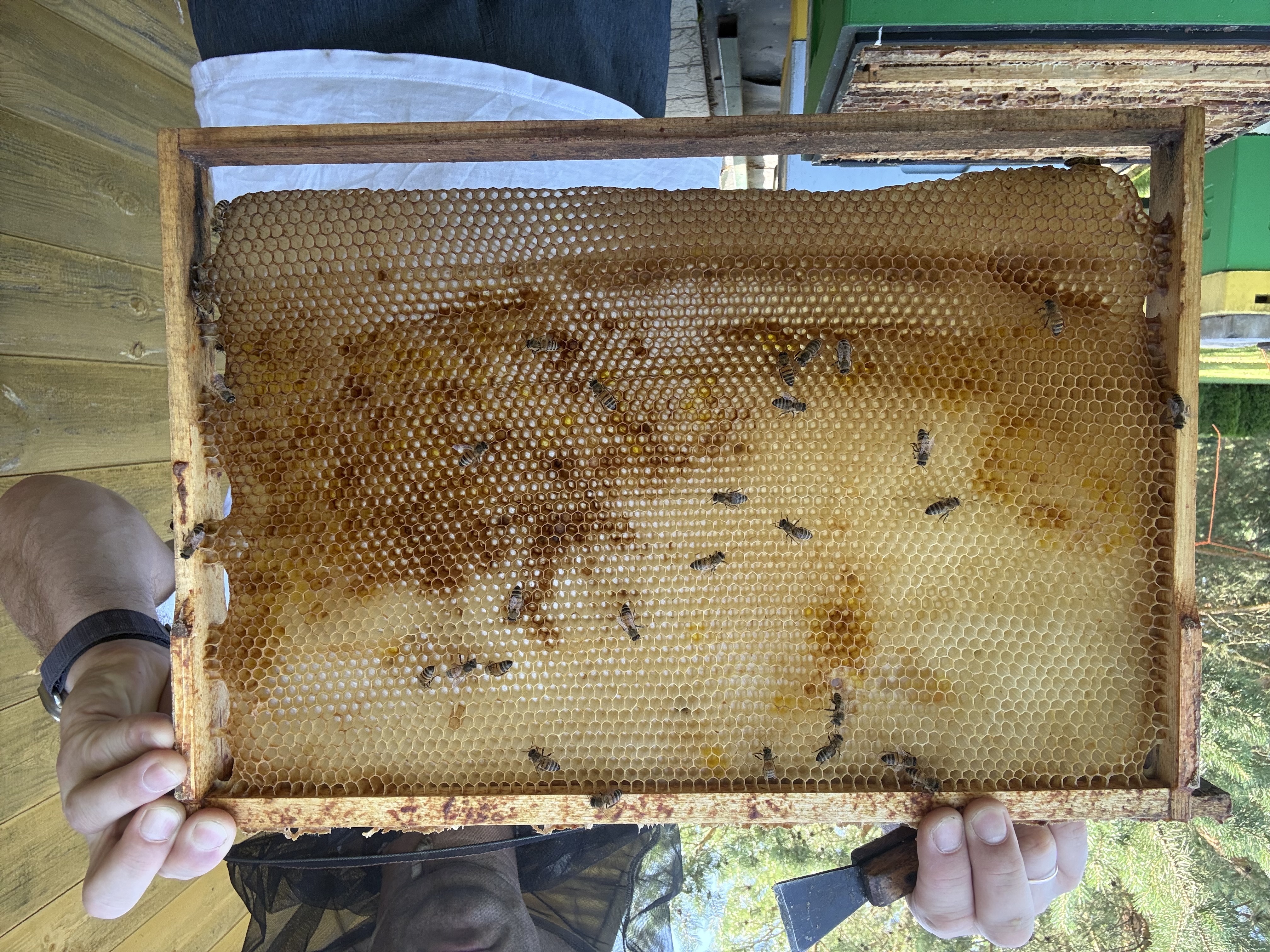
This side of the frame shows scattered bees on mostly empty or partially filled honeycomb with some uncapped honey and minor brood presence.
Side B
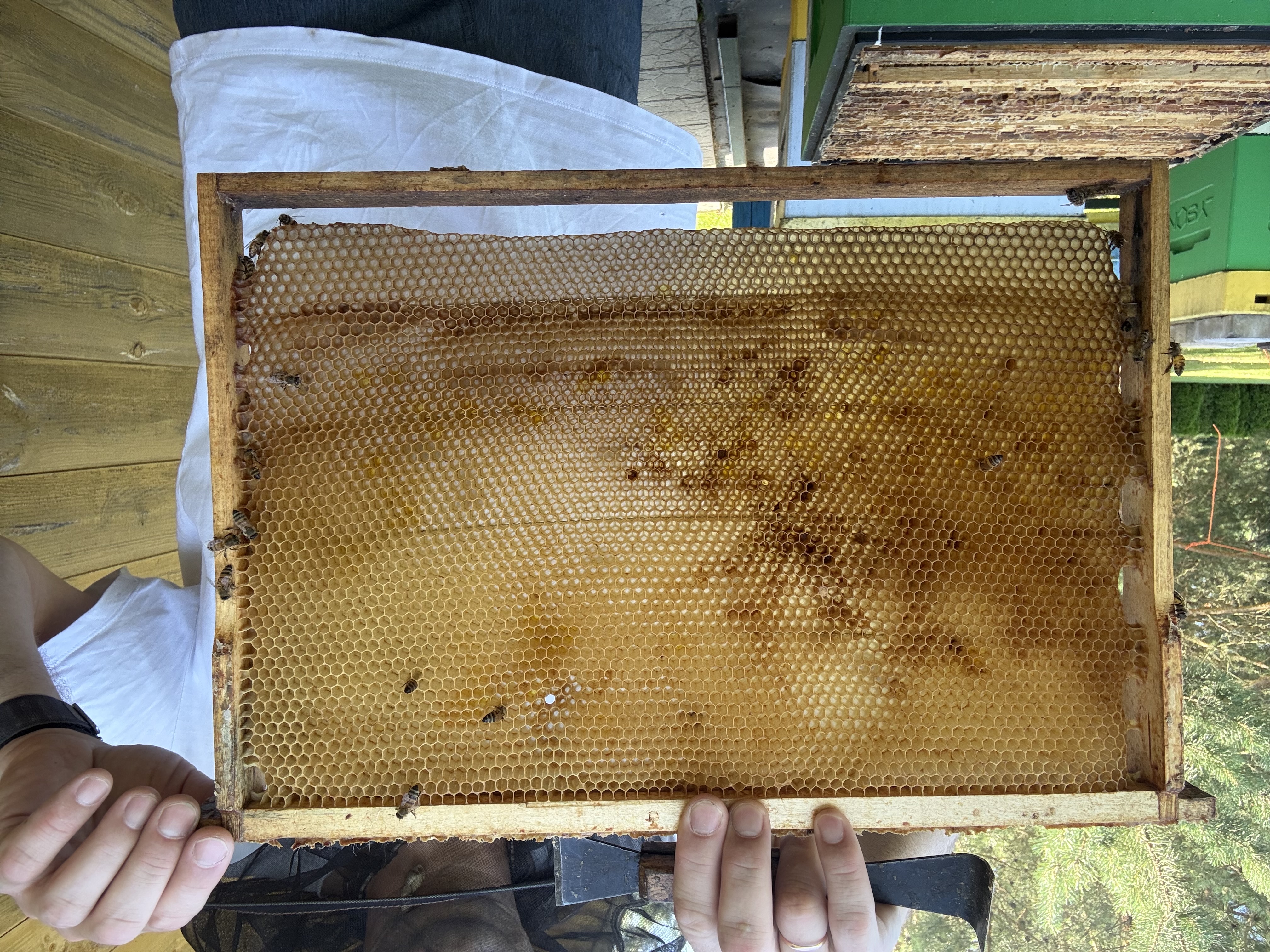
The reverse side of the frame also presents mostly empty cells and some uncapped honey with a few scattered bees.
Frame 1 is sparsely populated with bees and contains mostly empty cells or uncapped honey. Both sides show minimal brood.
Frame 2
Side A
Side B
Side A
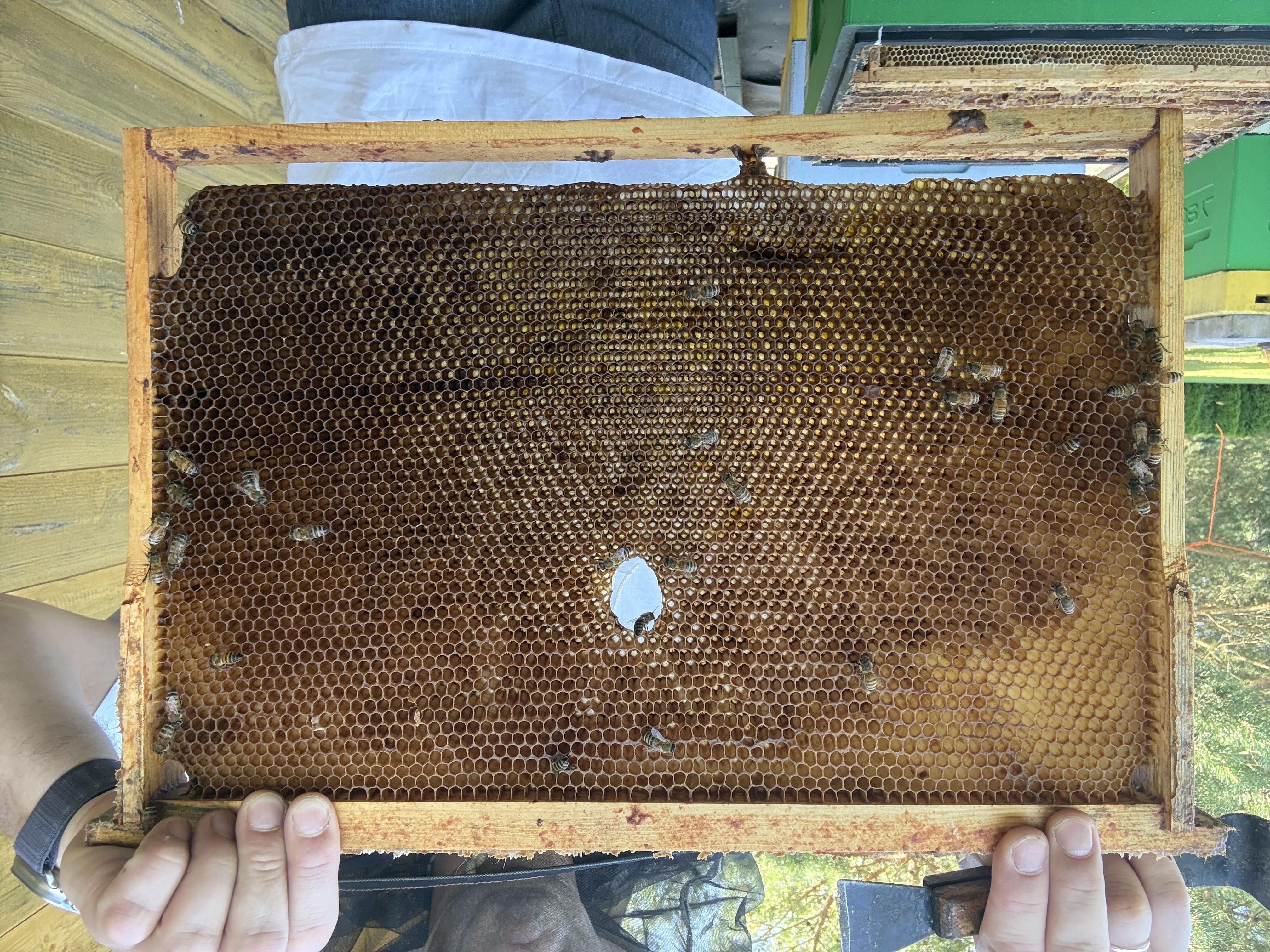
This frame side displays scattered bees and a central area with visible brood and pollen, surrounded by mostly empty cells and some uncapped honey.
Side B
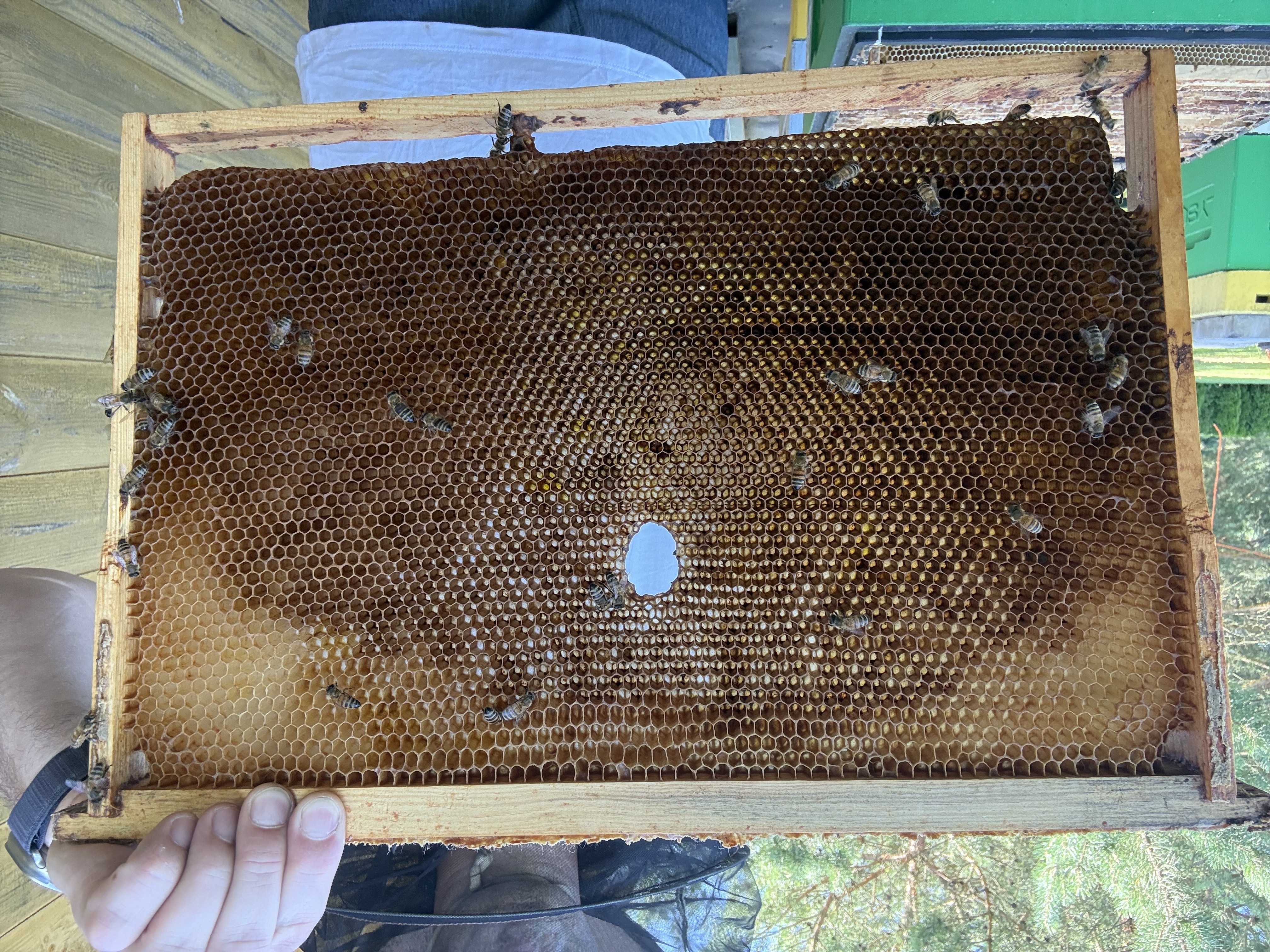
The other side shows similar characteristics, with scattered bees and a central region containing brood and pollen, flanked by areas of honey and empty comb.
Frame 2 shows a moderate number of bees with some scattered brood and pollen in the central region, surrounded by empty cells and uncapped honey. Both sides feature a distinct circular pattern in the comb.
Frame 3
Side A
Side B
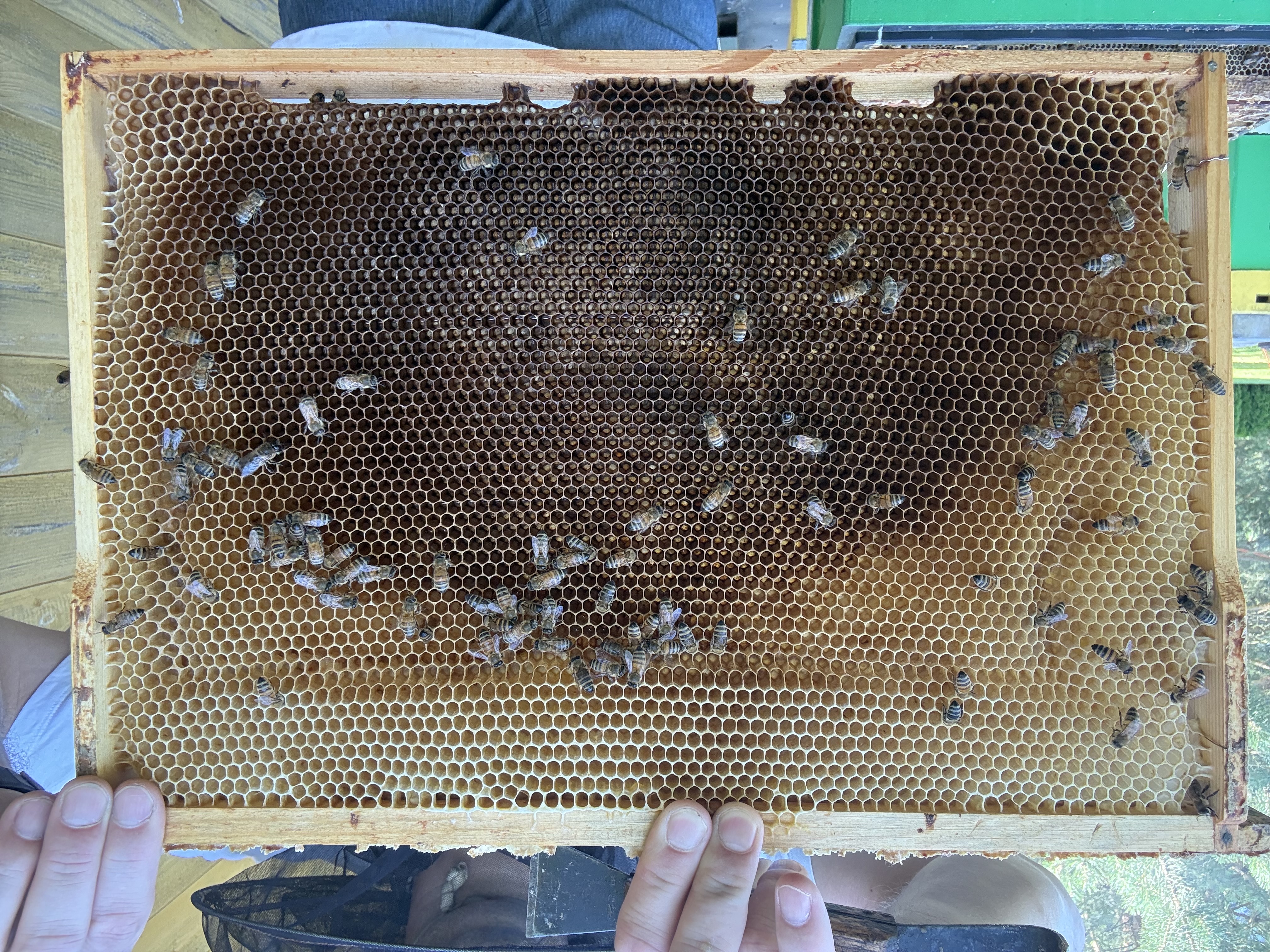
Side A
This side of the frame features a moderate number of bees, with significant areas of uncapped honey and a patch of brood in the lower central part.
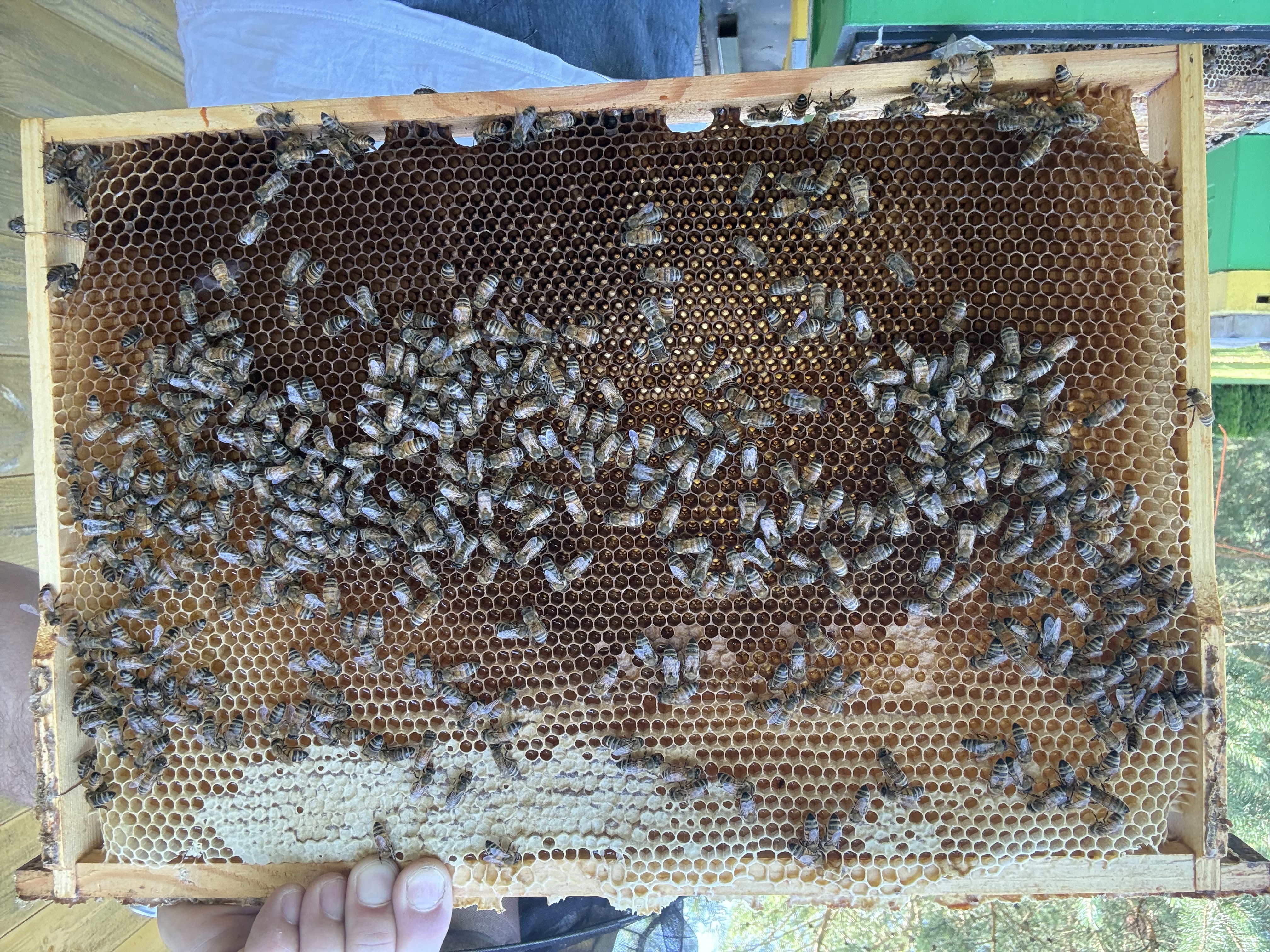
Side B
The reverse side shows a substantial cluster of bees covering a central area of capped brood, with some capped honey visible in the upper right corner.
Frame 3 marks a significant increase in bee population, with one side showing uncapped honey and some brood, while the other side has a substantial cluster of bees over a central area of capped brood. This frame indicates growing activity and brood production.
Frame 4
Side A
Side B
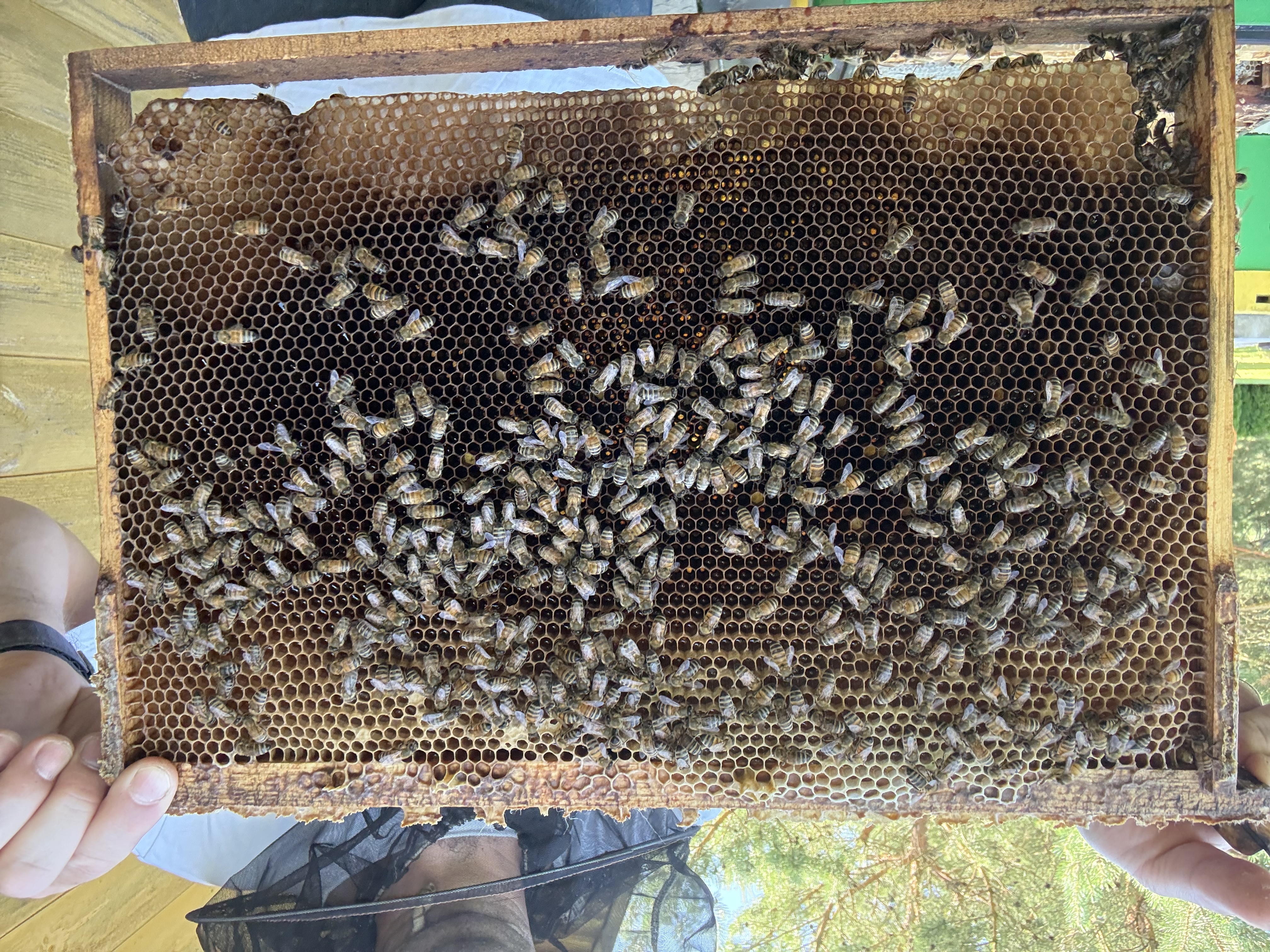
Side A
A large cluster of bees covers a significant portion of this frame side, which contains a good amount of capped brood and a strip of capped honey along the top.
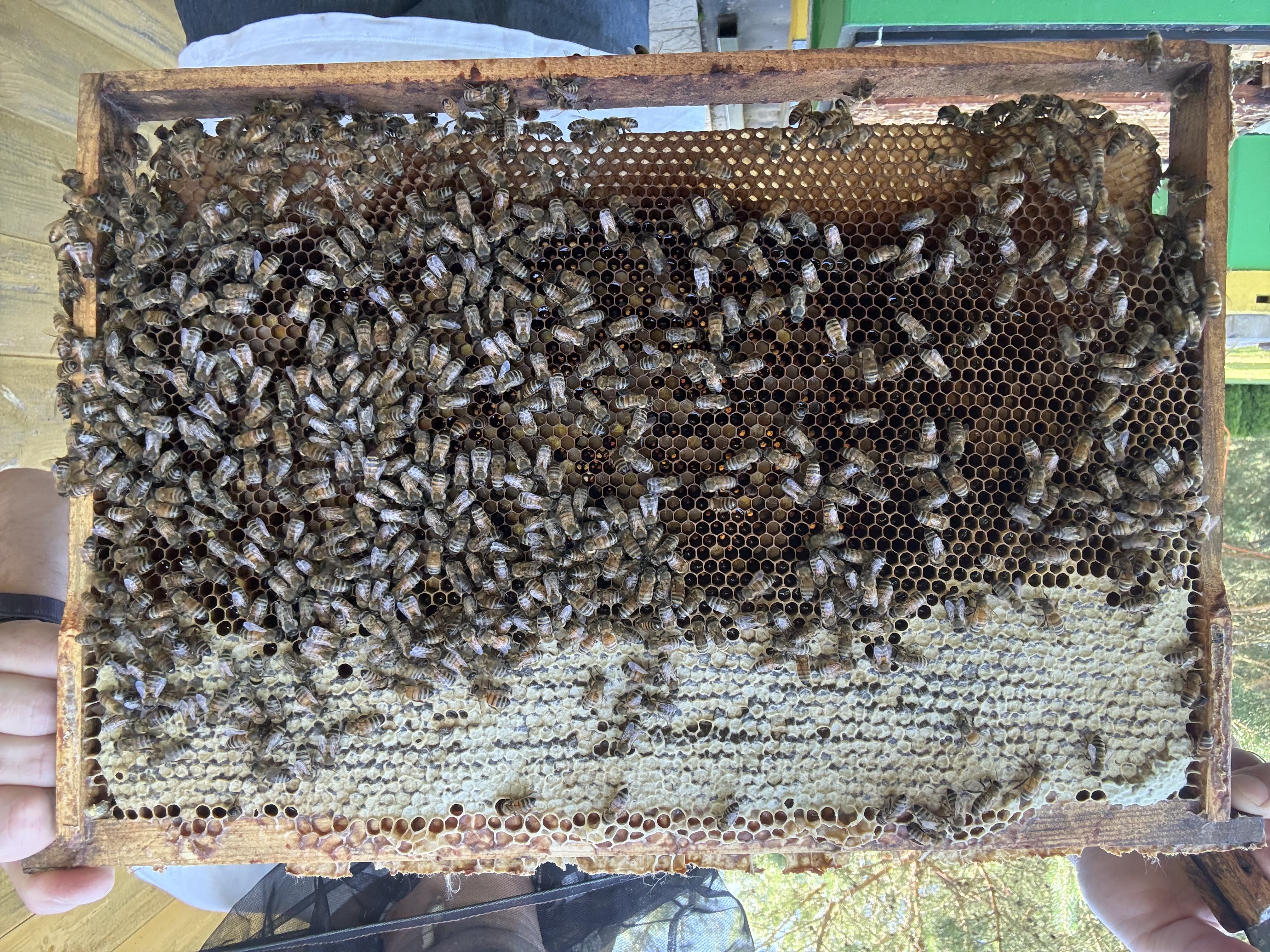
Side B
This side is heavily populated with bees, displaying an expansive area of capped brood in the center and a band of capped honey at the upper edge.
Frame 4 is densely populated with bees, showing significant amounts of capped brood and capped honey. Both sides indicate a strong and healthy brood nest.
Frame 5
Side A
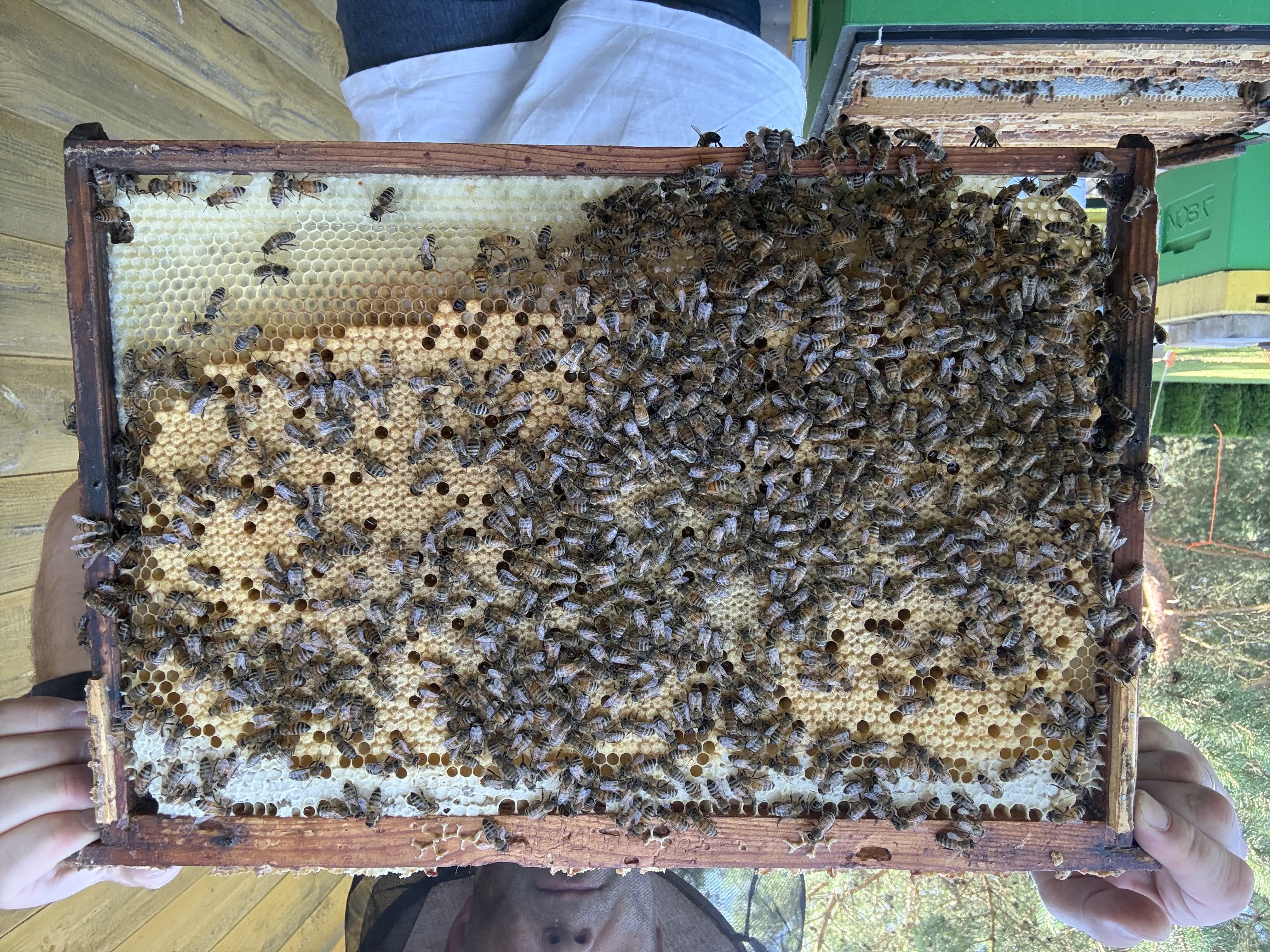
Side B
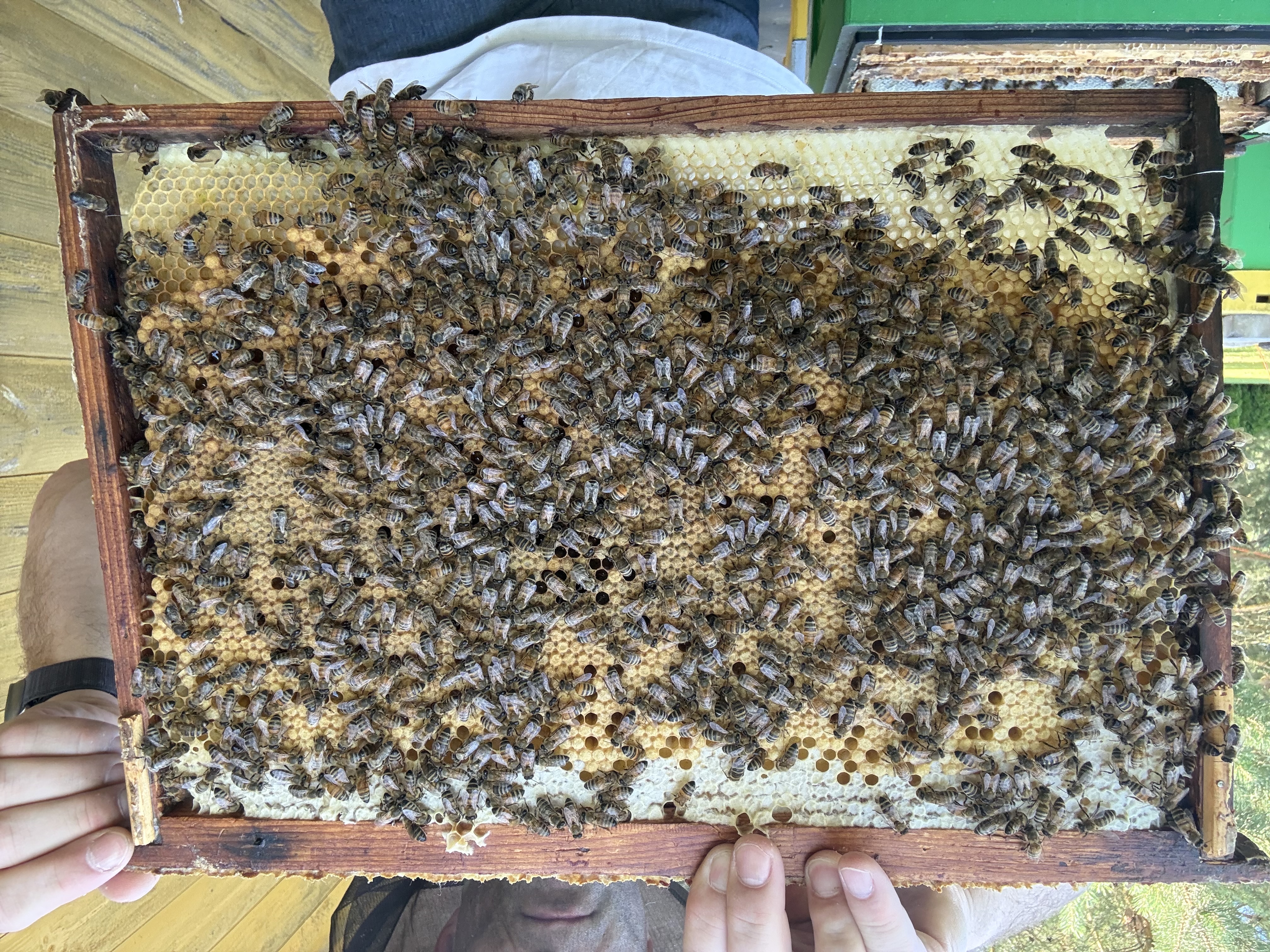
Side A
This frame side is almost fully covered by bees, revealing extensive capped brood dominating the central and lower regions, with some capped honey at the top and new comb at the bottom right.
Side B
The reverse side is densely packed with bees, showing a large area of both capped and uncapped brood along with a strip of capped honey at the top.
Frame 5 is extremely dense with bees, featuring extensive areas of capped and open brood, along with capped honey. This frame is actively supporting a large number of developing bees.
Frame 6
Side A
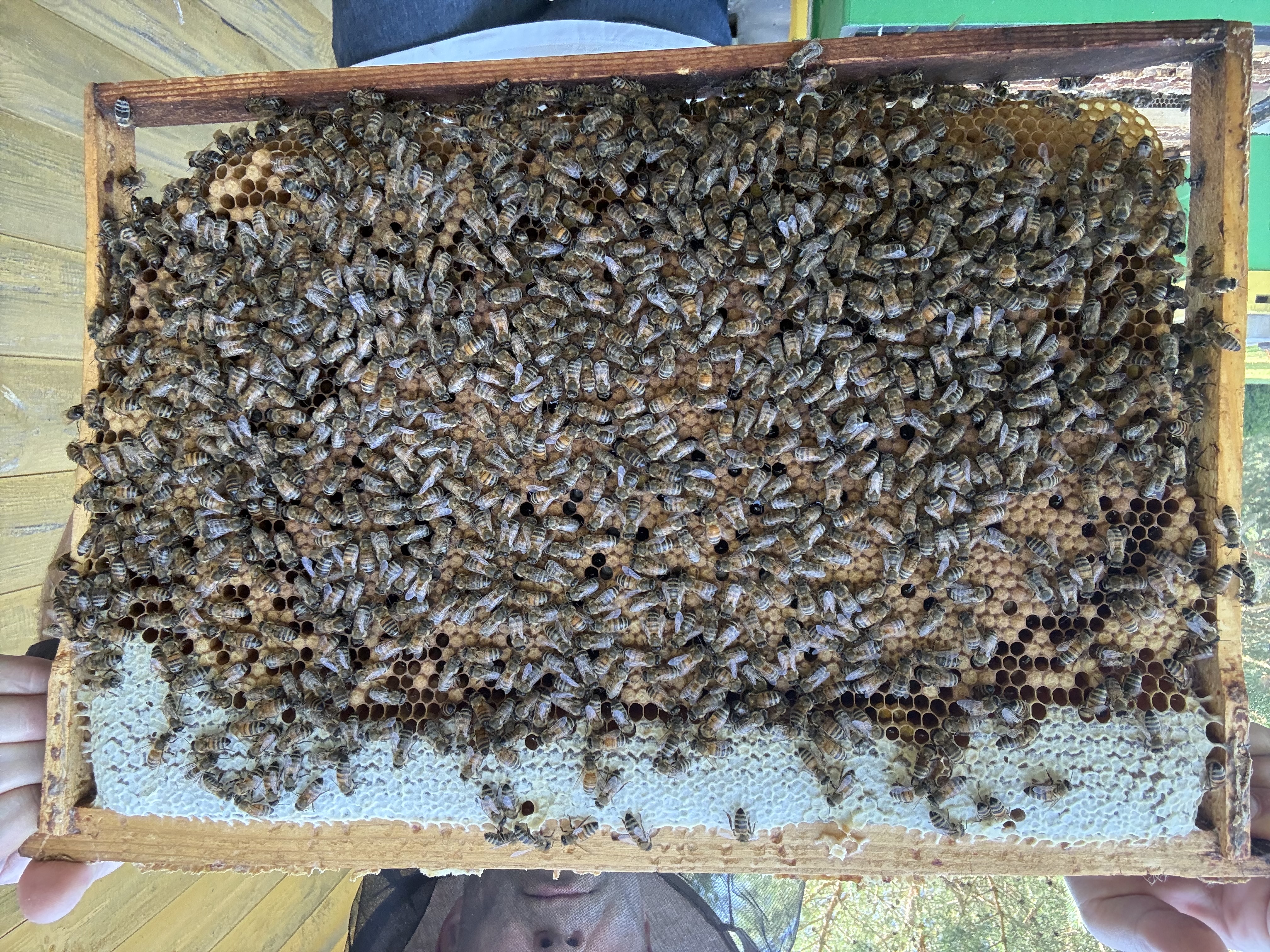
Side B
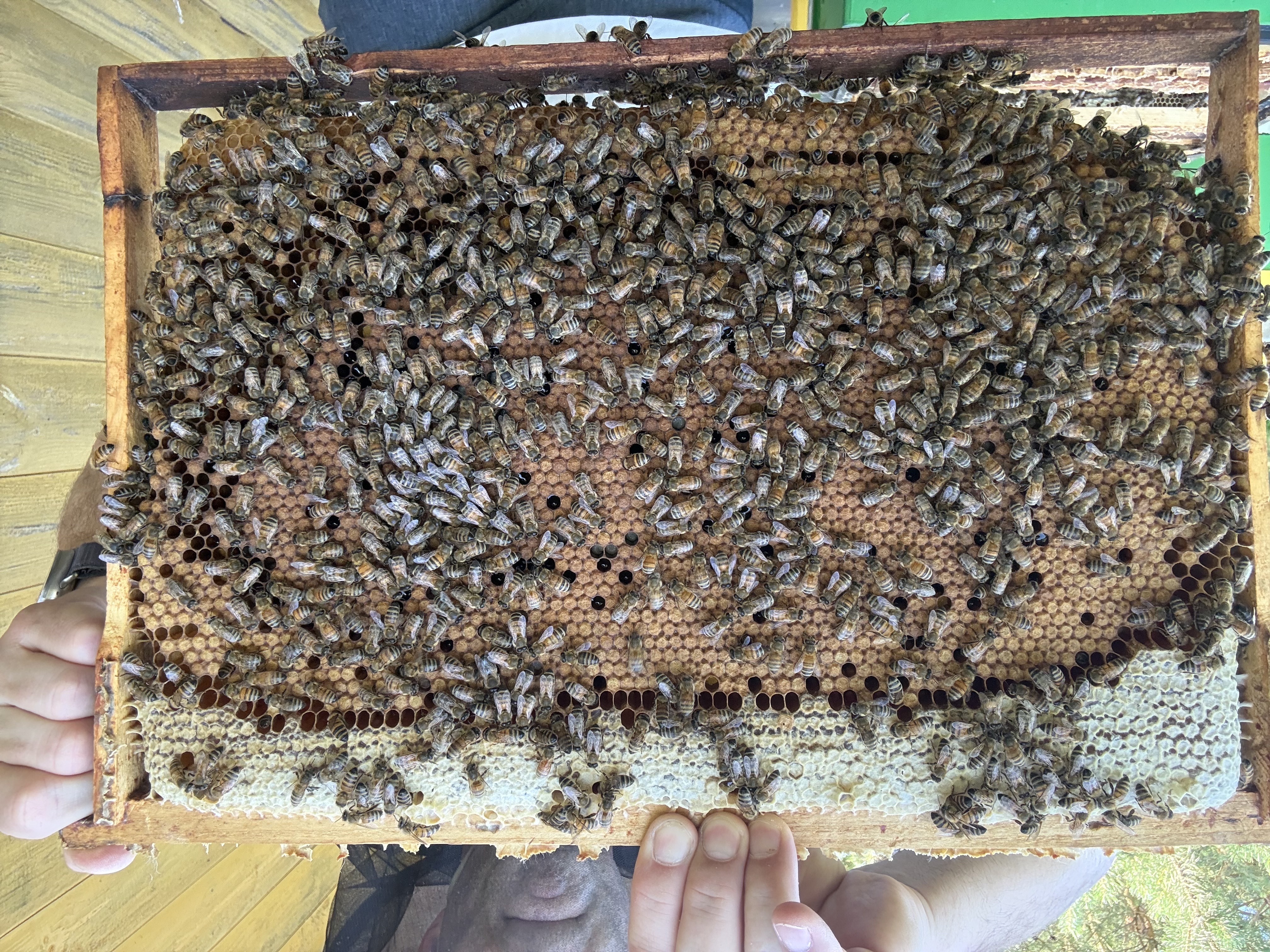
Side A
This frame side is heavily populated with bees, displaying a significant expanse of capped brood, alongside some uncapped cells, and a band of capped honey at the top.
Side B
The other side remains densely covered in bees, with a prominent region of capped brood and a section of capped honey visible along the upper edge.
Frame 6 is heavily covered in bees, displaying a large expanse of capped brood and some uncapped cells, complemented by a band of capped honey. This frame is a very active part of the brood nest.
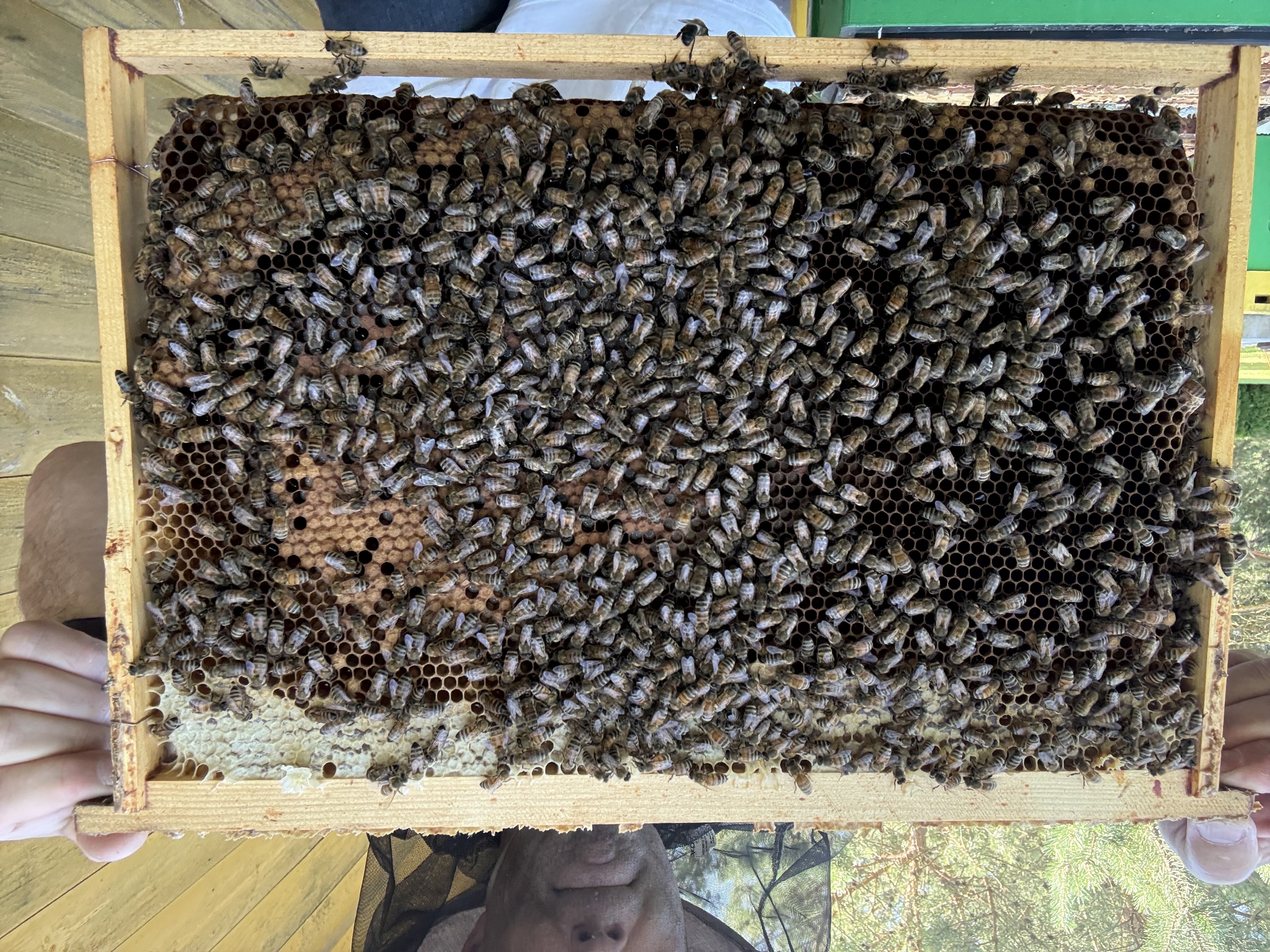
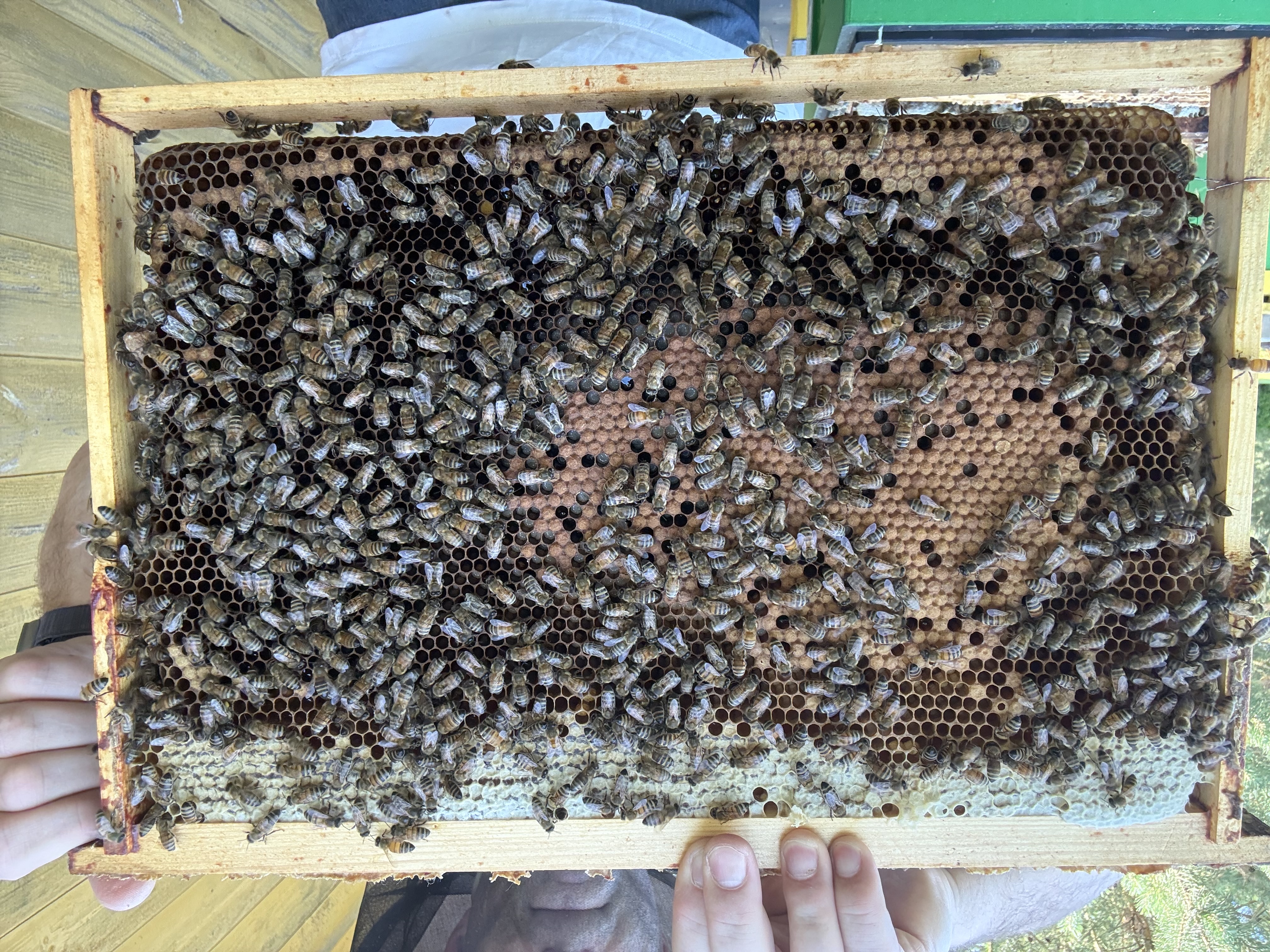
Frame 7
Side A
Side B
Side A
This side of the frame is full of bees, covering a large area primarily composed of capped brood and a strip of capped honey at the top.
Side B
The reverse side also exhibits a high density of bees, with a wide expanse of capped brood and a band of capped honey along the upper part of the frame.
Frame 7 is densely populated with bees, showcasing extensive capped brood and a strip of capped honey. Both sides are robust with active brood rearing.
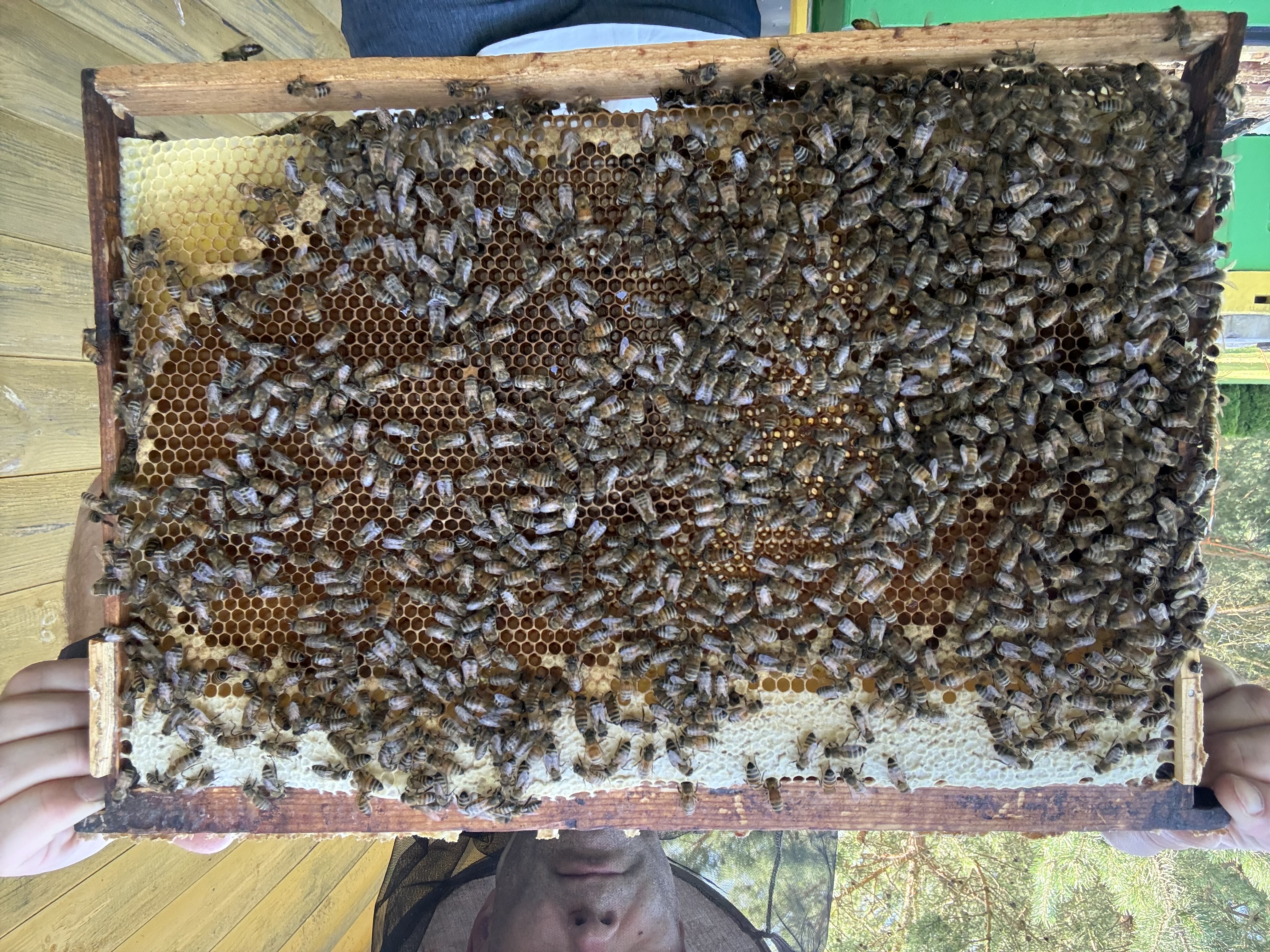
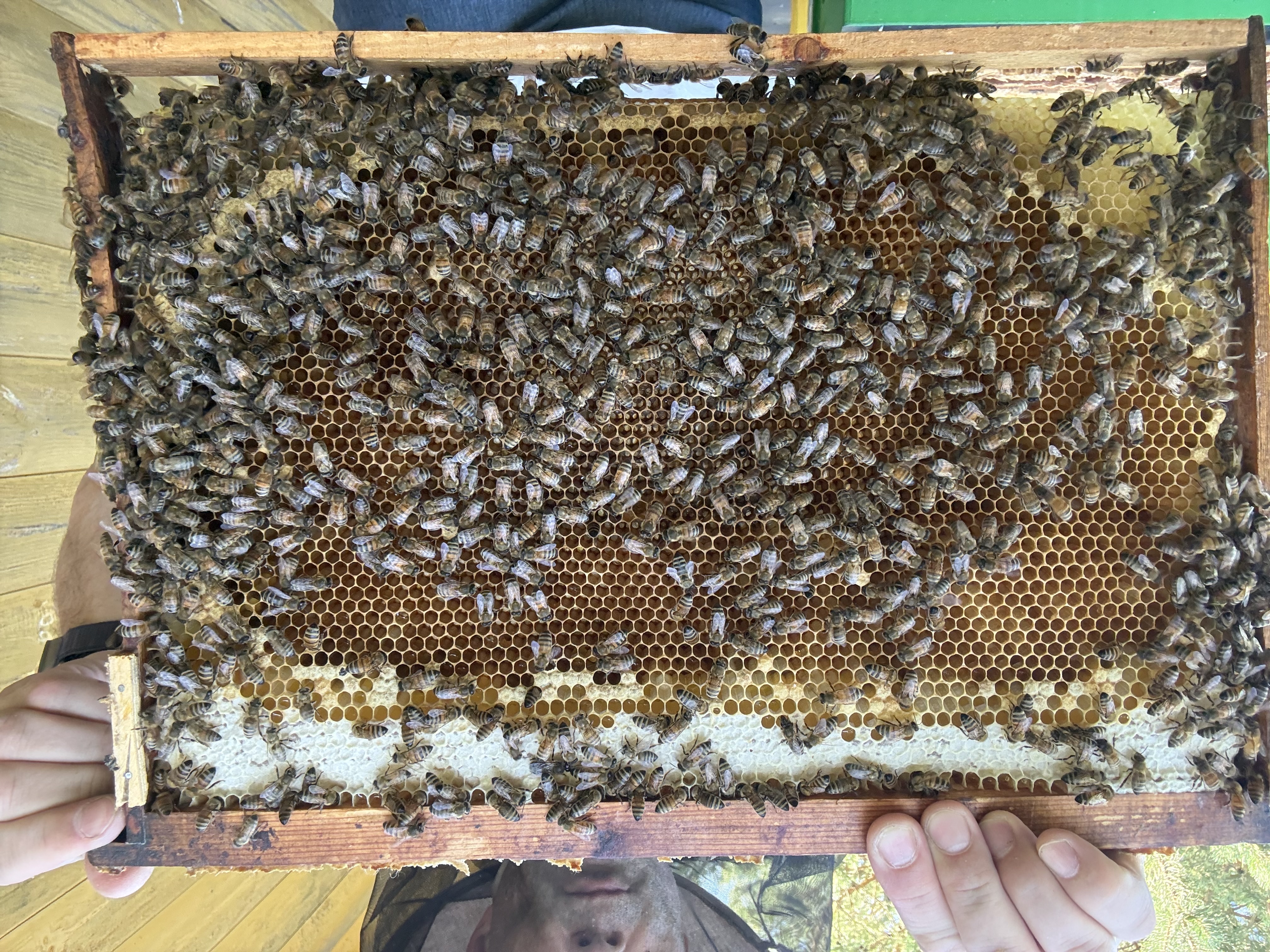
Frame 8
Side A
Side B
Side A
This frame side is thickly covered with bees, showing a large central area of capped brood and a notable section of capped honey at the top.
Side B
The final side inspected is also densely populated with bees, featuring a significant patch of capped brood and a substantial strip of capped honey at the upper portion.
Frame 8 remains densely covered in bees, featuring a significant area of capped brood and a notable amount of capped honey. This frame reflects continued strong brood development and honey storage.
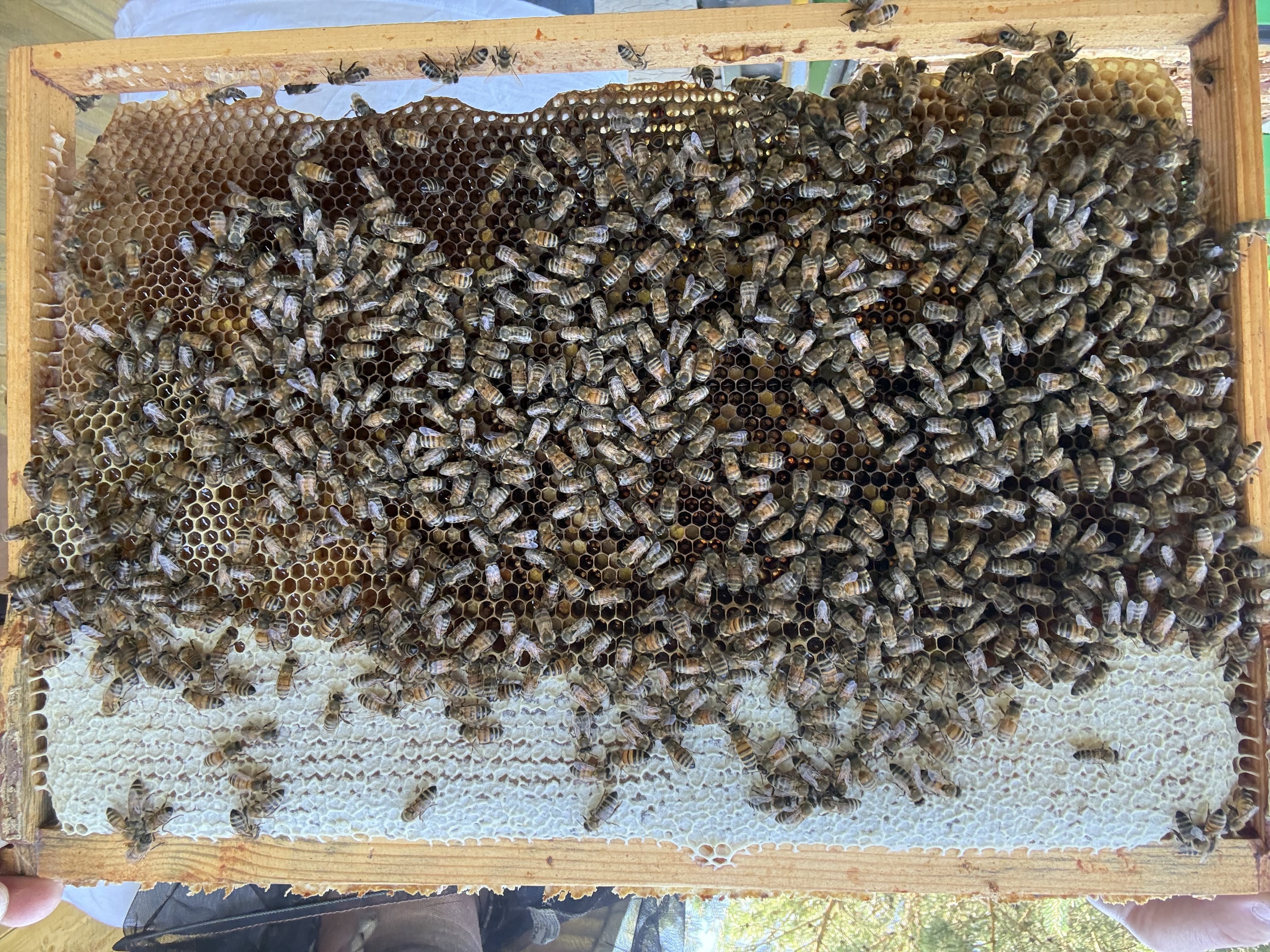
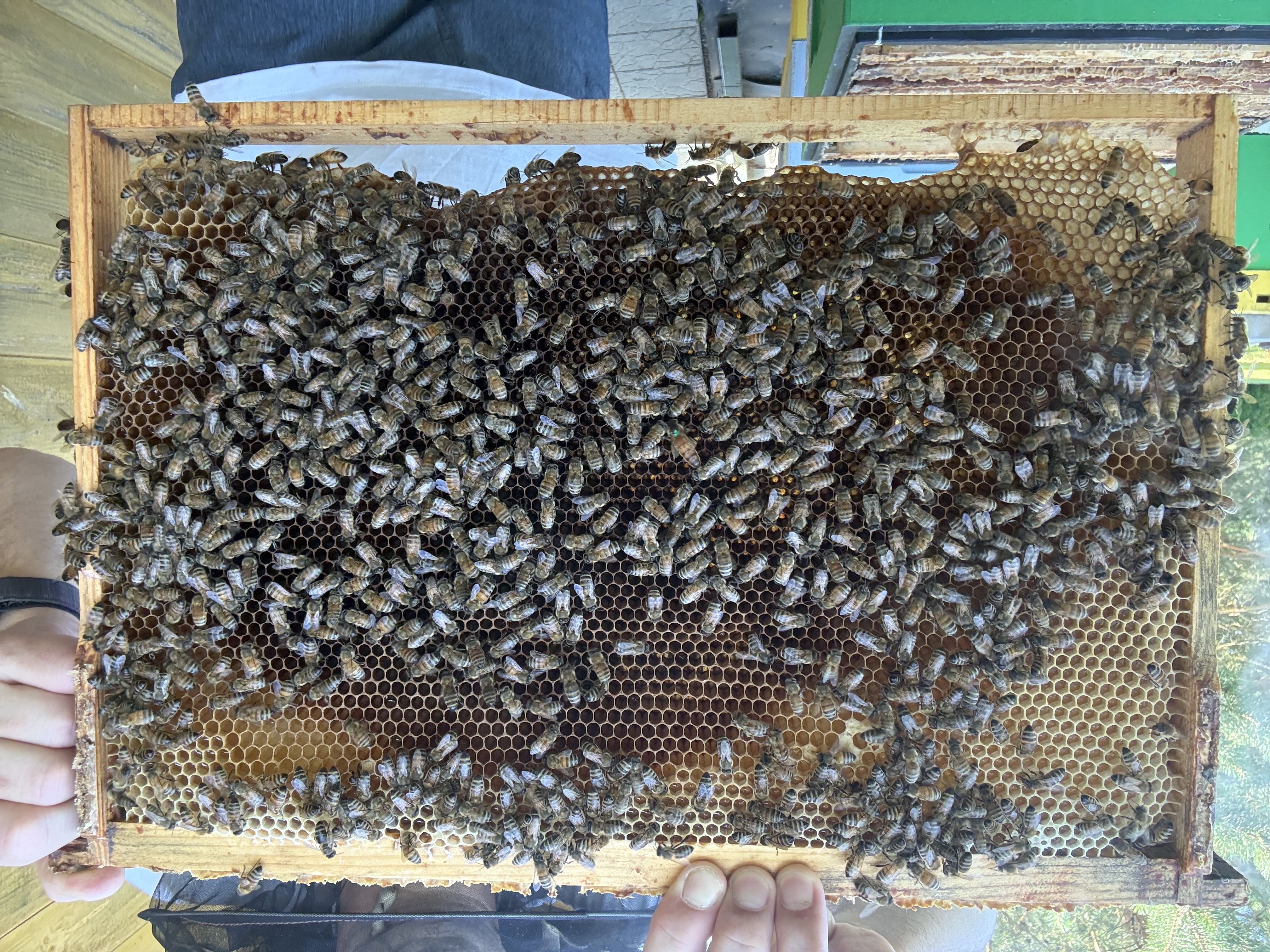
Frame 9
Side A
Side B
Side A
This side of the frame shows a significant area of capped brood in the center and bottom left, complemented by capped honey at the top right.
Side B
The majority of this frame side is covered with a strong pattern of capped and uncapped brood, indicating active queen laying.
Both sides of this frame exhibit a dense and healthy brood pattern, indicating a highly productive queen and a thriving colony. The presence of significant capped brood and some honey suggests a balanced and strong hive.
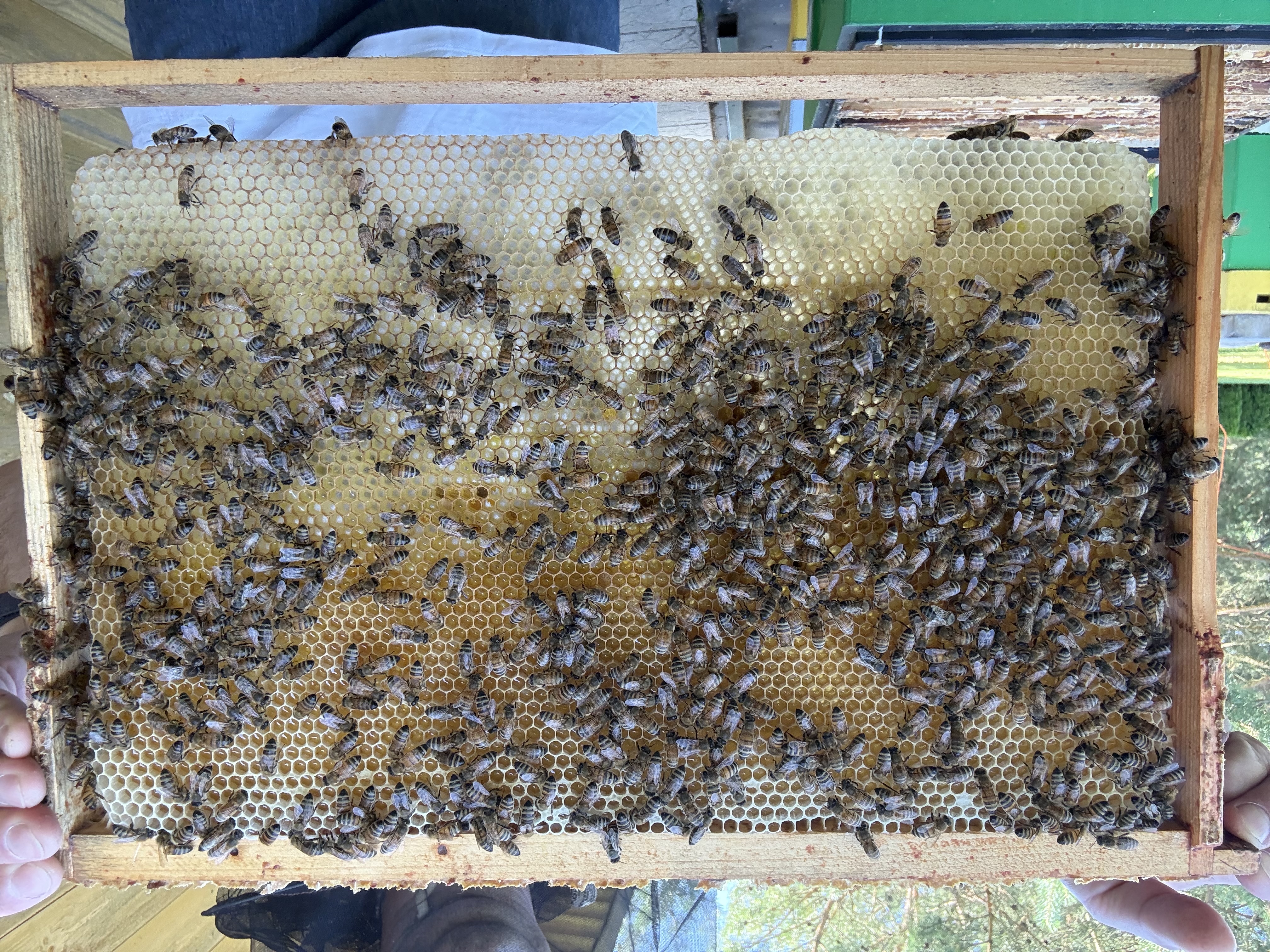
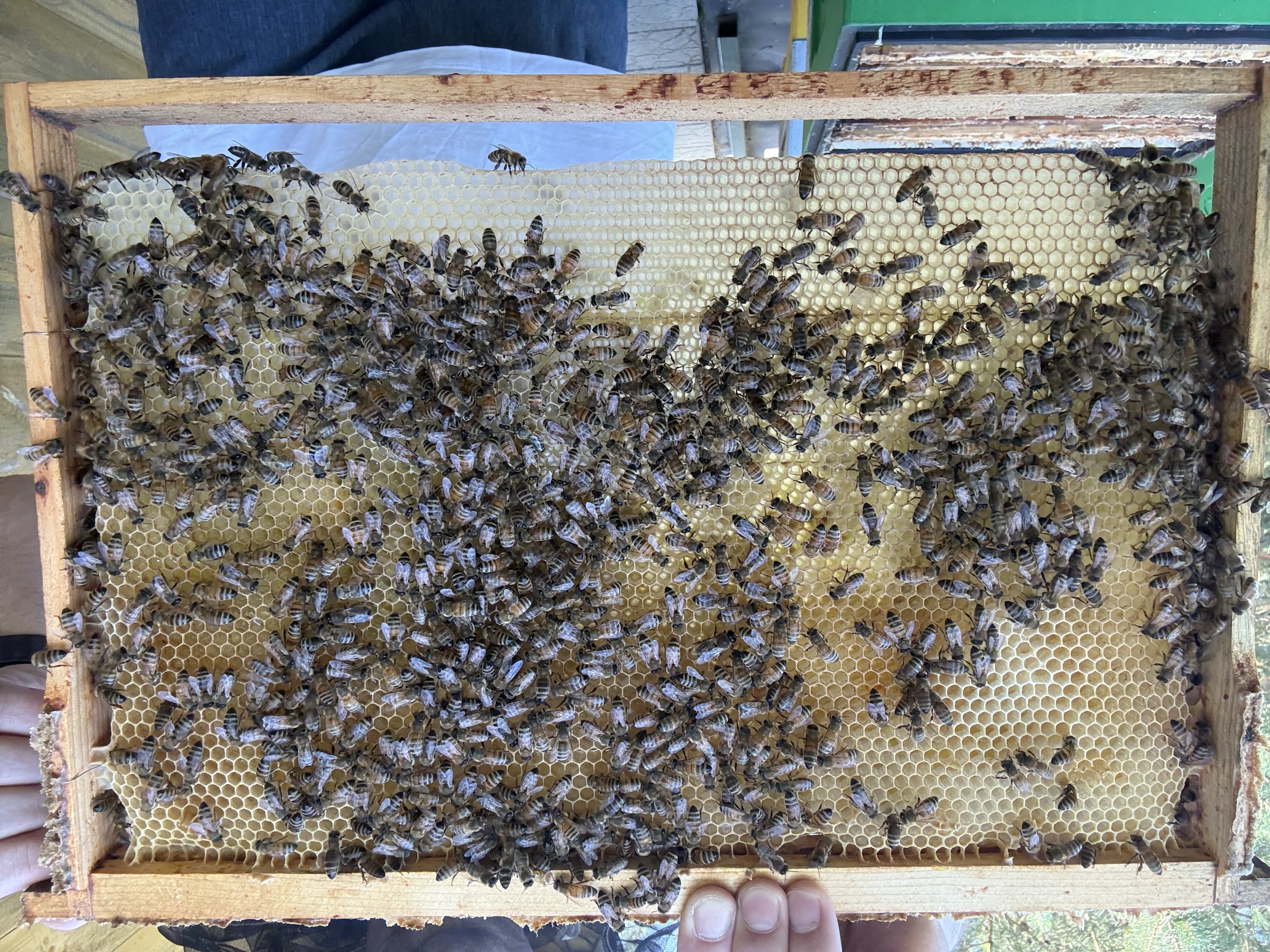
Frame 10
Side A
Side B
Side A
This frame side displays a moderate amount of capped brood in the central region, with several empty cells also visible.
Side B
A healthy mix of capped and uncapped brood occupies the central area of this side, alongside some open cells and nectar.
This frame features a good, albeit less dense, brood pattern across both sides, with bees actively tending to the cells. While some empty cells are visible, it still indicates ongoing queen activity and colony development.